
Clinton State Park, KS, October 2025
If bitter and pithy with an milky latex irritant sounds delicious, this is the pie for you!
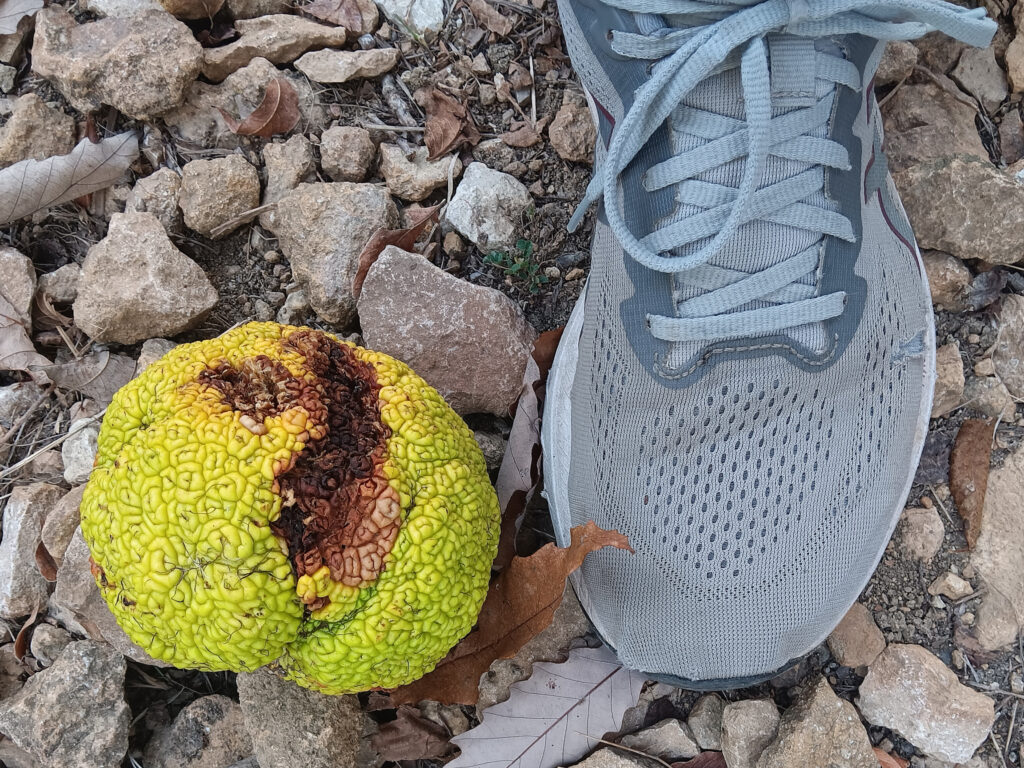
The fruit is not considered edible by humans, and most animals avoid eating them. One theory is that the animal that evolved to eat the fruit and spread the seeds has gone extinct, but it does not sound like this theory is widely accepted. (If the fruits taste as bad as it sounds, the animal probably wanted to go extinct.) With processing, the seeds are edible. They have a taste that is a cross between sunflower seeds and popcorn.
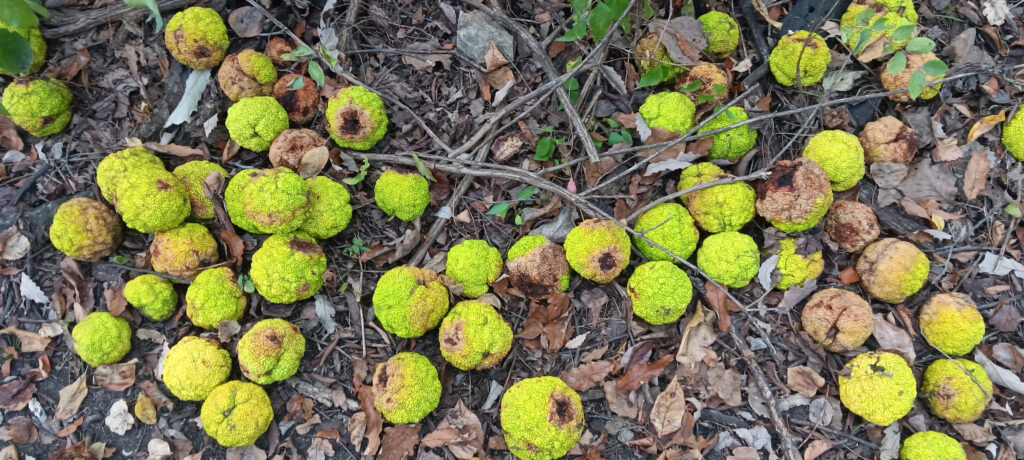
Clinton State Park has more Osage Orange (Maclura Pomifera) trees than anywhere we have been. There are many names for this tree, including Mock Orange, Horse Apple, Hedge Apple, Hedge Ball, and Monkey Ball, to name a few. They drop large, three to six inch, fruits that look a like immature oranges. In low spots, they can collect in large numbers.
The name Osage Orange appears to come from the wood being orange (not the similar fruit) and the Osage American Indian Nation that prized the wood for making bows. Since the tree is dense and thorny, the settlers used the trees as a livestock barrier. If the trees are trimmed down, they hedges outwards, branches intertwine, and they make a barrier that was sufficient for horses, bulls, and pigs. These hedge fences were later replaced by the use of barbwire. (You can read more on Wikipedia, here.)
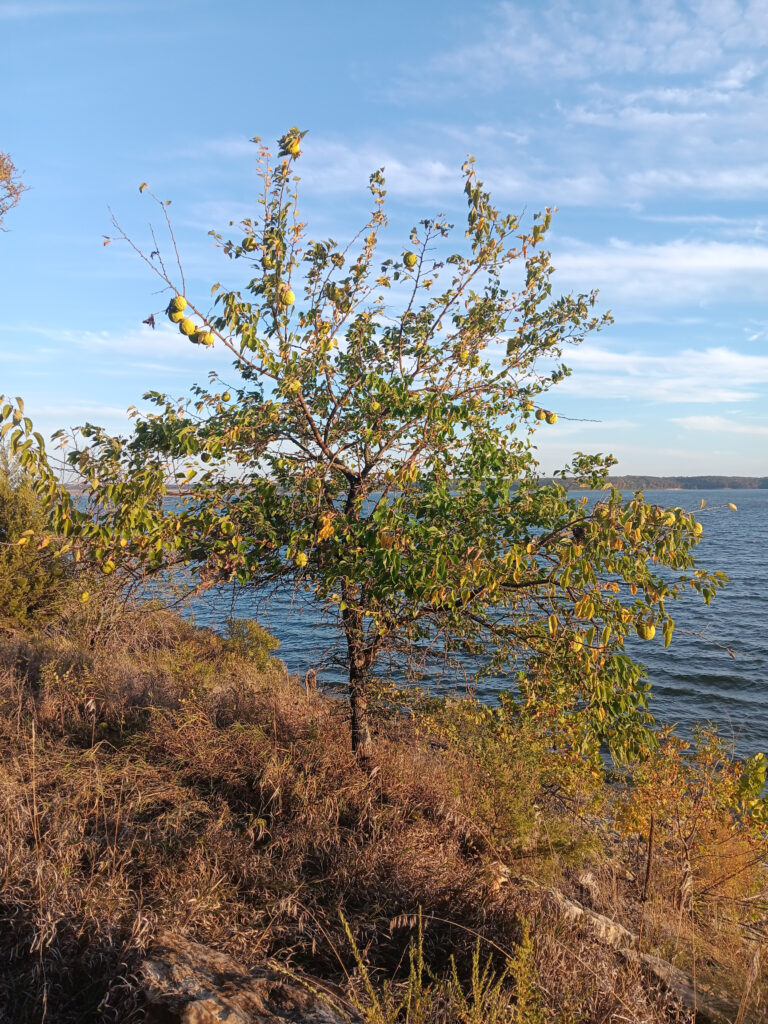
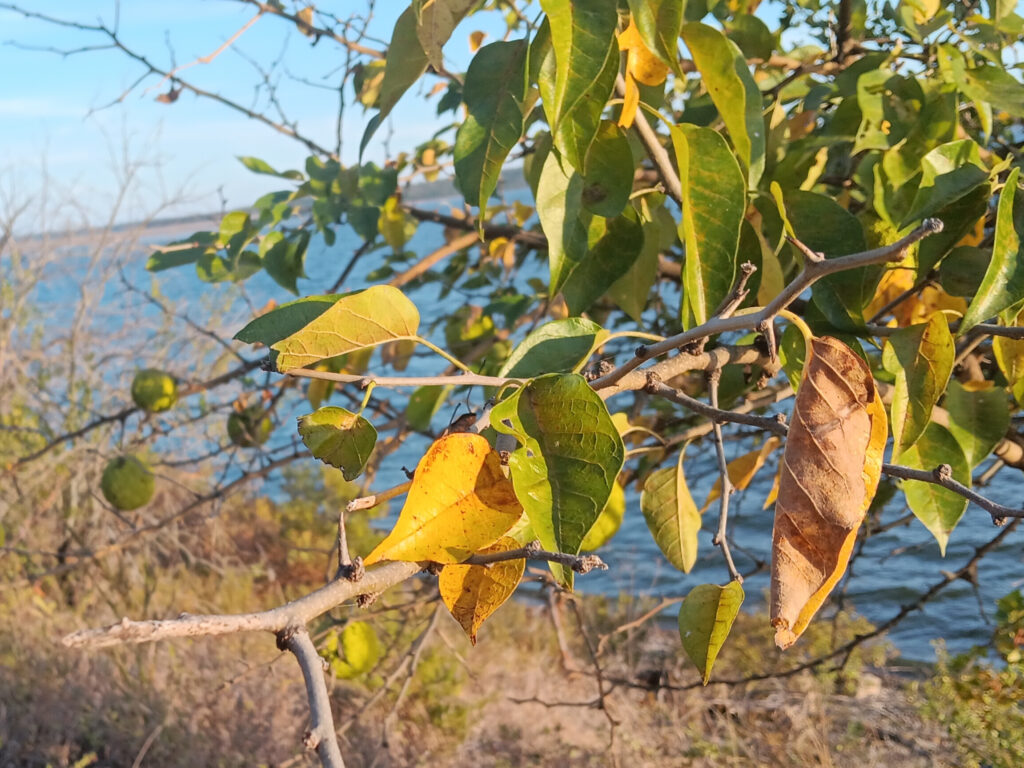
This is an immature tree; they get as tall as 30 to 50 feet. In the lower left corner of the picture on the right, you can see a one inch thorn.
Apparently, they are also a danger to hikers. One of the fruits landed just behind Kate with a very loud and solid thump. If it landed on your head, it would hurt.