Hillsdale State Park, KS, November 2025
Hillsdale Resevoir looks a little like a chicken foot. It branches off in a bunch of directions away from the dam. The chicken toe that most of Hillsdale State Park borders is the Scott Branch Bull Creek. Do not ask us; we did not name it. I assume the person that did was drunk or paid by Scott Bull.
State parks often have multiple campgrounds, and we have walked to the lake shore that borders out campground a few times. That is where the picture of the Belted Kingfisher came from. We went to the marina one evening, and we thought we saw an owl on the marina roof. We decided to check back at the marina and the beach to see if there were birds migrating through the park.
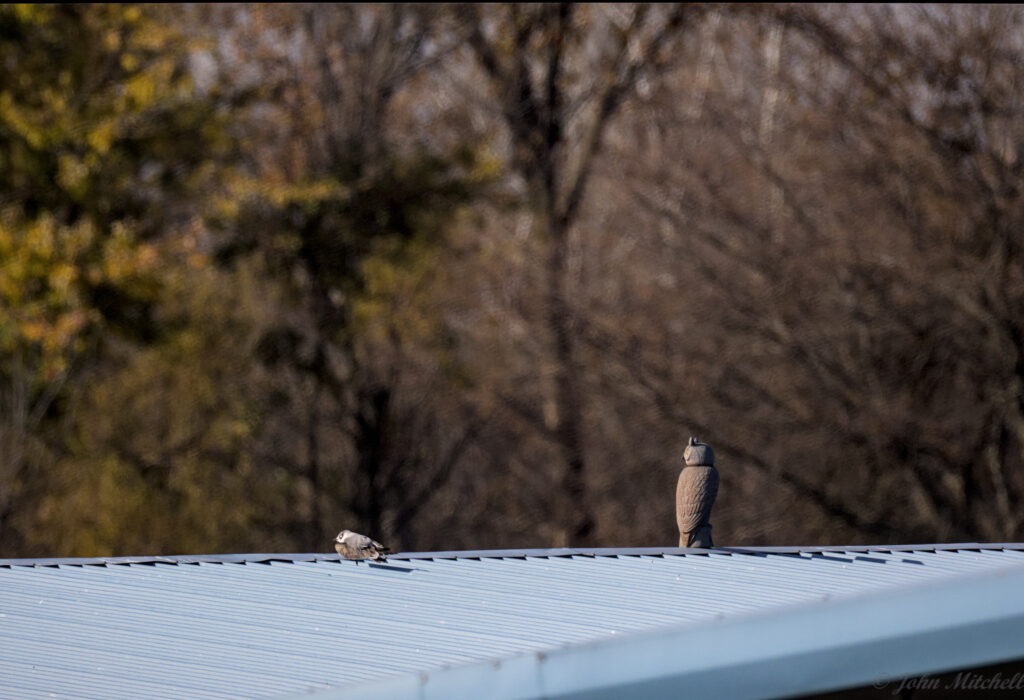
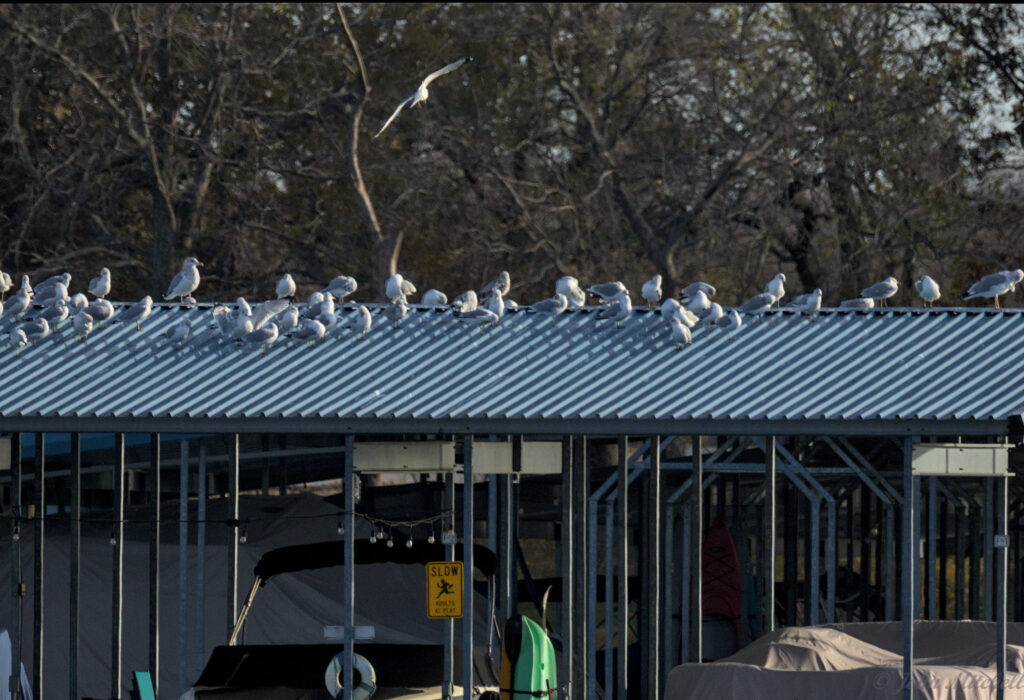
Yup, the owl was still there because it was plastic. You can see how well it works to scare the seagulls. In fact, it works so well that whole flocks party on the roof.
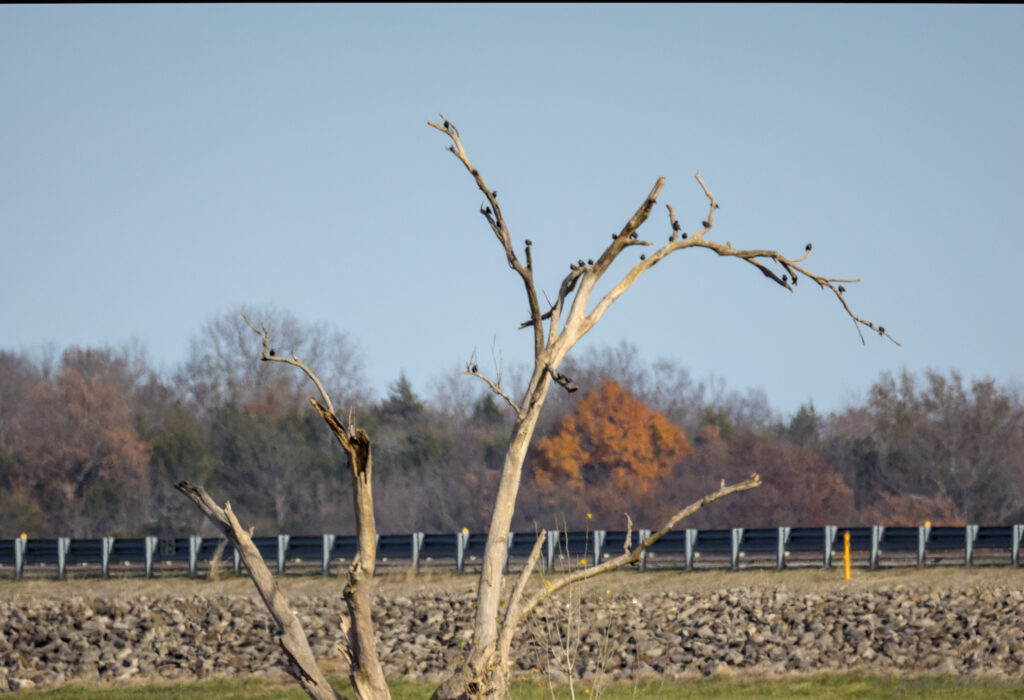
There are not as many birds as when we arrived, but we did see Starlings. They are not uncommon, but we do not have a picture of them. They puff their throats out, and that was new to John.
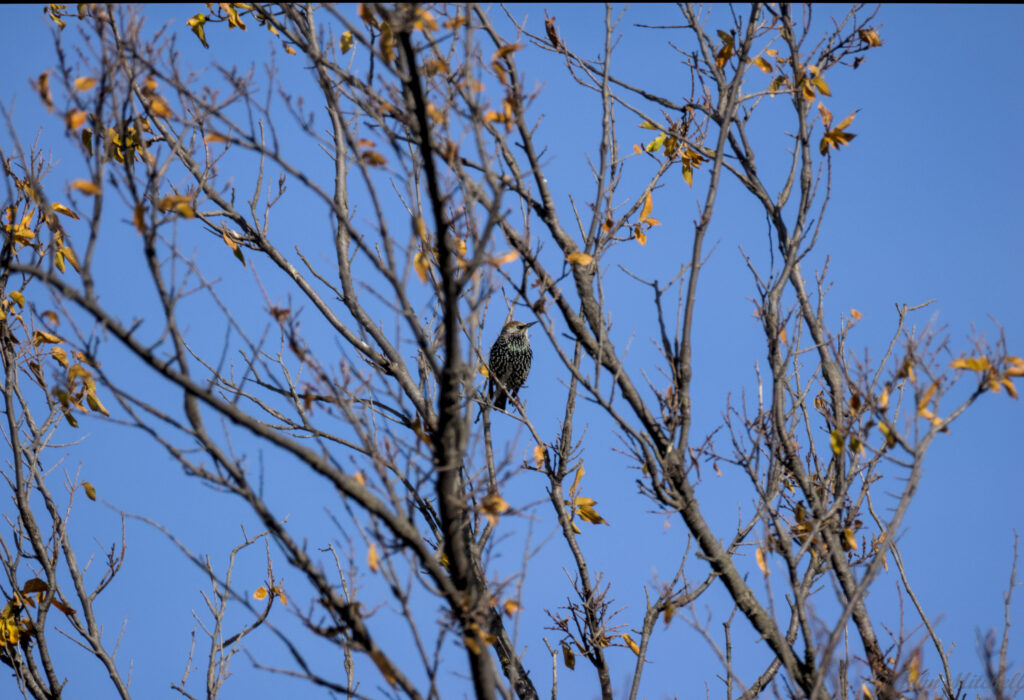
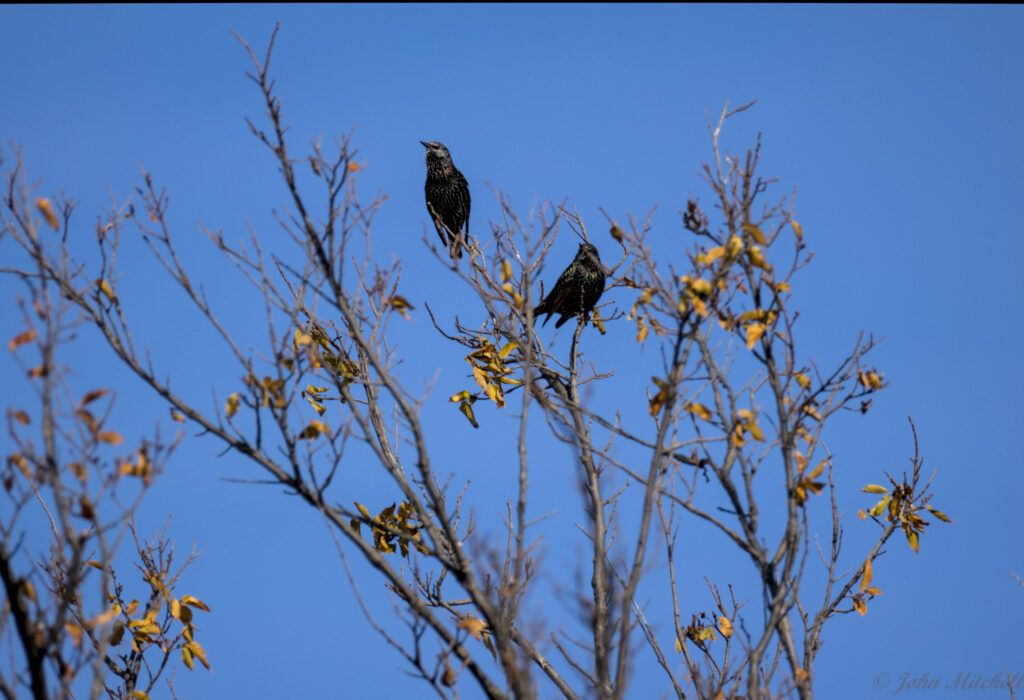
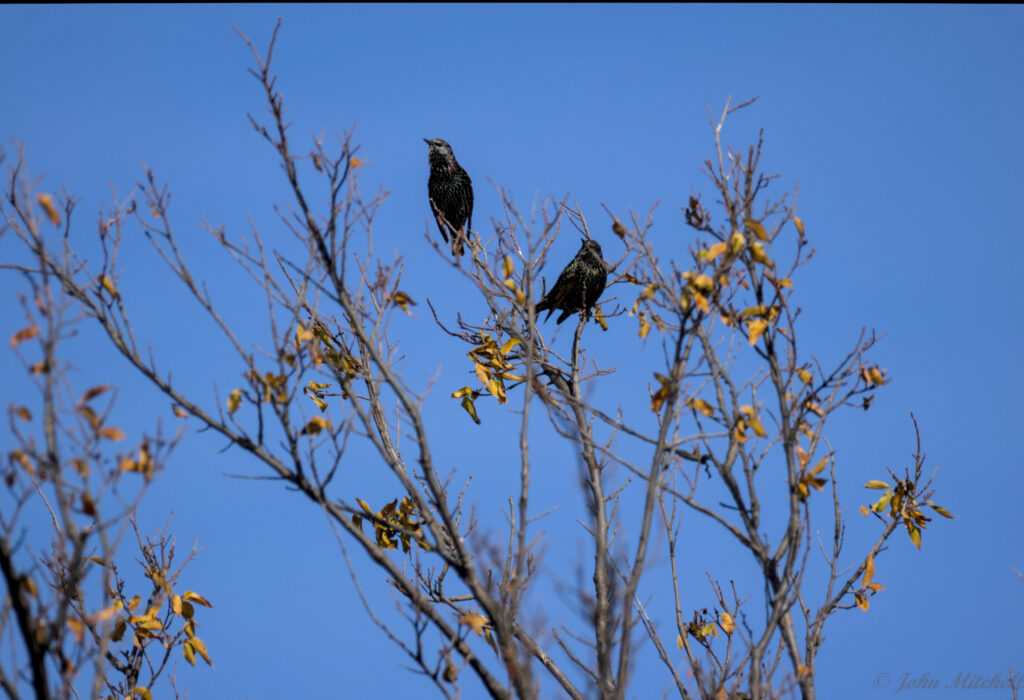
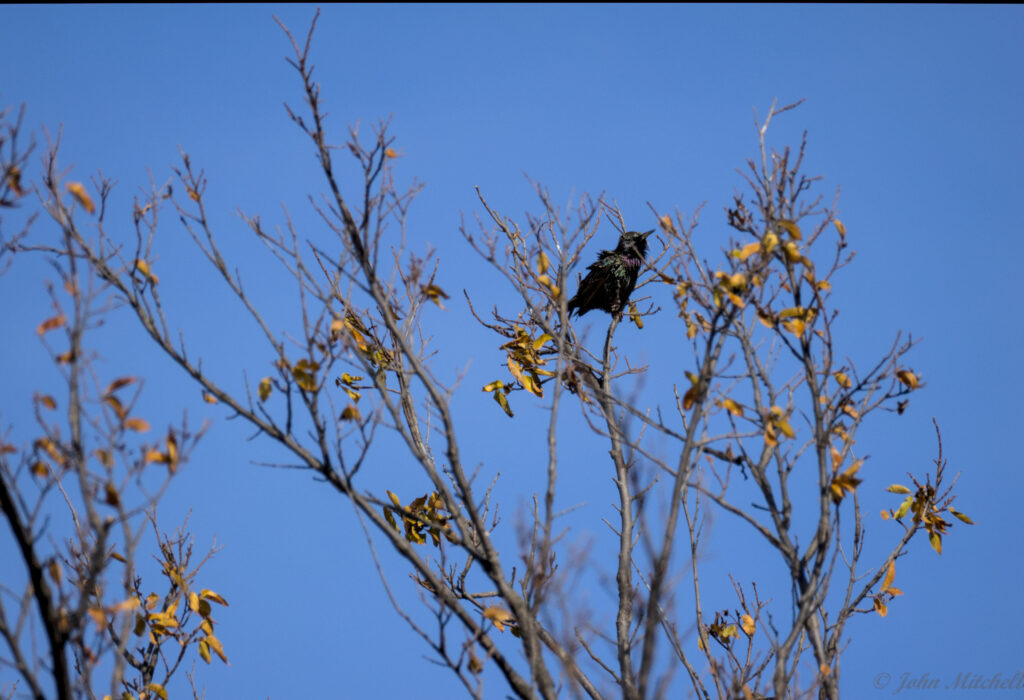
Starlings are an invasive species that compete with native species and force the native species out of prime nesting locations. Were they blown in by a storm? No. Were they accidentally introduced by shipping? No. Were they an escaped exhibit? No. They were intentionally introduced by dumb people with dumb ideas.
European Starlings were introduced in 1890 and 1891 by the American Acclimatization Society. Their goal was to introduce every bird mentioned in the works of Shakespeare’s play into America. Eugene Schieffelin released the birds in New York’s Central Park. The part about Shakespeare may or may not be true, but this is why random idiot’s should not be making environmental and ecological decisions.
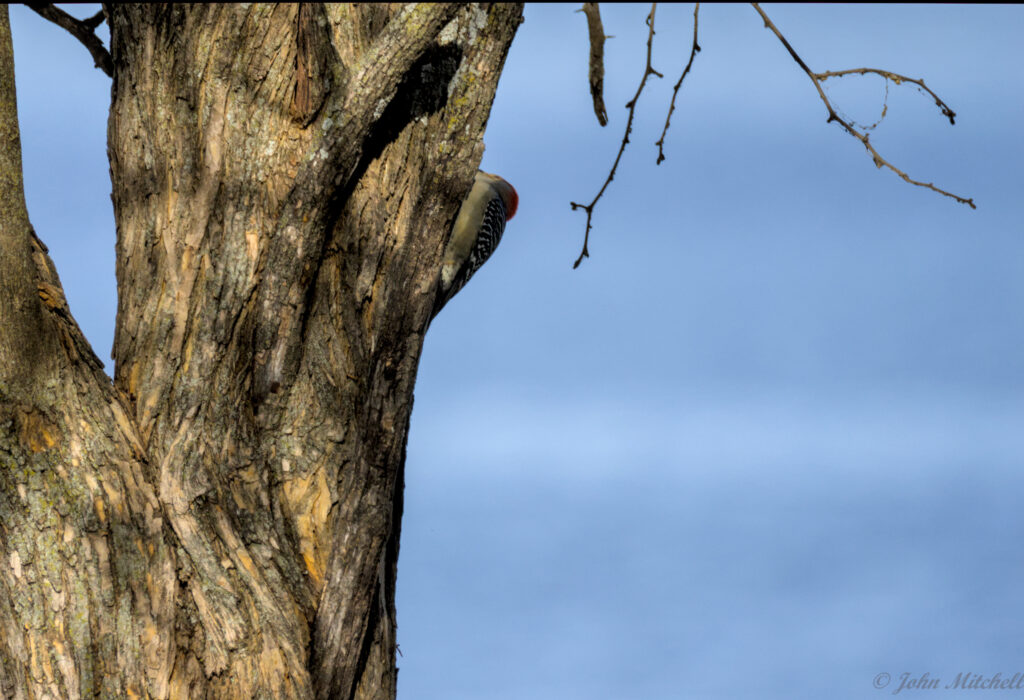
Kate thought she saw a Bald Eagle on a dead tree near the dam. As we walked towards it, we saw a woodpecker. We could not get a great picture, but it looks like a Red-bellied Woodpecker.
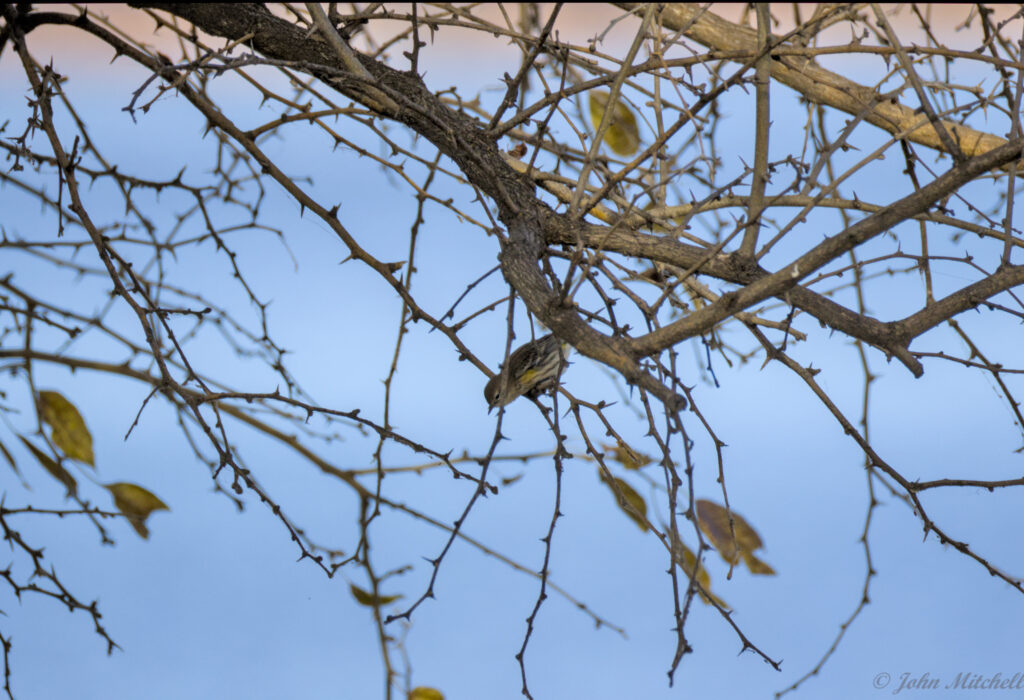
We also saw this, which might be a female or immature Yellow-rumped Warbler. It never warbled, so we are not sure. We saw many of these in Yellowstone, but they do not sit still for pictures.
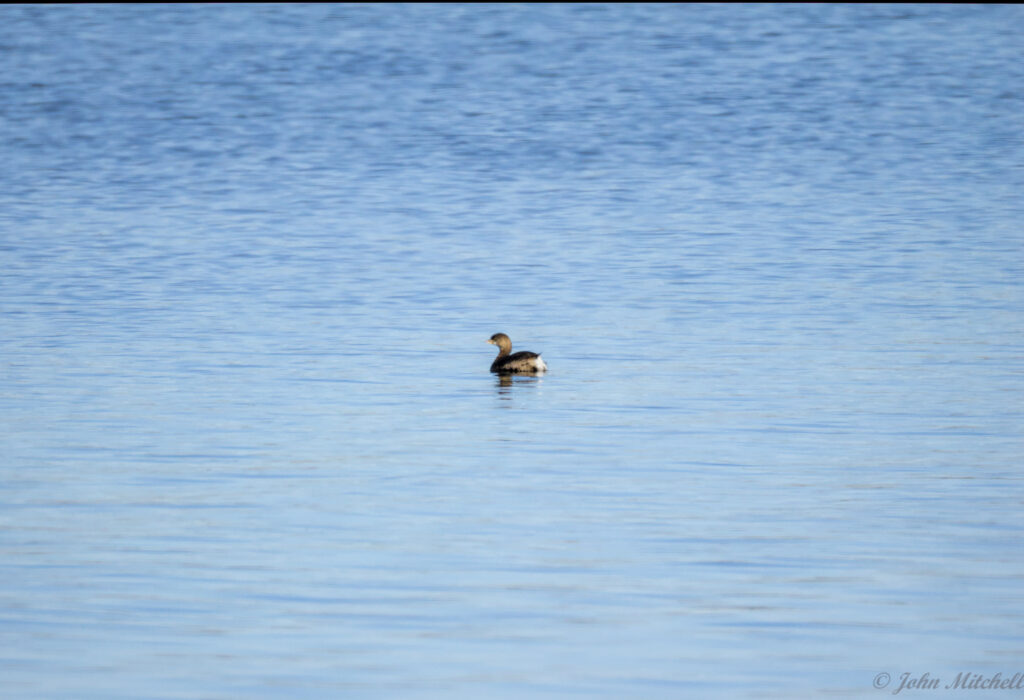
As we neared the water, we saw what looked like a pint-sized goose. Our best guess is that it is really a Pie-billed Grebe. The immature ones have black and white patches on their face by they bill.
When we had a view of the dead tree, the Bald Eagle had left or those are the smallest Bald Eagles ever.
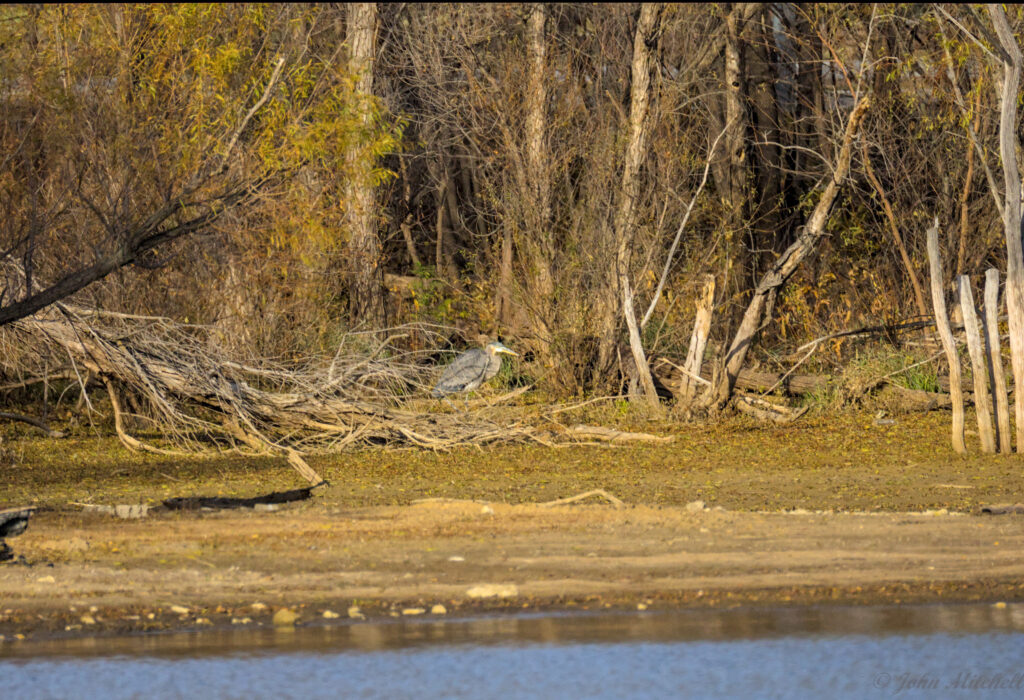
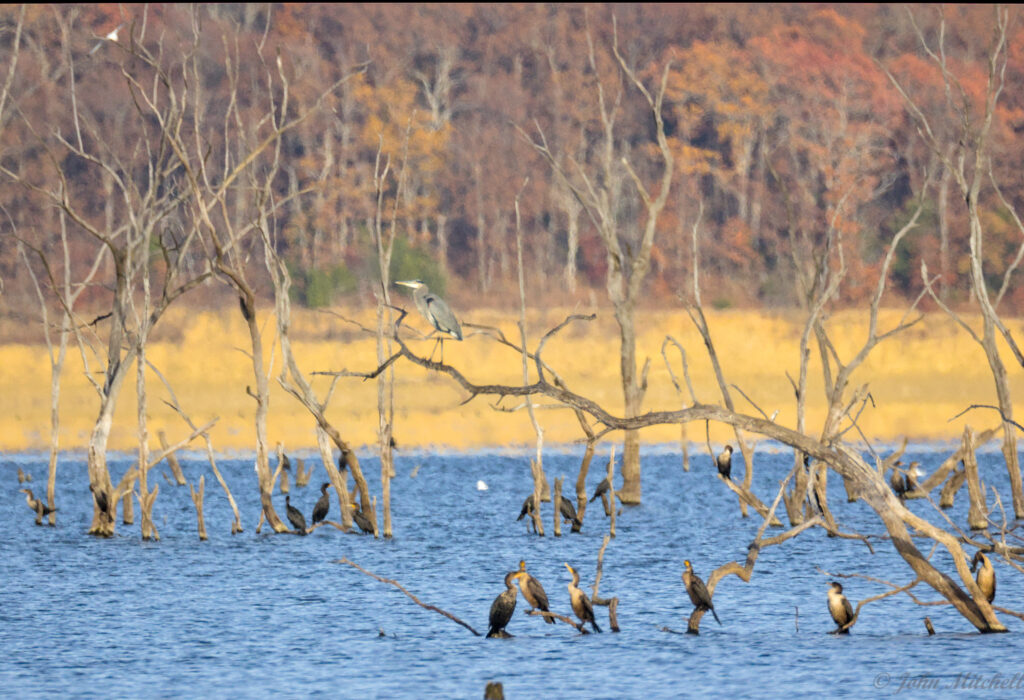
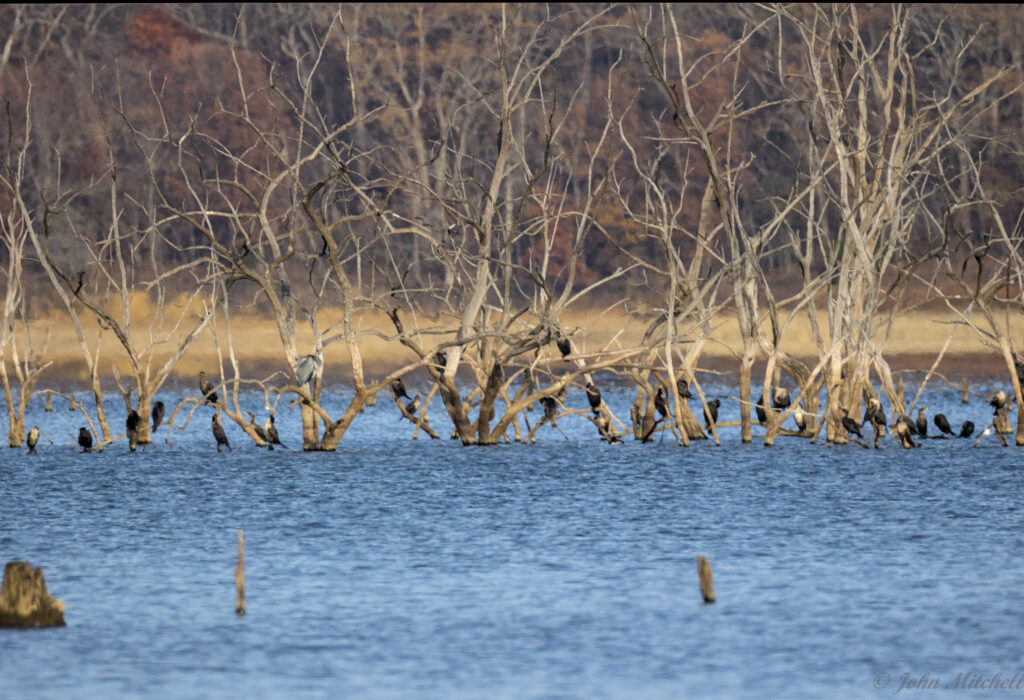
There was not much else at the marina, so we headed to the beach. The beach had some of the usual visitors. A Great Blue Heron, Double-crested Cormorants, Seagulls, and Starlings.
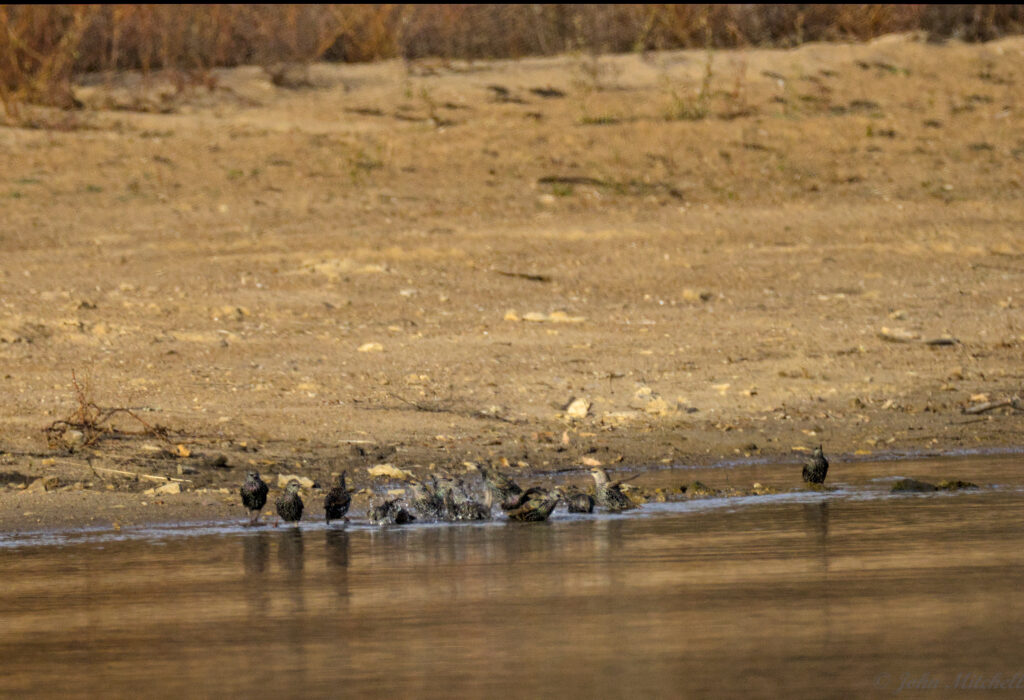
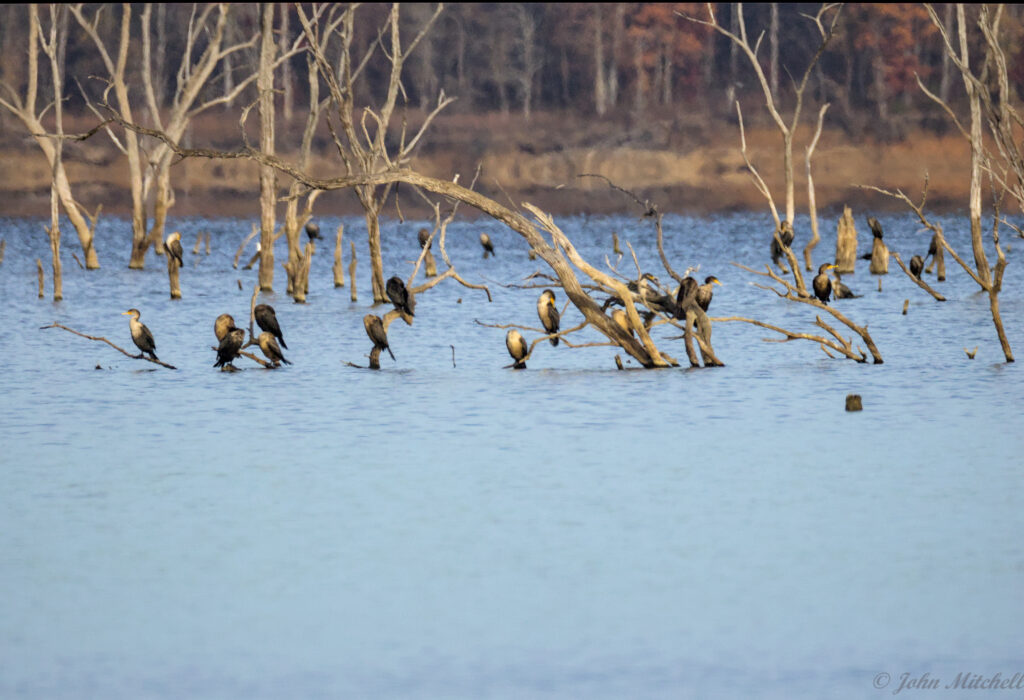
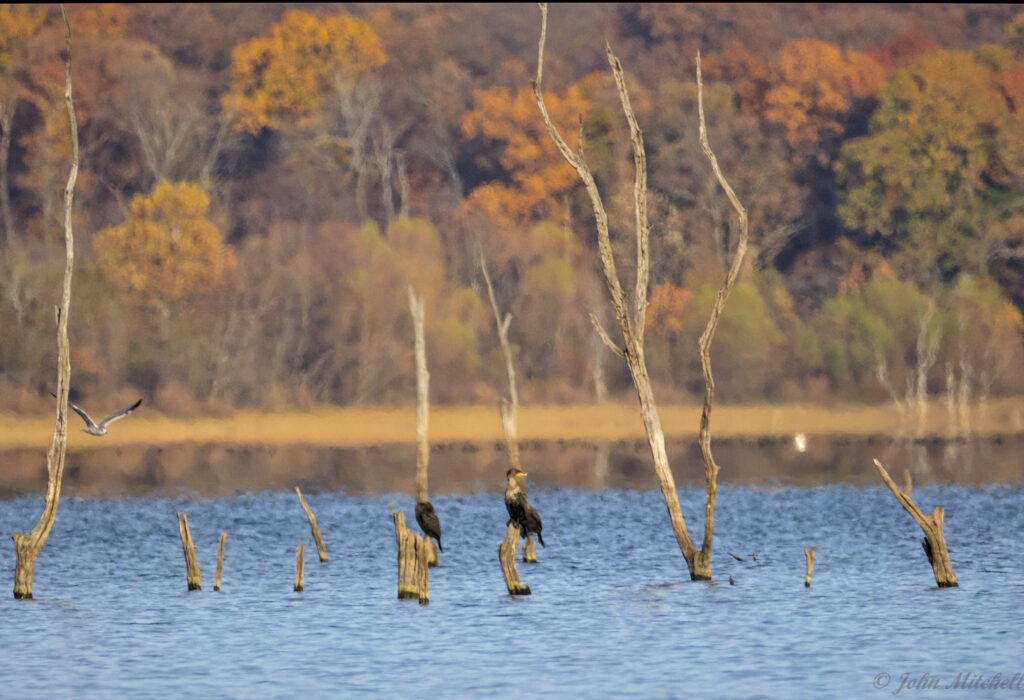
One of these pictures is easier to solve than the other. Treat these two pictures like the “one of these is not like the other” puzzle.
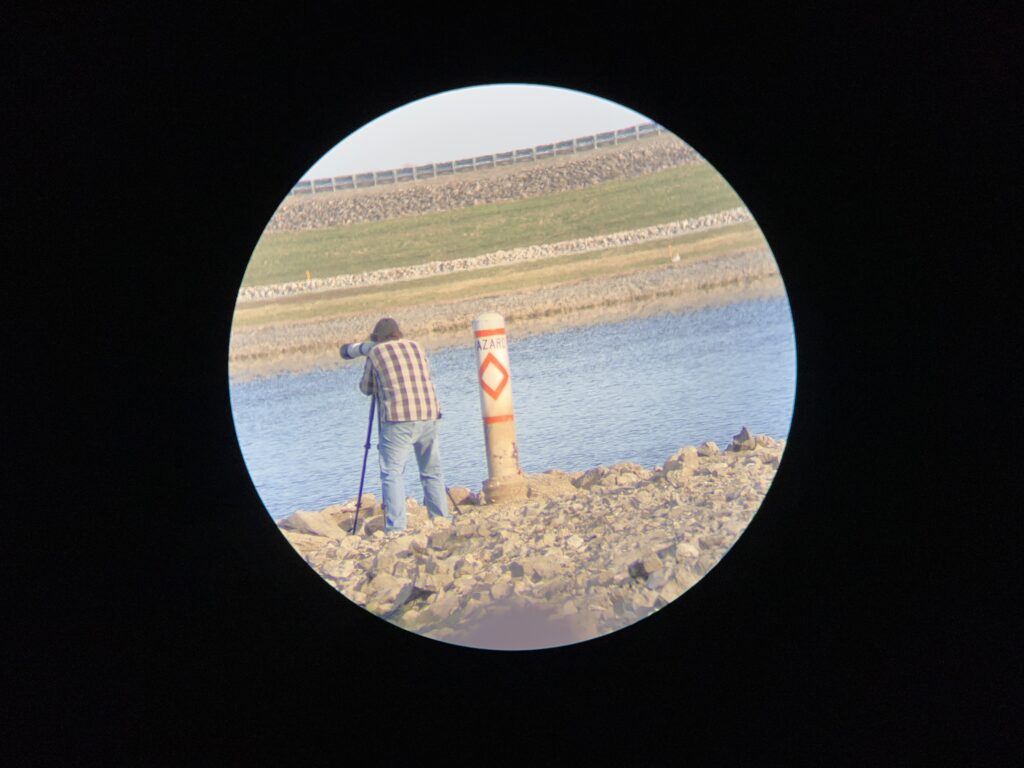
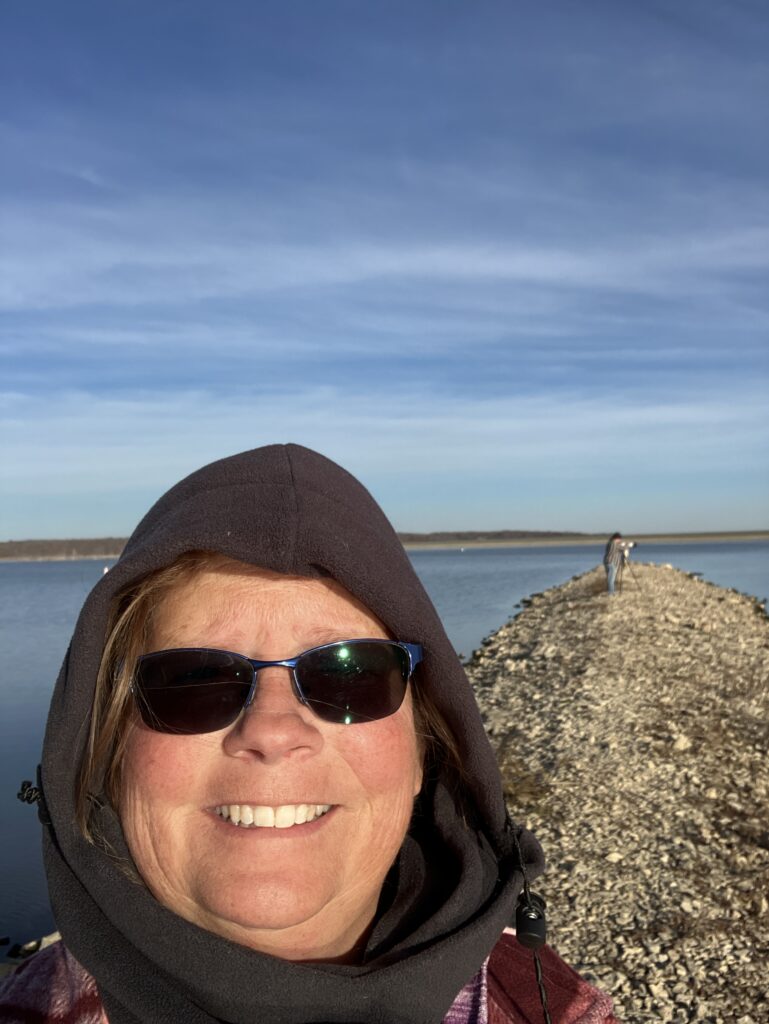
While John was taking pictures, Kate was taking pictures with her scope. One attempt was to stand in front of the scope to include both herself and John. It did not work out so well. Kate is the gray blob at the bottom of the picture.
You might notice a little black line at the top of John’s photos. This is not on the digital negatives (RAW files), so it is something new and odd happening in the file processing flow.