Poverty Point Marina, LA, February 2026
We went to the marina again the next morning, and some of the birds Kate saw were there. We stopped at the entry pond which had fishermen on the shore and boats in the water. The snipes probably ran for the hills. We though there was nothing in the pond, but John saw what looked like a duck decoy with the binoculars.
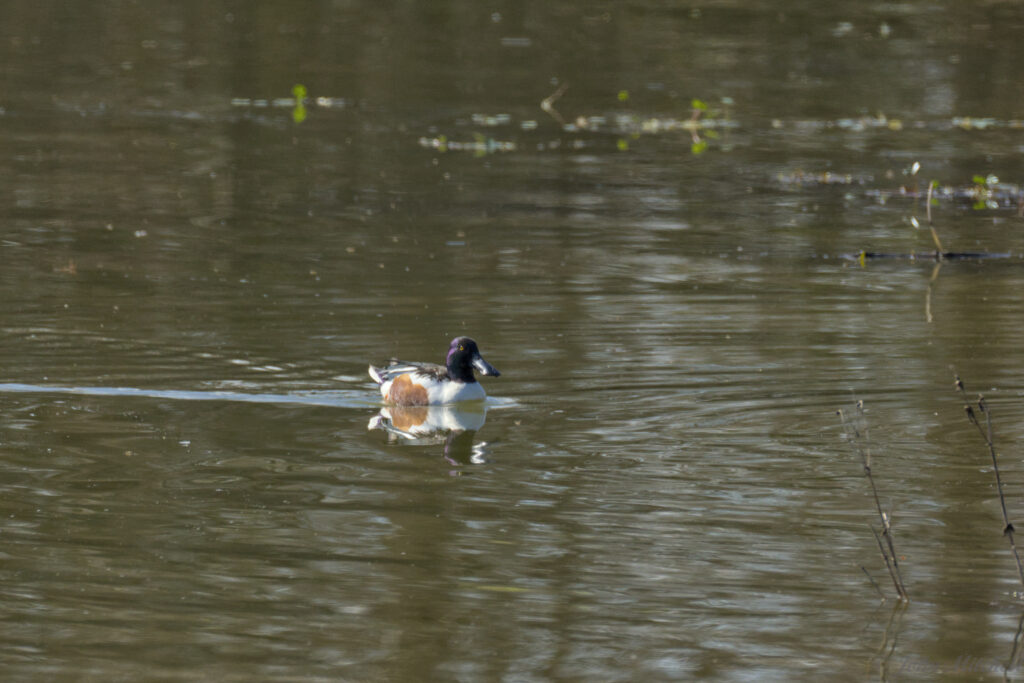
And then, it moved. Not like a horror movie; like a duck. We thought it was a new duck, but it turned out to be a Northern Shoveller. Over the last few years, we saw some circling at a state park and a few in Yellowstone. All of them were very far away, so we were able to take slightly better pictures. The SLR camera was not focusing well with the shadows, movement, and lack of contrast. John thought the white markings on the duck would help, but no luck there.
The french have Duck à l’orange; the Americans have Duck à l’garbage. You can see the green patch on the wing in the second picture. It is in a similar place to mallards, green-winged teals, and blue-winged-teals.
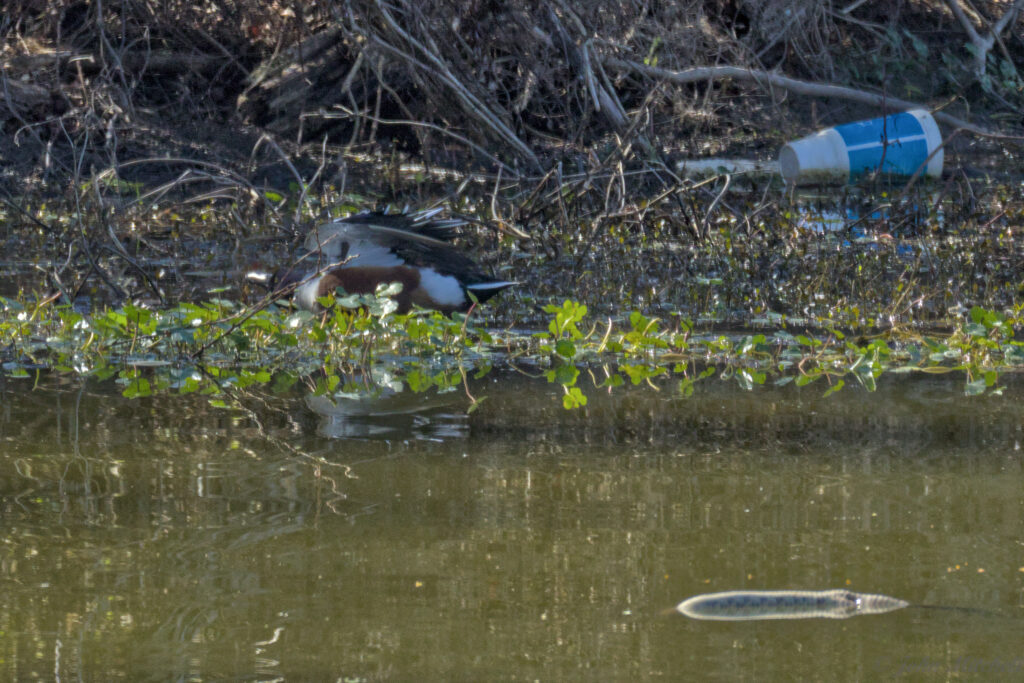
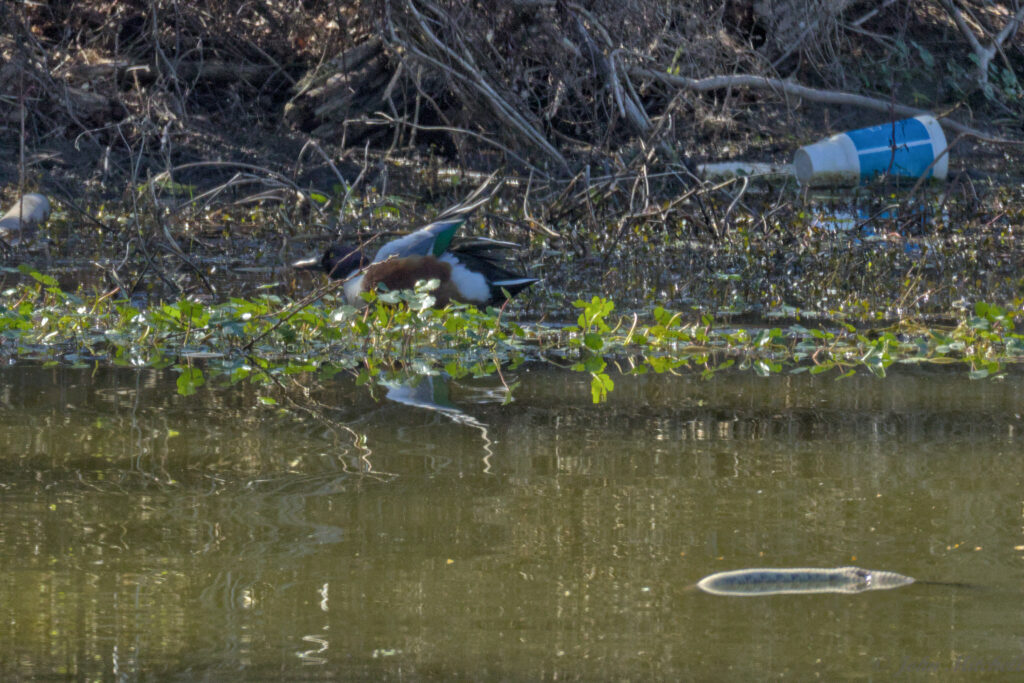
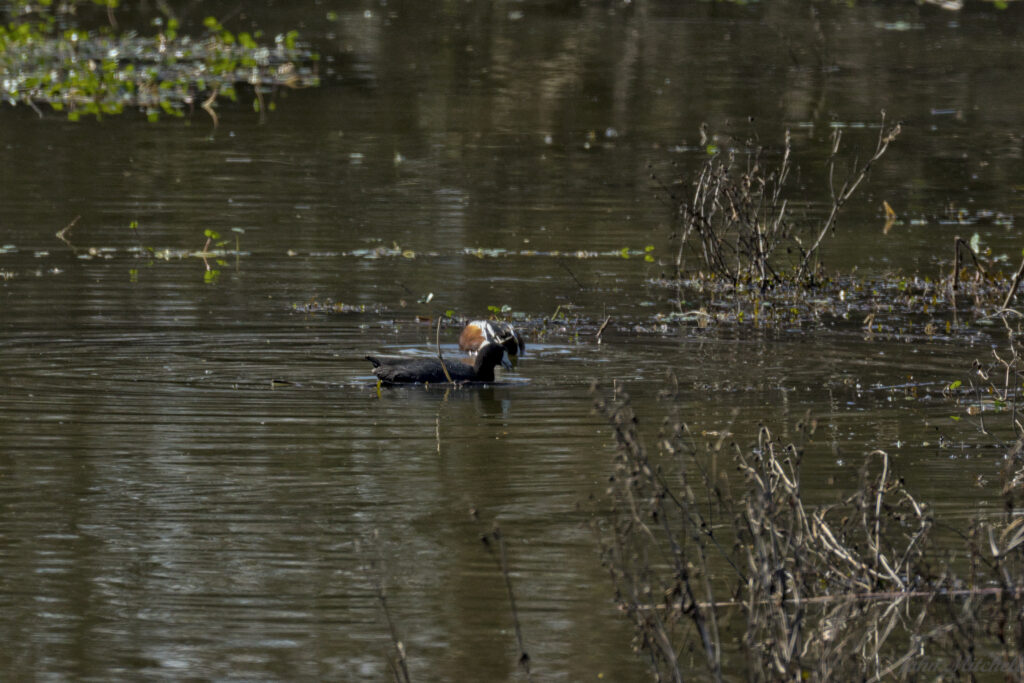
The Northern Shoveller swam past us, along with two American Coots. You can see a purple sheen on the duck’s head in some pictures. Depending on the direction of the light, it can also appear green. The other bird catalog picture shows a green shine, similar to a Mallard.
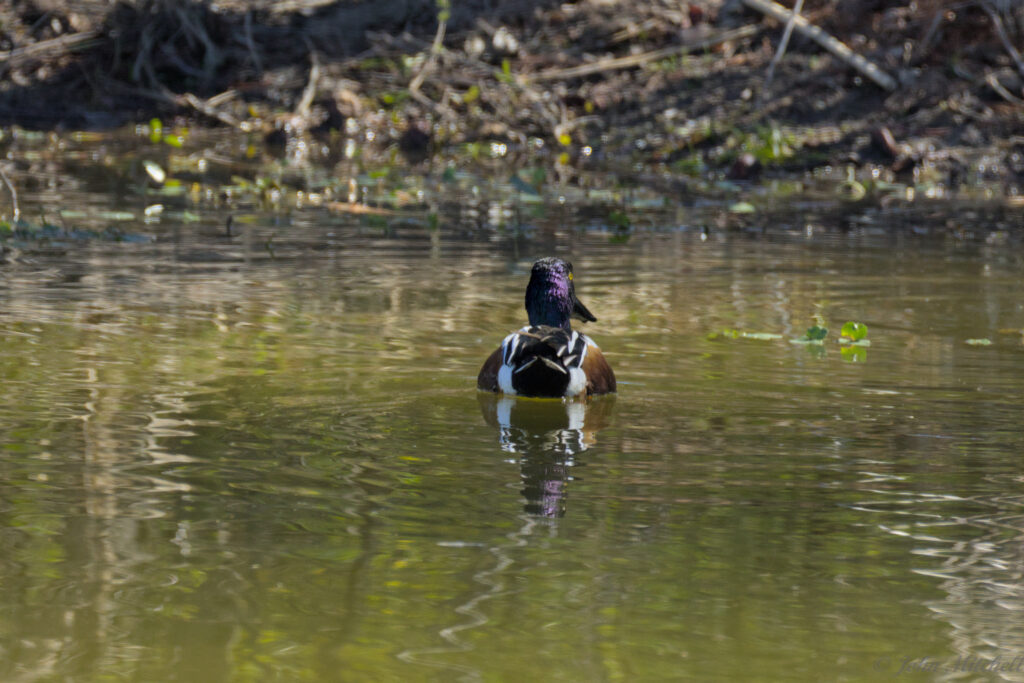
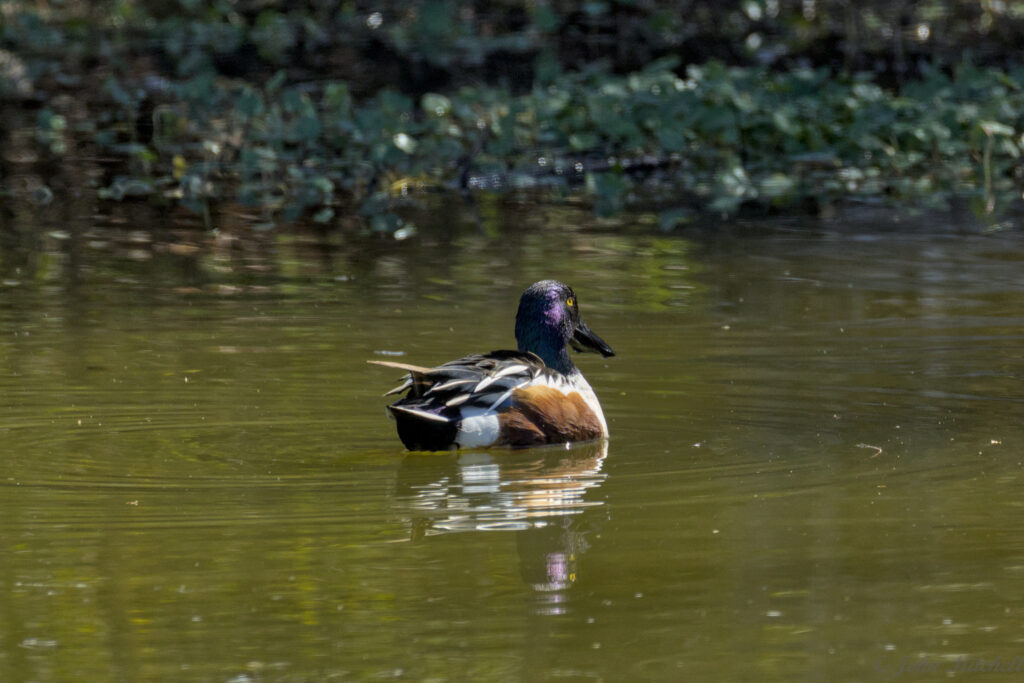
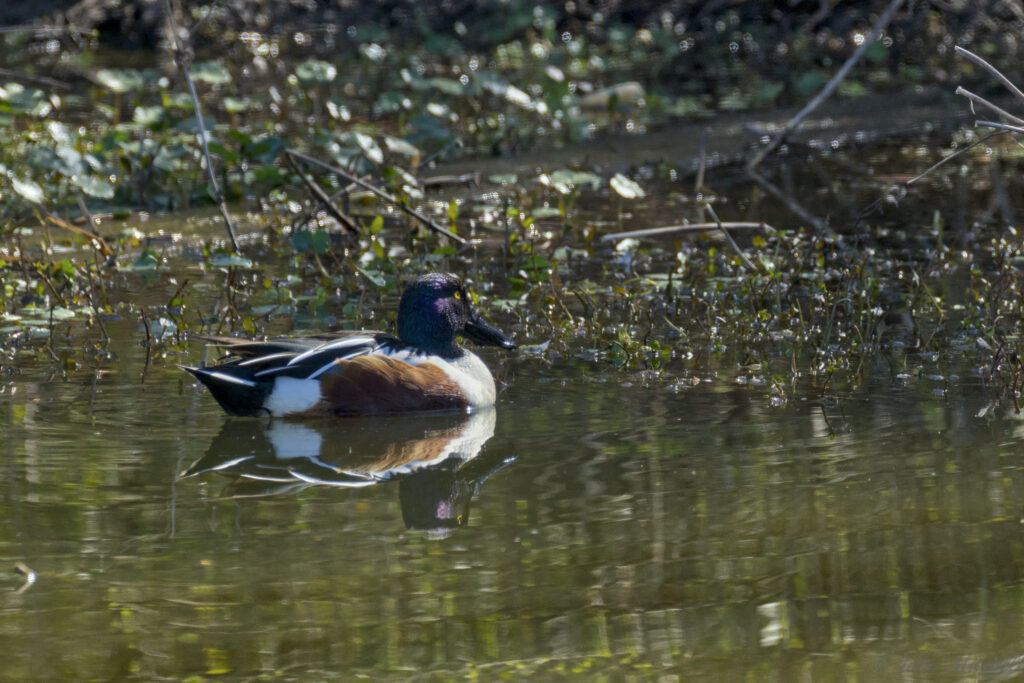
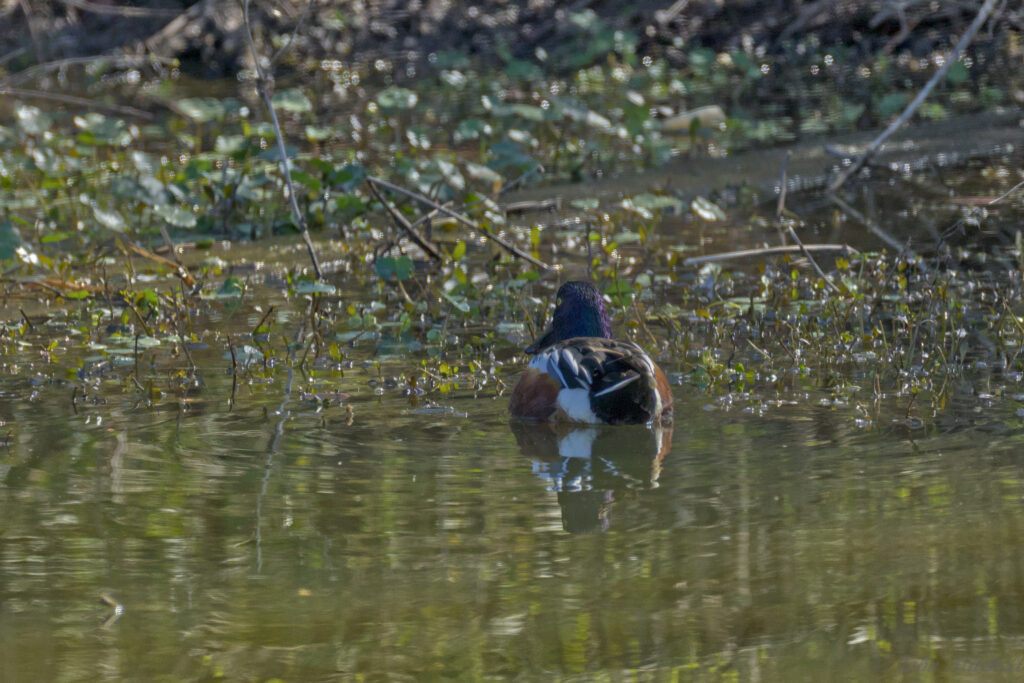
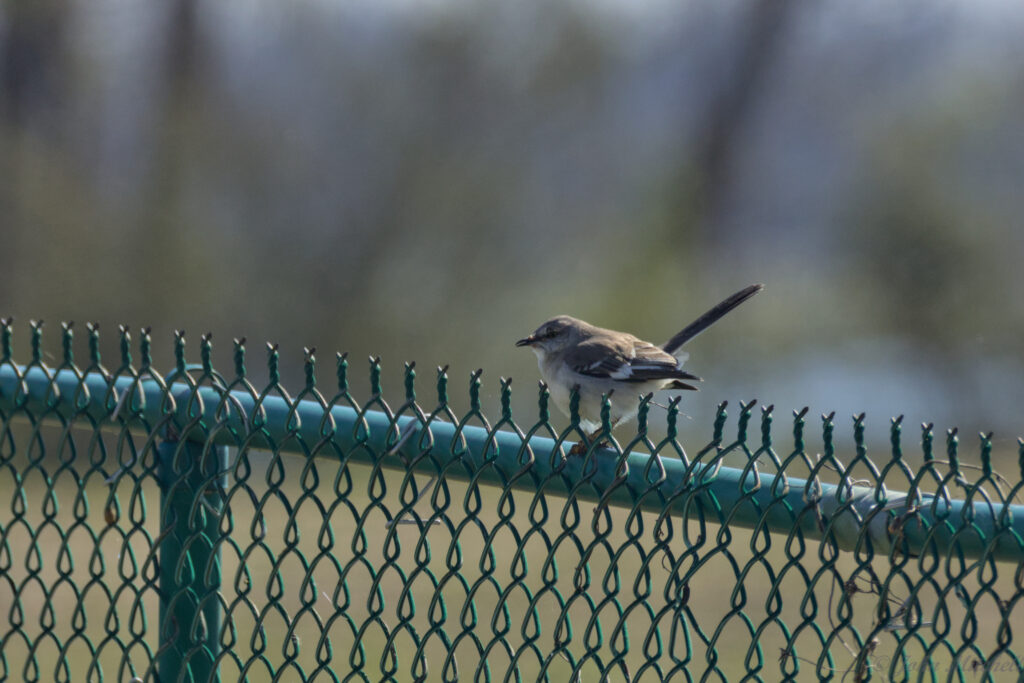
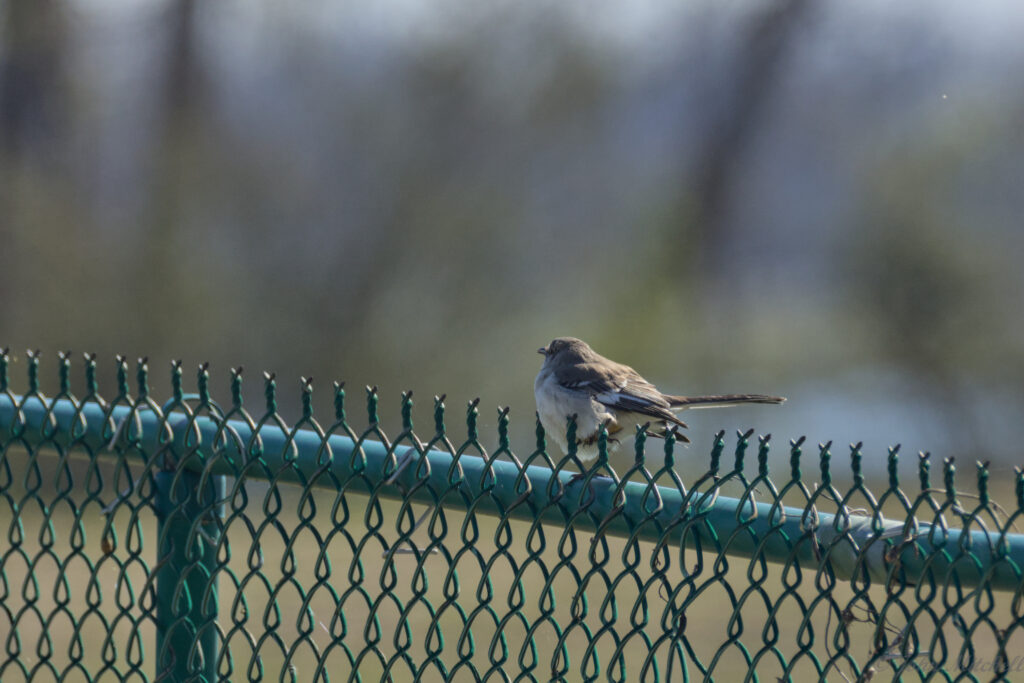
After John got frustrated with the blurry duck pictures, we started heading to the beach to check for gulls and terns. On the way, we saw a Northern Mockingbird on the fence by the road. John did not get many photographs because drivers wanted to use the road. (The nerve of those people wanting to drive on the road.) The bird looks like it might have had an injury at the top of the beak.
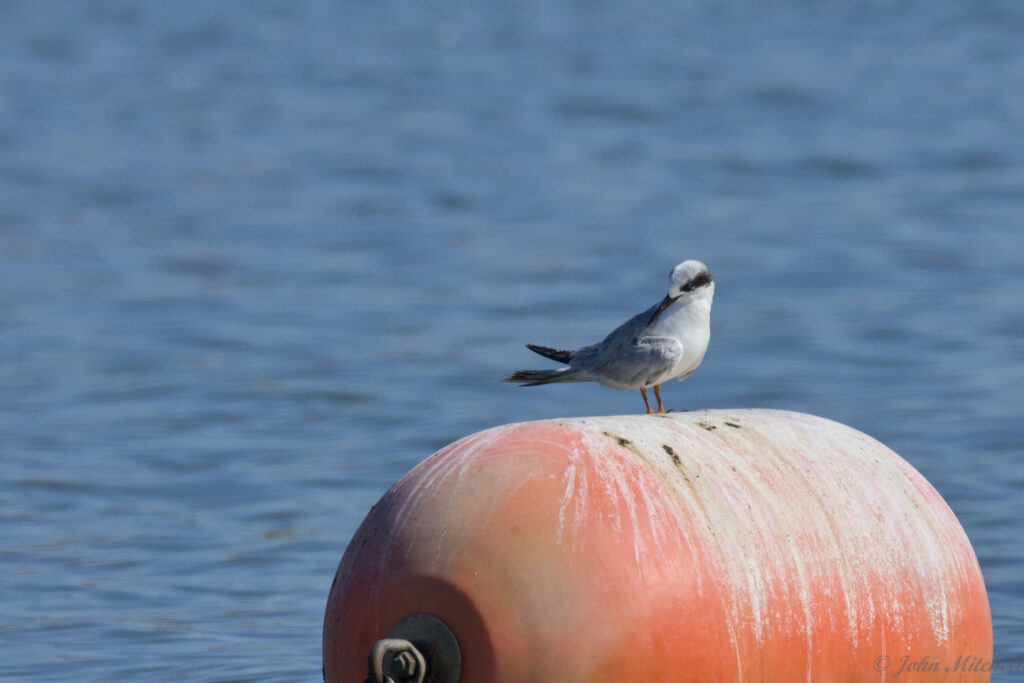
The beach had the Forster’s Tern that Kate promised the day before. There were about five to ten of birds on the buoys and pylons. Some were terns and others were a similar looking seabird.
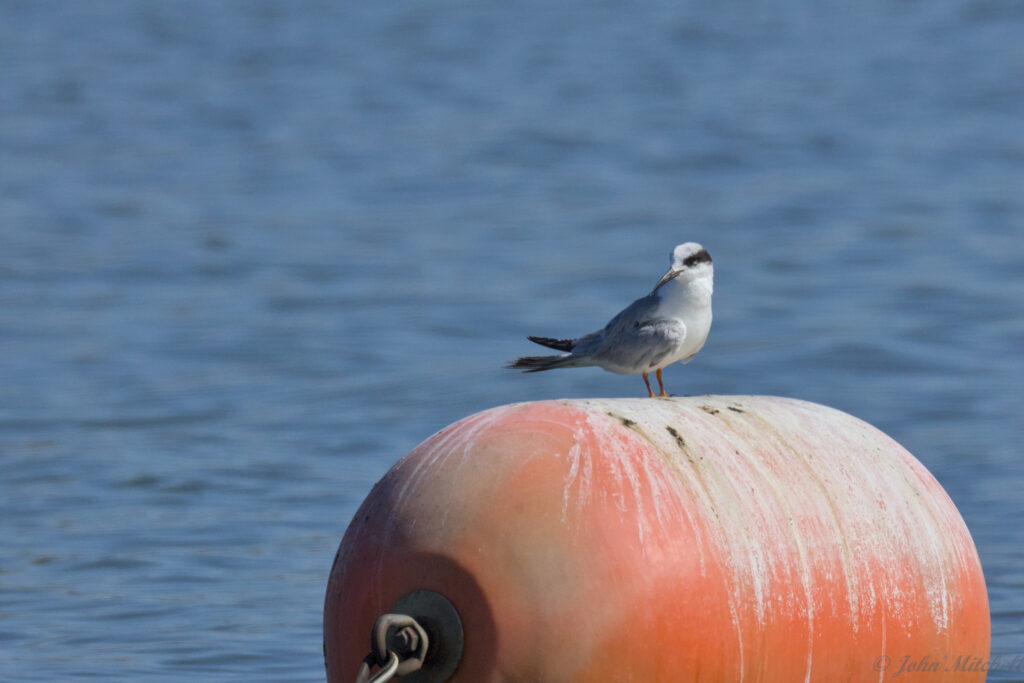
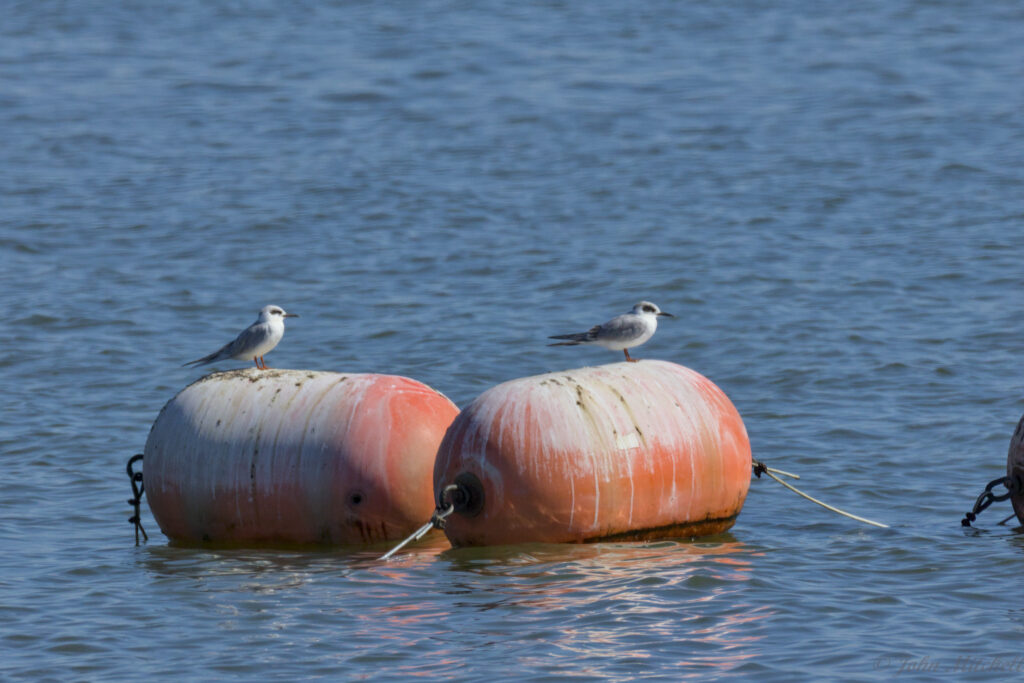
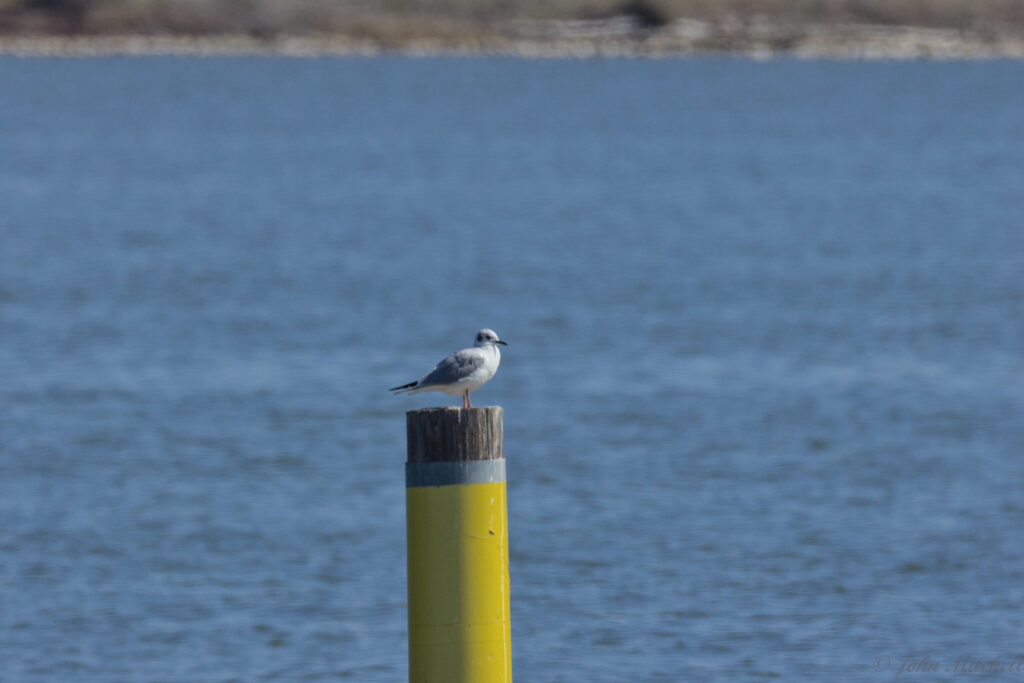
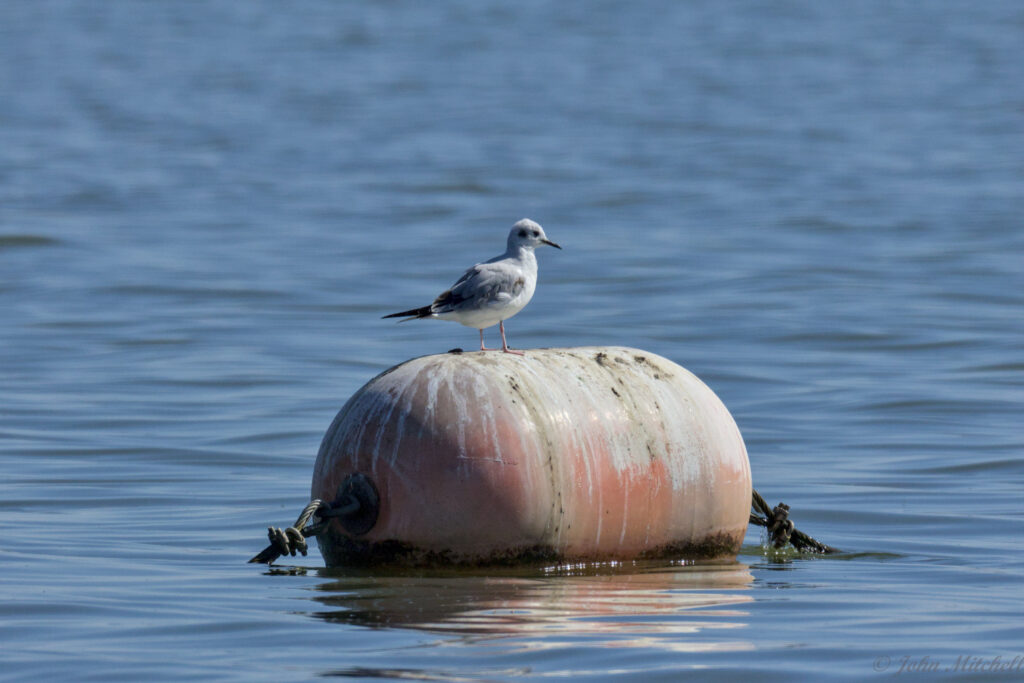
The other bird appears to be a Bonaparte’s Gull with non-breeding plumage. This was also a new bird, and it is noted for having a similarity to terns in appearance.
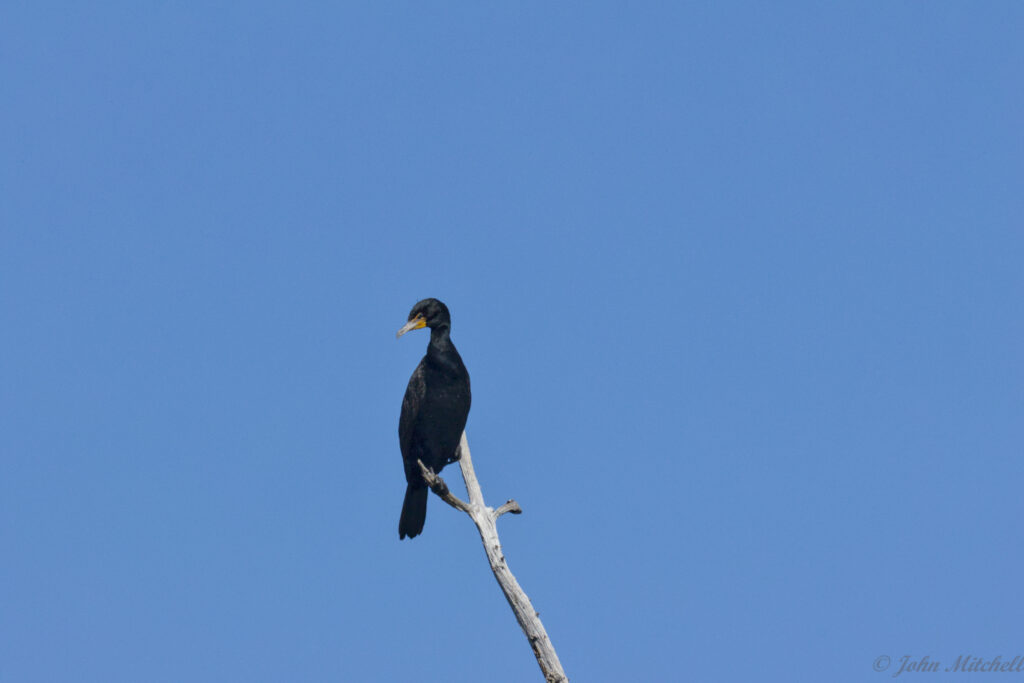
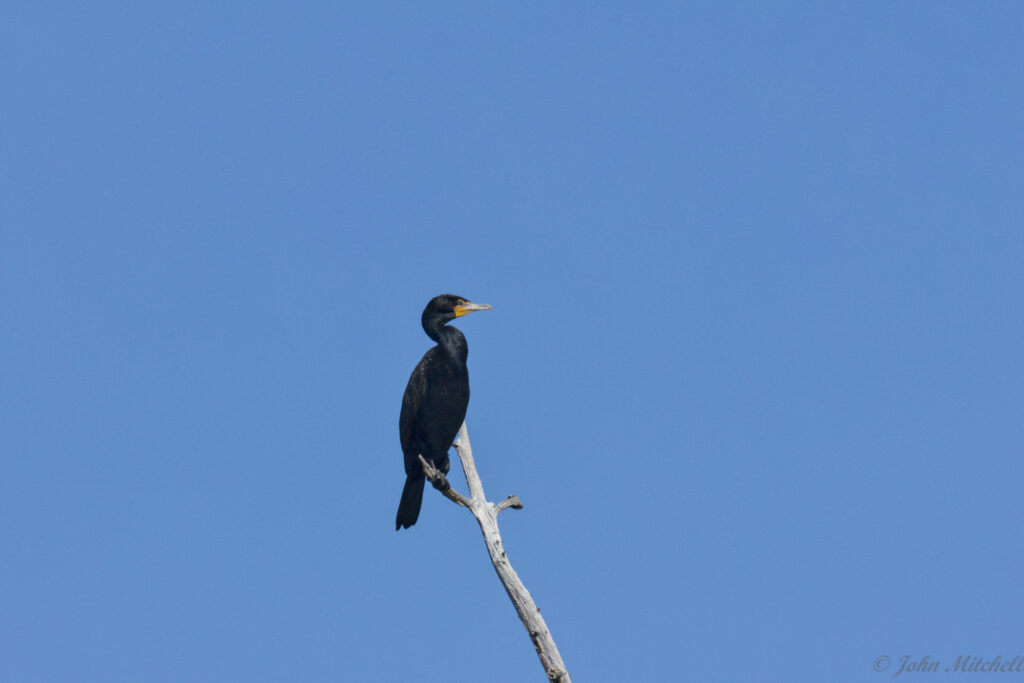
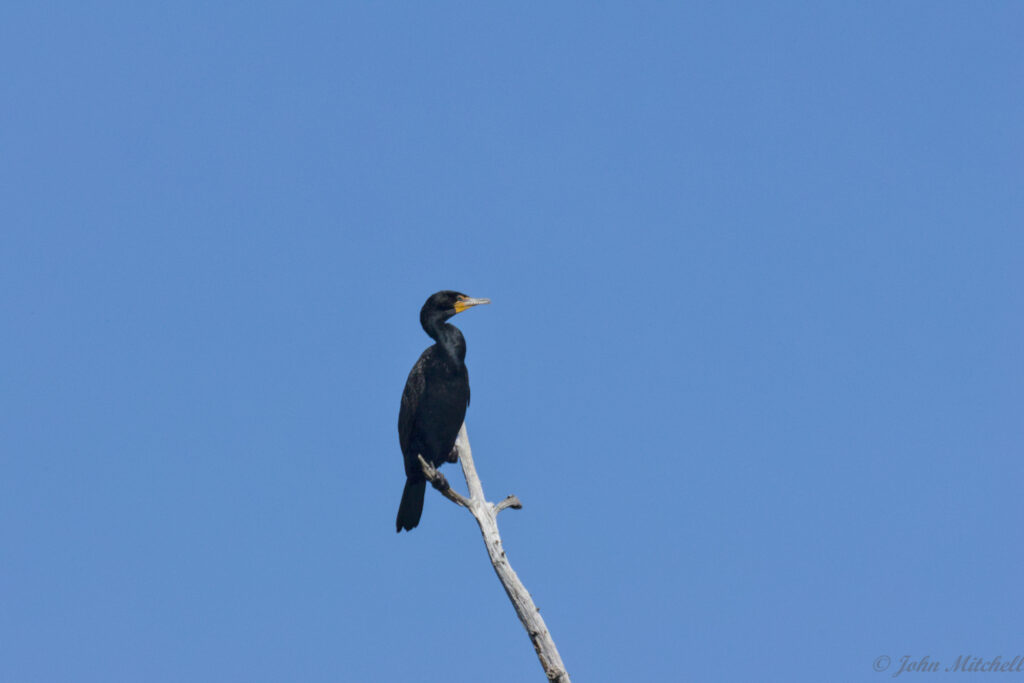
After the beach, we stopped in the marina store; Kate posted about that separately. On the opposite side of the store was a pier for fishermen to park their boats. Off the end of the pier was a tree with a single Double-crested Cormorant. This one was all black, so that should mean it is male. You can see what looks like tufts of feathers starting to grown from his head. This might be the start (or end) of mating plumage.