
Three Rivers State Park, FL, April 2026
At Three Rivers State Park, the campground loop is not very big. It only has 31 campsites, and that might include the ones used by the camp hosts. It is on (an alligator infested) Lake Seminole. The hosts warn you that there is no swimming in the lake, and do not allow small children or animals near the shore.
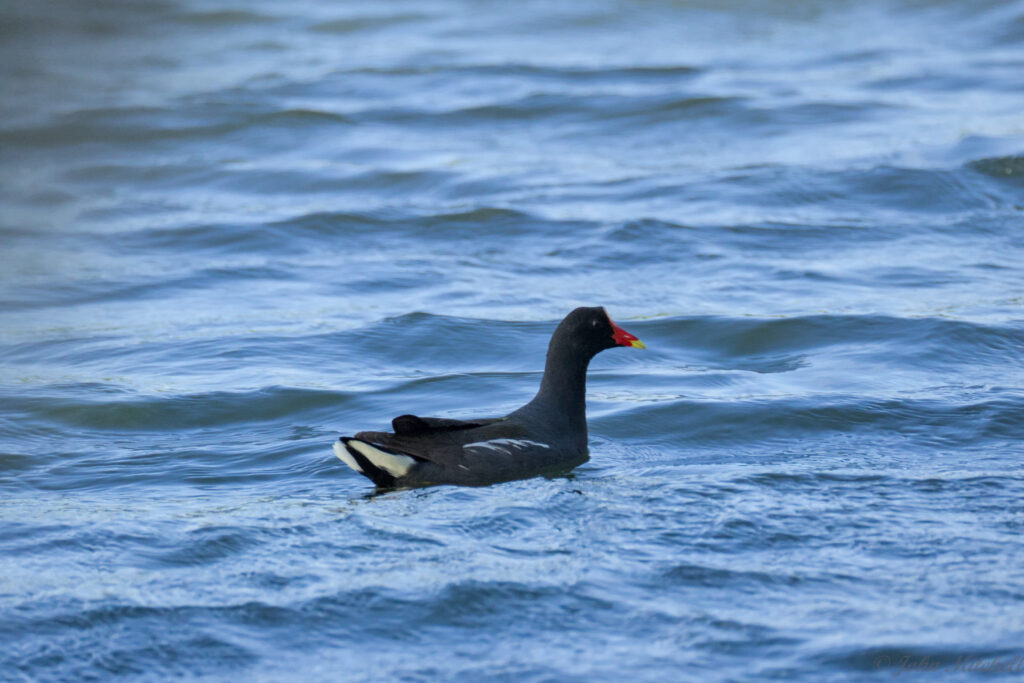
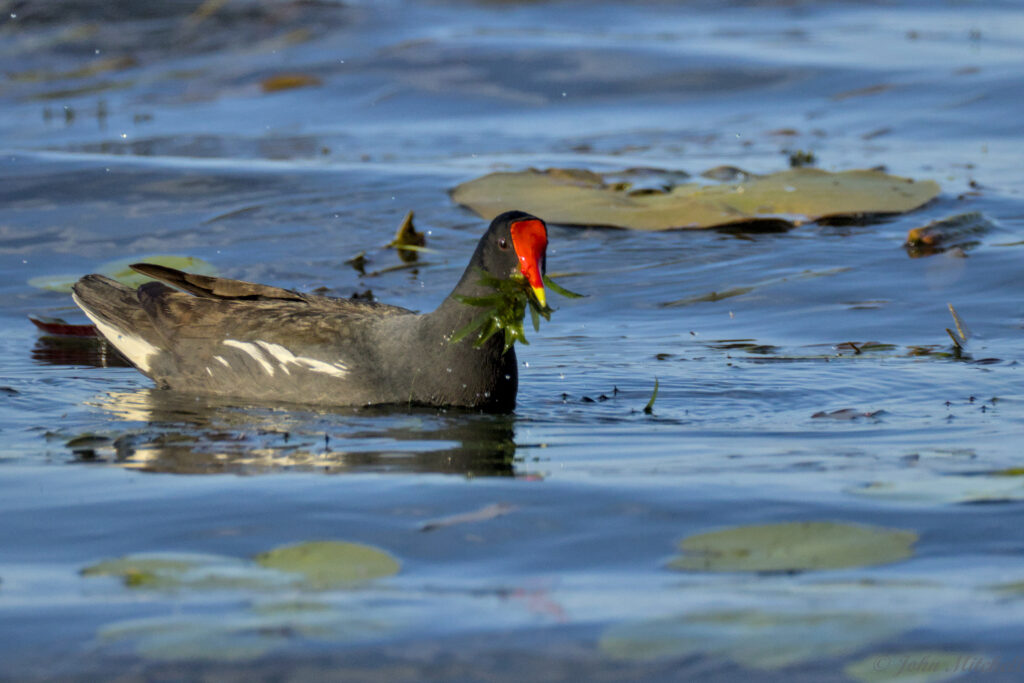
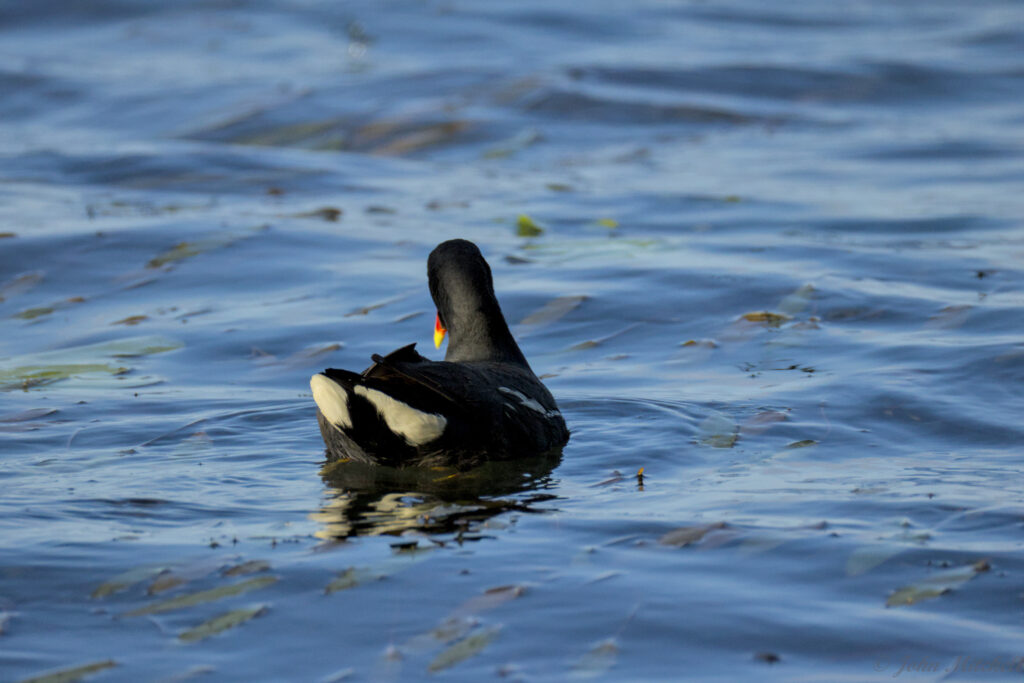
Since it is a small campground, us large children can get to the shore pretty quickly. We walked the shore and pier a few times since arriving, but we did not see anything new. Today, we ran across a few new things. Kate pulled out the Merlin Bird App, and we found out that they have Boat-tailed Grackles here along with Common Grackles. While looking for their distinct V-shaped tails, we saw something in the water that looked like an American Coot, but it had a red beak and white butt. We ran (OK, walked briskly) back to the RV to get the camera and scope.
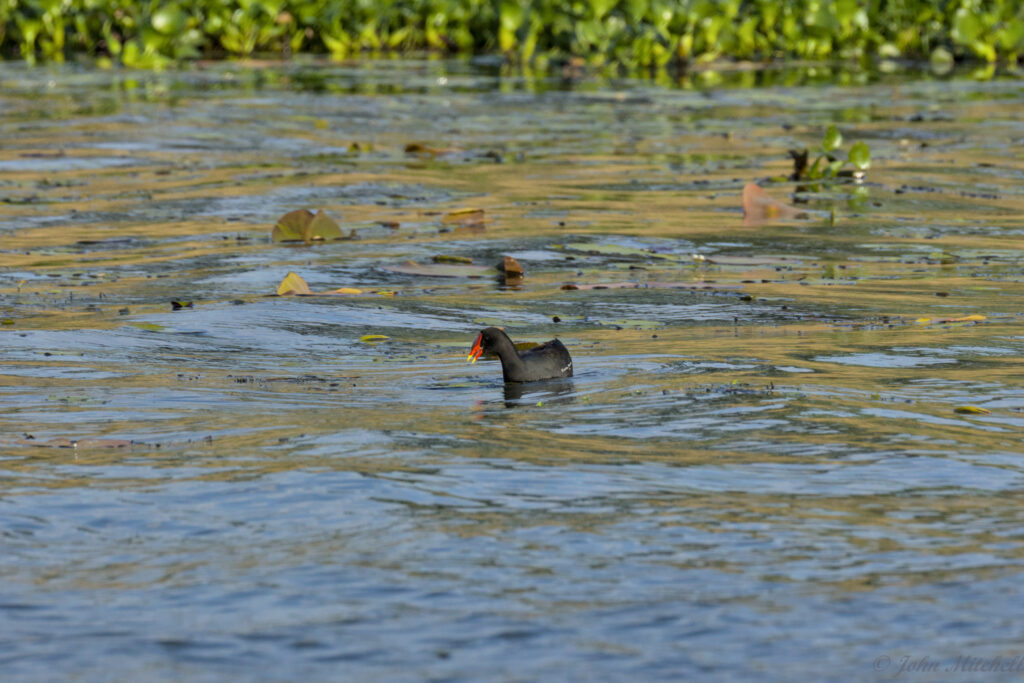
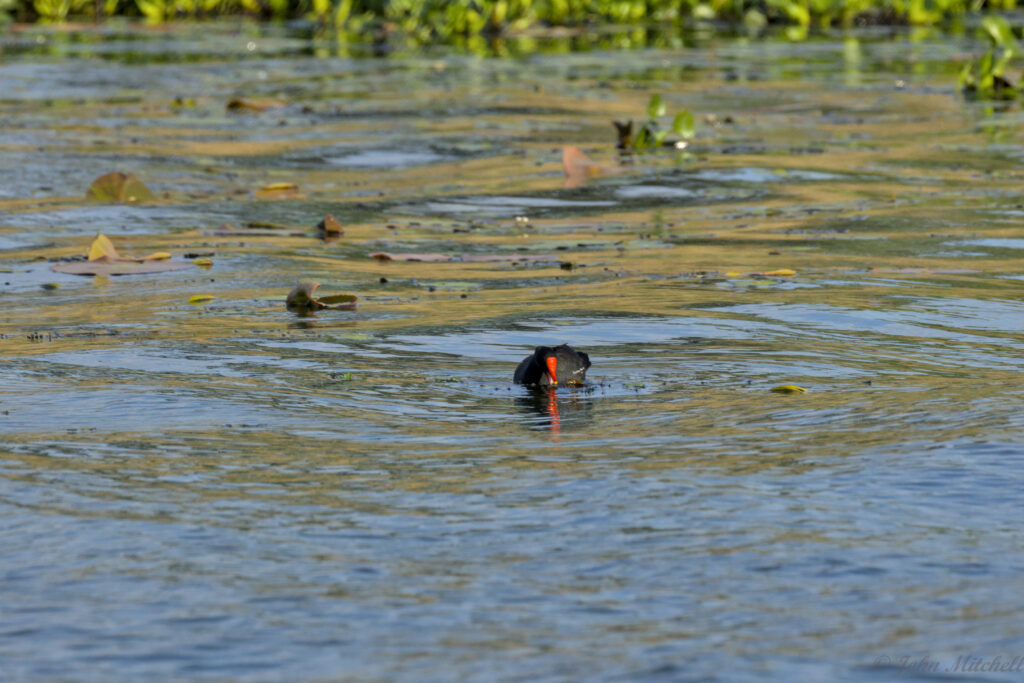
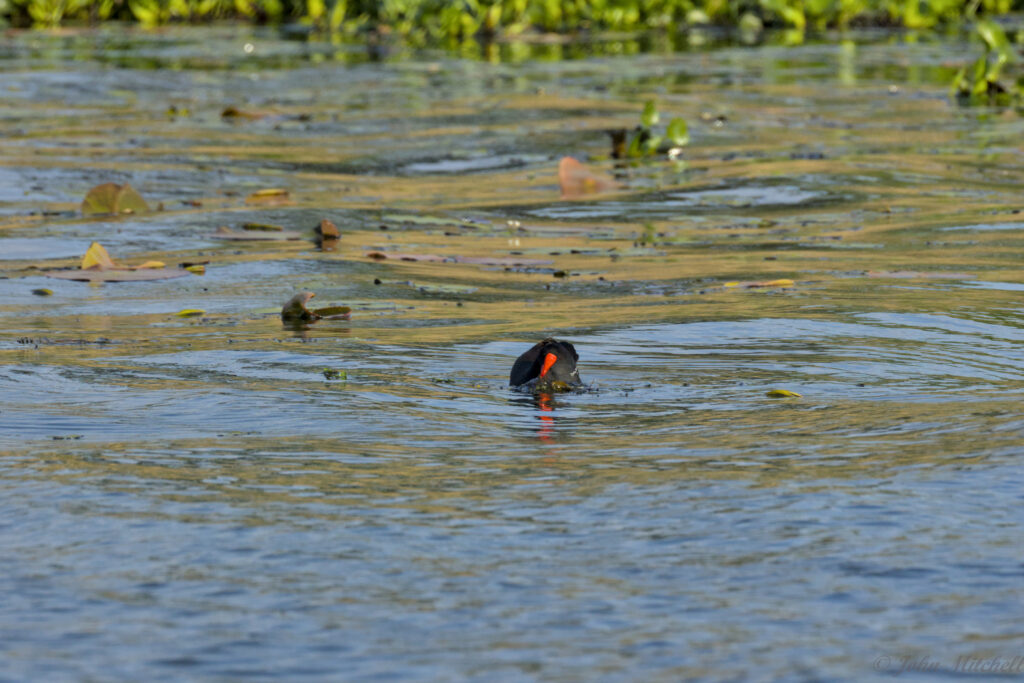
We tried to get a picture of the bird, but it fled in terror at our approach. John stayed there waiting for it to return, and Kate went to another area. Like many humans, it has a very small brain and returned shortly. This is what we saw.
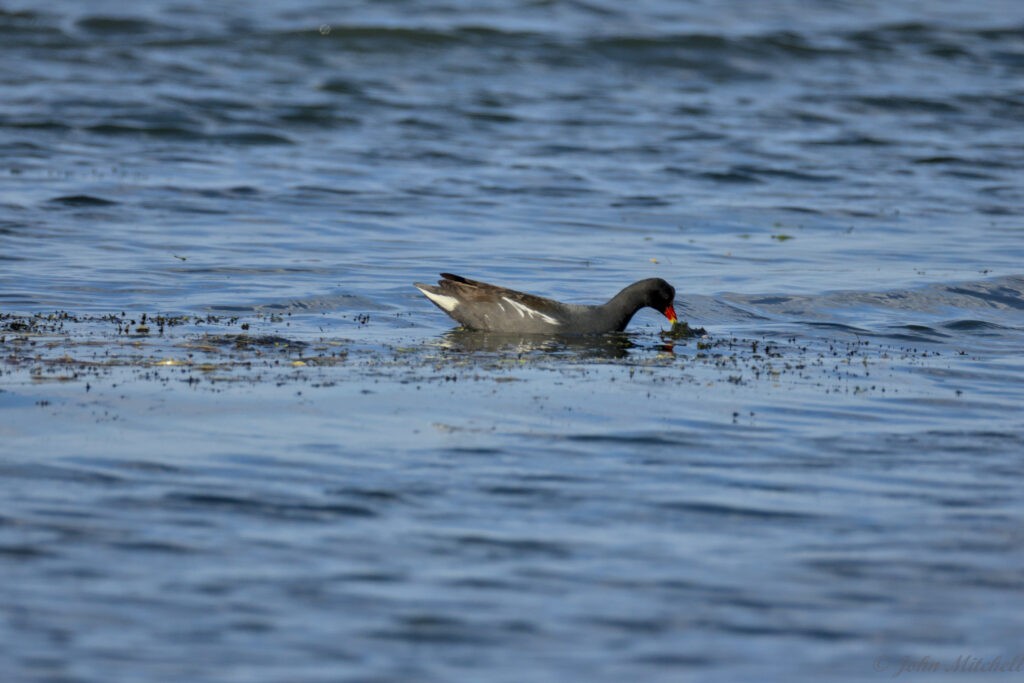
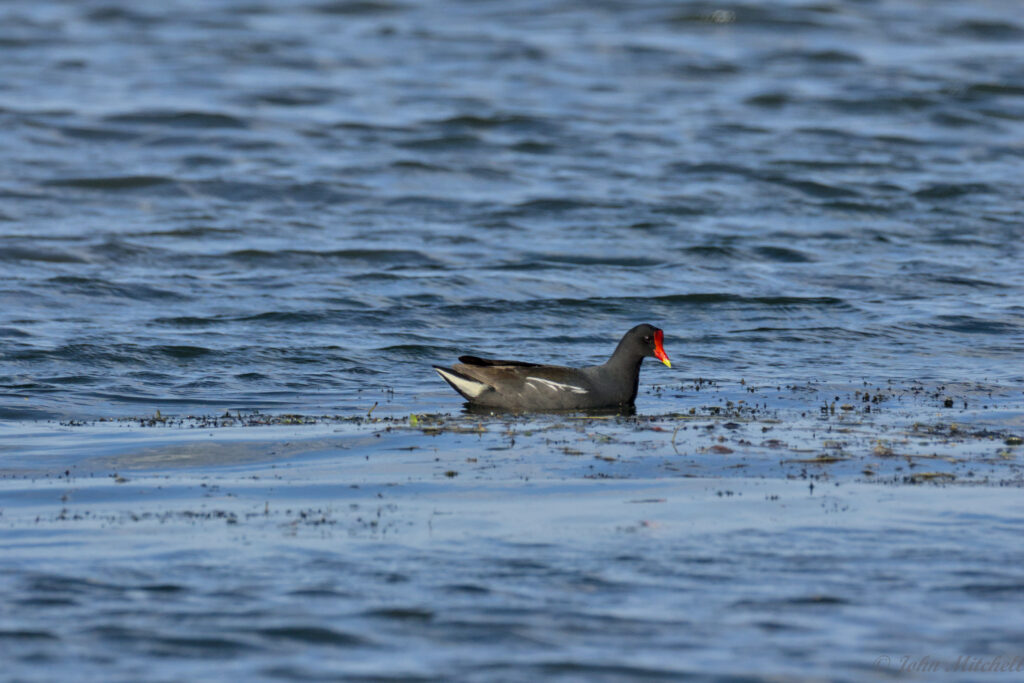
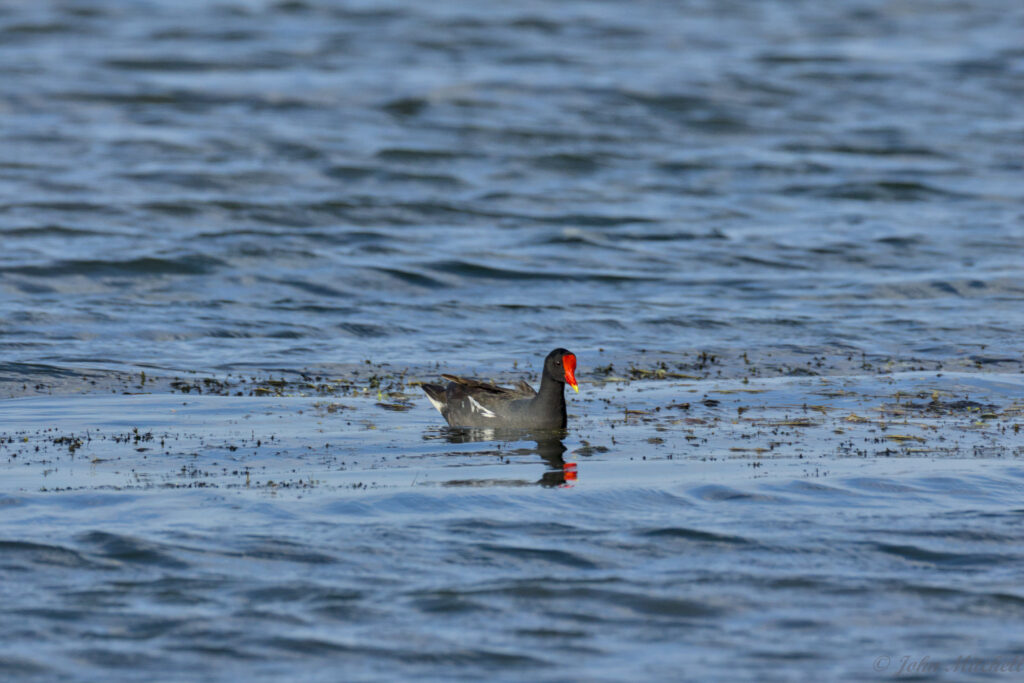
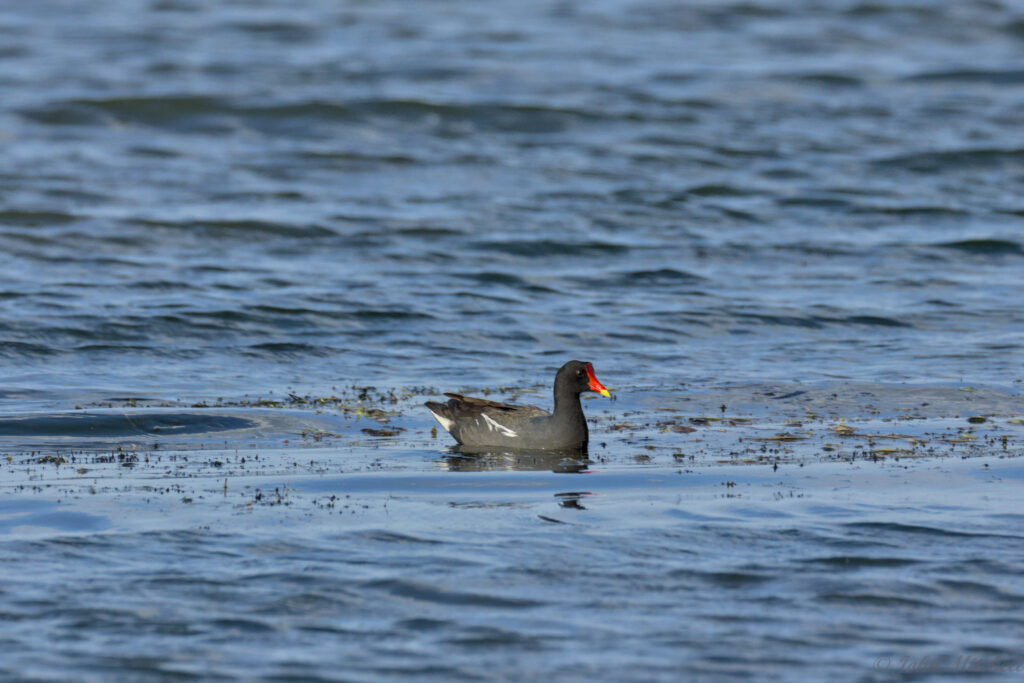
You might think it is a Common Moorehen, but you are wrong, as of 2011.
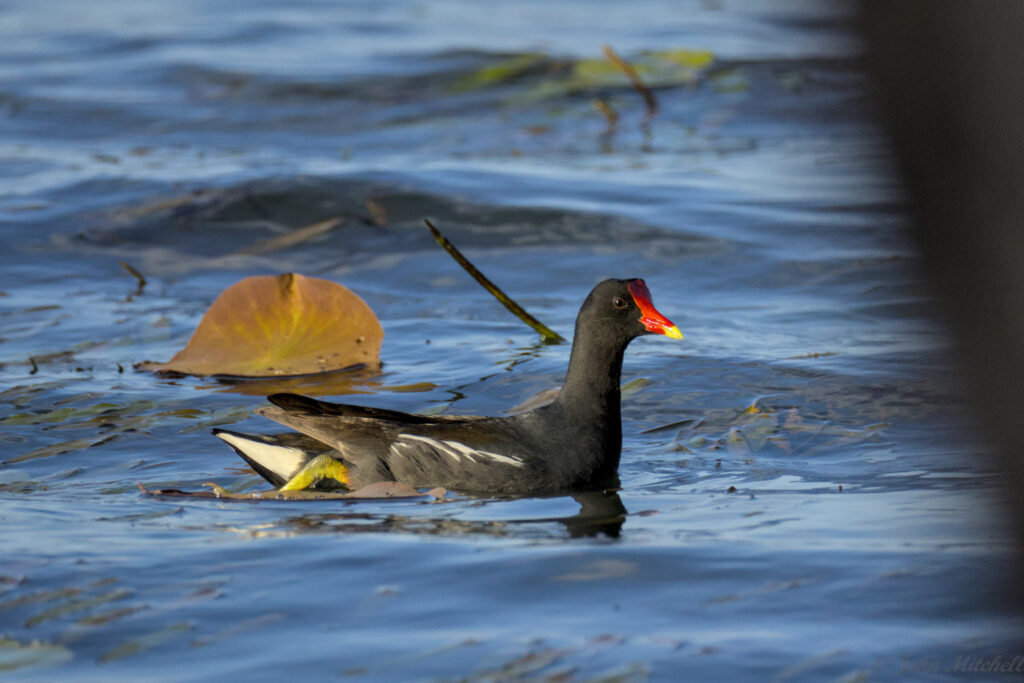
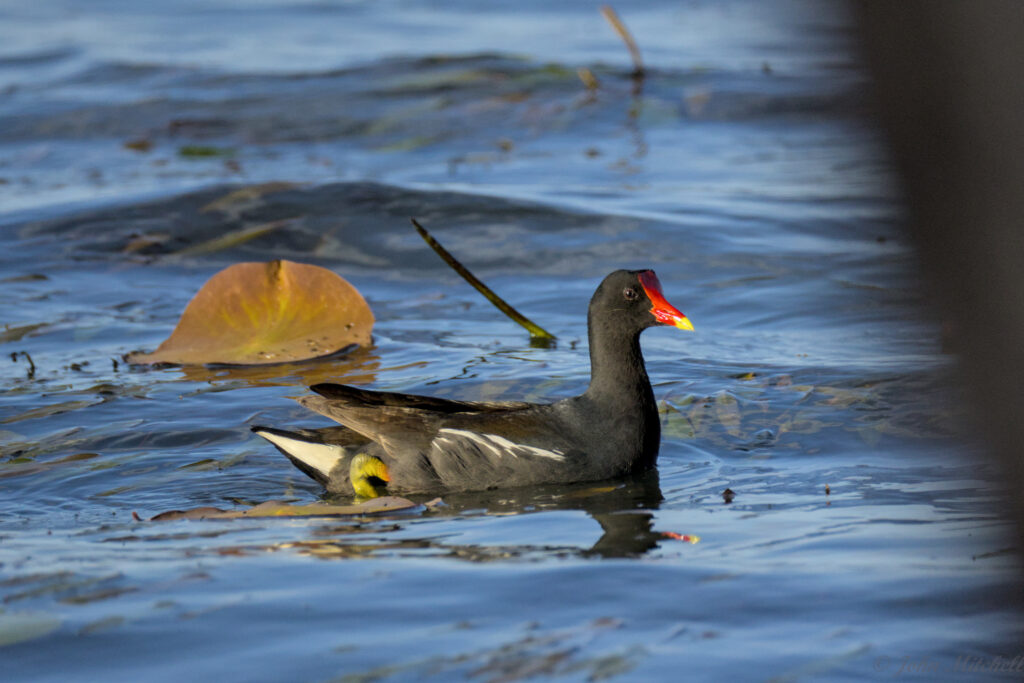
In 2011, they separated the New World (American) and Old World (Europe/Asia/Africa) into two species. Over there, they have the Common Moorehen. Over here, we have the Common Gallinule. Do not blame us; Blame the scientist. Apparently, there is almost nothing to visually distinguish them; it is solely based on location. If you take a Common Gallinule to Europe on vacation for a week; it becomes a Common Moorehen for a week.
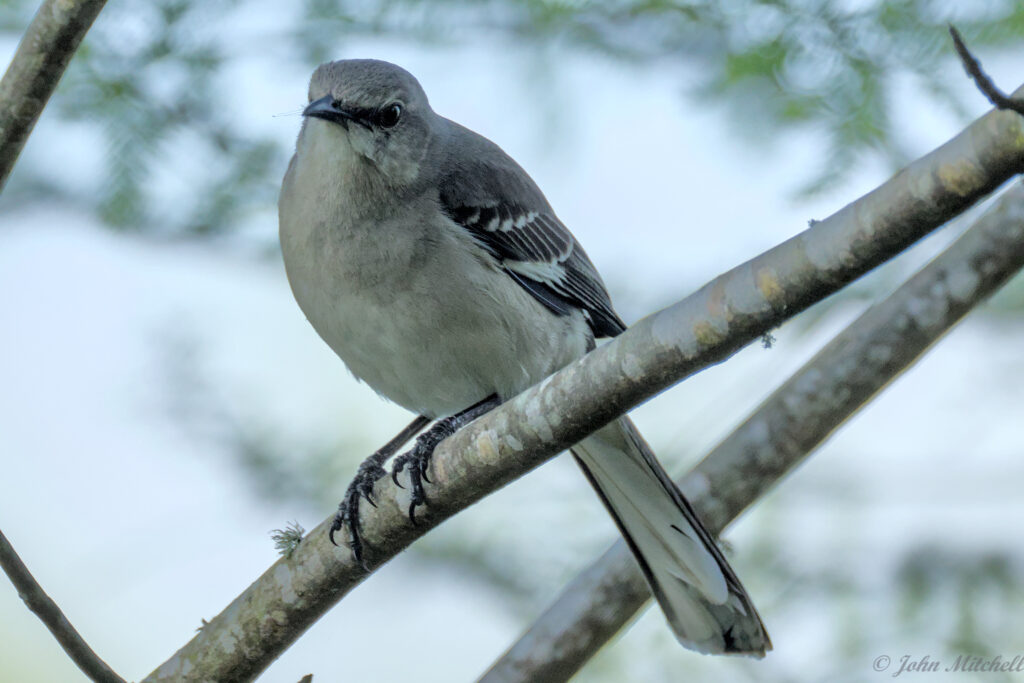
Kate saw some in her area. On the way over, one of the Northern Mockingbirds perch on a branch. The mockingbirds and grackles are only mildly wary of the campers.
We took more pictures of the not Moorehen over there too.
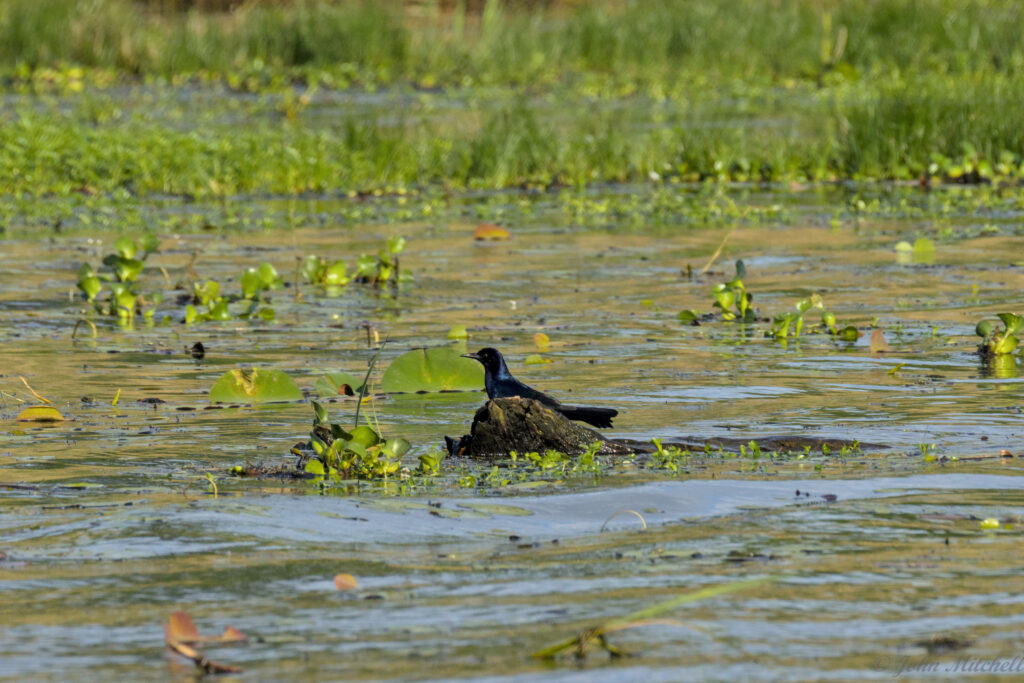
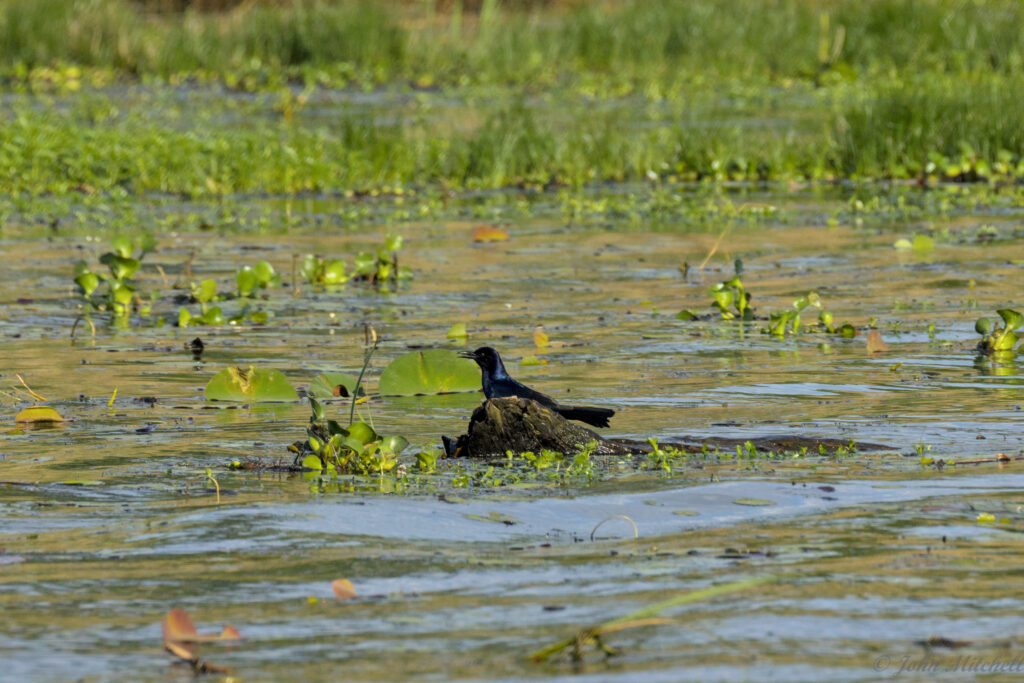
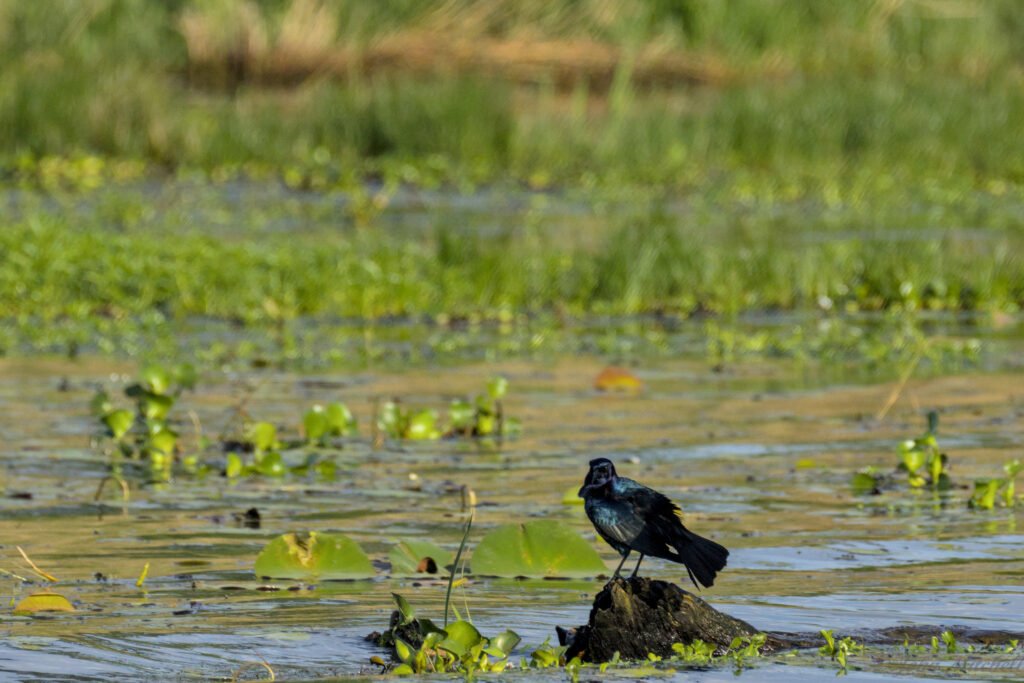
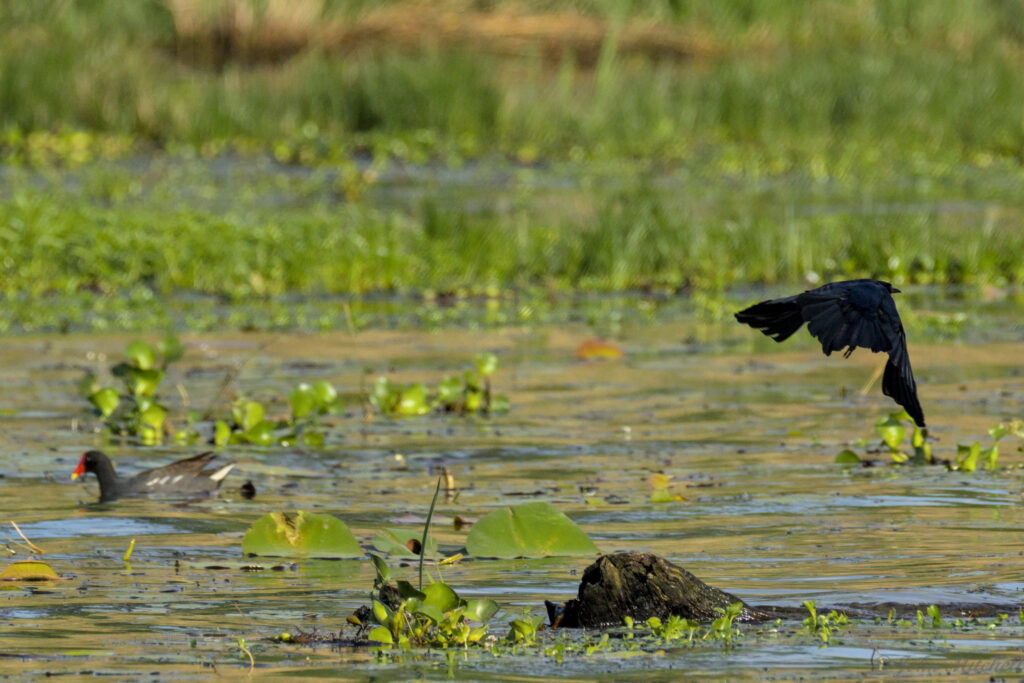
A Boat-tailed Grackle landed on a floating log to take a bath. We waited about five minutes focused on him to try to get a picture of the V-tail. You can see a blue/purple sheen on this bird instead of the blue/green sheen of the Common Grackle. In the last picture, you can see the tail dip in the middle to make a “V”.
The first Common Gallinule was passing in and out of view through the reeds.
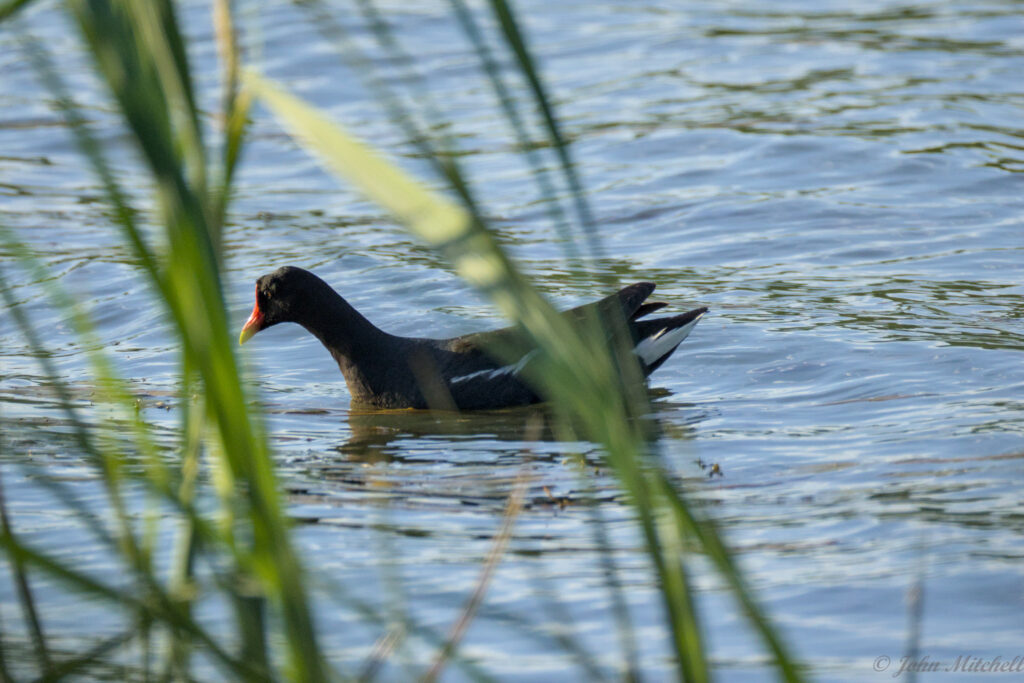
While it was behind the reeds, a Red-winged Blackbird and a brown bird were in the reeds.
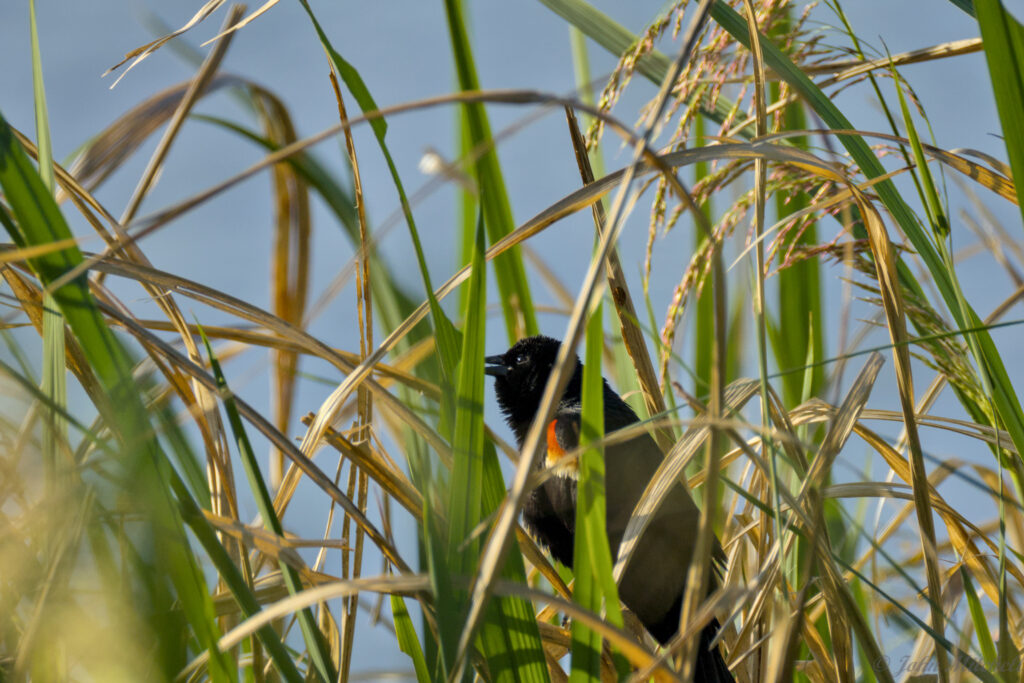
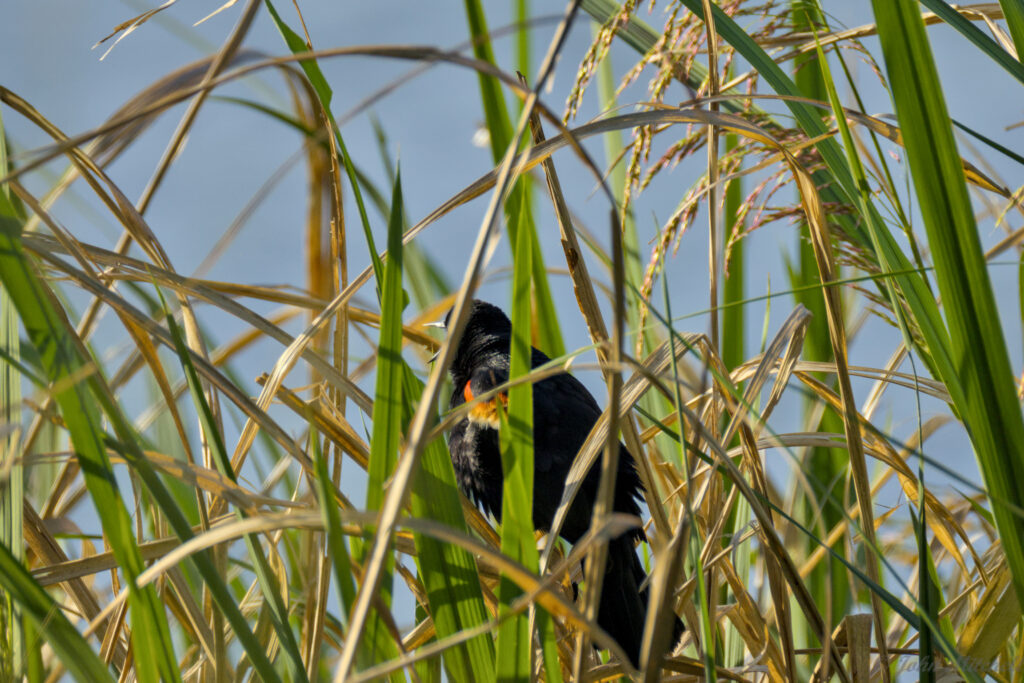
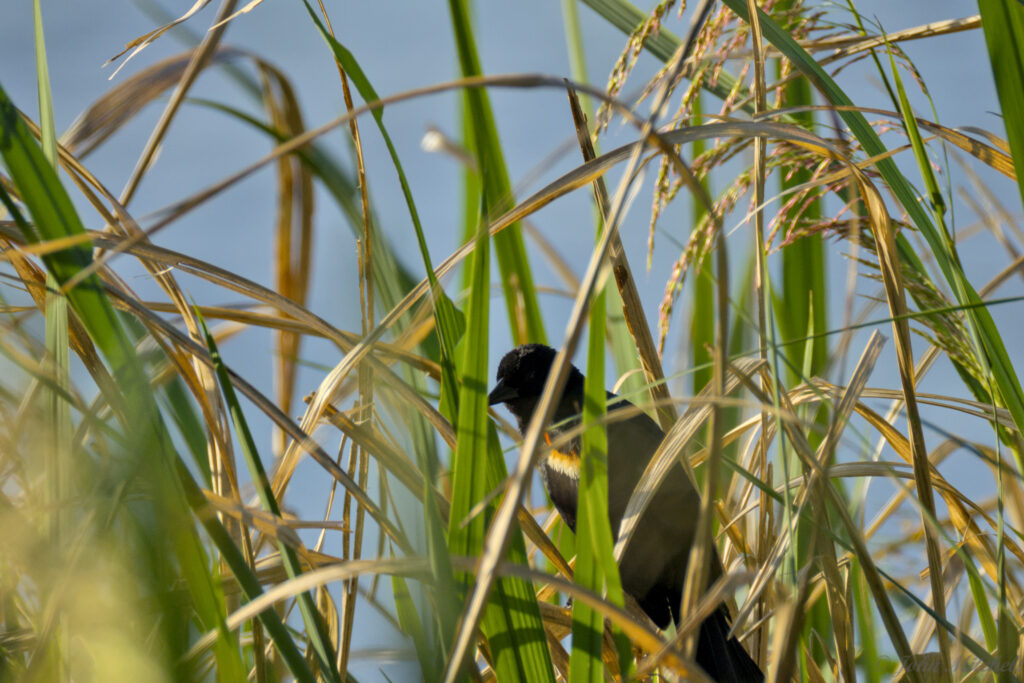
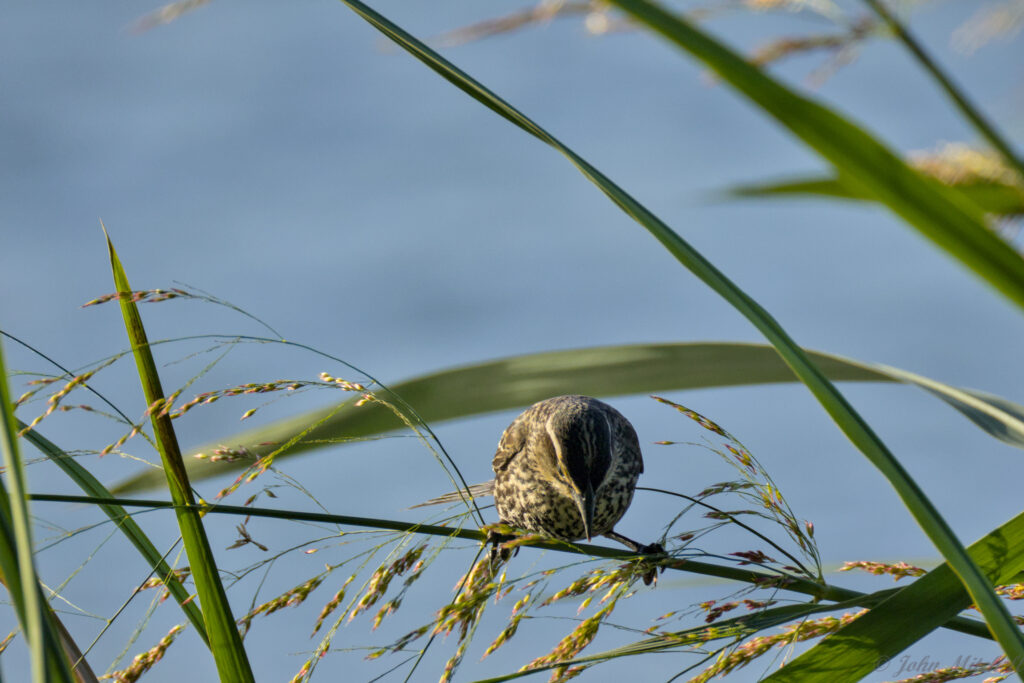
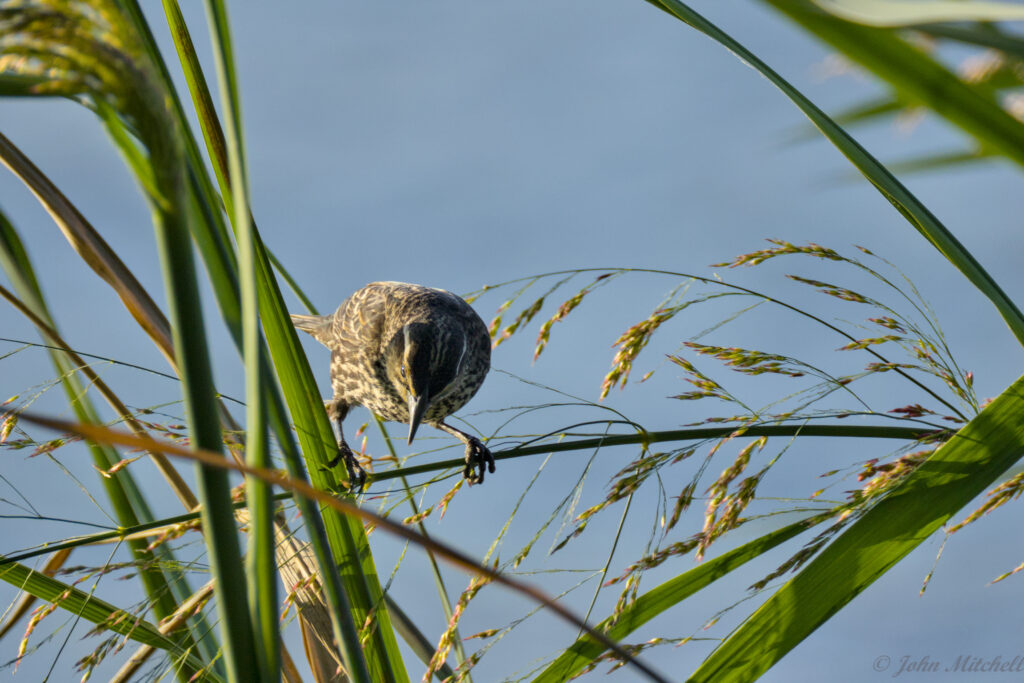
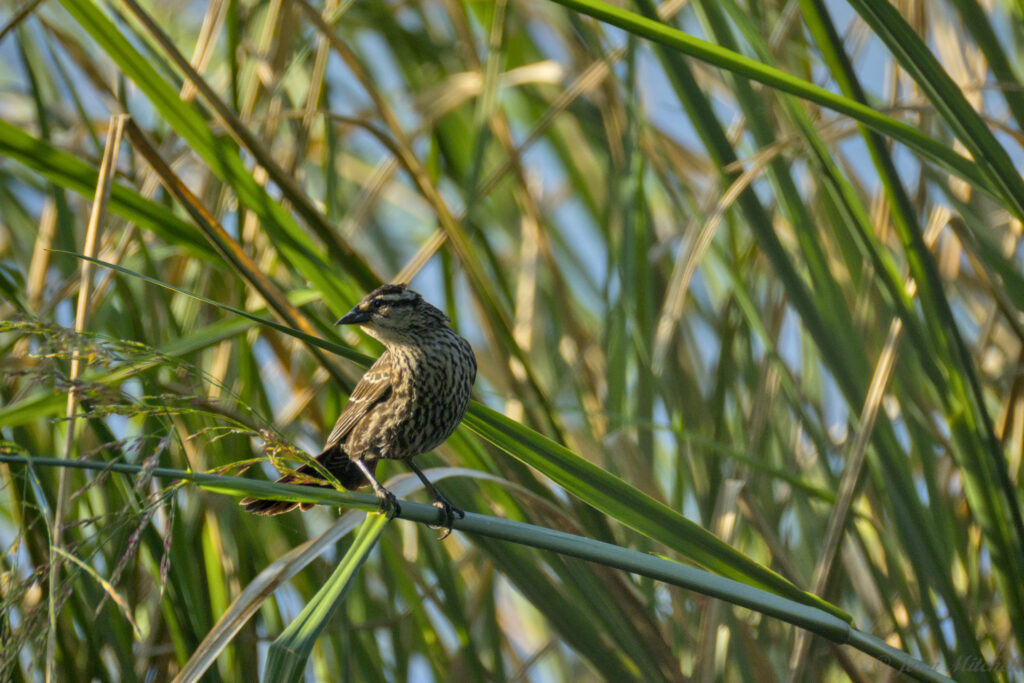
John spent quite a bit of time at a few places trying to get a picture of a female Red-winged Blackbird. It is not a new bird, but it is a female variant to add to the bird catalog.
And the Common Gallinule came out of the reeds at the closest point at about 20 feet away.
At this point, we were covered in gnats and more interested in escape than birds.