
Mentor, OH, June 2026
The second stop of the day, after eating fried hand pies … are those pies filled with hands and fried? Pies filled with fried hands? … Both of those sound painful and disgusting … filled, fried, and glazed pies you hold in your hand, was the Garfield House. John was very excited to see where that fat, mean, orange, and loving cartoon cat was conceived. Sadly, it turned out to be the James A. Garfield National Historic Site.
James A. Garfield was the 21st President of the United States, and the second president to be assassinated. There have been four Presidents assassinated -Lincoln, Garfield, McKinley, and Kennedy. Interestingly, we have visited sites dedicated to three of those – Lincoln, Garfield, and McKinley. We have been to the other two memorials, but not the Garfield memorial. There have been eighteen major assassination attempts on presidents. At least we know that people have been crazy for at least 200 years.
As you drive in, you see a swanky house, smaller building, stone tower, and a few more buildings near the parking lot. In total, there are about ten buildings. As you walk towards the visitor center, there are multiple signs and displays.
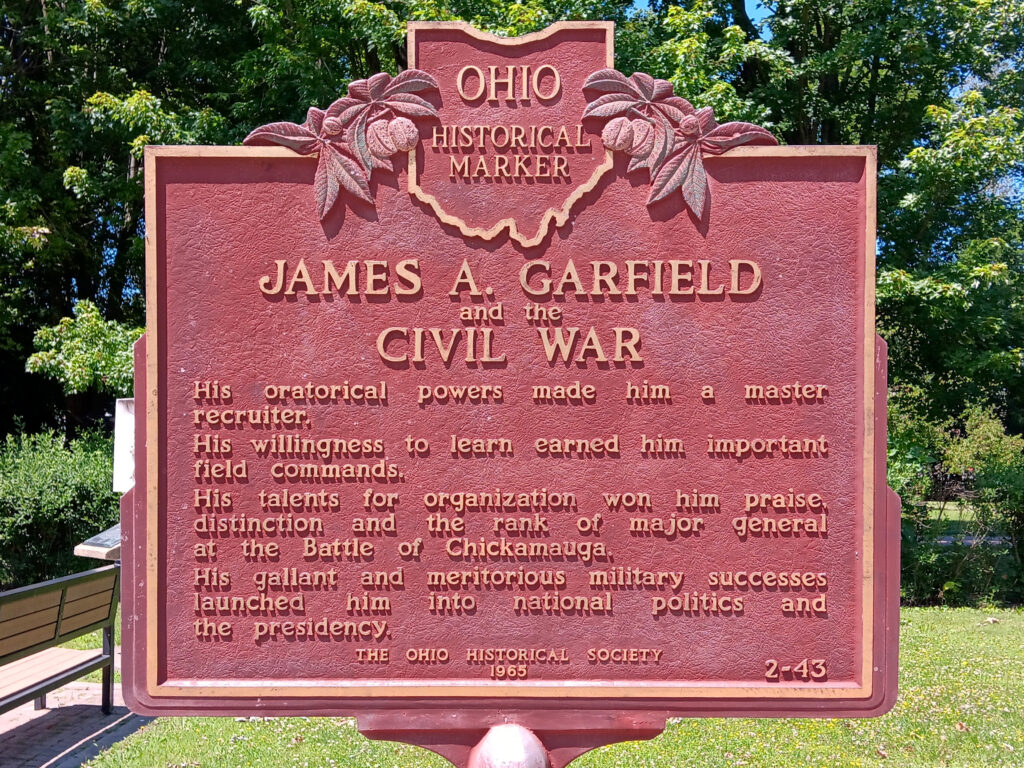
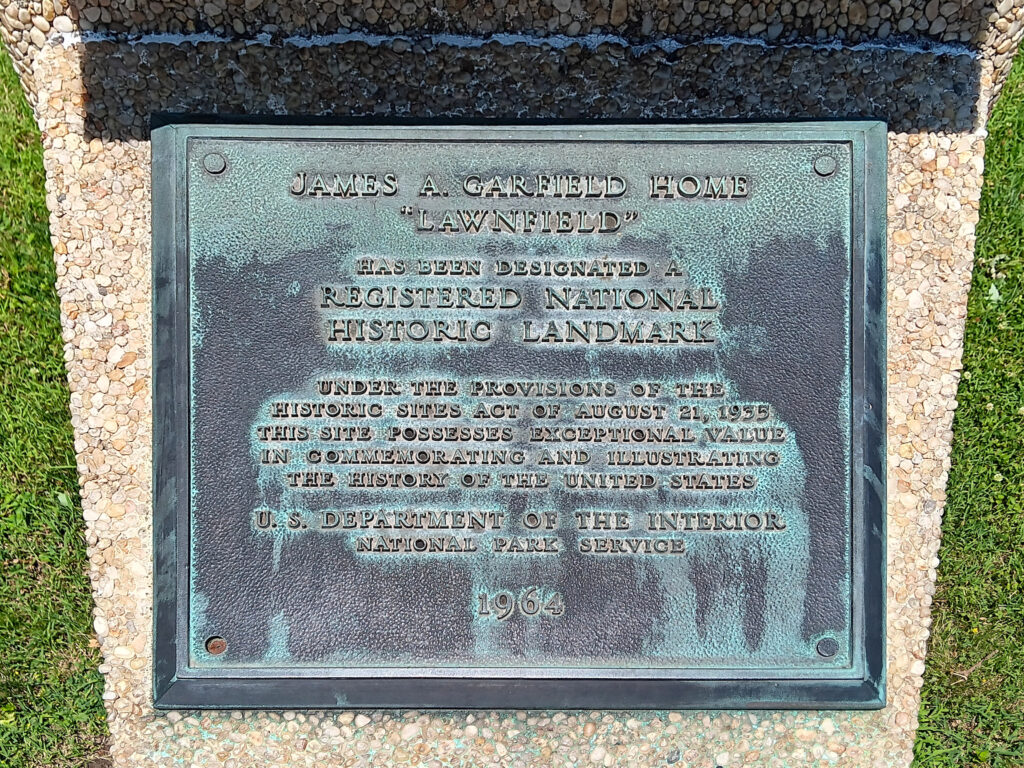
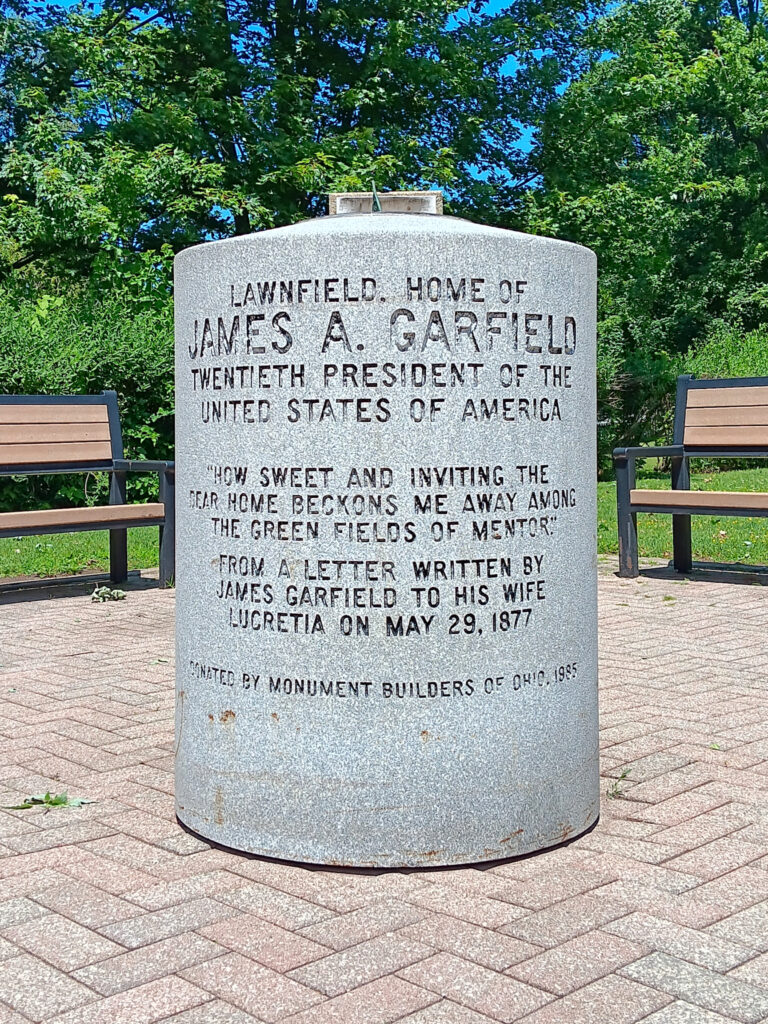
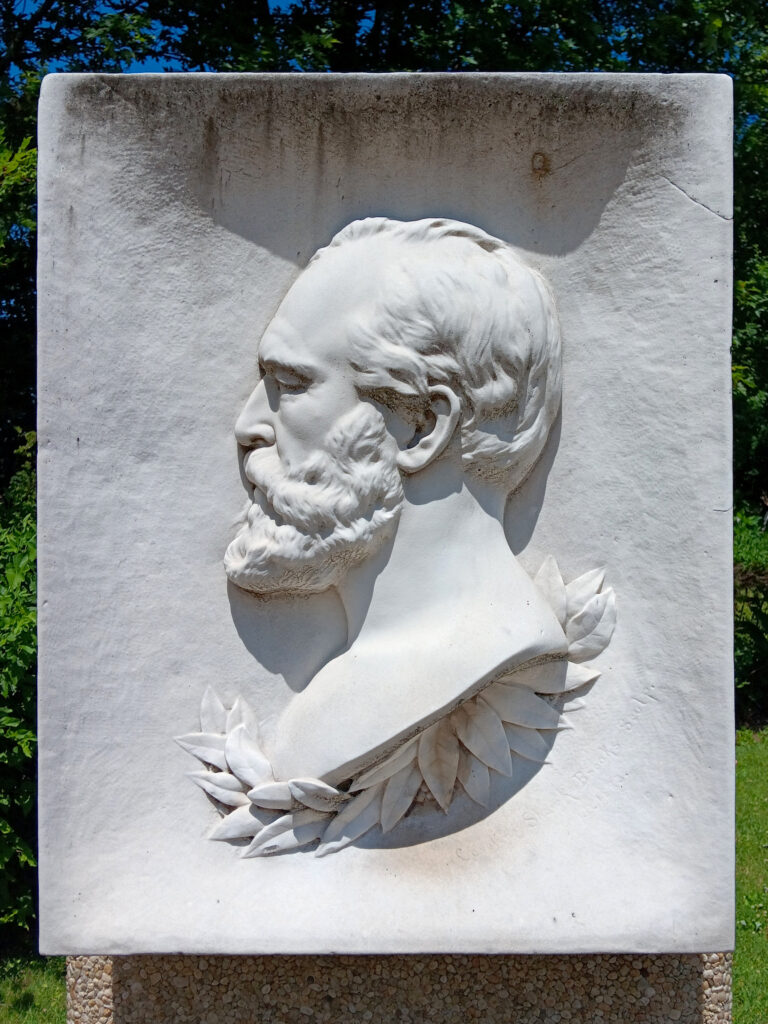
The concrete cylinder is actually a sundial. It clearly shows the time as …
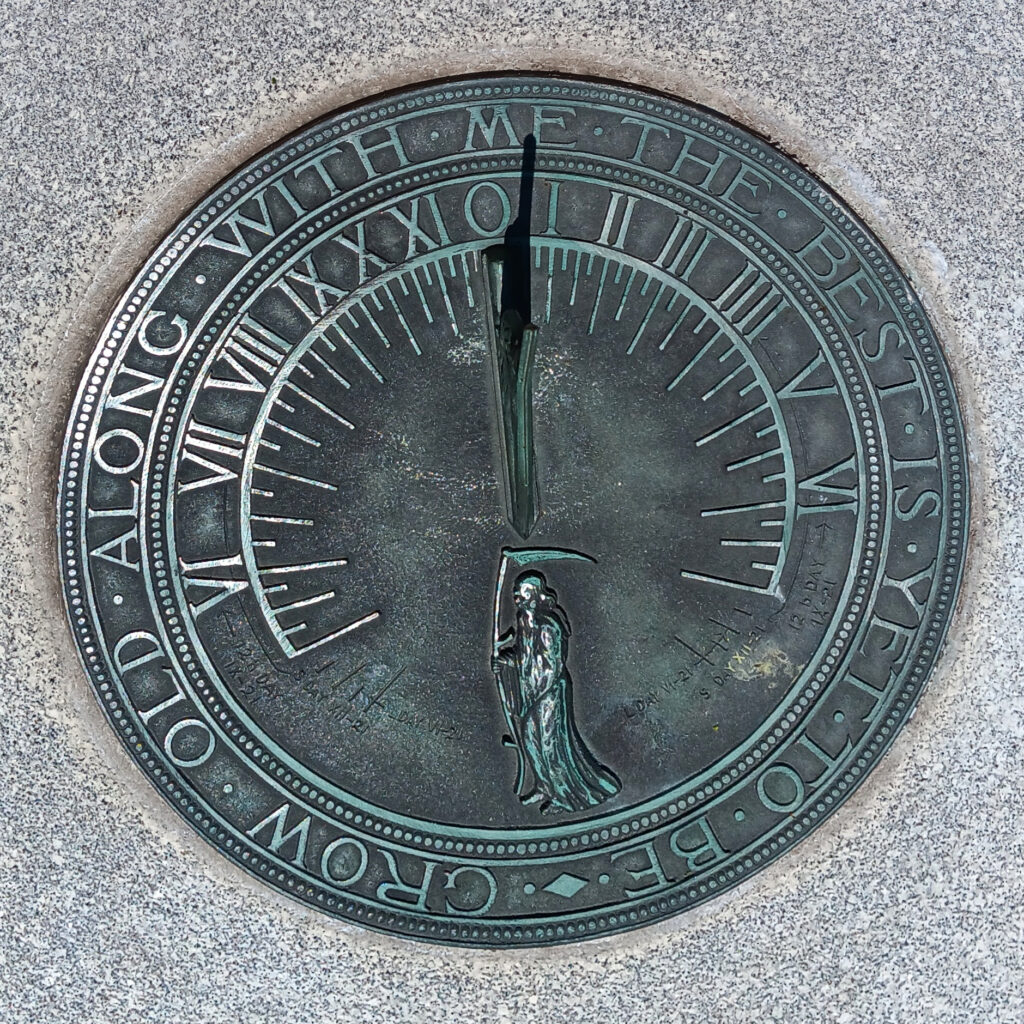
… uh … half past zero? There is no zero in roman numerals, so it must be broken. (In case you care, Romans used ‘nulla’, which is none, to represent zero.) Presumably, that is supposed to be the location for the 12, so it would be about 12:30. The photos show a timestamp starting at 12:20, so the sundial was set to the right time. This makes you wonder how they handle daylight savings for a sundial. If you think pushing a button on a modern clock is too hard for changing the time, imagine having to rotate that giant concrete cylinder 15 degrees for daylight savings!
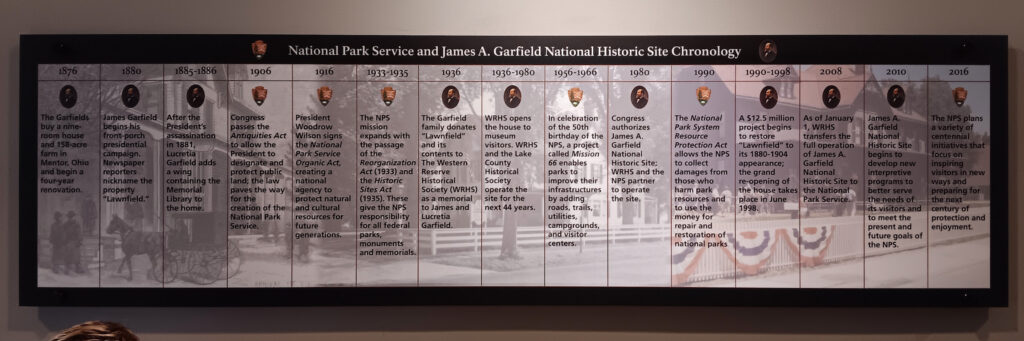
The visitor center was the first stop to get the cancel stamps. While Kate was stamping everything in sight, John wandered around taking pictures of the displays. The museum was on the small side, but the historic site has existed for nine decades, in some form. The display below shows the history.
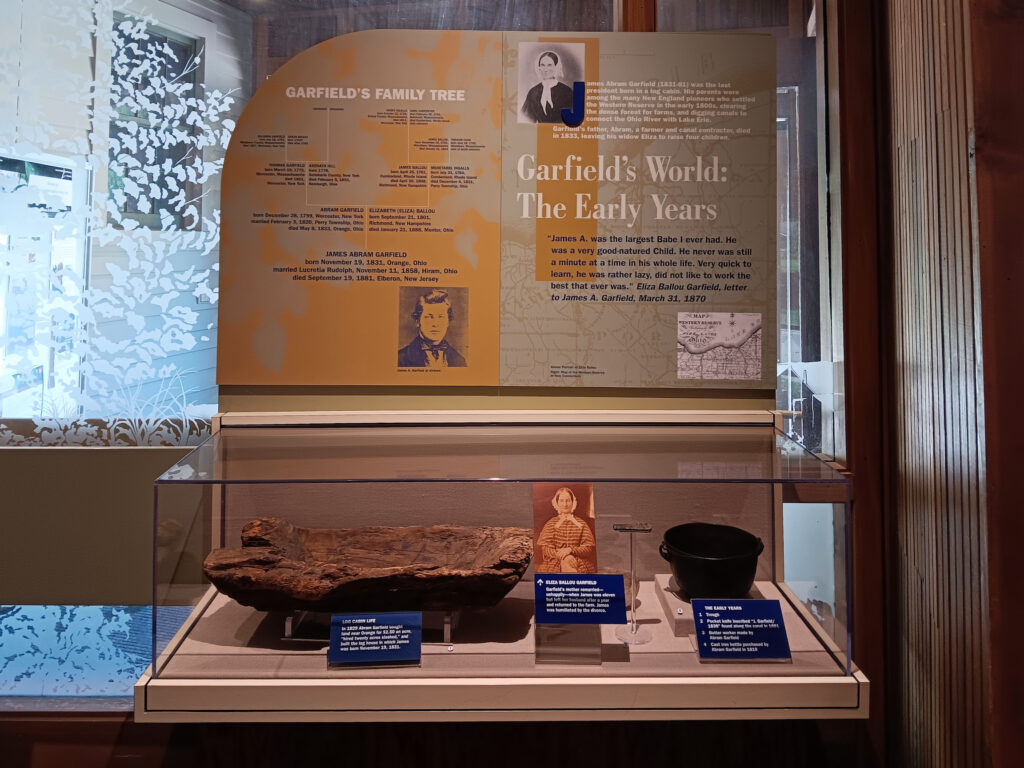
The path through the museum was not particularly clear. Across from the Garfield as a young man is the swearing into office display. We will try to piece it together in a somewhat chronological way.
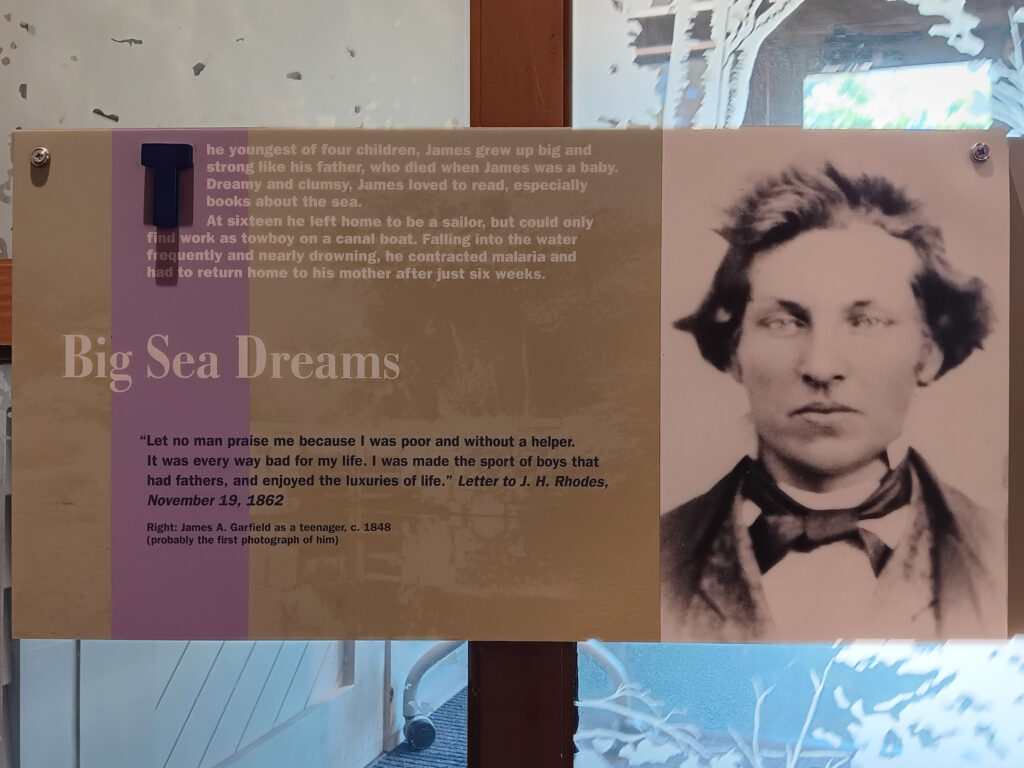
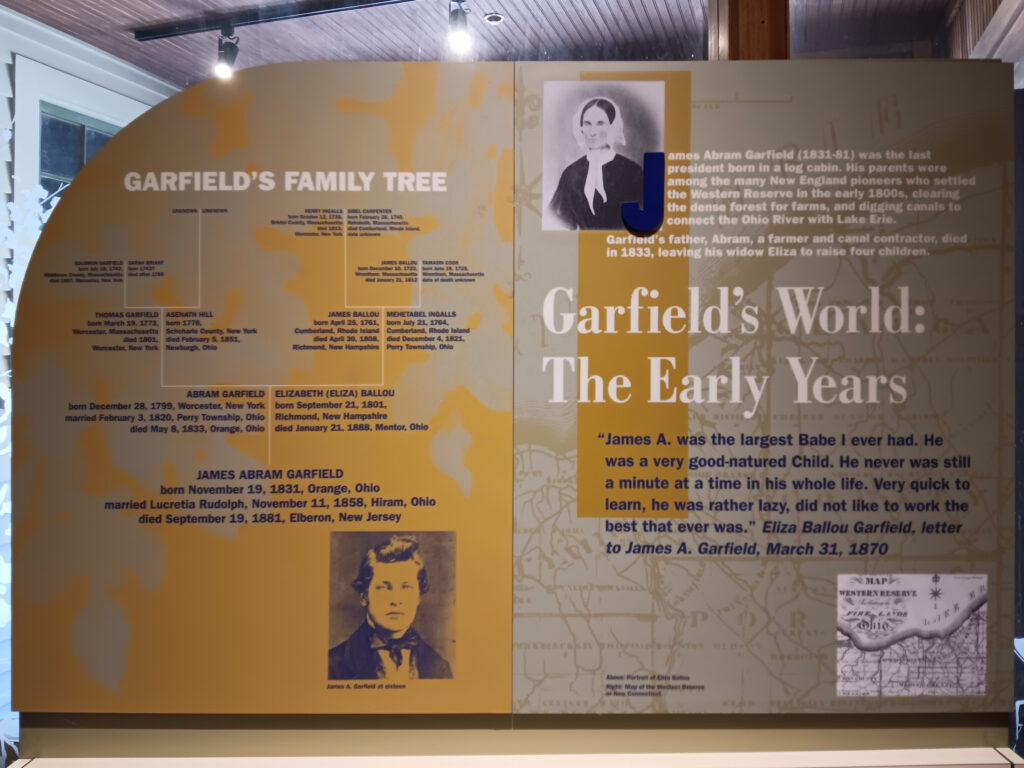
He was the last president born in a log cabin. When he was young, he had a hard life because he was poor and his father died when he was a baby. He was a big man, but he was lazy. He dreamed of going to sea, but he was also clumsy. He got work on a canal, but he fell in and almost drown multiple times.
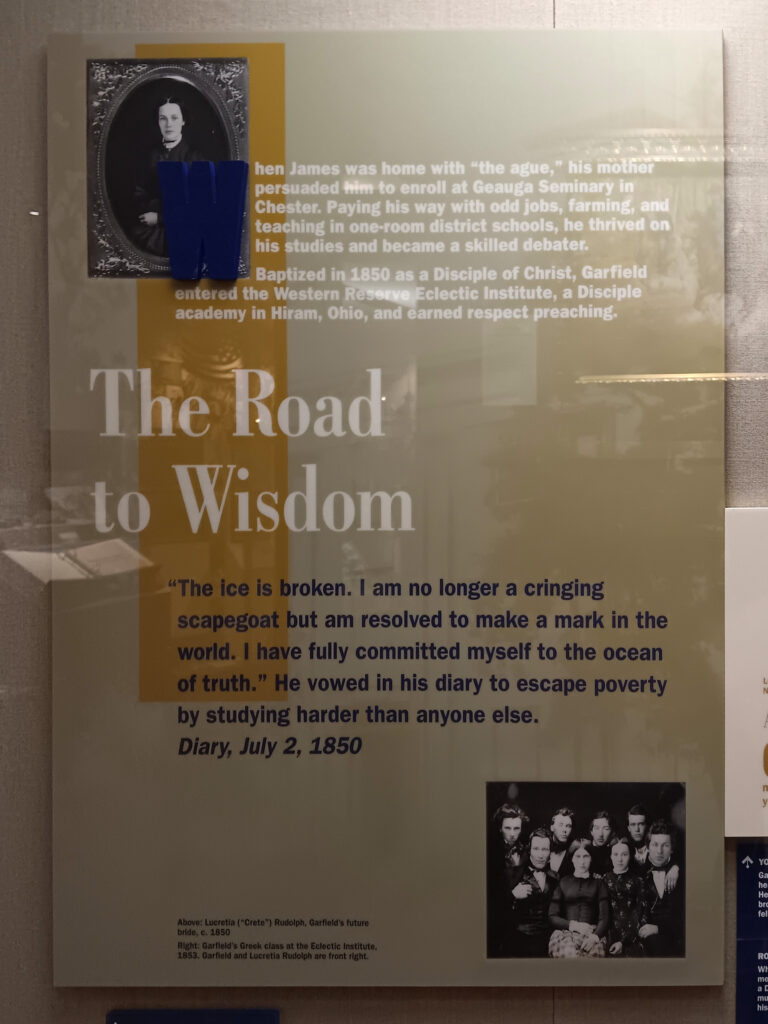
He went to school at a seminary, and he found he was skilled at debating. He later moved on to the Western Reserve Eclectic Institute in Hiram, OH. This institute is a historic site along the Garfield Trail.
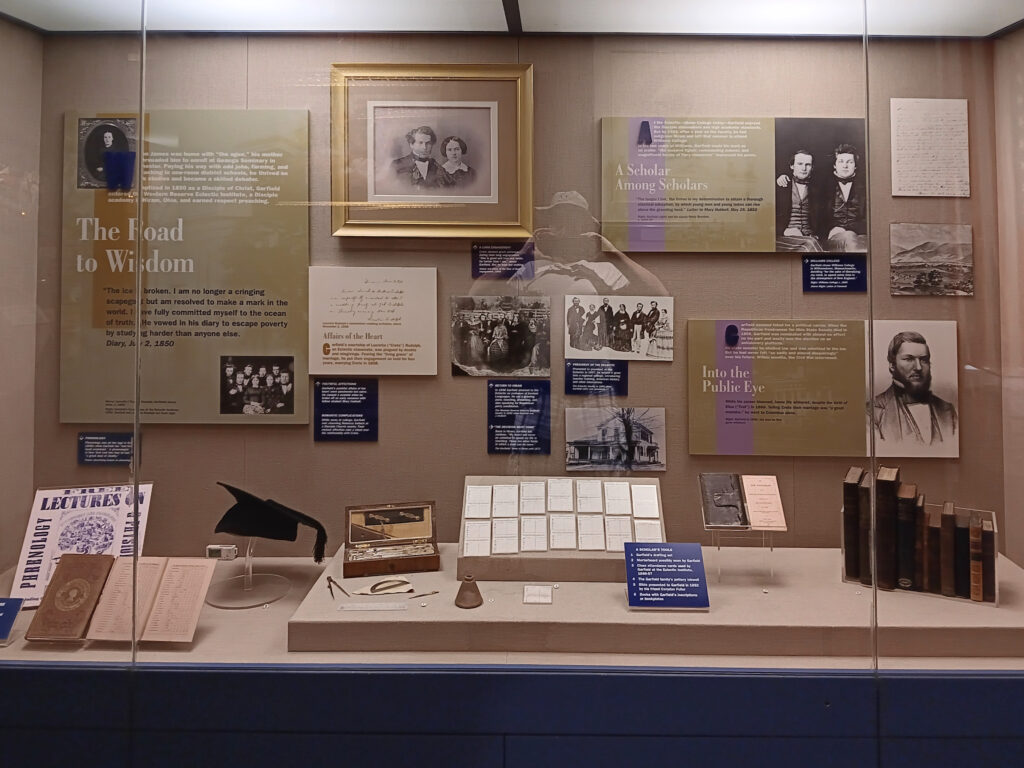
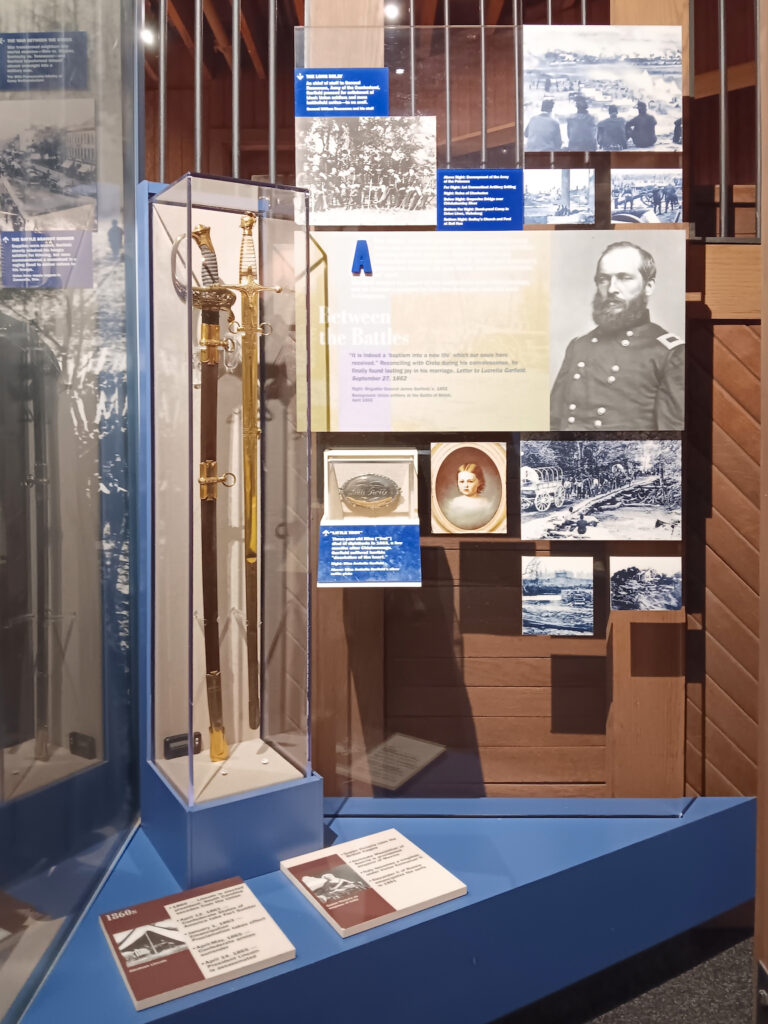
During the civil war, he joined the military, and he quickly rose through the ranks. In 1961, He organized the 42nd Ohio volunteer militia, and he was commissioned as its colonel. By 1963, he was raised to the rank of Major General due to distinguishing himself at the Battle of Chickamauga.
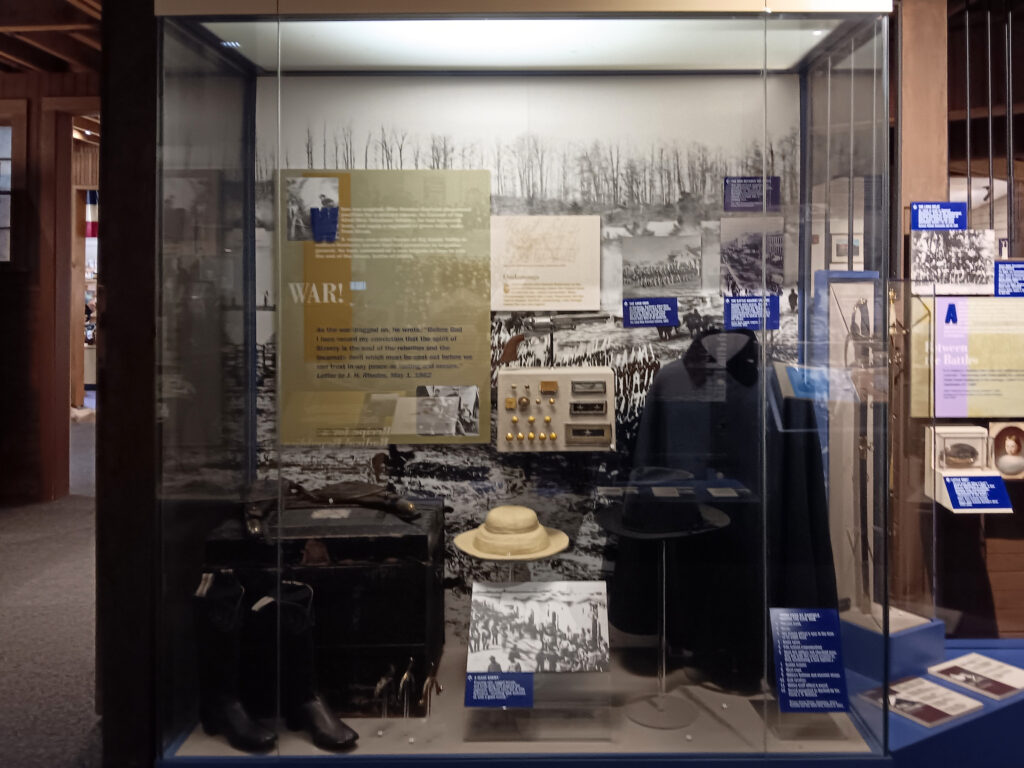
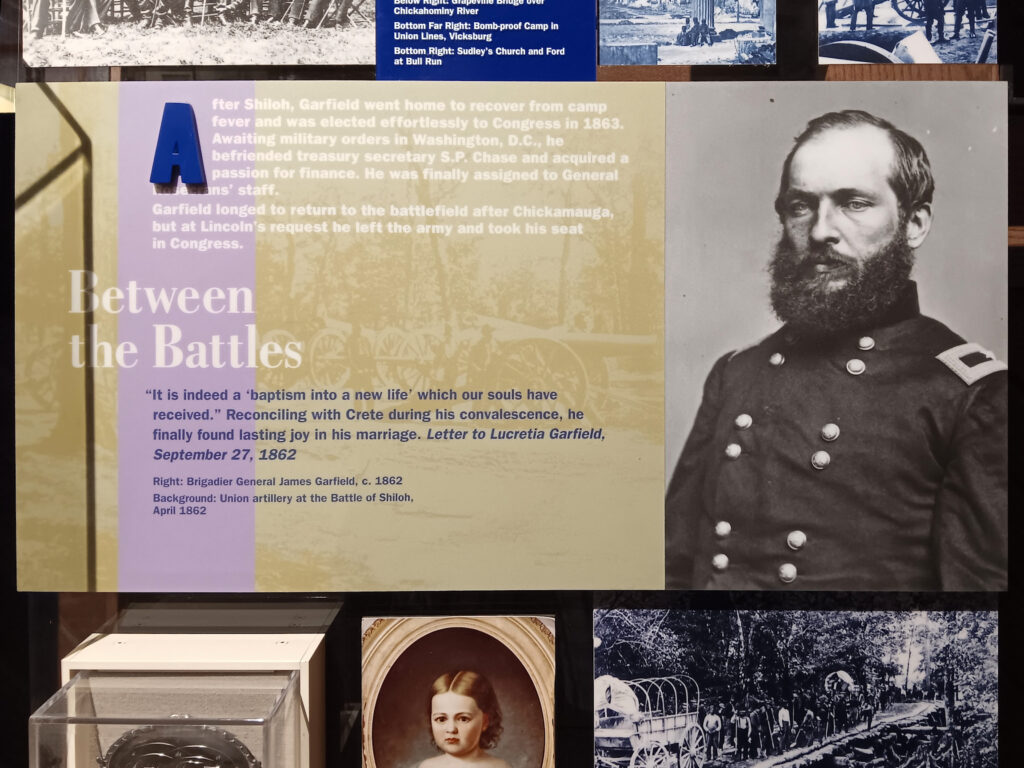
After being sent home to recover from camp fever, he was encouraged by Lincoln to join Congress instead of returning to the war.
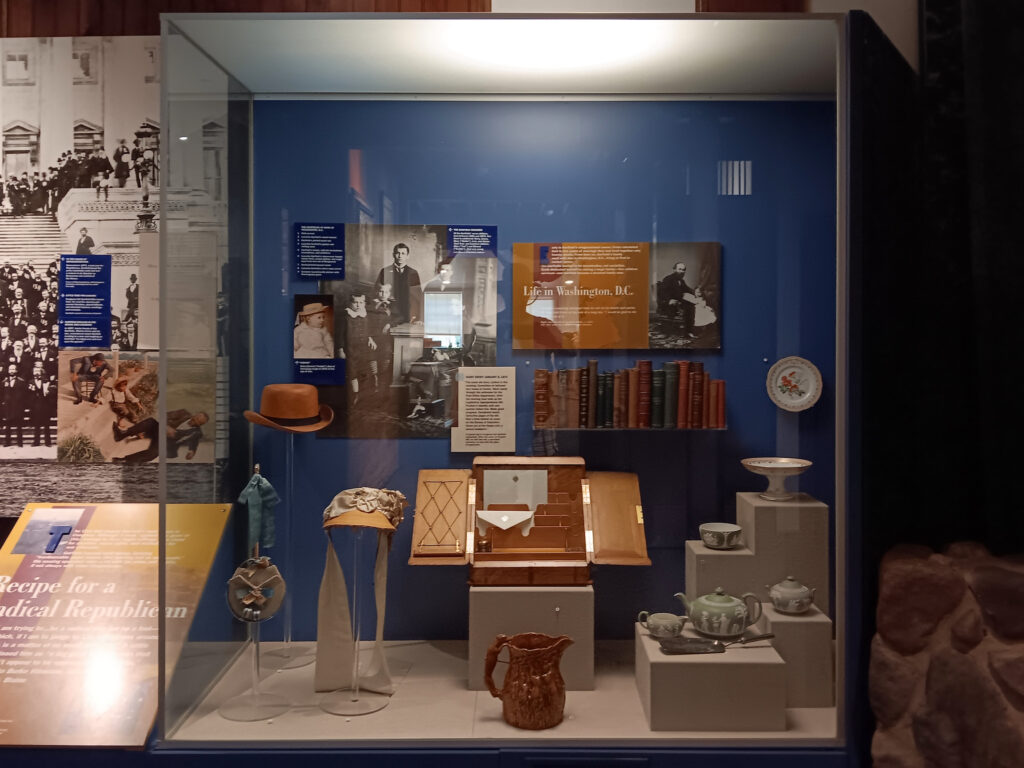
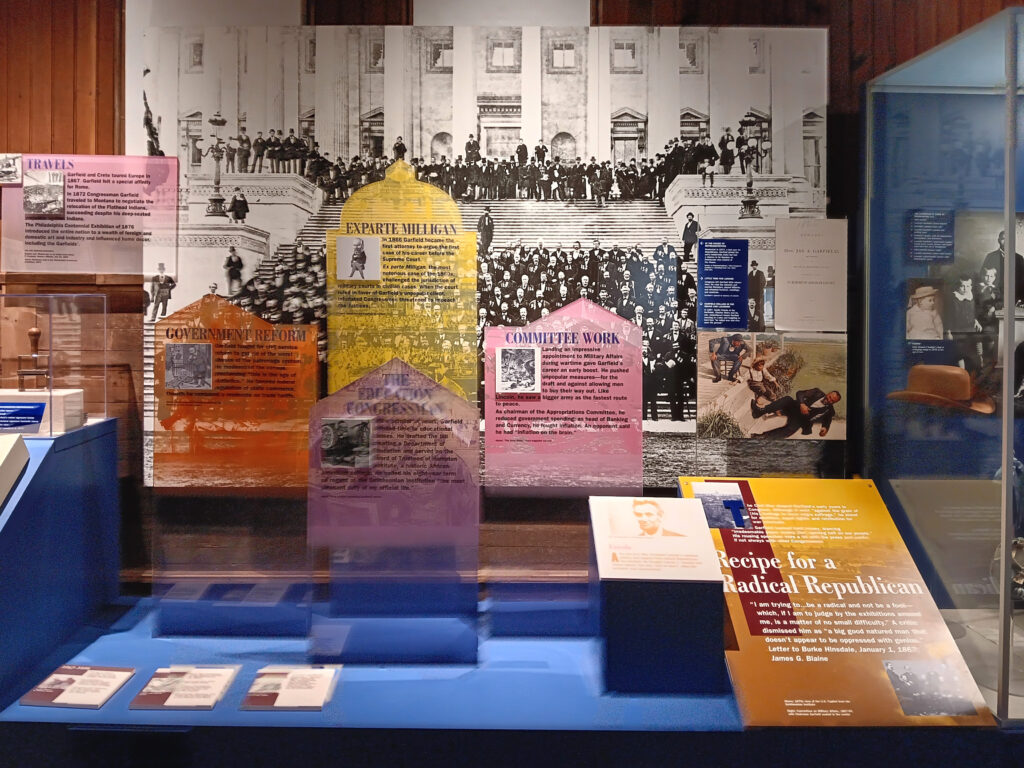
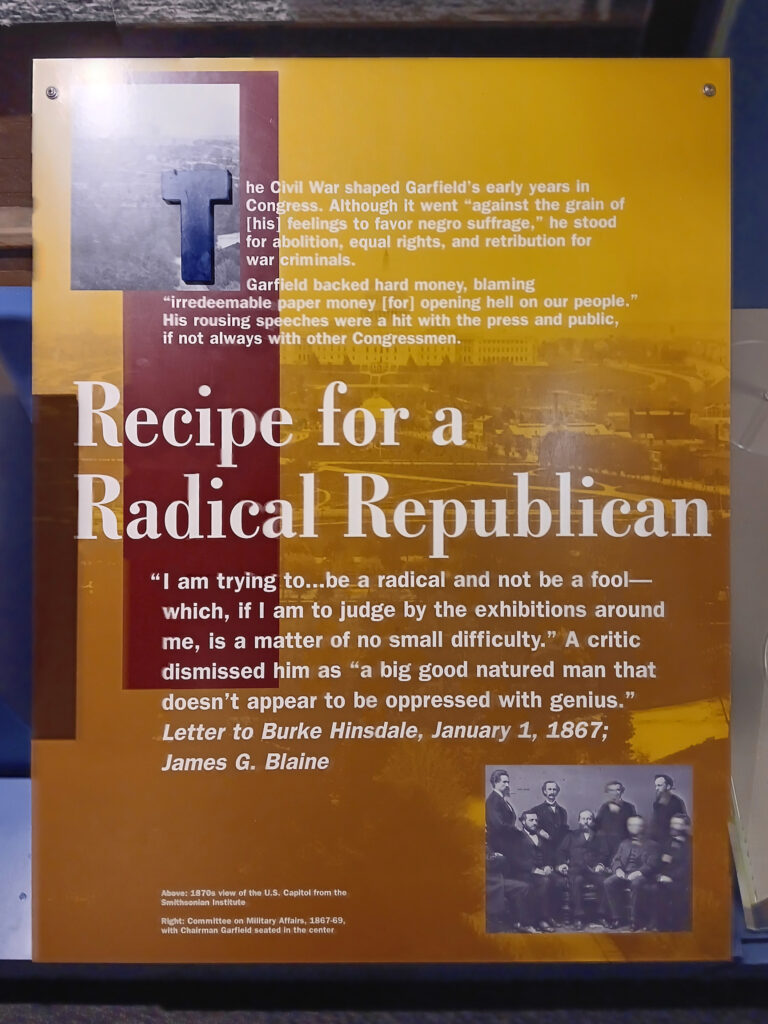
At the Republican National Committee, they could not agree on a candidate. On the thirty-sixth vote, they dropped the existing candidates and voted for Garfield, who was not a candidate. He was selected by a landslide.
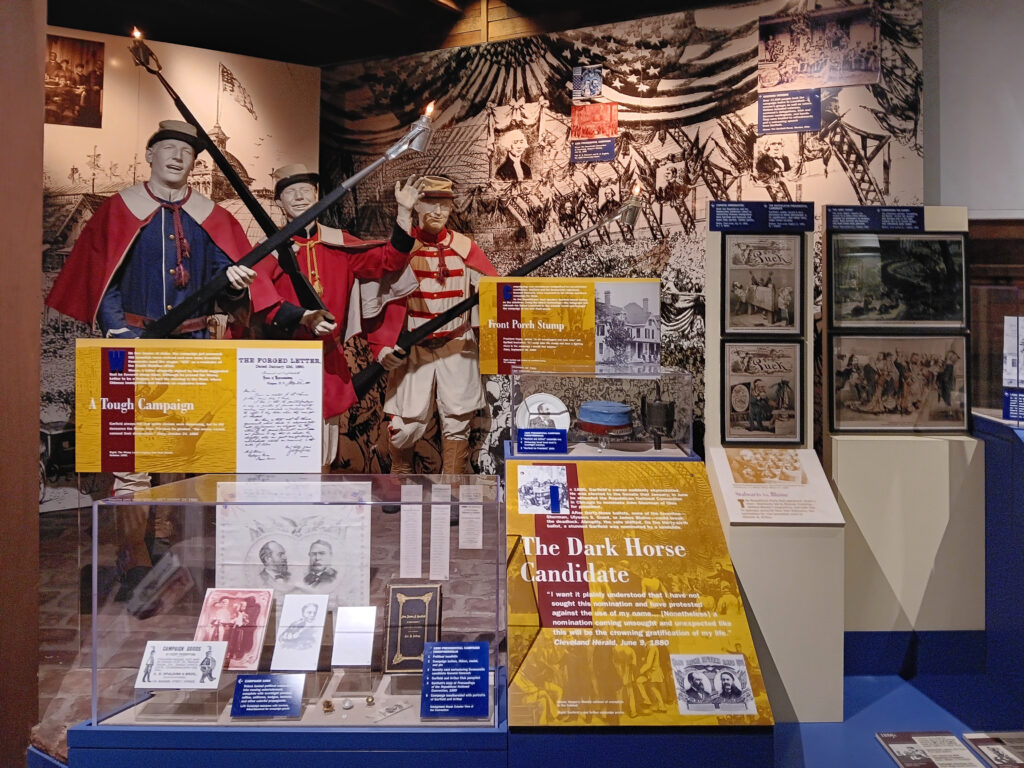
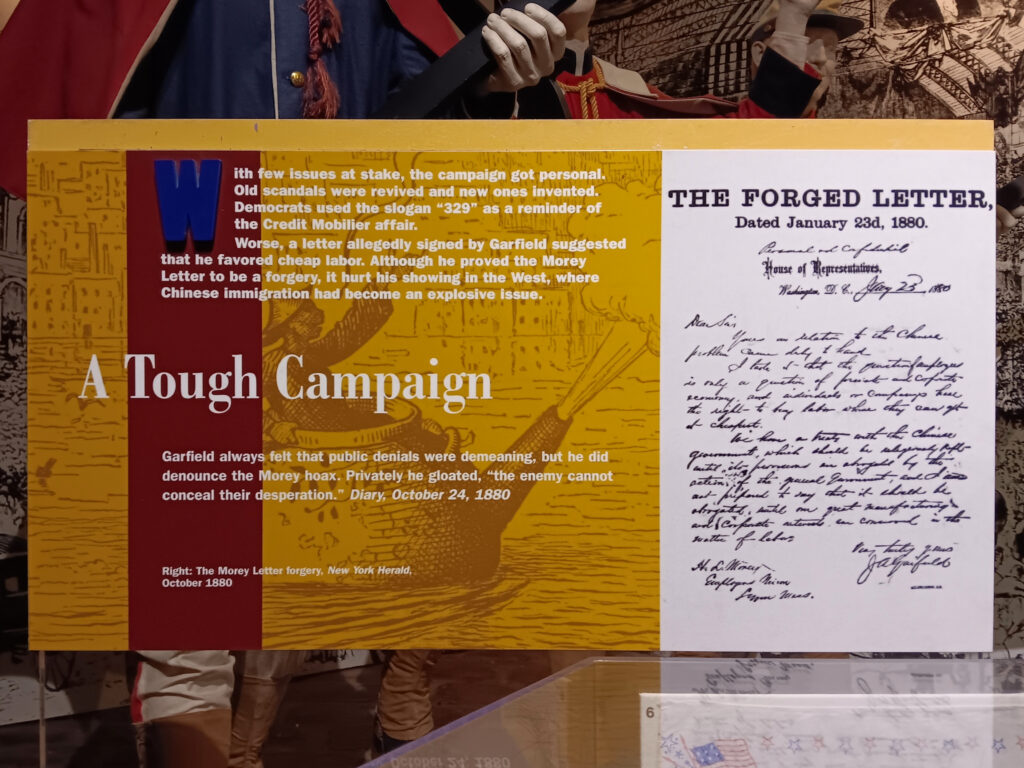
In the past, presidential candidates paid people to campaign for them. Garfield was a skilled speaker and debater, so he campaigned for himself. The outside displays note that he would campaign from his front porch.
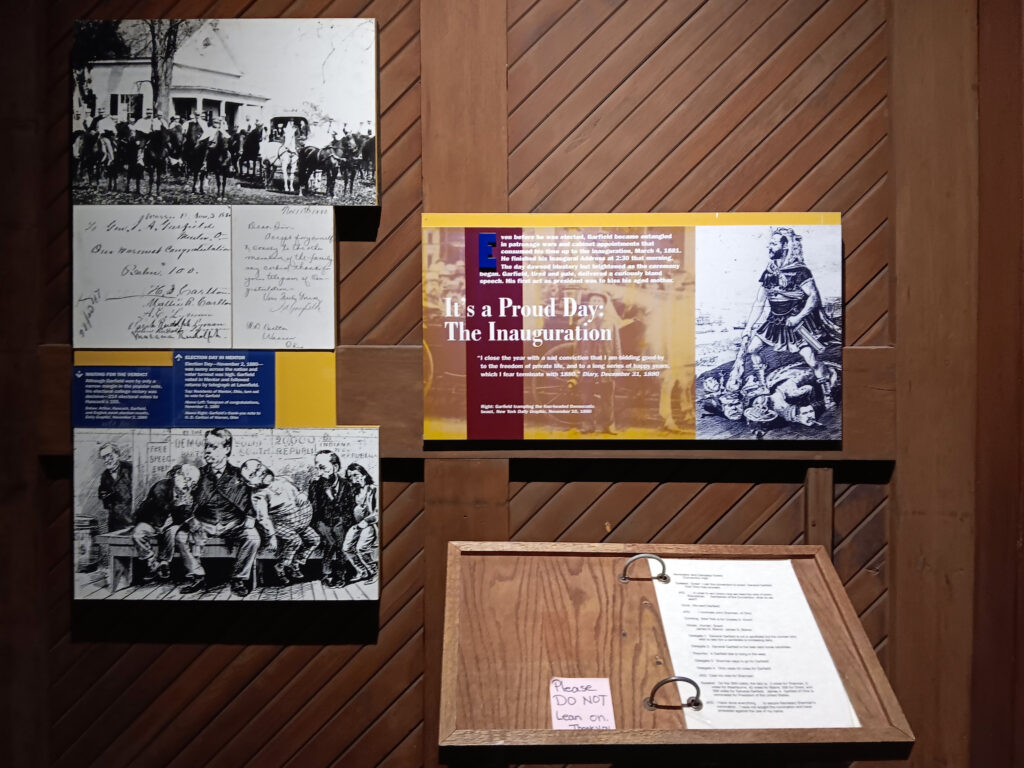
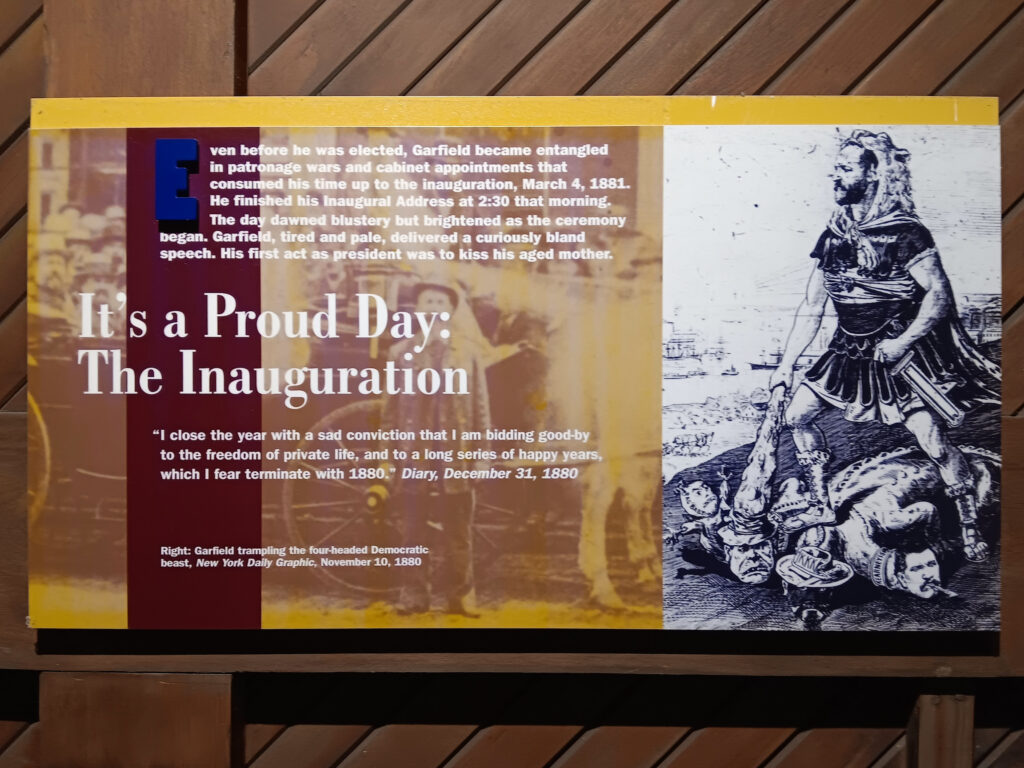
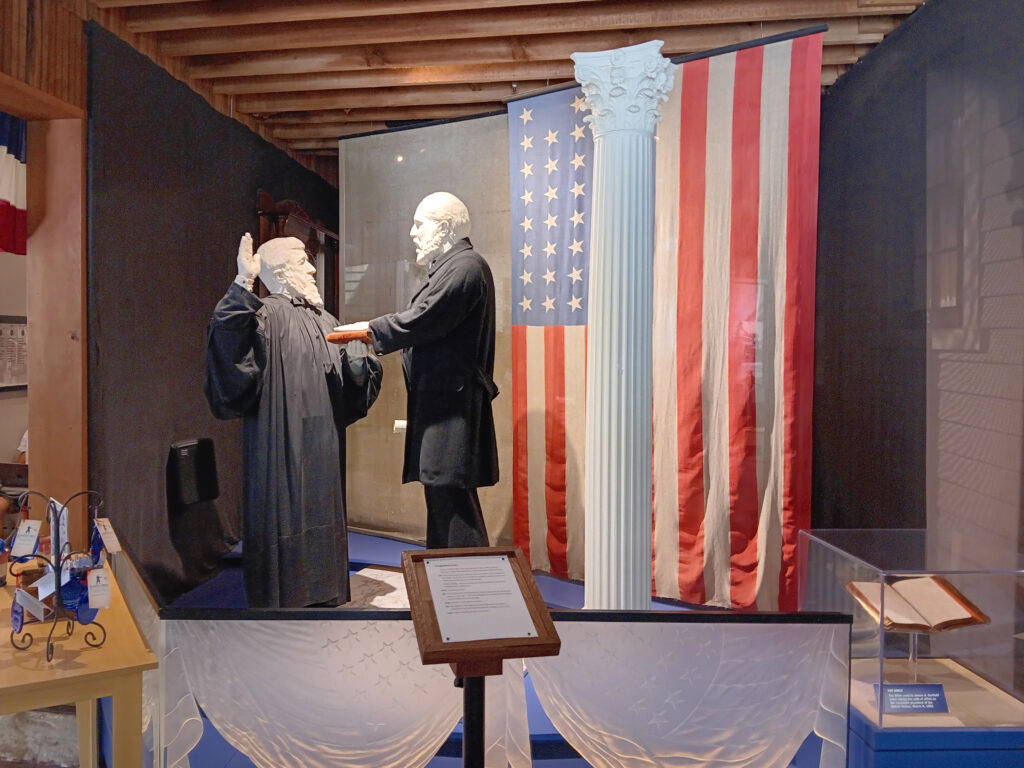
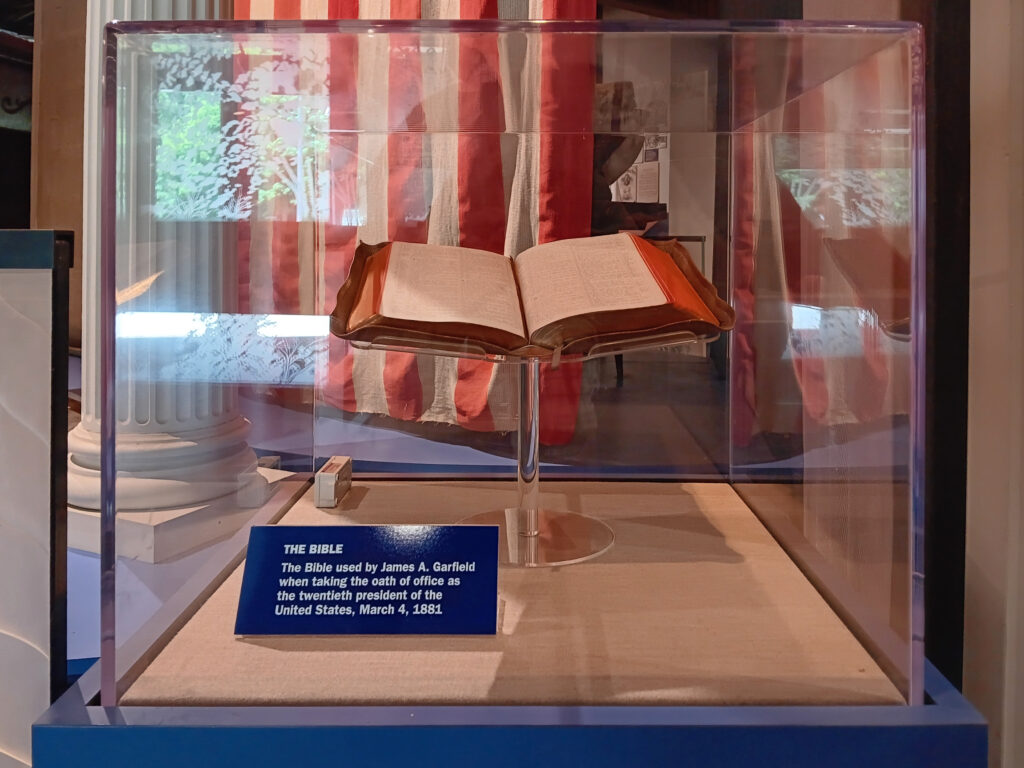
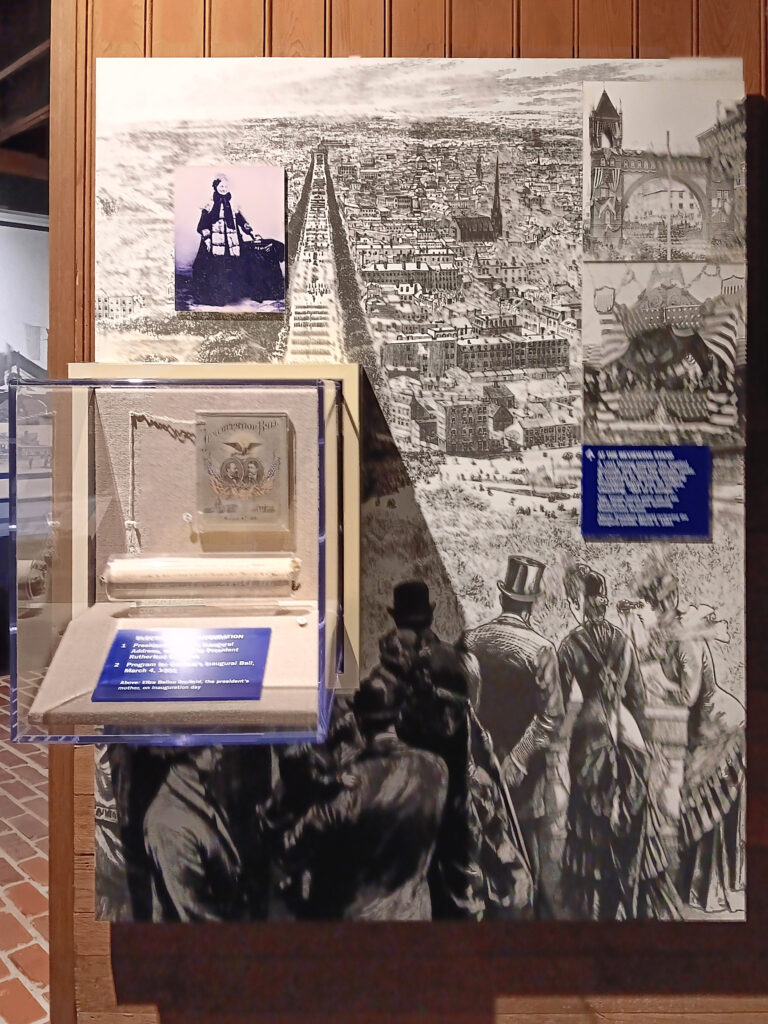
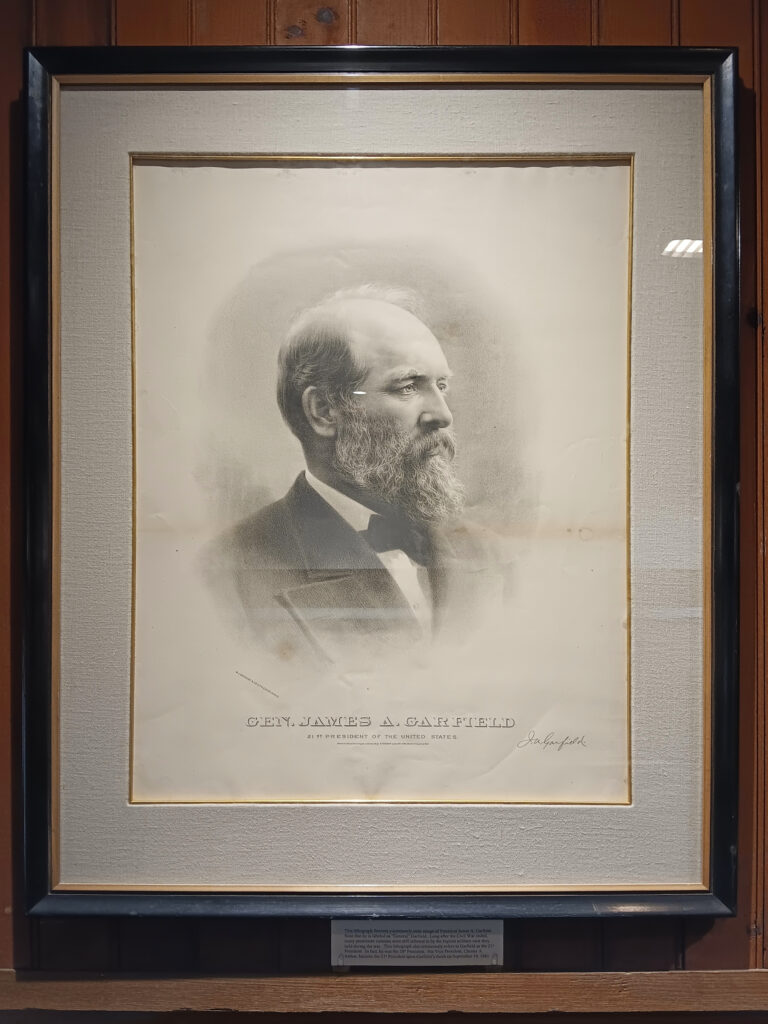
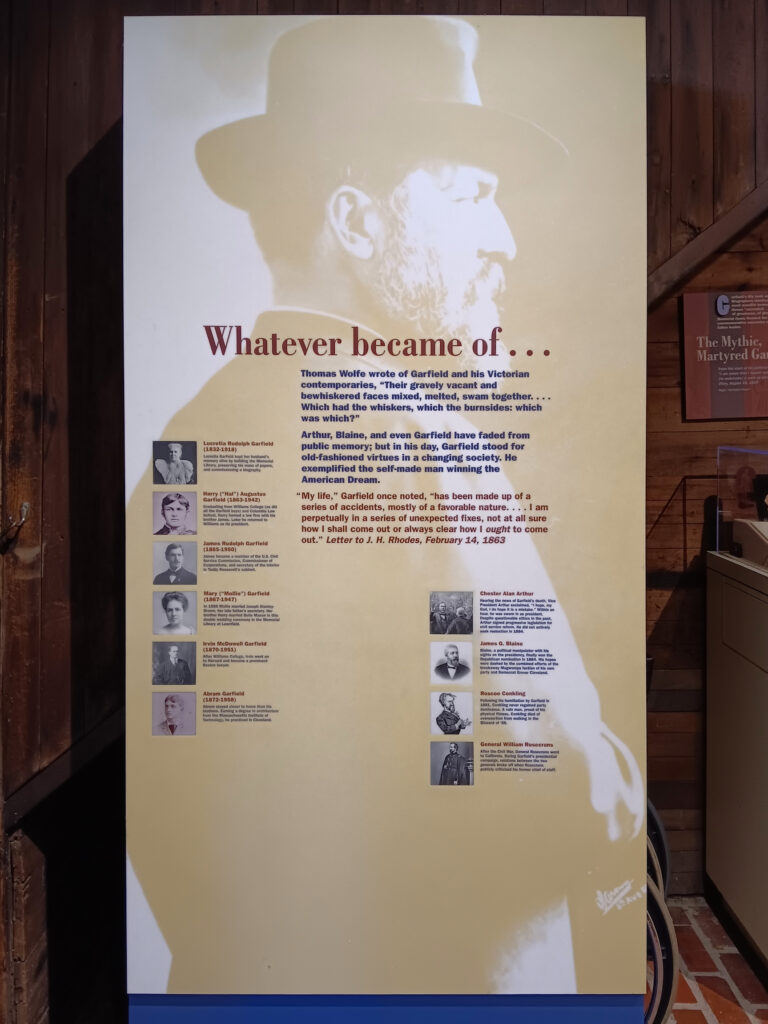
His second term was only 200 days before he was assassinated.
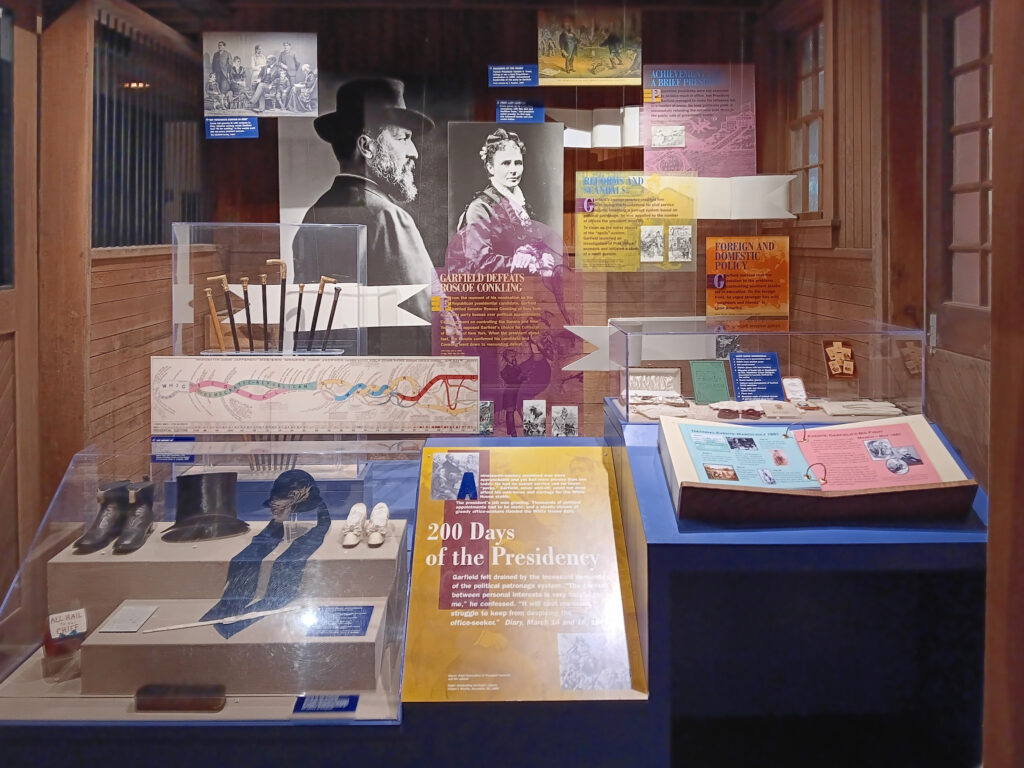
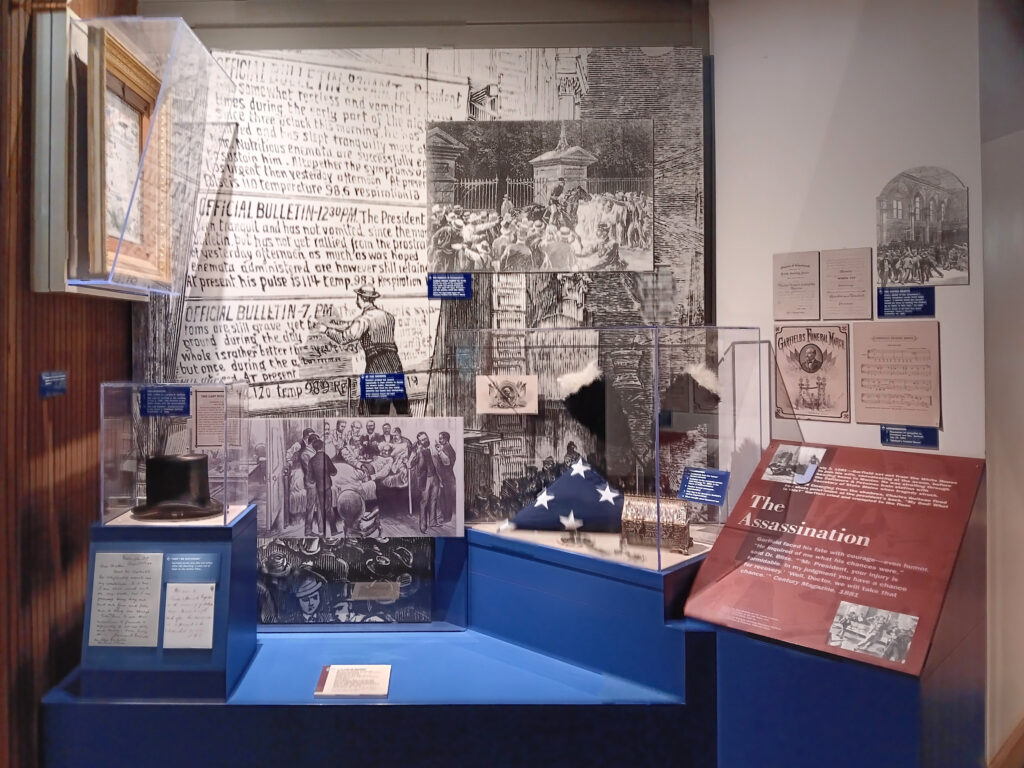
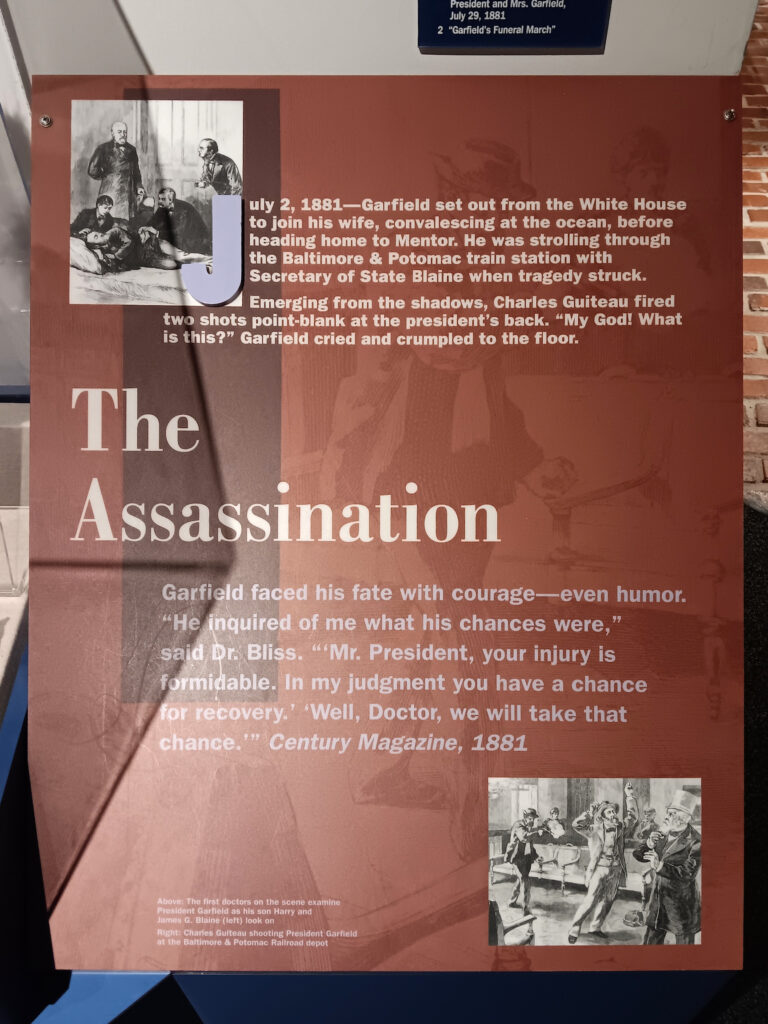
The museum spends a large portion of its space related to his assassination and death. That convalescence bed scene seems a bit morbid and unnecessary.
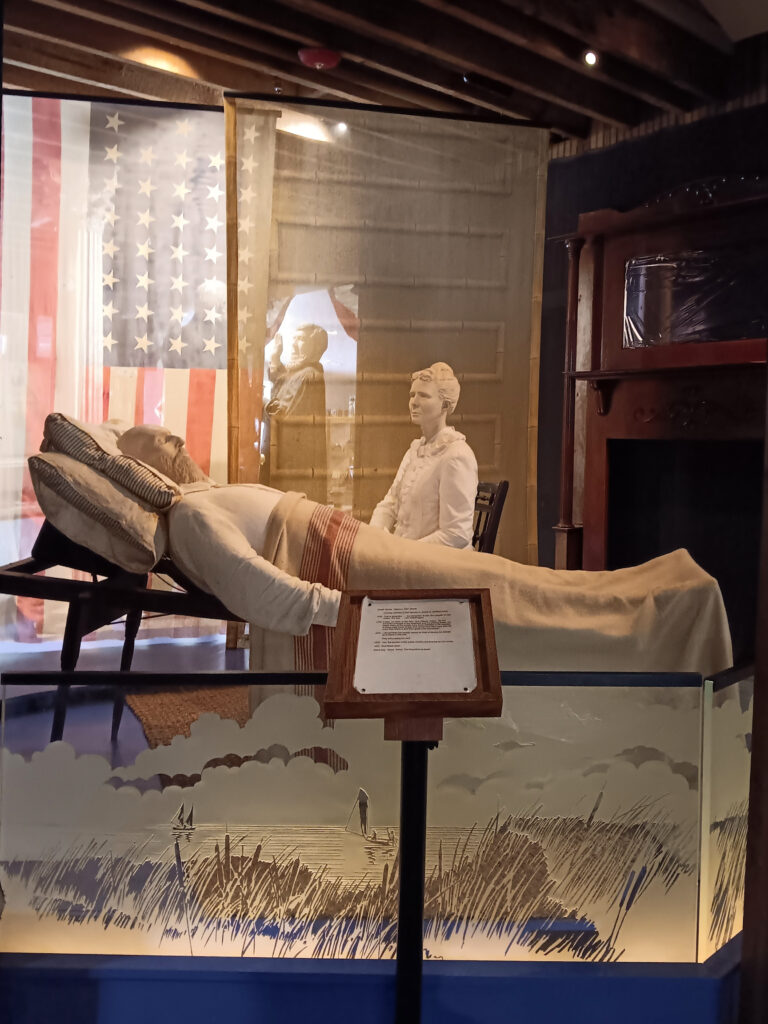
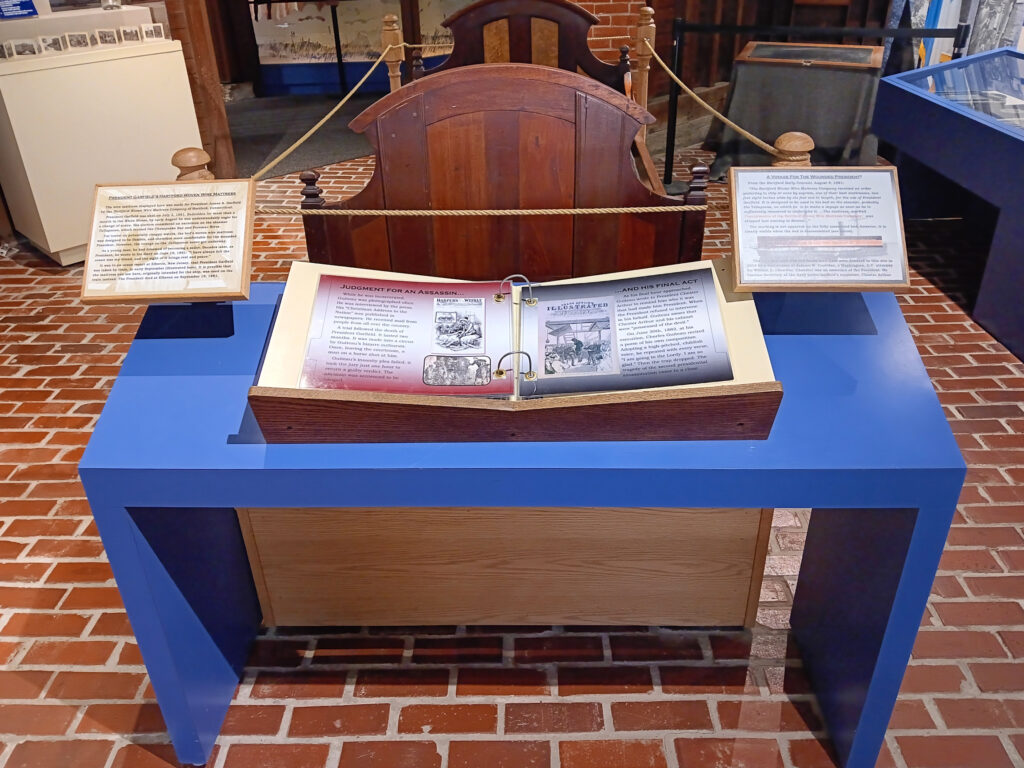
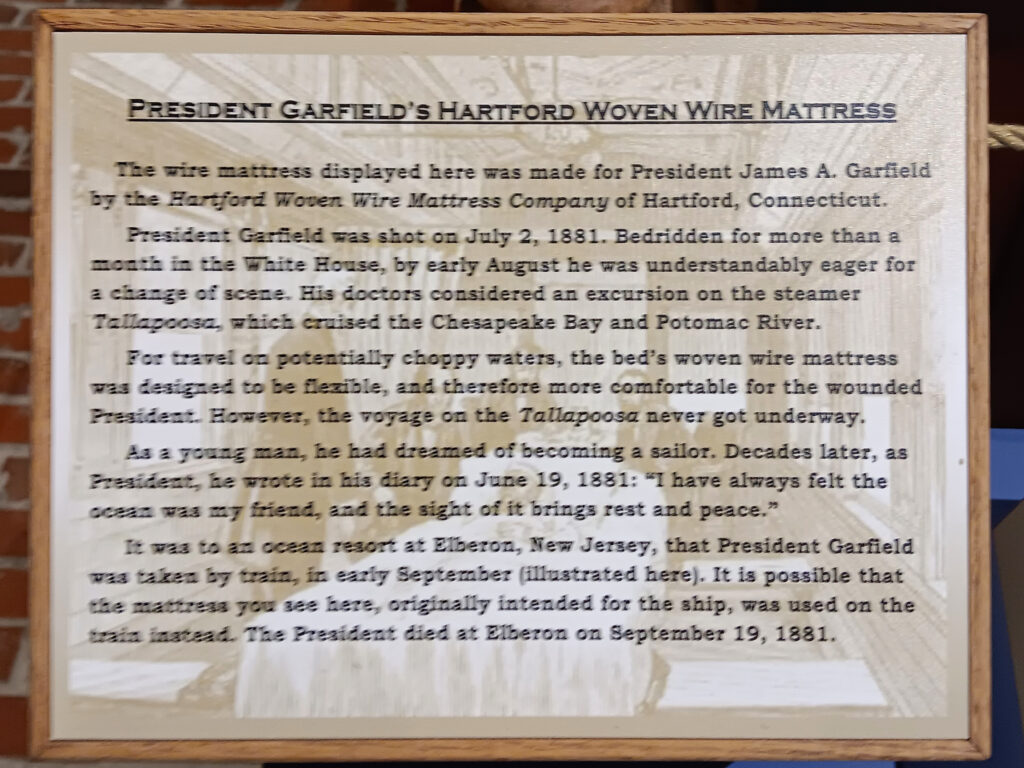
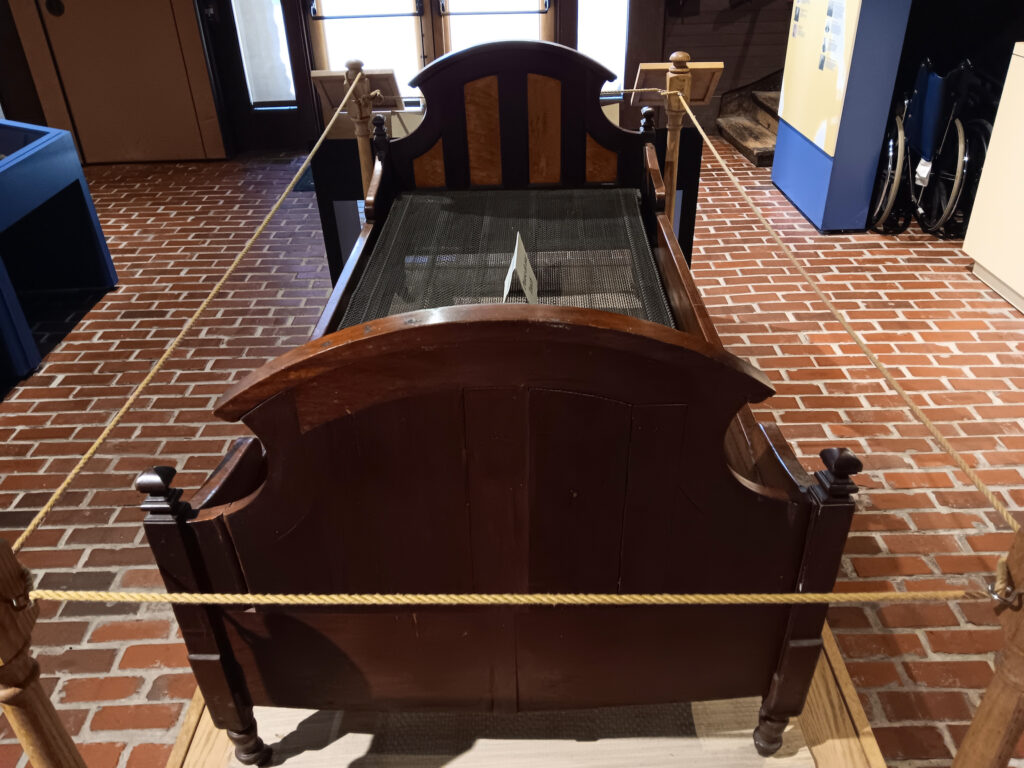
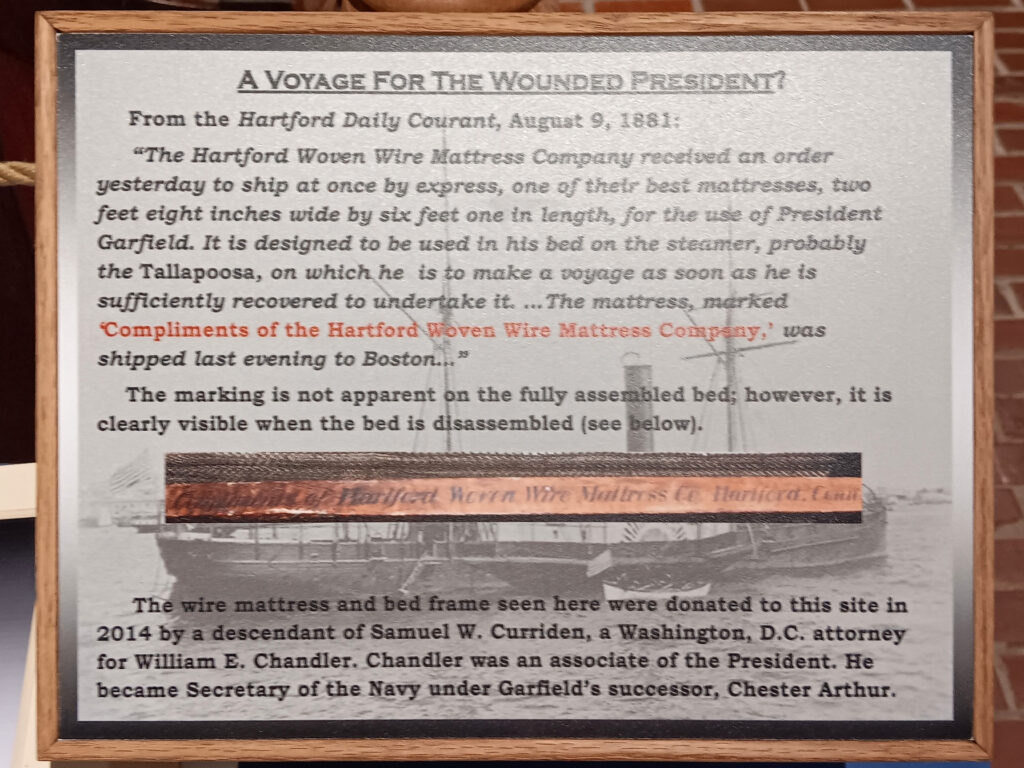
A large prominent artifact in the museum is a wire spring bed that was made for him during his convalescence. We assume wire spring beds were special back in the days when people slept on … what? … rocks? boards? bug infested straw?
And memorial artifacts. The bronze face and hand are kind of creepy. John might do something like that, but he would design them spring out to scare people.
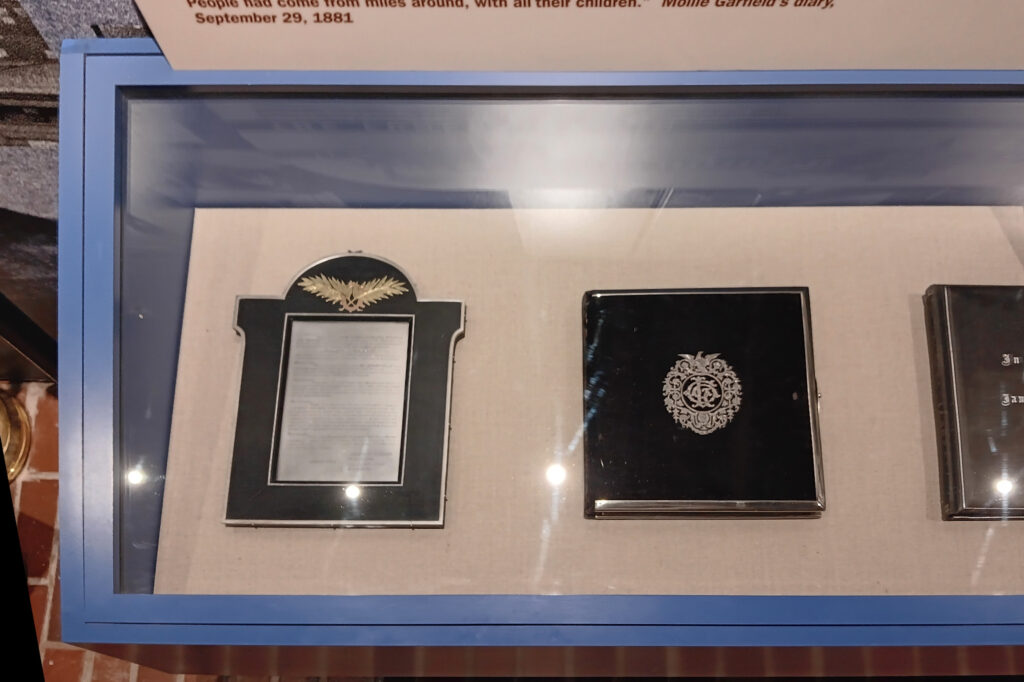
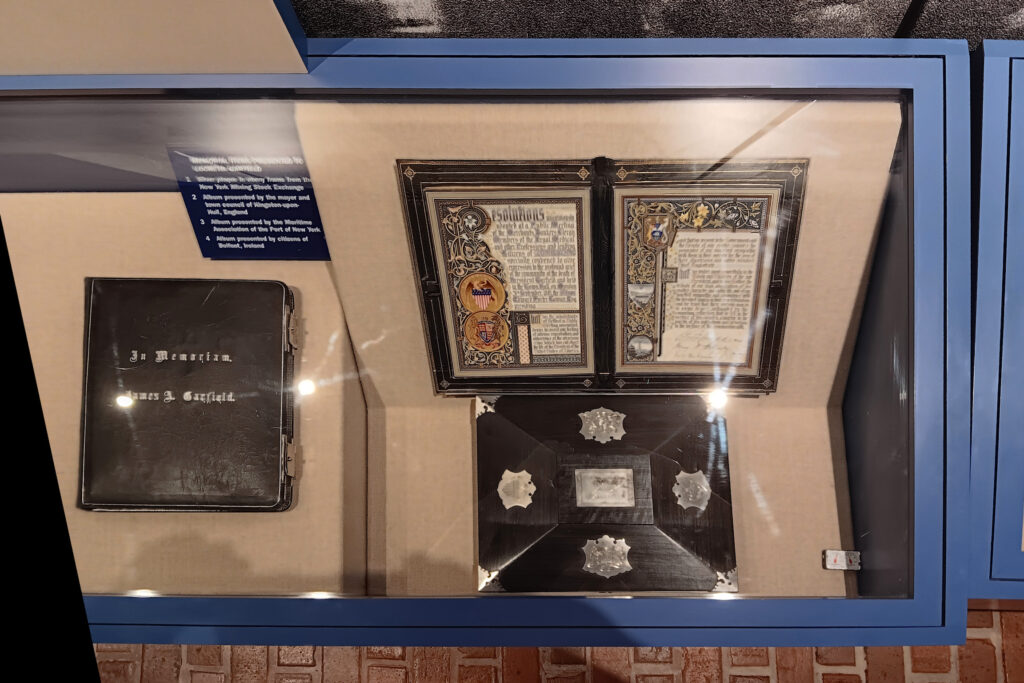
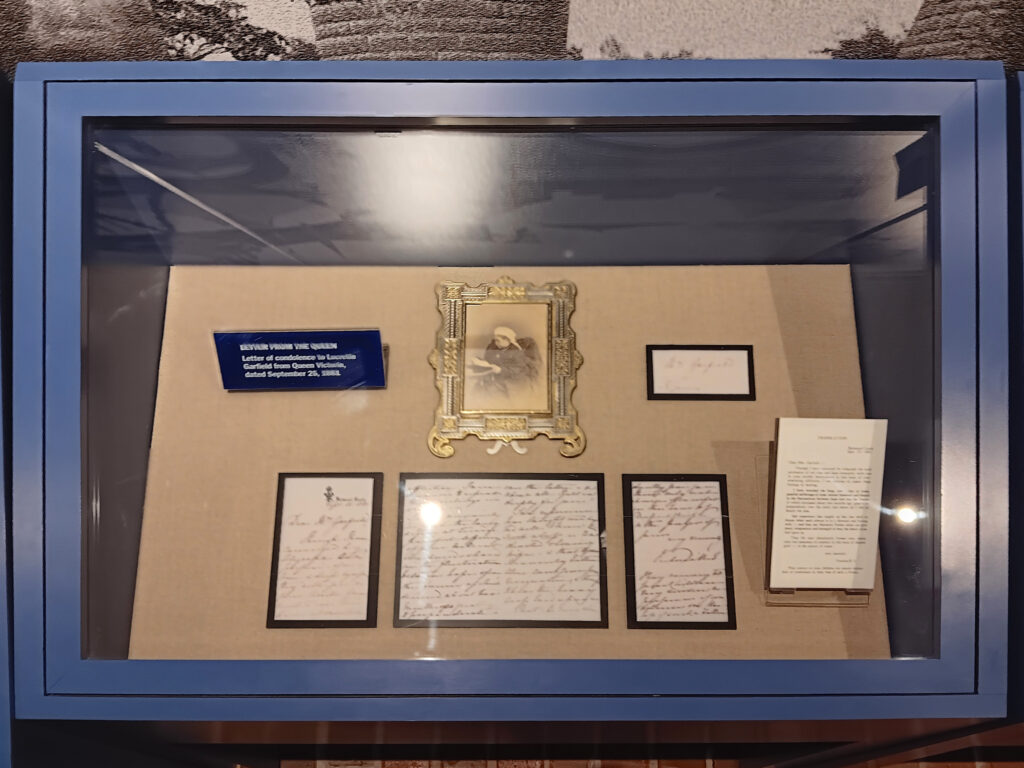
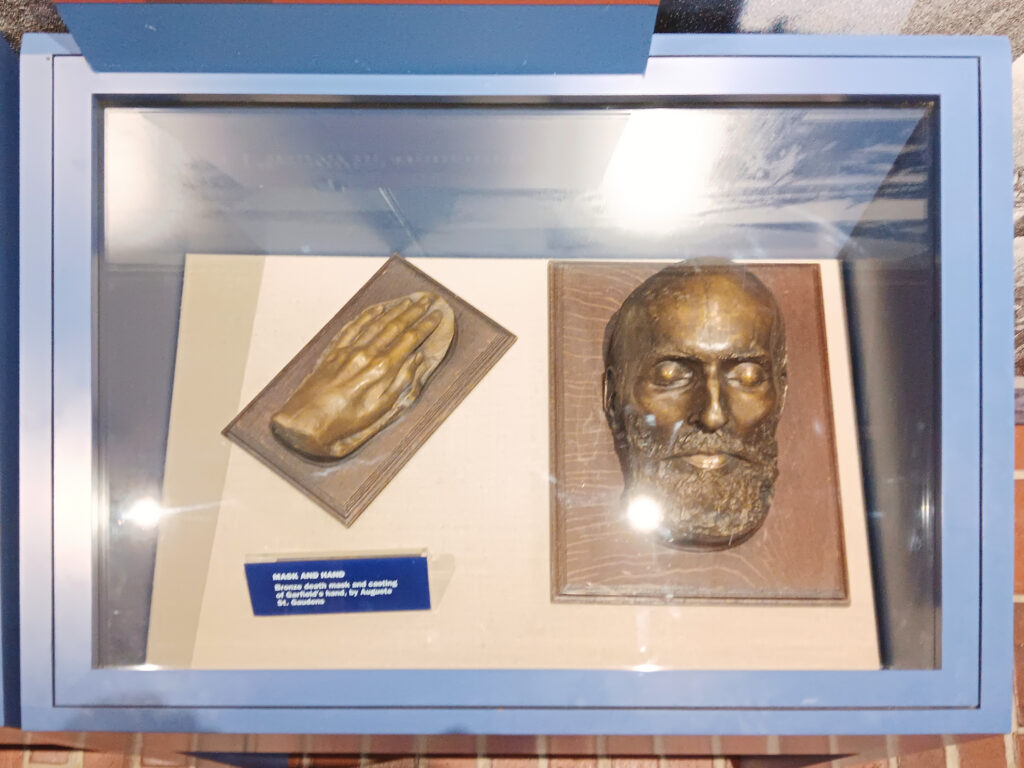
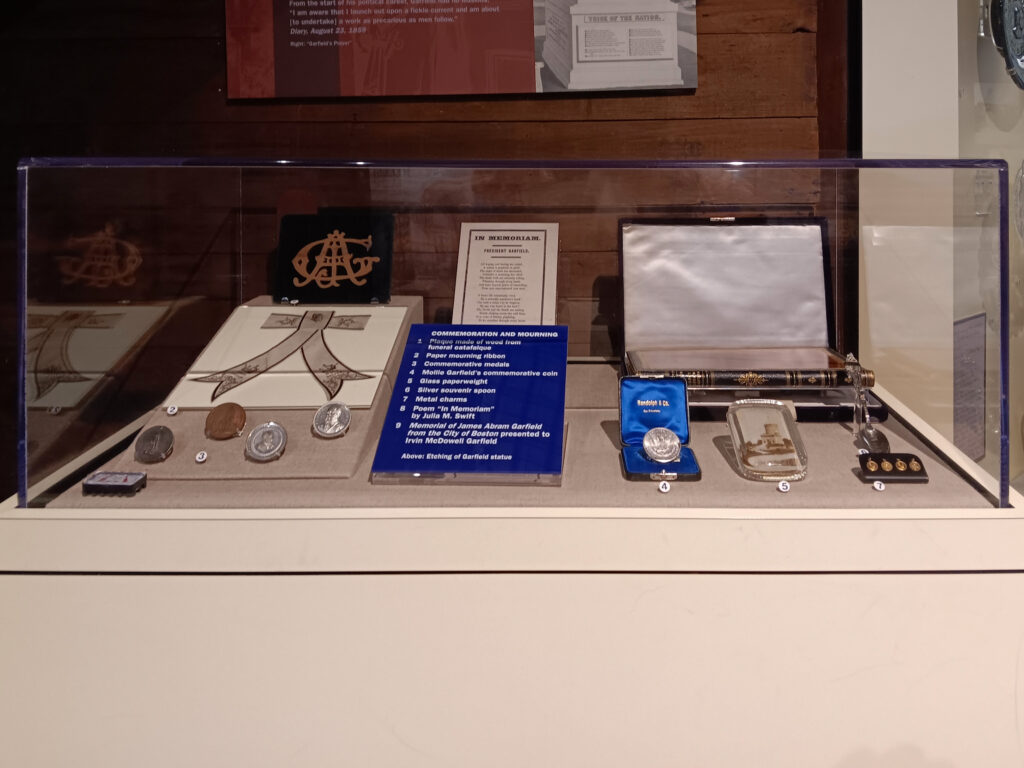
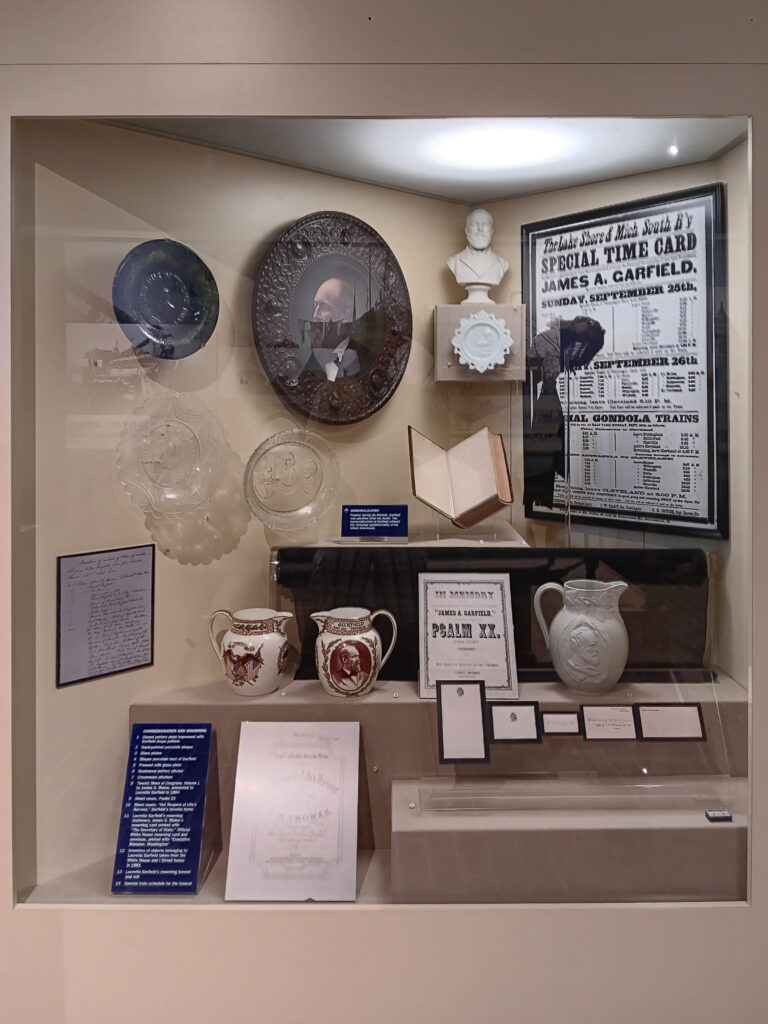
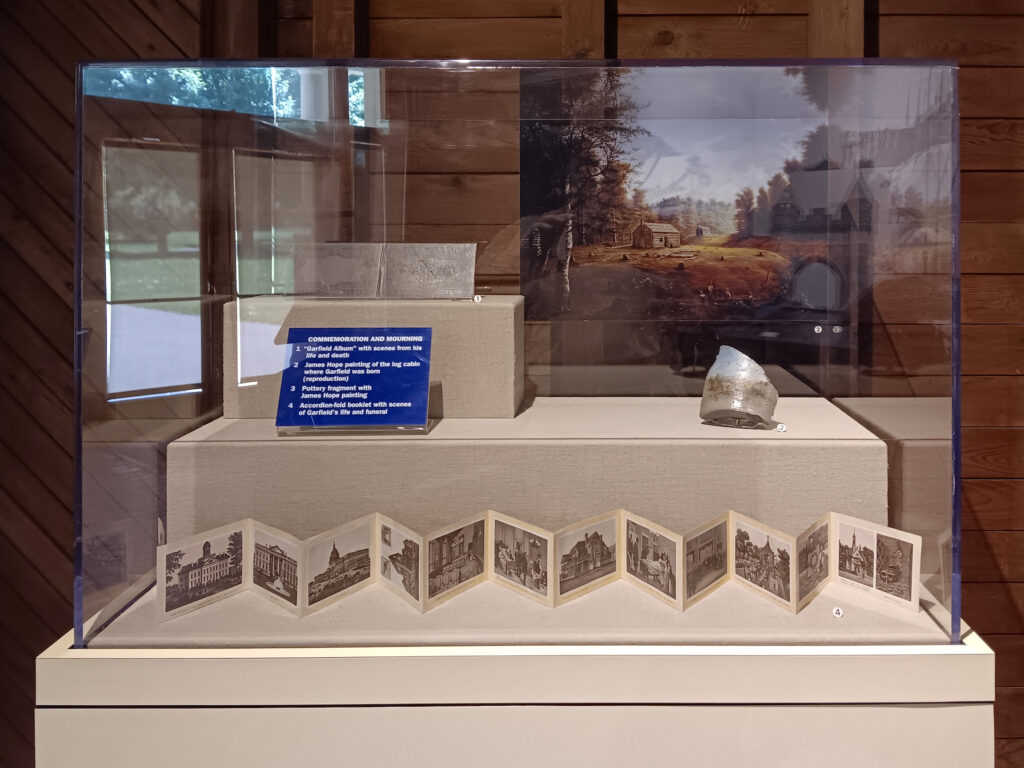
Apparently, modern people are not as clever as they think they are; merchants have been profiteering off of famous people for centuries. Here are some commemoration and memorial items from Garfield’s life and death.
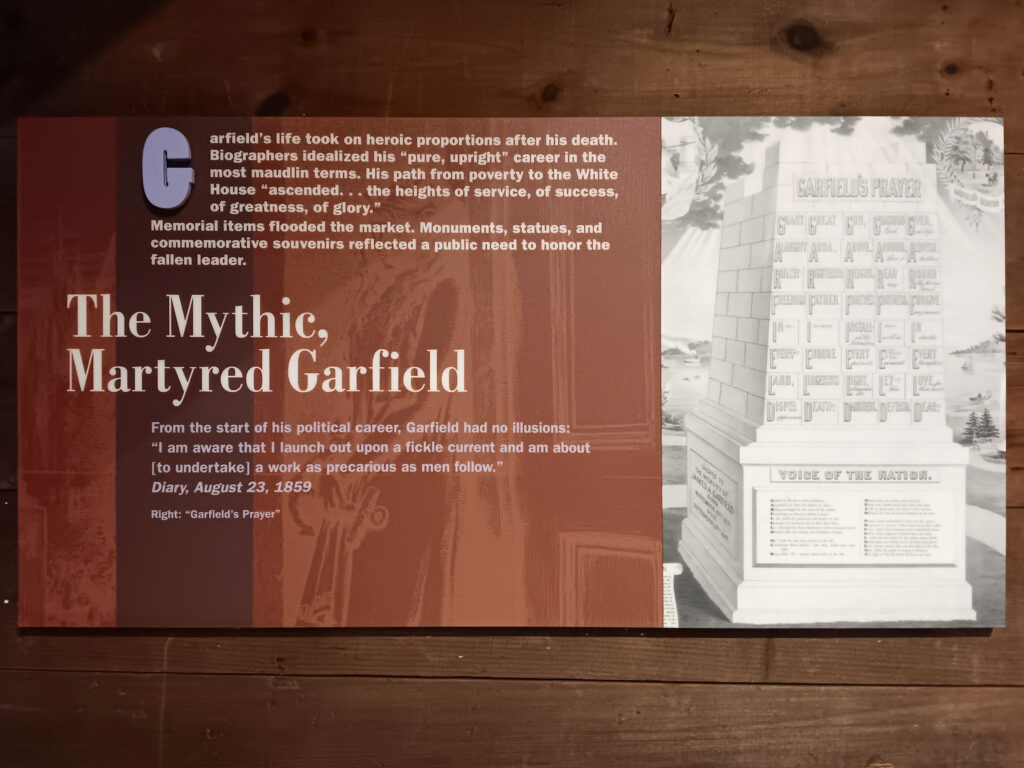
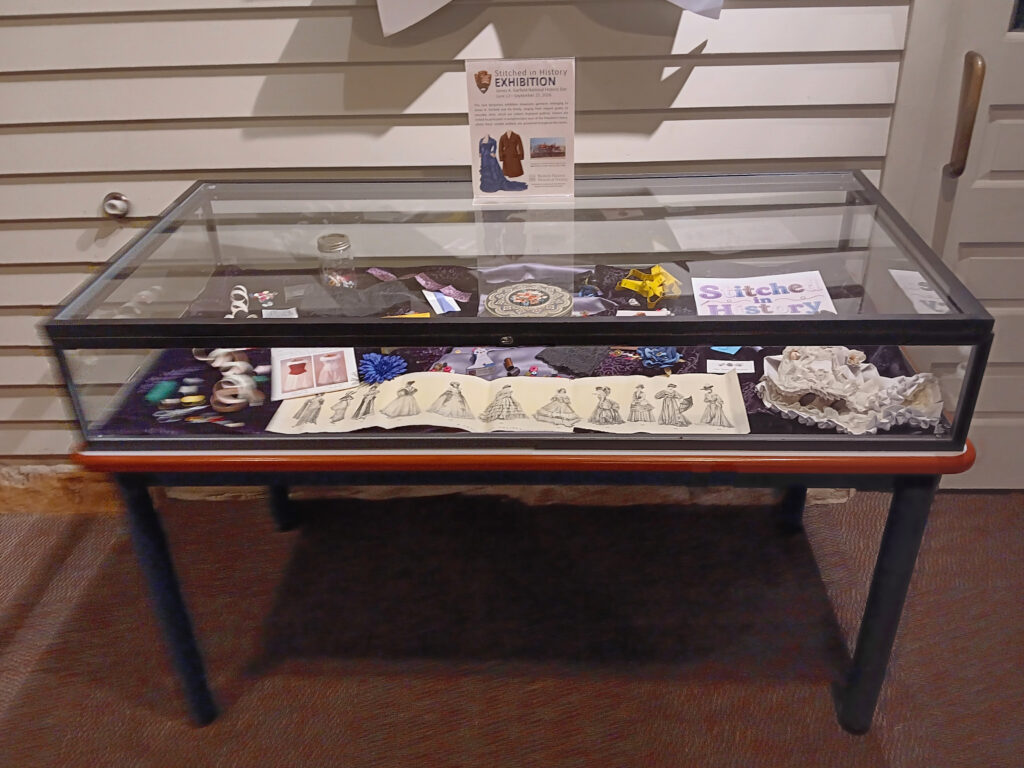
There were several “unrelated” displays. They were probably period specific, but not related to the president.
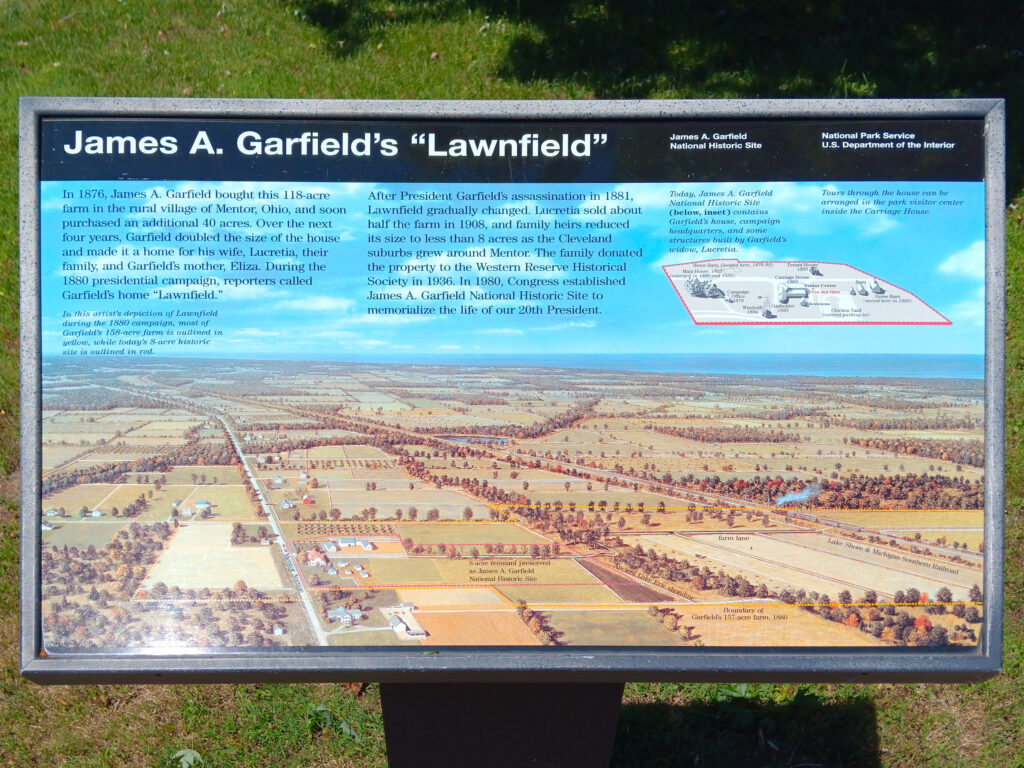
After finishing at the museum, we went to the back of the park to work our way forward. On the way to the back, there was a barn red building on the left. The stable map appears to mark this as a “Tenant House”.
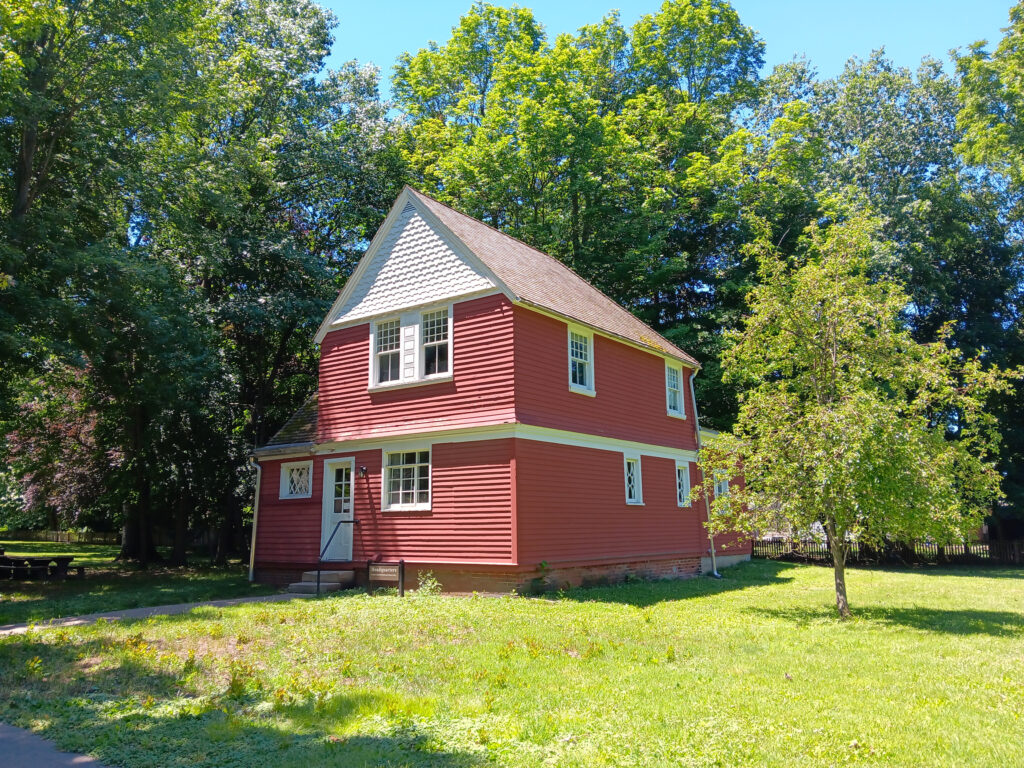
In the back, there was a small group of buildings. The sign indicates that this is the old stable, but it does not quite match the map on the sign. It looks like only one of the main stable buildings remain with a few side buildings.
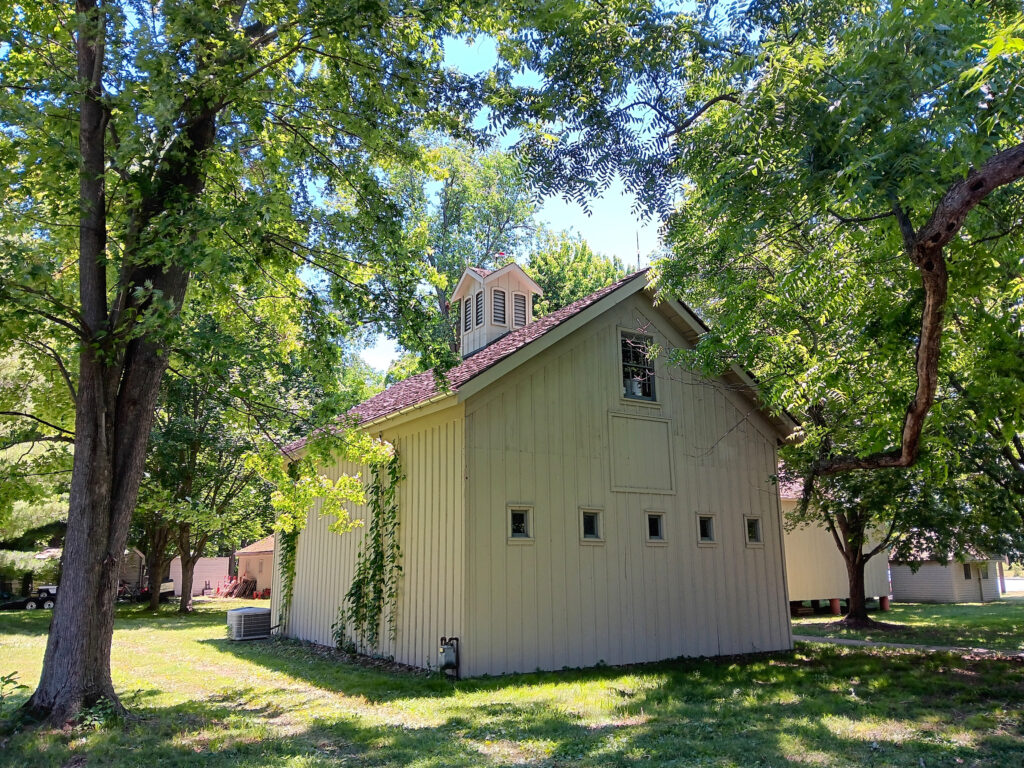
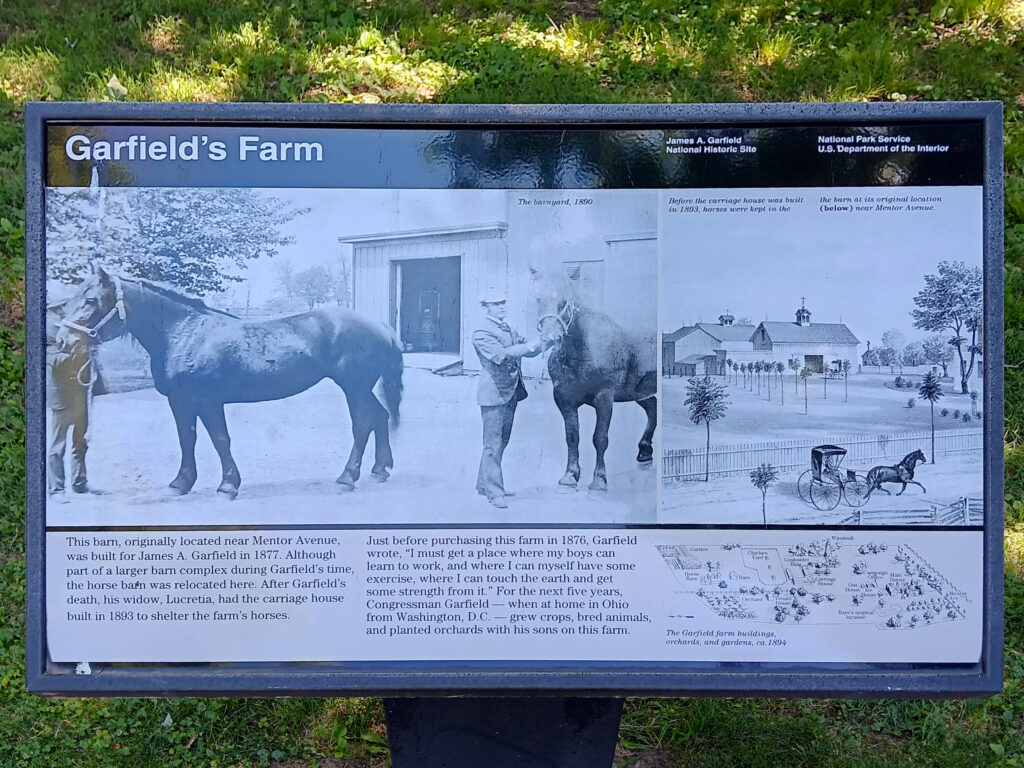
The dirt lane mentioned on the sign above is now a brick walking path, but in the past, people road a train out to the middle of nowhere to hear him speak,
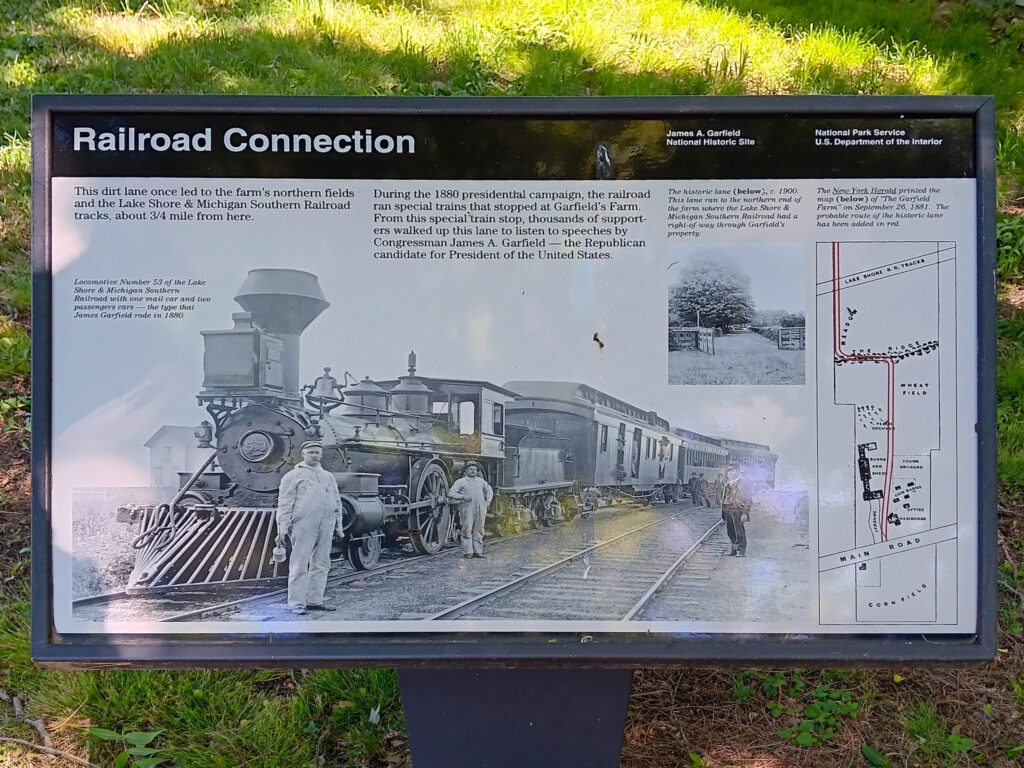
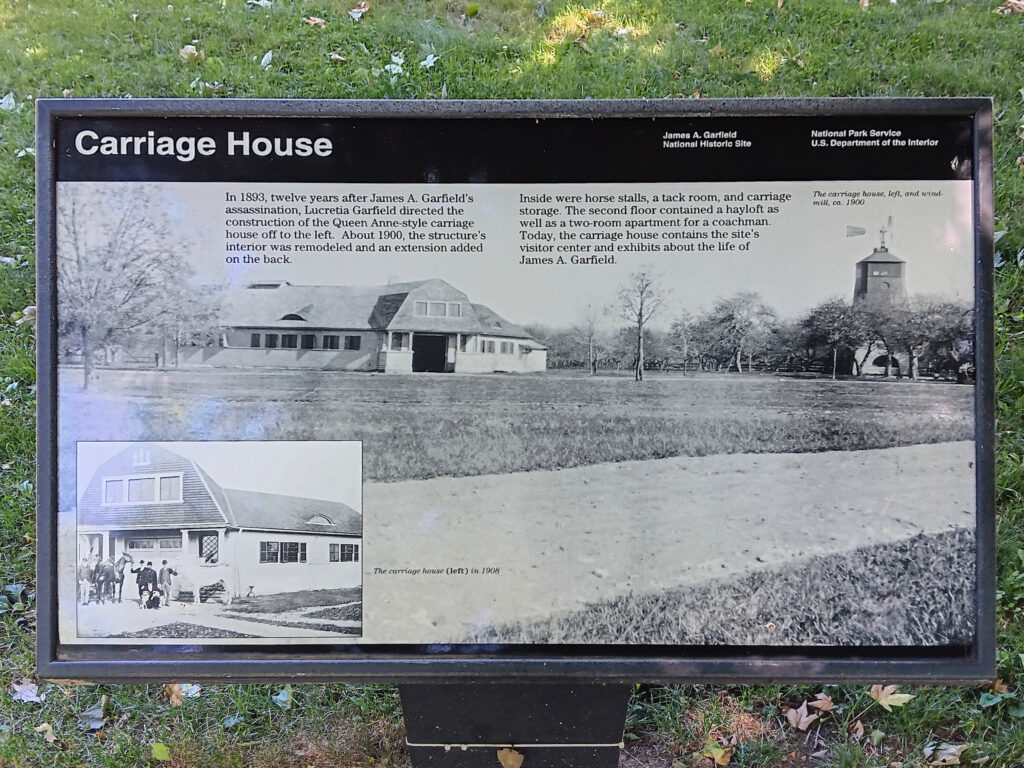
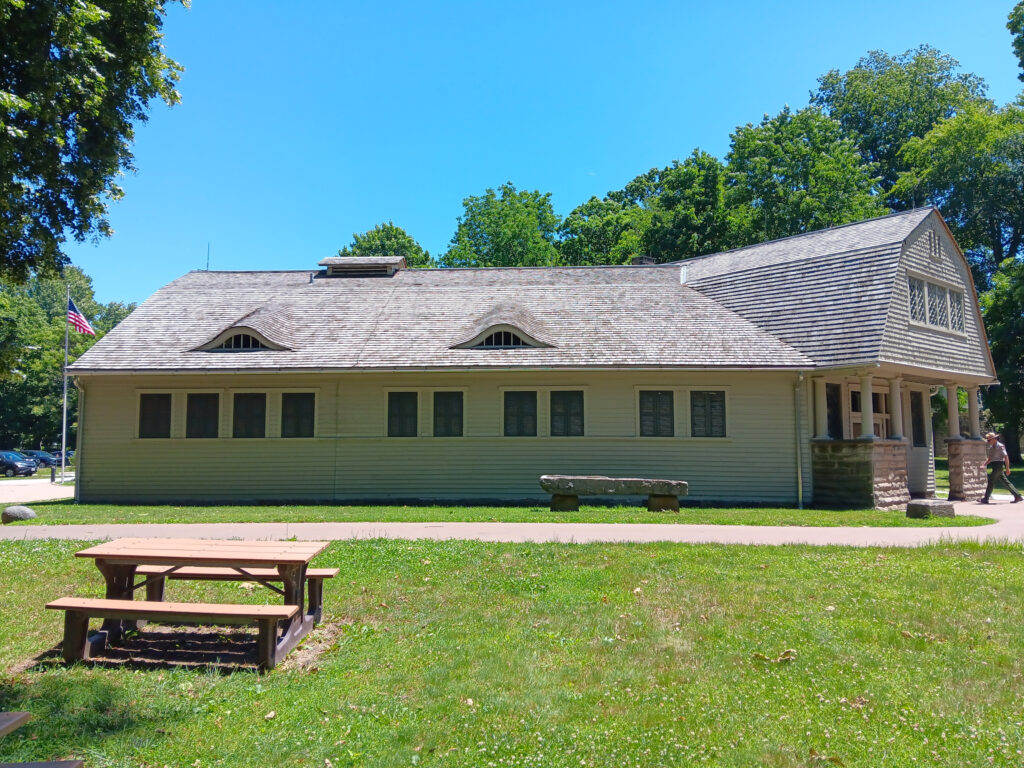
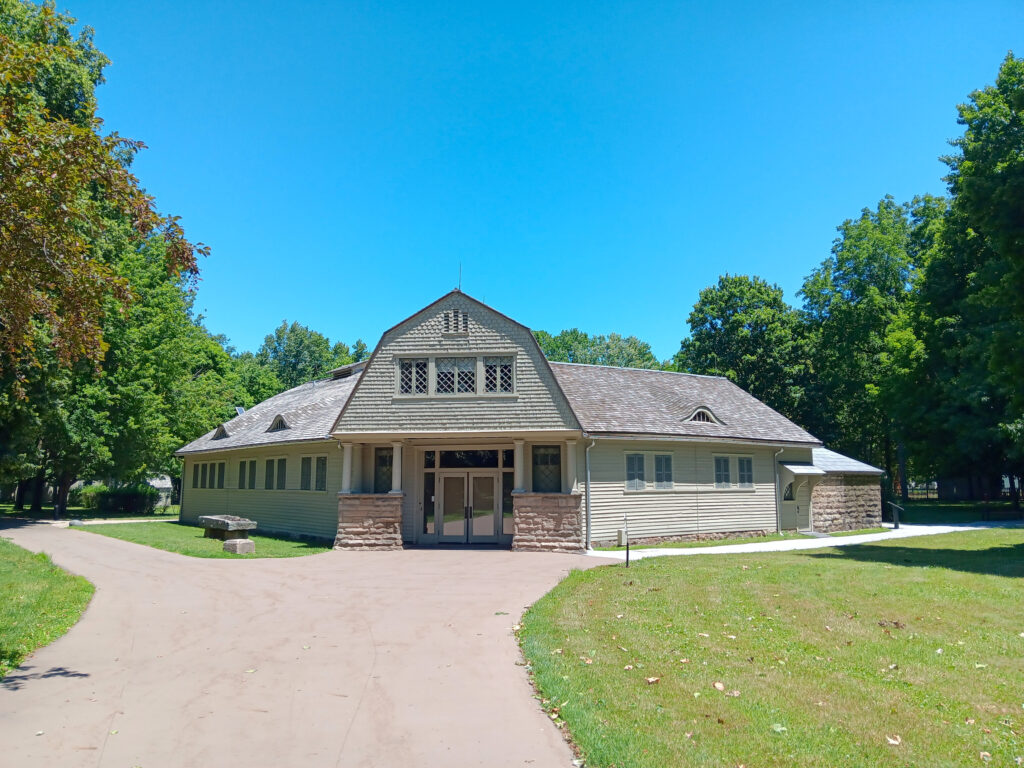
Continuing towards the front, you learn that the visitor center is in the old carriage house. The carriage house was added by his wife, after he passed.
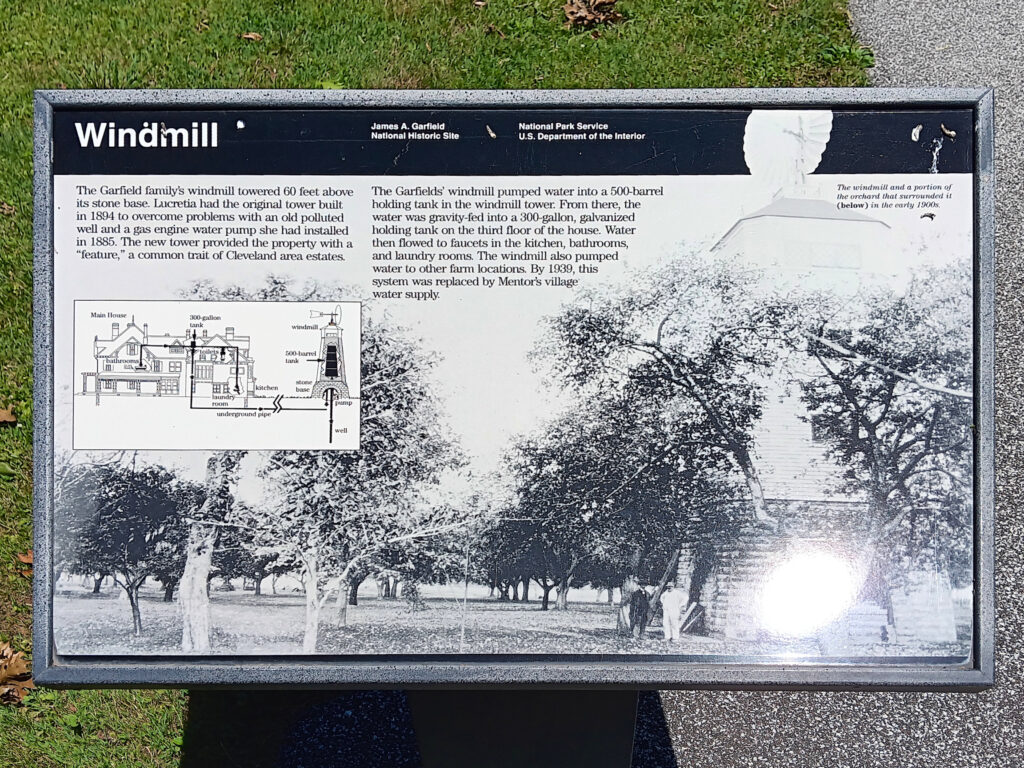
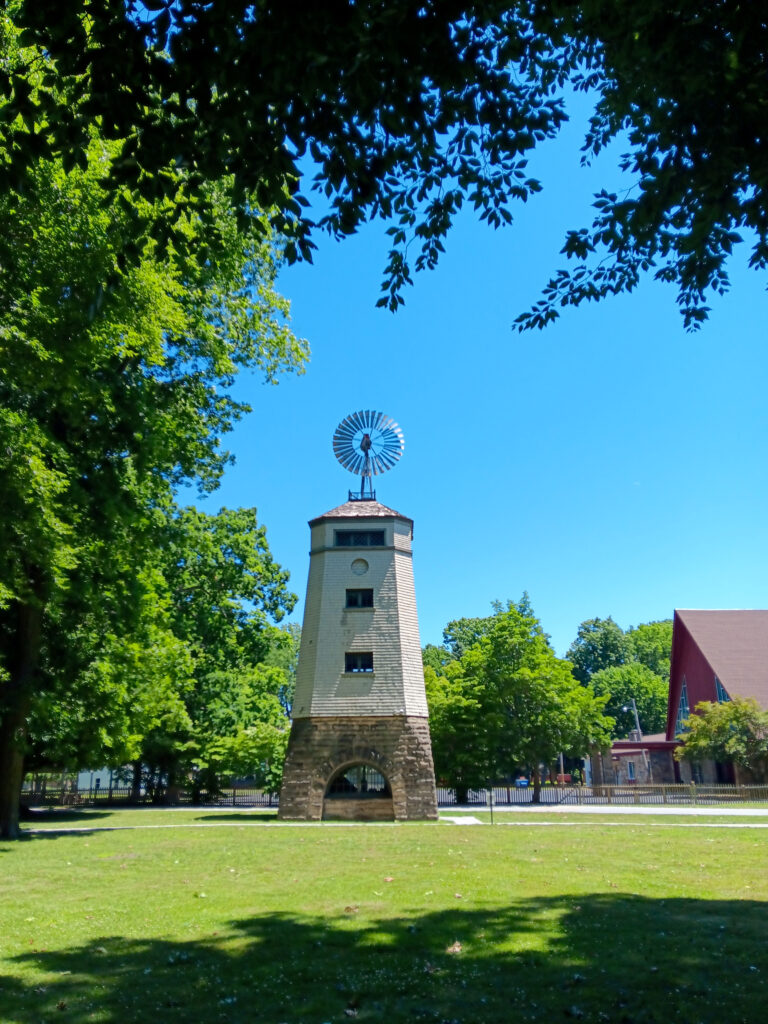
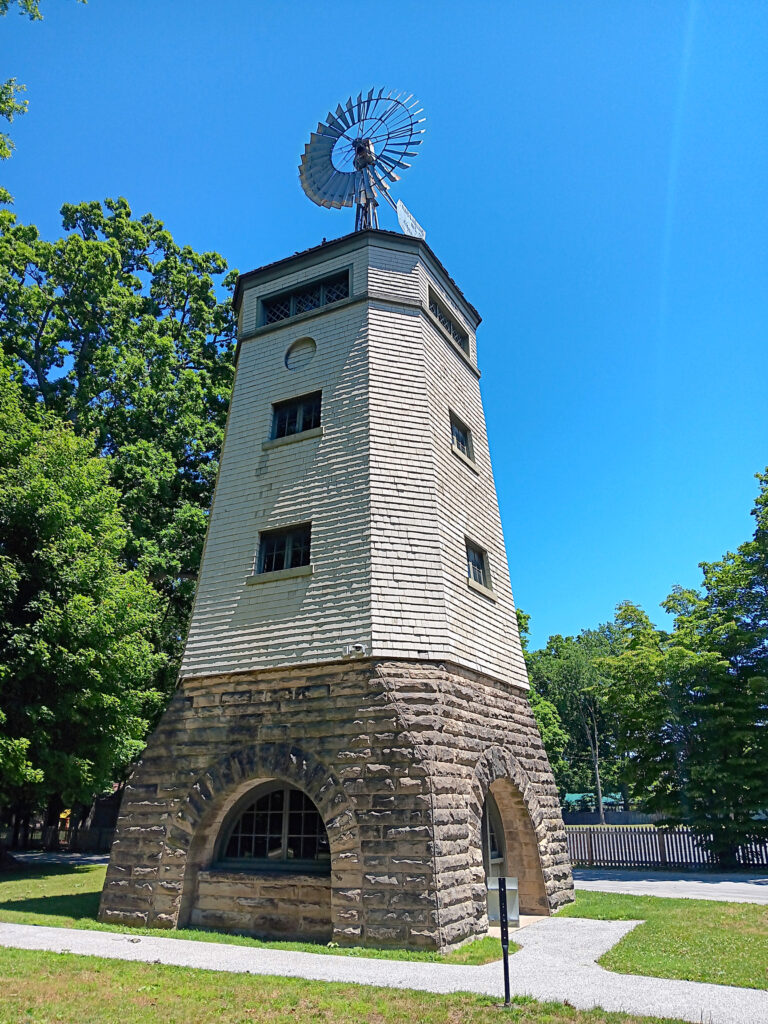
The stone tower that we passed on the way in turns out to be a windmill. The windmill pumped water to an internal reservoir, and the water was further pumped into storage in the house.
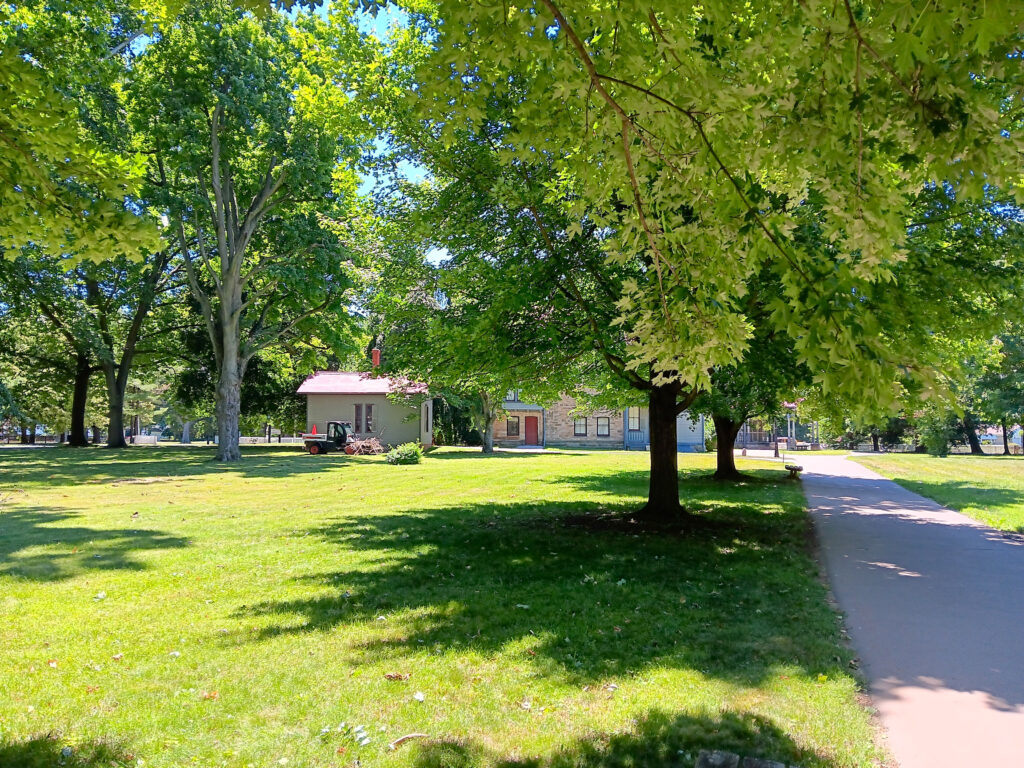
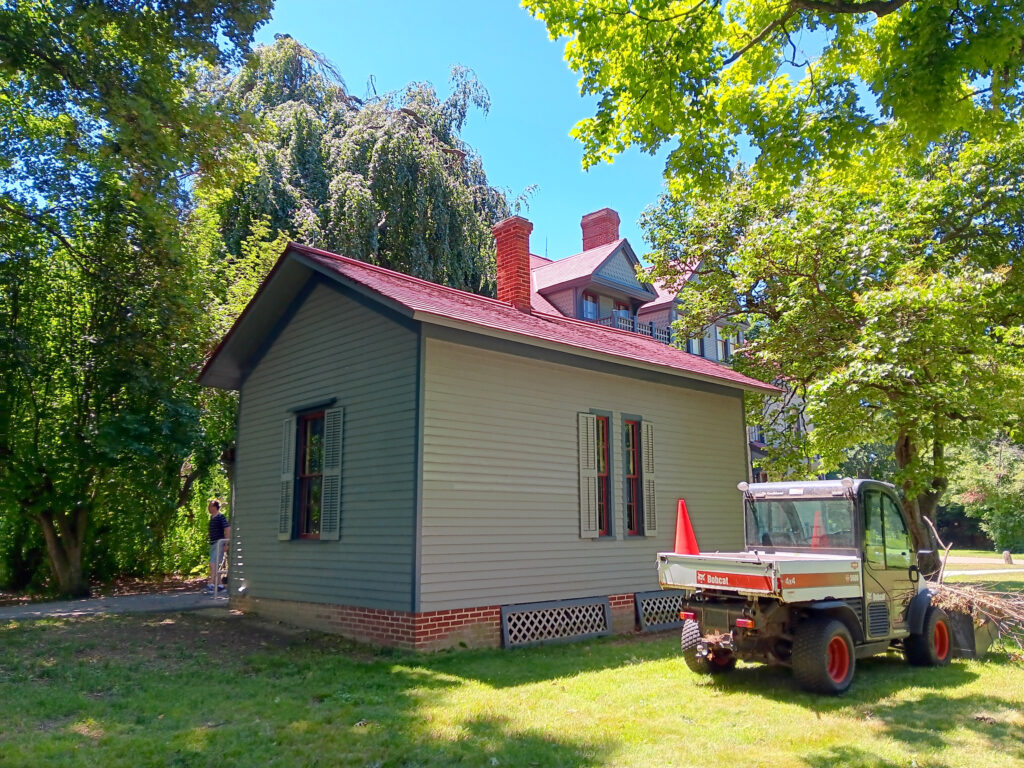
The main house has a tiny building behind it. The map back at the stable makes this look like one of the campaign buildings.
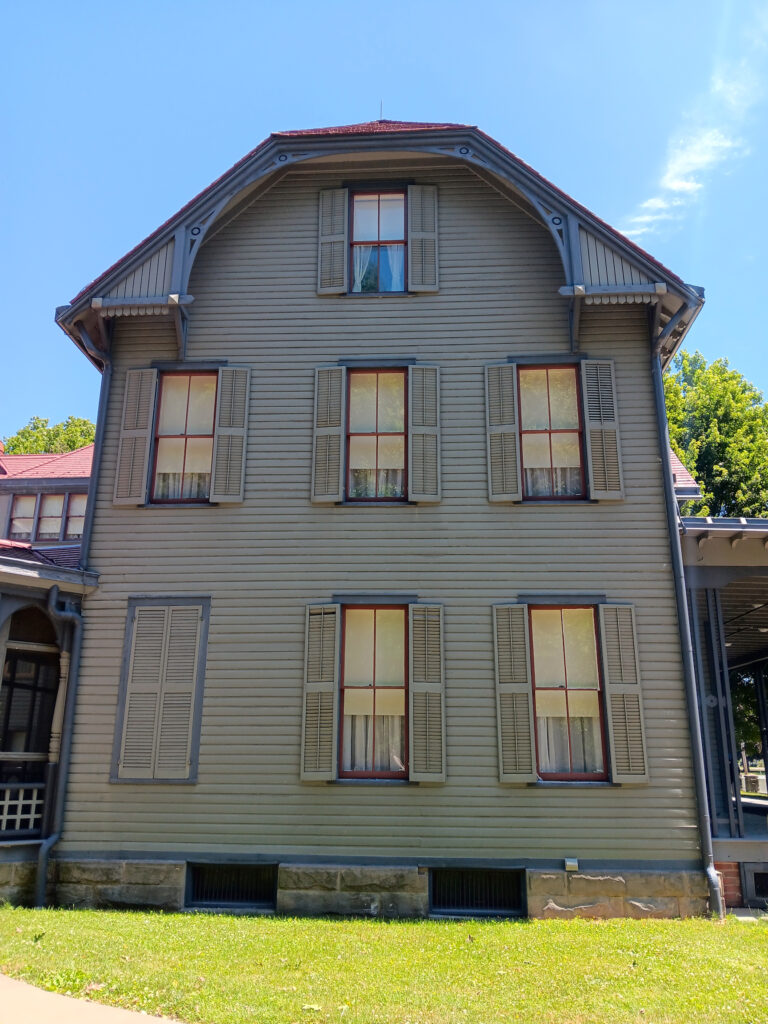
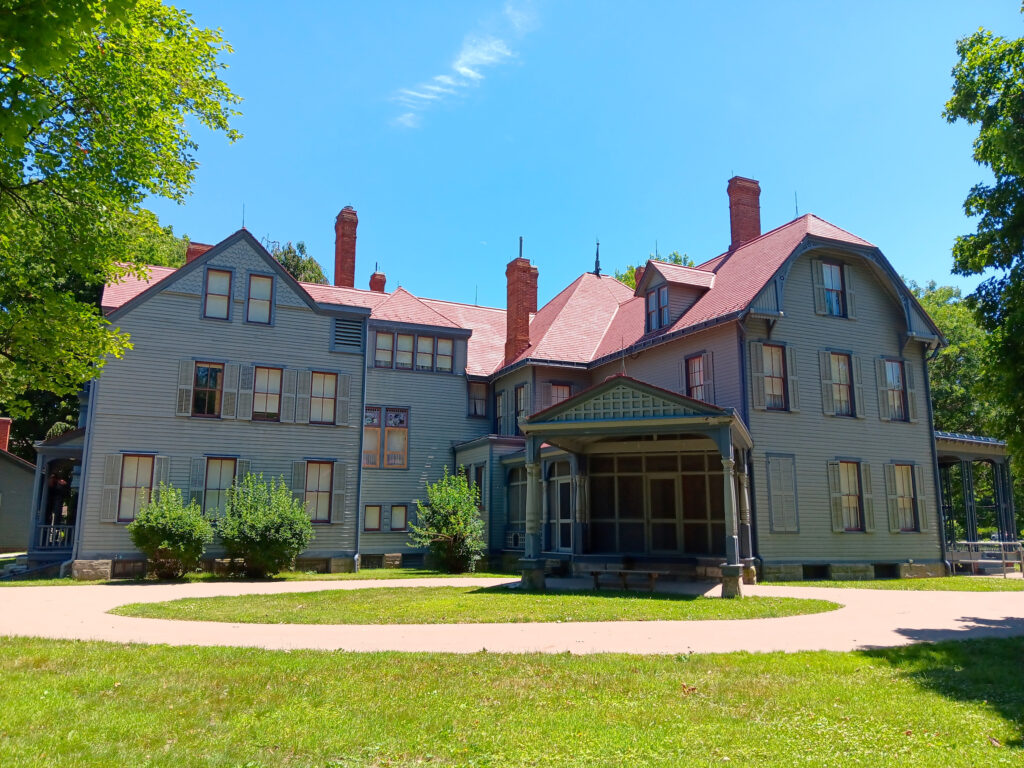
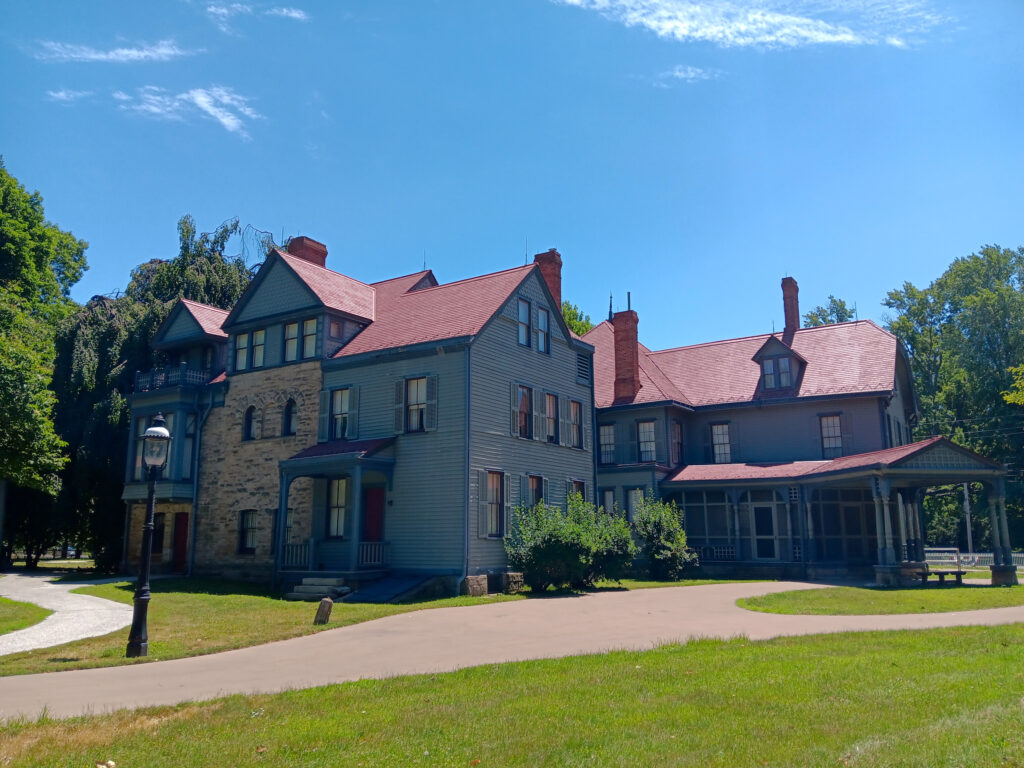
The main house is pretty big, but it has nothing on the McMansions of today. Given that we have seen where a family with 9 children grew up in a 10′ x 10′ house, this was probably enormous for the time.
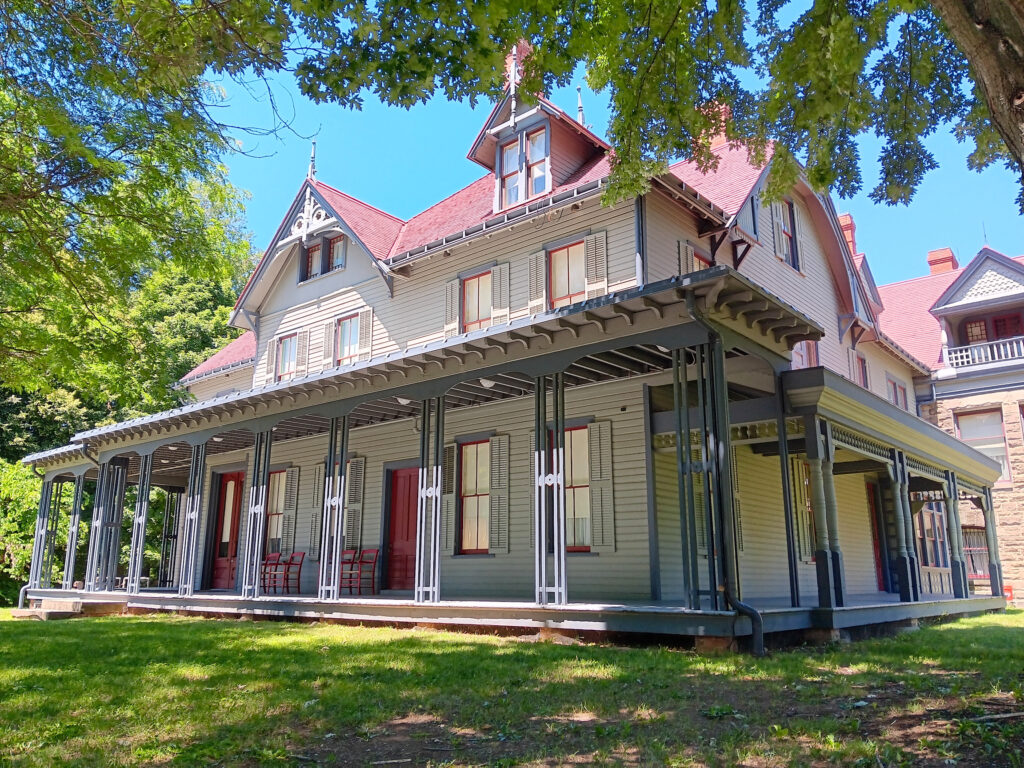
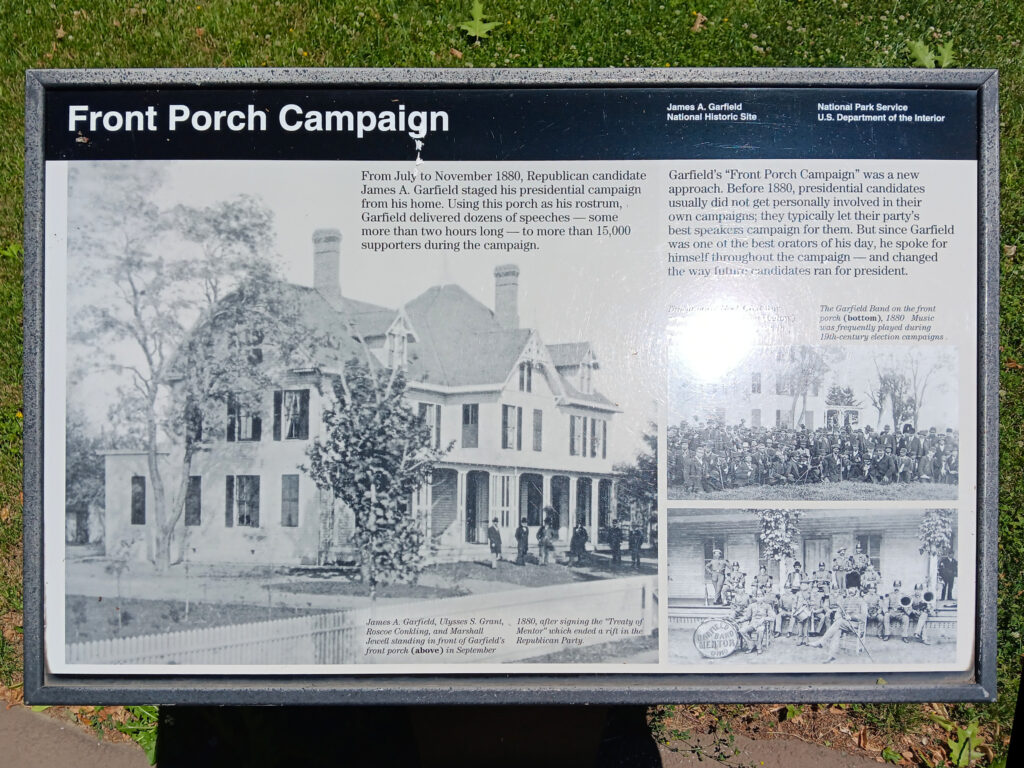
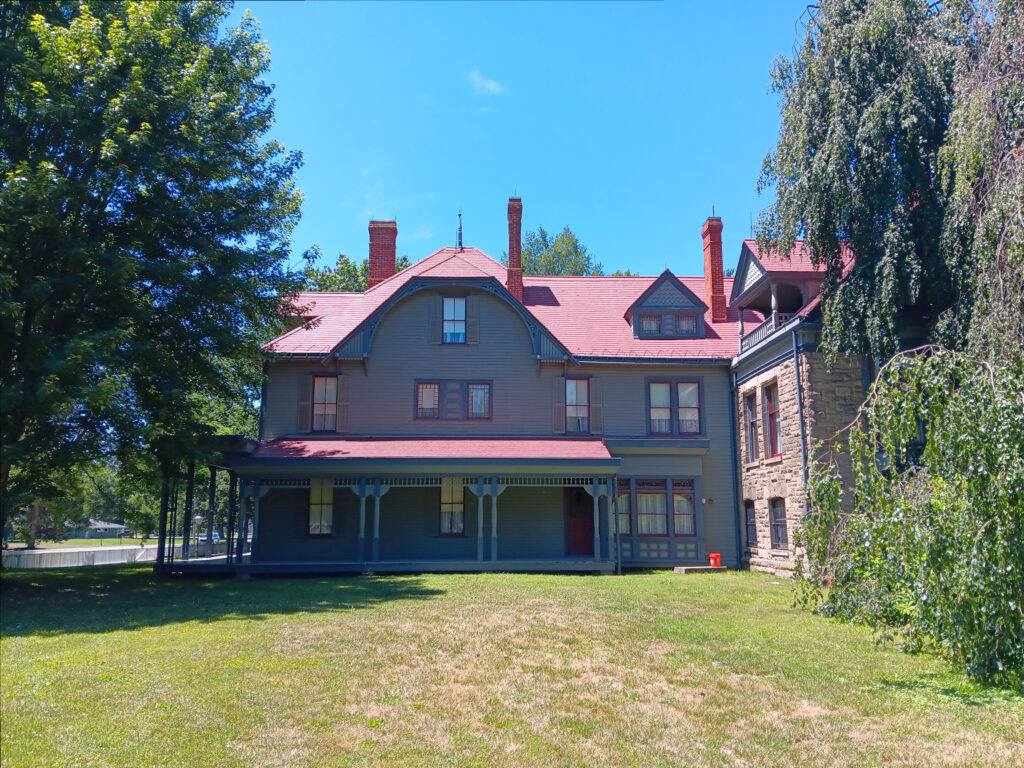
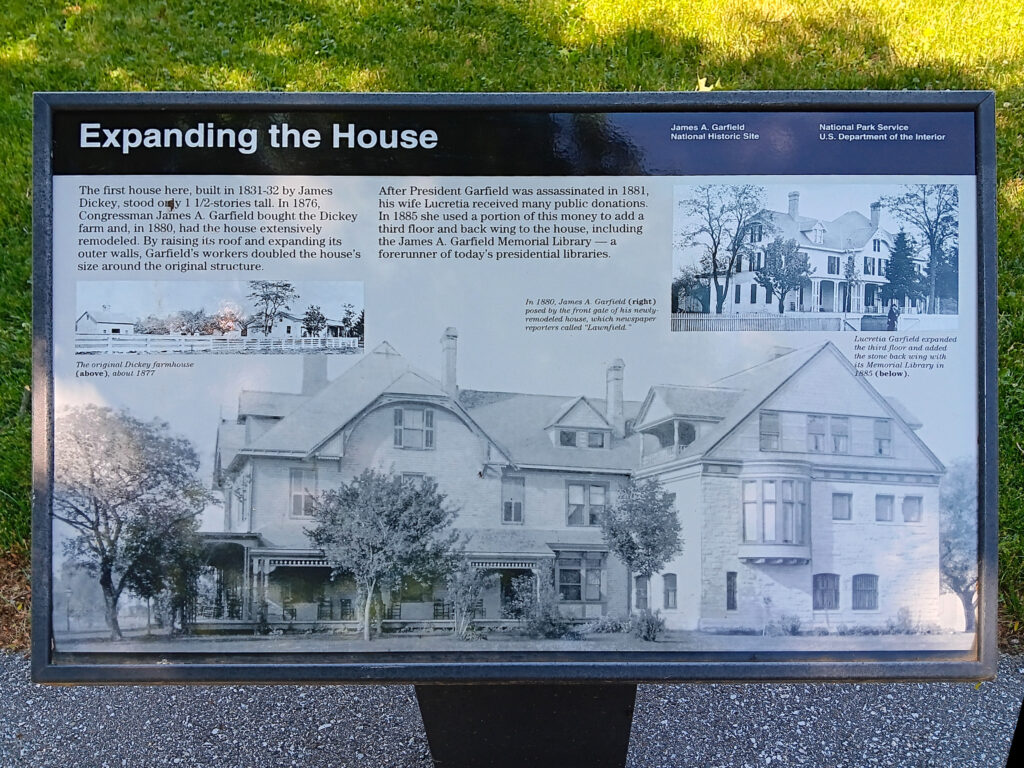
The house was expanded before and after James A. Garfield’s assassination.
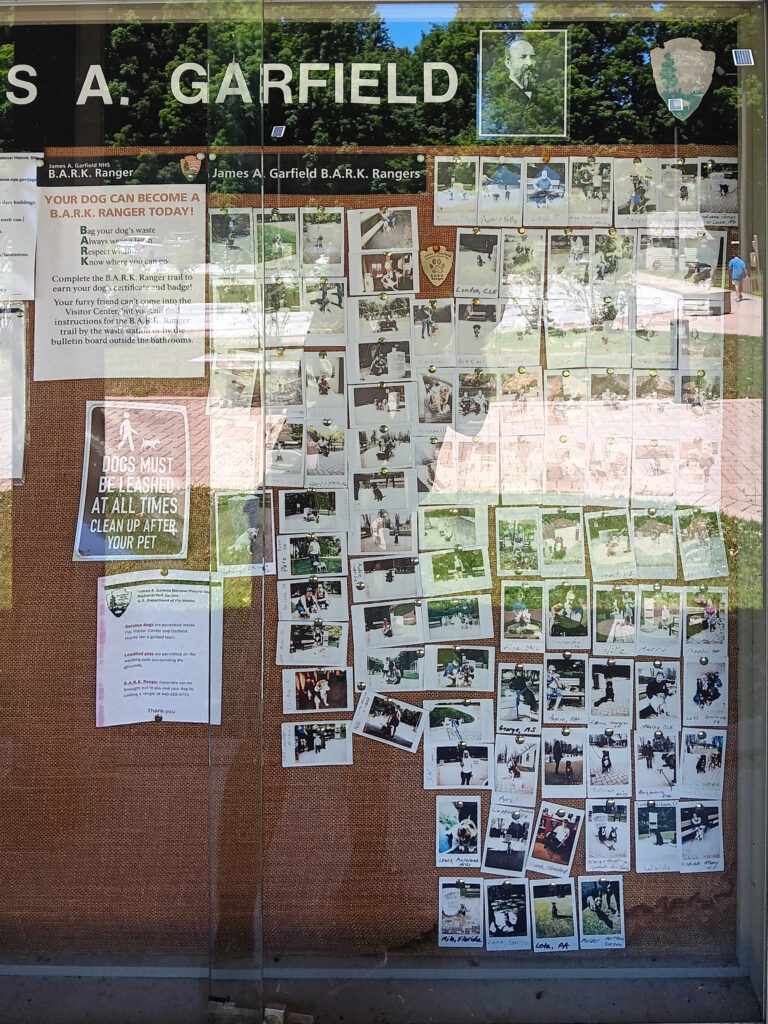
At the bathrooms, the park had a bulletin with all the Bark Rangers.
The next stop was the David Berger Memorial.