Findley State Park, OH, July 2026
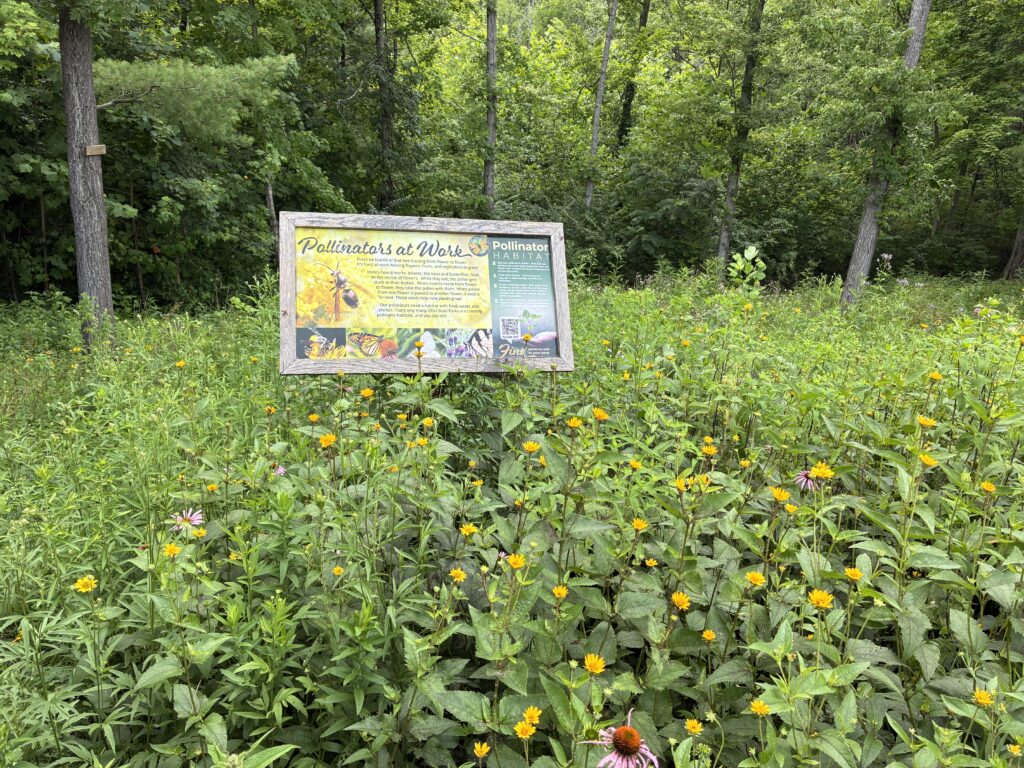
Findley State Park has as active Naturalist that runs various weekly programs. These include kayaking, stand-up paddle boarding, and Gyotaku. What is Gyotaku? It is Japanese fish printing. John saw this last year, but we did not have time to do it. Having not looked it up, we thought it would be block printing.
It is not block print; you rub ink on a fish and press paper on the fish. It is named for Gyo (Fish) – Taku (Stone Impression). In Japan, the practice was started in the 1800s as a method for fisherman to record their catches. It later became an art form. It is rumored that Samurai would use Gyotaku of their catches to determine the winner in fishing competitions. You can read more about it on Wikipedia here.
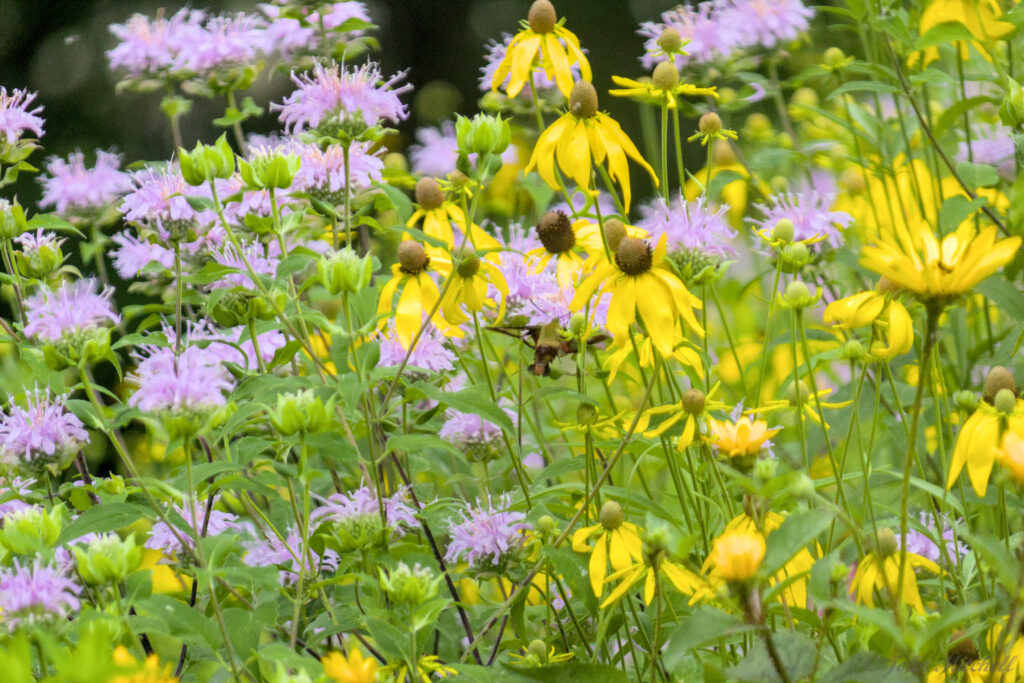
We arrived early to find rubber fish on a table with water-based paint. We talked to the naturalist, ‘Wiz’, and he told us that there were Clearwing Hummingbird moths in the pollinator garden out back. In the pollinator garden, they are attracted to the purple Wild Bergamot, also known as Bee Balm and Wild Oregano We tried to get a few pictures with cell phones, but it was not working out. Mostly young kids turned up to make the prints. Since the event was geared more towards children, so we ended up not making fish prints. Instead, John went to get the SLR camera.
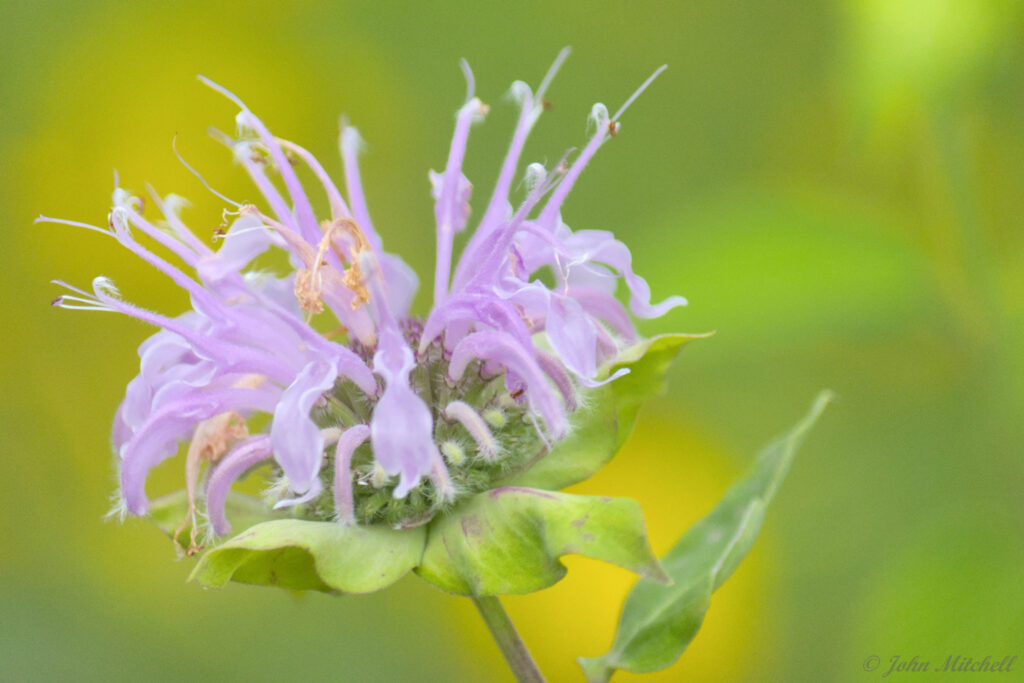
There are three moths commonly referred to as hummingbird moths due to their tendency to hover and feed similar to hummingbirds.
- Snowberry Clearwing (Hemaris Diffinis) moth is yellow and black with a flared tail. It has coloration reminiscent of a Bumble Bee. It is found all across North America.
- White-lined Sphinx (Hyles Lineata) moth is a larger white and black moth with bright pink spots on the rear wings. It is found all across the USA.
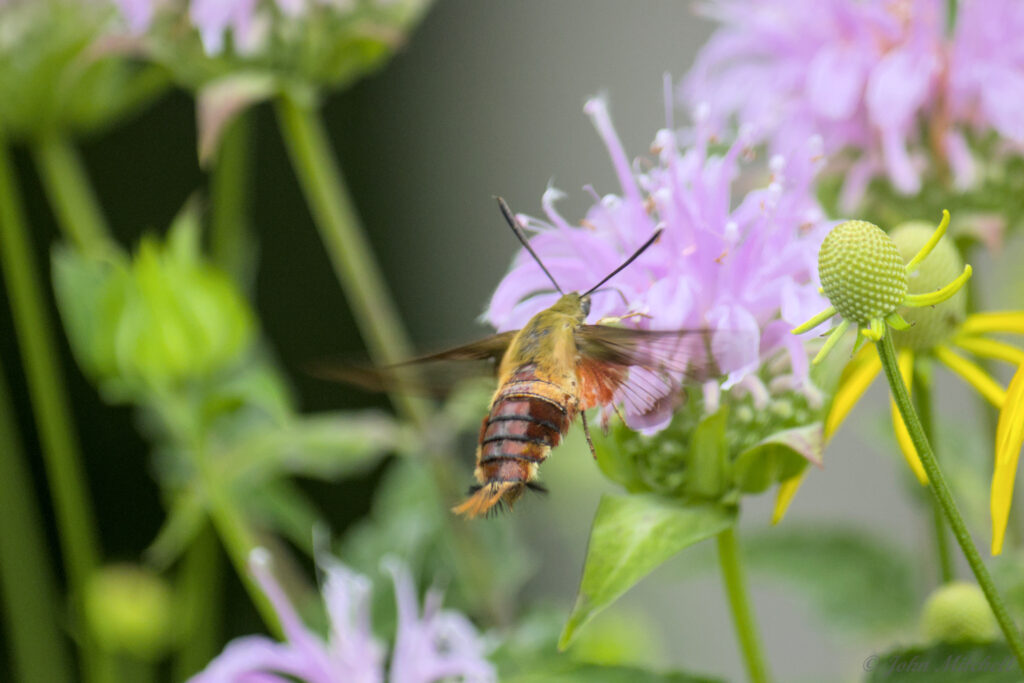
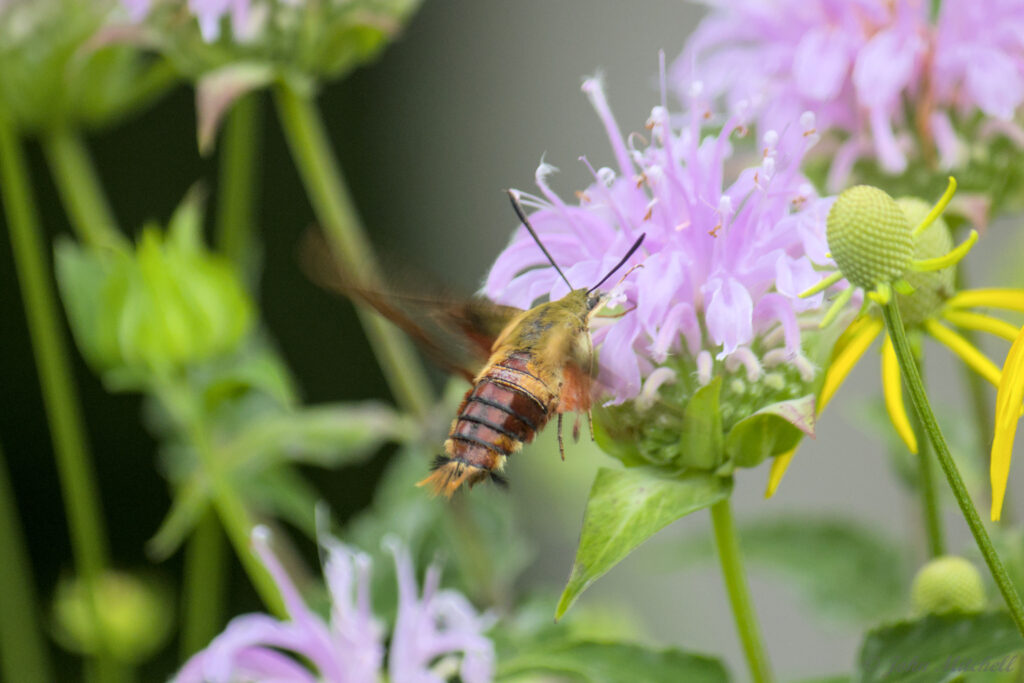
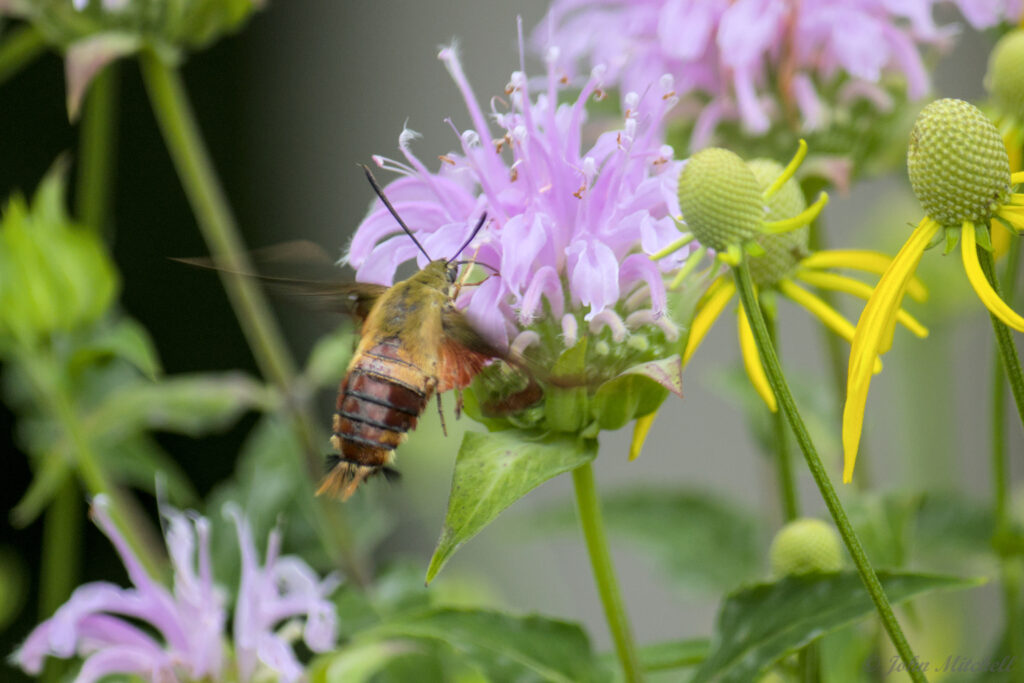
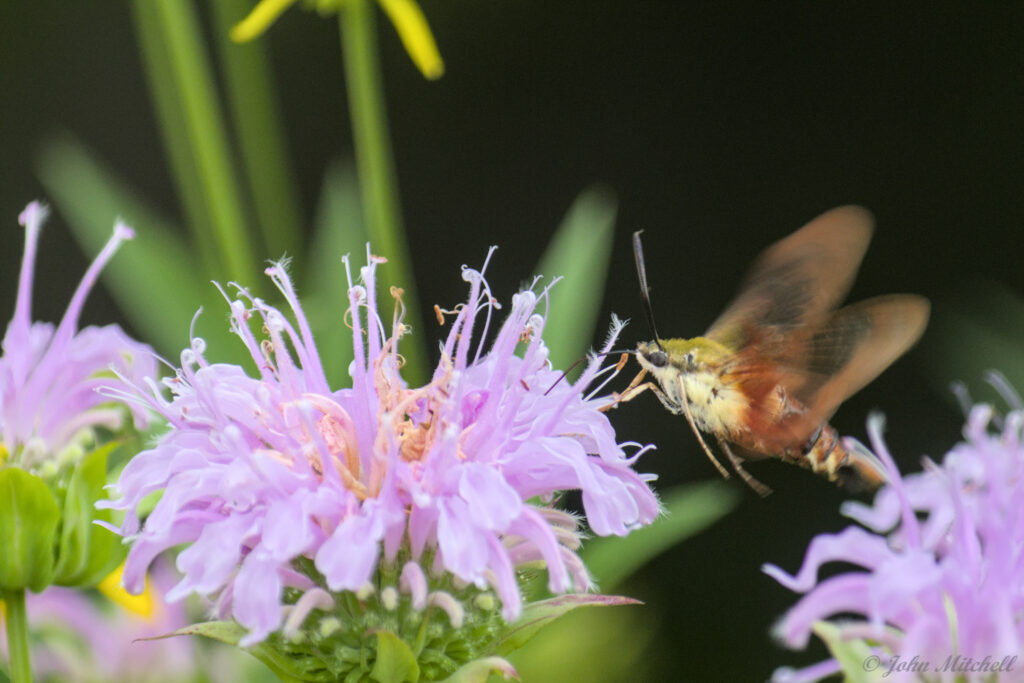
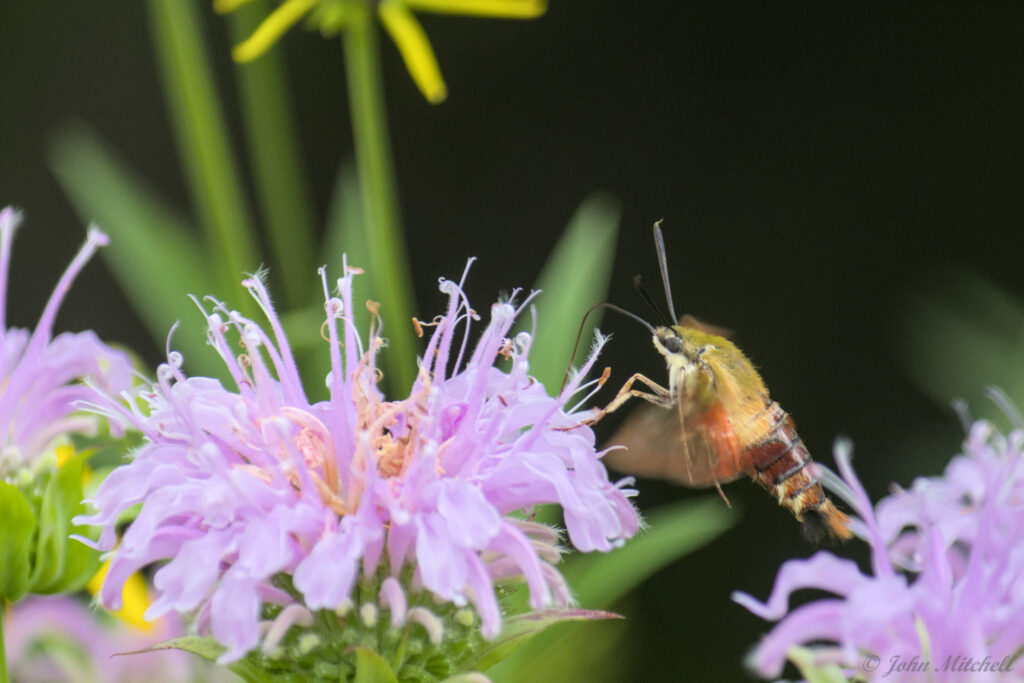
- Hummingbird Clearwing (Hermaris Thysbe) moth is olive and reddish brown with a flared-ish tail. It is mostly found in the eastern USA.
The pollinator garden had a large number of the Hummingbird Clearwing moth, which is sometimes called a “Flying Lobster”. Due to its size, John tagged it as a flying shrimp before reading about the lobster name.
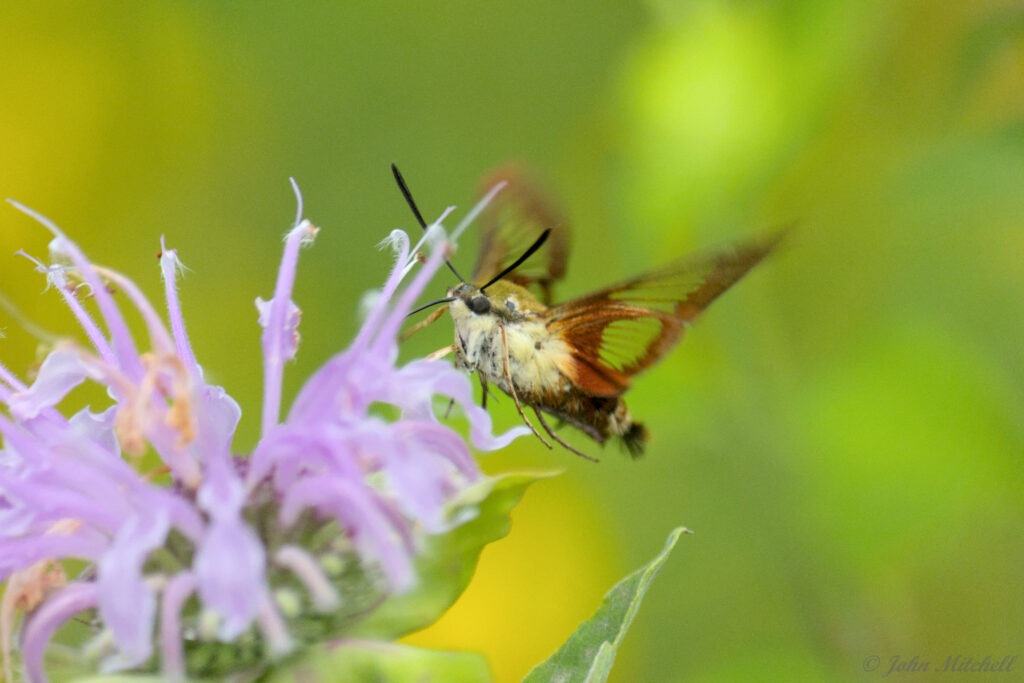
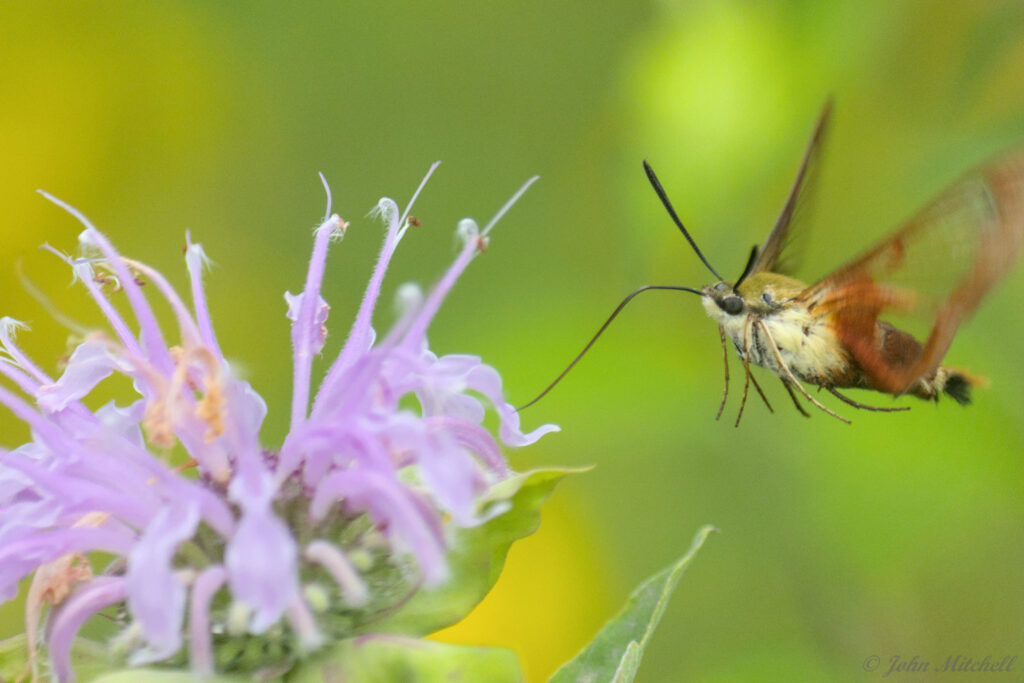
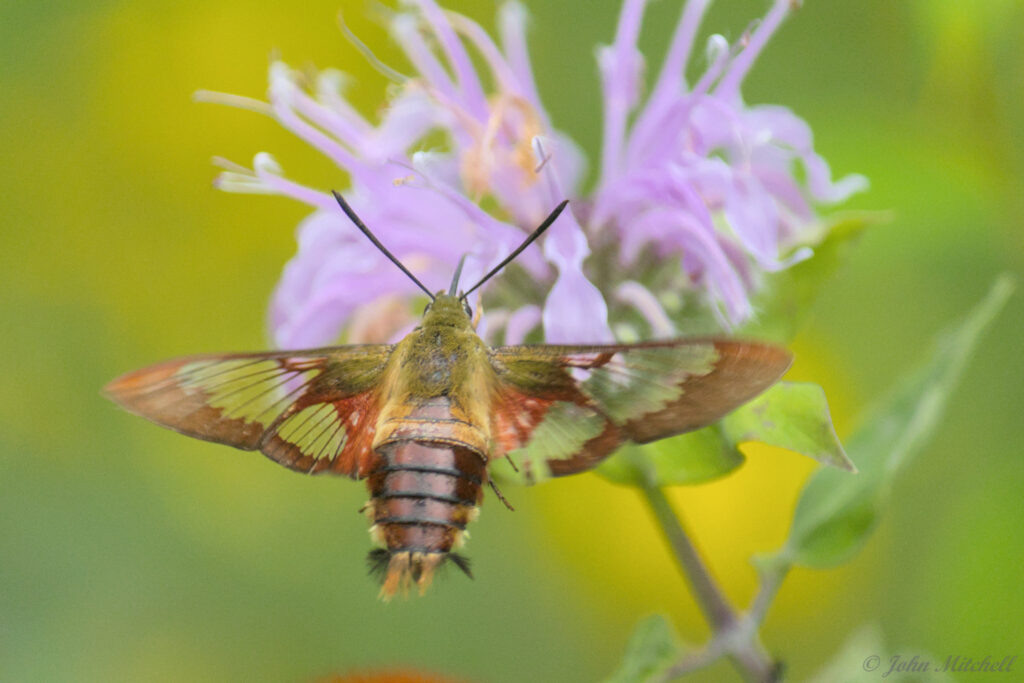
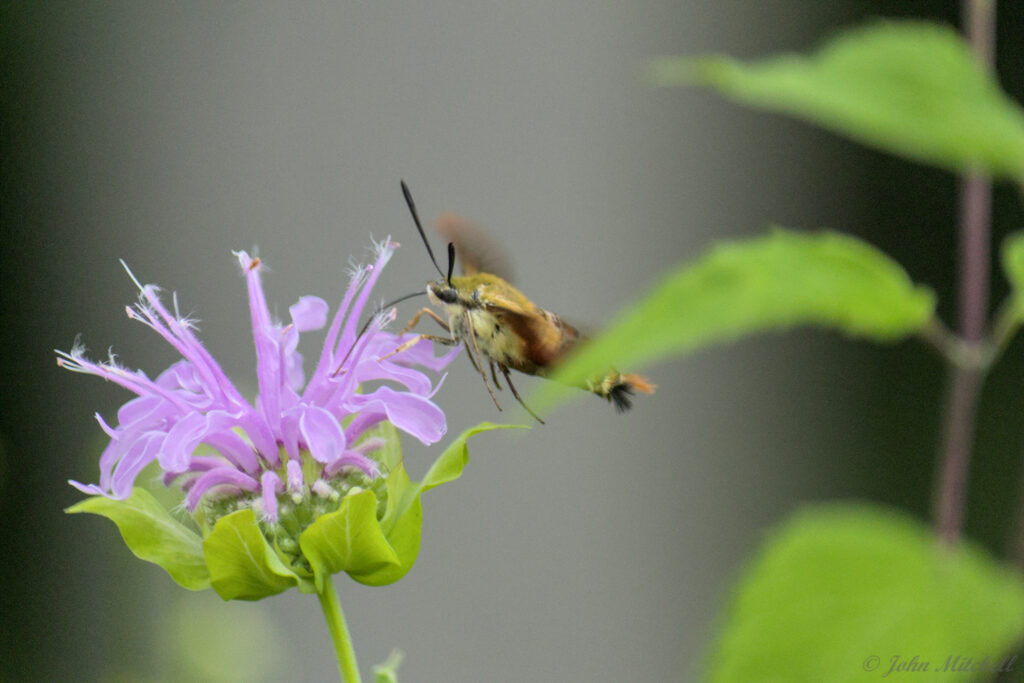
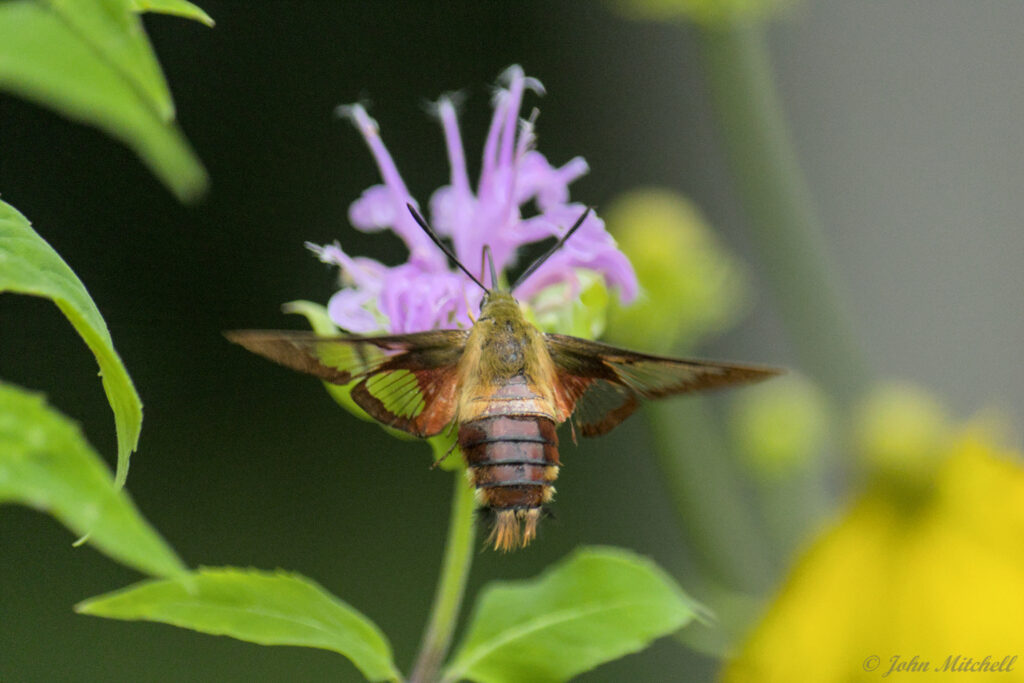
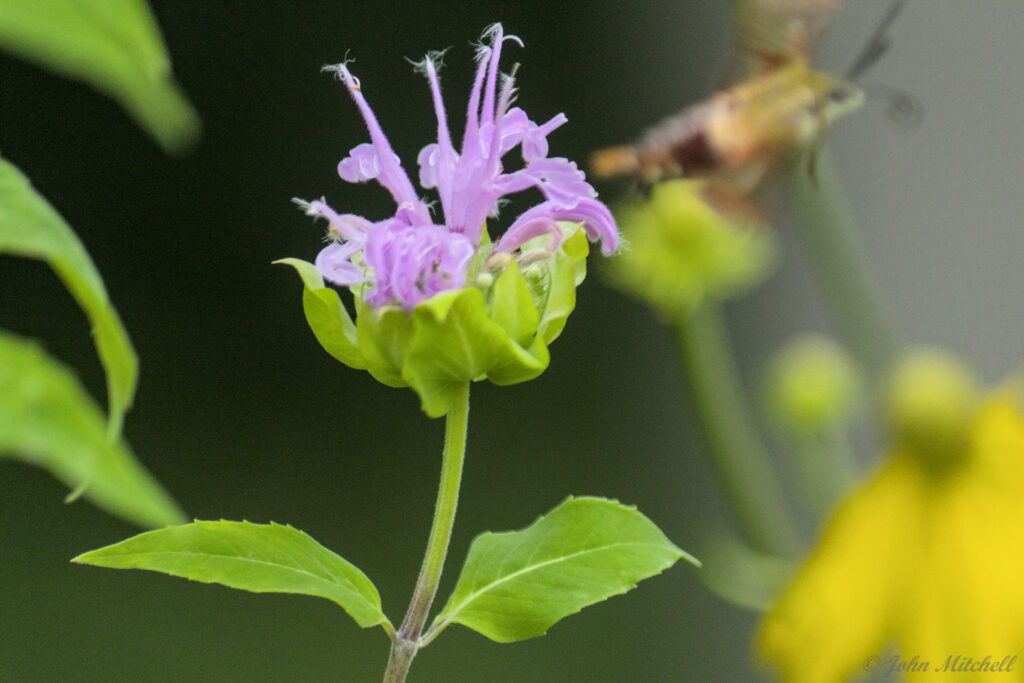
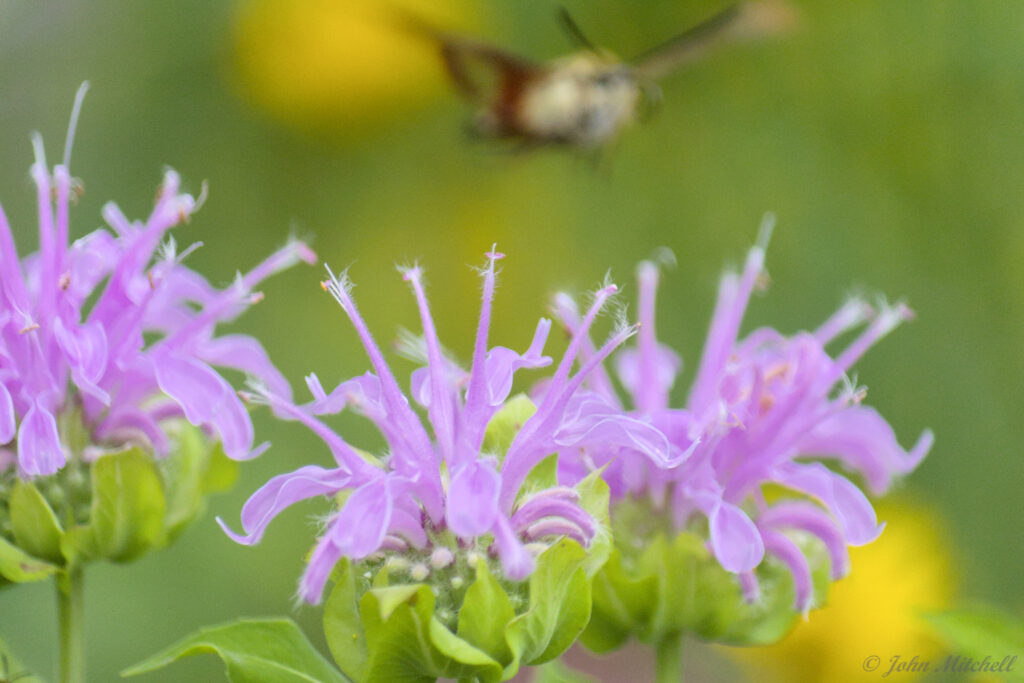
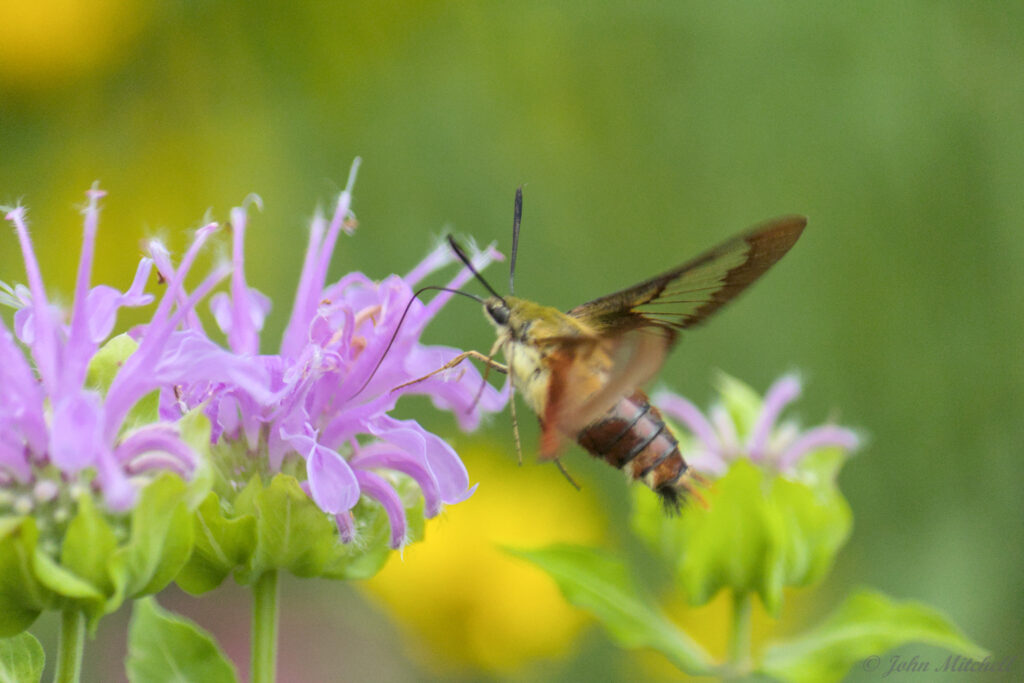
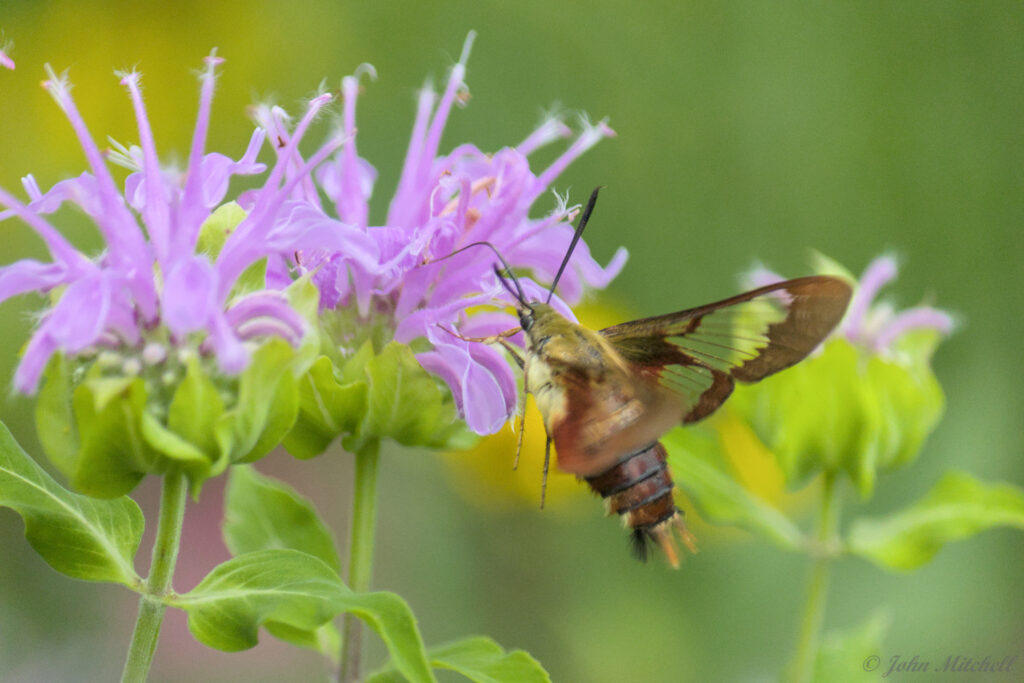
In these five images, the shutter speed it about one quarter of what it was above. This gives the wings a little more of the hummingbird blur effect.
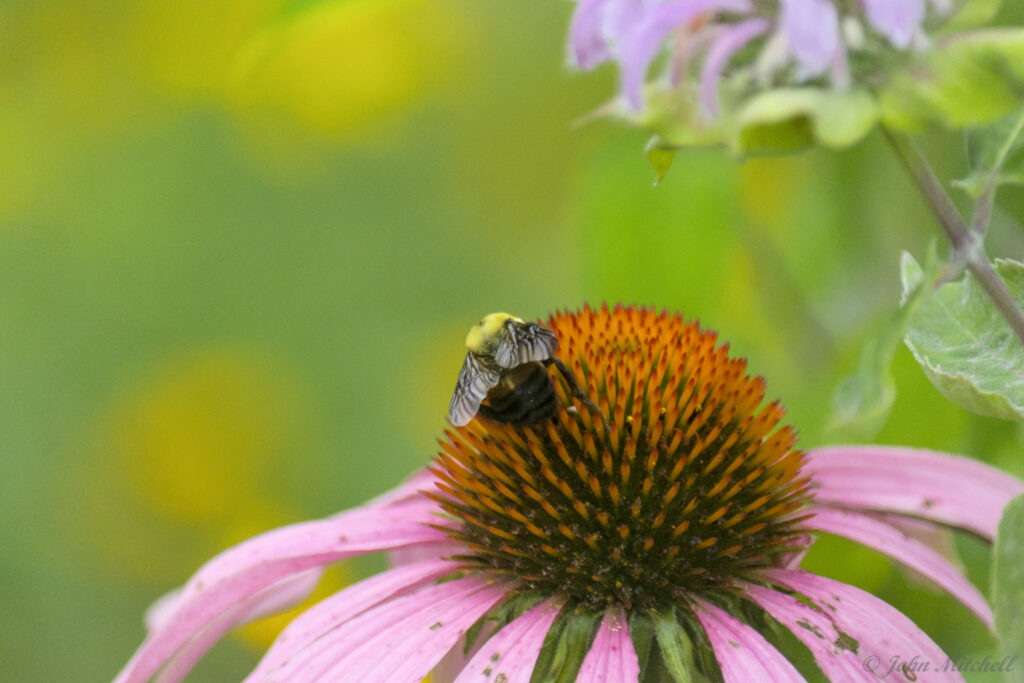
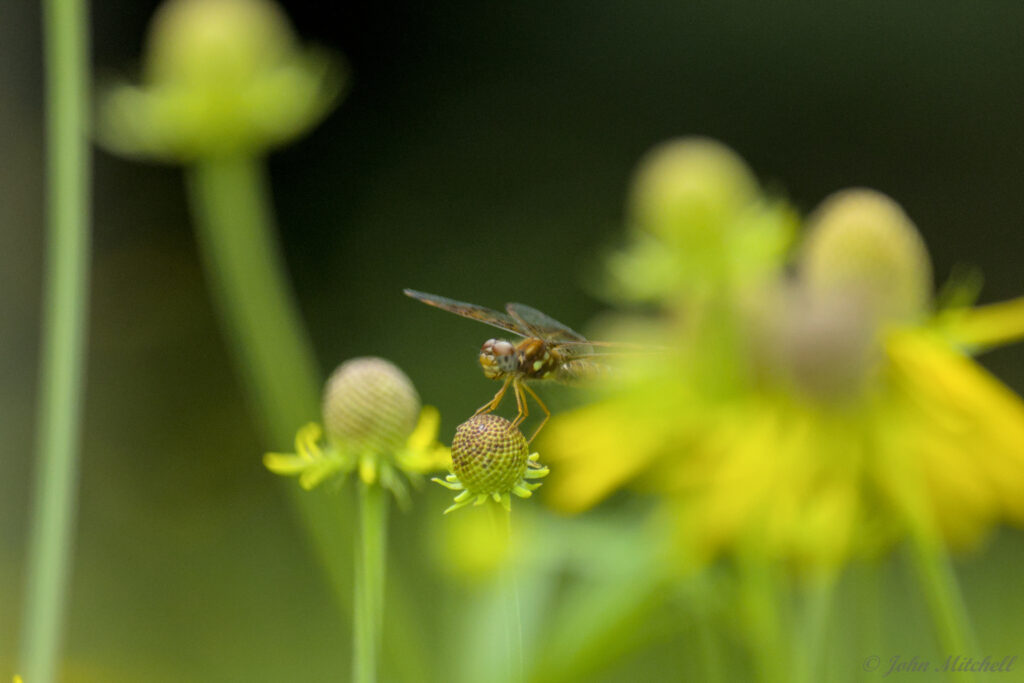
There were also a few other residents in the garden.