
Summit Lake State Park, IN, July 2026
looks HUGE with a macro photography lens. The lens is at 55mm or 42 mm with 31 mm of extension tubes. The magnification is between about 0.85x and 1.05x. This means that the spider image on the 22.3 mm x 14.8 mm R7 sensor is 85% to 105% of life size. The leg tip to leg tip length is about half the sensor width, so the spider is, at most, one centimeter diagonally.
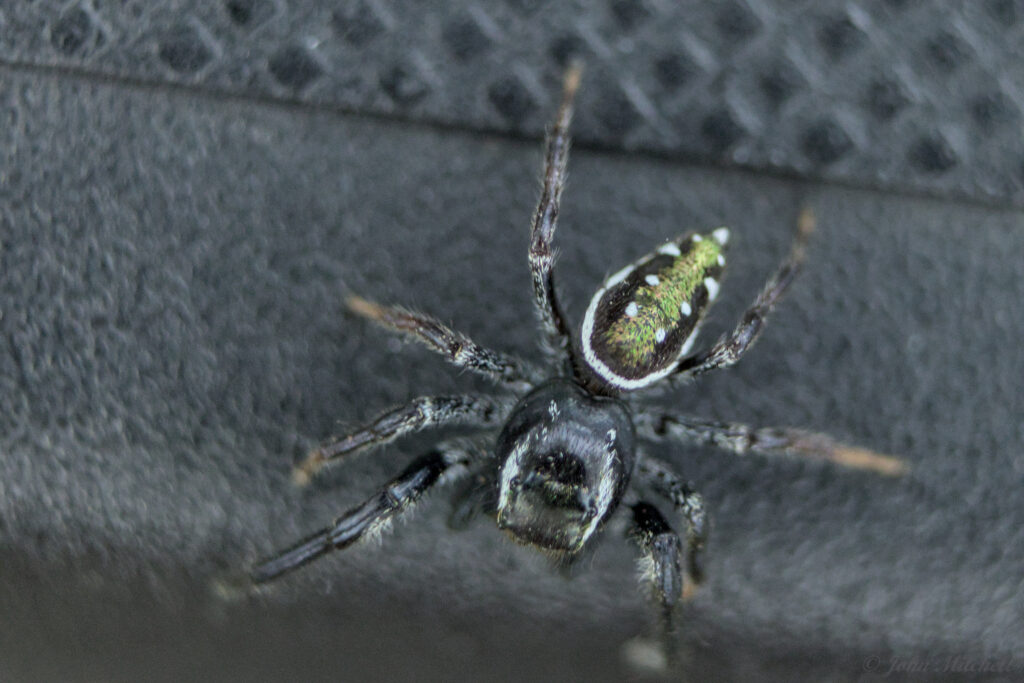
This is probably an Emerald Jumping Spider (Paraphidippus Aurantius), and yes, they do jump. With the extension tubes, you have to focus very close to the subject. At the closest, the lens was maybe 1 to 2 inches away. The spider looked up at the lens, waved his legs at it, and jumped onto the lens. This is when the photography session ended. There was no screaming like a little girl, or at least, you cannot prove there was.
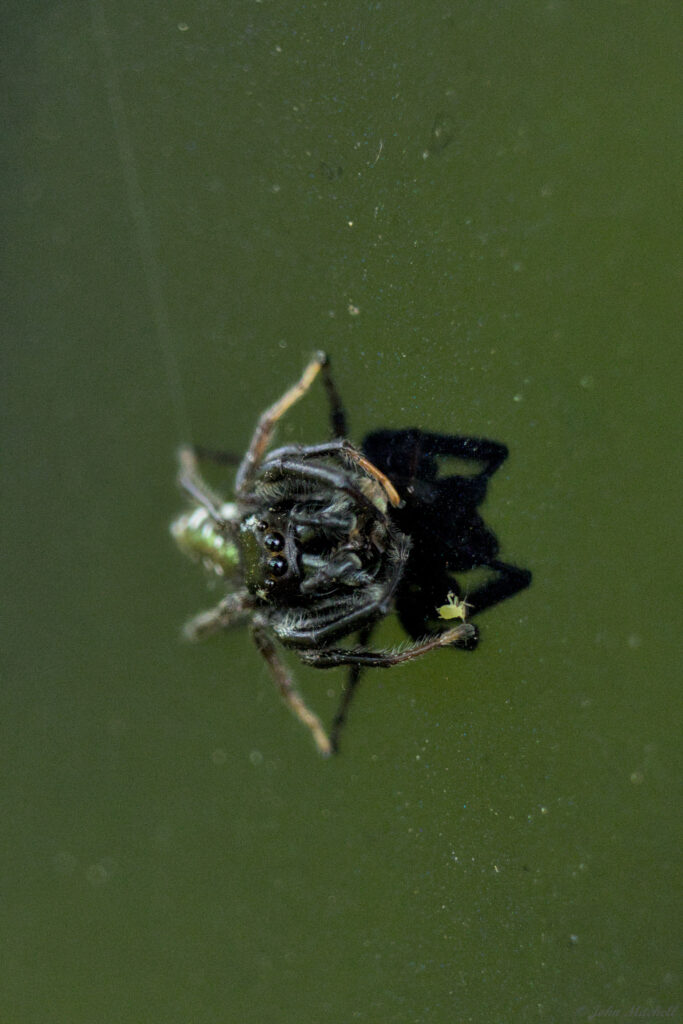
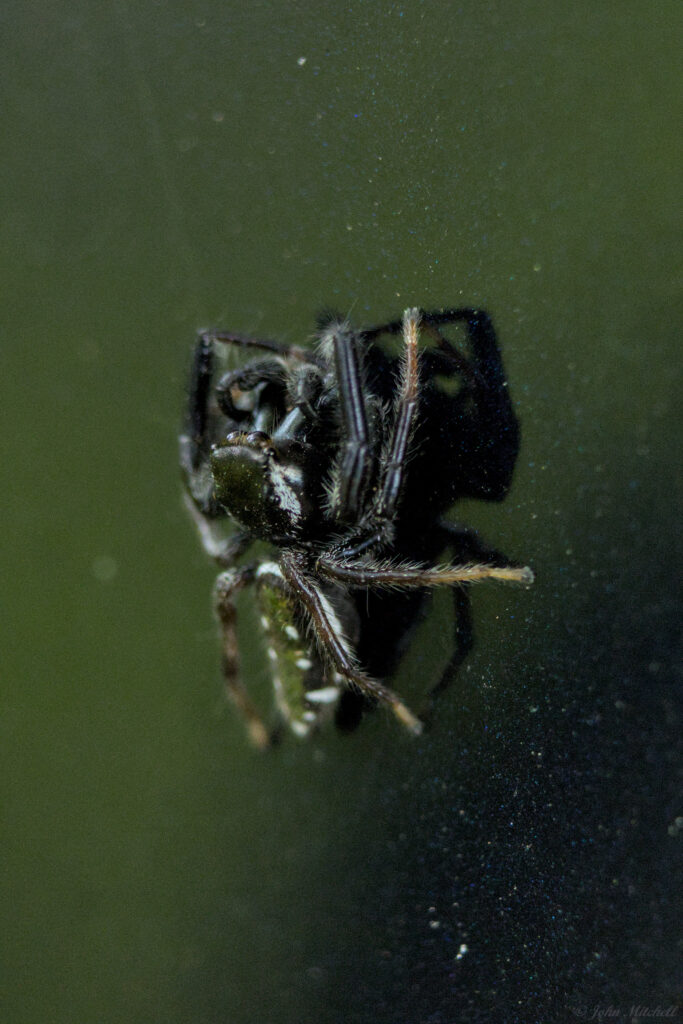
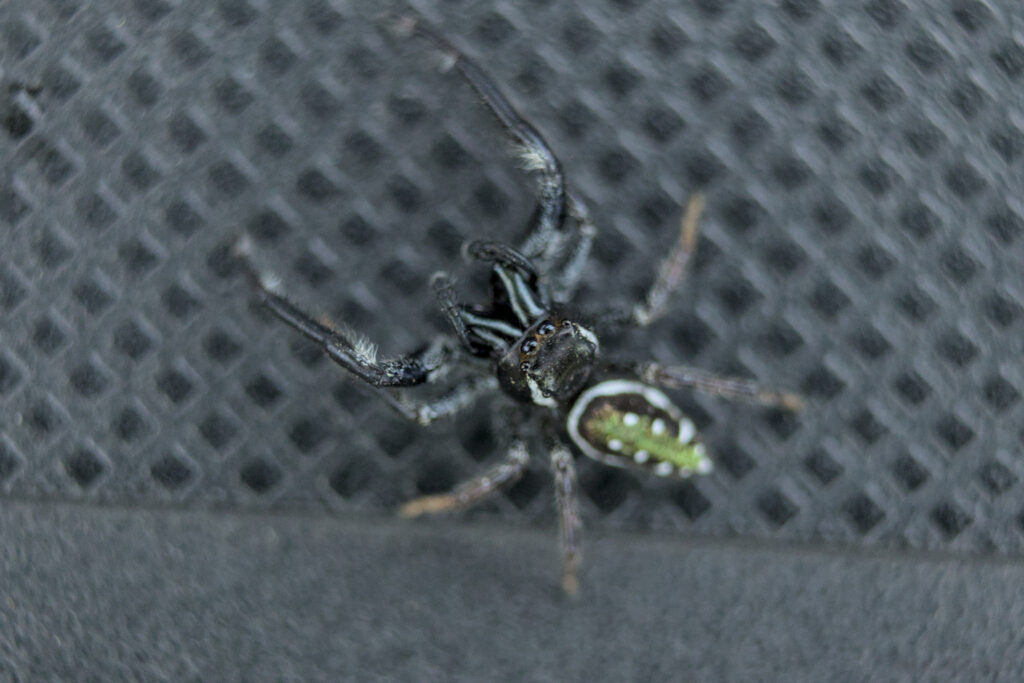
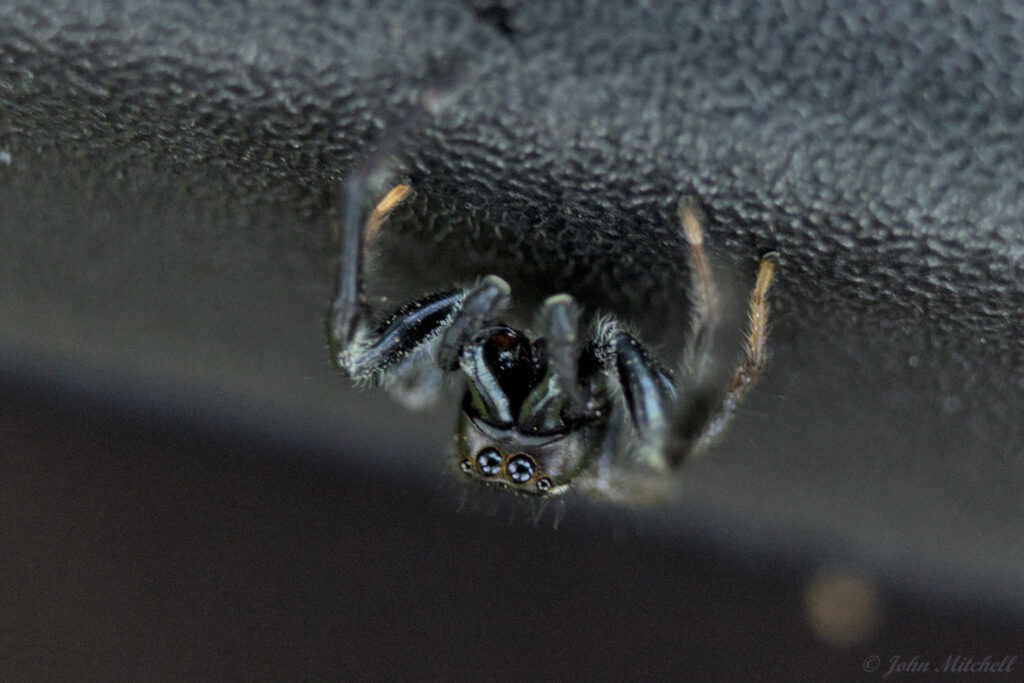
That was a joke. Yes, the spider jumped on the lens, but Jumping Spiders are curious and non-aggressive towards humans. They have extremely good eyesight, and they are known for watching you watch them. While being photographed, it would move around to get a view of the camera and lens. It likely saw the reflection in the lens and jumped on to investigate. A gentle puff of breathe made it jump back on the truck bed.
Here are some focus bracketed stacked shots. The bracket was a little too wide for an insect. The focus brackets and stacking are an ongoing experiment. In the first two stacks, the spider and I never moved. The pictures are almost identical.
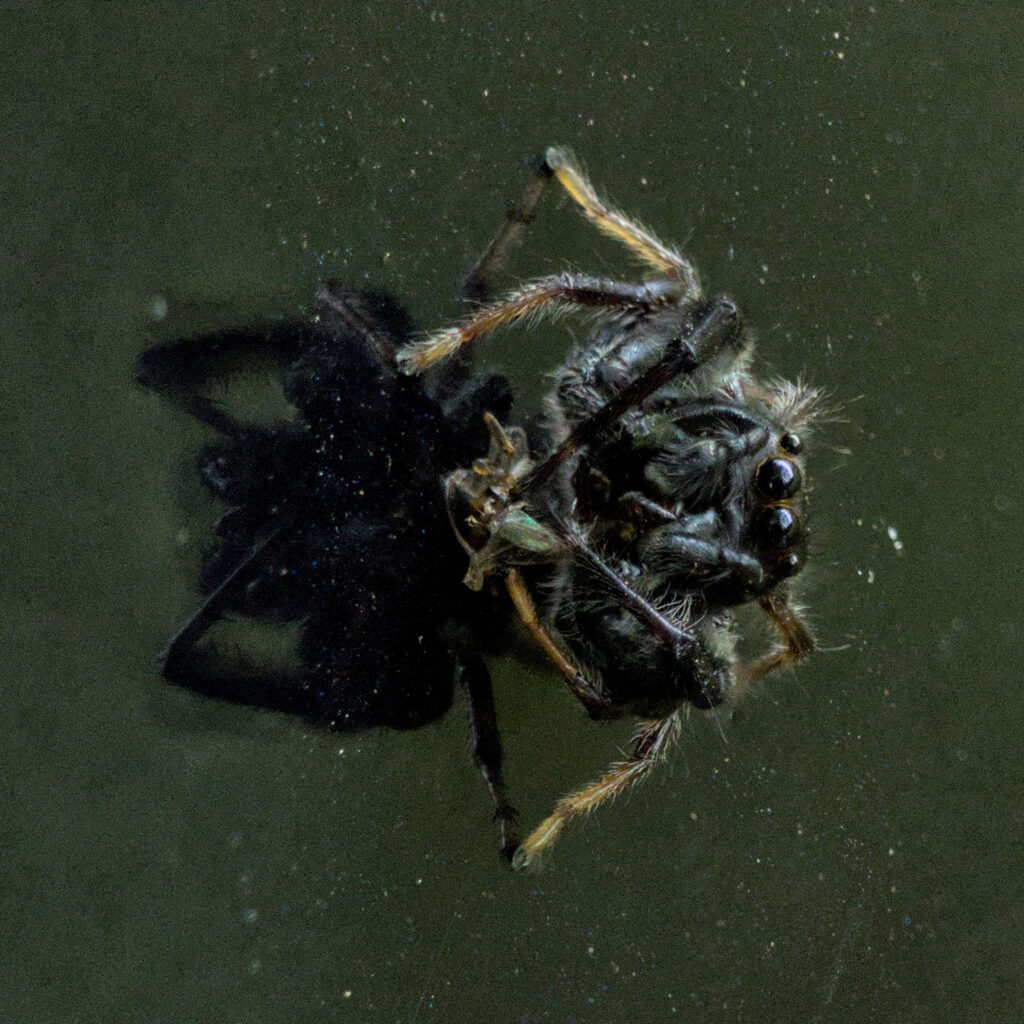
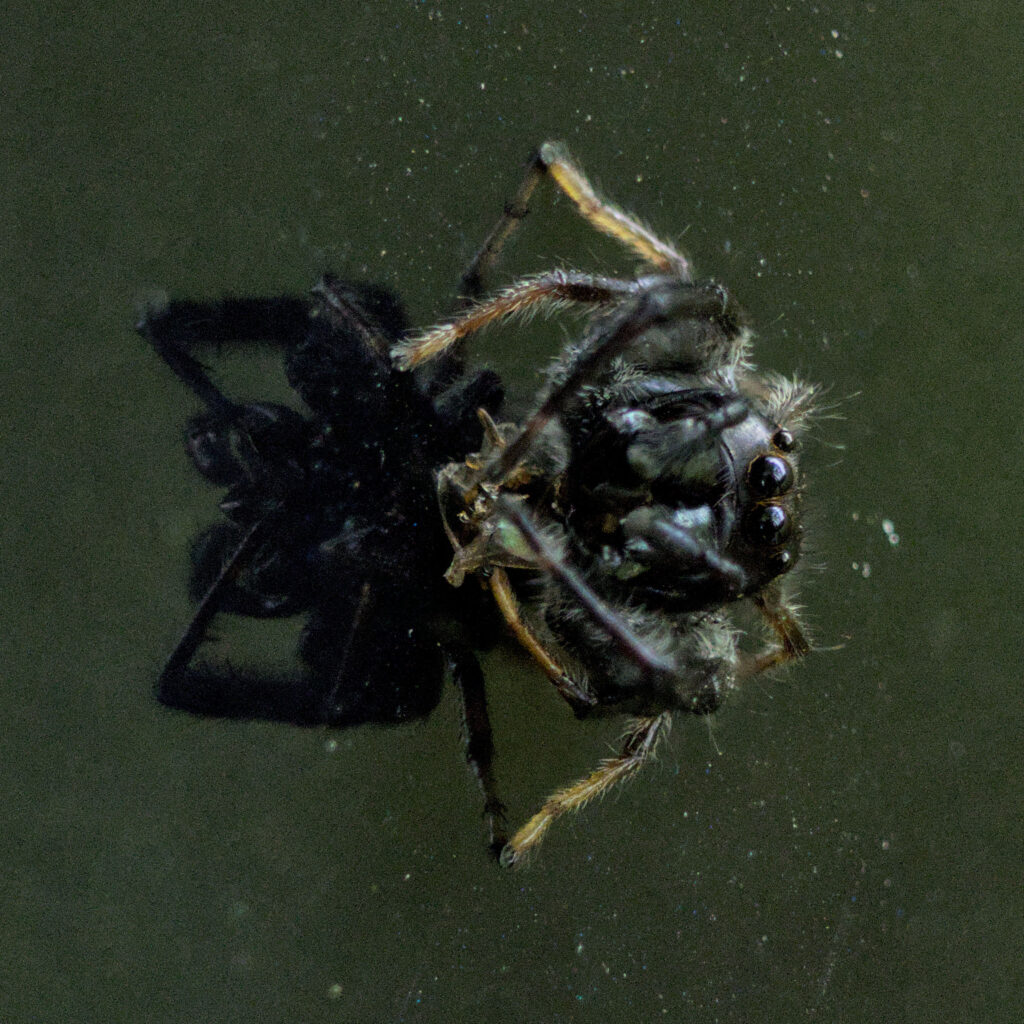
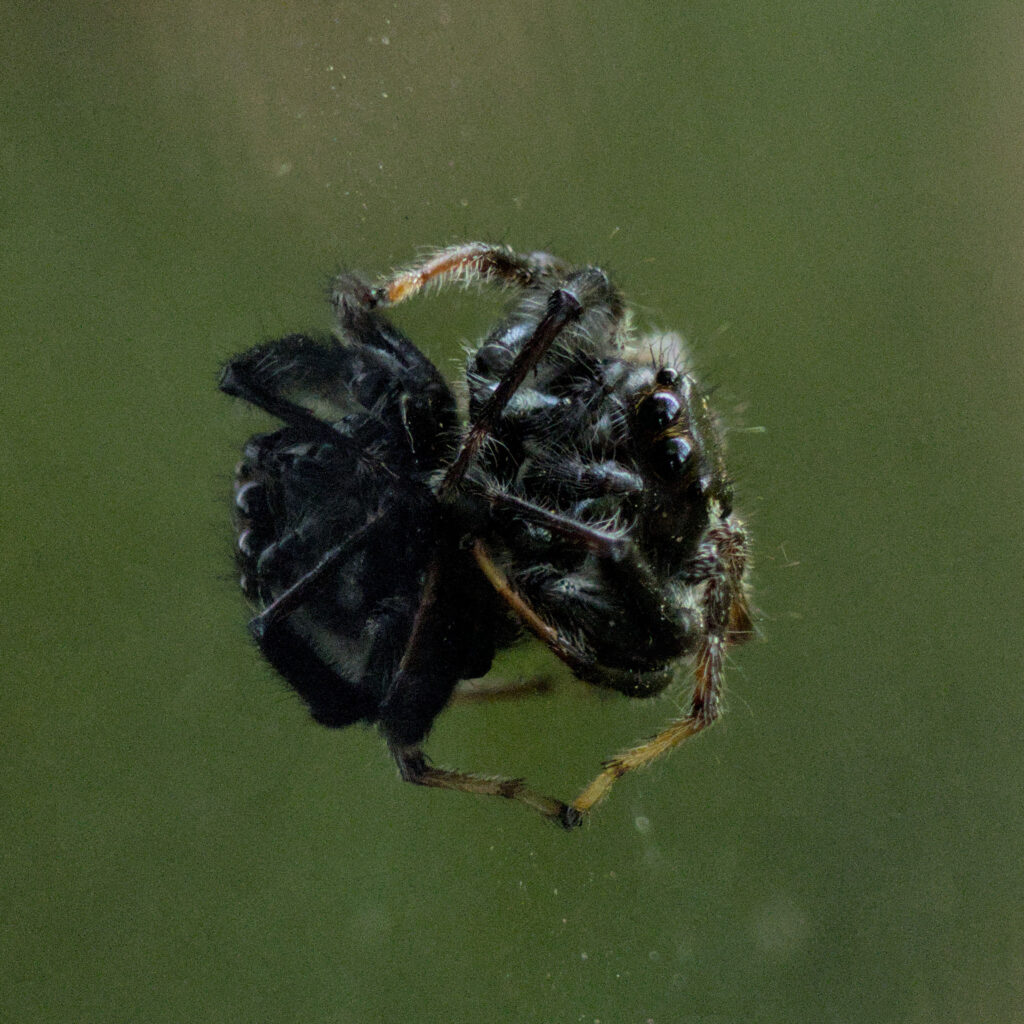
Jumping Spiders are among the most observant, intelligent, and curious of spiders. It takes aggressive handling to get them to bite. Generally, they will just flee. Their poison is not dangerous to humans, and it only produces mild itching and swelling. They are ambush predators that using amazing leaps to land on their prey (or nearby to run them down.)
Some people keep them as pets. They can learn to associate your look and smell with safety, so they no longer view you as a predator. The debate is ongoing about whether they form an emotional bond with humans or just associate you with food and safety. A Harvard study used young Jumping Spiders with translucent exoskeletons to observe a REM-like sleep state in the spiders complete with rapid retinal tube movement and leg twitching. REM sleep was original thought to be exclusive to vertebrates. They reliance on vision may contribute to this.