Mill Creek Metro Park, OH, June 2026
Youngstown has the Mahoning (not Majong) River flowing through the middle of the town. Mill Creek winds northwards through the west side of town until it empties into the Mahoning River. Most of Mill Creek is either a Metro Park, Preserve, or Sanctuary. It also has several scenic and historic spots along it. The two we went to see were the Lanterman’s Mill and the Cinderella suspension bridge. There are a lot of pictures of the mill, so we will separate this stop into two posts using the mill as the break point. This post will be everything up to and including the mill.
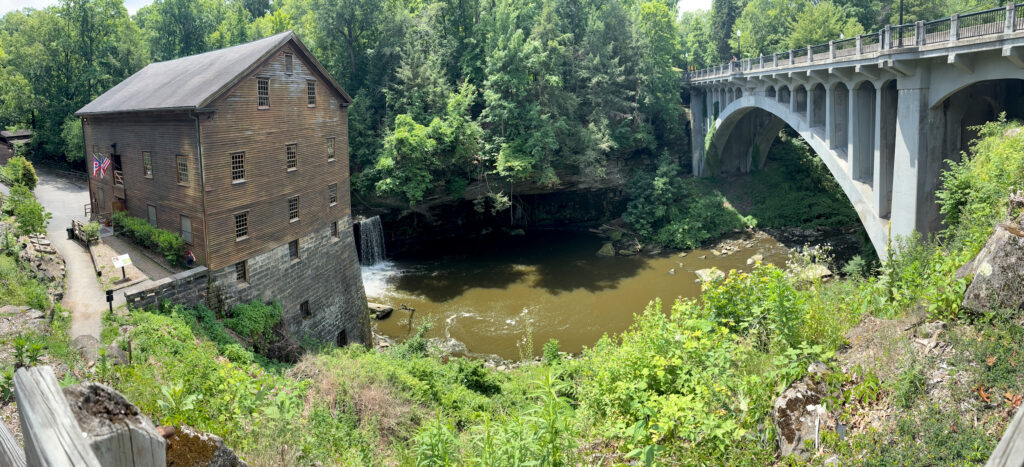
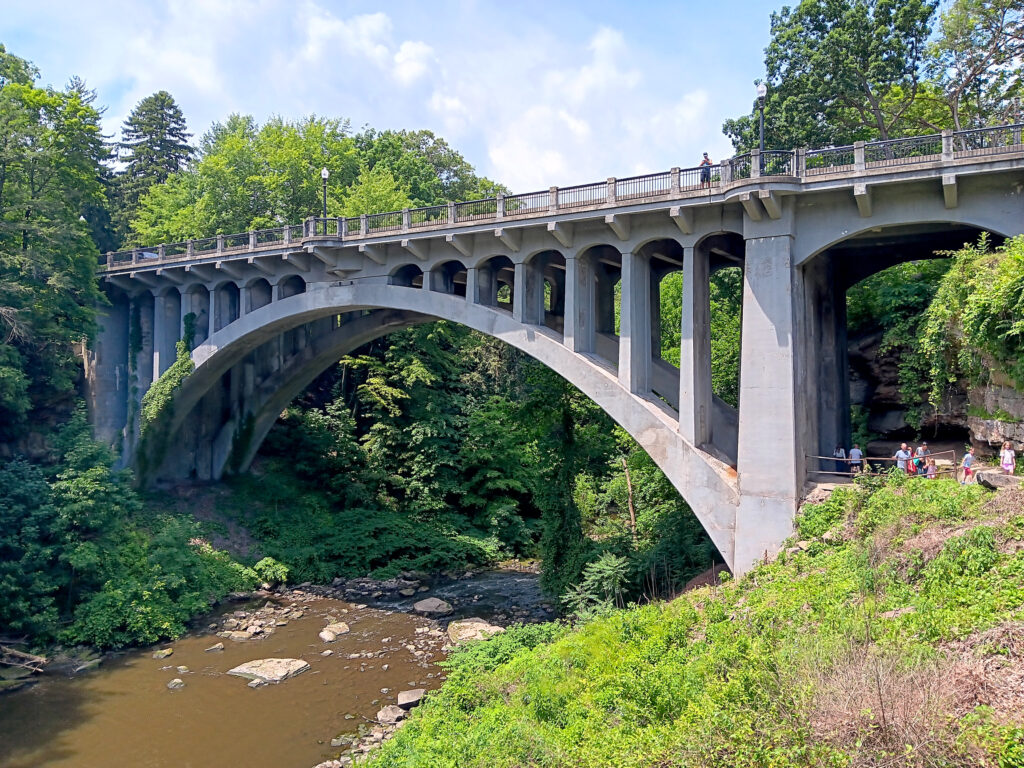
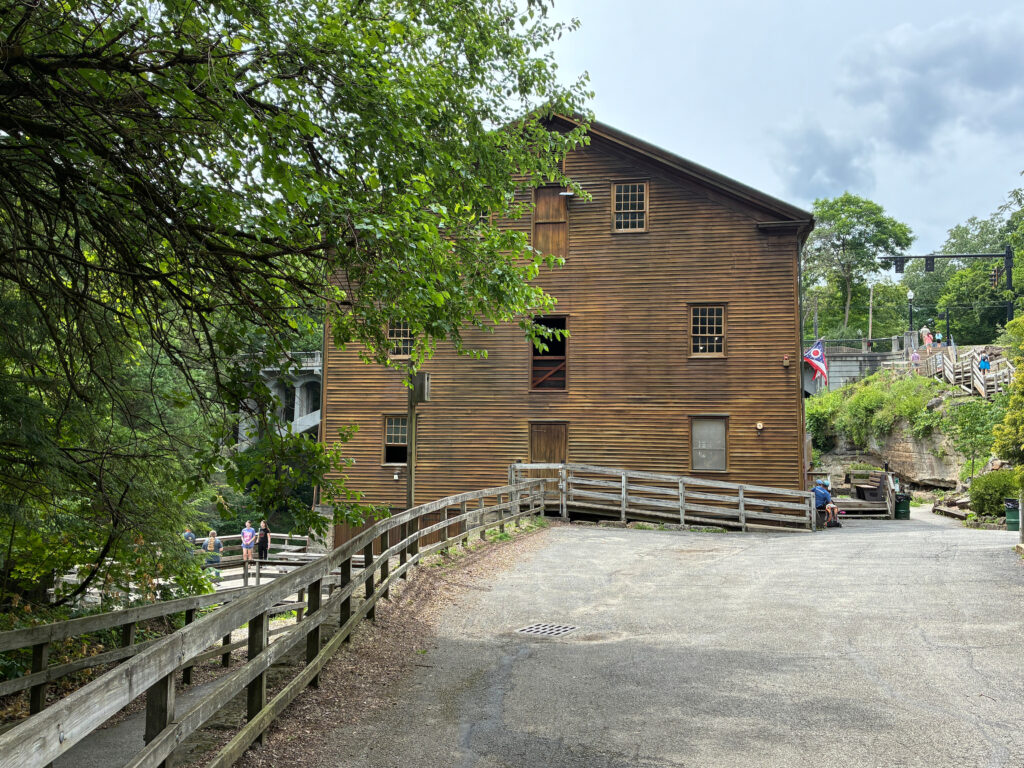
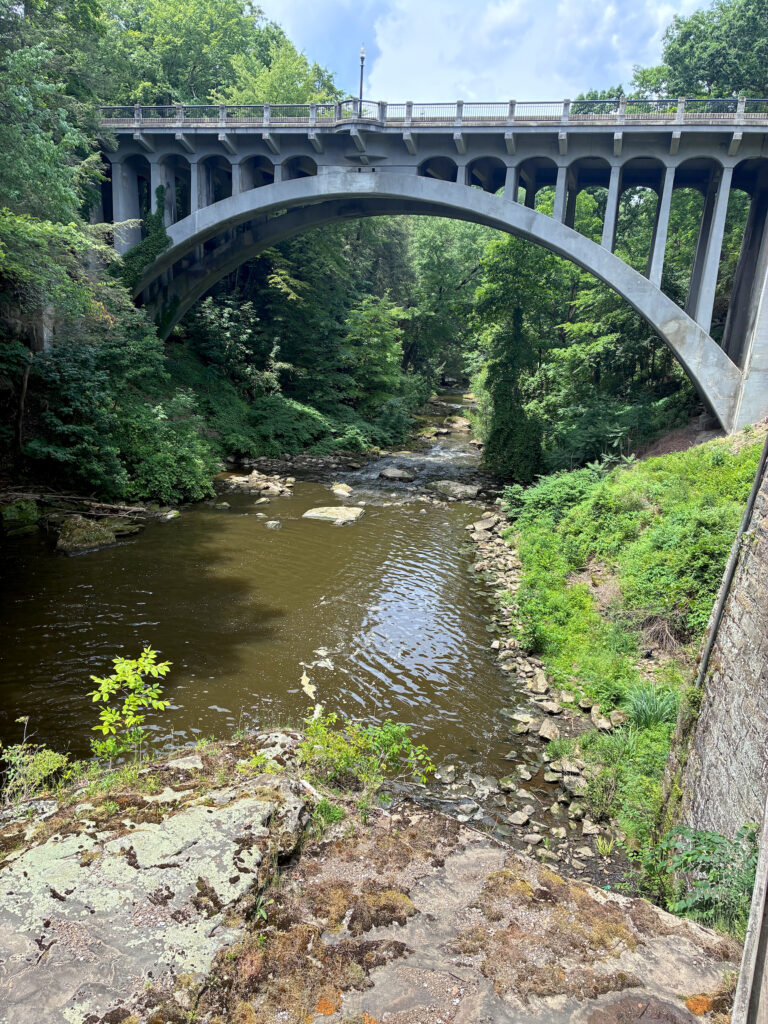
Due to a bathroom and lunch break, we did not get great parking, but it was still only a quarter of a mile hike. Right beside the mill is the Mill Creek/Canfield Road/Lanterman’s Falls bridge over the gorge. It is a 231 ft concrete open-spandrel bridge built in 1920. Among the bridges we have seen, it is fairly scenic.
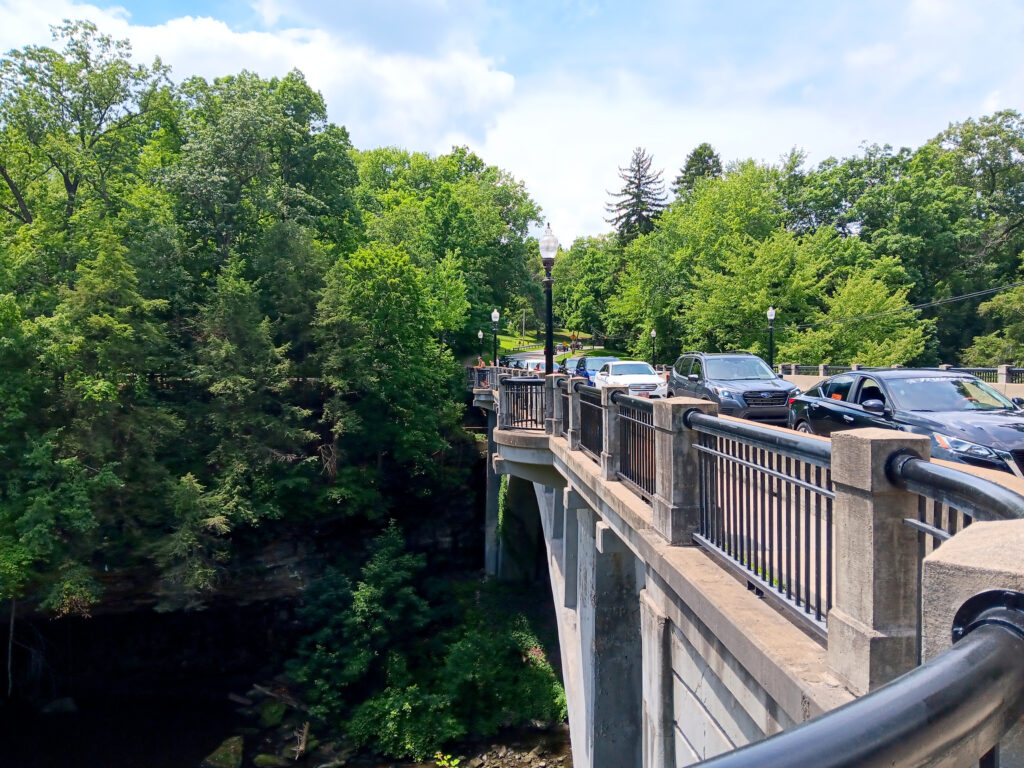
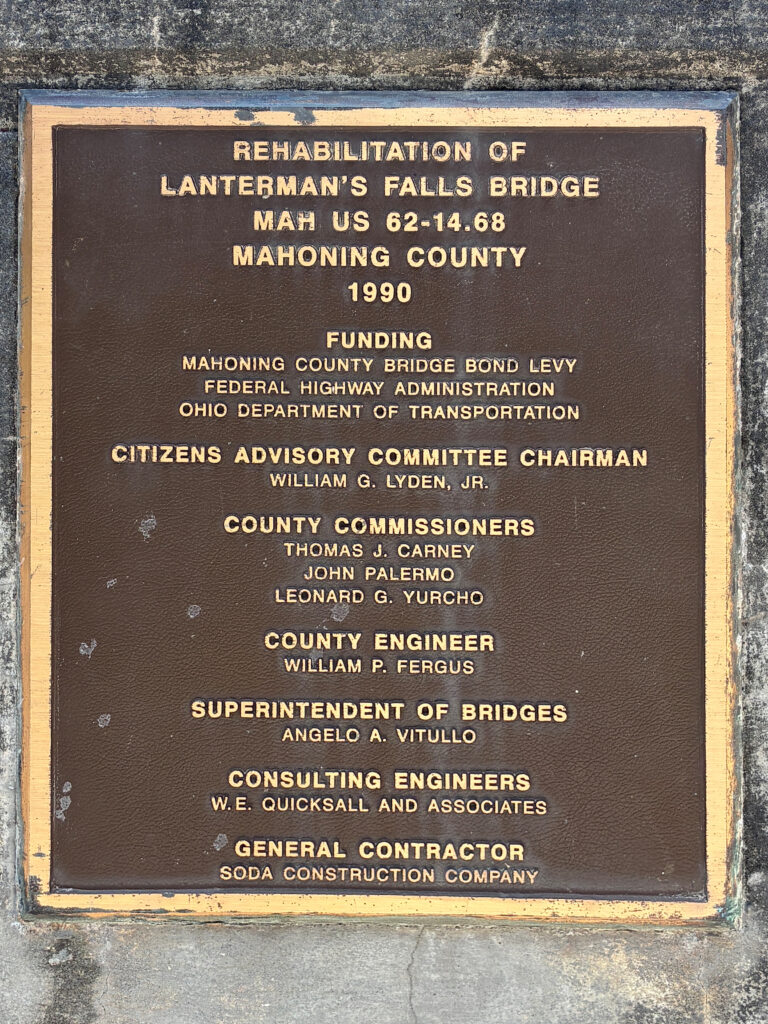
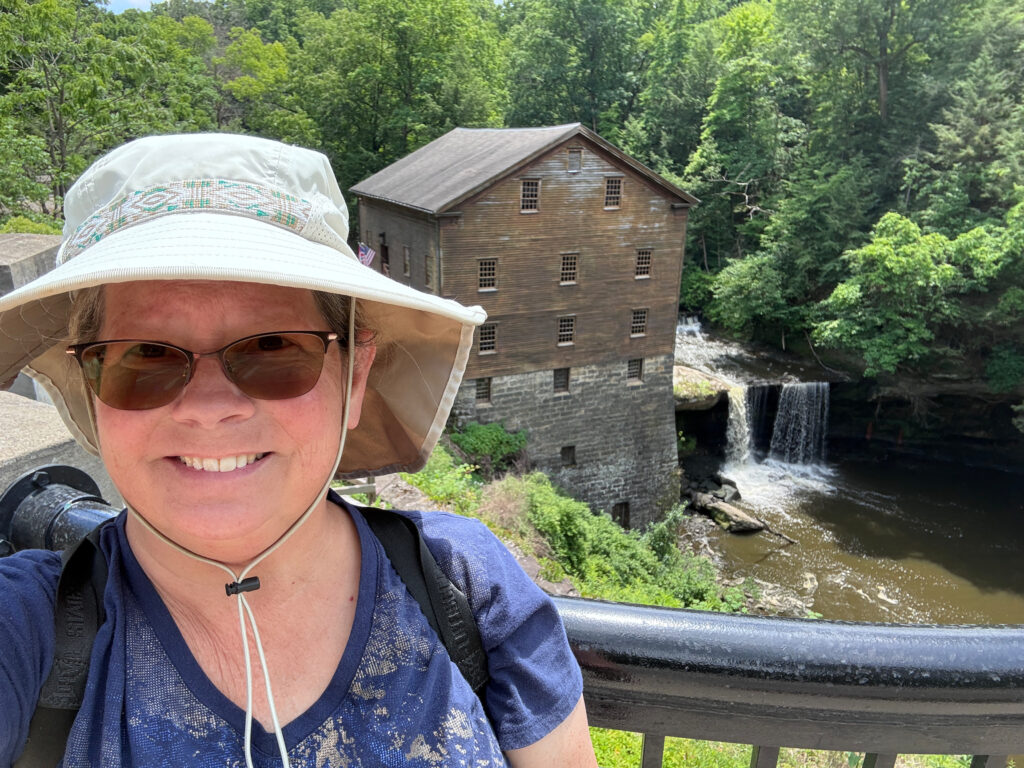
Just past the bridge are the stairs to the mill. From the bridge or the stairs, you can see the mill, spillway, and waterfall.
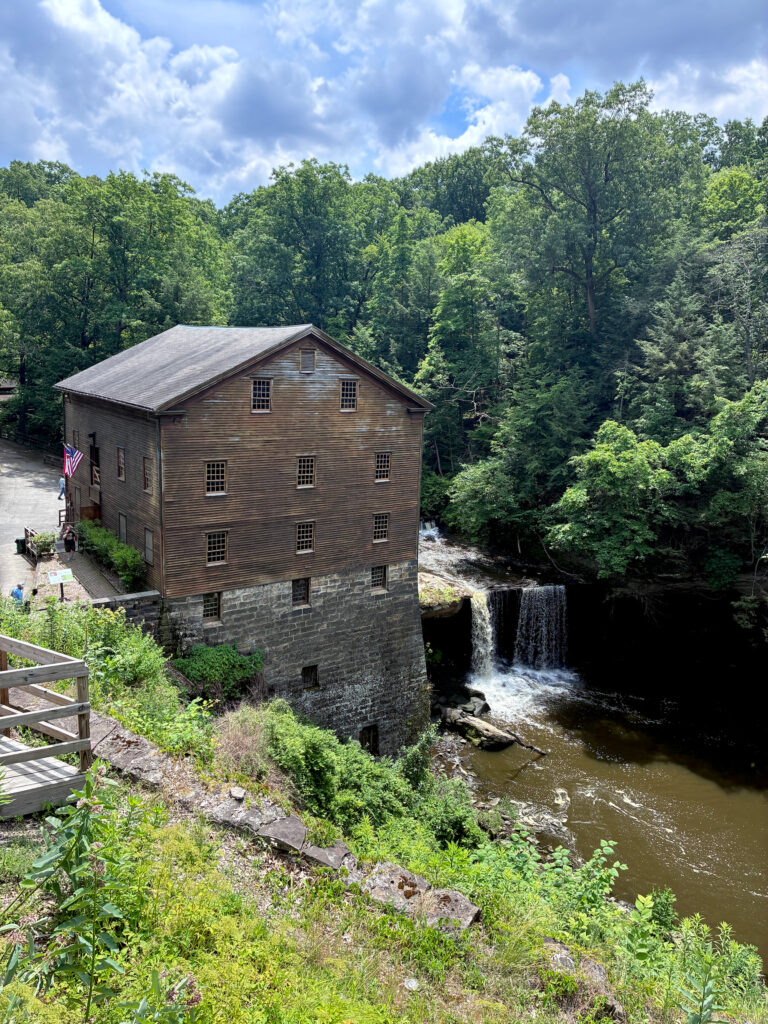
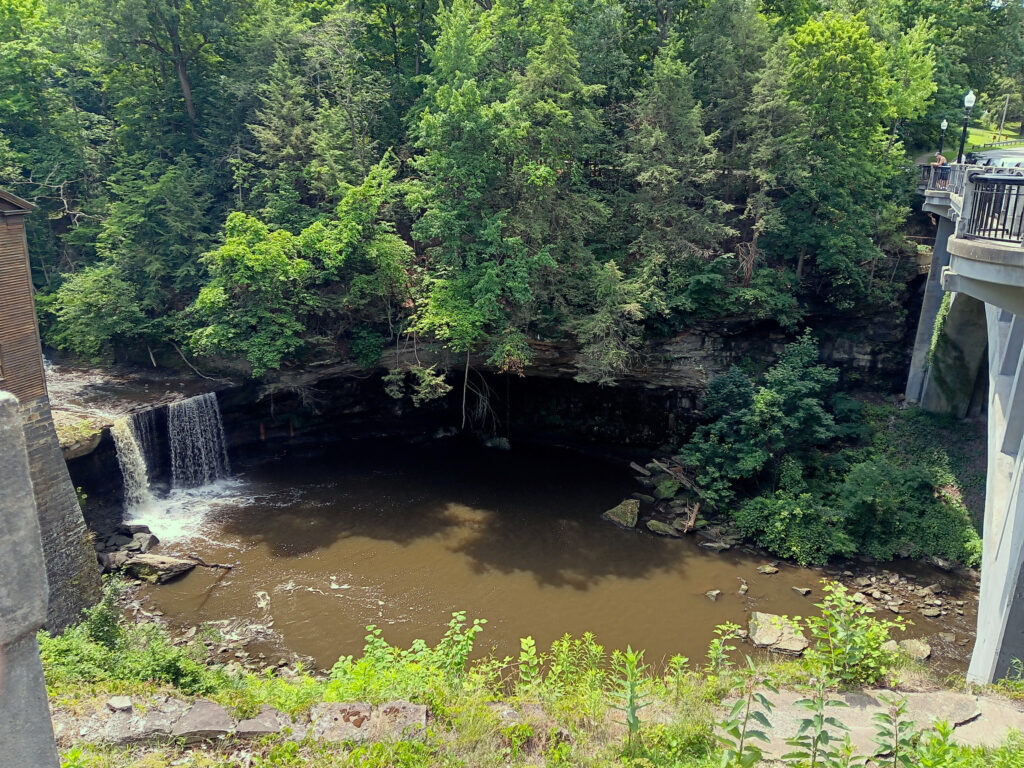
From the stairs, you can also see the structure of the bridge. Doesn’t THAT look like an “open-spandrel” to you? Does it make you wonder what a “closed-spandrel” is?
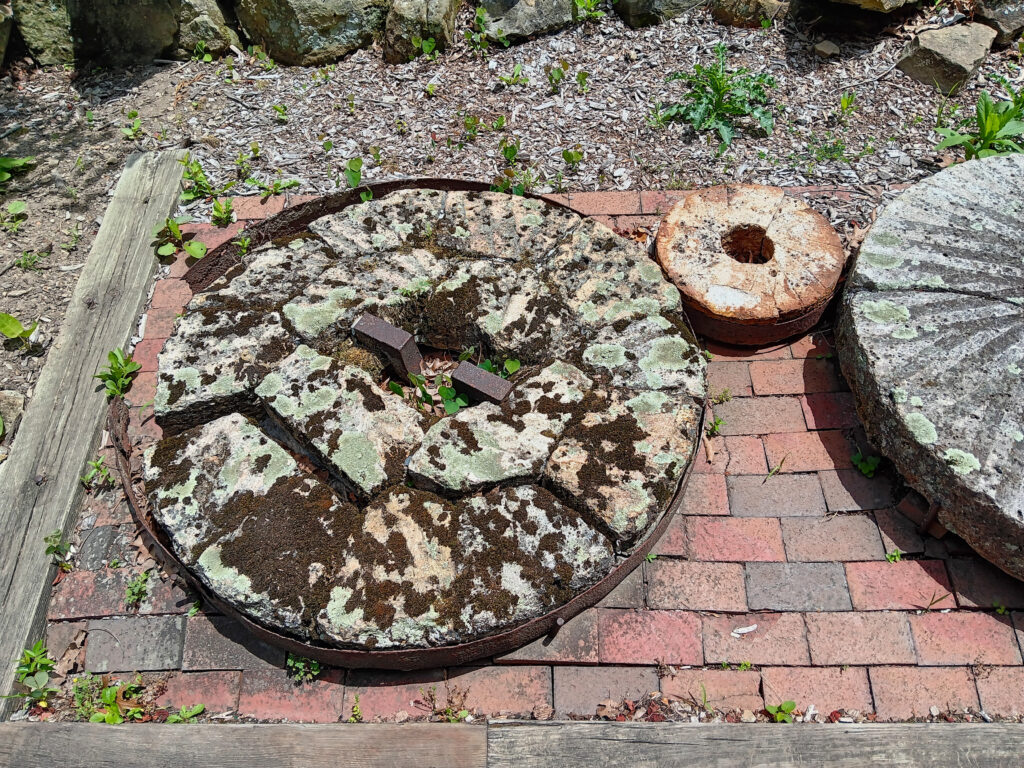
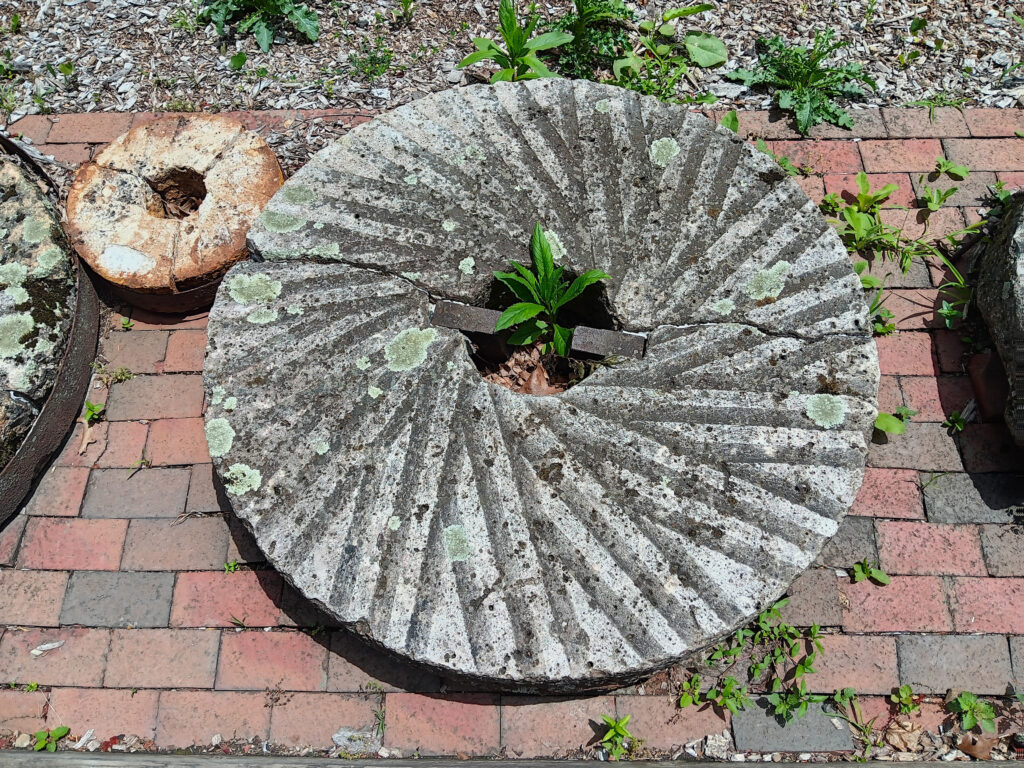
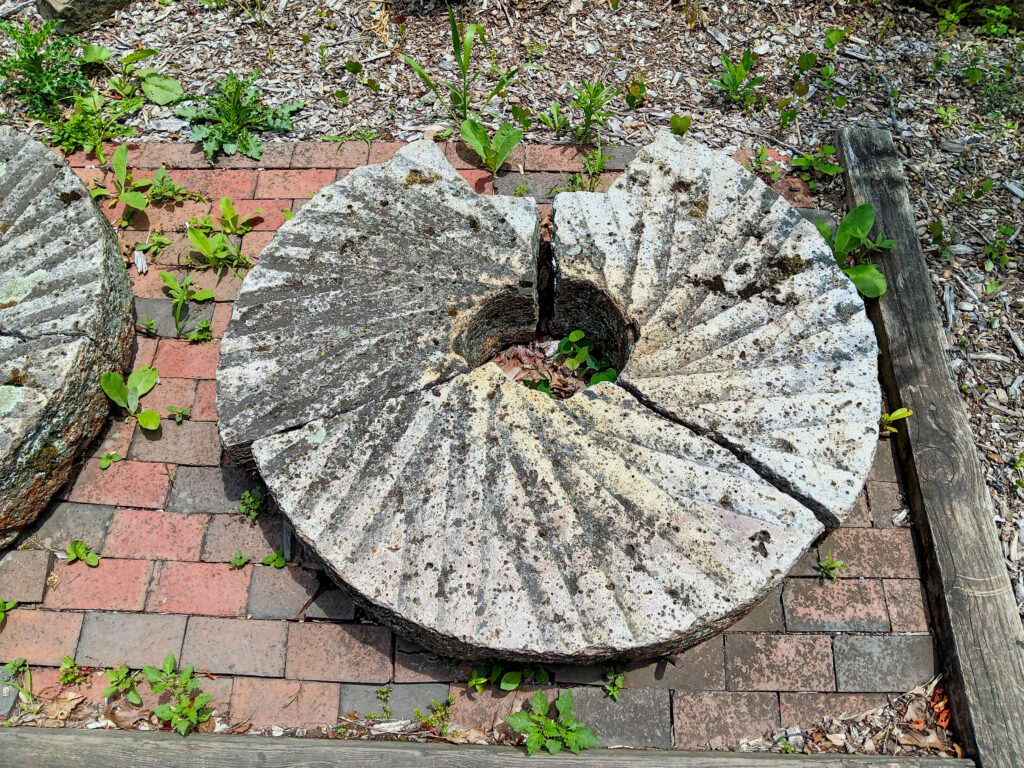
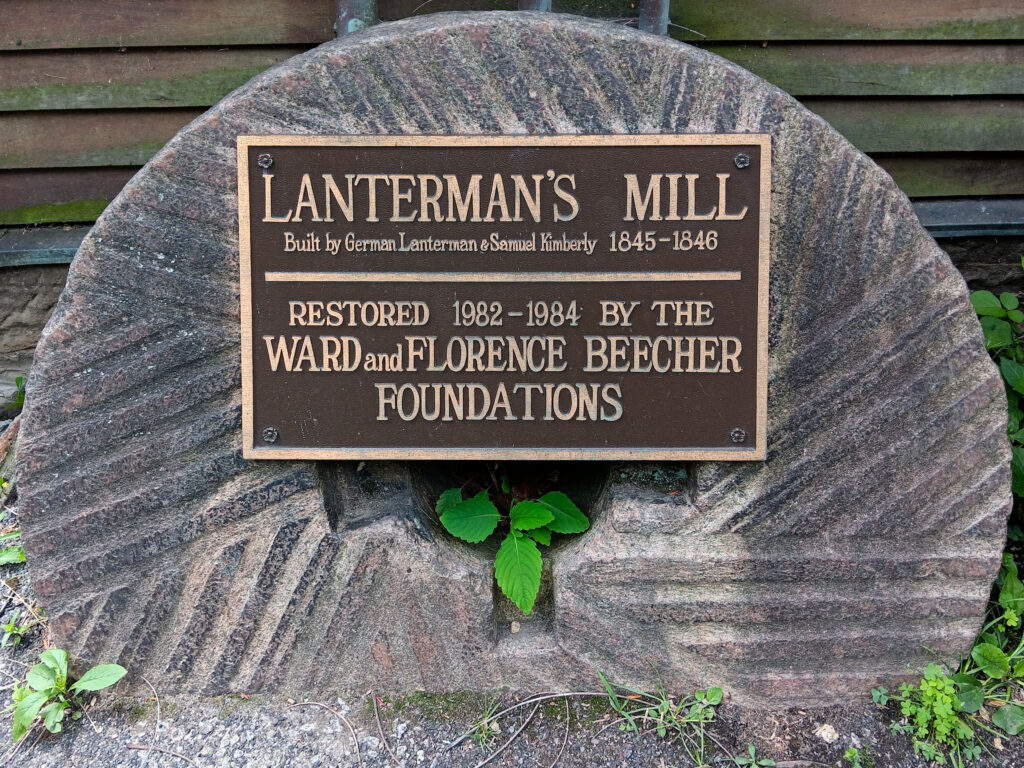
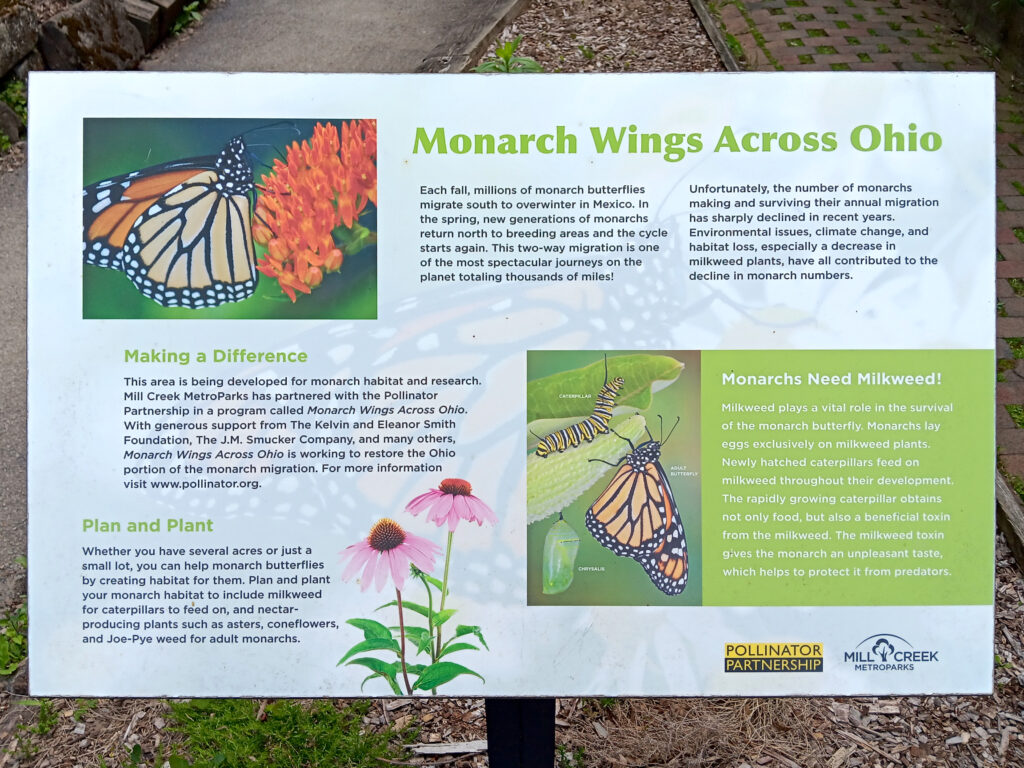
At the entrance to the mill, they have old broken mill stones, Monarch Butterfly garden, and the mill stone landmark sign. We never ask what broke the mill stones. It could have been usage or just leaving them in the weather for decades.
Just inside the door of the mill is the store and the station to collect your entry fee. After we paid, we learned that the “working” mill is currently “not working”. We do not think this was intentional deception, but it was annoying. “The Working Mill is NOT Currently Working” really seems like something they should put on the website and/or the front door of the mill.
We were told that the clutch went out… We can only assume that the mill is manual shift, and they put a someone under 50 in charge of shifting gears. They stopped the mill on a hill, applied too much gas without fully releasing the clutch, and, BAM, the clutch goes out! From what the guide claimed, there are only six companies in the USA that can repair this clutch. The repair company has had it for six weeks, and, they will get to it, when they get to it.
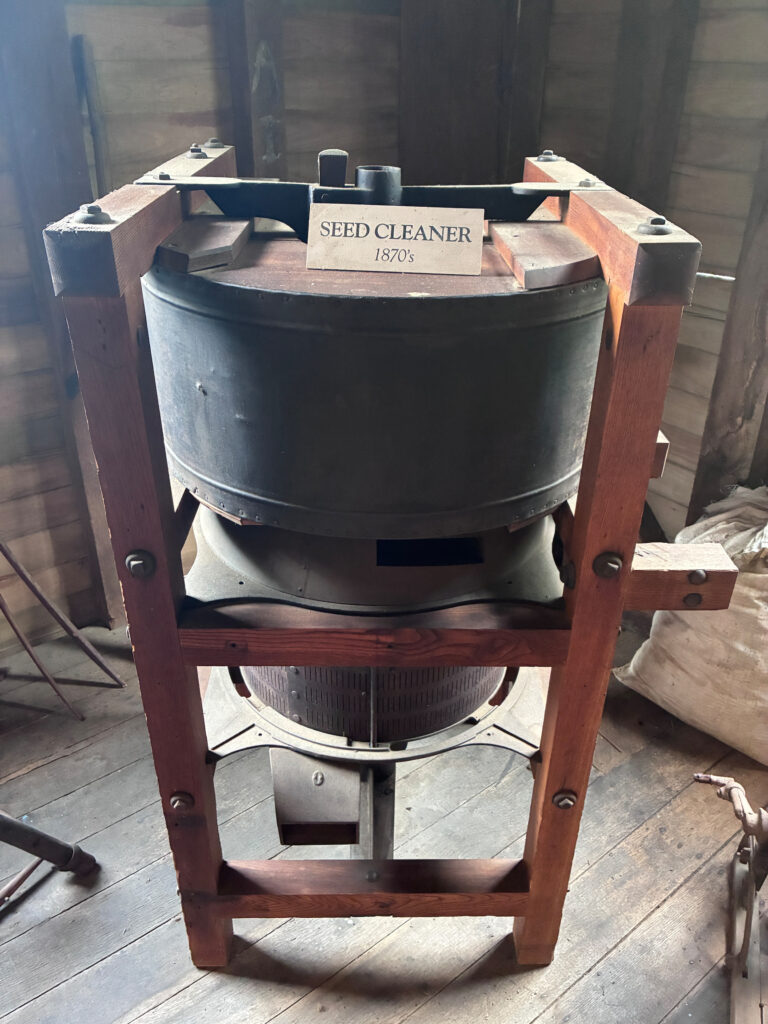
There are six floors to the mill, and the top floor is not accessible. The suggested tour route is to start at the highest accessible (second) floor and work your way down. This floor is the grain bins, grain feed belt elevator, cleaner, bolter, assorted other tools, and ladies lingerie*.
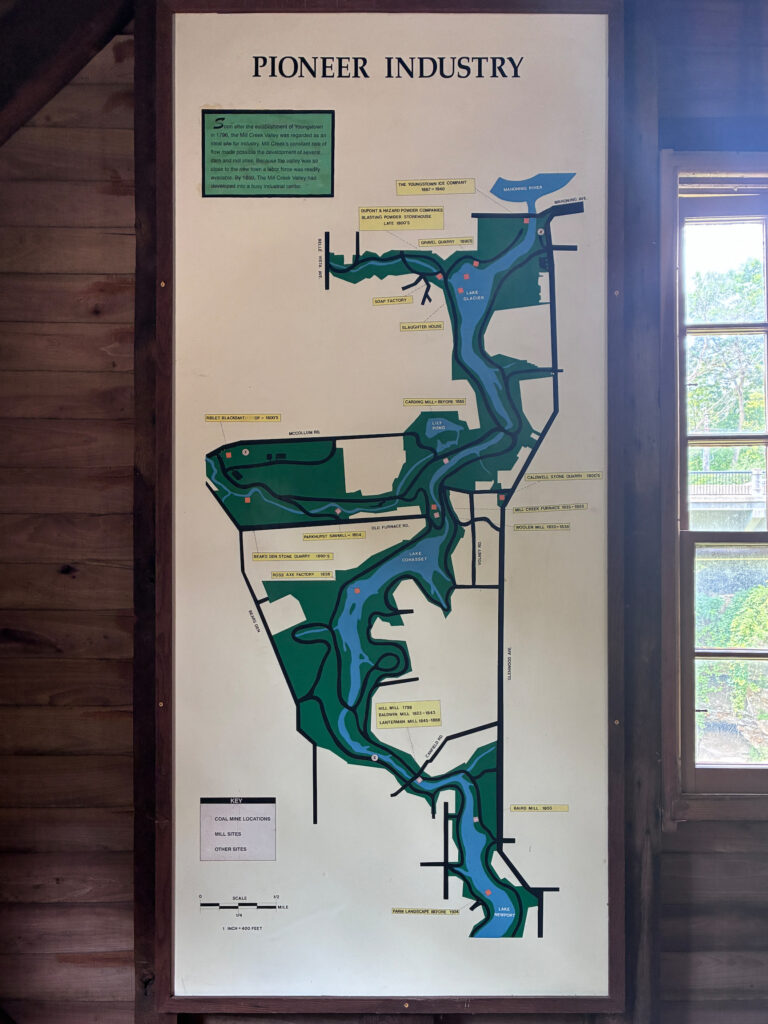
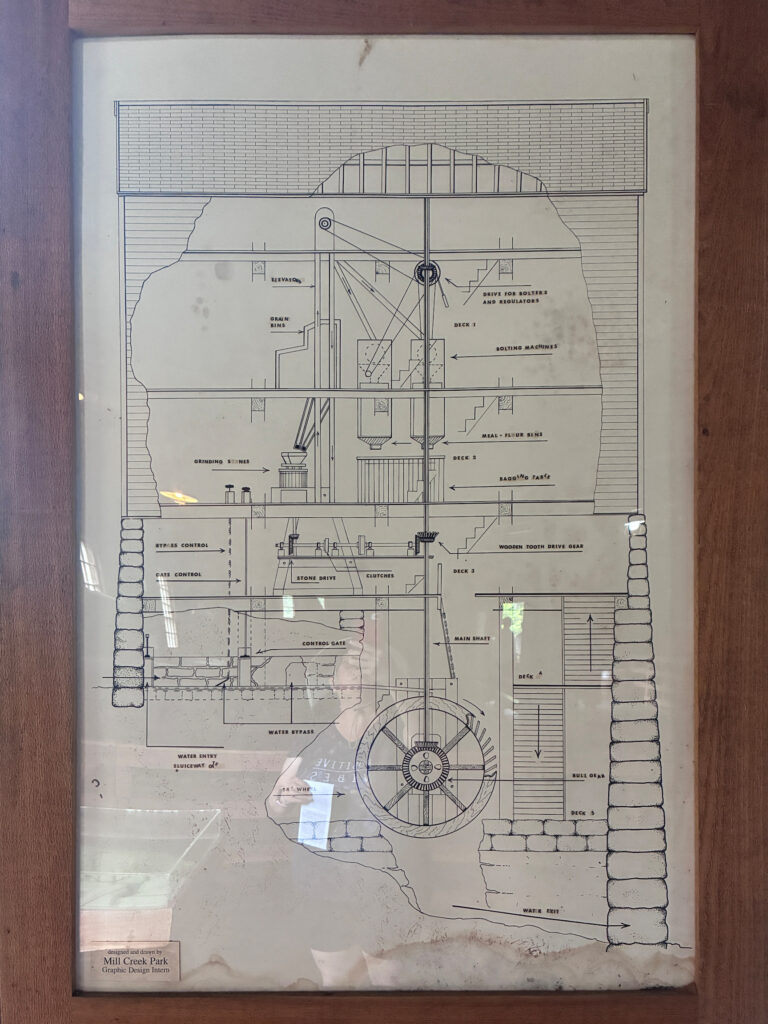
This floor also has a signs showing the old industrial locations along the creek and the layout of the linkages from the water wheel to the grinding stones. The sign shows that there are three levels up above the stone blocks and three levels in the stone blocks. We could get to the lowest level, but not the highest one.
These are some of the larger independent machines.
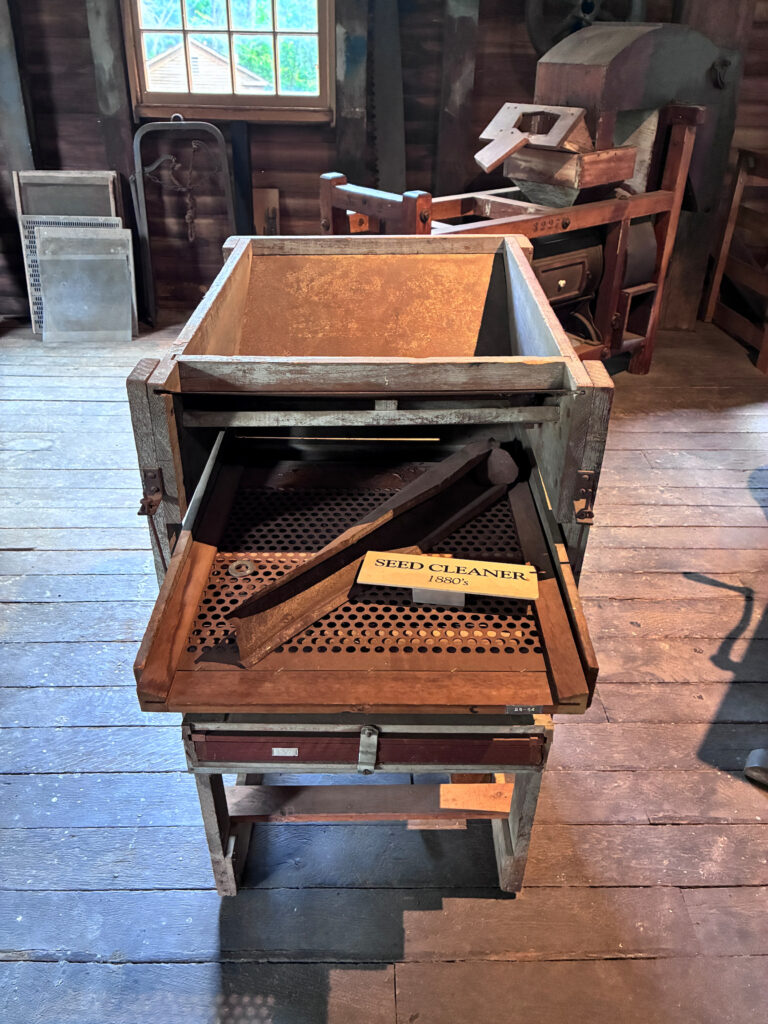
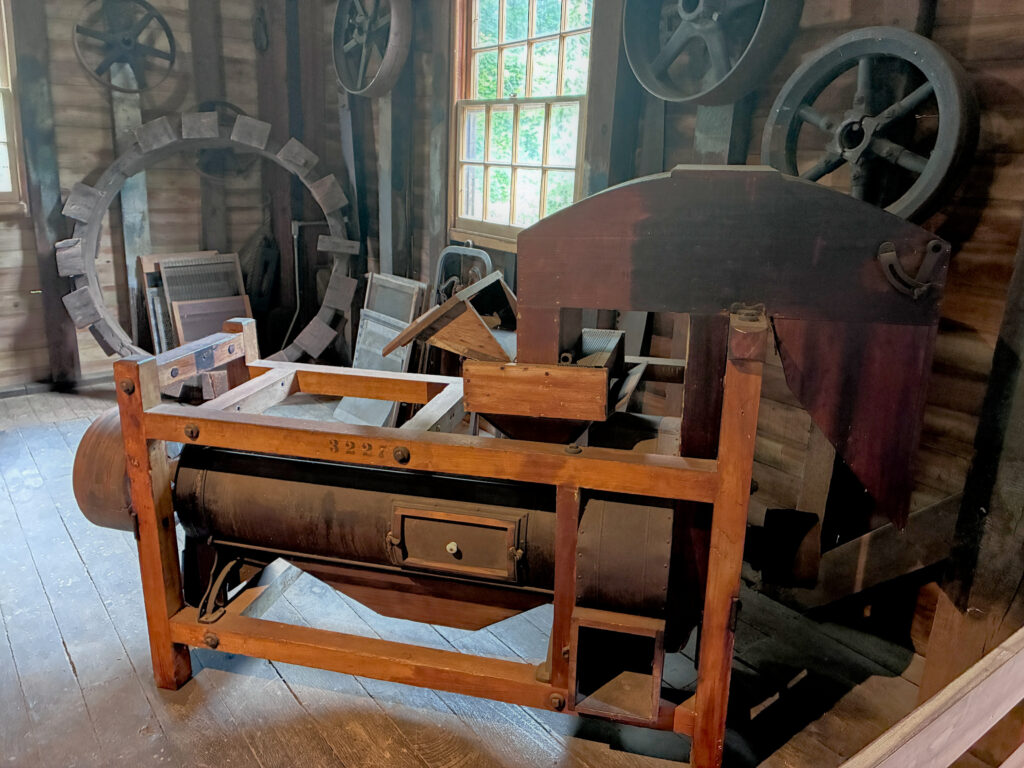
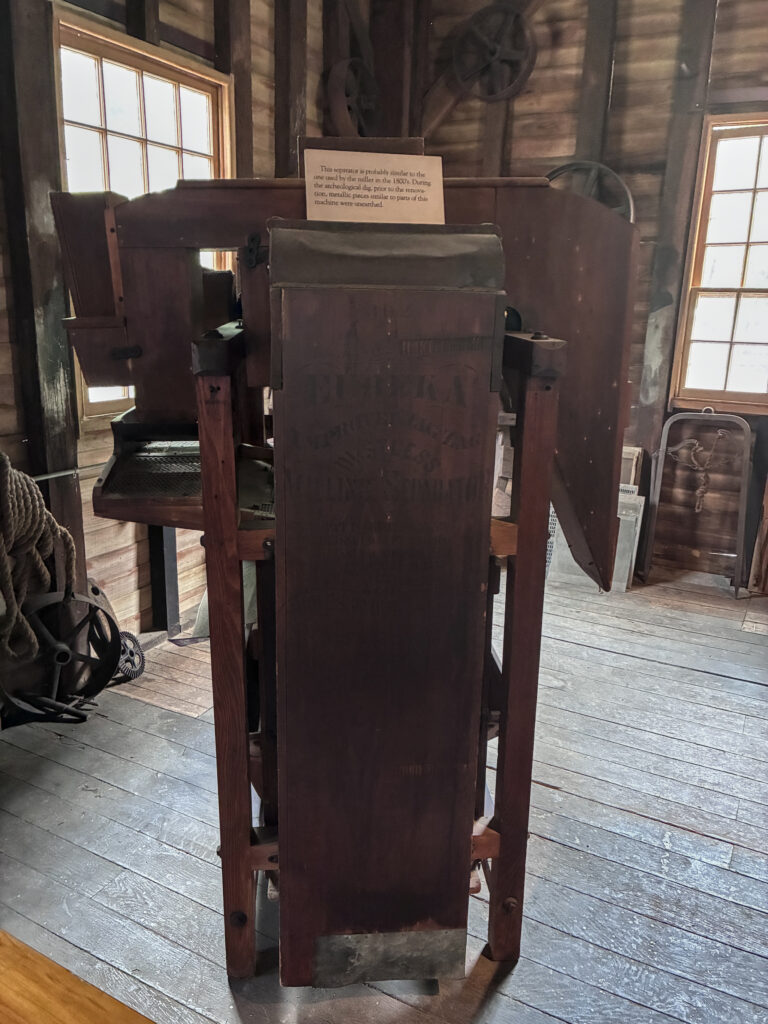
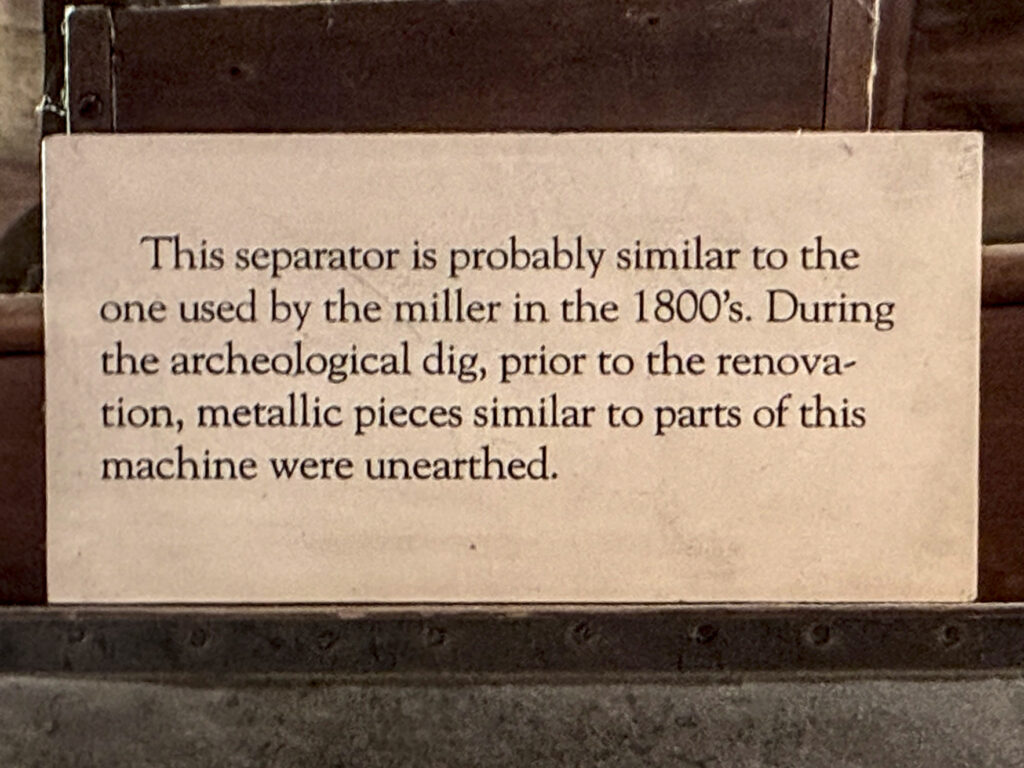
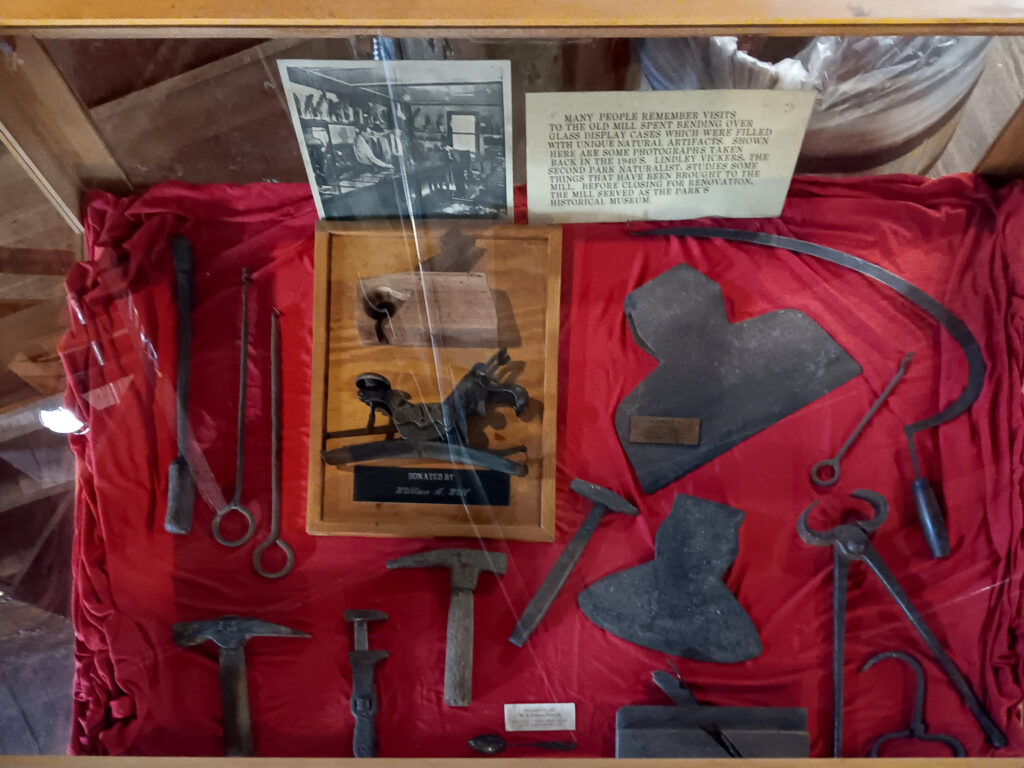
And hand tools, John was able to identify all the tools, but it was mostly process of elimination. He has used few, if any, of them.
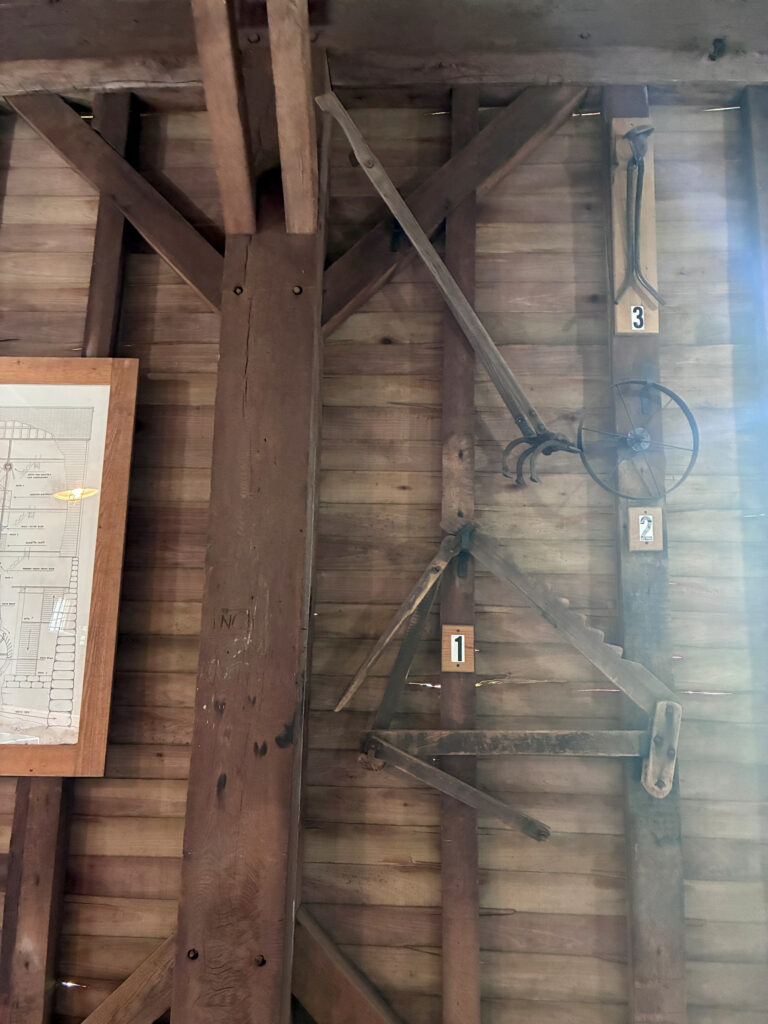
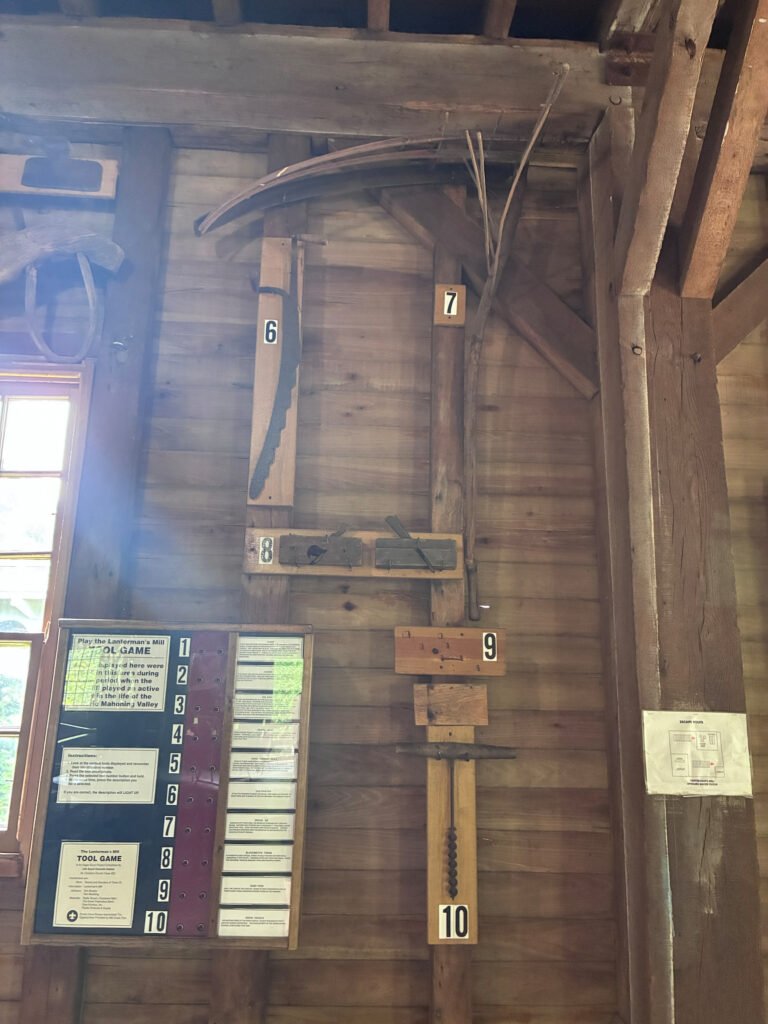
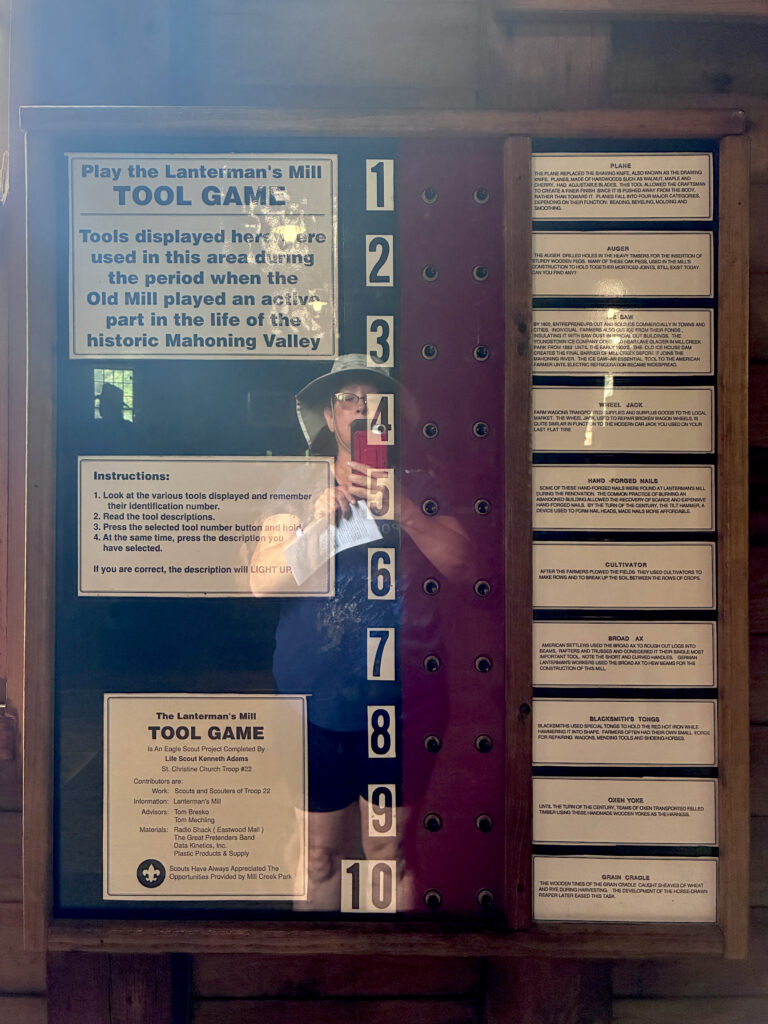
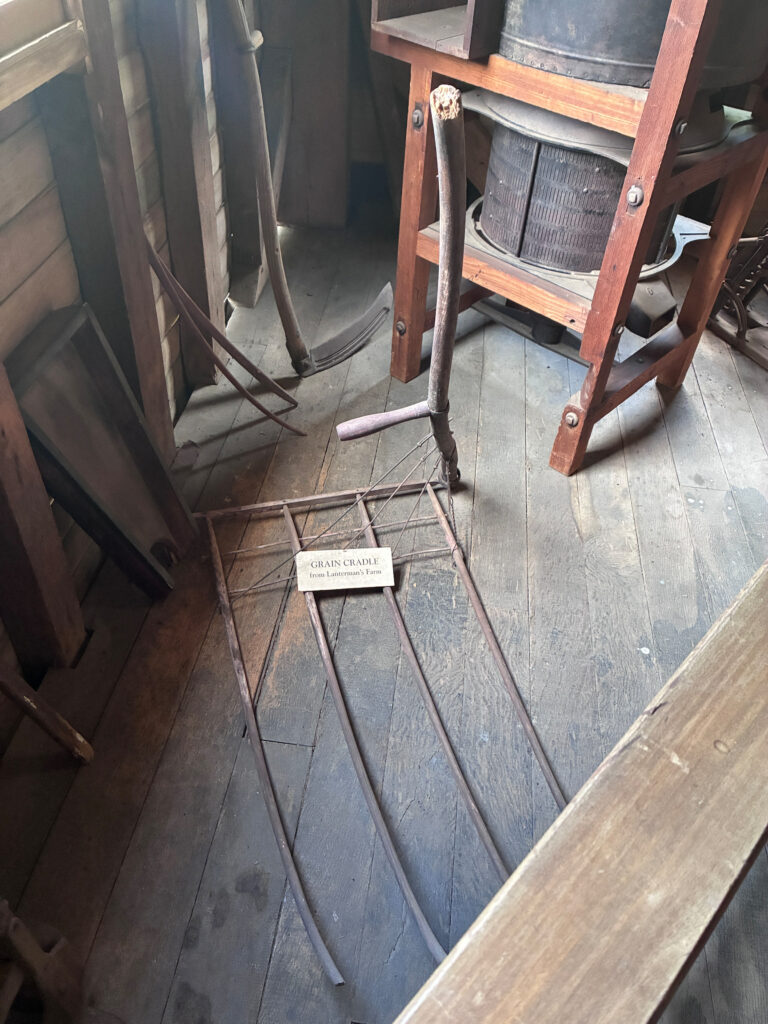
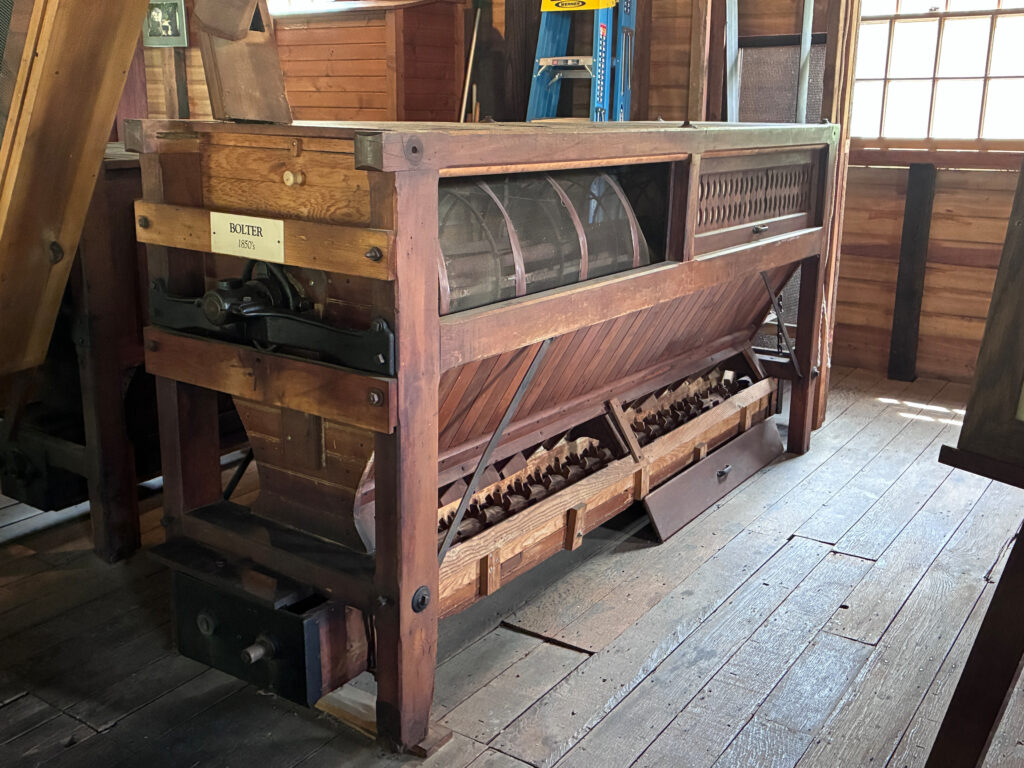
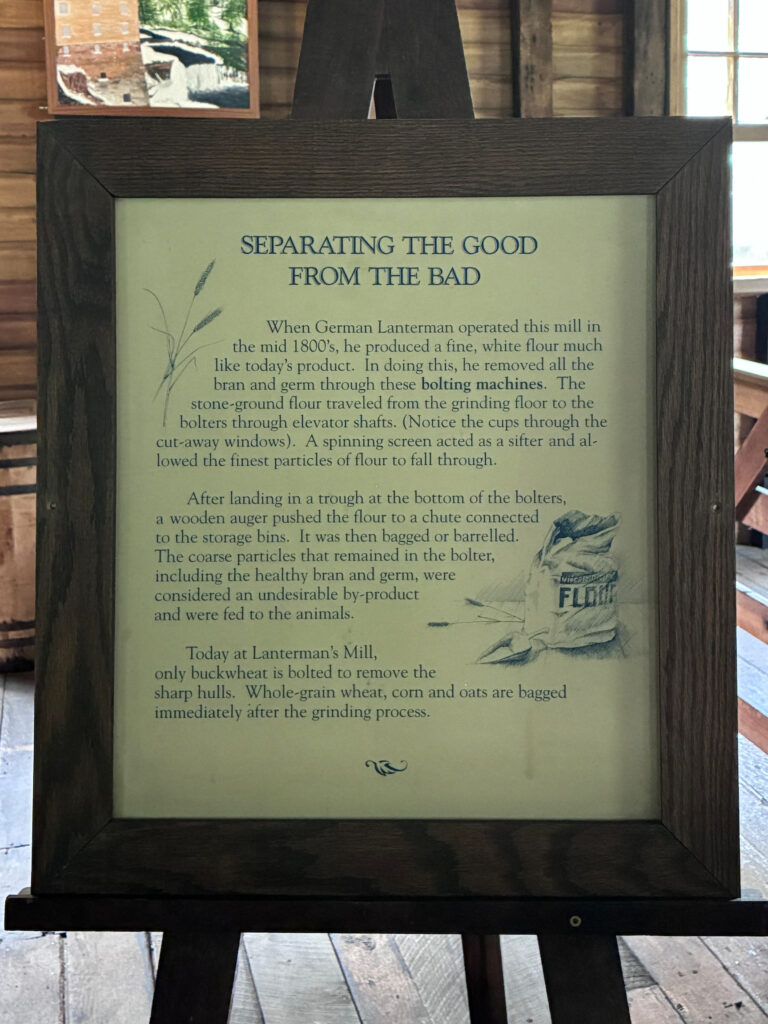
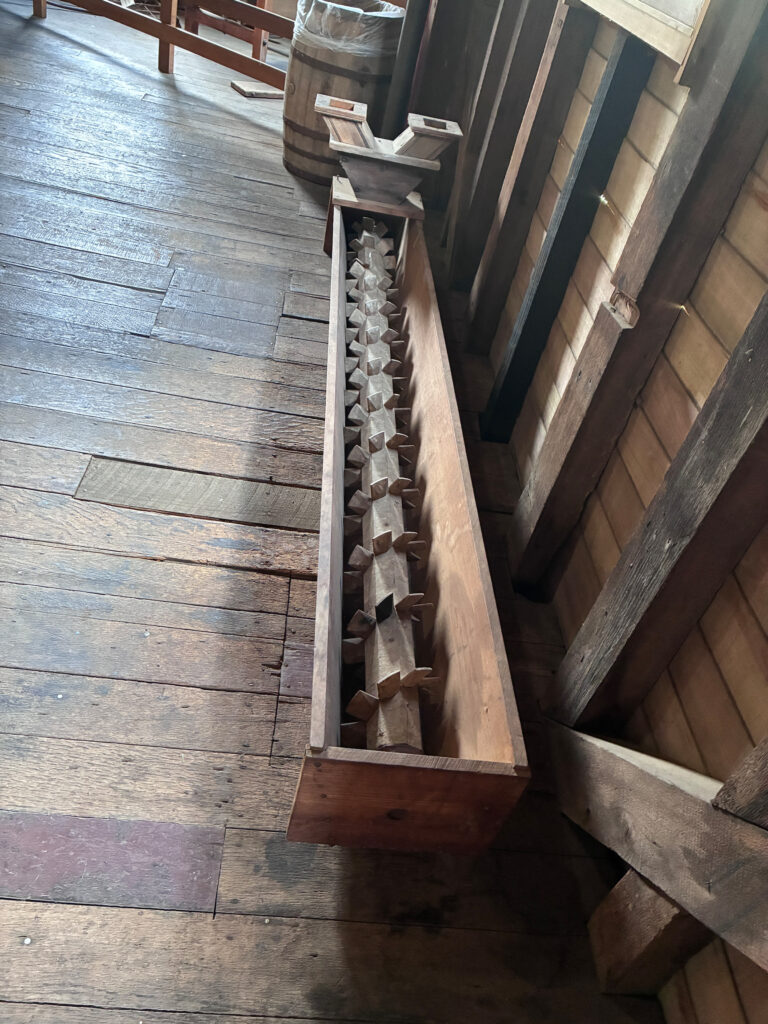
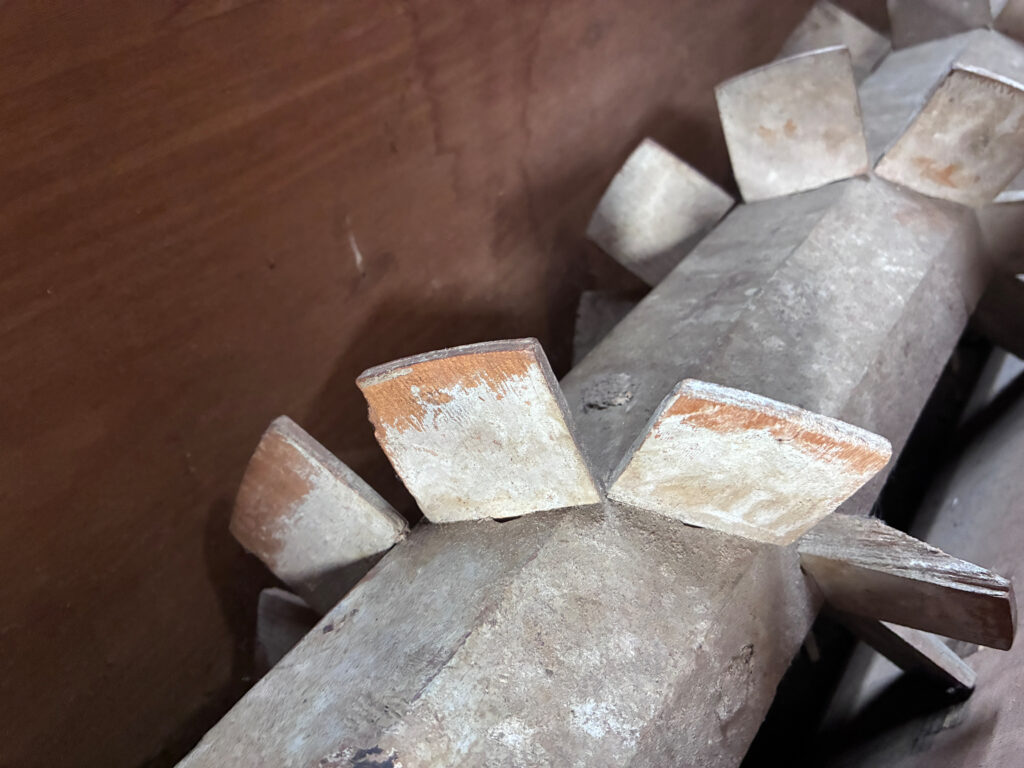
The picture below is the bolter for removing the bran and germ. In this picture, you can see the augur for moving product along the bottom of the bolter. In the pictures of the second row, you can see a detached augur. The entire thing is made of wood; that would be a monumental pain to construct.
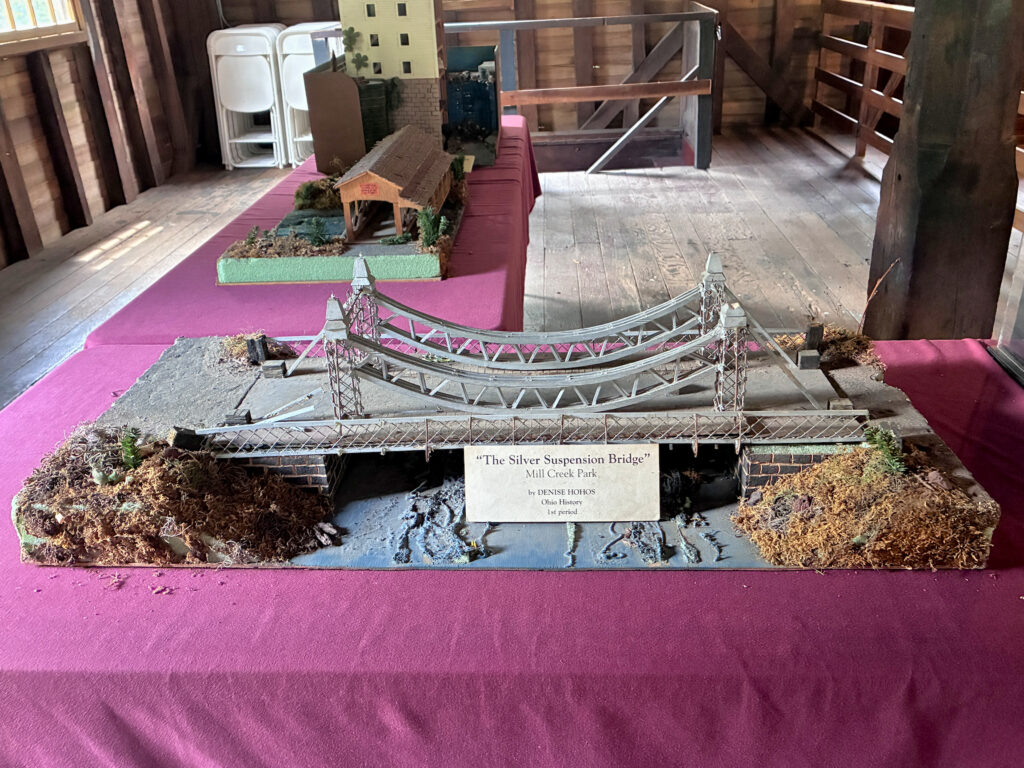
There is also a school project of the Lanterman’s Mill and Cinderlla bridge.
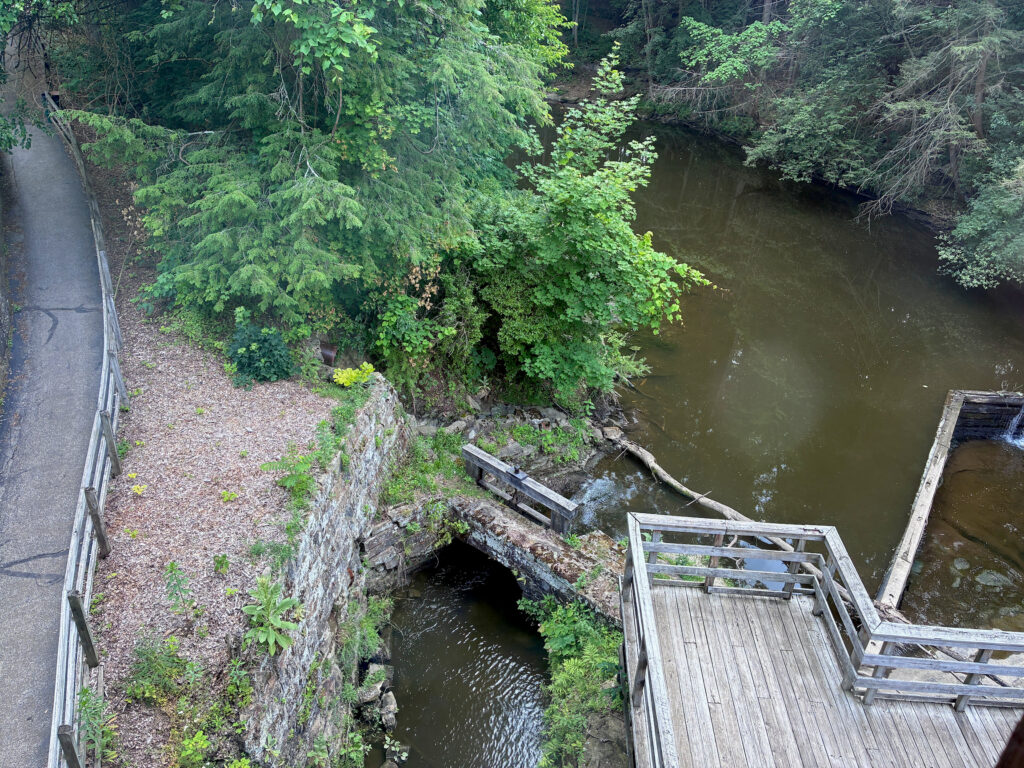
Out the window is a view of the back deck, diverter for the water wheel, and diverter gate.
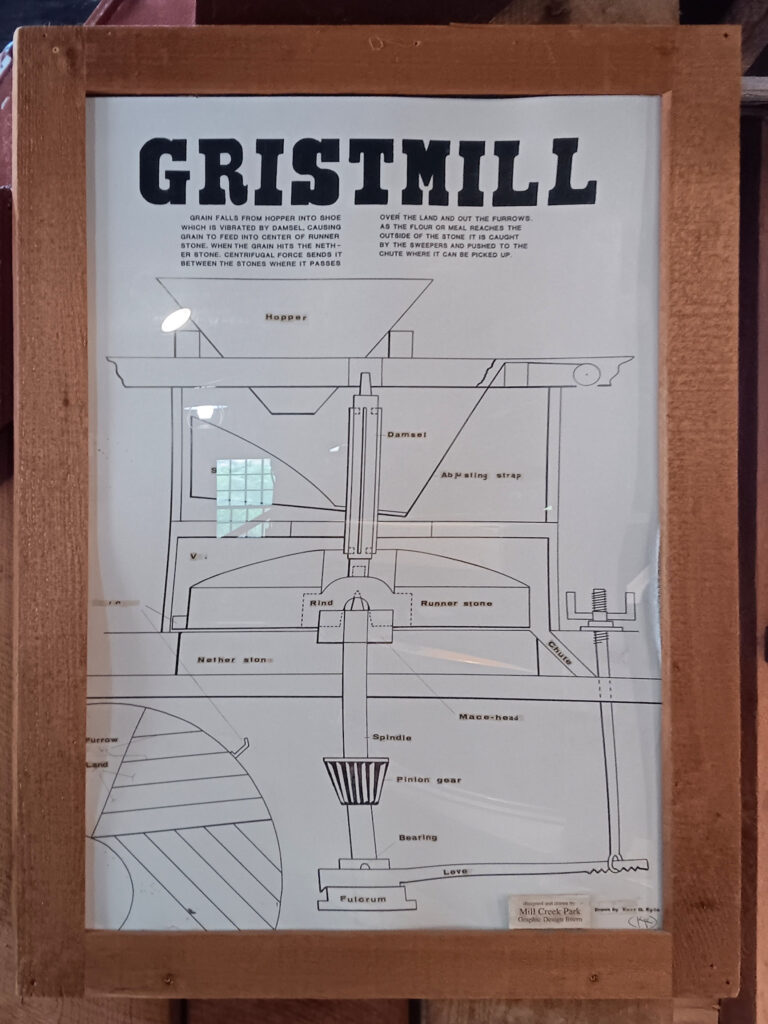
The ground (first) floor has the mill stones. Historically, there were three stones, but they only have two (not) running, right now. The milling is described in this sign.
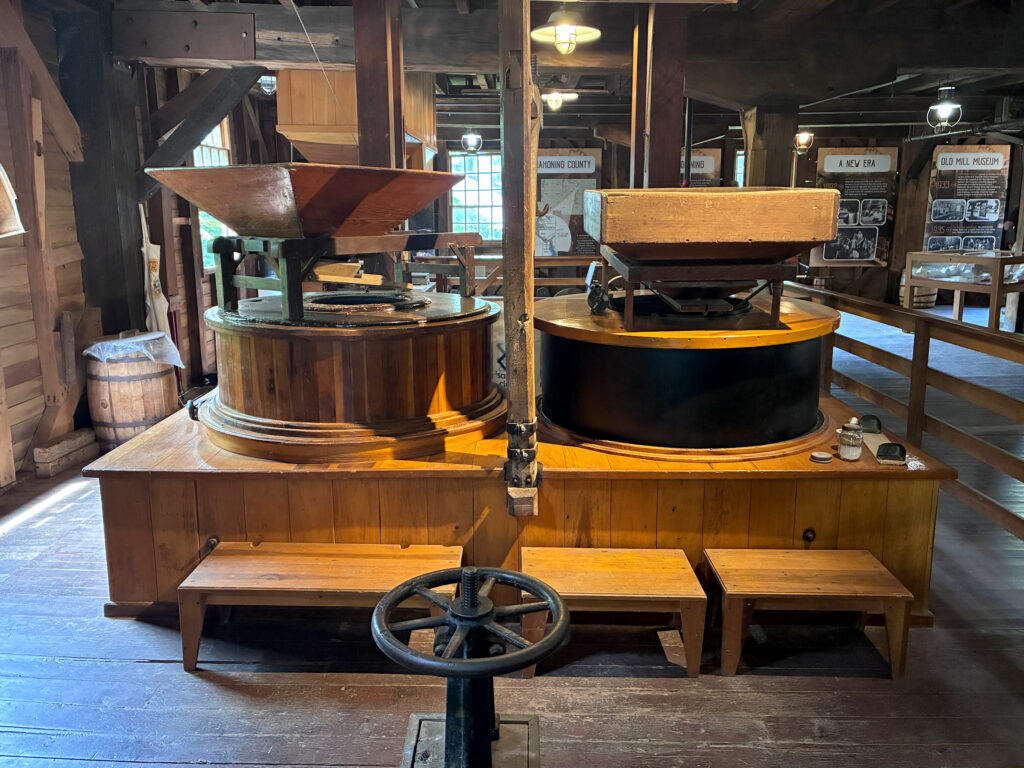
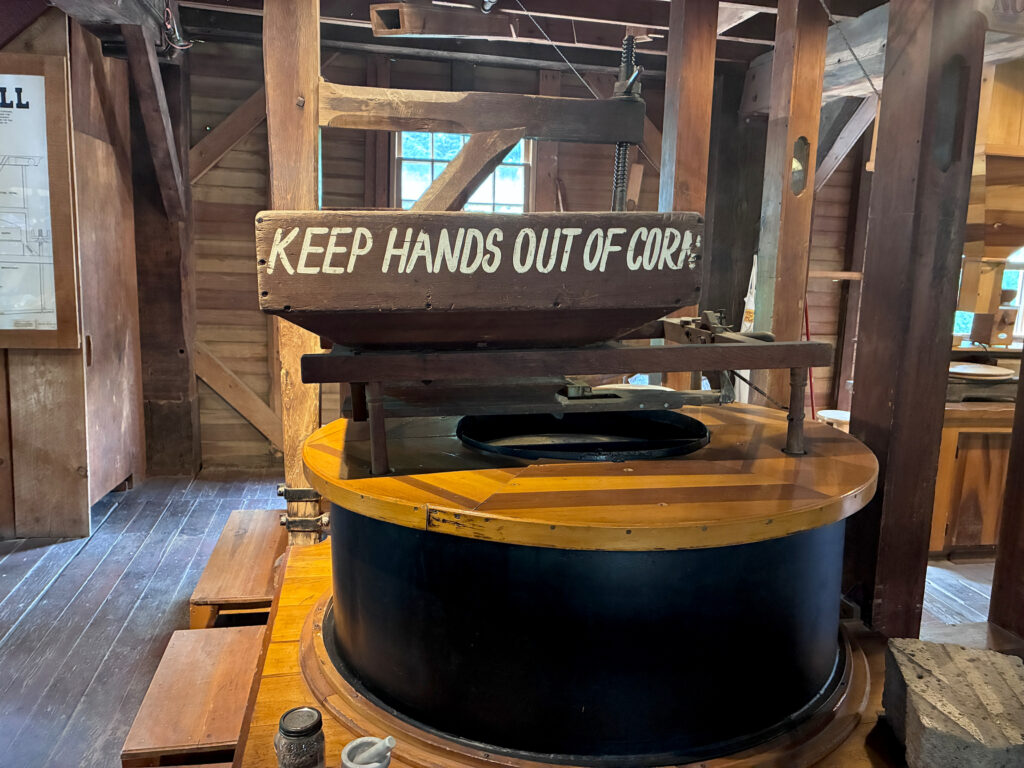
These are the two grind stones. Remember, do not lick the grind stones while they are running… Wait, that is fine… Just do not stick you hand in the corn.
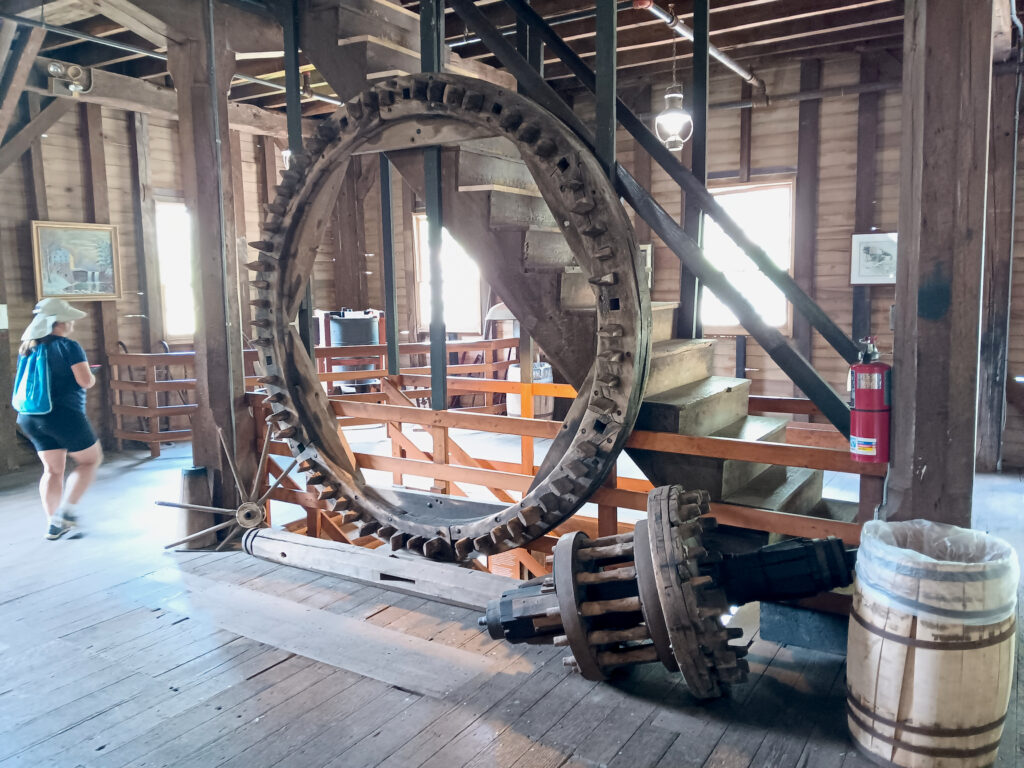
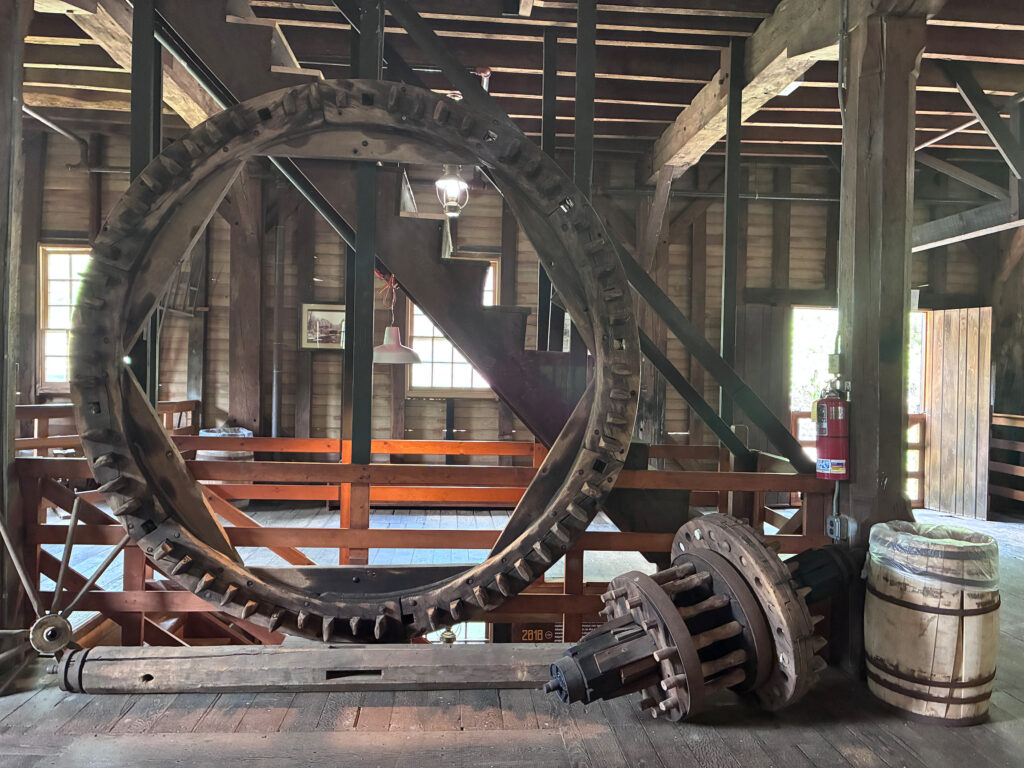
These are some of the giant wooden cogs. These are either examples of older solutions or modern metal cogs replaced them for maintenance reasons.
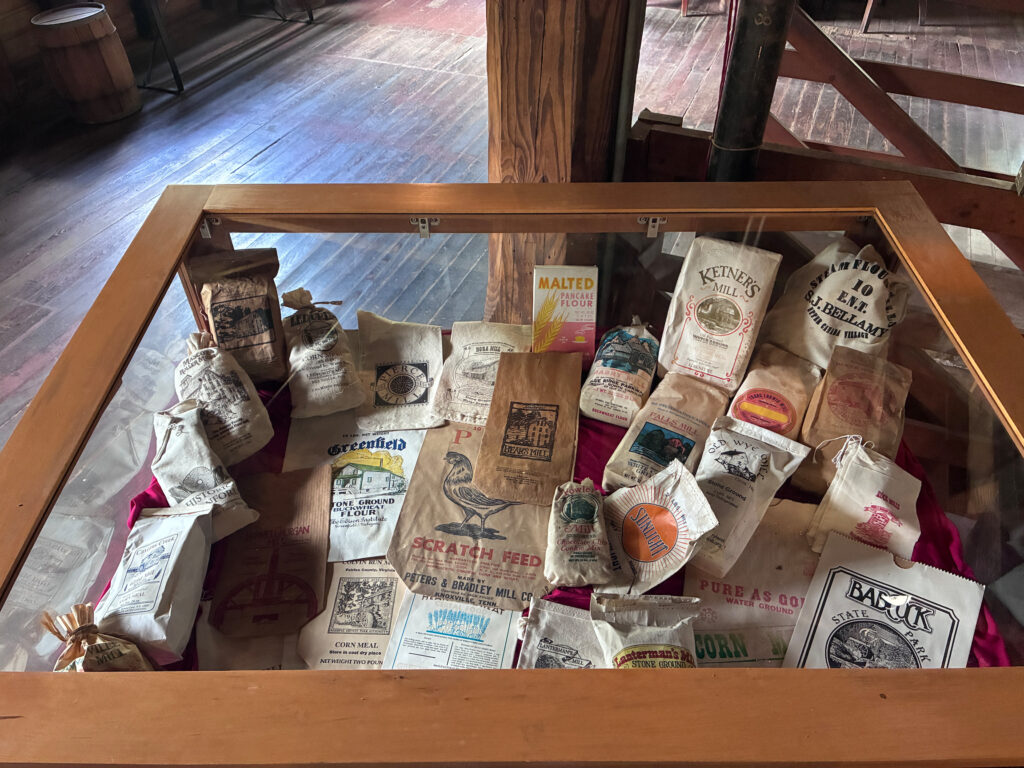
These are some hand tool artifacts and some sample product packages.
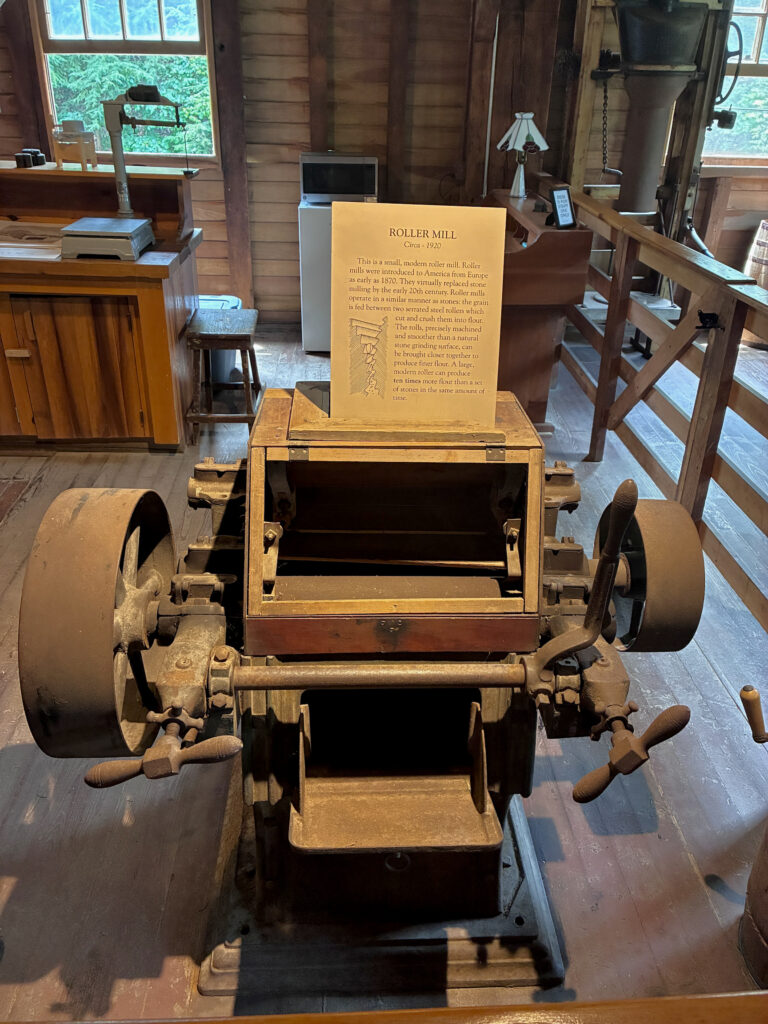
This is the modern tool that replaced the mill and grind stones. It is reminiscent of some of the old farming equipment that was miniaturized. Granted, there is still a lot of giant farm equipment.
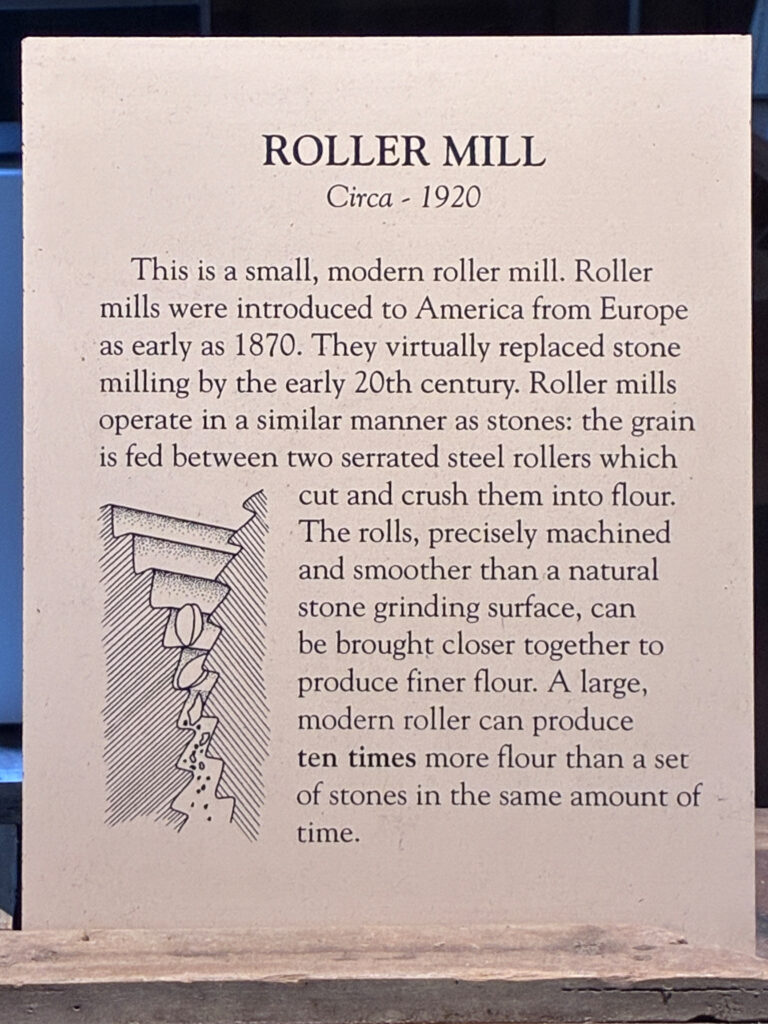
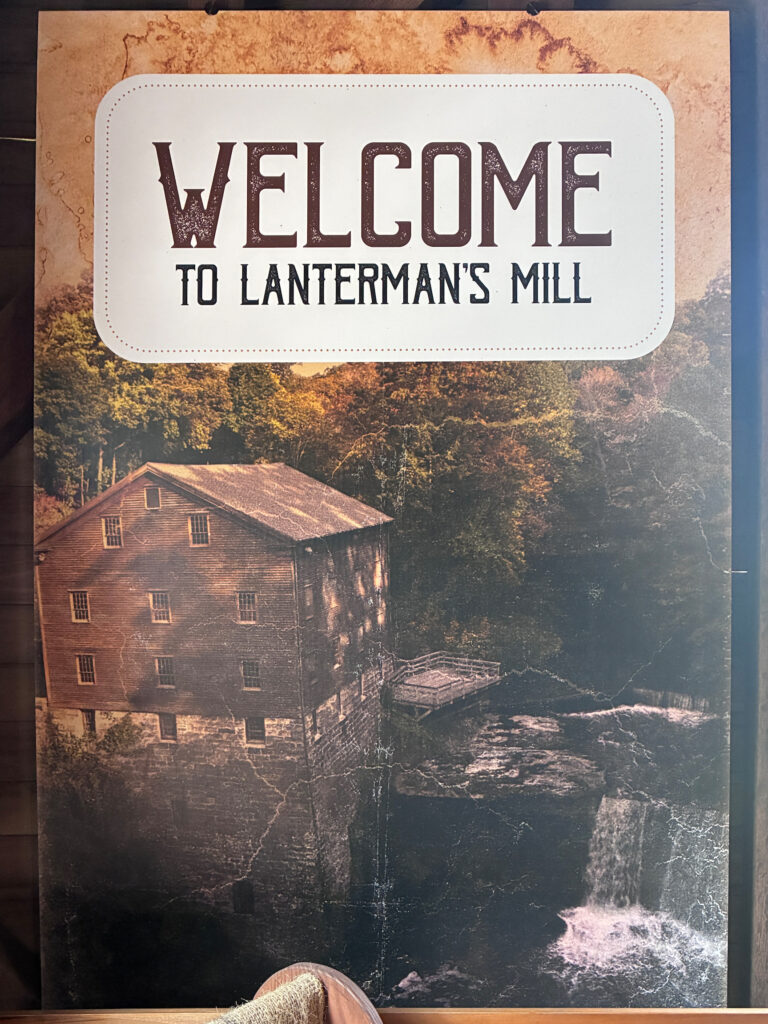
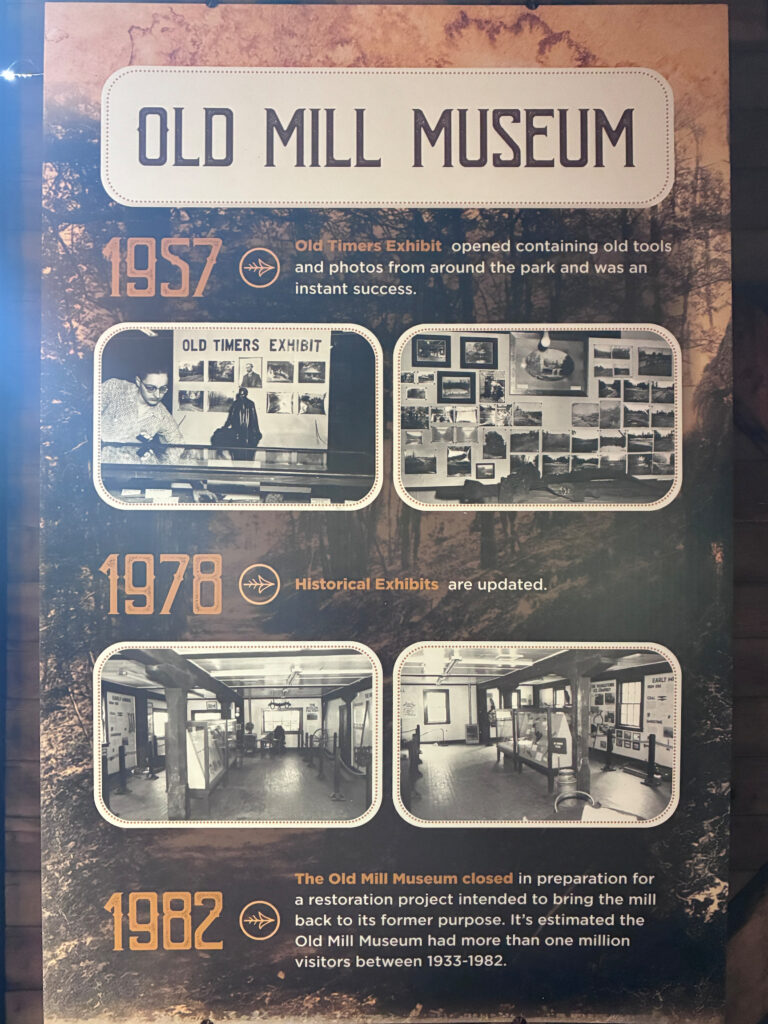
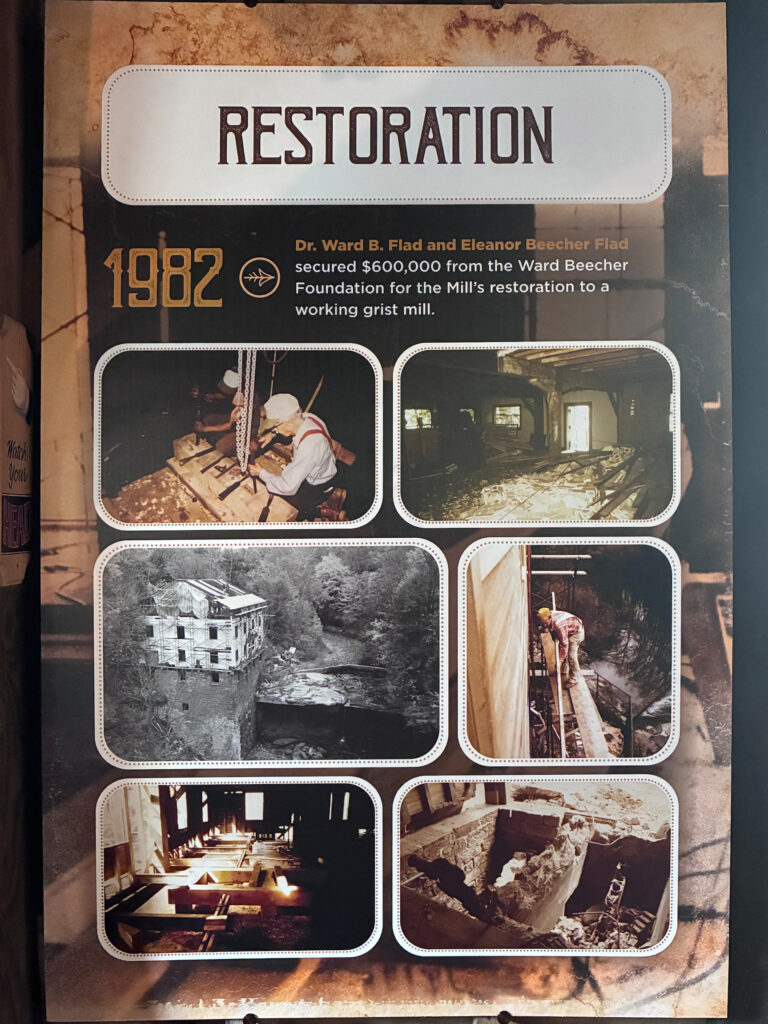
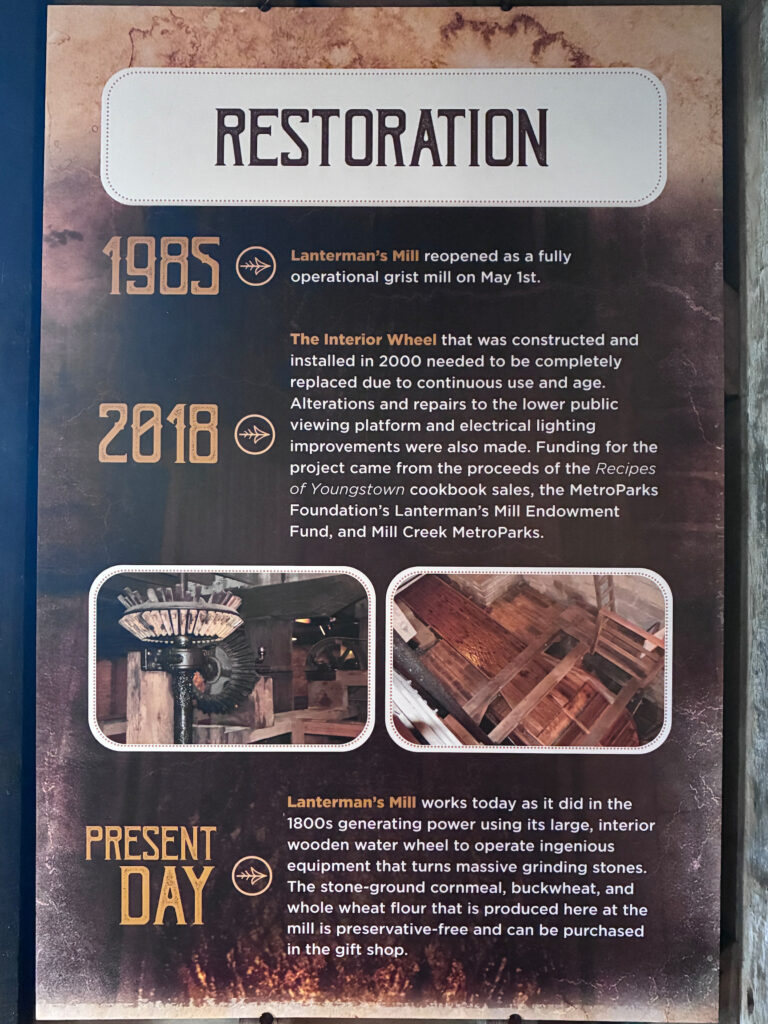
There is a series of panels around the walls talking about the history of the mill.
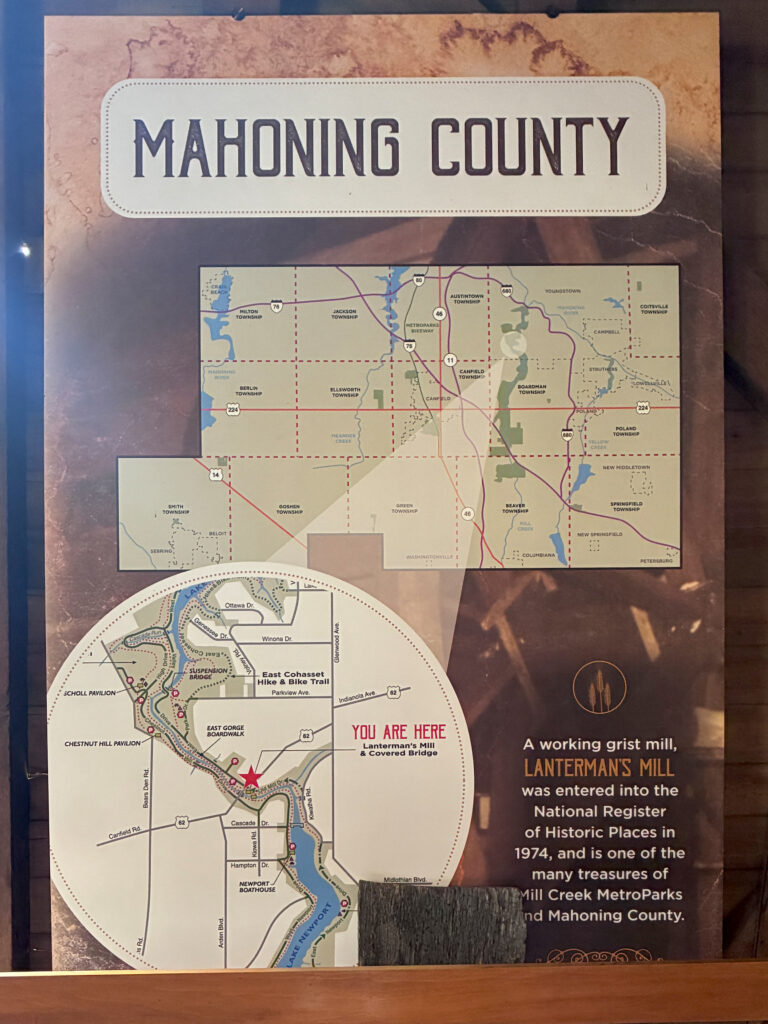
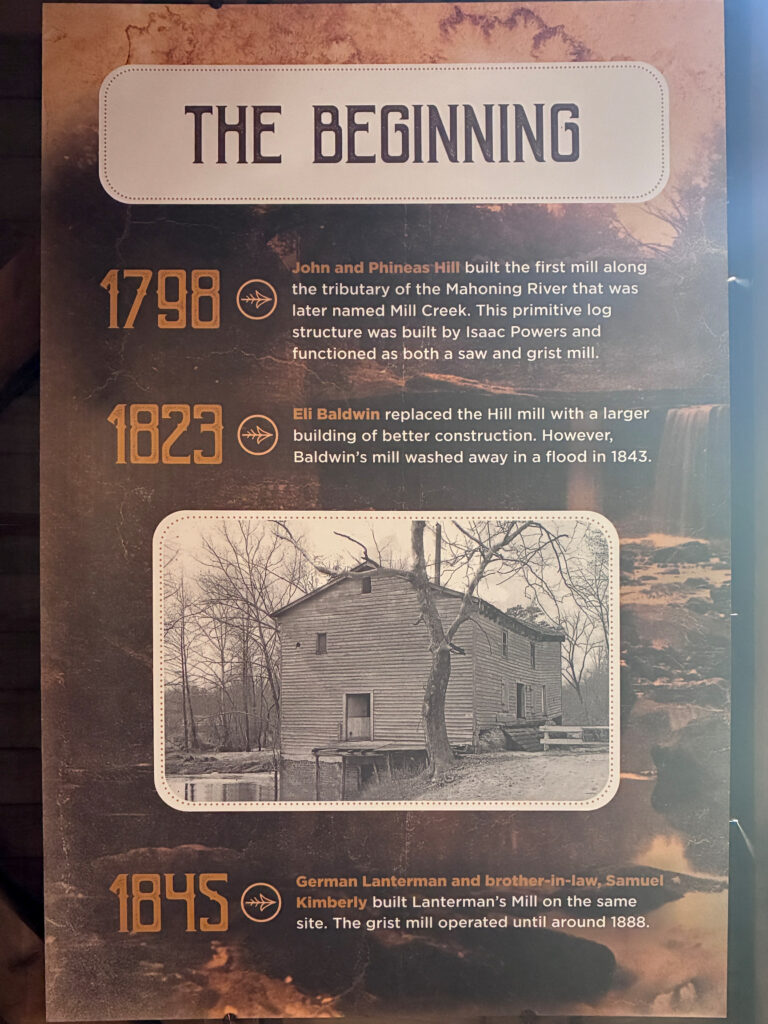
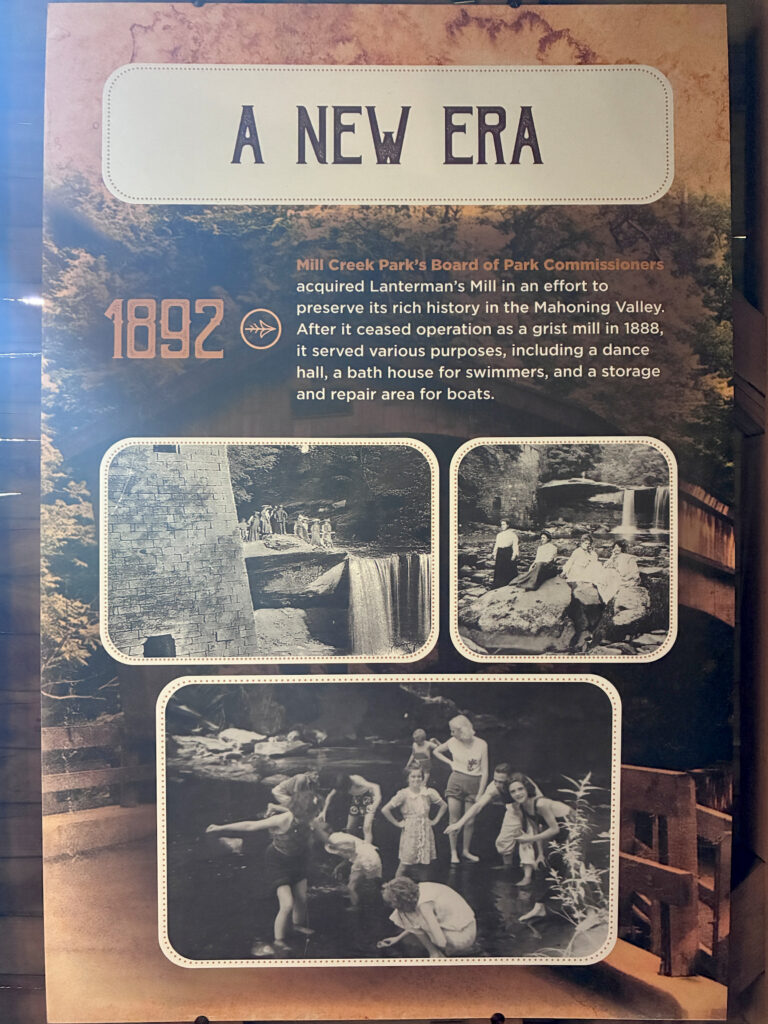
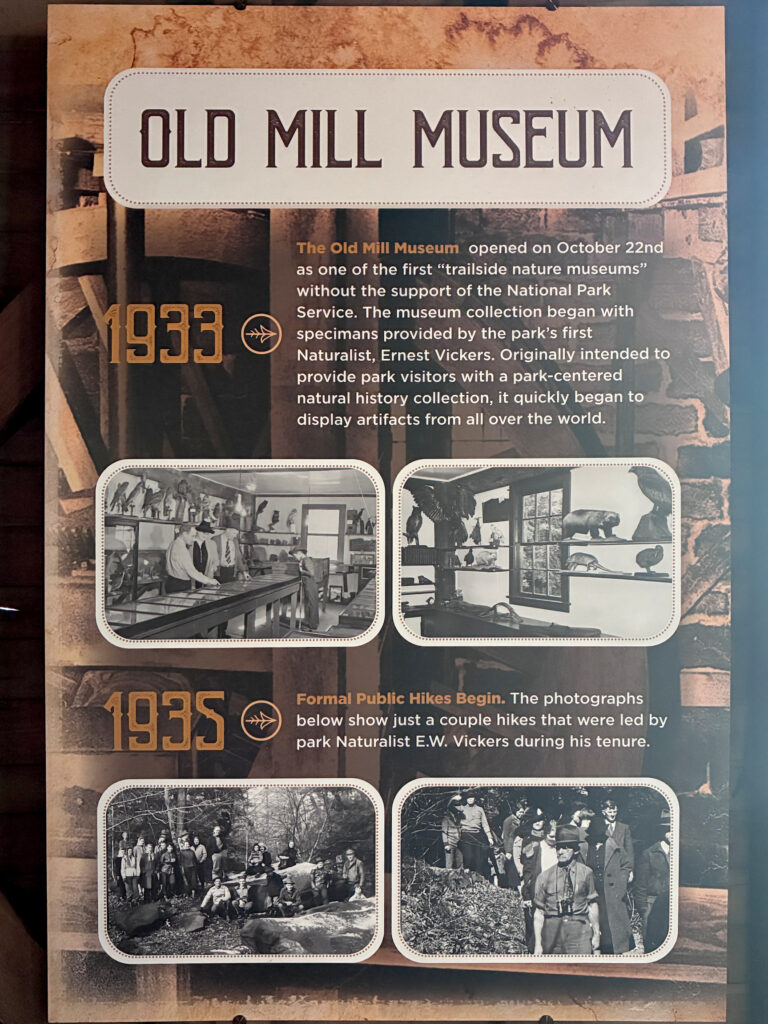
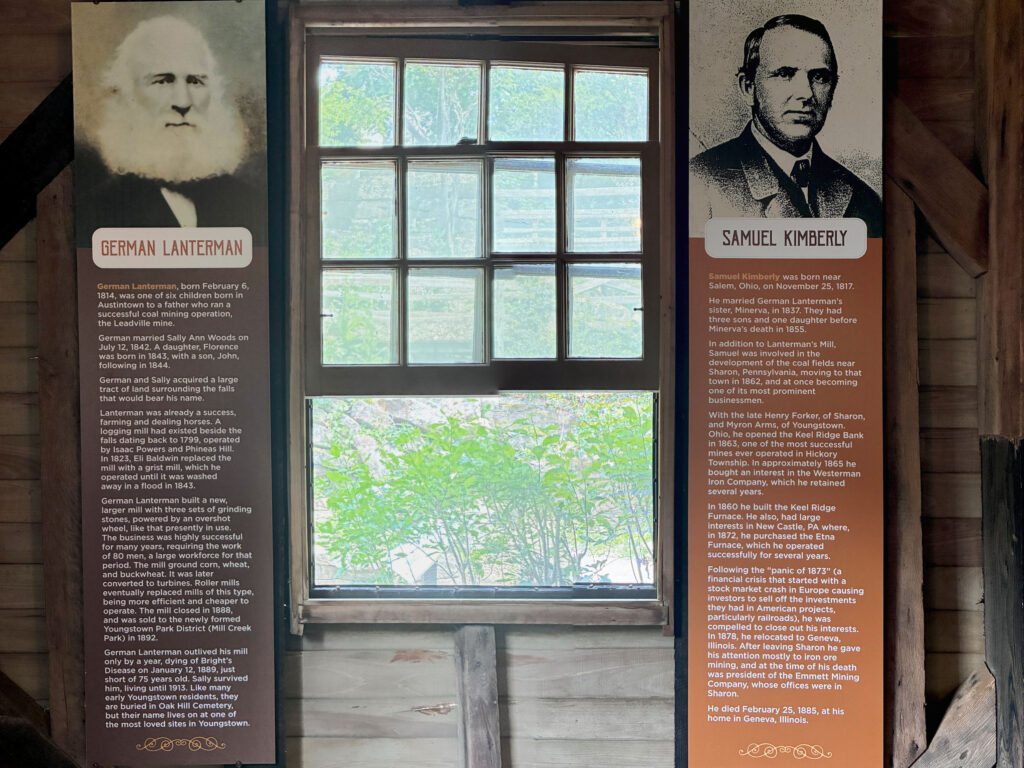
And some panels talking about the developers and owners.
As seen in the sign on the top floor, the basement (minus one) floor has the gearing and drive mechanisms.
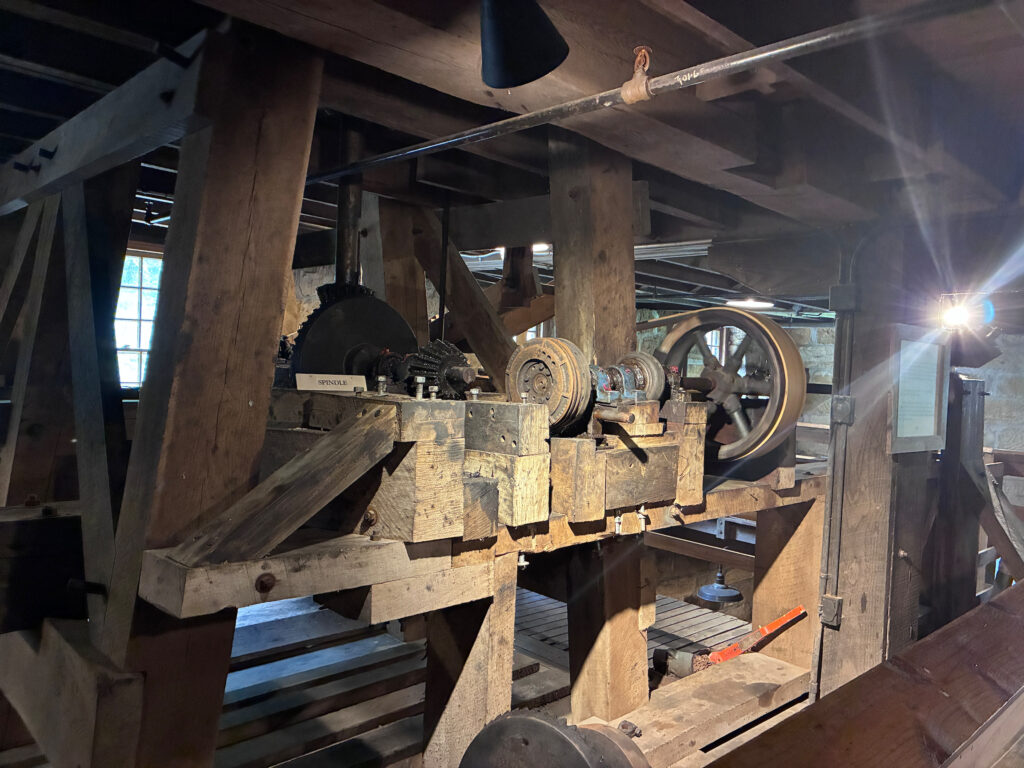
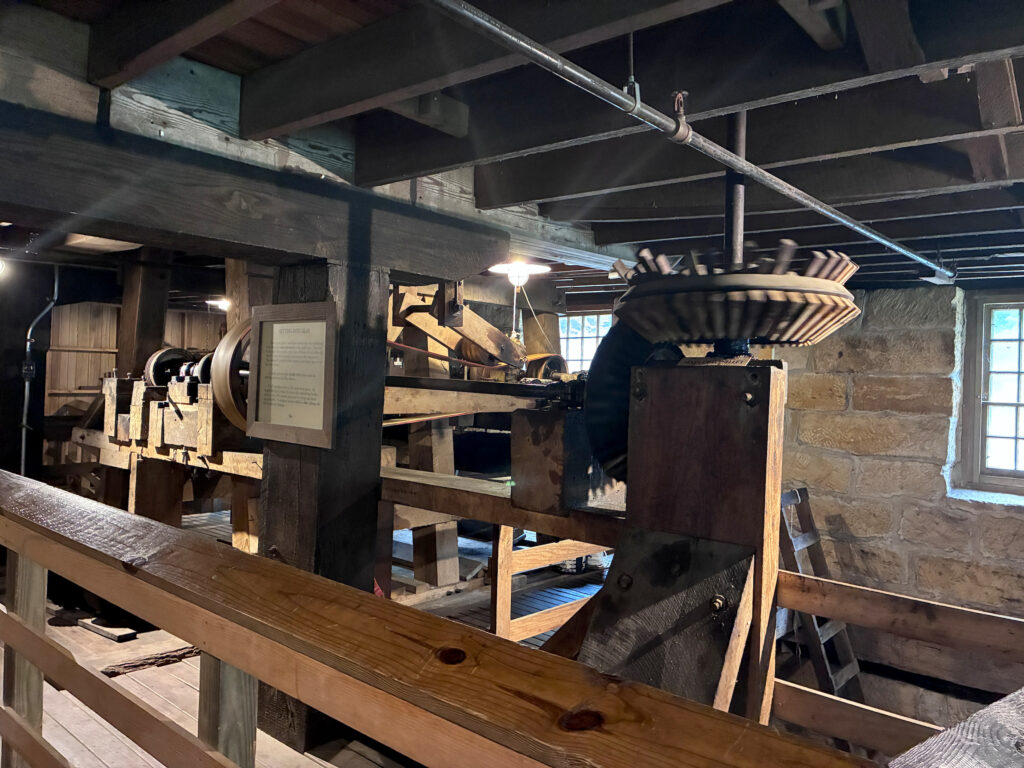
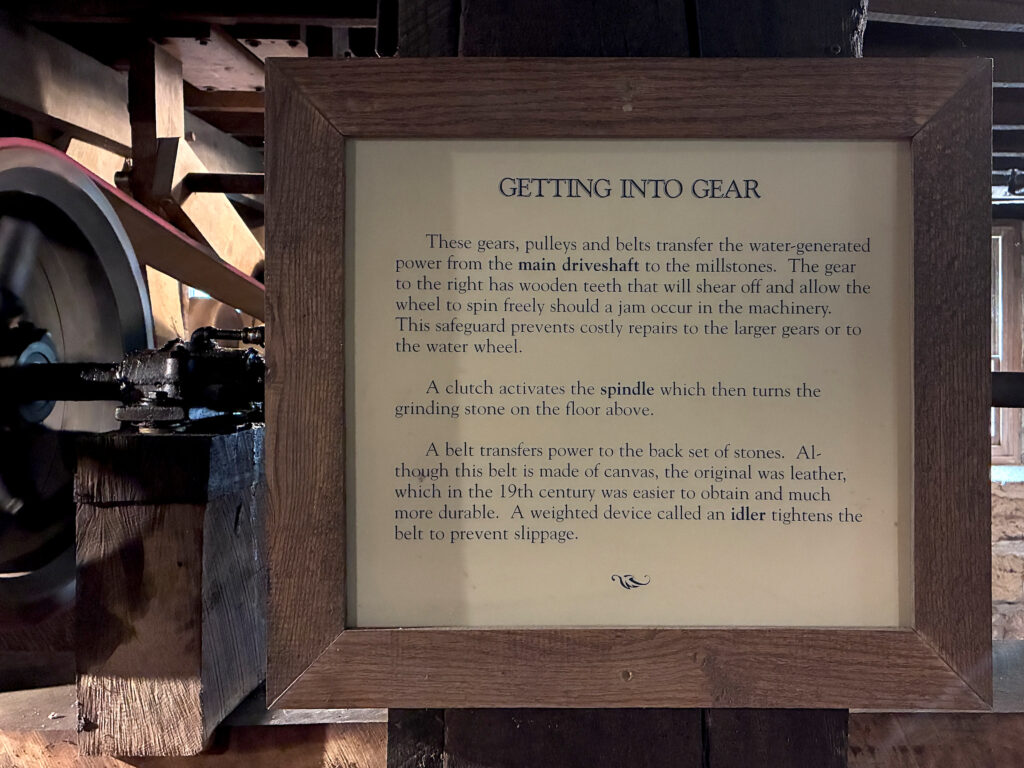
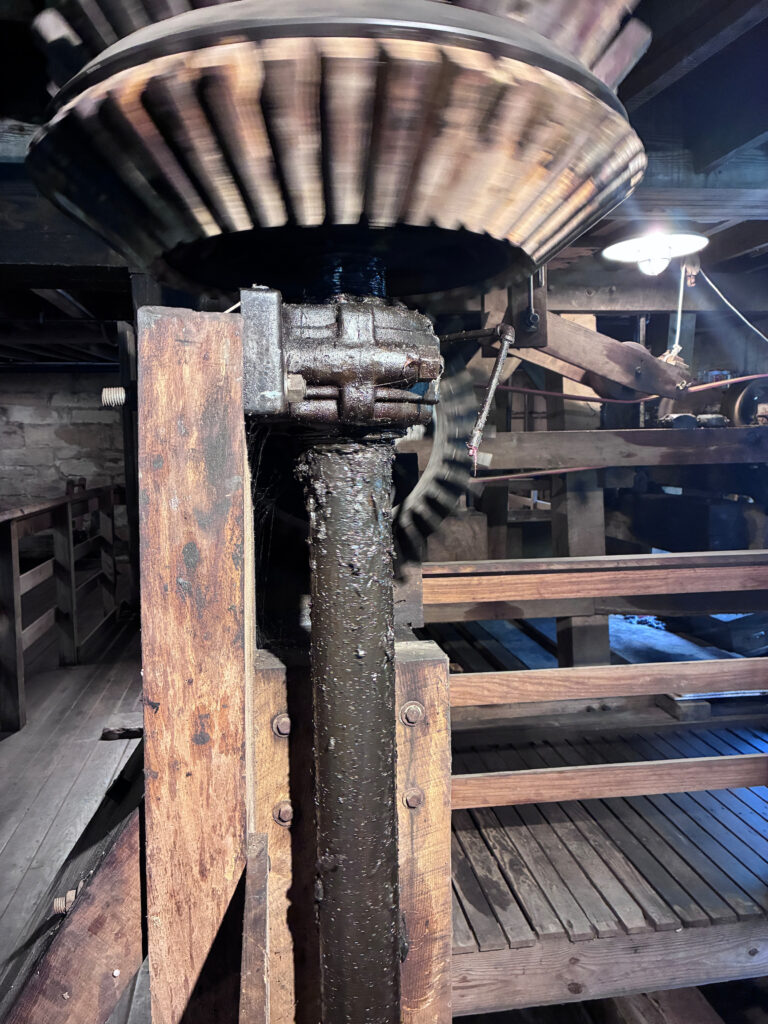
Near the stairs down to the next level, they have a view down to the water wheel and a … wooden raccoon gargoyle? In the first picture, the view down is between the railing and platform in the middle; you can see the missing floor section there.
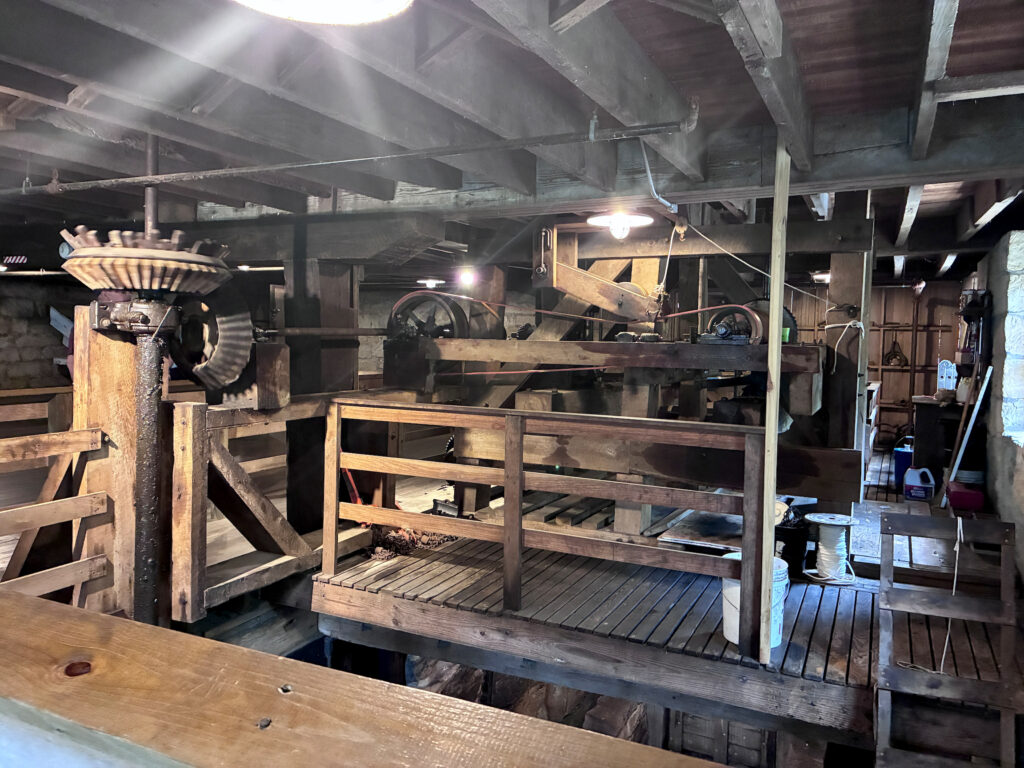
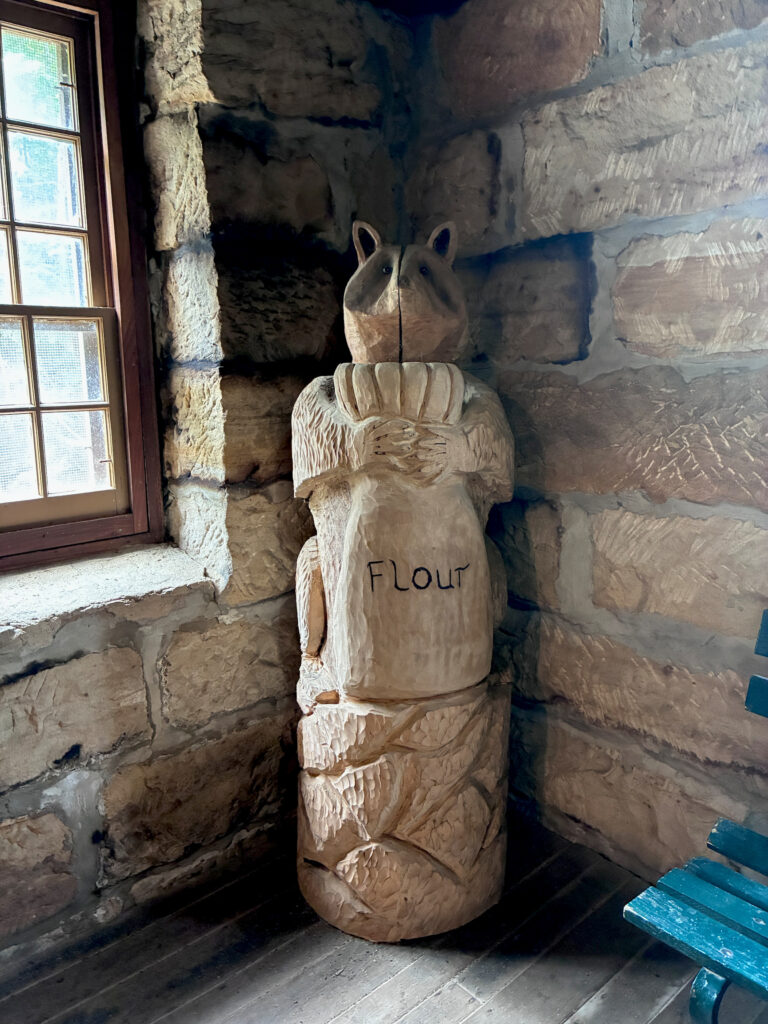
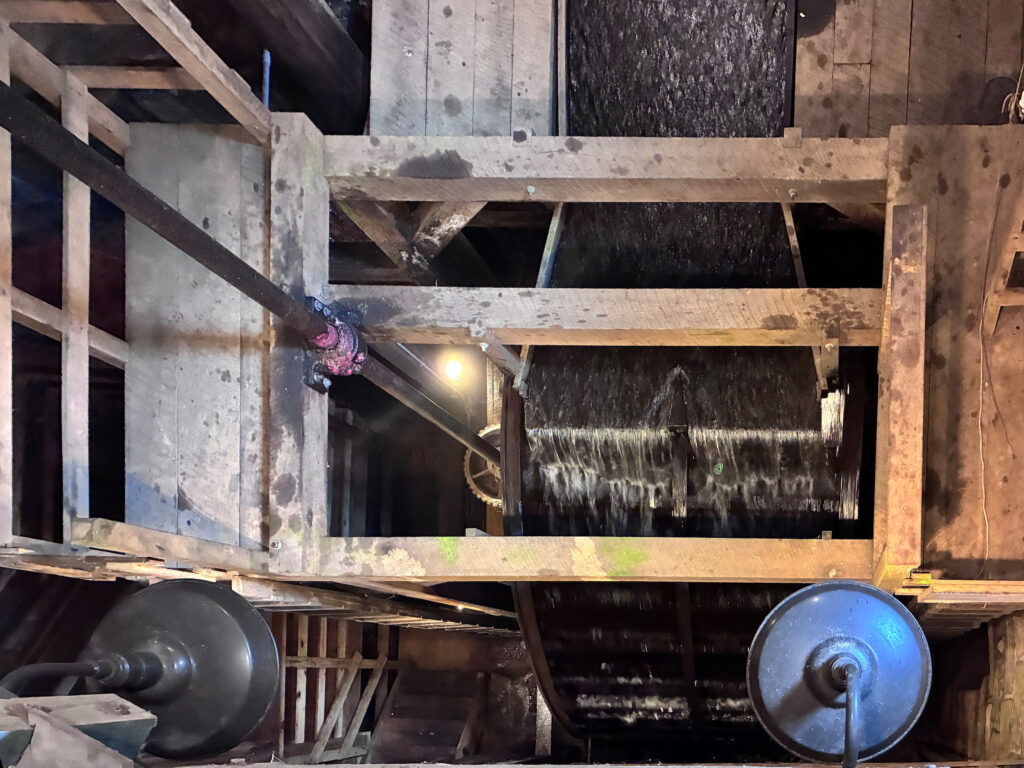
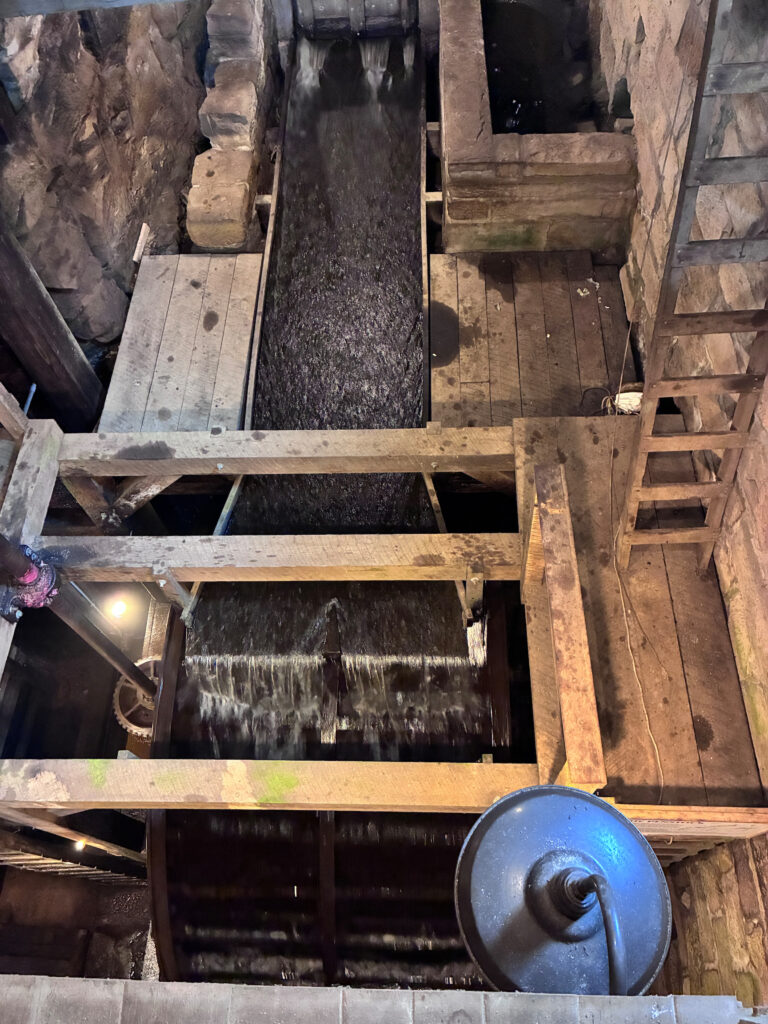
The sub-basement (minus two) floor has the water intake and control wheel. It is a half floor (or just a platform) because the water works take he rest of the space.
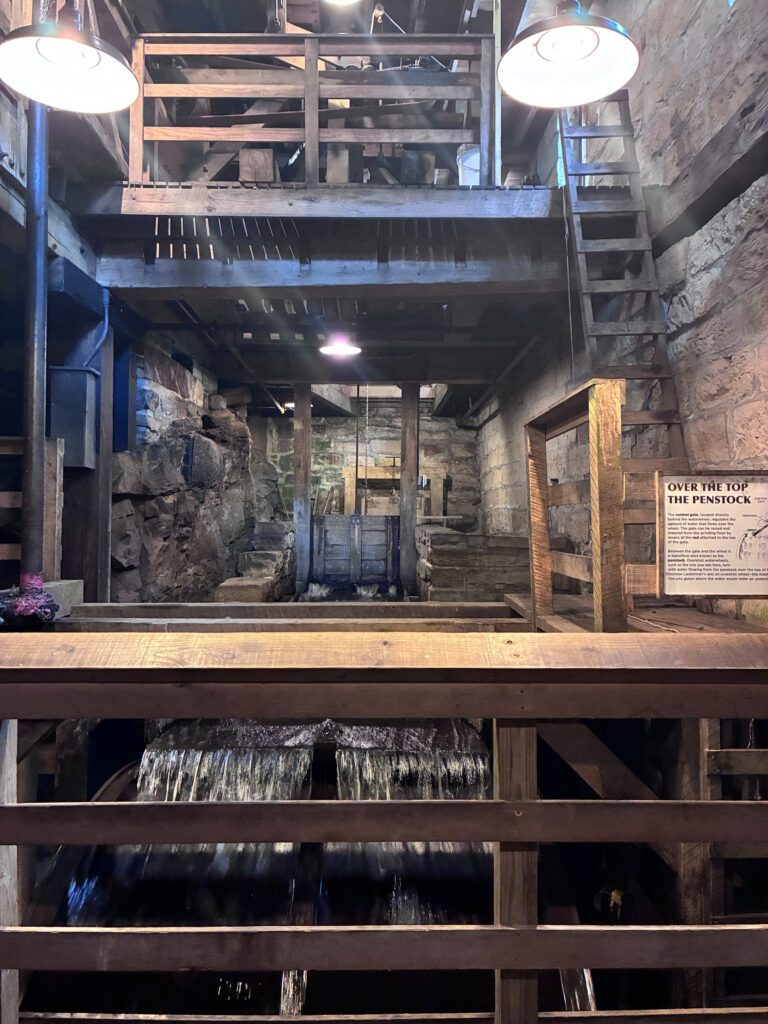
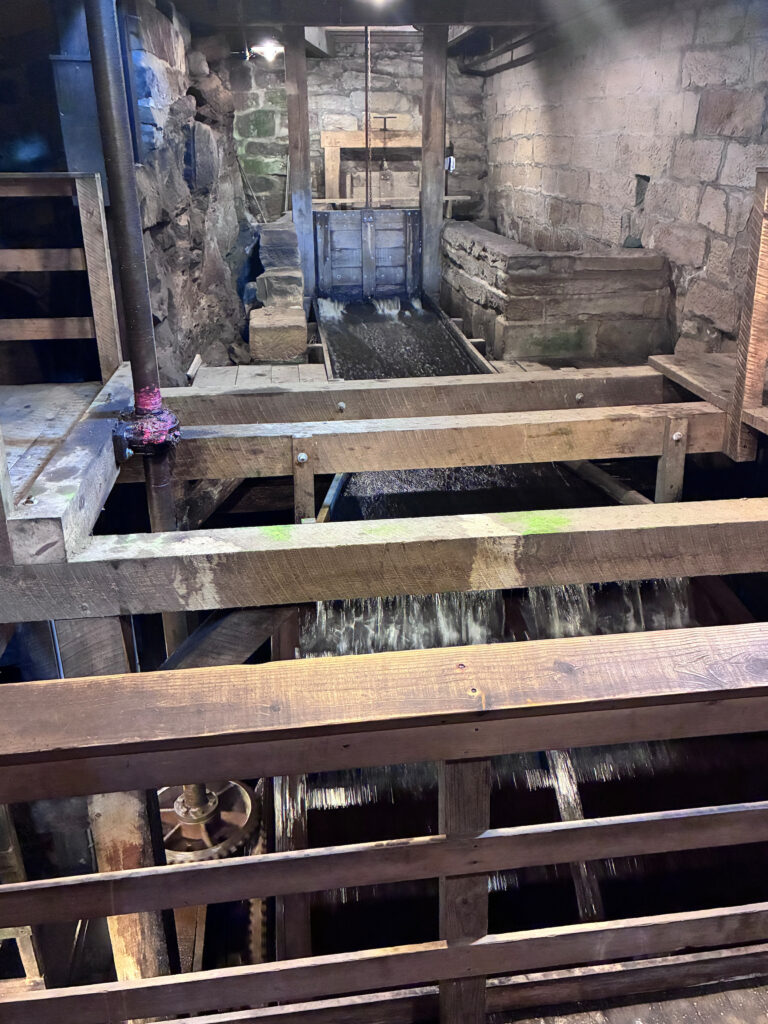
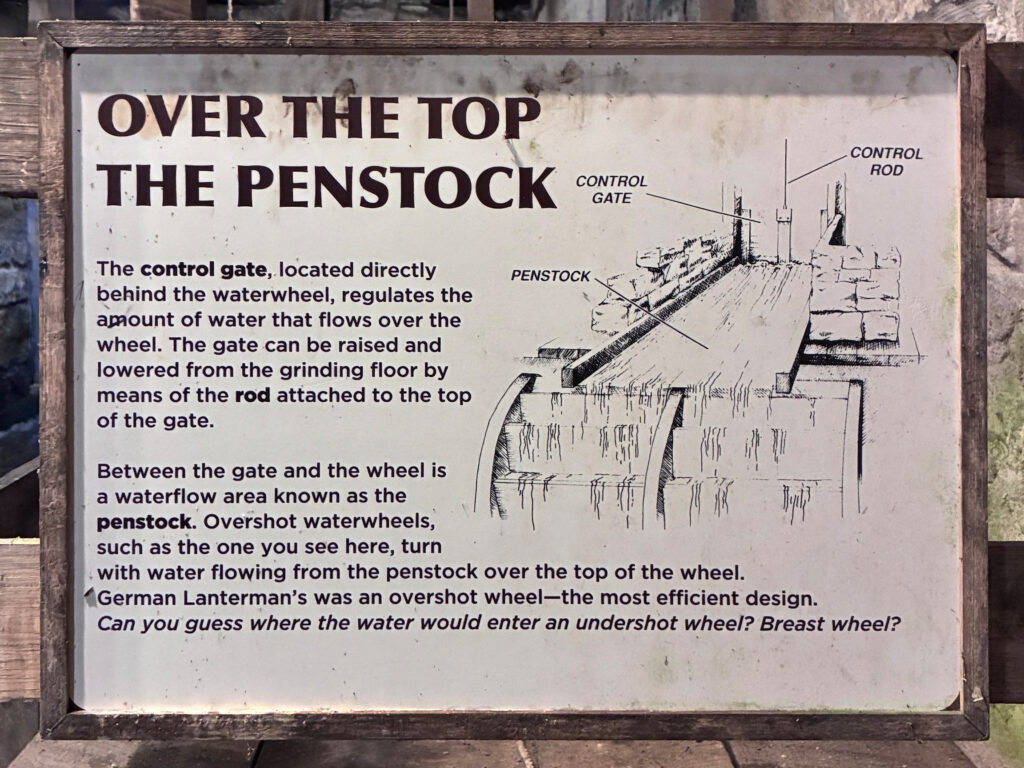
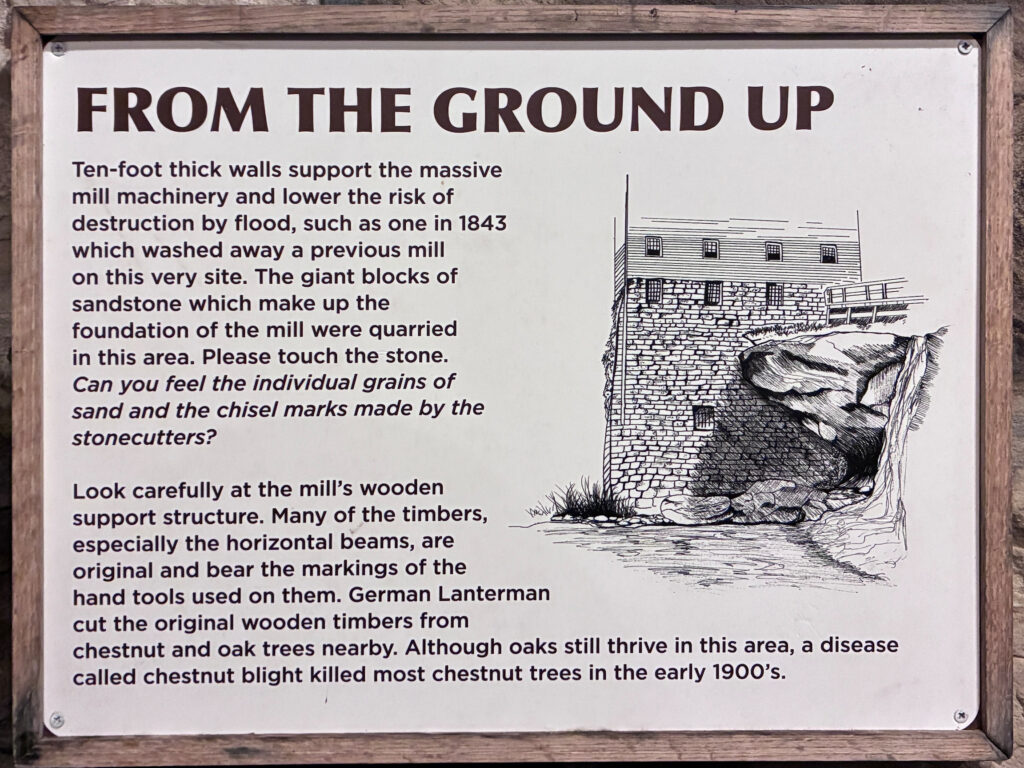
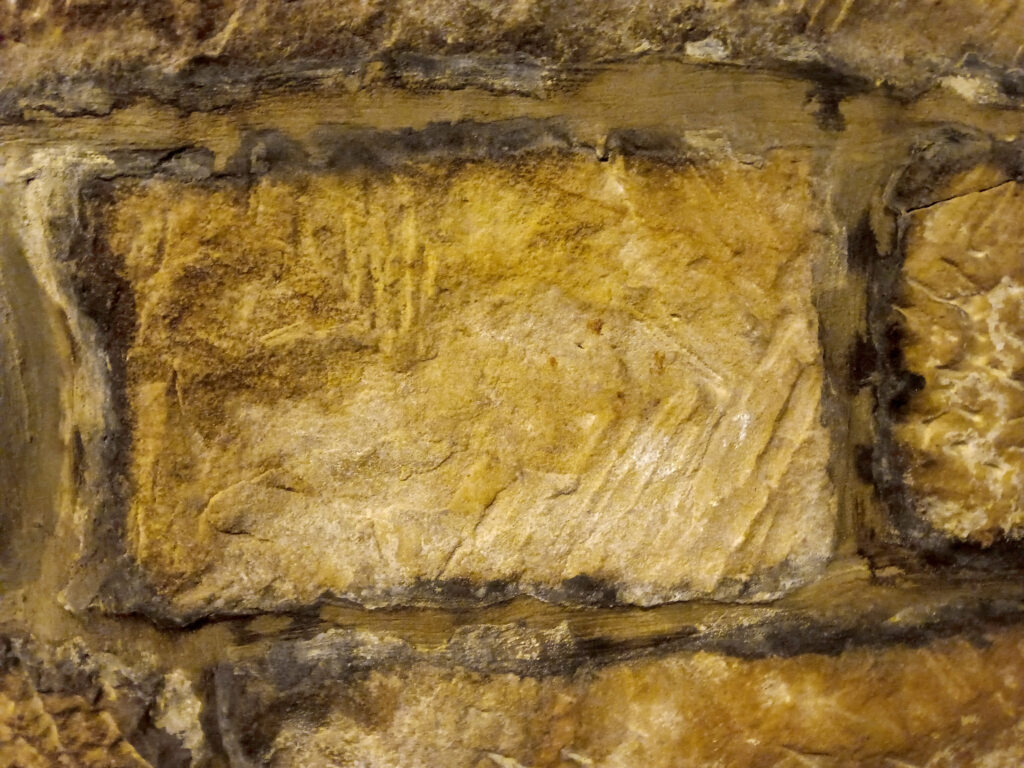
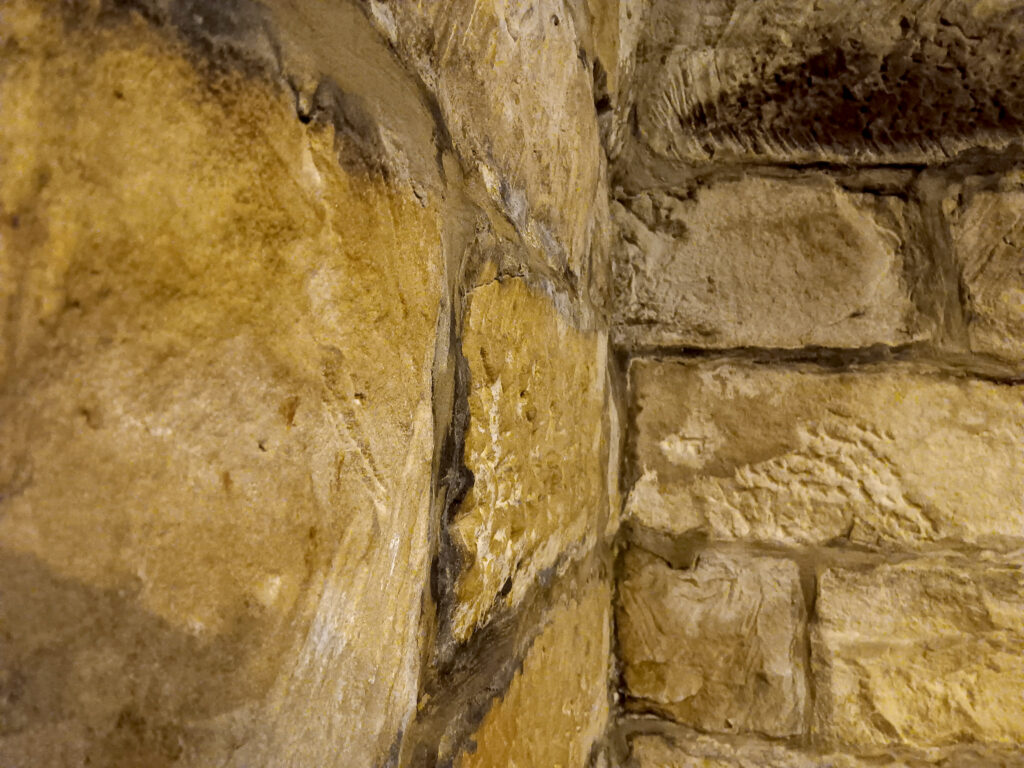
The second sub-basement (minus three) floor is just a small platform beside the water wheel. You walk down dim stairs by damp natural stone to get to it. It is interesting because this is an interior water wheel instead of an exterior one.
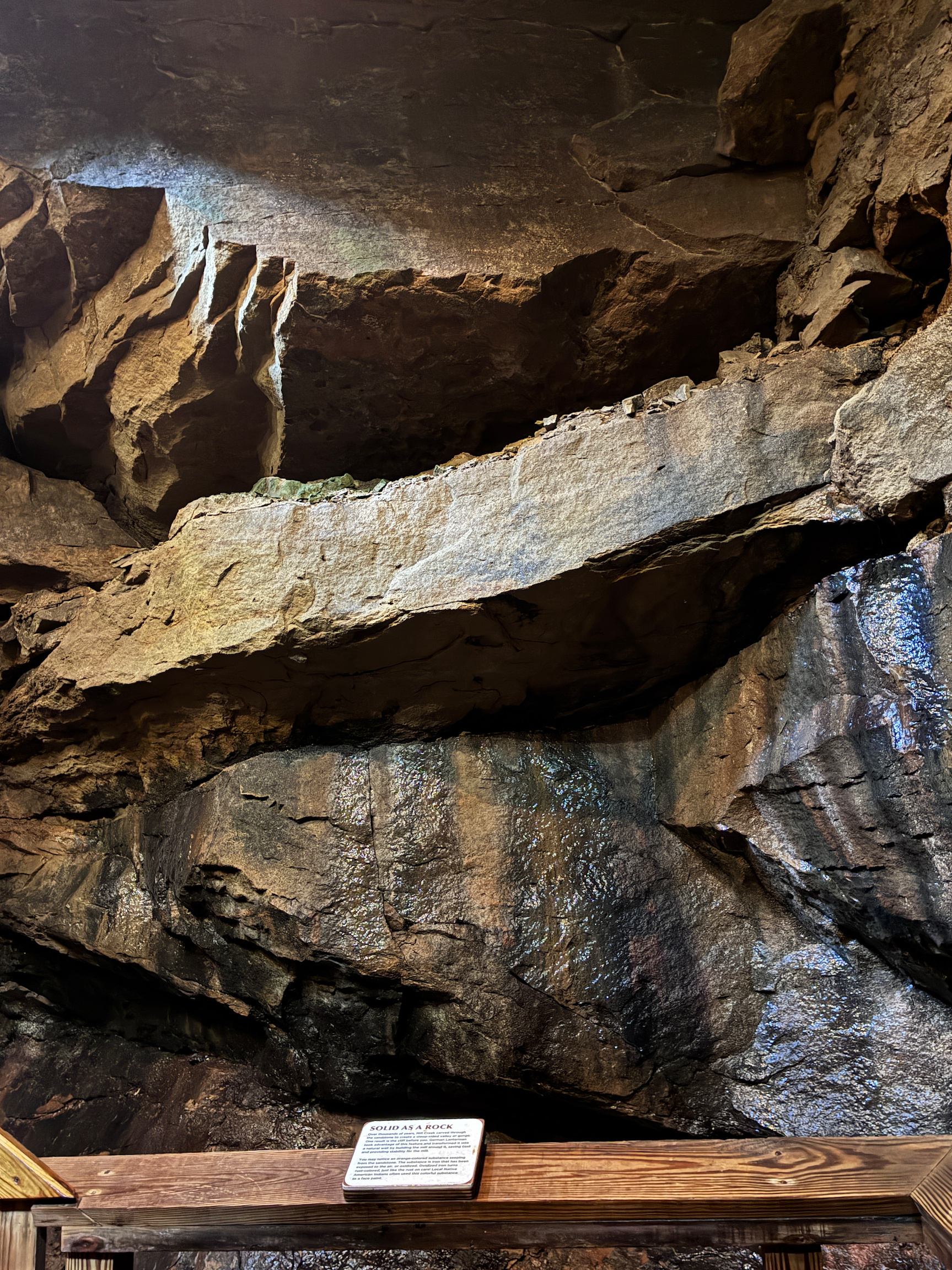
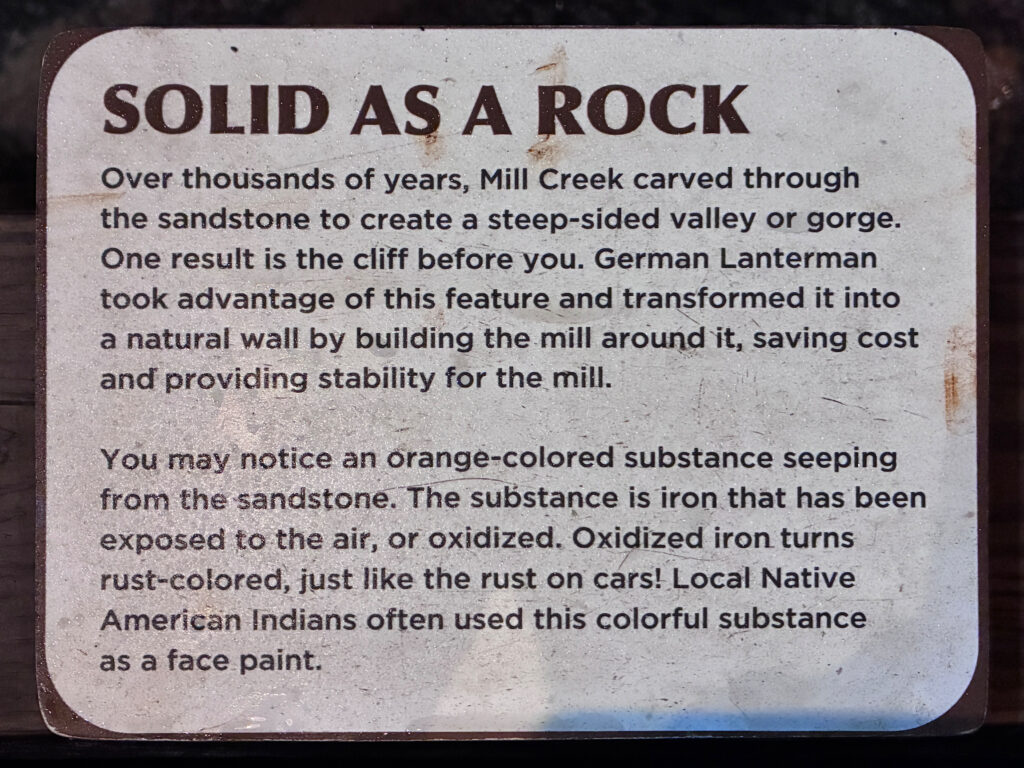
At the bottom is the water wheel. It is big, 14 feet, according to the sign. There was no warning sign here. Maybe they thought it was obvious, but you probably do not want to stick your hand (or your tongue) on the water wheel. The best you could expect from that experience is 100 year old algae and splinters.
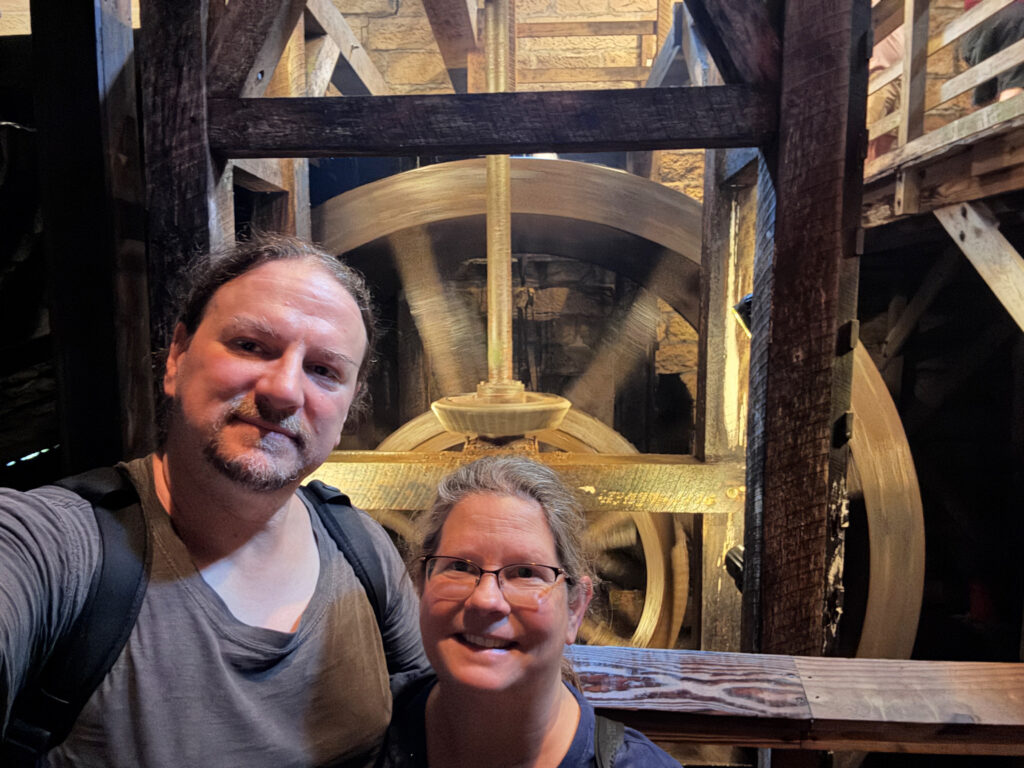
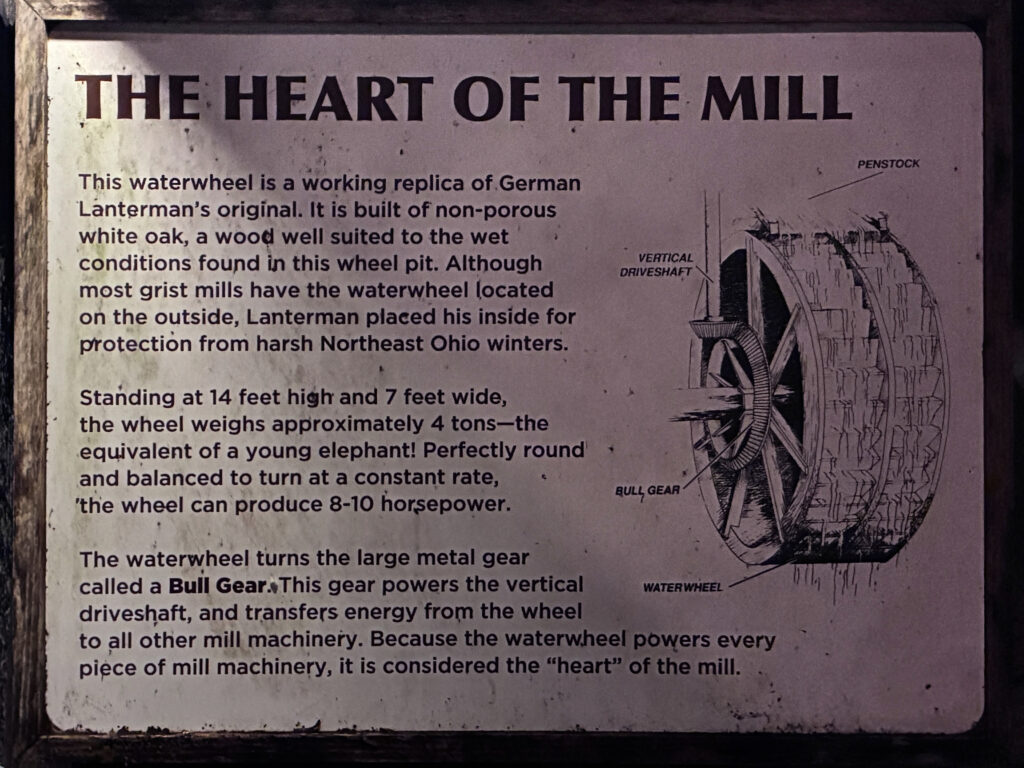
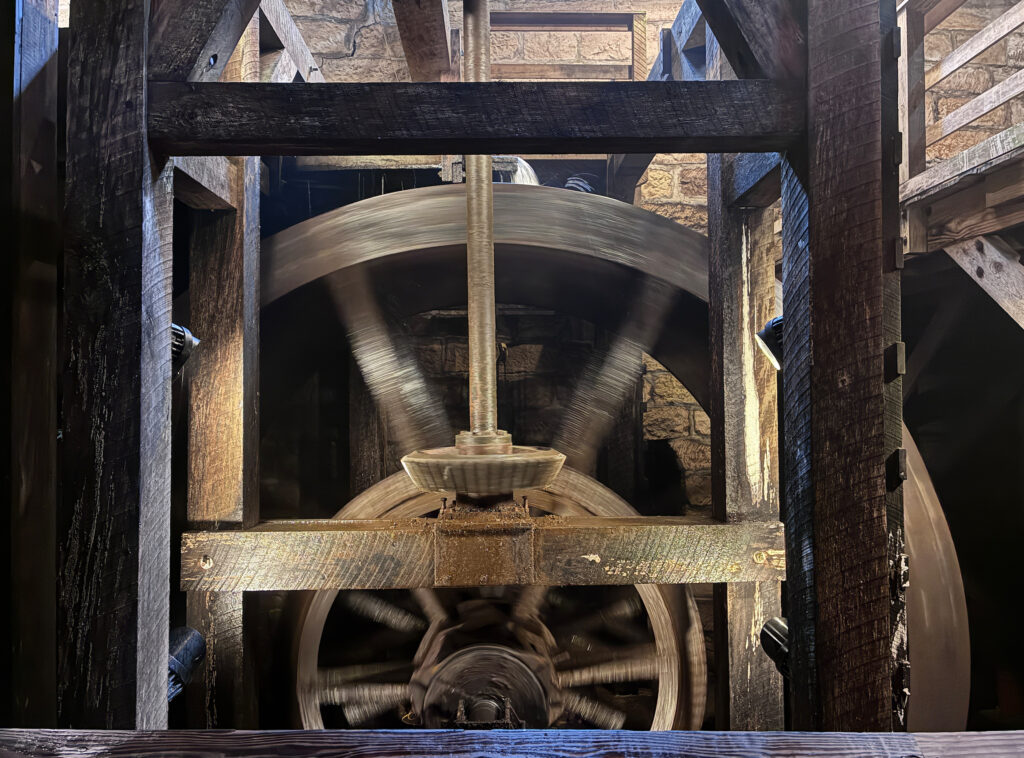
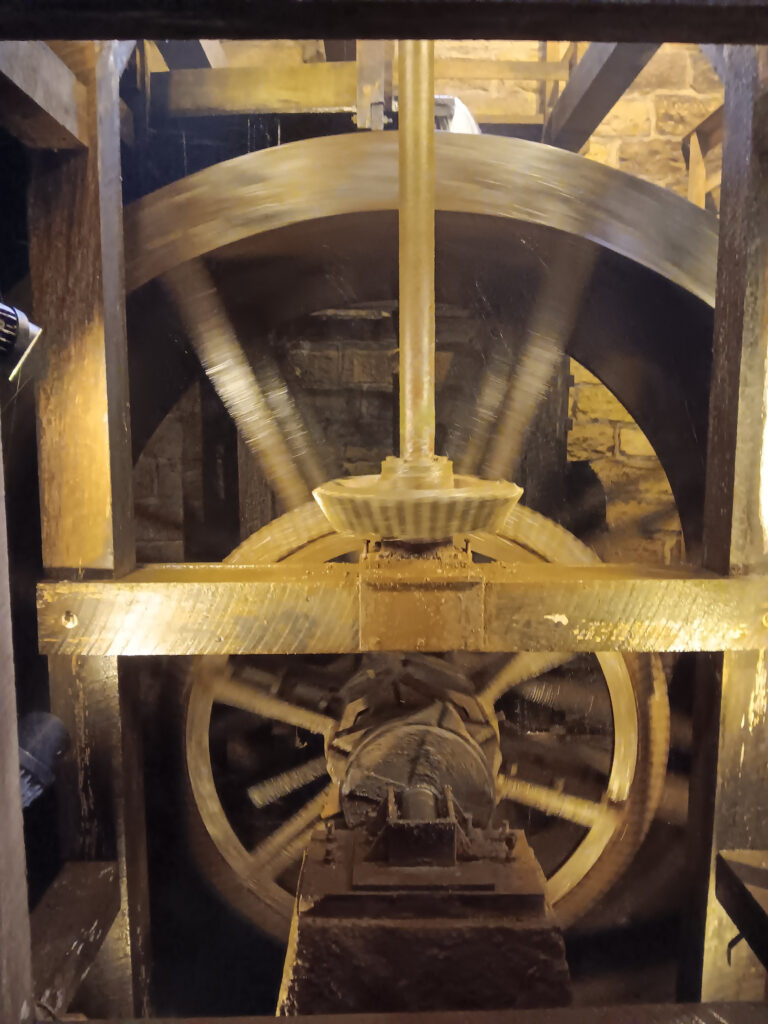
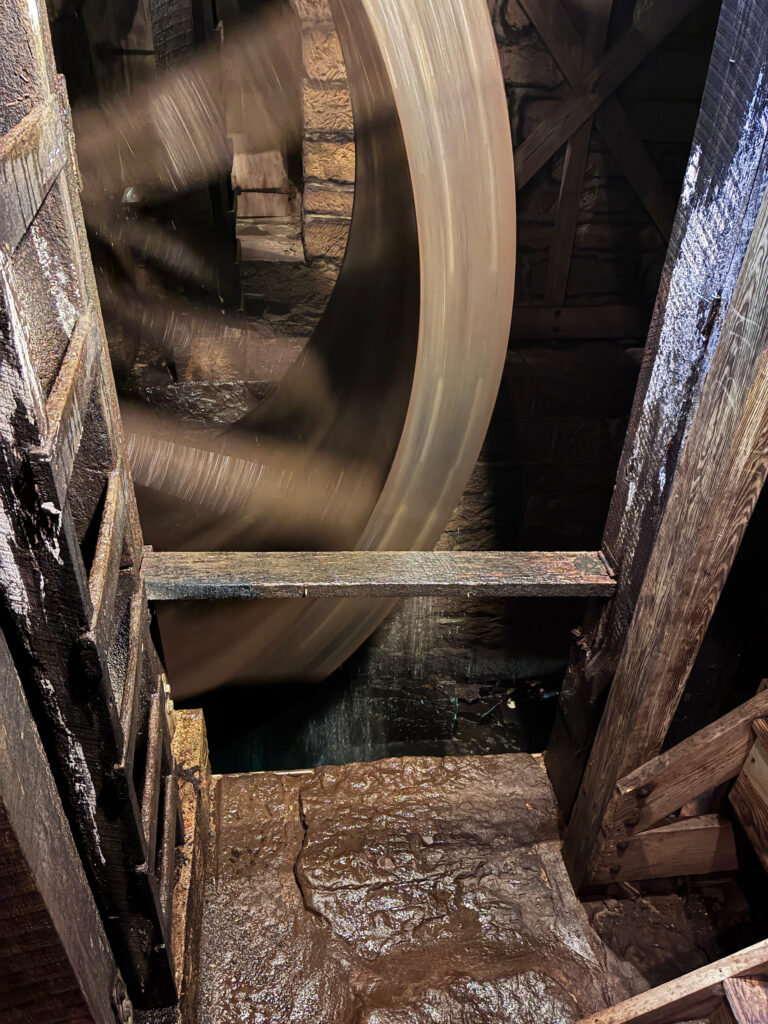
Oooh, fancy. It’s a video panorama.
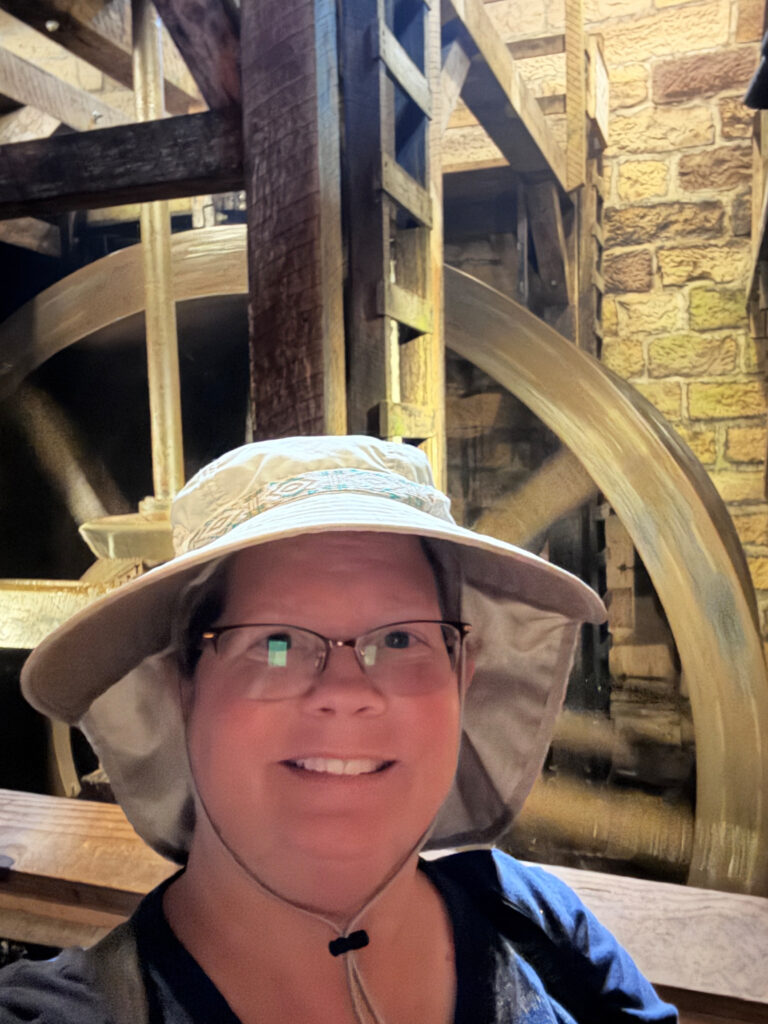
And a video selfie.
On the way out, they had old pictures of and signs for the mill.
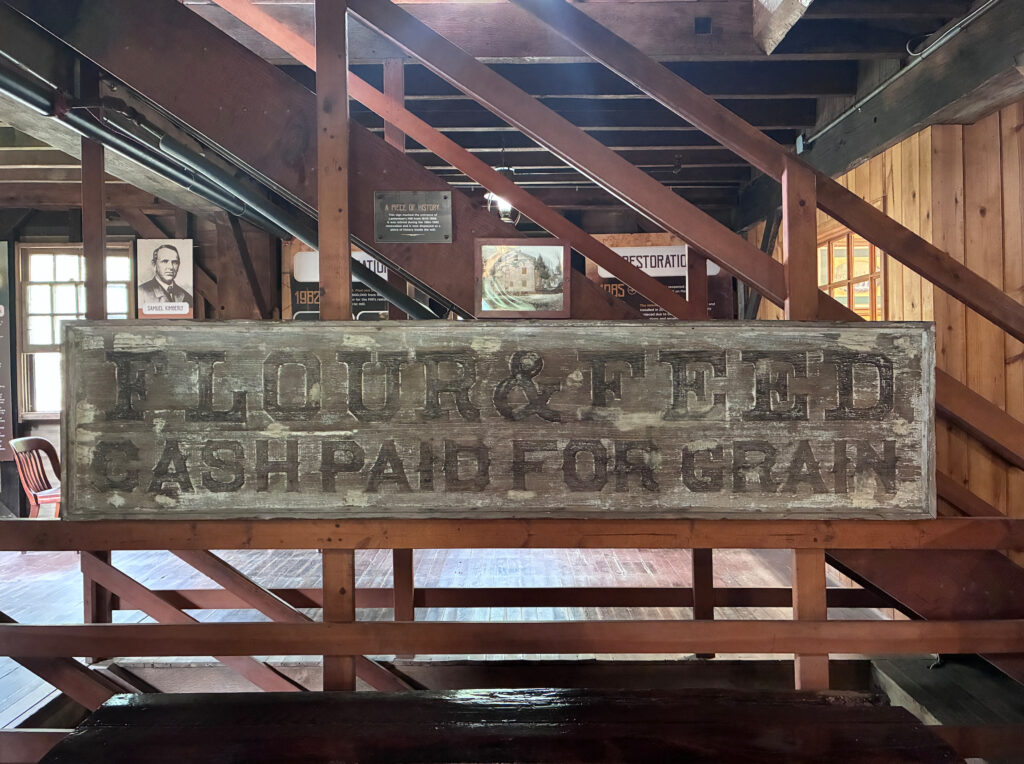
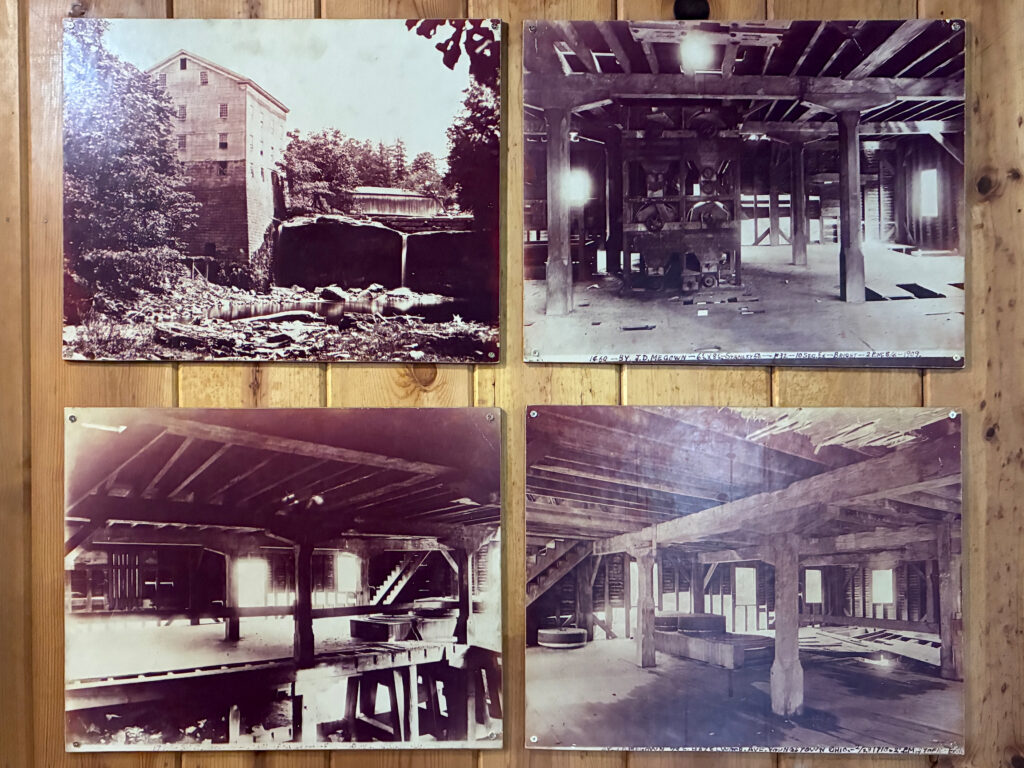
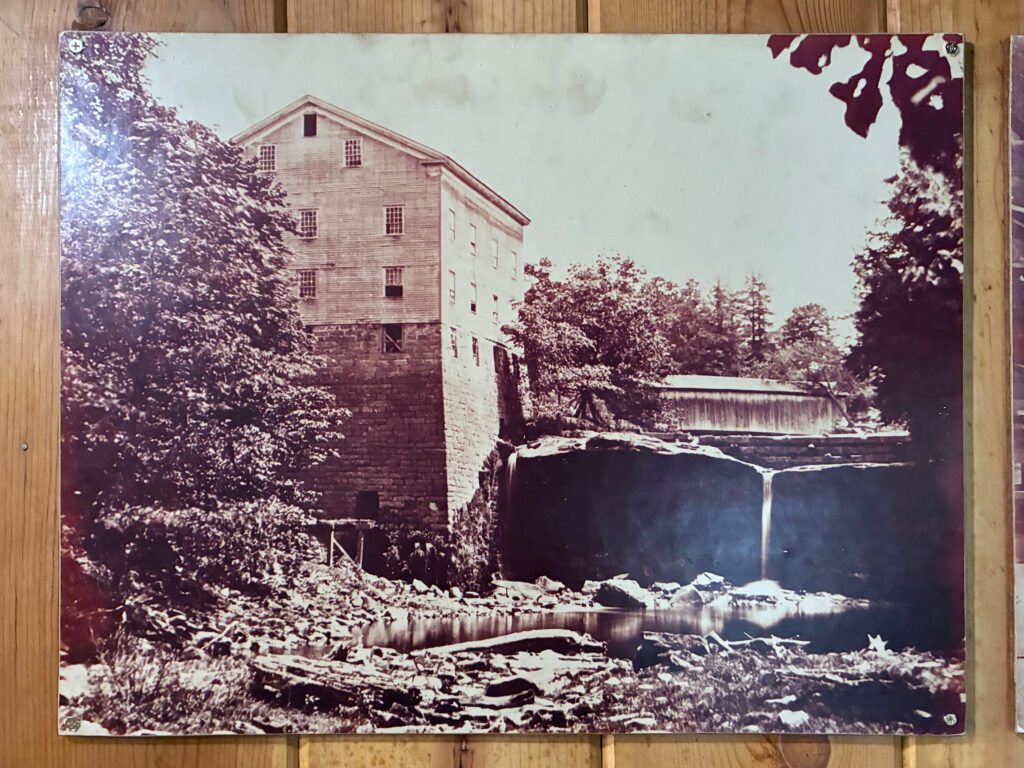
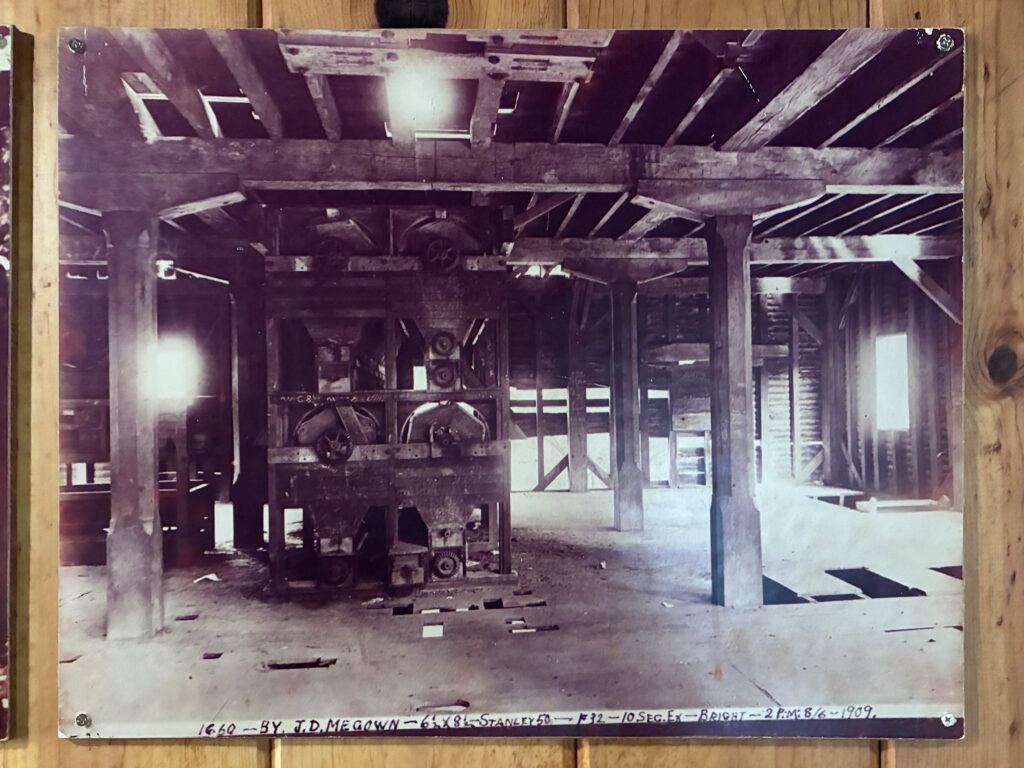
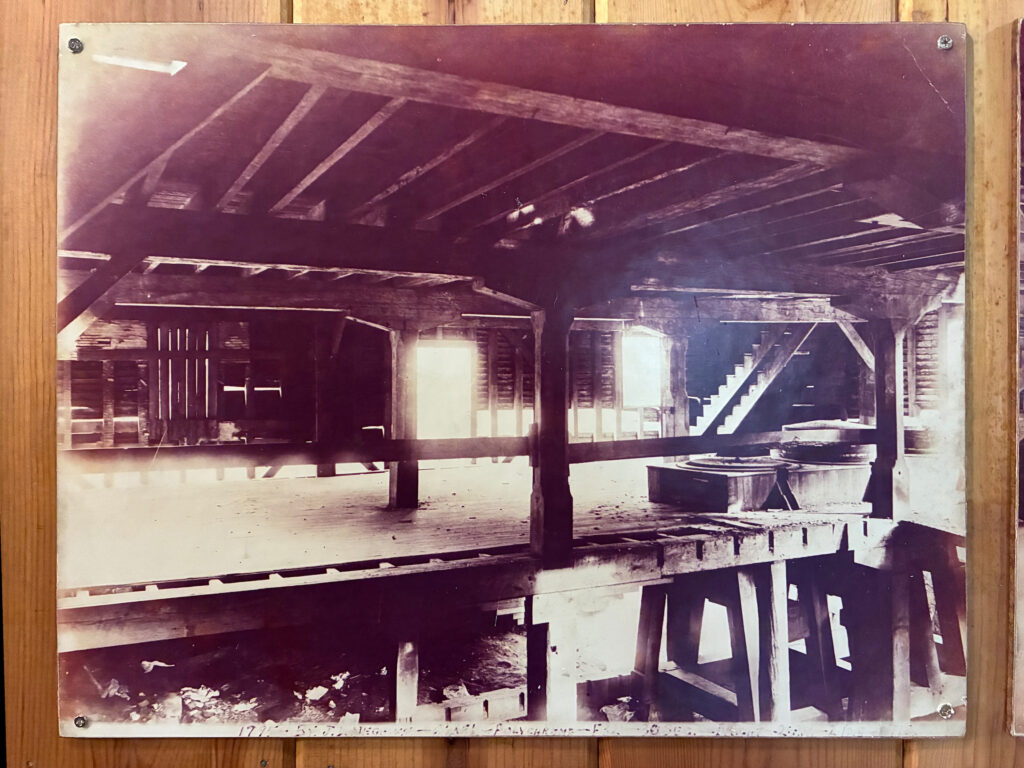
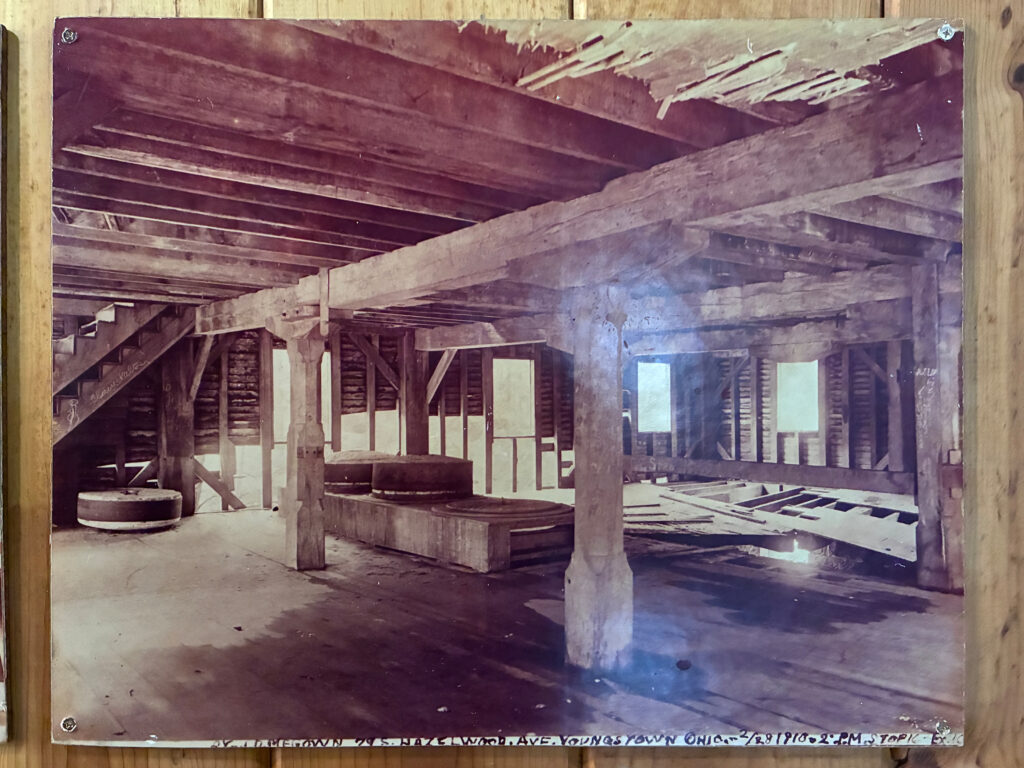
You exit out the side of the mill, and you can see the back deck down a ramp on the left of the picture.
Outside on the deck, you can see the dam, spillway, water wheel diverter, and waterfall. There was a group of Mallards in the water at the waterfall and a group of Pheobes flying around. The Pheobes were to fast to get good pictures.
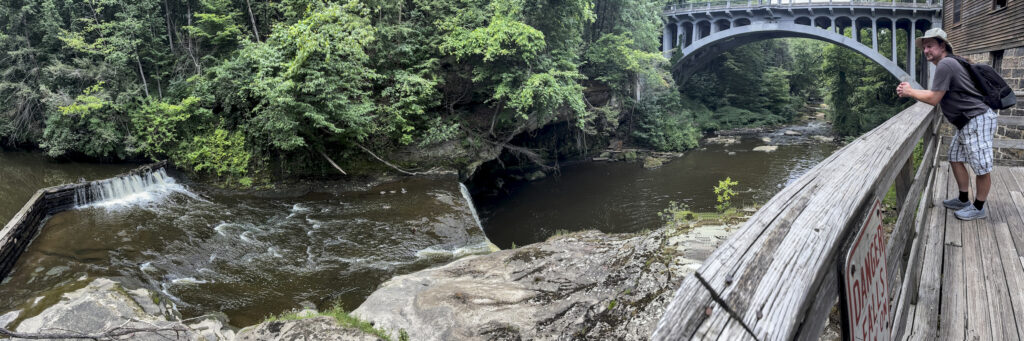
Here you can see the log dam and spillway. The log dam forces the water into the diverter for the water wheel.
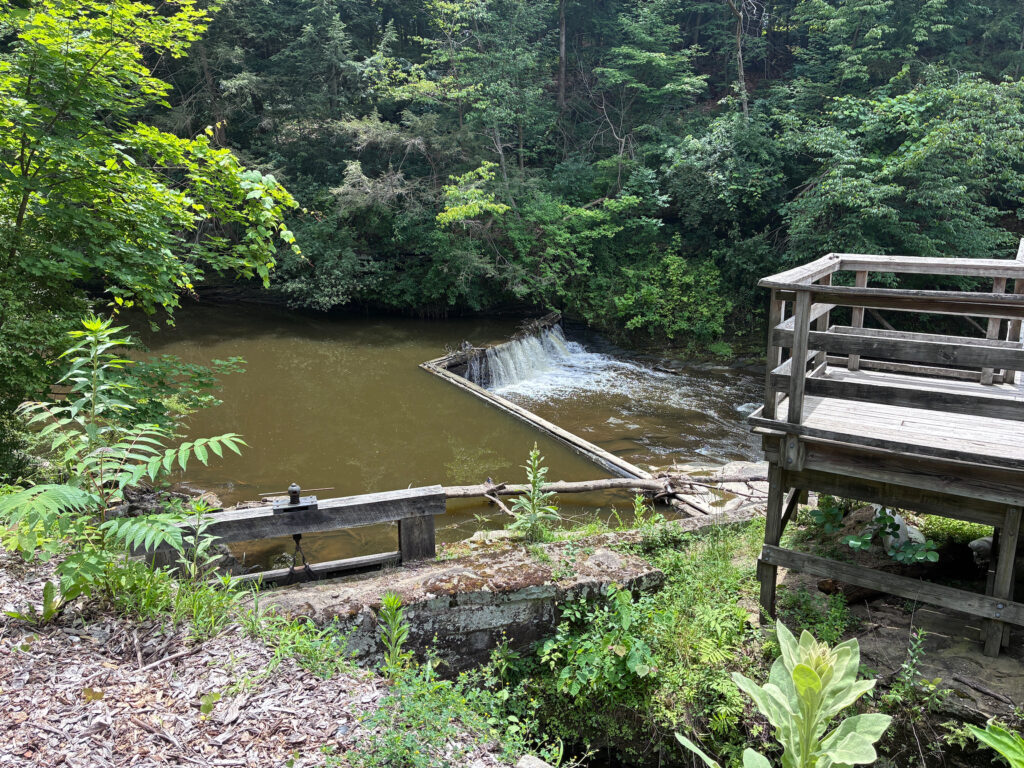
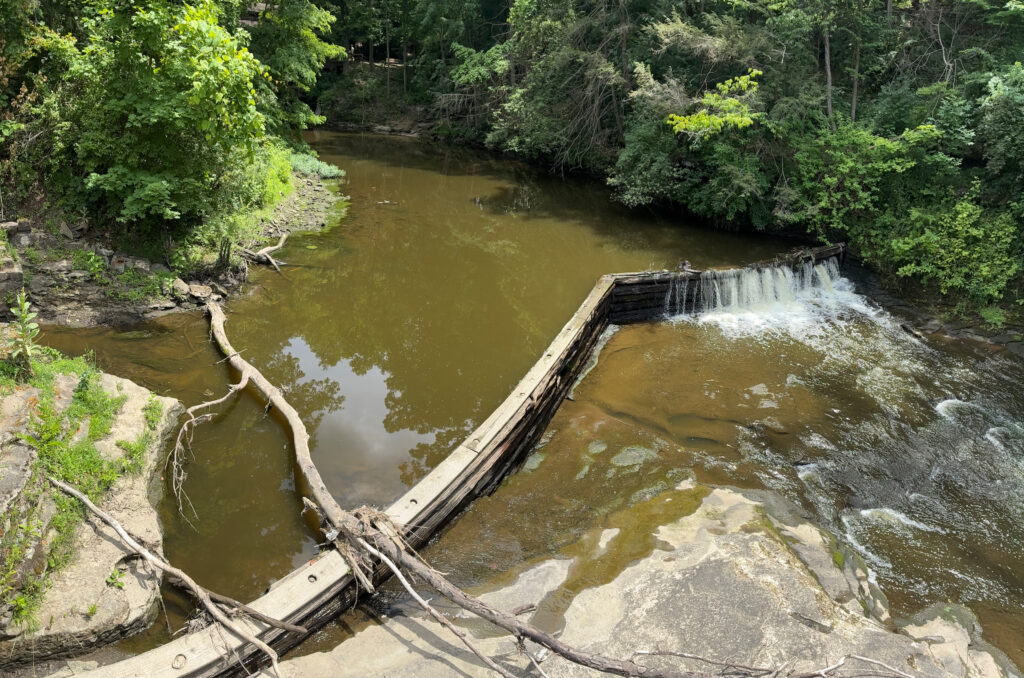
And here you can see the diverter and diverter gate. Inside the mill at the waterwheel, there is another gate. On the bridge side of the deck, you can see the overflow come out from the side of the mill.
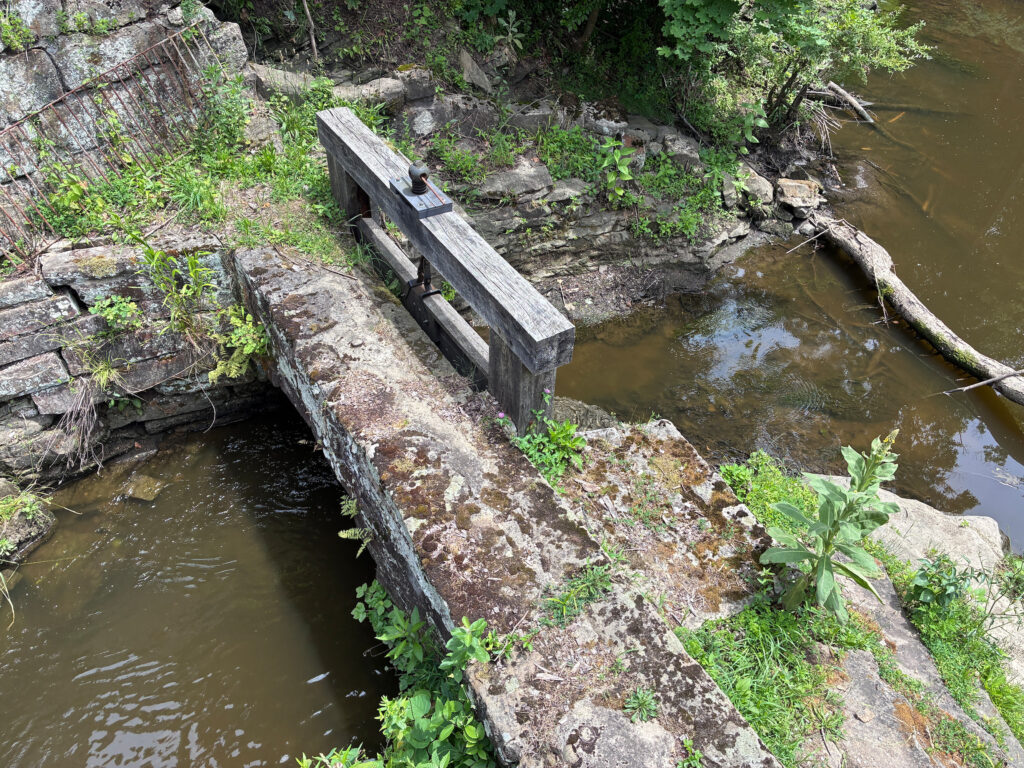
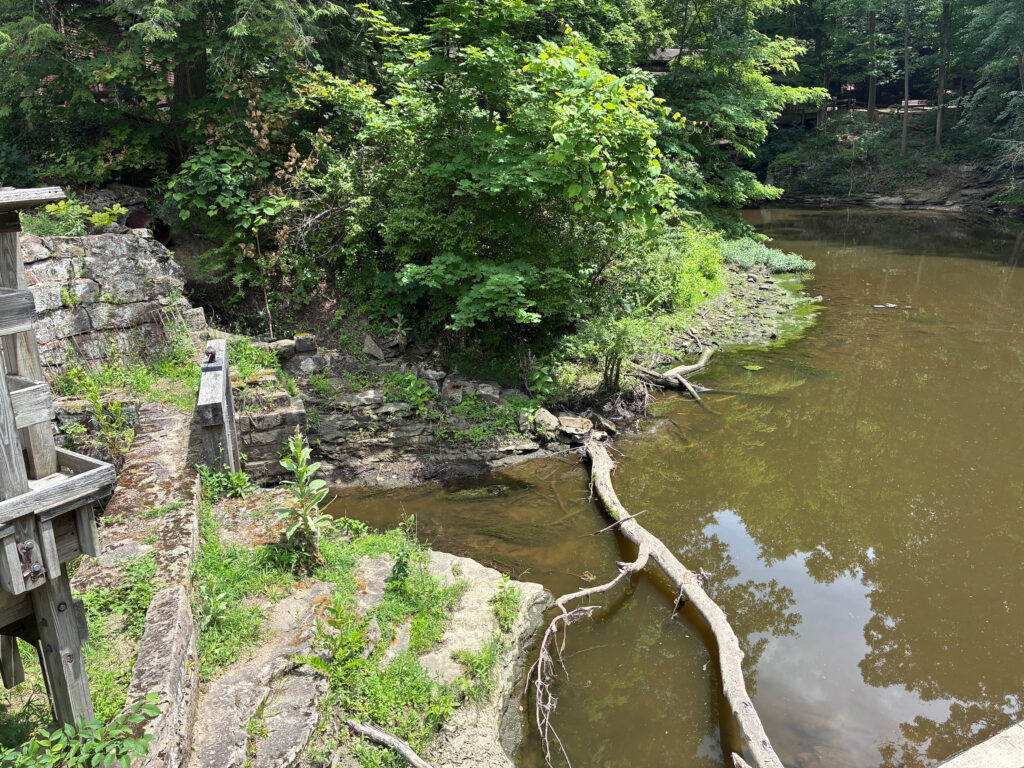
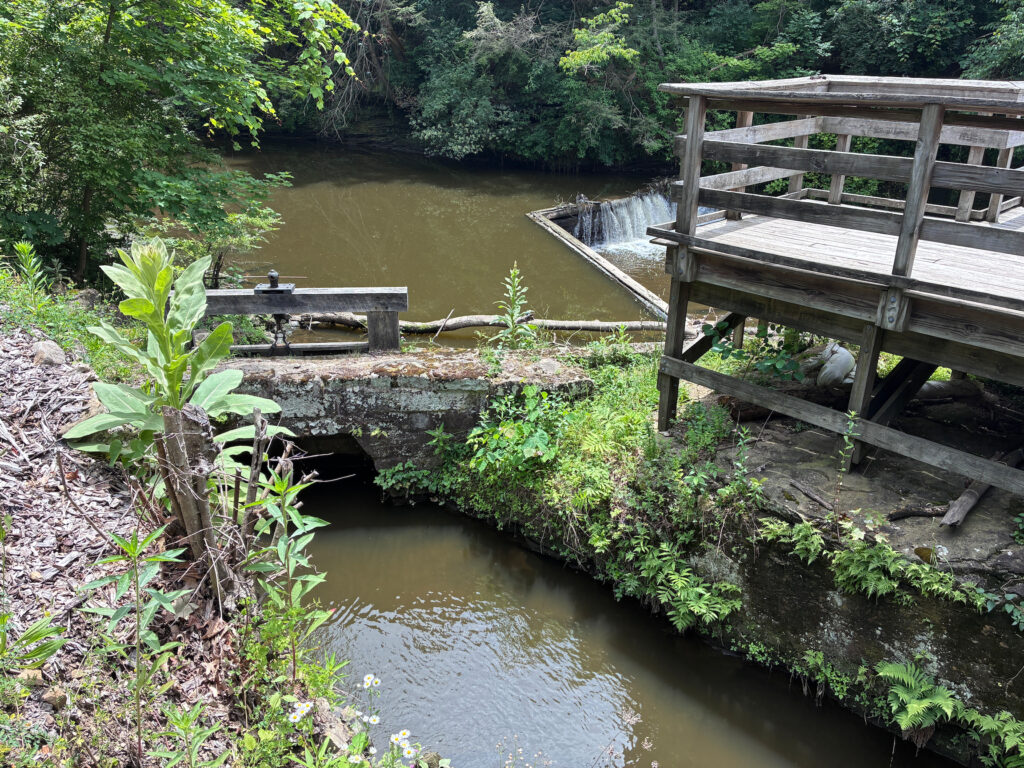
You can also see the bridge from here. The excess water from the water wheel comes out from the side of the mill in the bottom right of the picture.
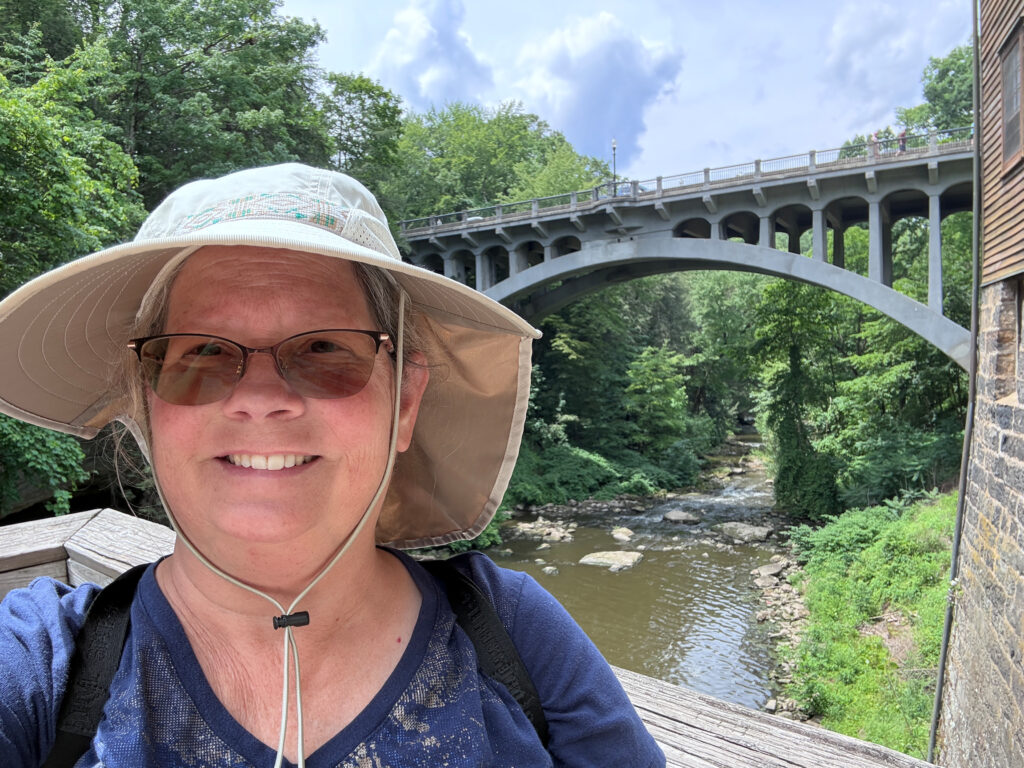
From here, we hiked part of the gorge trail to get to the Cinderella bridge.
* If there was any ladies lingerie in there, it was being worn by other the visitors. It was not ours; we were going commando.