Ravenna, OH, June 2026
When searching Google for things to do, John had seen a short blurb about Pitcher Plants and Triangle Lake Bog. He forgot about it, but the kayaking naturalist brought it up as a thing to do in the area. The bog was only 10 to 15 minutes away, so we went to check it out in the last few days of our stay.
Pitcher Plants are carnivorous. Unlike the Venus Flytrap, Pitcher Plants are passive. They have a bowl of water to drown the bugs; no effort required.
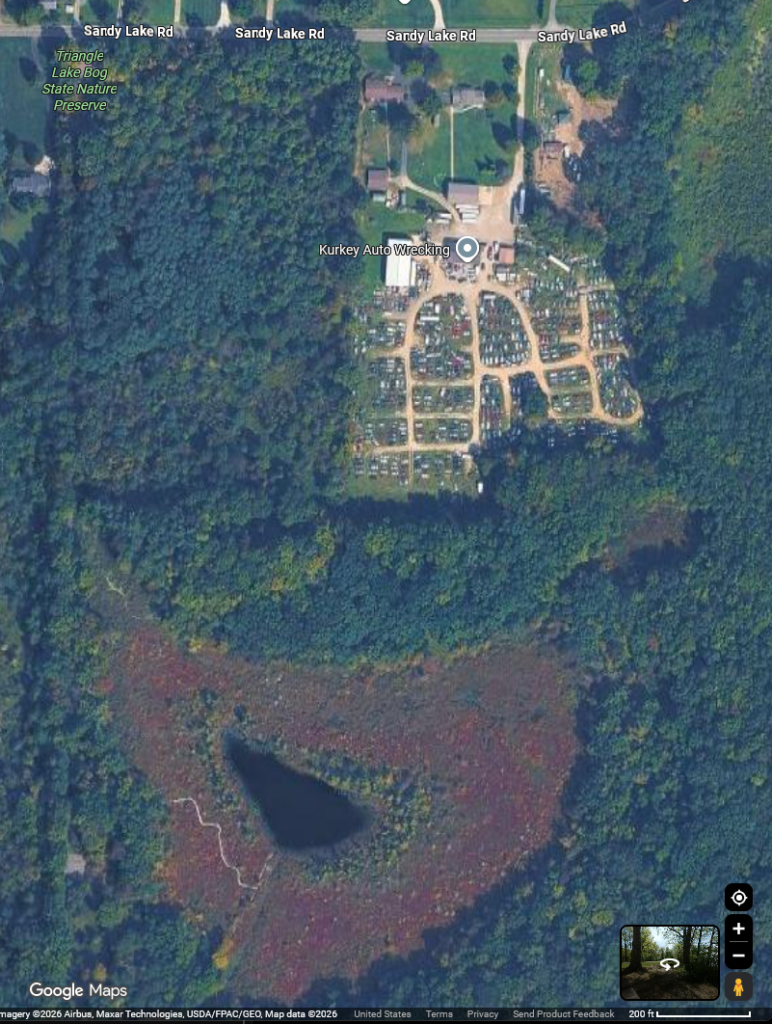
The bog is south of Ravenna, OH and northeast of Rootstown, near Muzzy Lake. The park is in the middle of a community (and a junk yard), and it is not very big. Under the “Triangle Lake Bog State Nature Preserve” in the upper left of the map, you can (kind of) see the new parking lot. If you go directly south of there, you can see a gap in the trees near the bottom of the map that is the old parking lot. The trail loops around from there. You can see the bright line of the light grey board walk leading through the bog beside the lake. The boardwalk is only about two feet wide; it is barely wide enough to not brush the vegetation on either side. While not a perfect triangle, the lake is more triangular that was some people draw in art class.
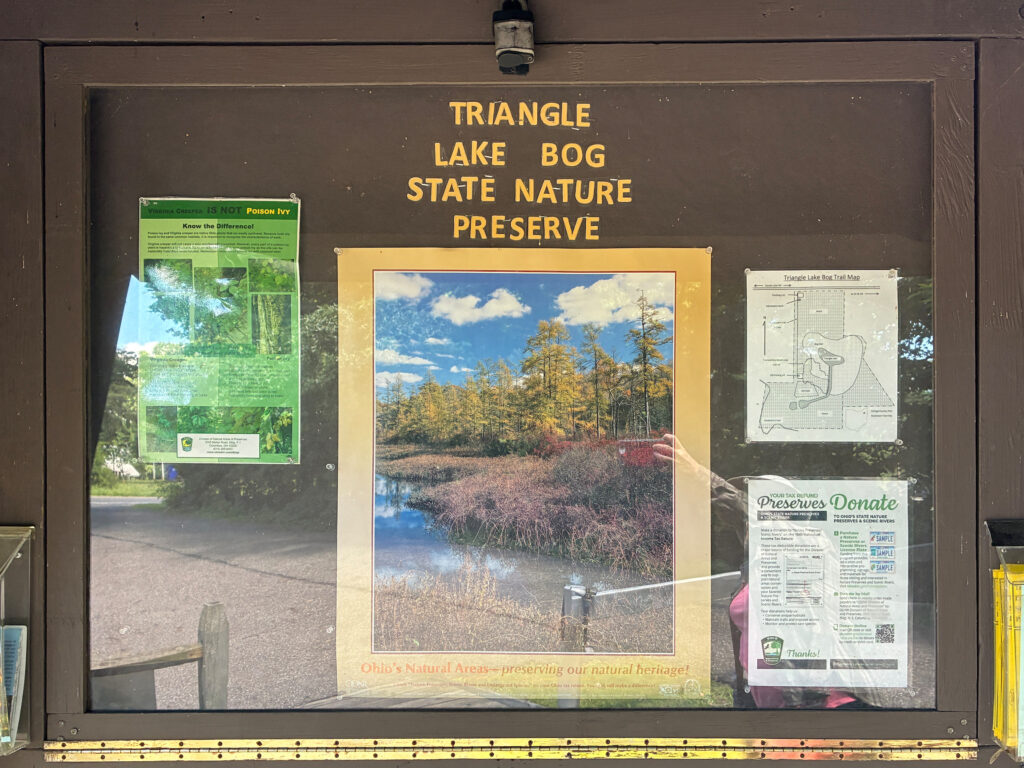
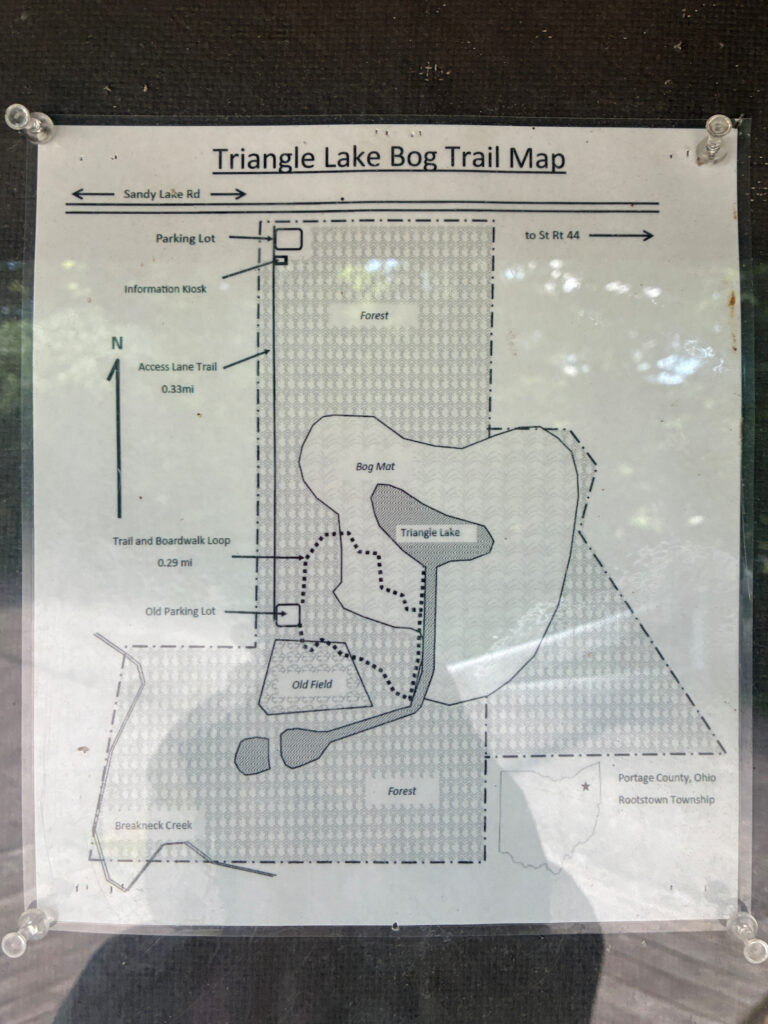
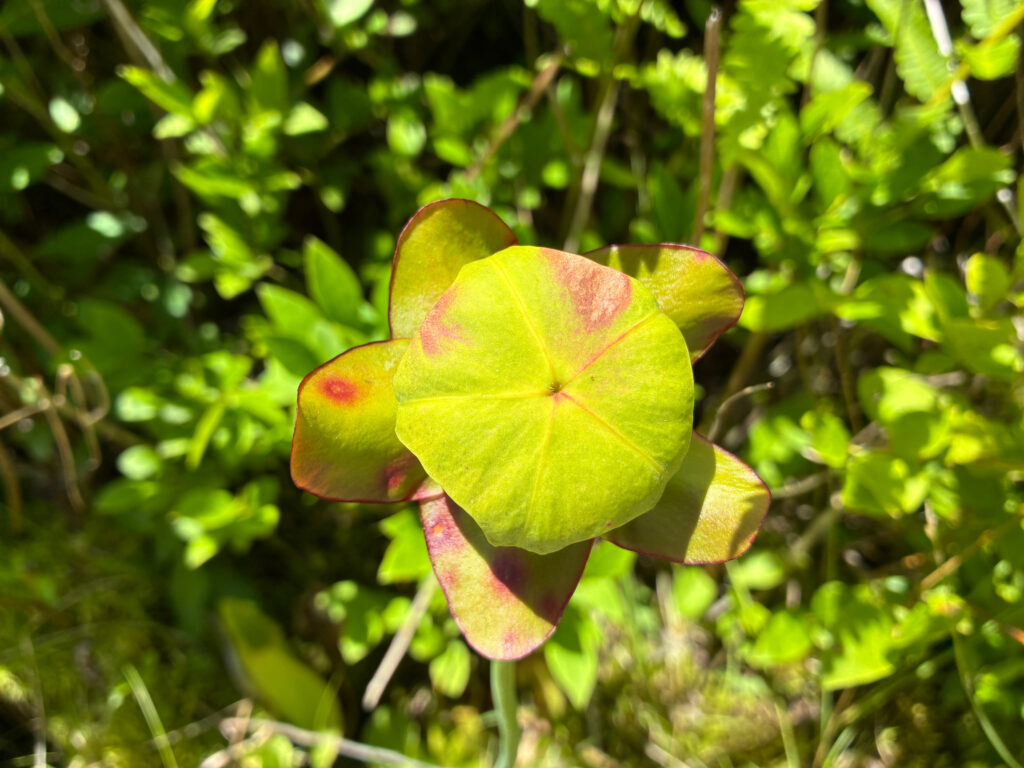
The reeds are taller than your head, so you see pretty much nothing but reeds. It looks like you are going to see nothing, until you realize you are walking right by dozens of the Pitcher Plants. The base has a part that looks like a little water pitcher without a handle.
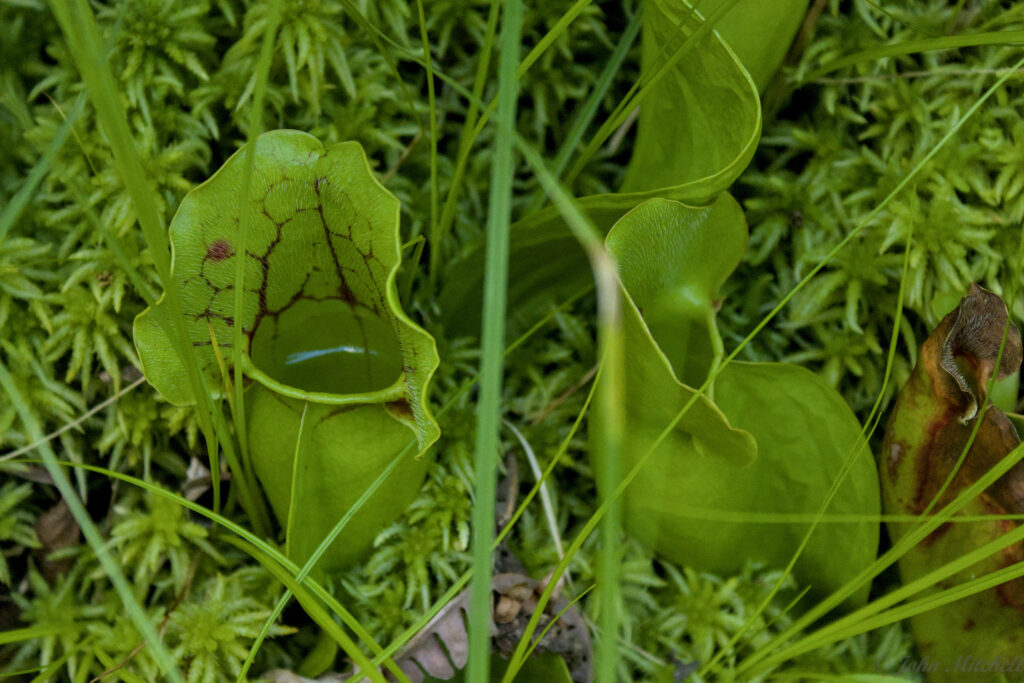
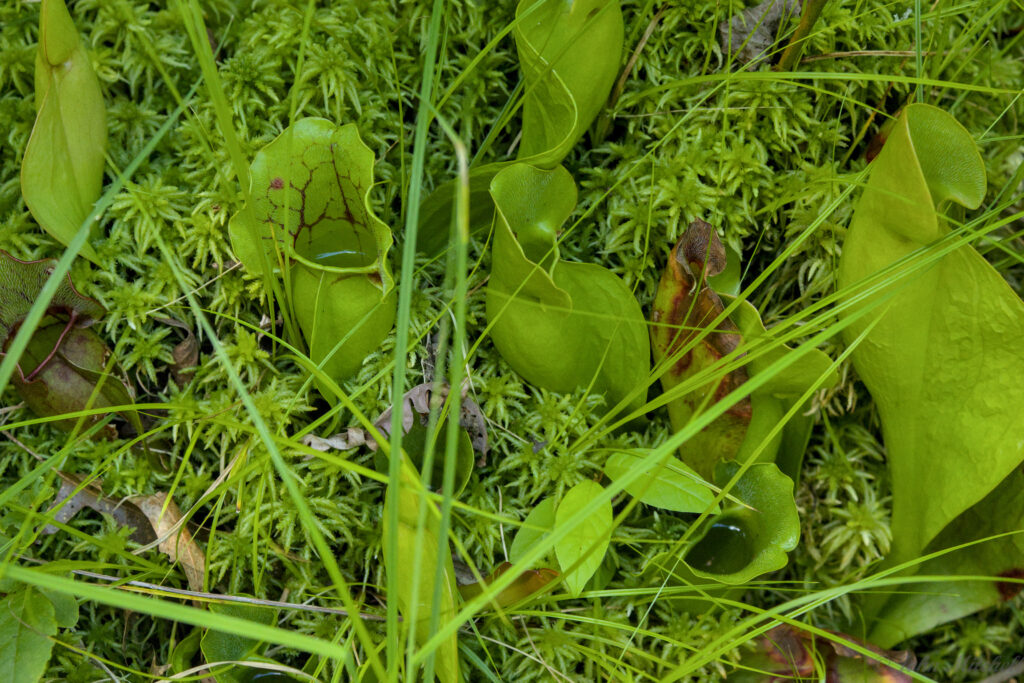
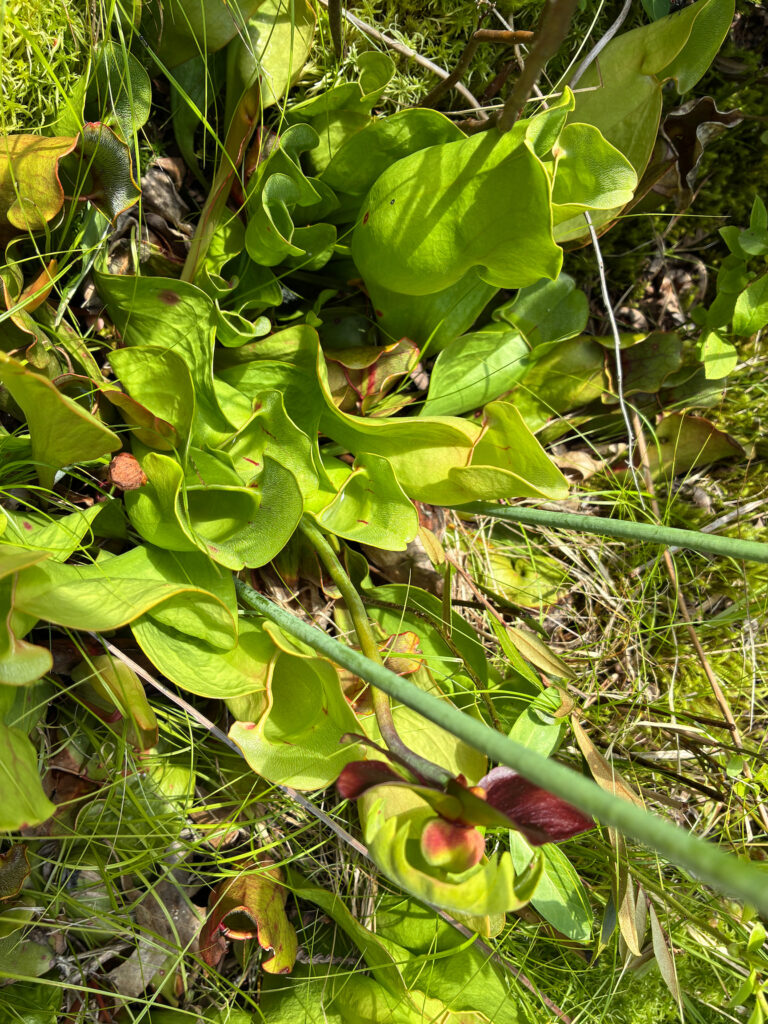
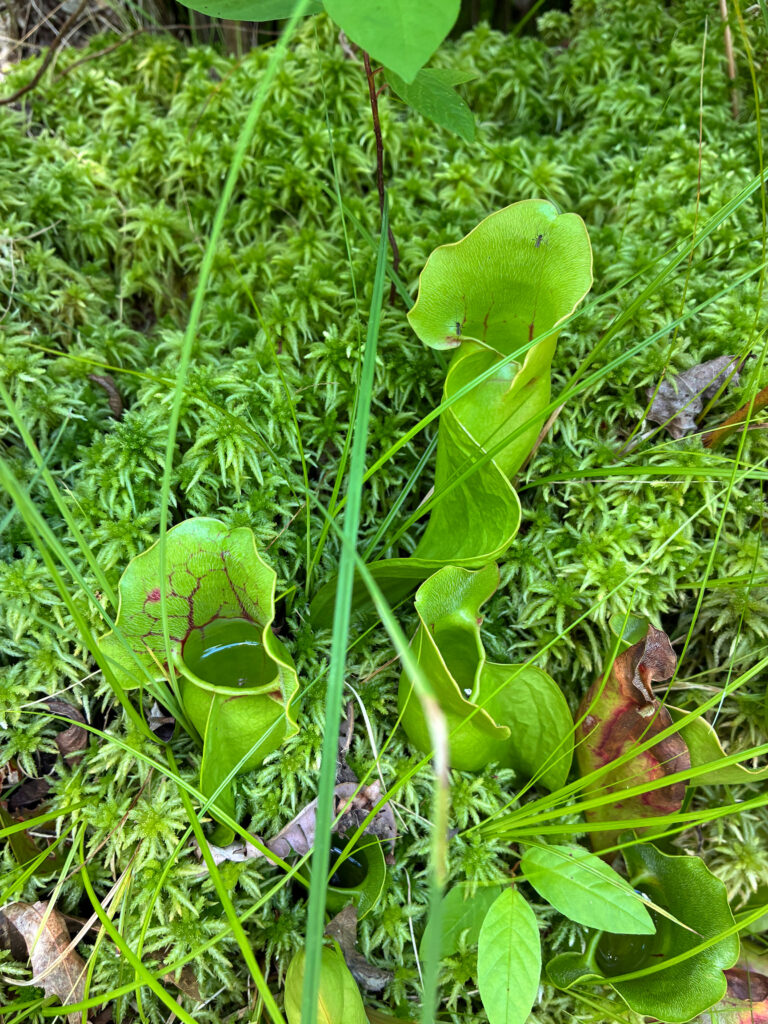
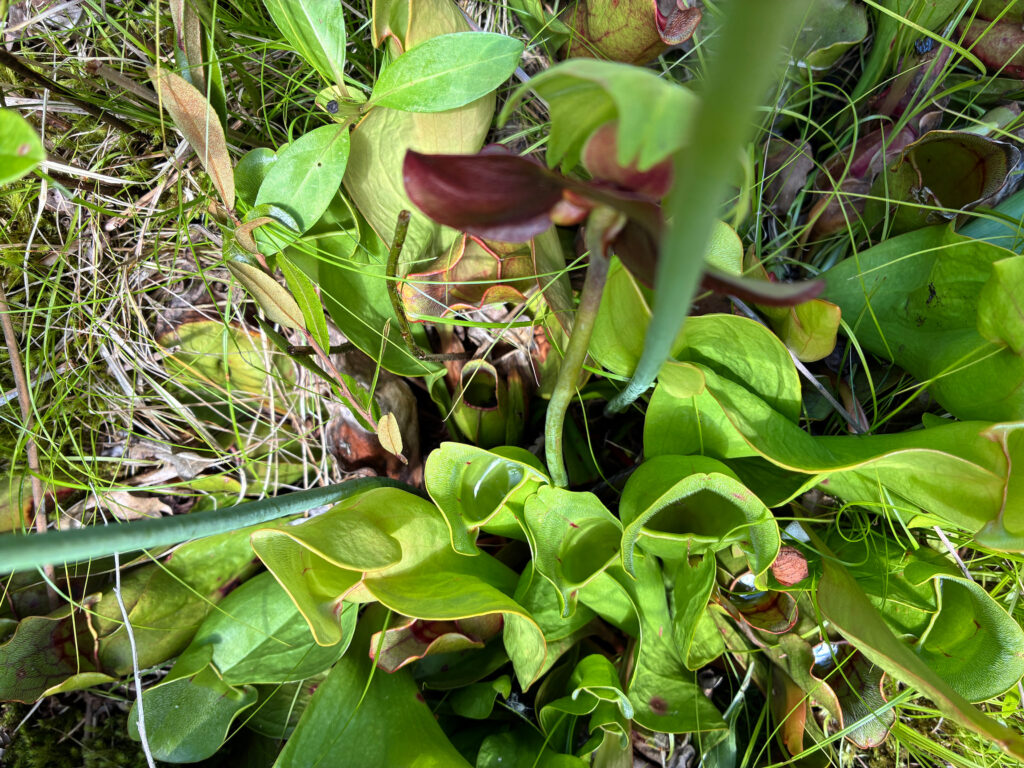
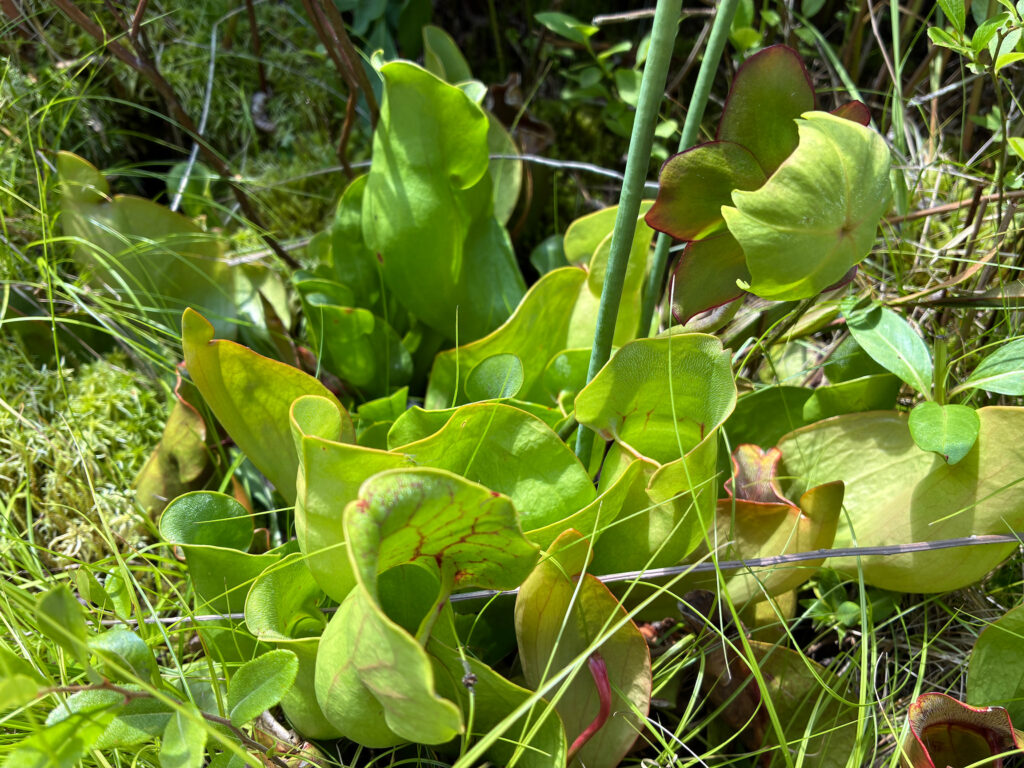
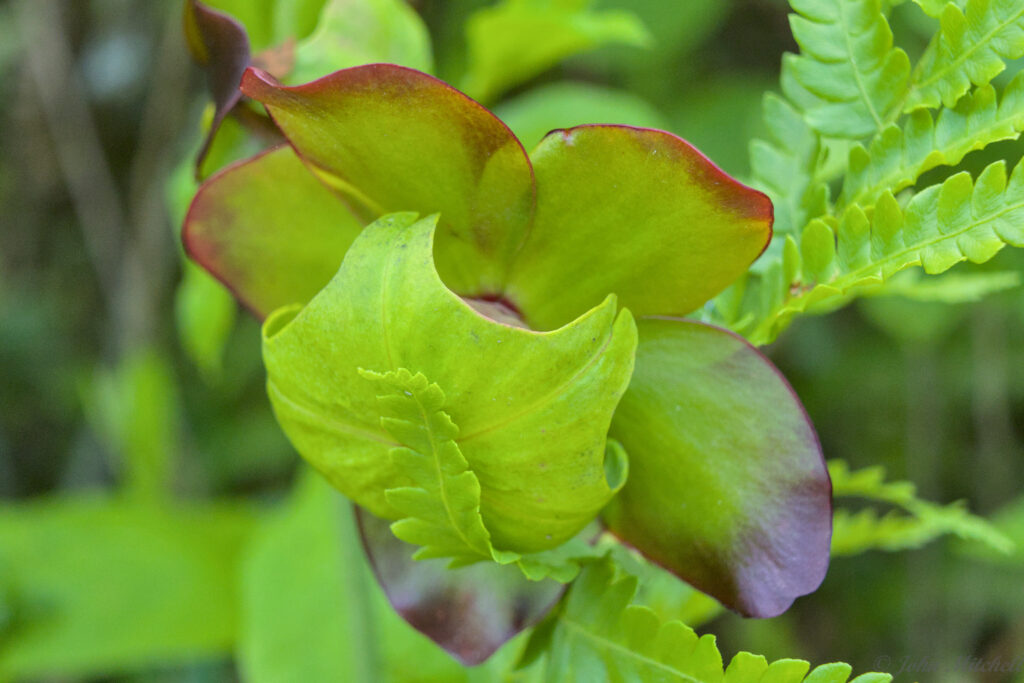
At this time of year, they are “flowering” We use quotes because it does not look like any flower that we have seen.
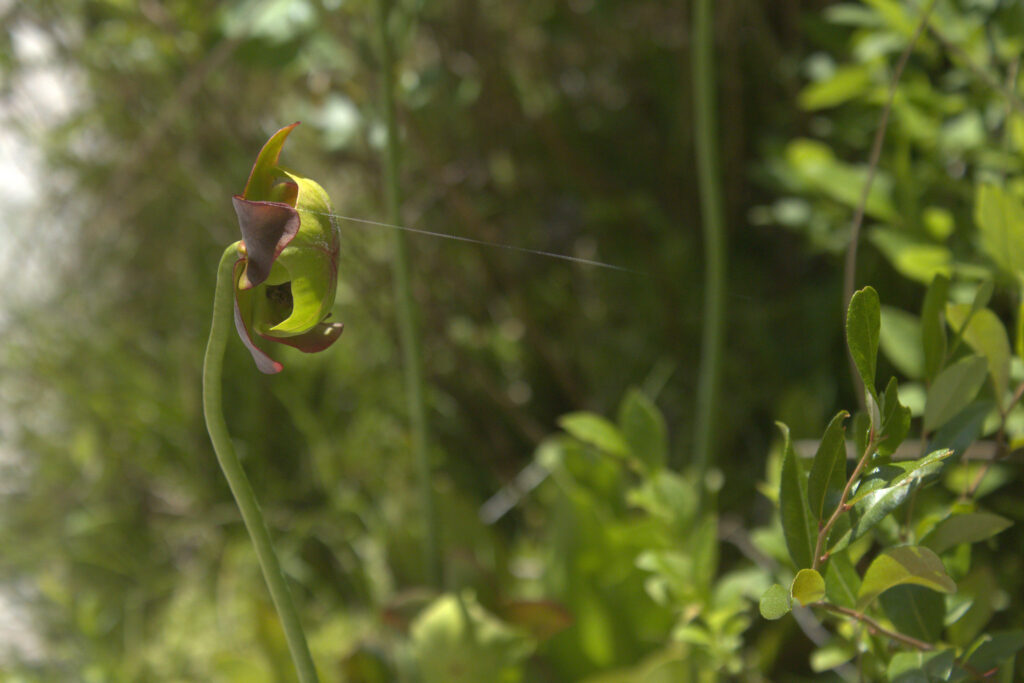
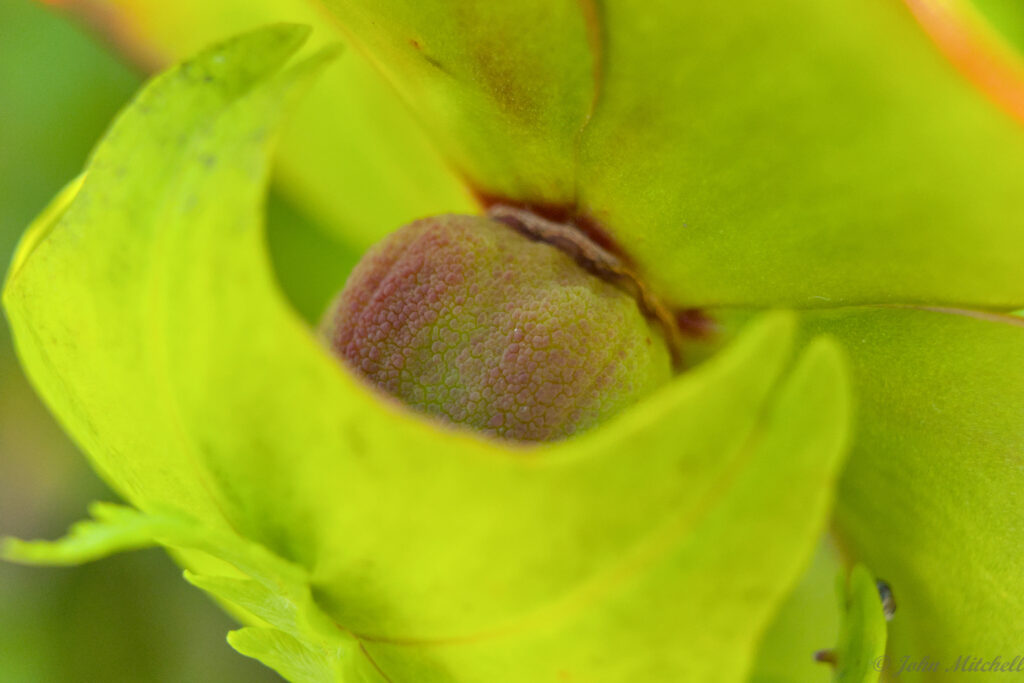
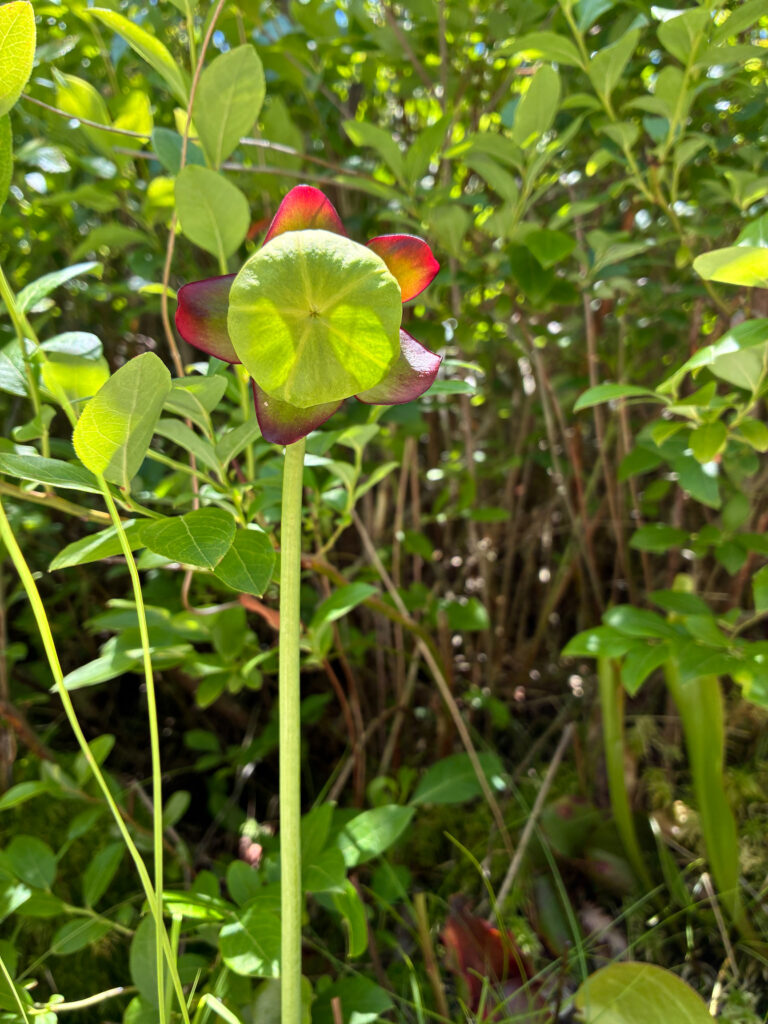
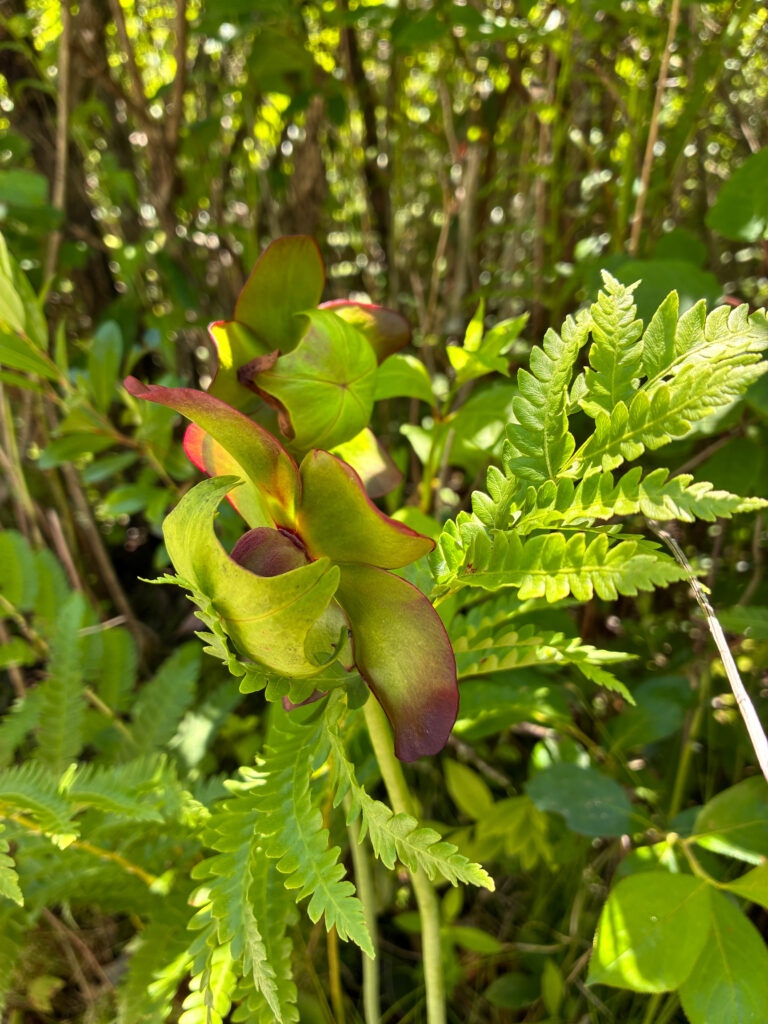
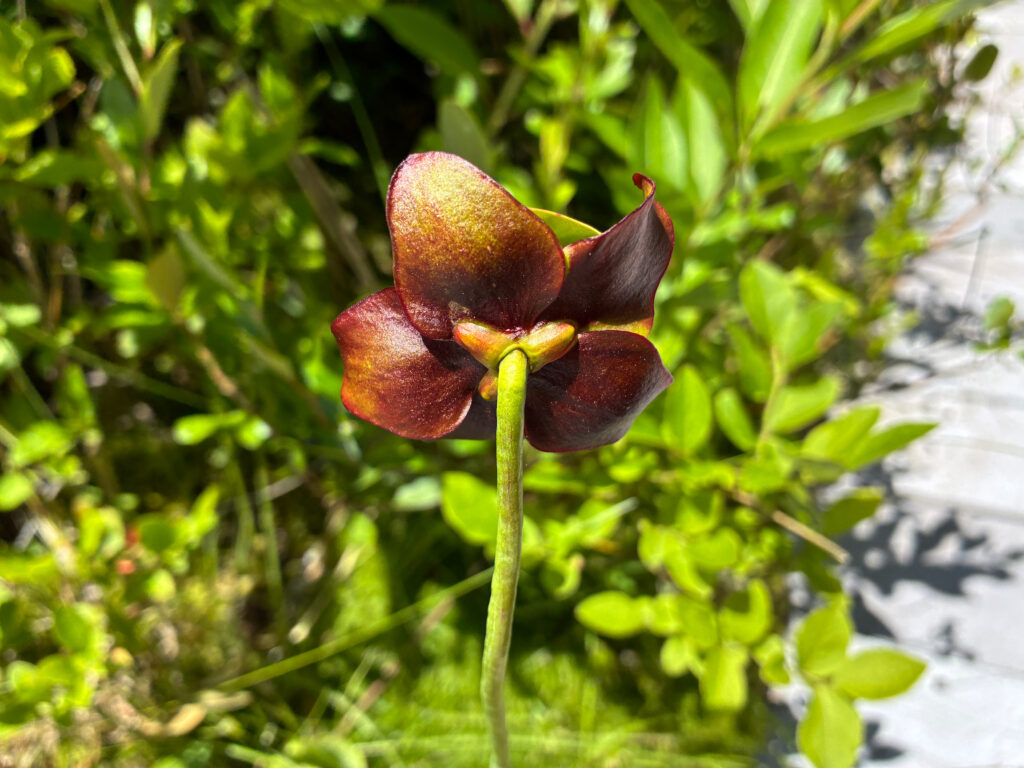
We also found a few with bugs in the pitcher. This one has a beetle in the pitcher. There might also be a small caterpillar or maybe mosquito larvae in it.
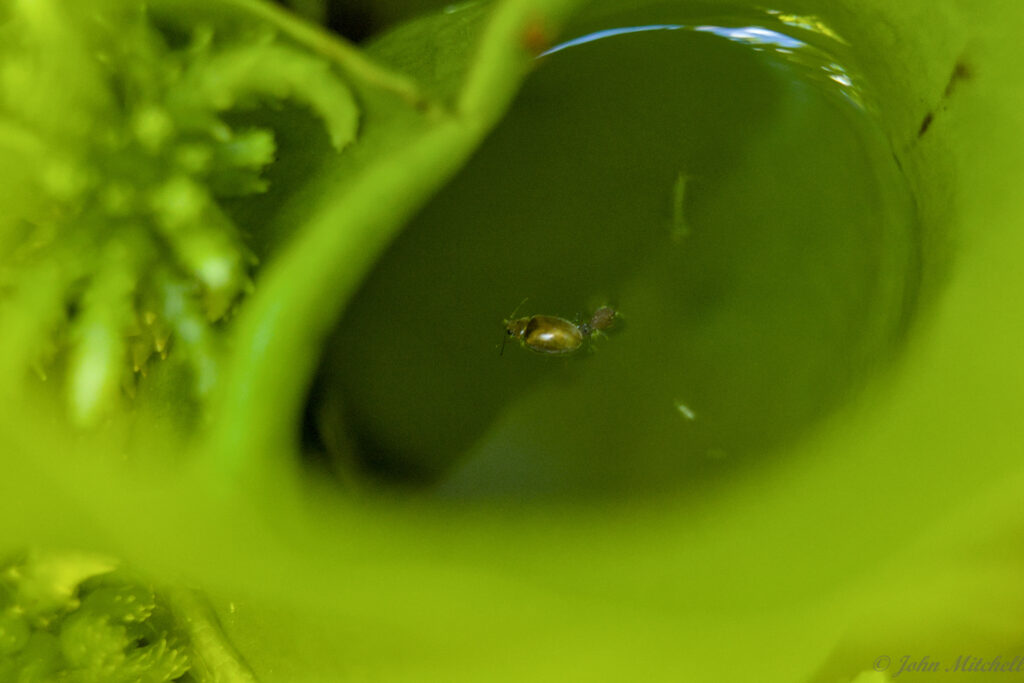
And, in case you wanted to see him do the back stroke …
In order to photograph negatives, John bought an extender tube set to be able take full frame pictures of 35mm negatives. These are just empty tubes that go between the camera and the lens. It allows the lens to focus closer to the object. Unfortunately, the distance that is in focus is tiny. There is a concept called “focus stacking” where you take a bunch of pictures with a slightly different focal point and blend them. The goal is to blend them such that you have a larger region of the picture that is in focus. It is commonly used by scientist for images of insects. John finally got this working in Adobe Photoshop with these plant pictures.
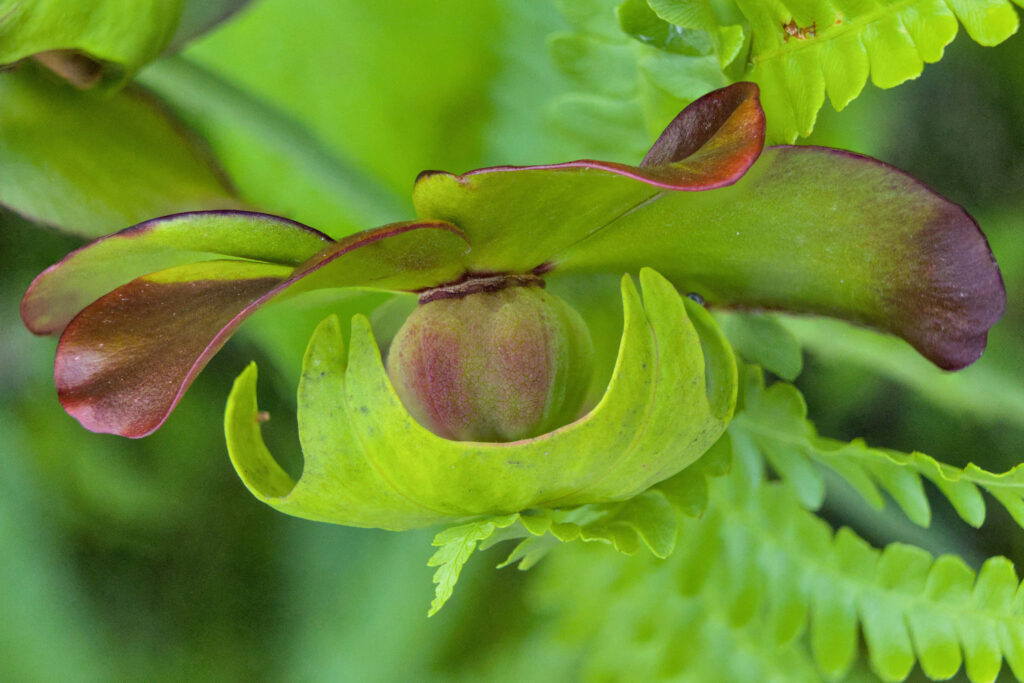
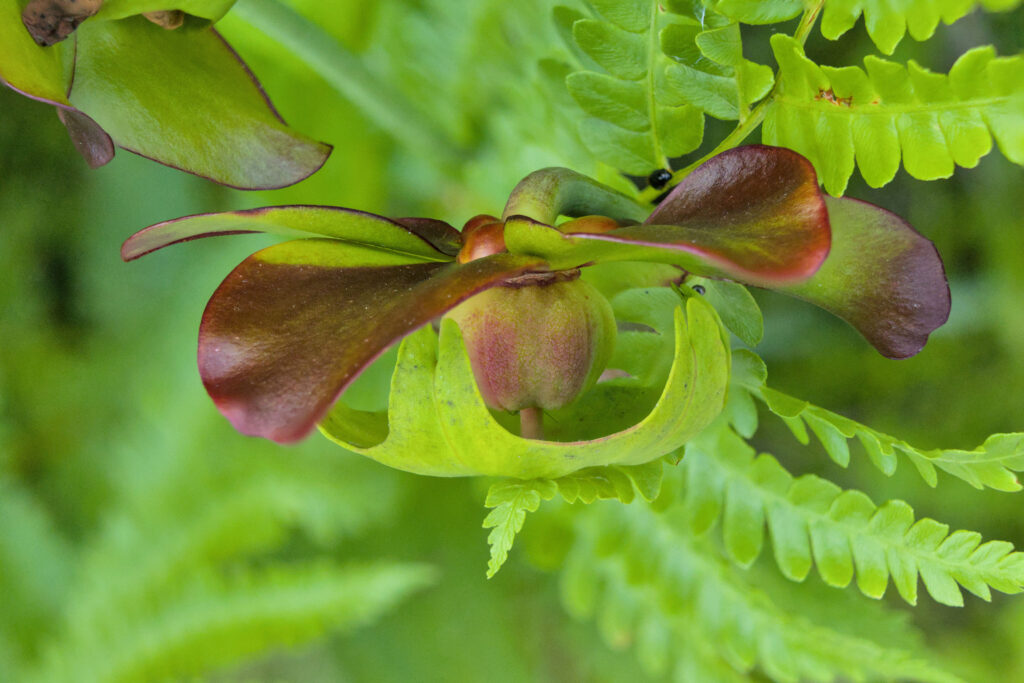
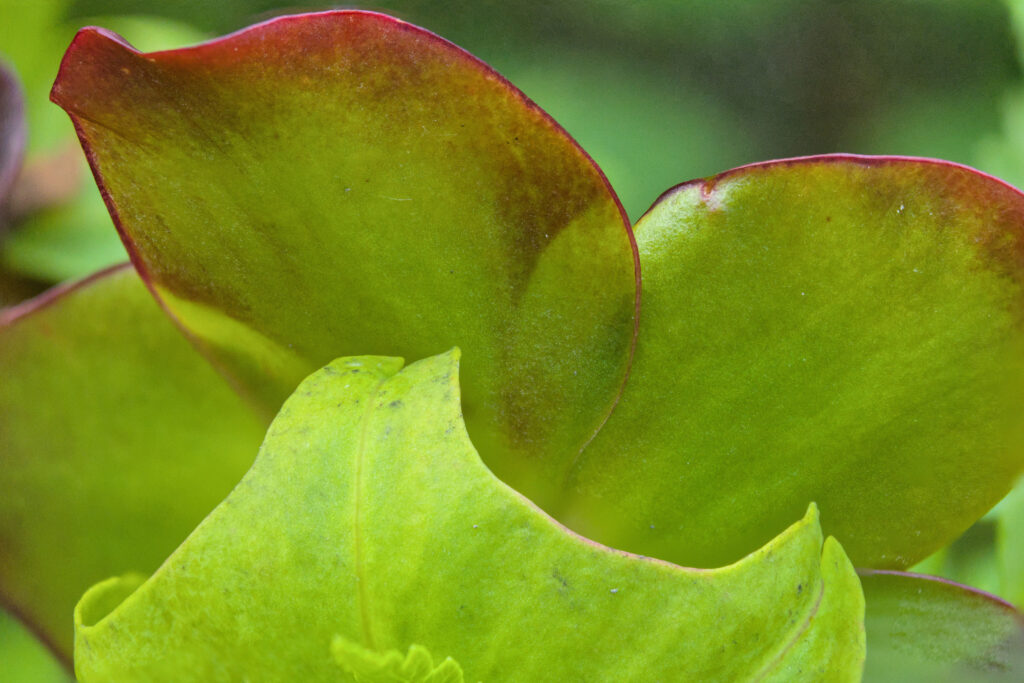
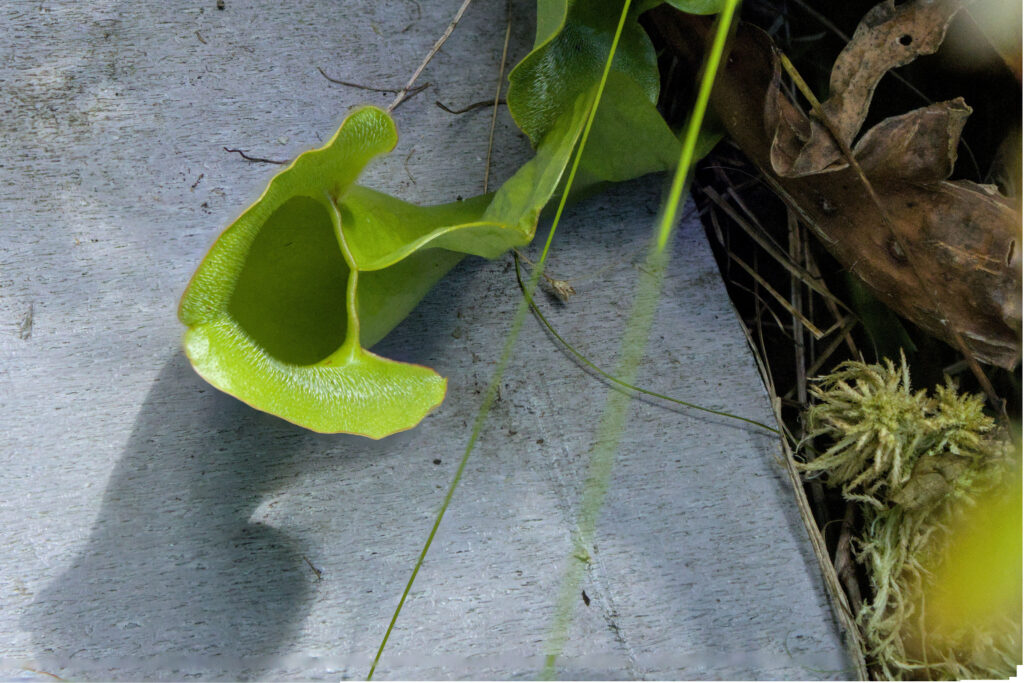
The one on the bottom right did not work as well. The software could not detect which layer was properly focused inside the pitcher plant. The bottom left is probably the best result. Using the camera on a tripod would improve the results.
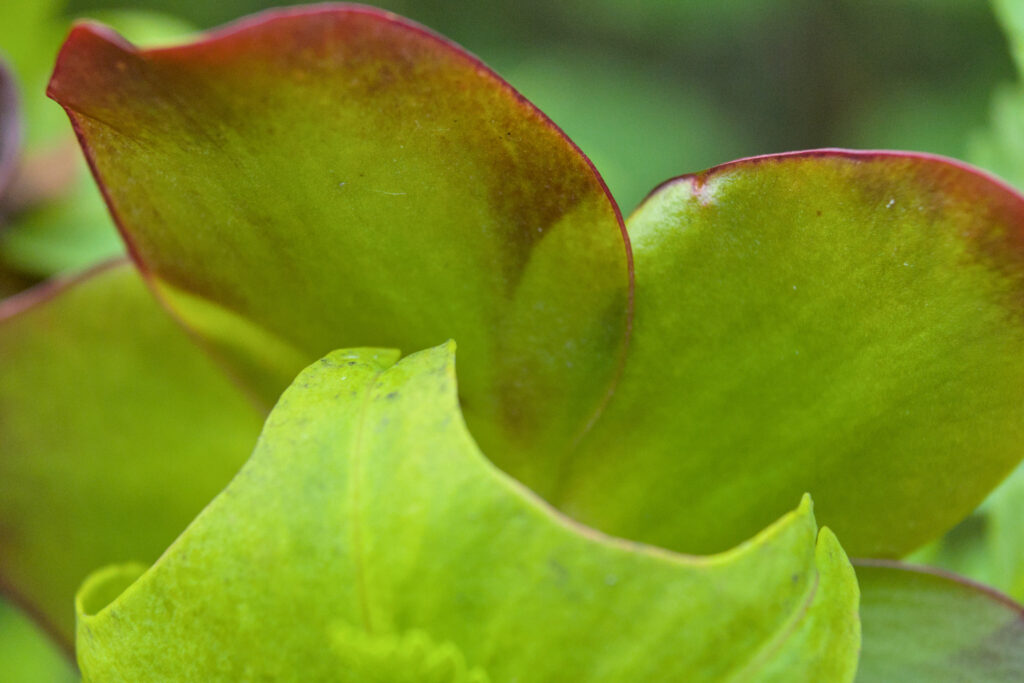
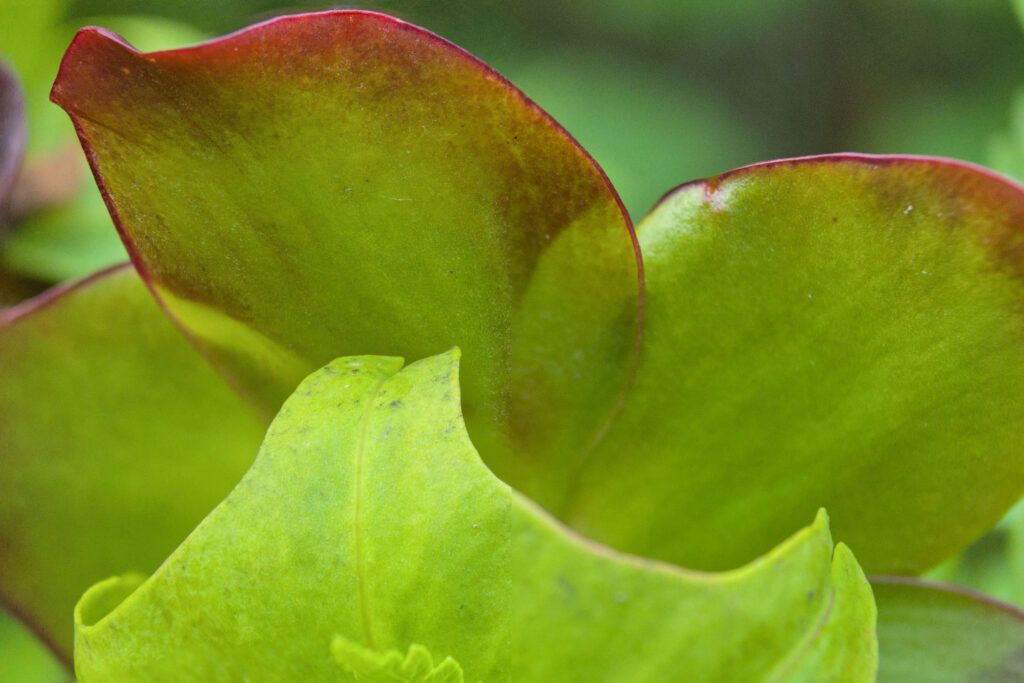
It might not be apparent what the difference is, so here is an example. In the image on the left, almost the entire flower is in focus; this is the image above. On the right is a picture from the middle of the focus bracket. In this image, the back petal is in focus, and the front of the flower is out of focus. The image on the bottom is an aligned 50/50 split of the images.
The entire hike is no more than a mile long, including the 0.6 mile round trip on the old parking road. The hike on solid ground is reasonable with enough room to avoid touching poison ivy. The boardwalk is a bit narrow, and it is just placed on the ground. You need to watch for uneven places and boards that shift. It is probably, at most, moderate difficulty due to the boardwalk. There is a very limited view of the lake. There was no wildlife, aside from a few mosquitos, when we viewed it.
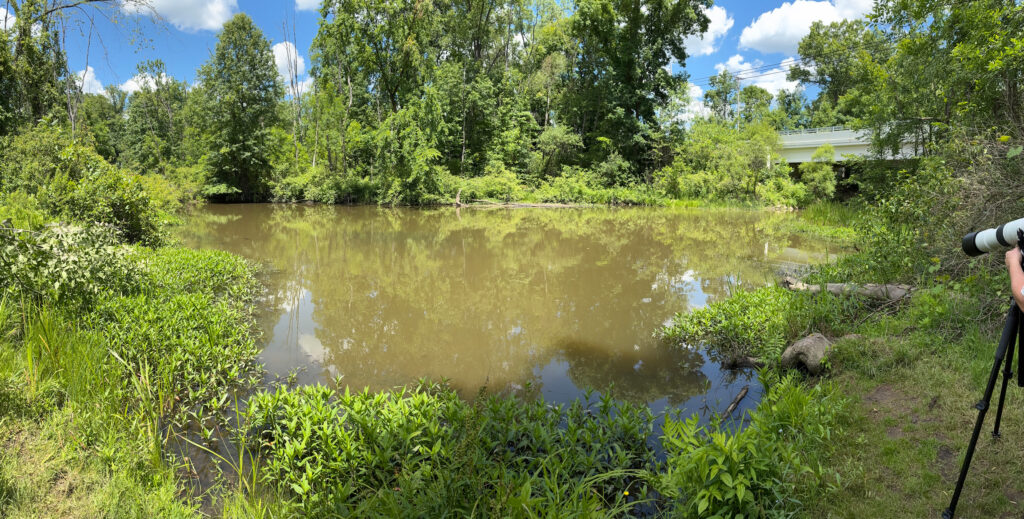
After this stop, we went to Breakneck Park because there had been recent River Otter sightings. Sadly, we did not see any, so we did not have many pictures. This is the creek where people have seen an otter.