
Goshen, IN, July 2026
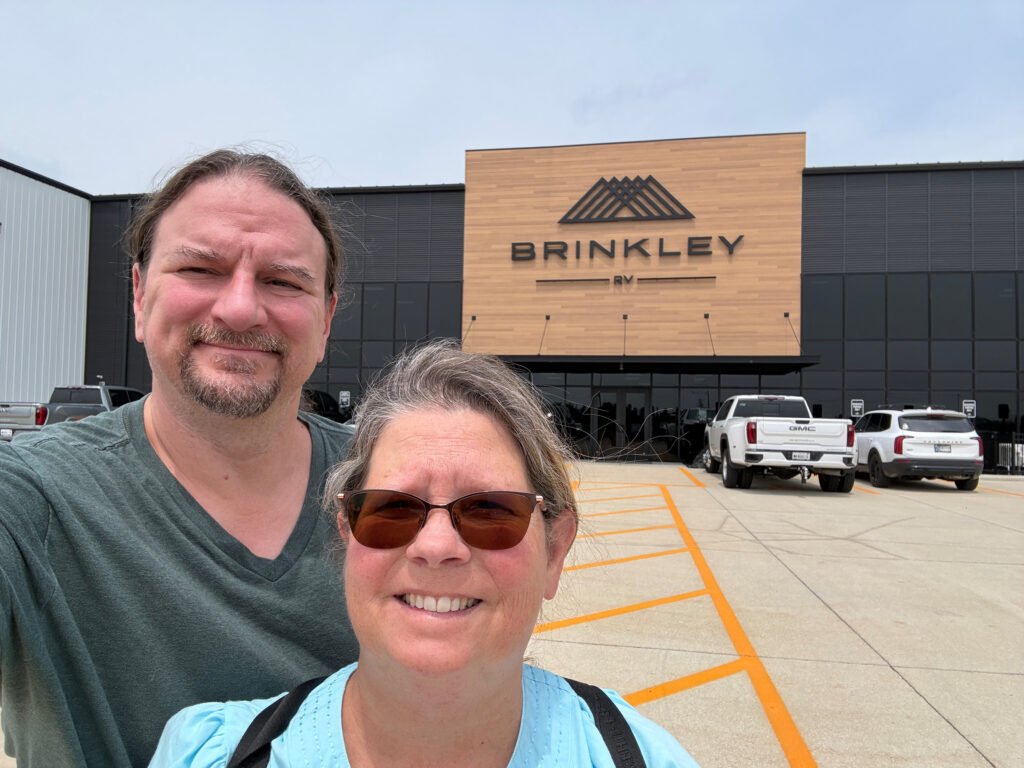
While staying in Indiana, we scheduled a tour of the Brinkley 5th wheel manufacturing plant. The plant was 150 miles one way from the park. So, it was a fairly long day. The tour lasted 3 hours. The first 30 to 40 minutes was more of a sales pitch than anything else.
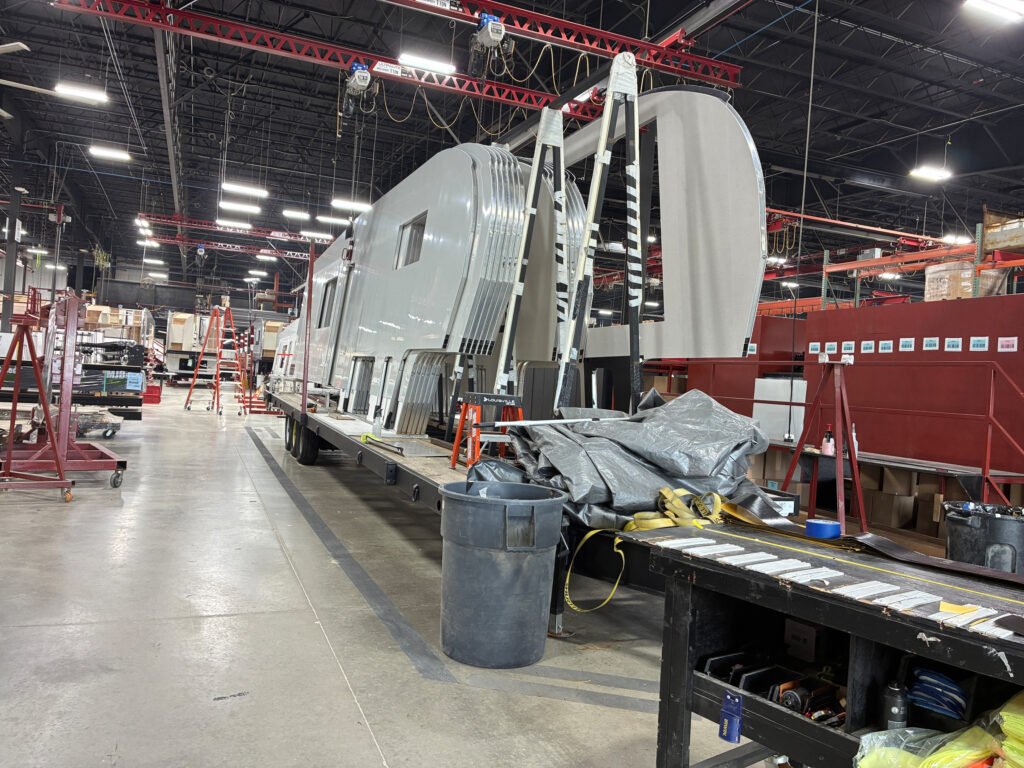
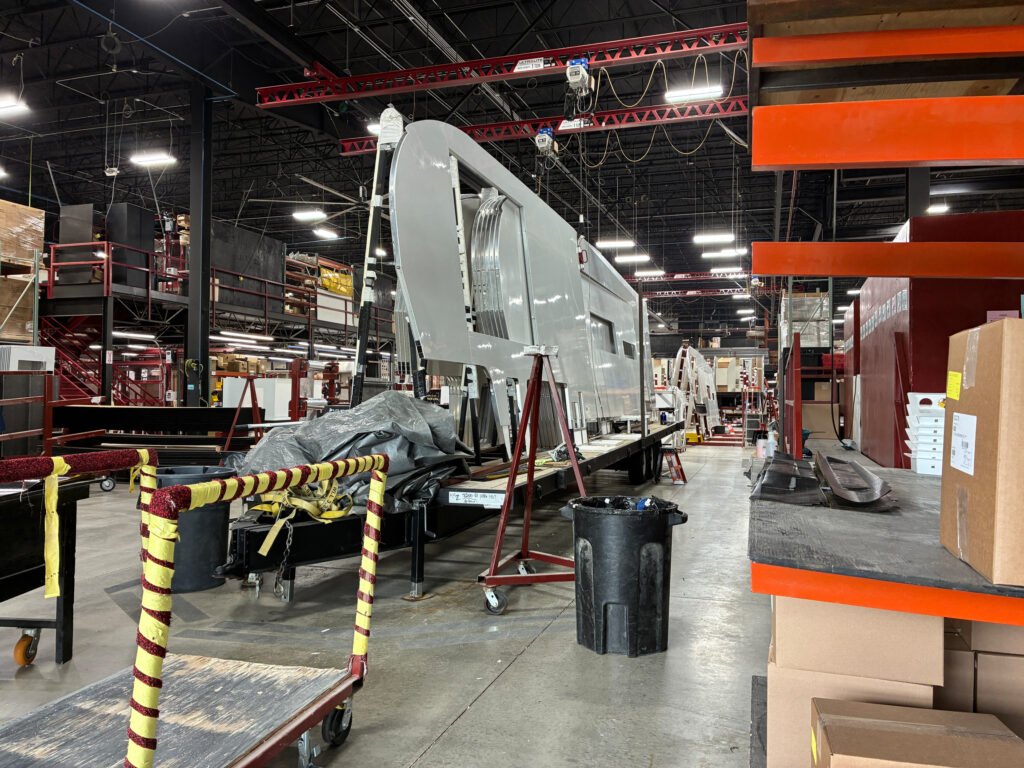
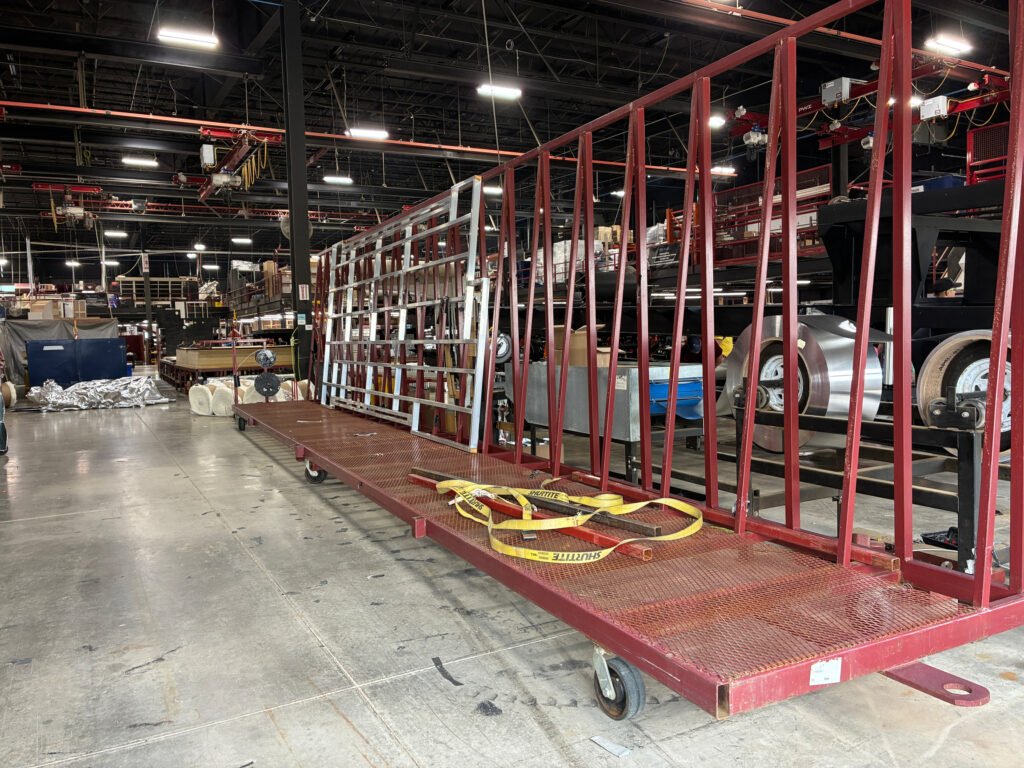
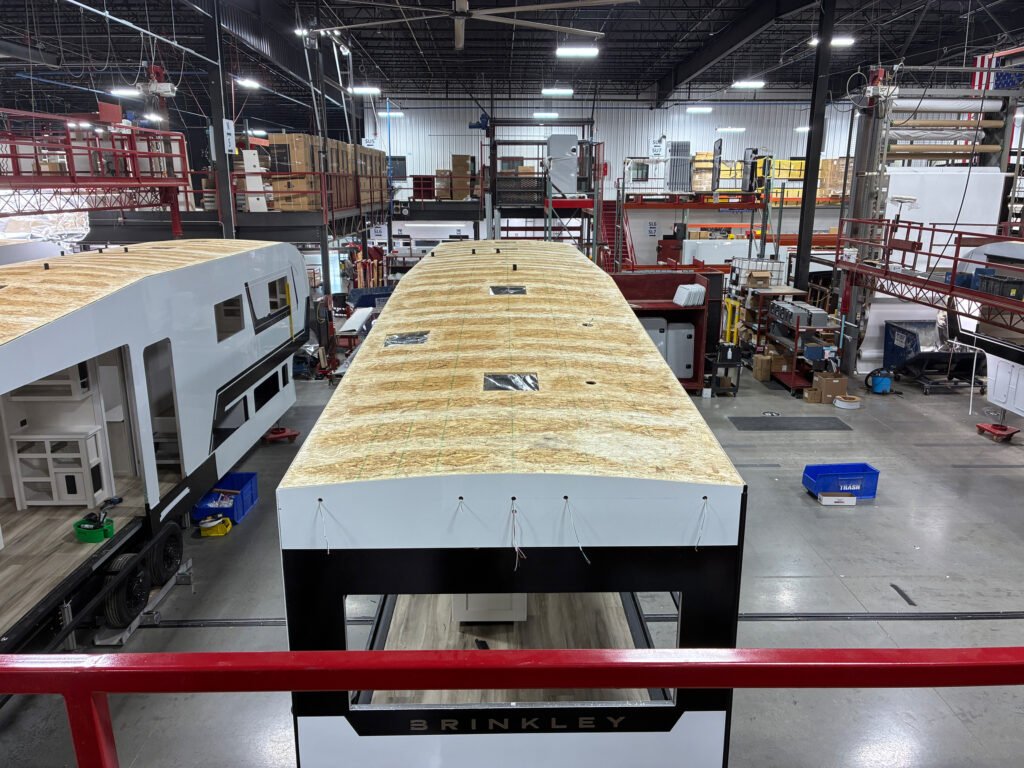
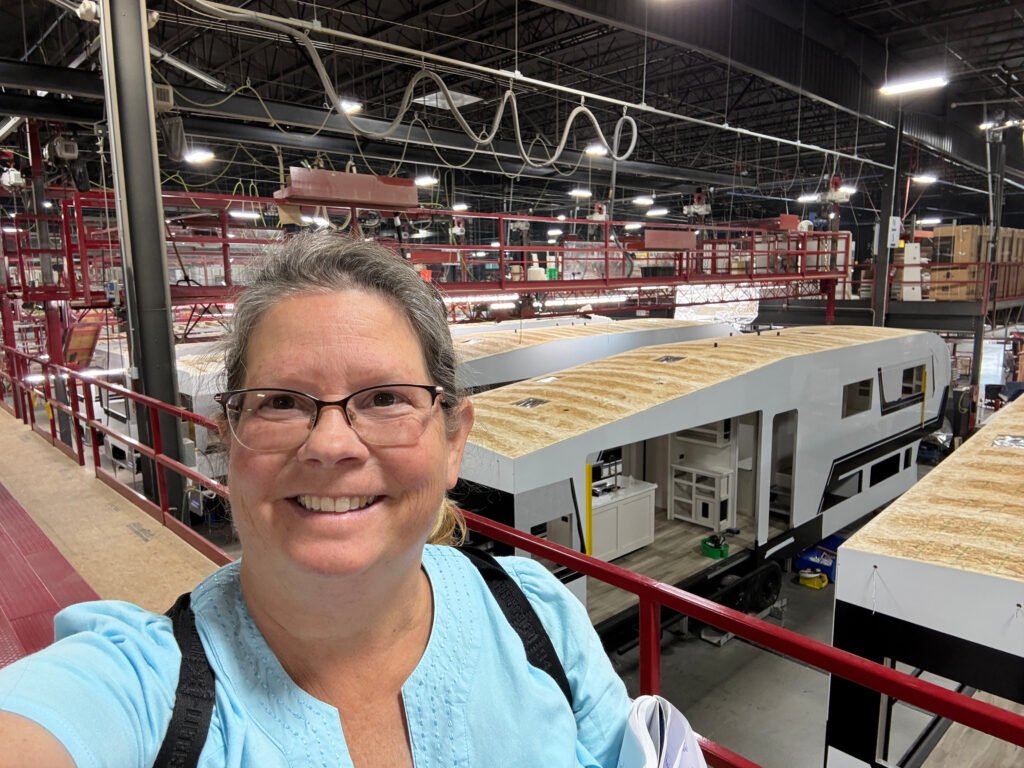
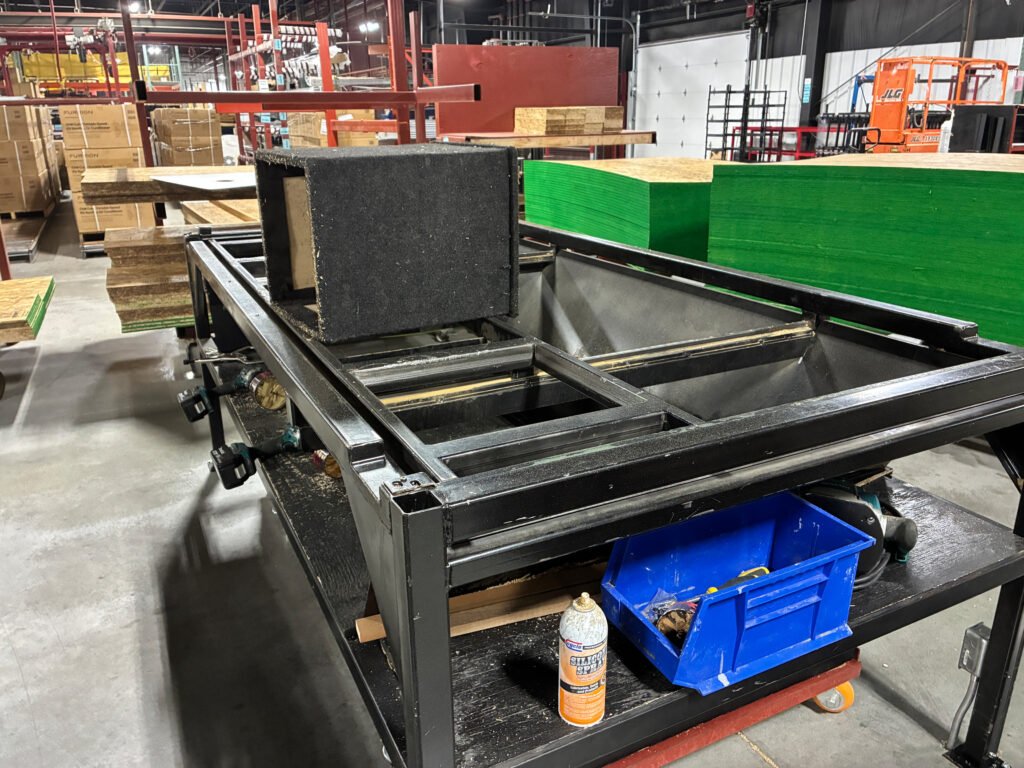
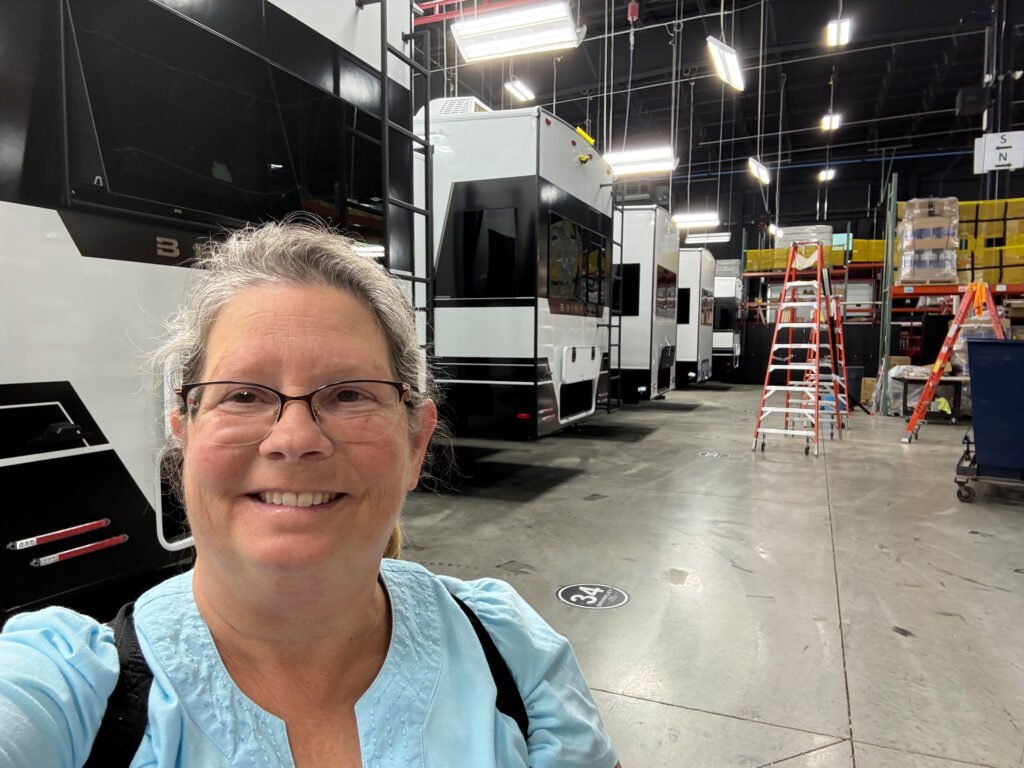
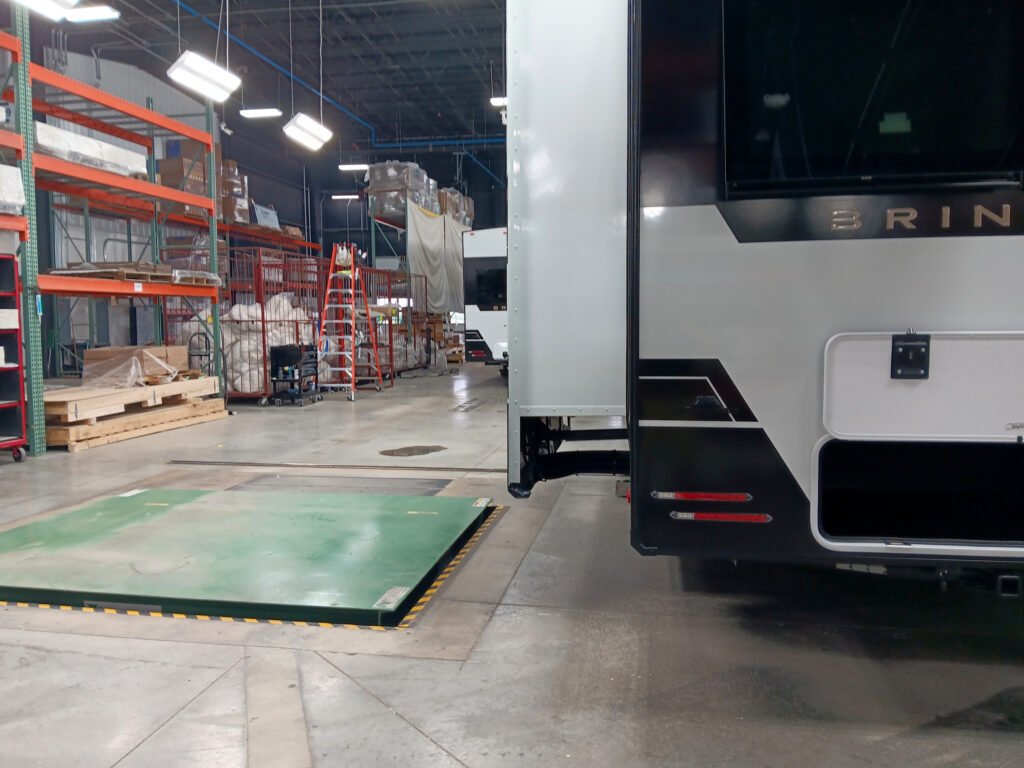
The pictures are from the assembly line in plant one, and there were batches of different RVs on the line. We specifically noticed Z 3600 and a Z 3210. You might notice very different layouts in the RVs between different pictures. The pictures are roughly in order going down the assembly line. Some are out of place, due to context. For example, the pre-assembled sidewalls were stored near the front of the assembly line.
Below are our notes:
General Information
- Tour guide was Josh Daily. Eric Farber met with us for the initial introduction pitch.
- Manufacturing building
- Air conditioned manufacturing facility.
- Some of the largest building to allow for warehousing
- All parts that can be weather damaged are stored inside
- Normal start time 6 am. Other plants typically start around 4 am in the summer due to no air conditioning and high temperature
- 1276 employees
- Brinkley contacts buyers 30 days, 6 months and 1 year after purchase for feedback.
- No shareholders. Five owners with equal shares. Three are actively involved and two are advisory.
- Customer Care
- Normal customer care contact is M-F 9am – 5 pm.
- Unit down means an immediate response. People are always monitoring facebook, X, instagram, etc. during off hours
- Preference is for buyers with concerns or issues to reach out to Brinkley first before contacting dealer or facebook
- Tons of mobiles service technicians, 350-400 people, where some can go remote places
- Rolling floor plan changes occur vs. once a year updates. To determine updates on trailer call Brinkley with VIN # and ask what rolling changes occurred. salesinfobrinkley.com
- Said they are using AI slightly in the backroom. Not using AI for customer service, but always looking for new and better ways. No one has been let go due to AI.
- Brinkley Owners hub has detailed information on the warranties.
- Another person there said do not purchase from Fun Town located in Texas.
- All RVs spend time on a rumble plate to simulate 100 miles of travel to identify issues, such as bad latches
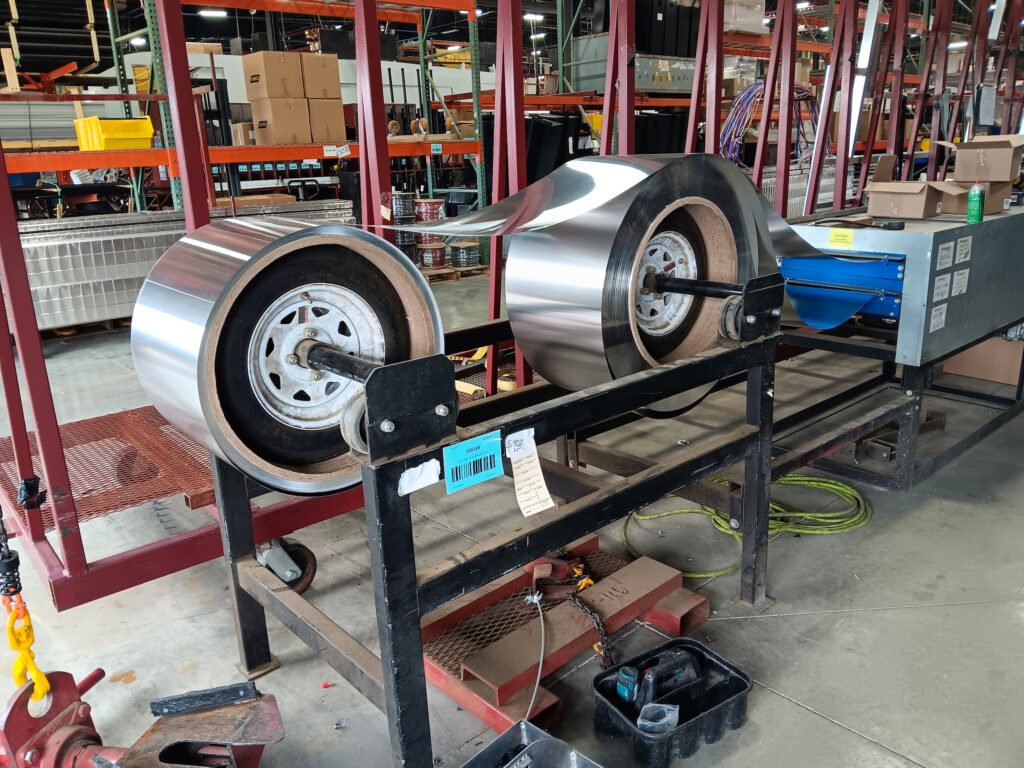
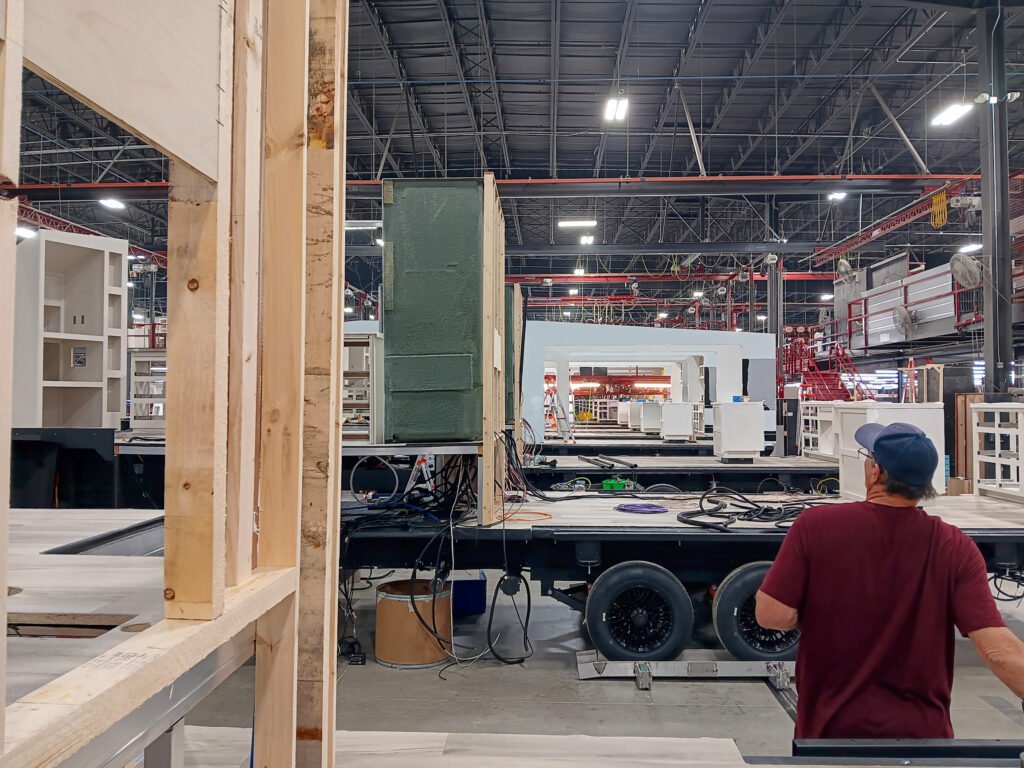
Frame / Suspension / Tires / Brakes / Details:
- Frame
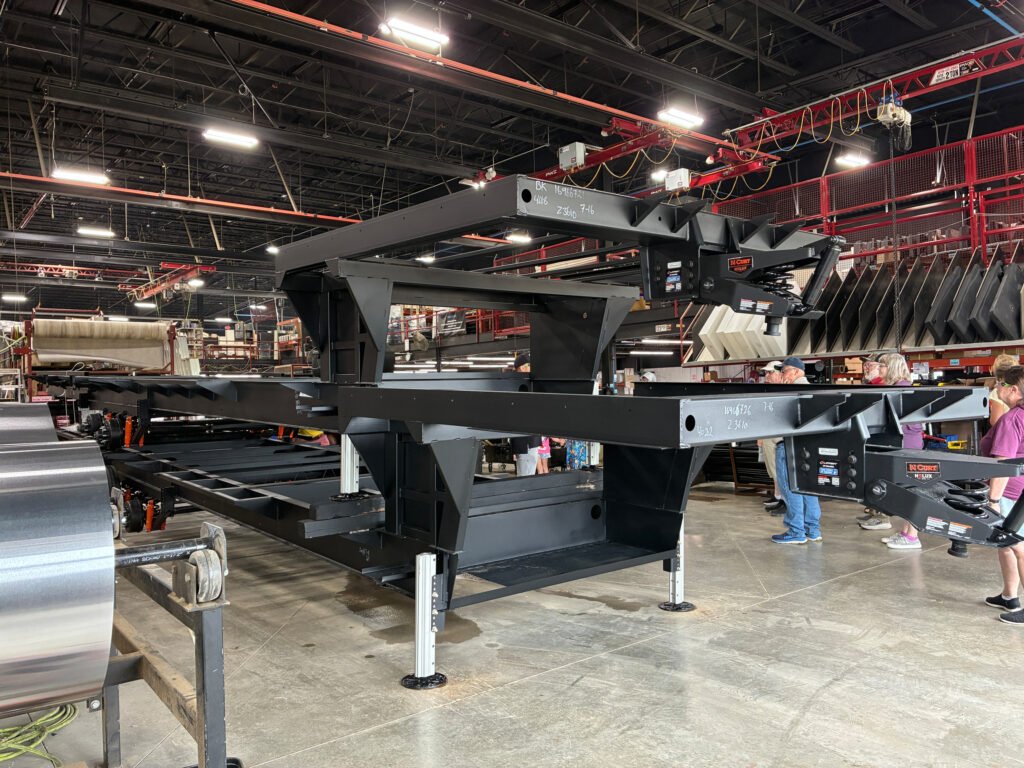
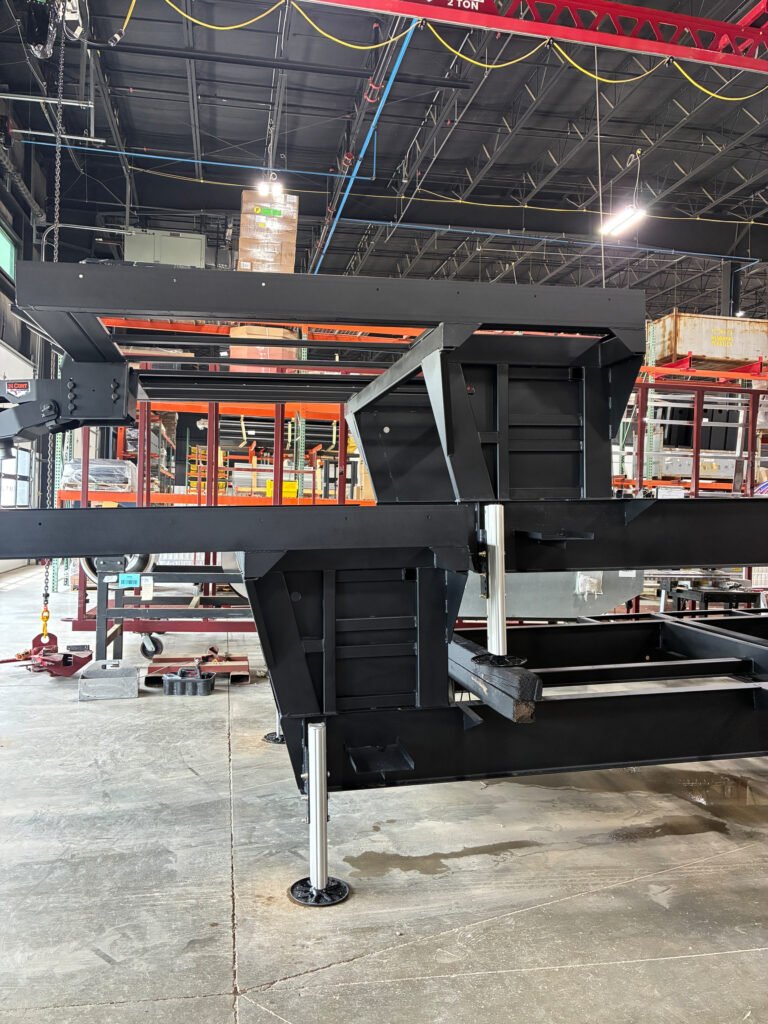
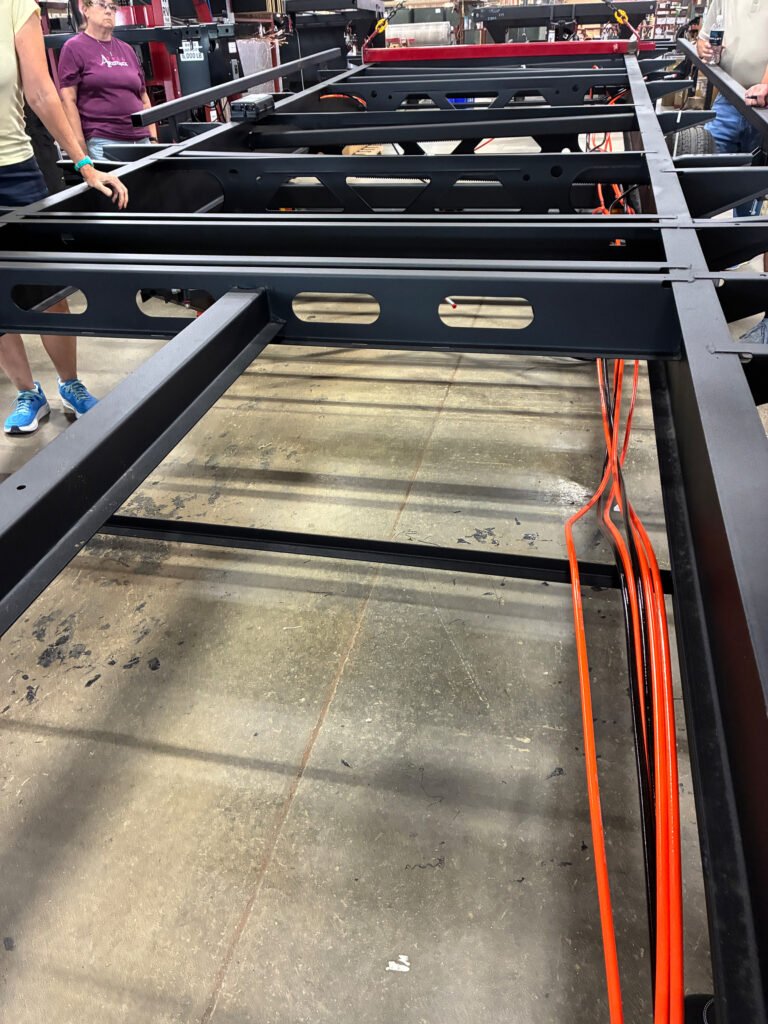
- Use 5/16 steel instead of industry standard of 3/16.
- Some vendors drop the front for more cargo room, but it is better to be straight across. The drop creates a stress point.
- Frames are custom designed and made for Brinkley. They are tested to 120% of the required GVWR.
- Frame has ledges for sidewalls to sit on to allow large sidewall pieces to be vertically and horizontally lag screwed to ensure support
- Frame outriggers (side cantilevers) are placed based on weight distribution and doubled as needed.
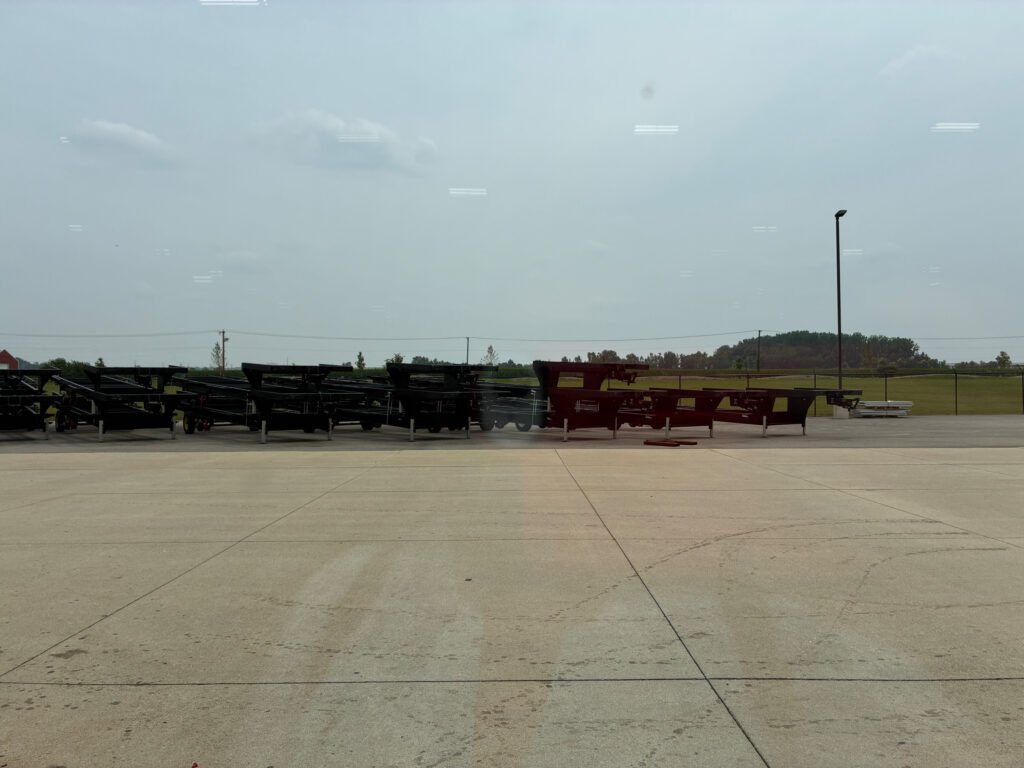
- Triple powder coat the frame one frame at a time instead of a stack of frames. Only Brinkley and Airstream do this.
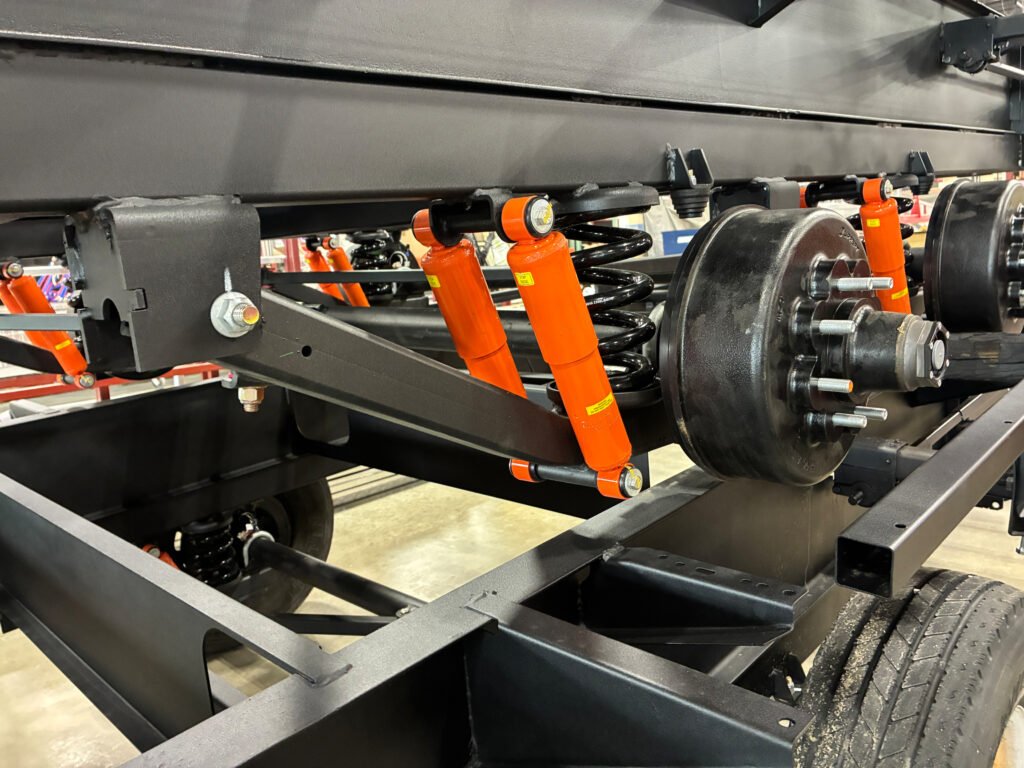
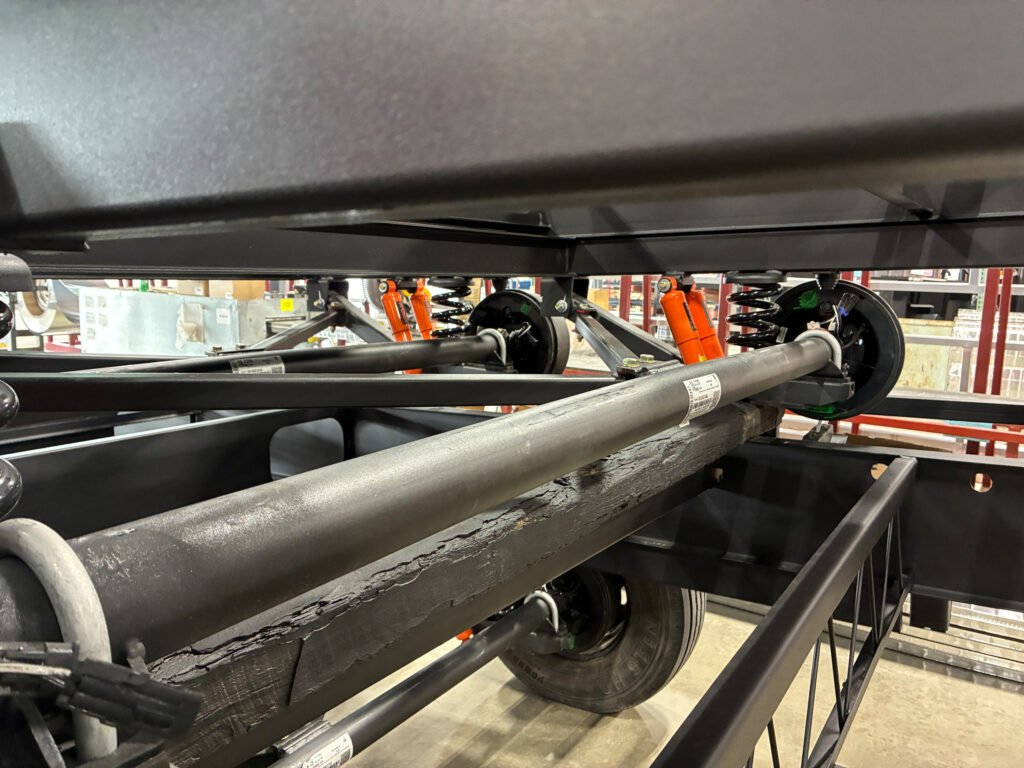
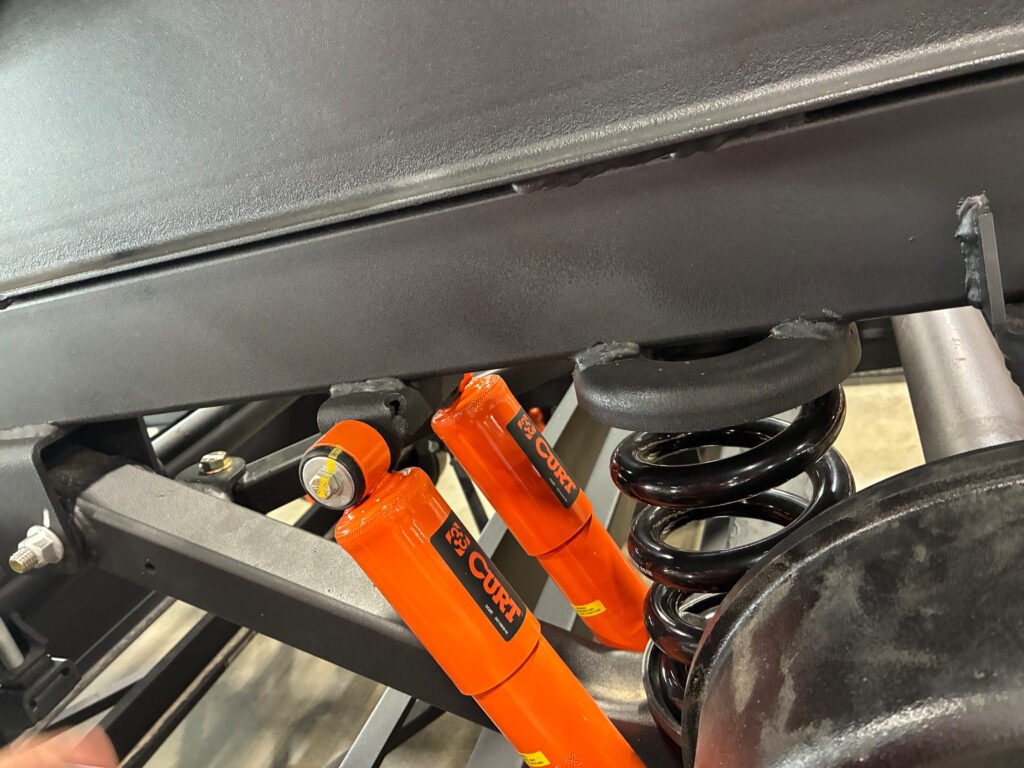
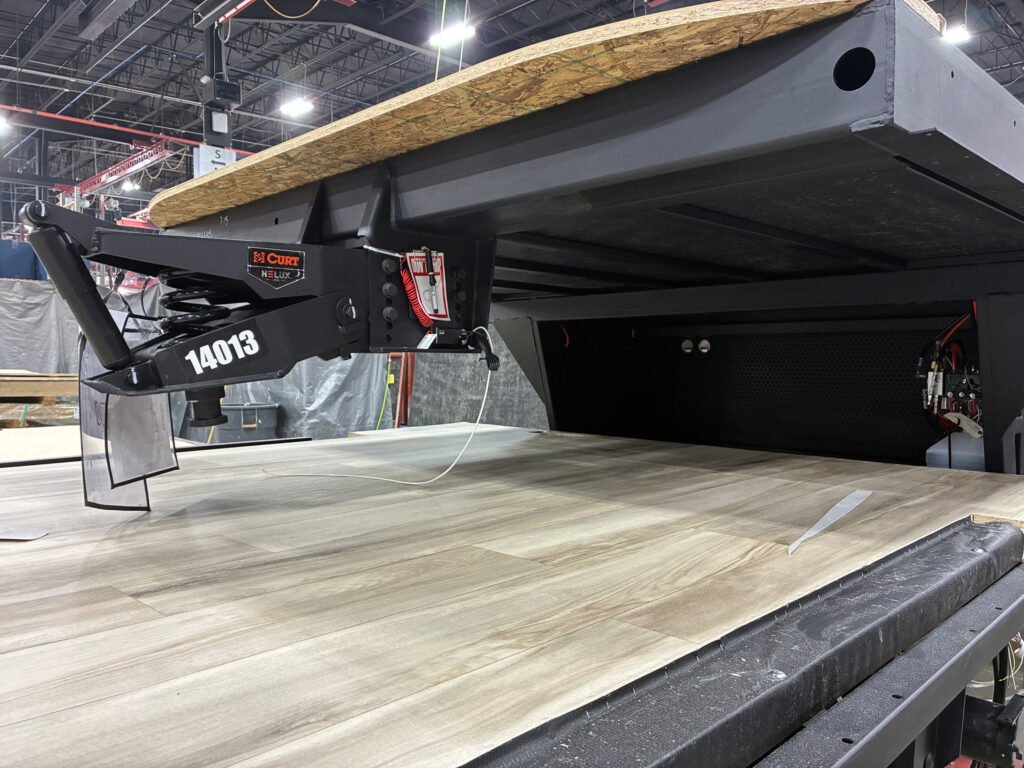
- TCS touring coil suspension.
- Very similar to independent suspension, but with an axle.
- Has about 5″ of travel instead of normal ~3″
- Absorbs about 50% of the vibration.
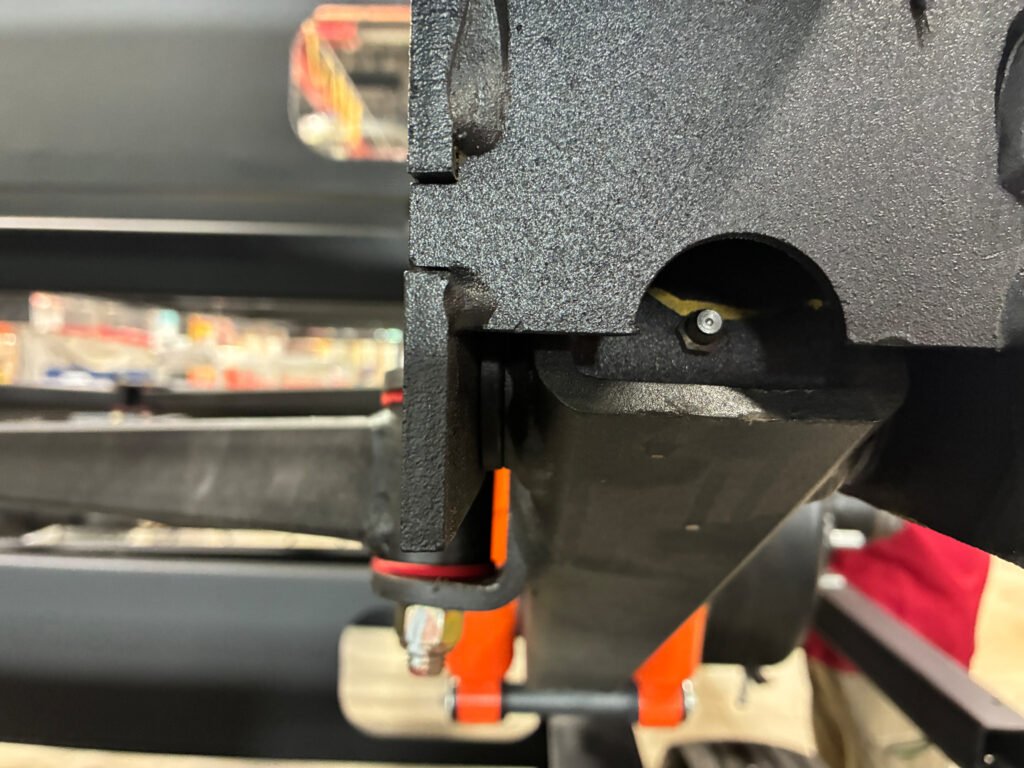
- 8 wet bolts (i.e. grease points) per side.
- Lubricate every 3K miles.
- Started using in Dec 2024
- Brakes
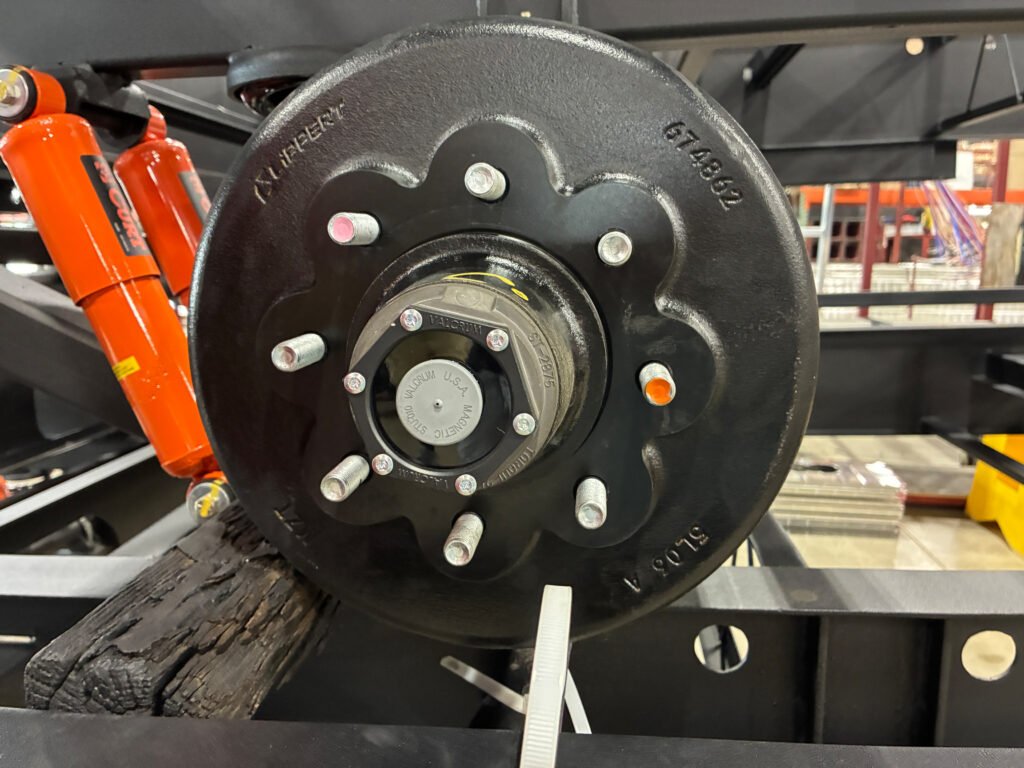
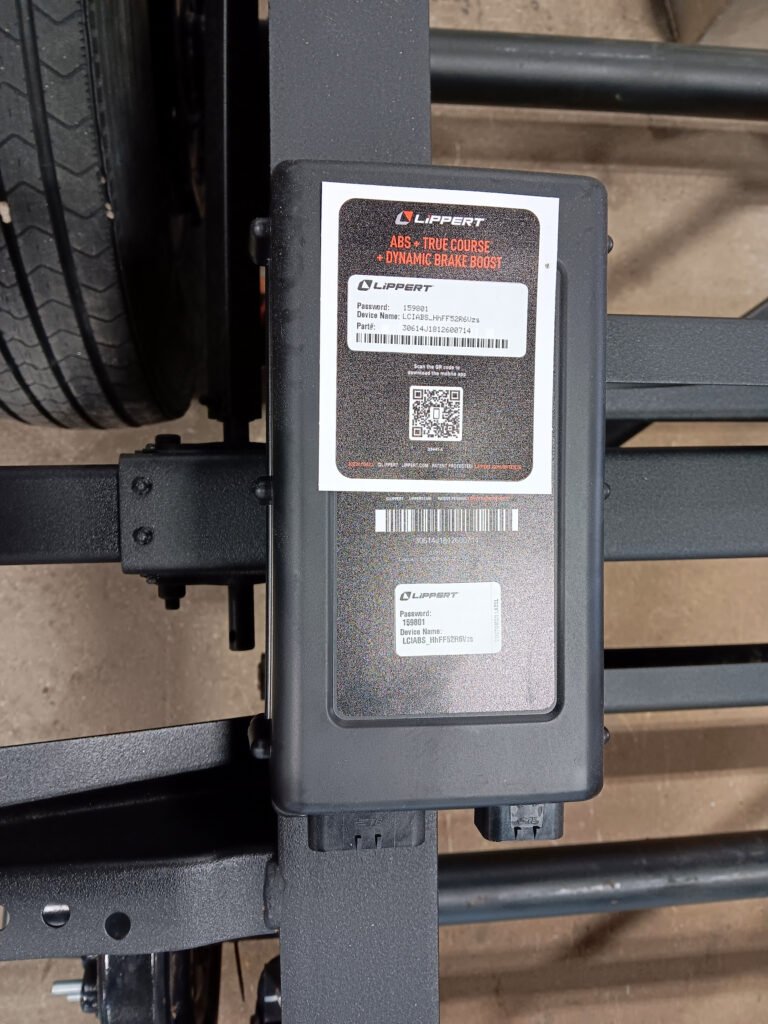
- Antisway & ABS to drum brakes. Has dynamic brake boost
- Brakes to be serviced every 12 months 36,000 miles
- Don’t use disc breaks because they do not have ABS capability at this time.
- Tires
- Uniroyal ties vs cooper. Reason: Cooper during covid reduced tire line and no longer makes the tires used on Brinkleys
- H-rated tires
Frame Setup Pictures
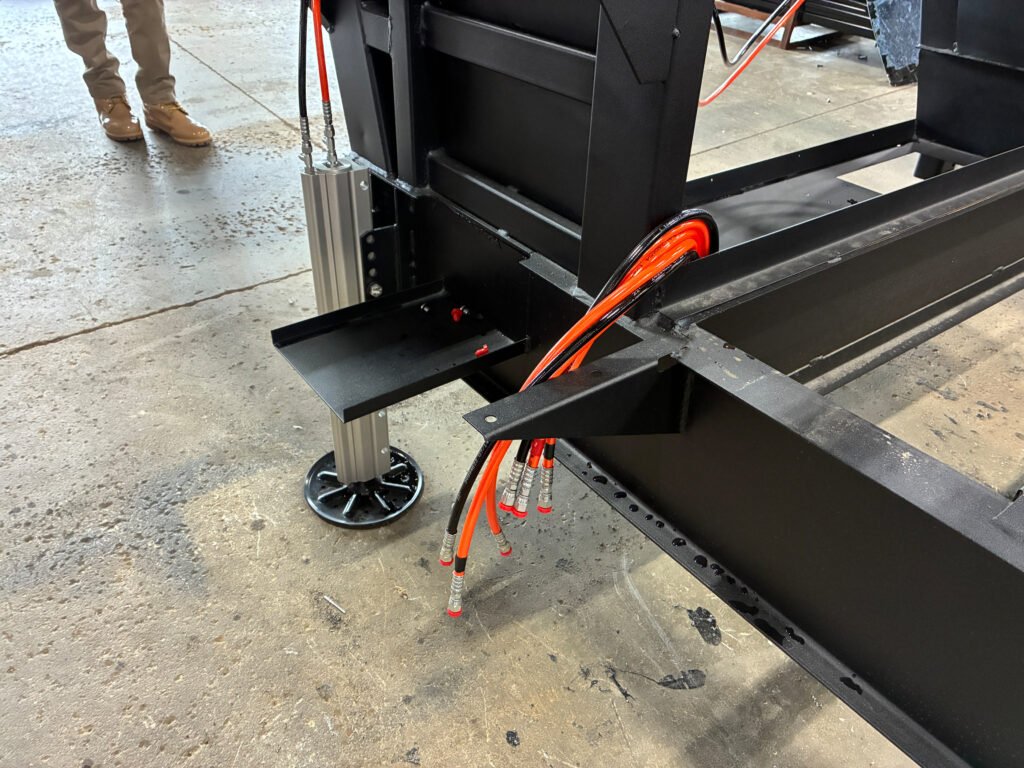
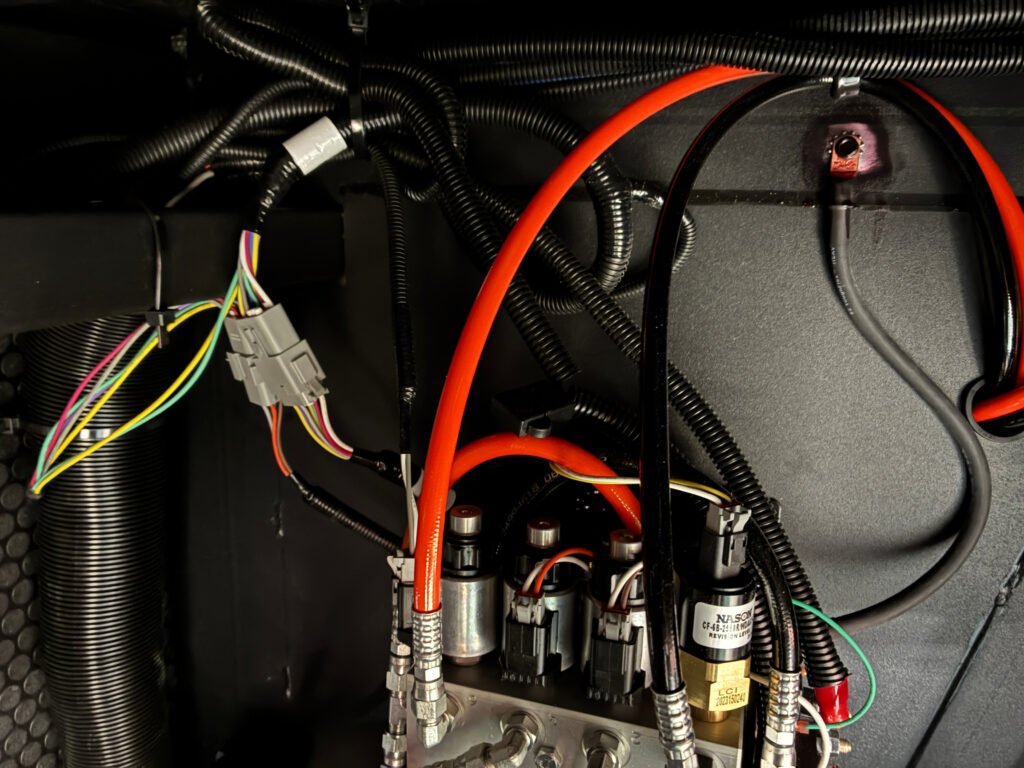
It looks like the axles, suspension, brakes, ABS, levelers, and hydraulic lines are the first things added to the bare RV frame.
Interior Construction
- Cabinets, etc
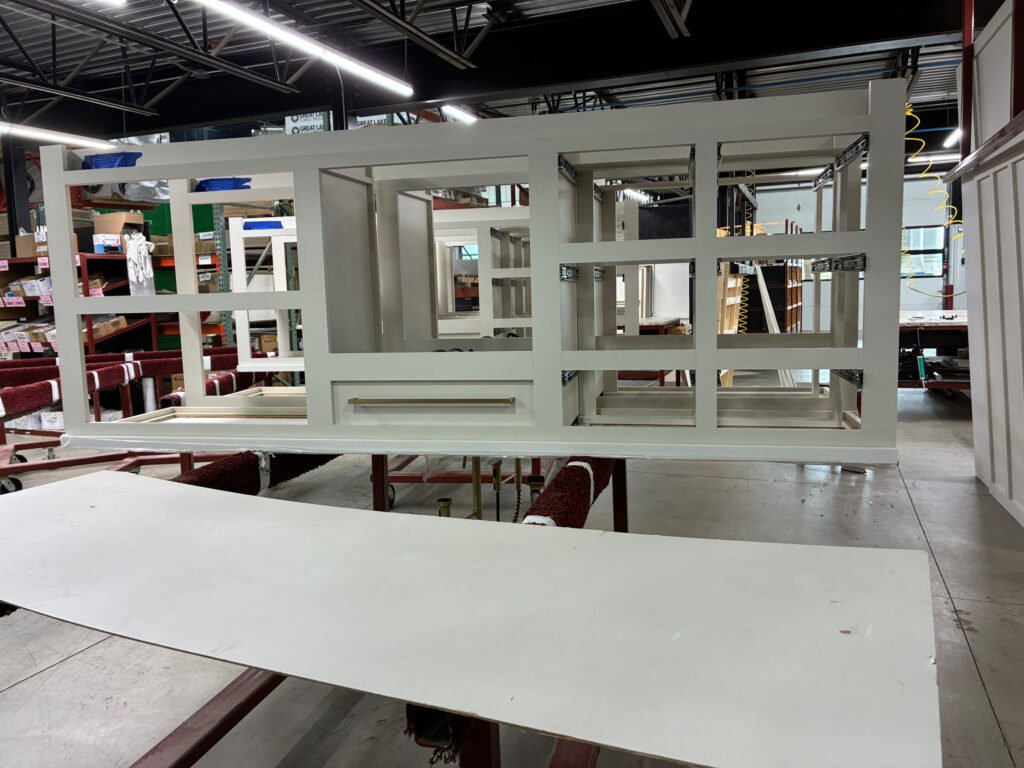
- All cabinets are built inside the facility, except the following is built by Amish and put in: cabinet doors, drawer fronts, and dove tails
- Use CNC machine to cuts boards exactly the same.
- Island sits on metal mount to be extra stable
- Cabinets built using countersunk screws instead of staples
- Do not use trim, so everything has to be square
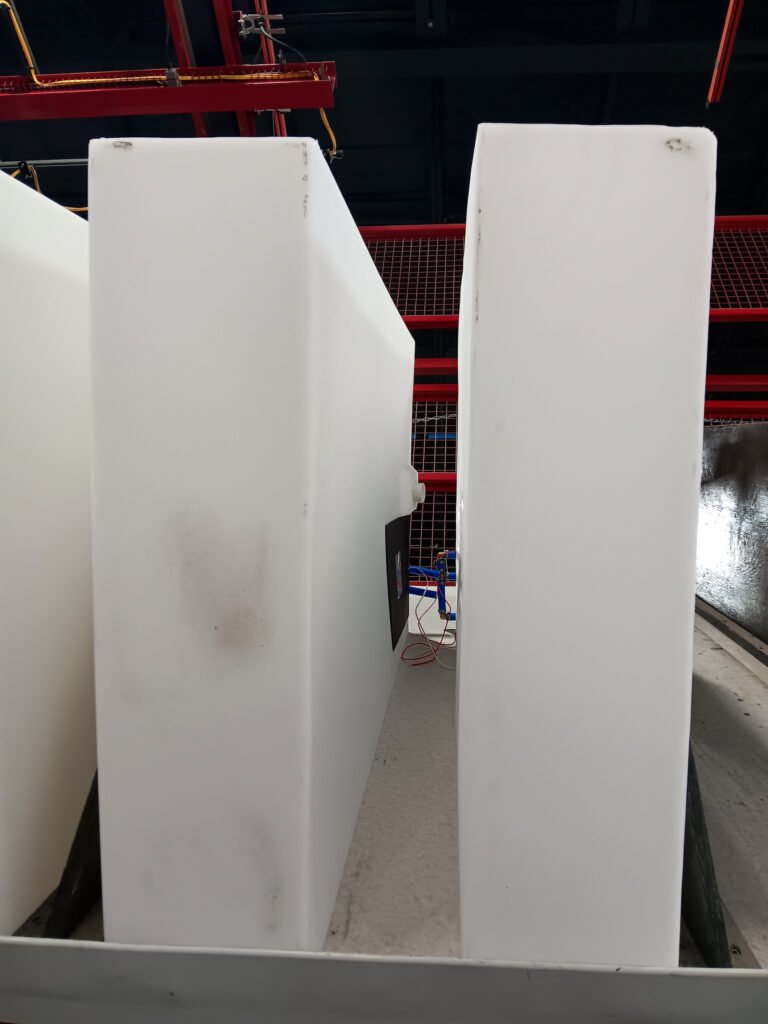
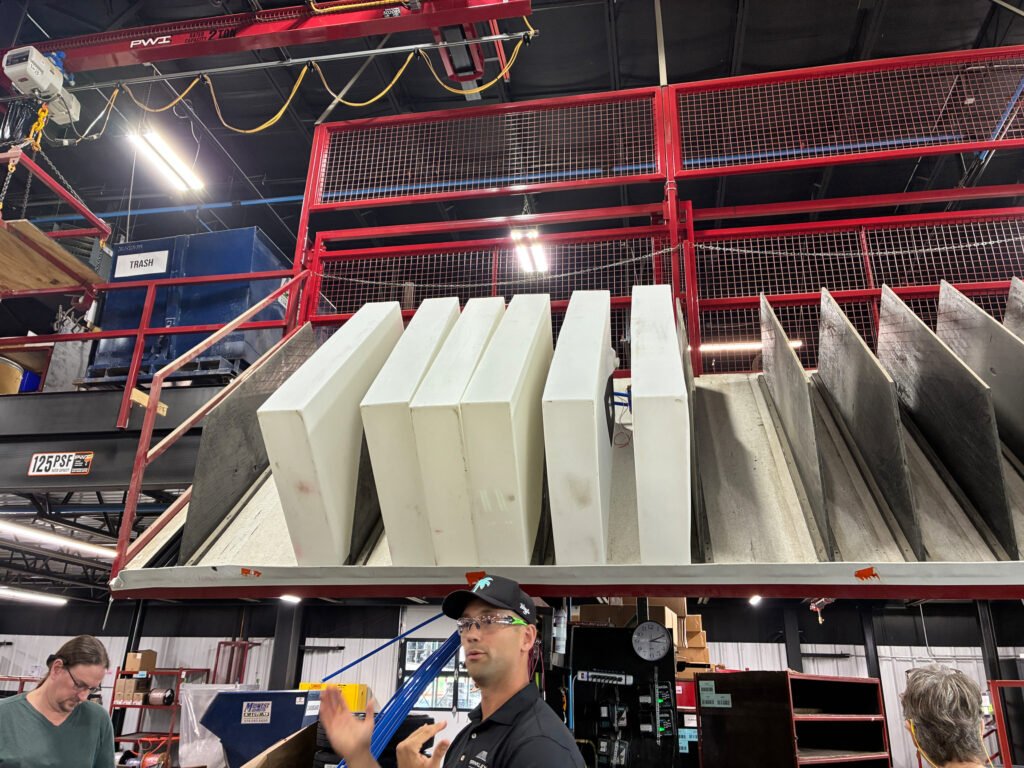
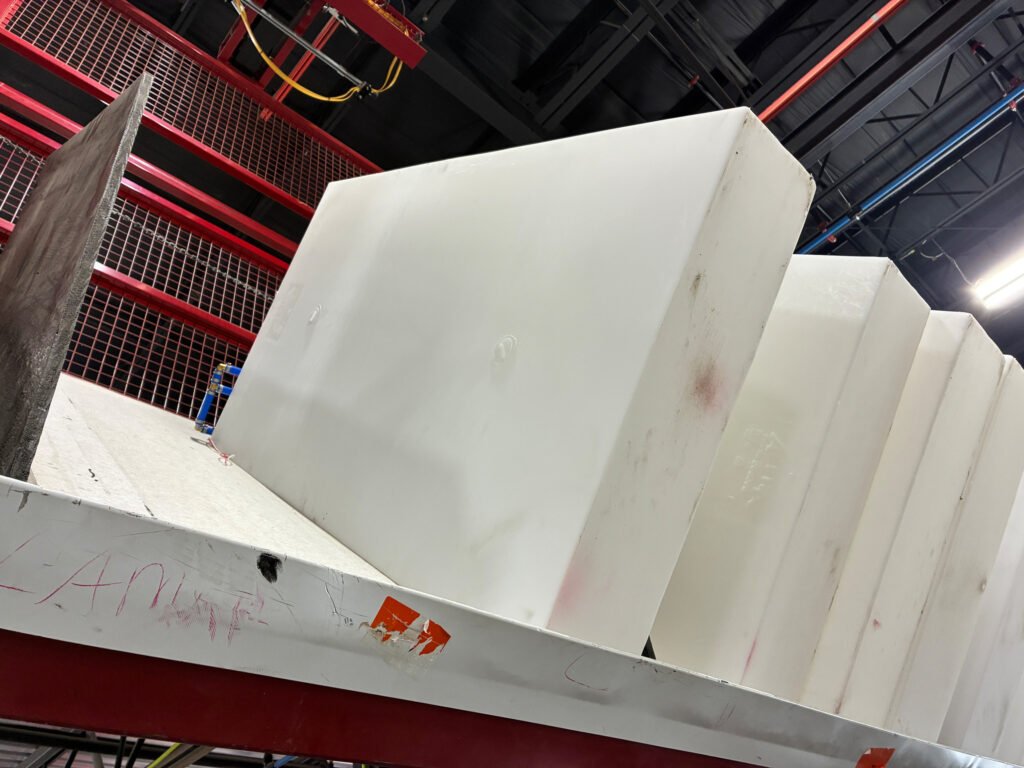
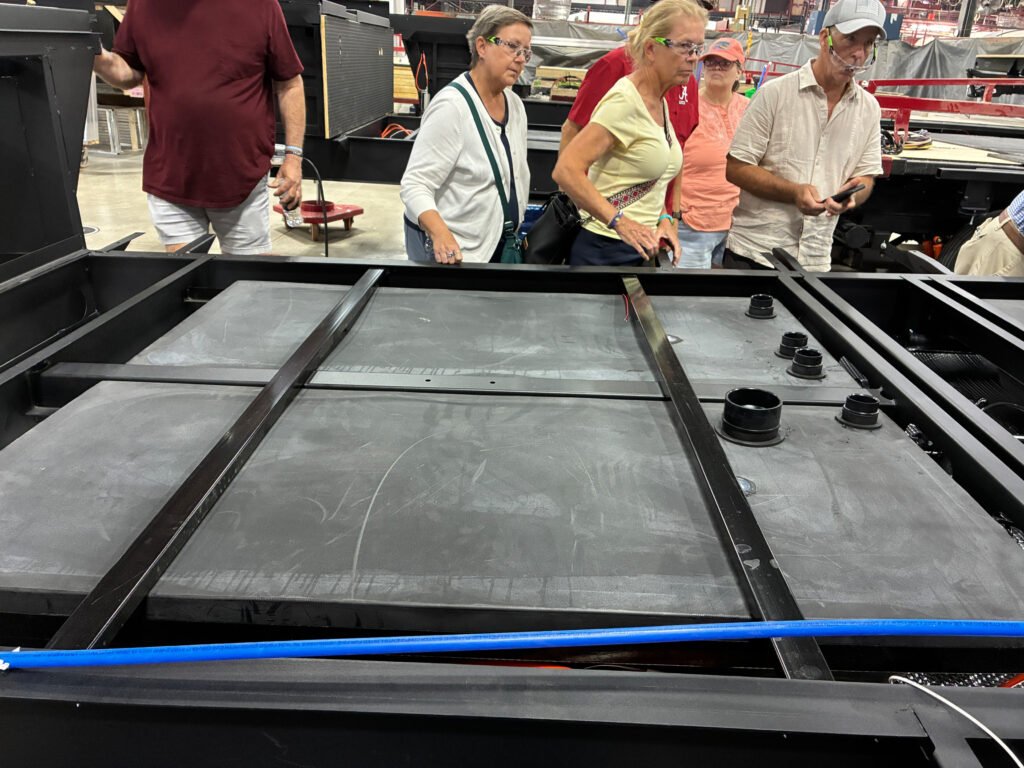
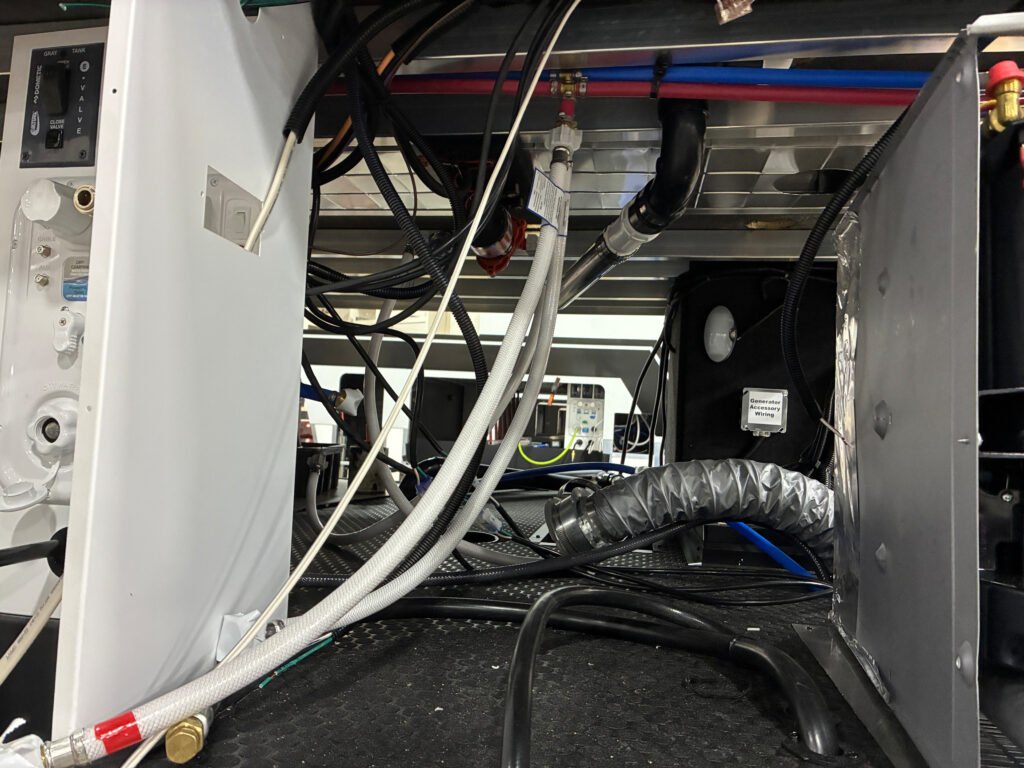
- Holding tanks
- frame member passes under the tanks to help support them instead of a nylon tie
- thermostatically heated, when the tank heater is turned on
- tanks are angled and heaters are just a pad at the low point
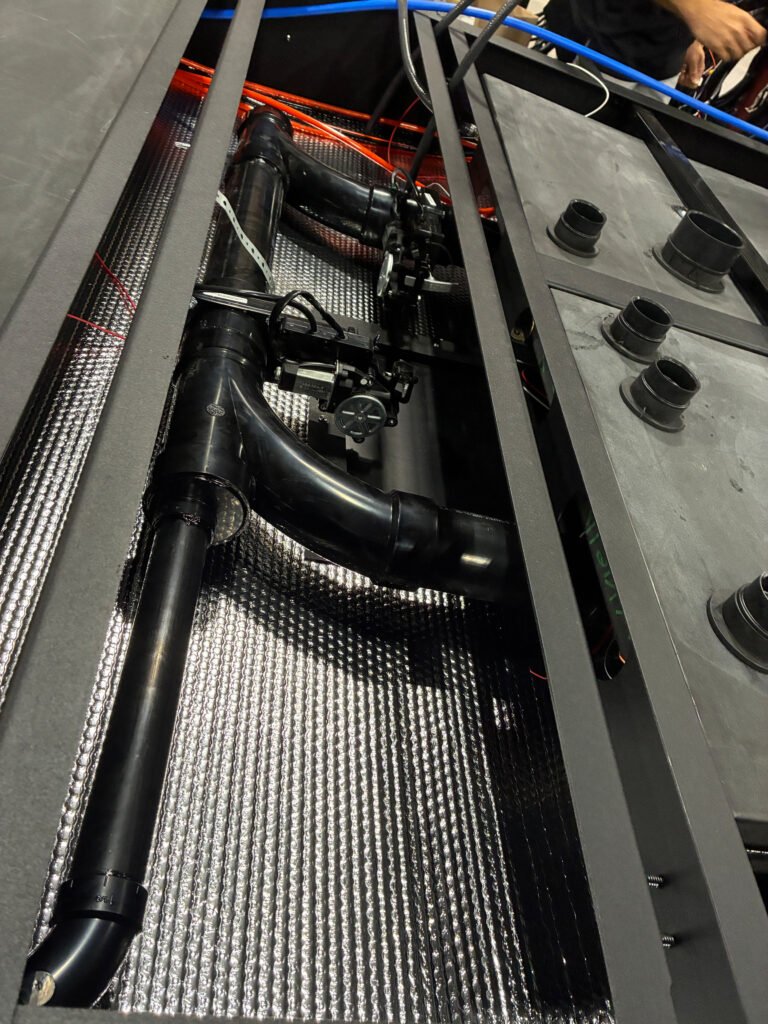
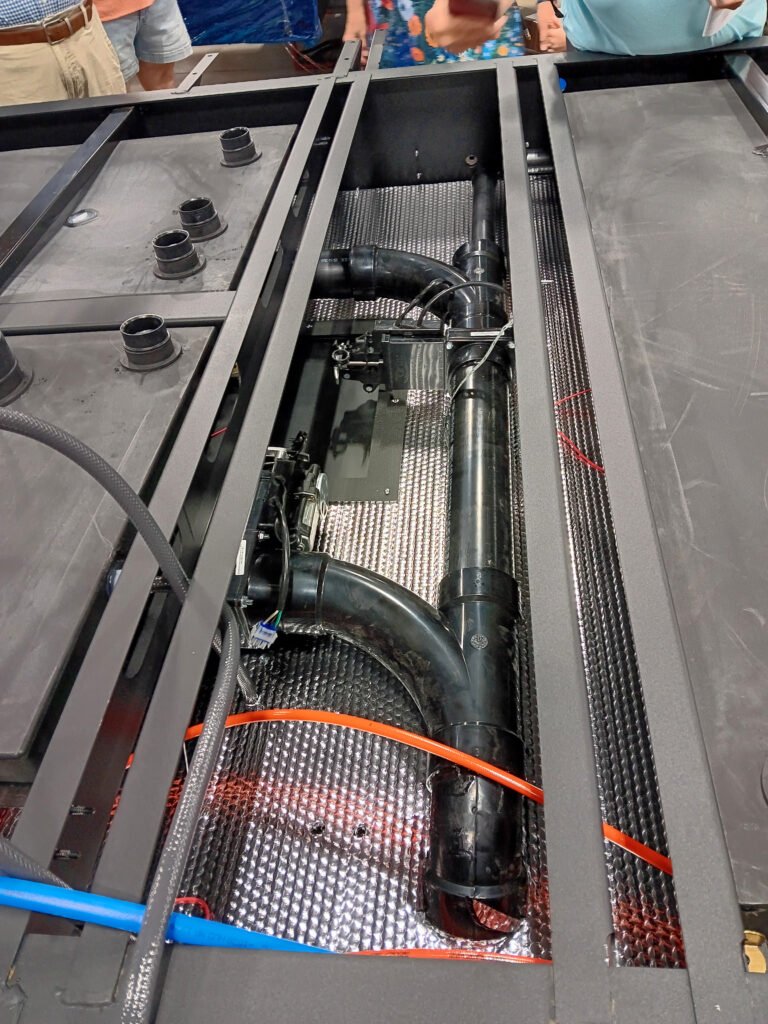
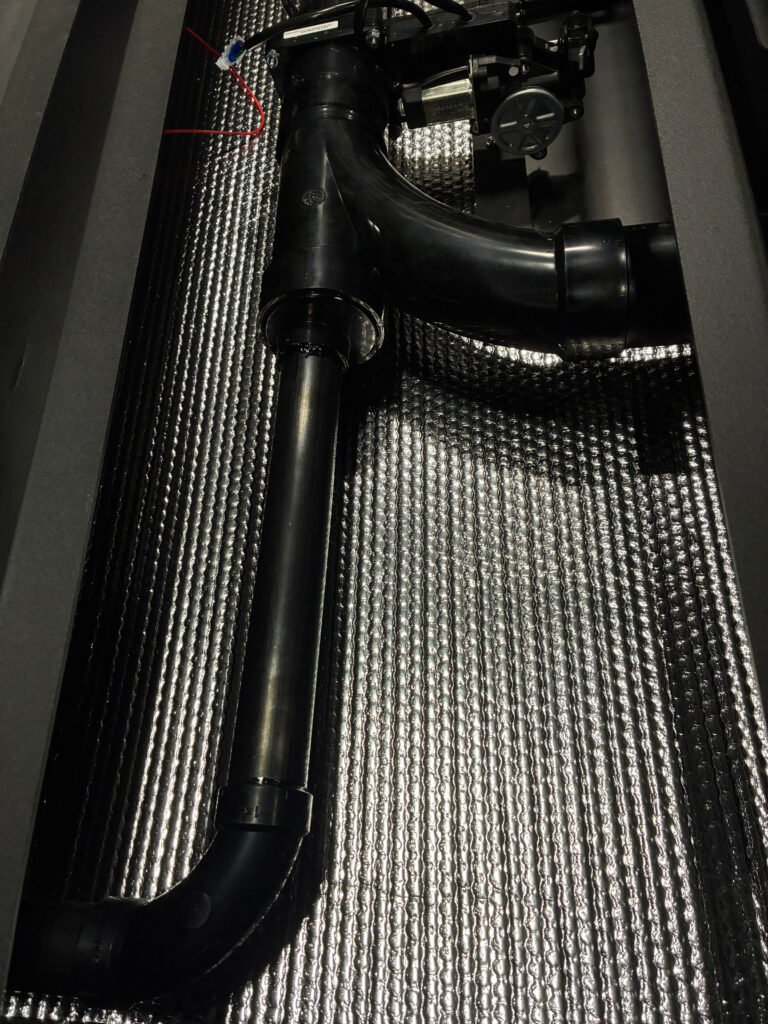
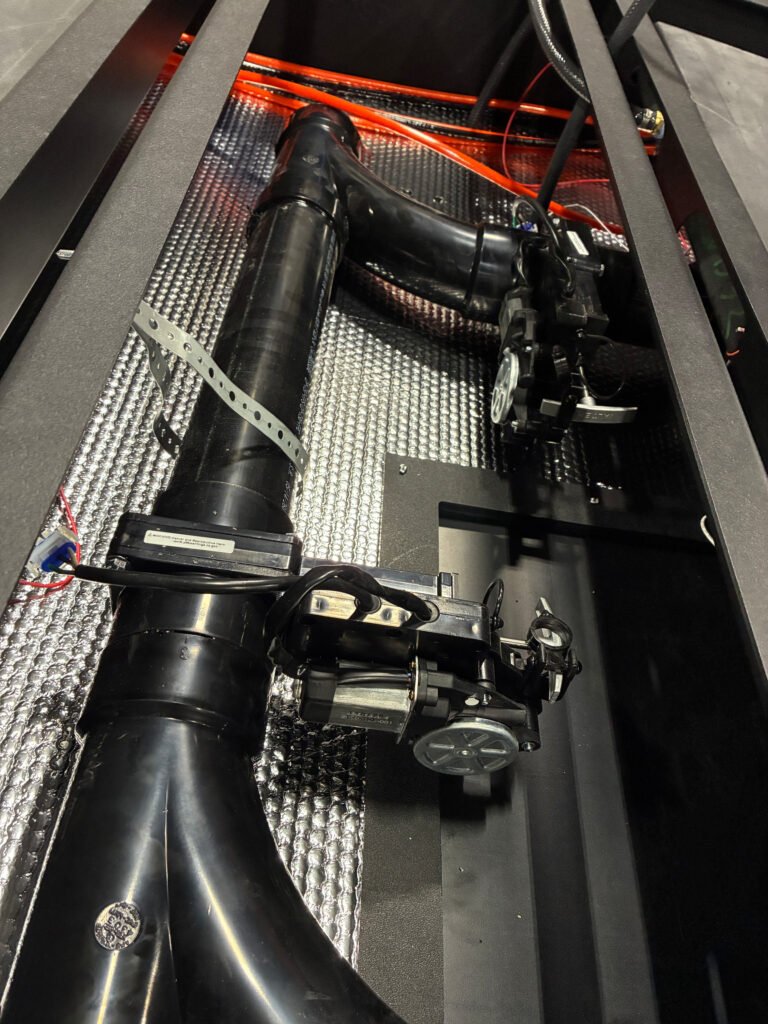
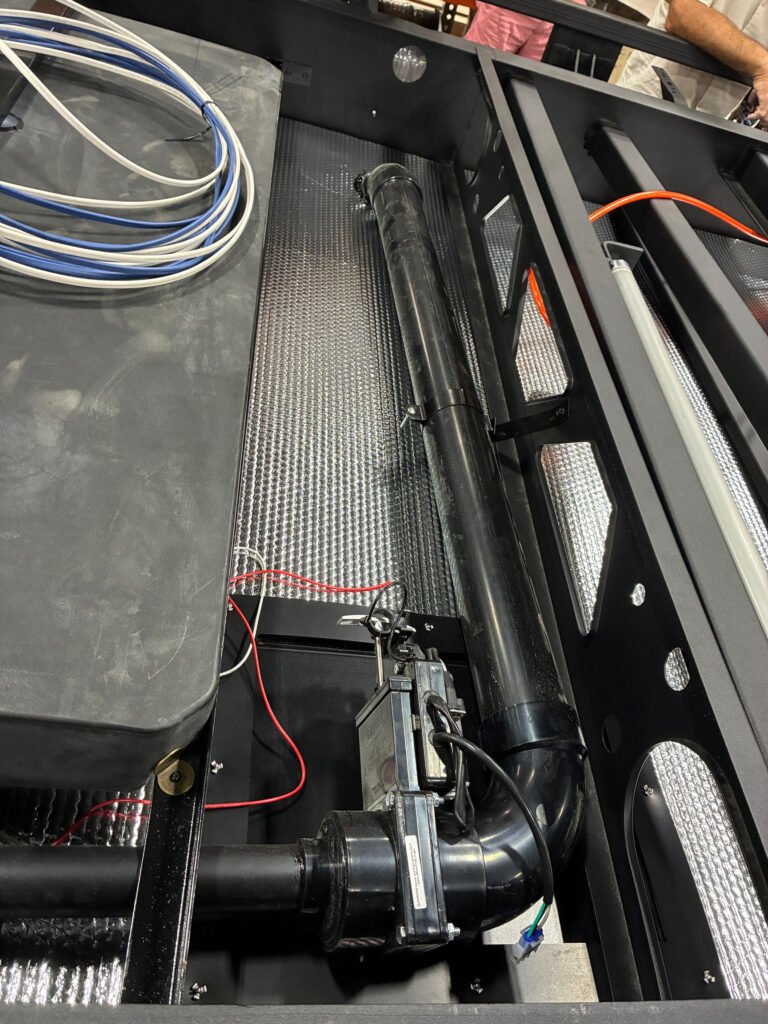
- central area between tanks has electronic tank drain valve
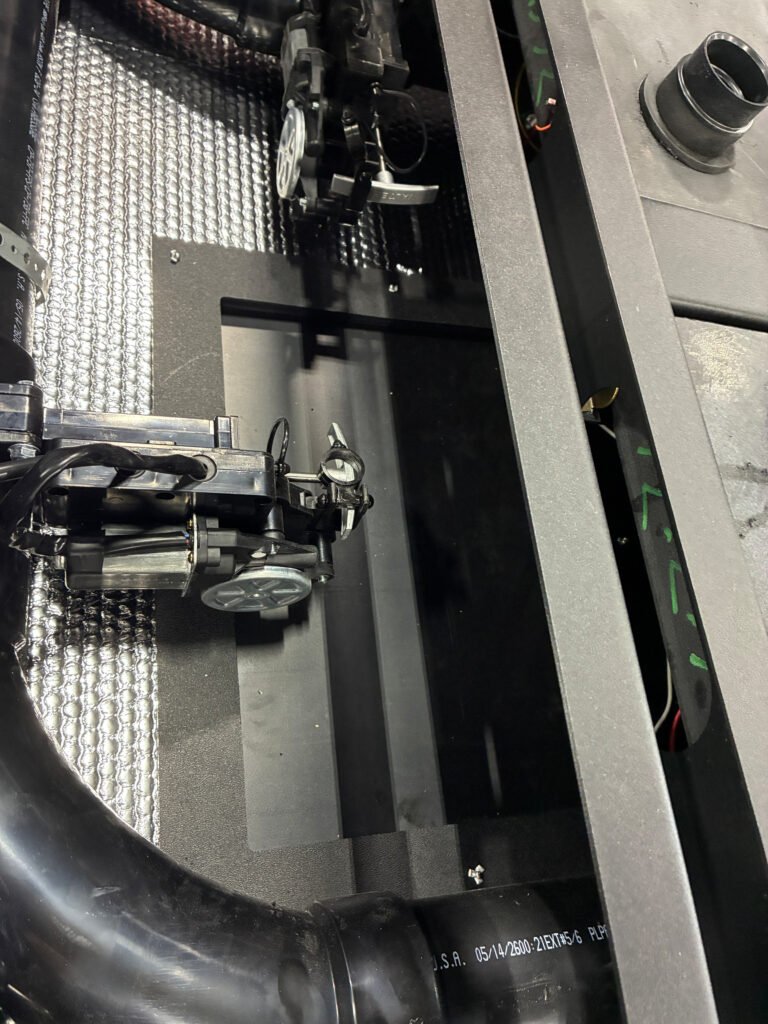
- Panel in the middle underneath is the emergency access
- There is no significant insulation here.
- No elbow heating pads
- Propane heat will be required for cold temperatures.
- Holding tanks are filled and travel through construction process full to ensure no leaks
- Uses the same crap sensors as everyone else
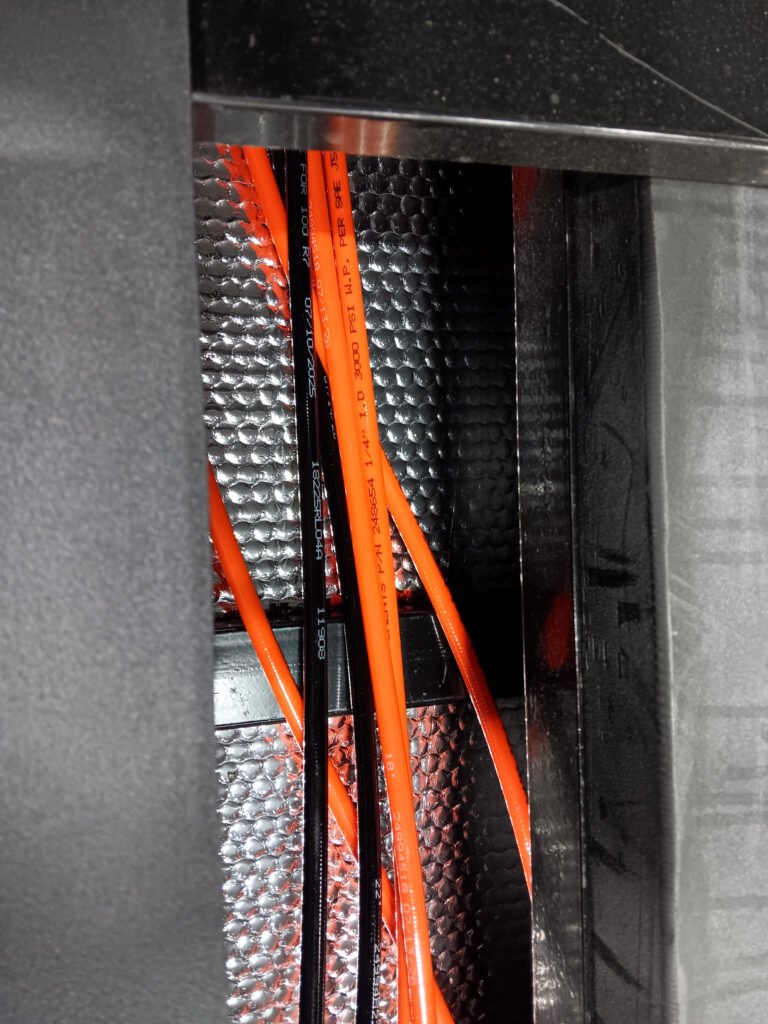
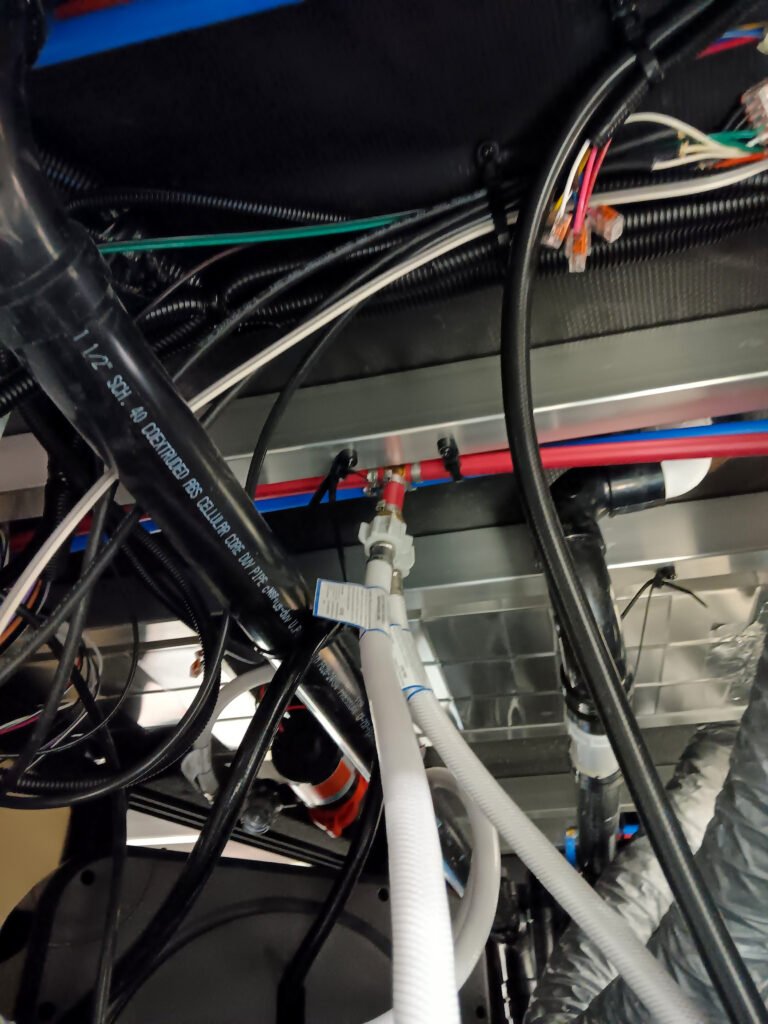
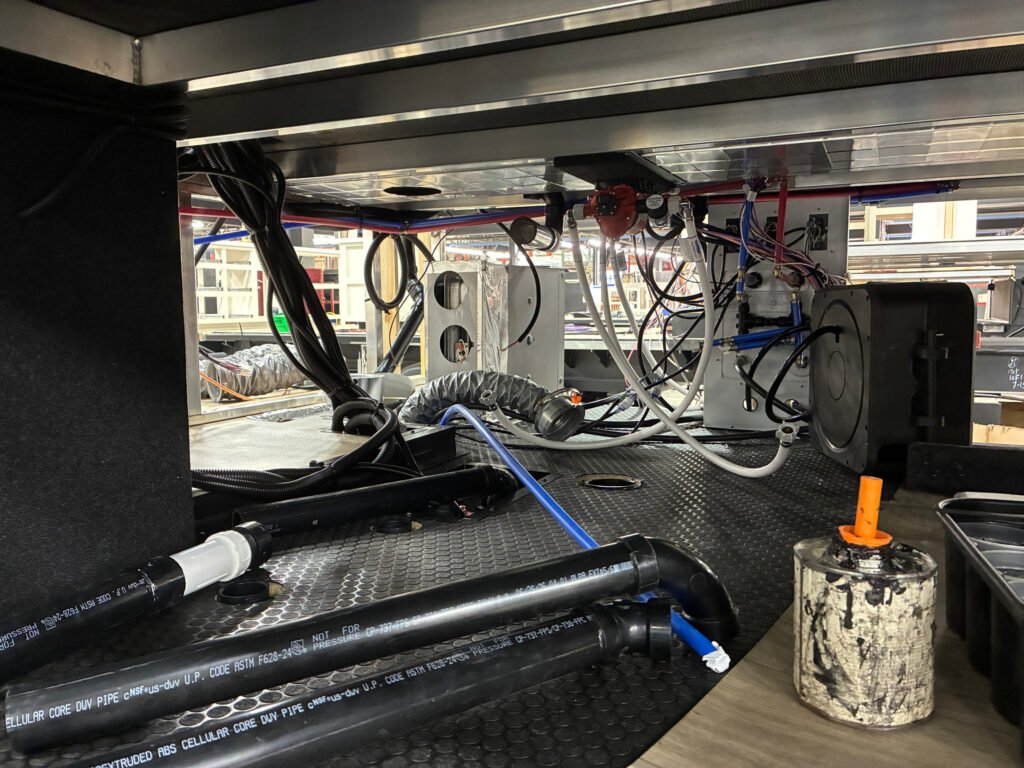
- Pipes are PEX with brass elbows. PEX couplers are pneumatically crimped to ensure consistency.
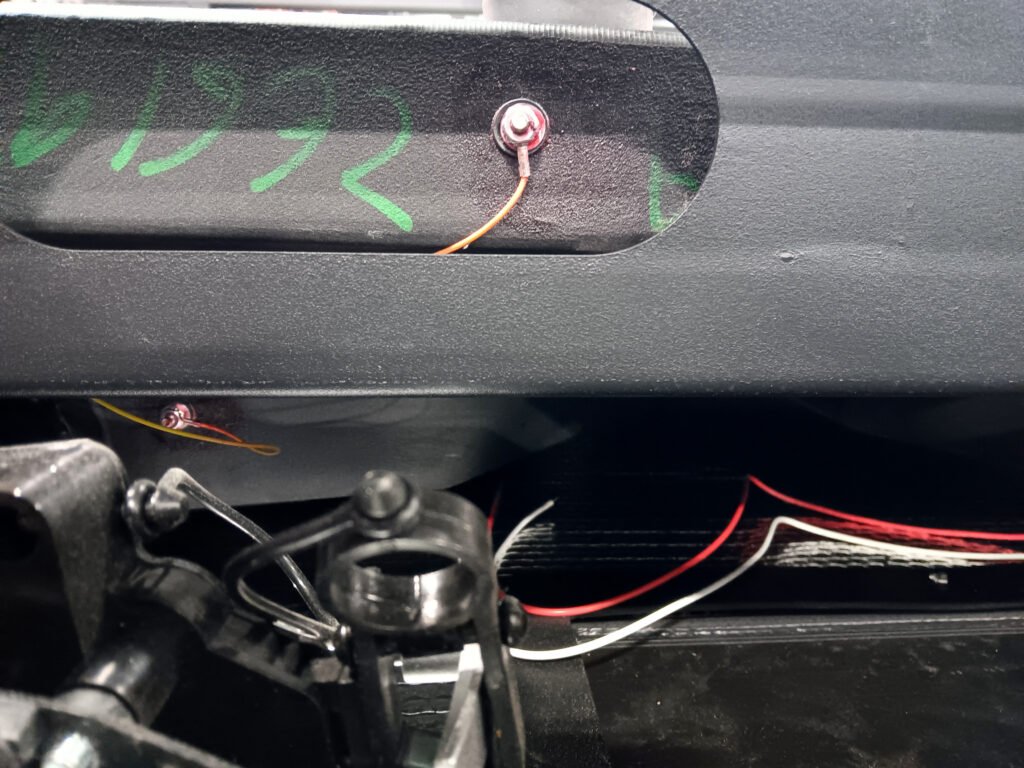
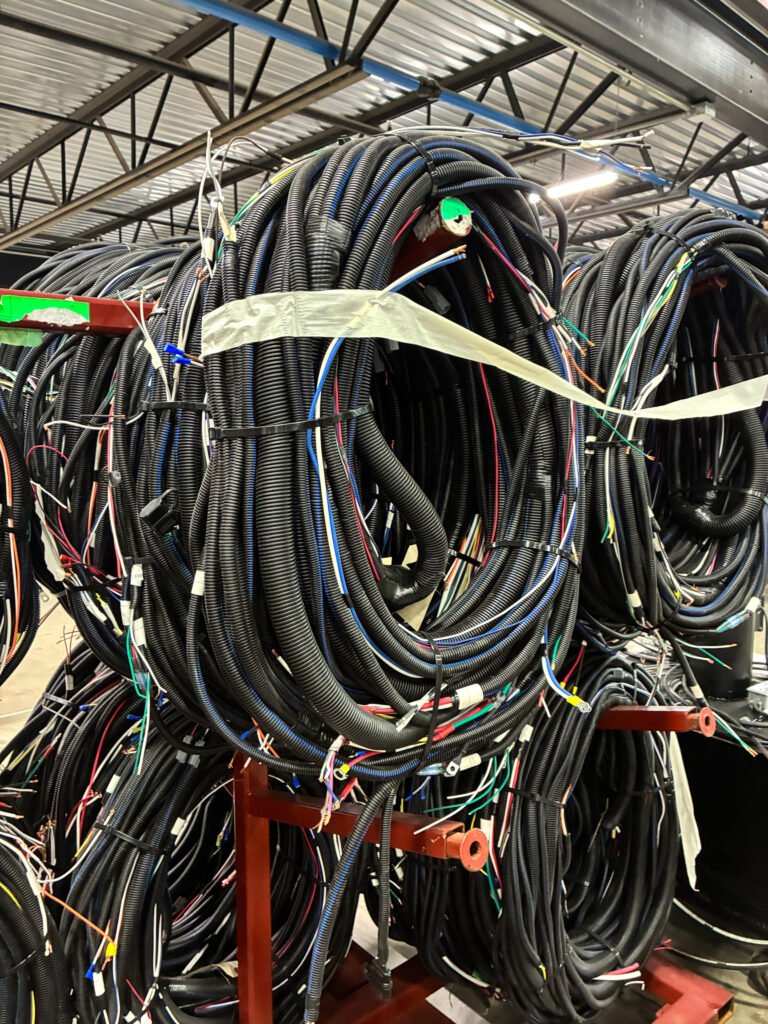
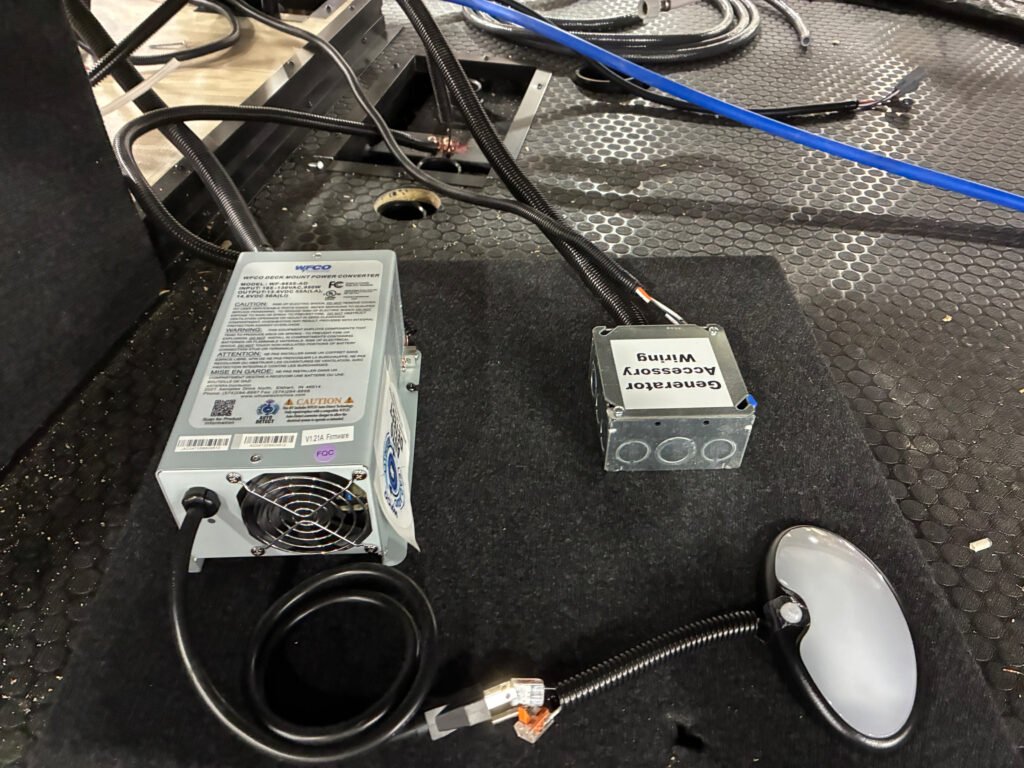
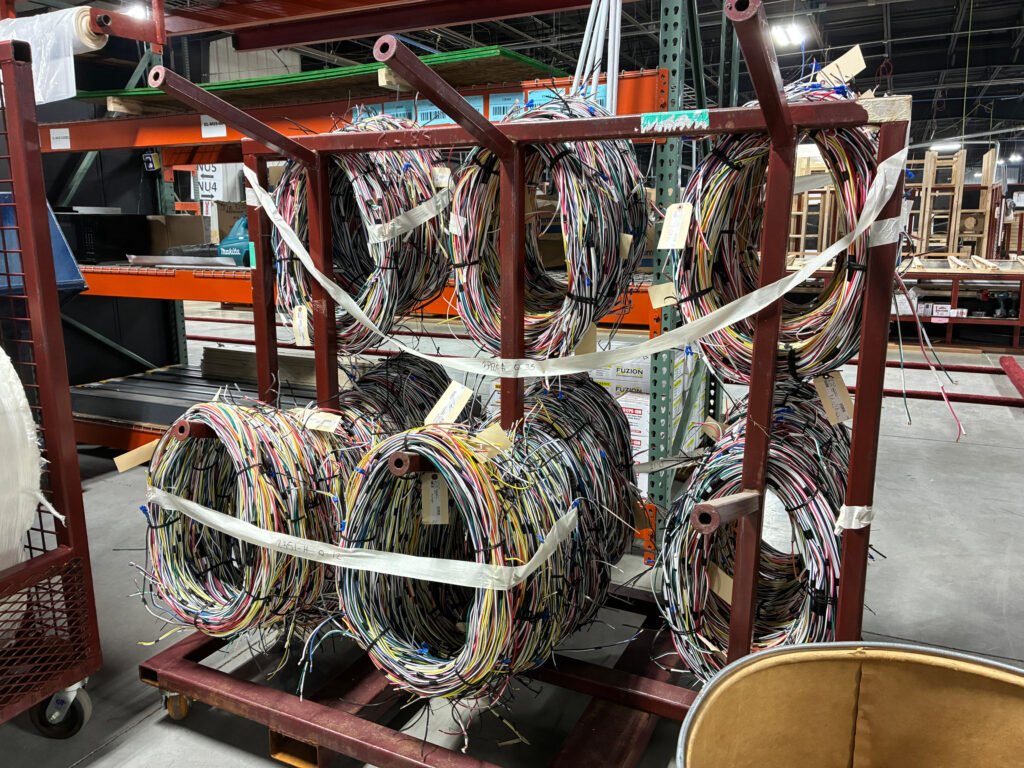
- Automotive style wiring harnesses. Pre-made, pre-tested, color coded wires, and easier to install.
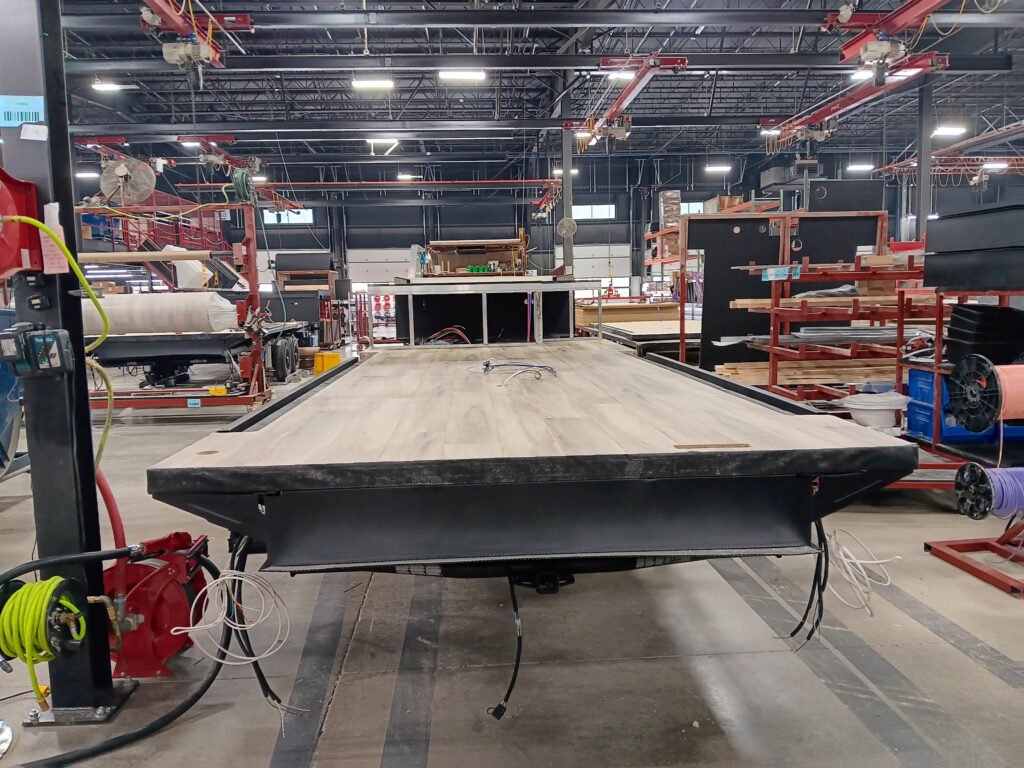
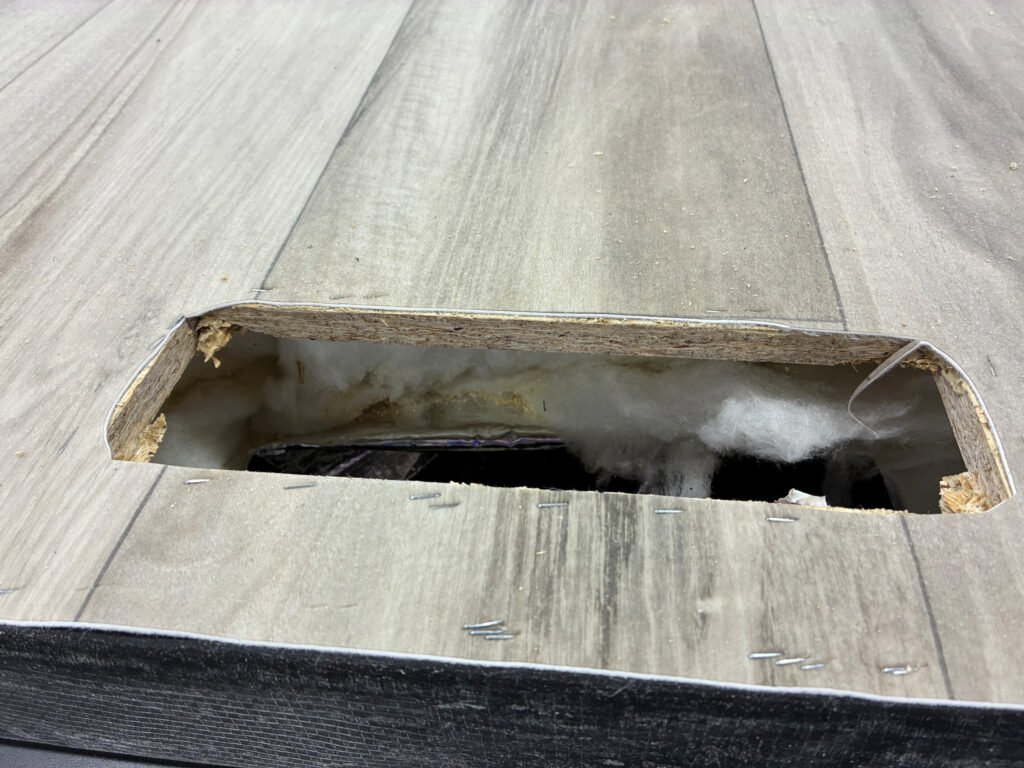
- Staple linoleum along outer edges instead of glue. This made repair easier.
Holding Tank Pictures
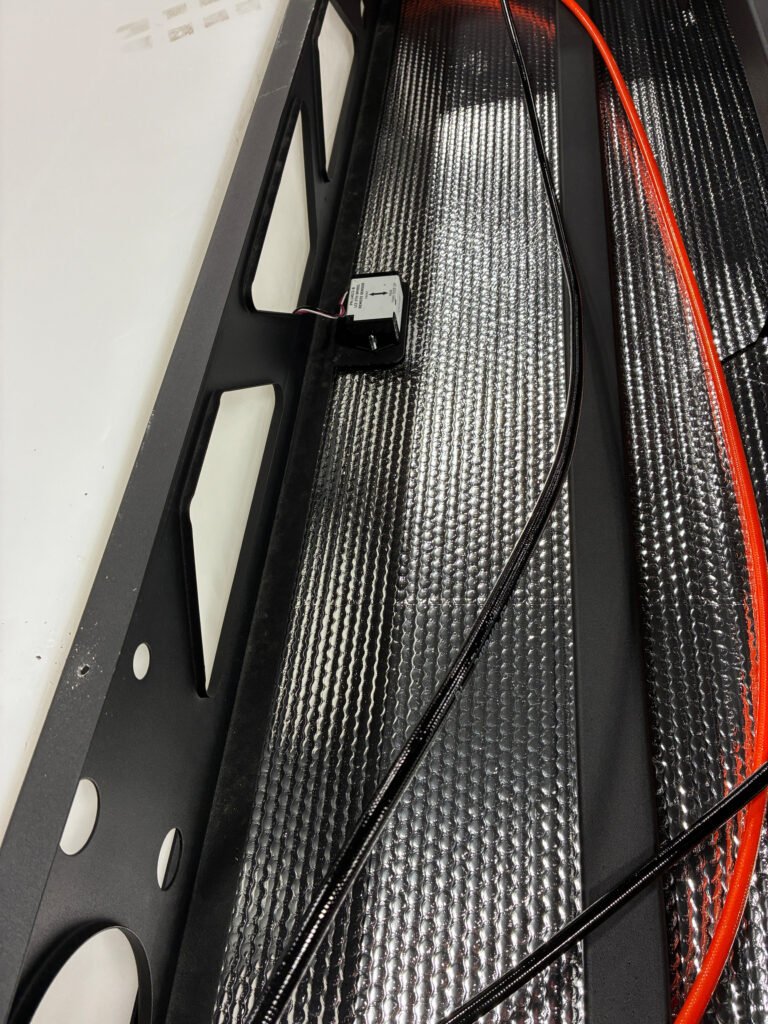
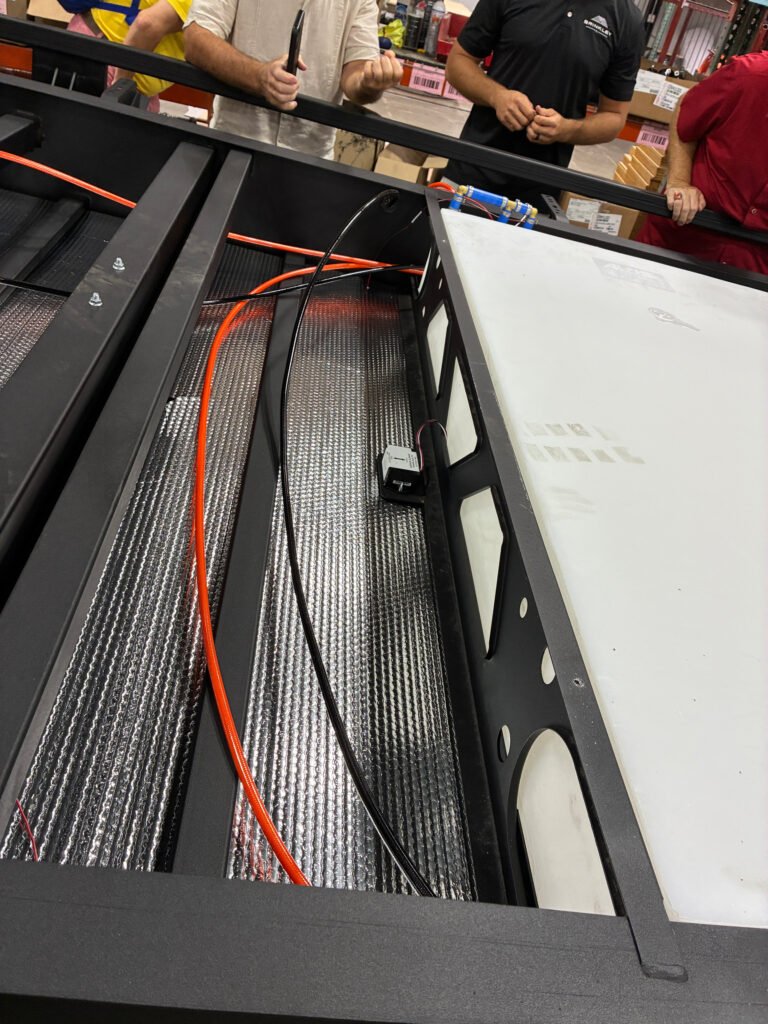
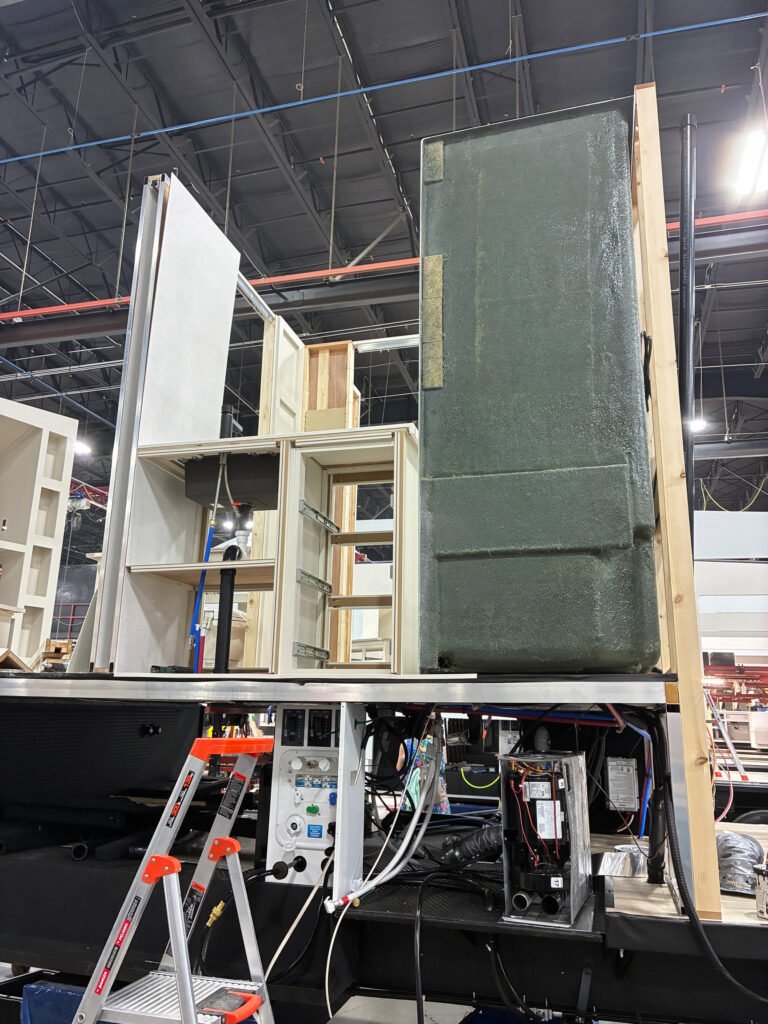
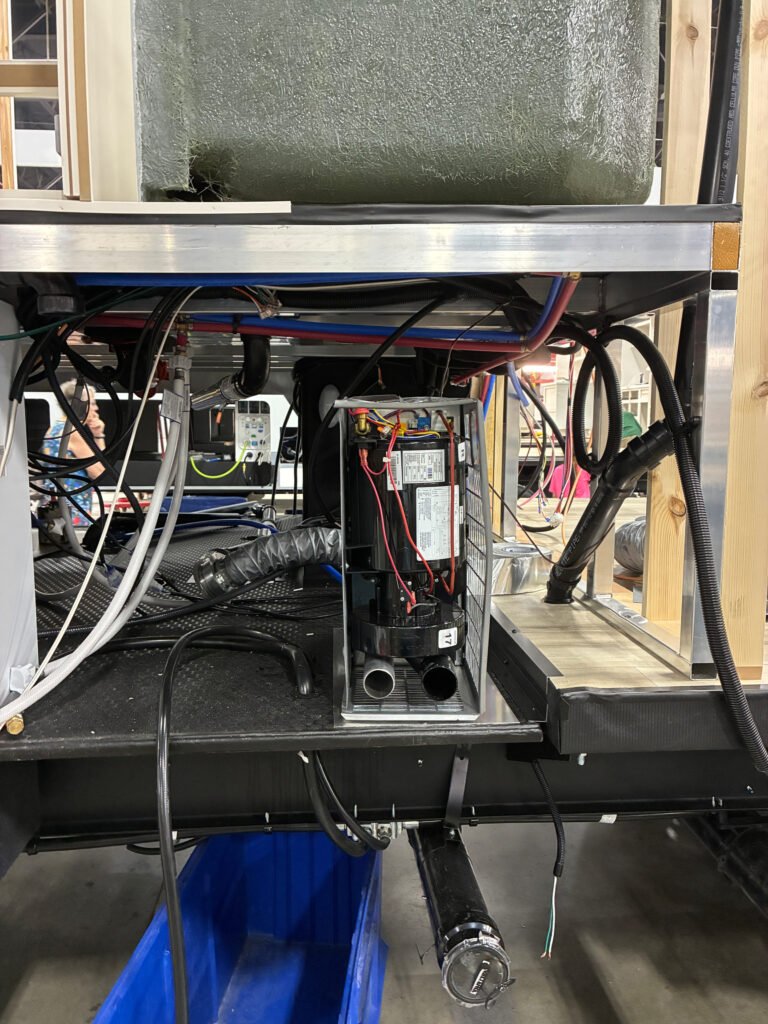
Holding tanks, sewer lines, and some wiring harnesses are installed right after the basic frame components because these will be covered by the main floor.
Sewer Line Pictures
Right after the tanks are installed, the sewer line, valves and remote valve controls are added. There are access panels underneath, in case you need to manually pull the dump valves. We learned there is no insulation underneath at all. Brinkley owners on the tour said their tanks never froze, but it uses propane heat.
Cargo Assembly Pictures
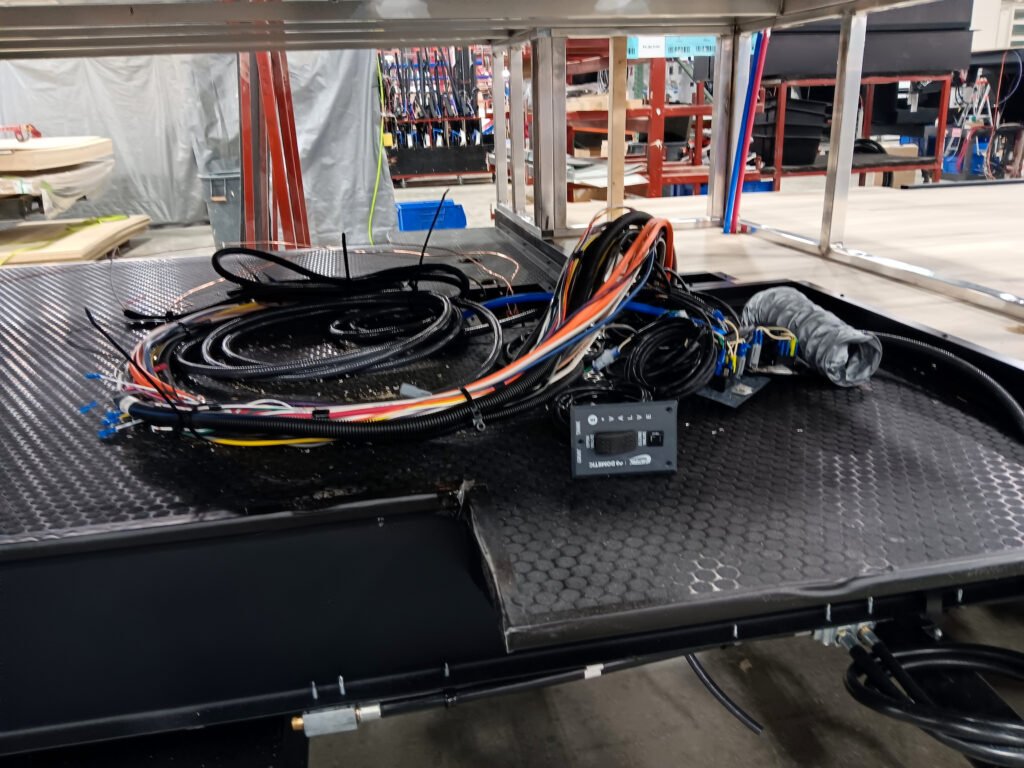
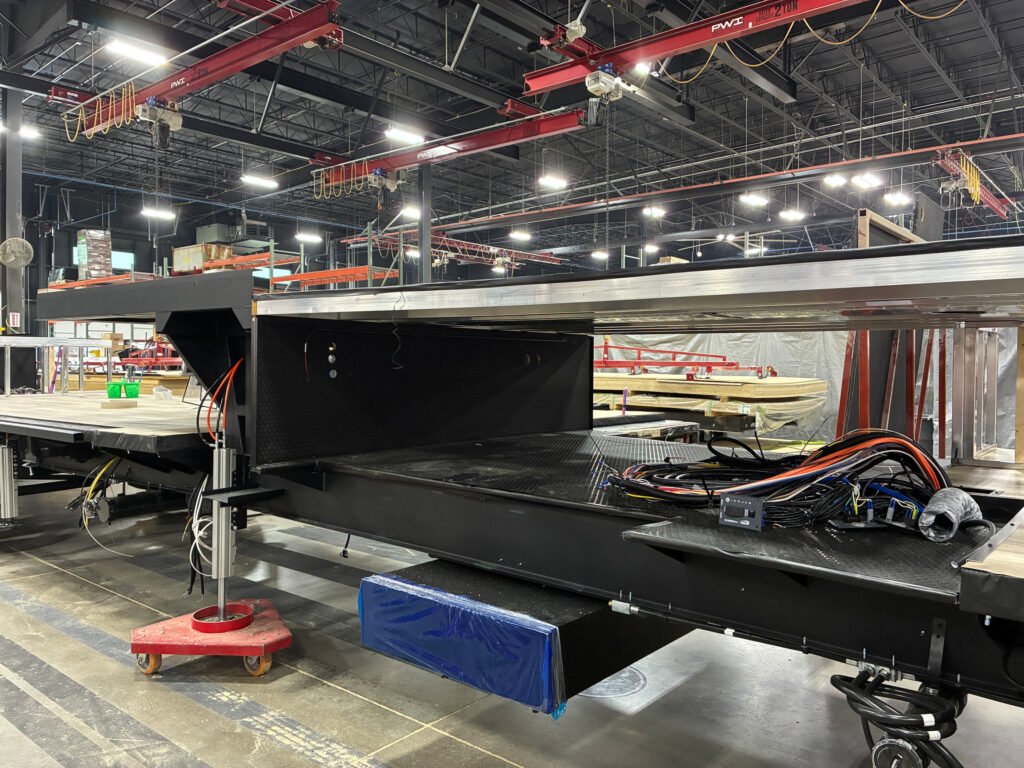
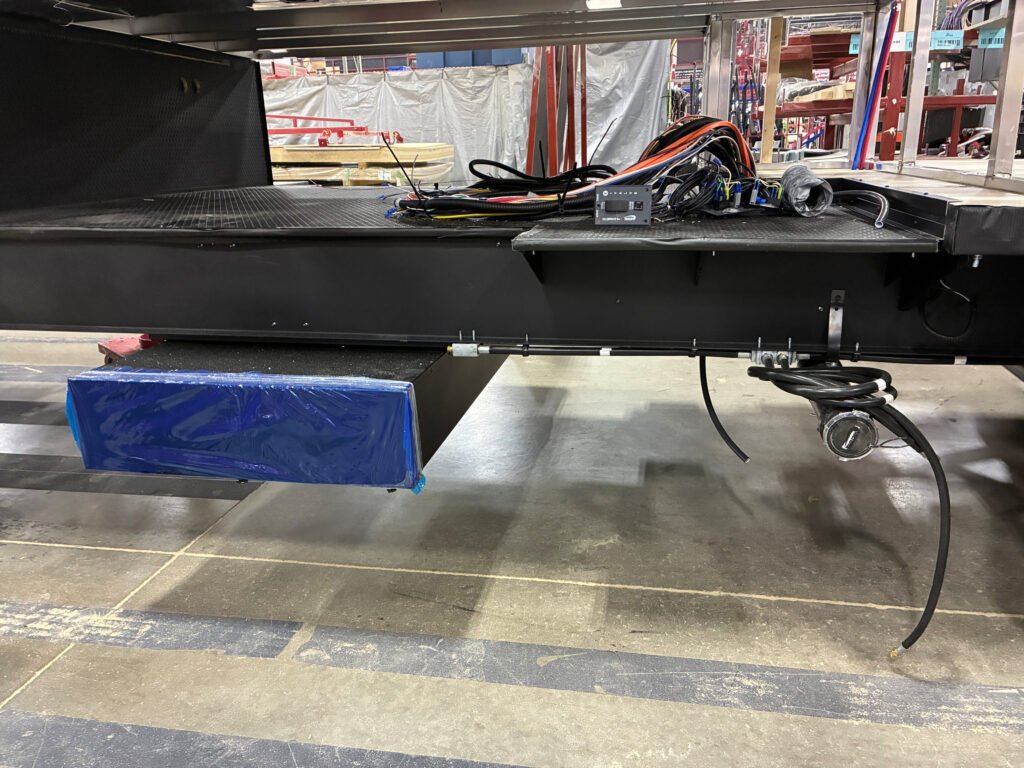
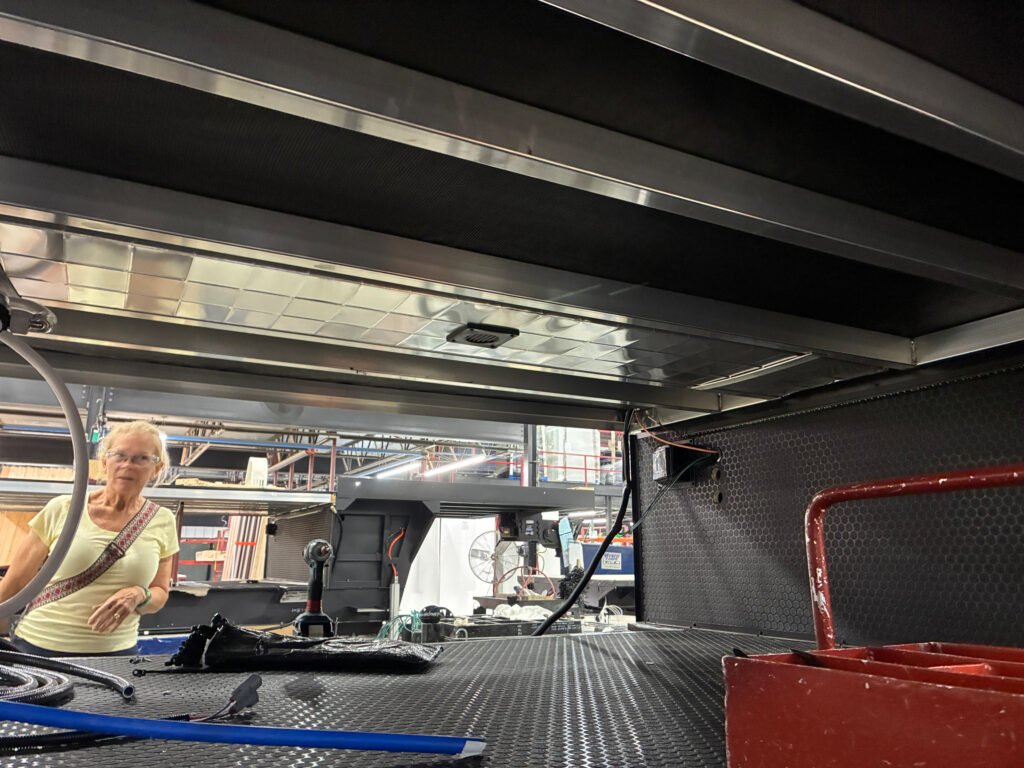
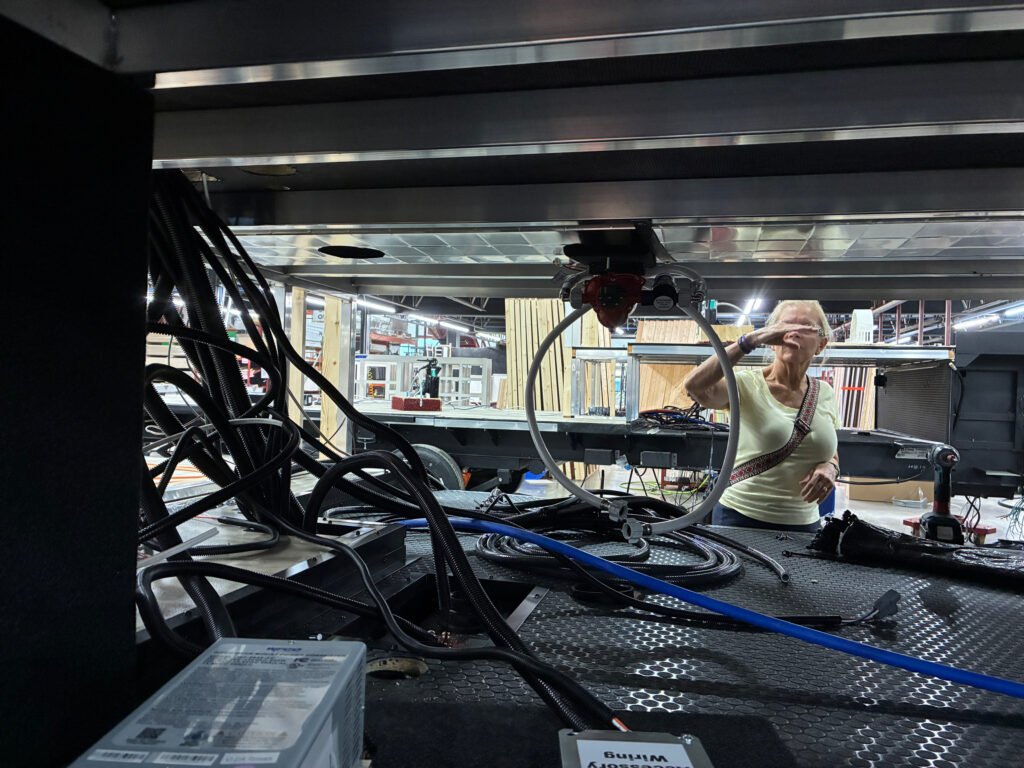
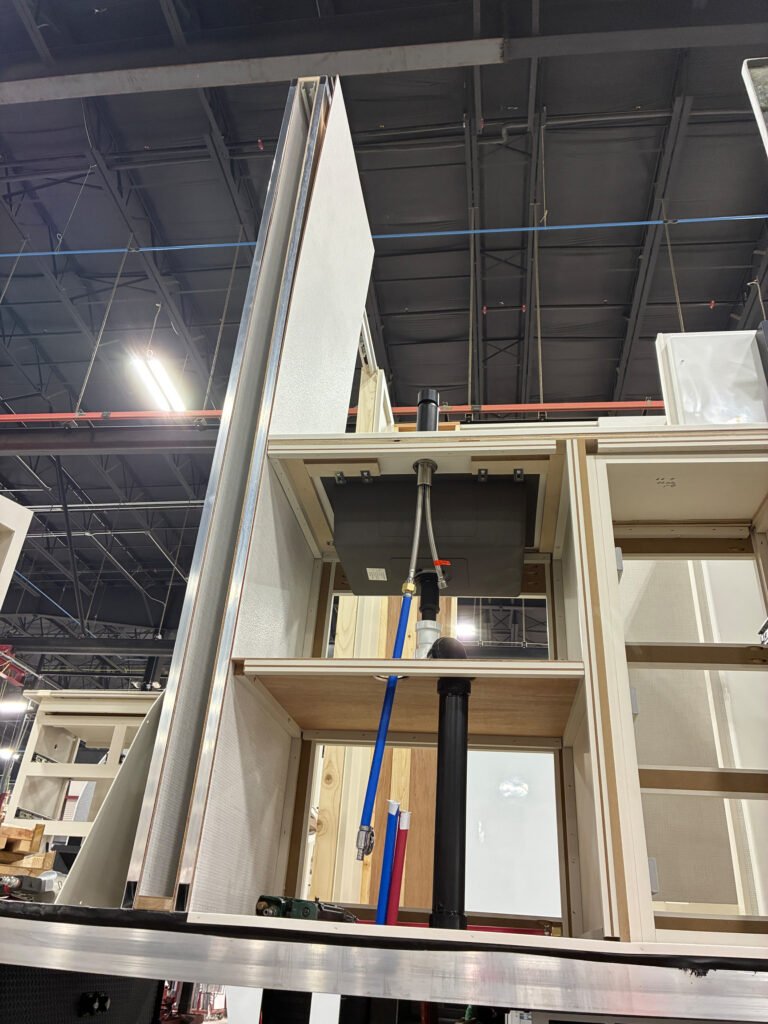
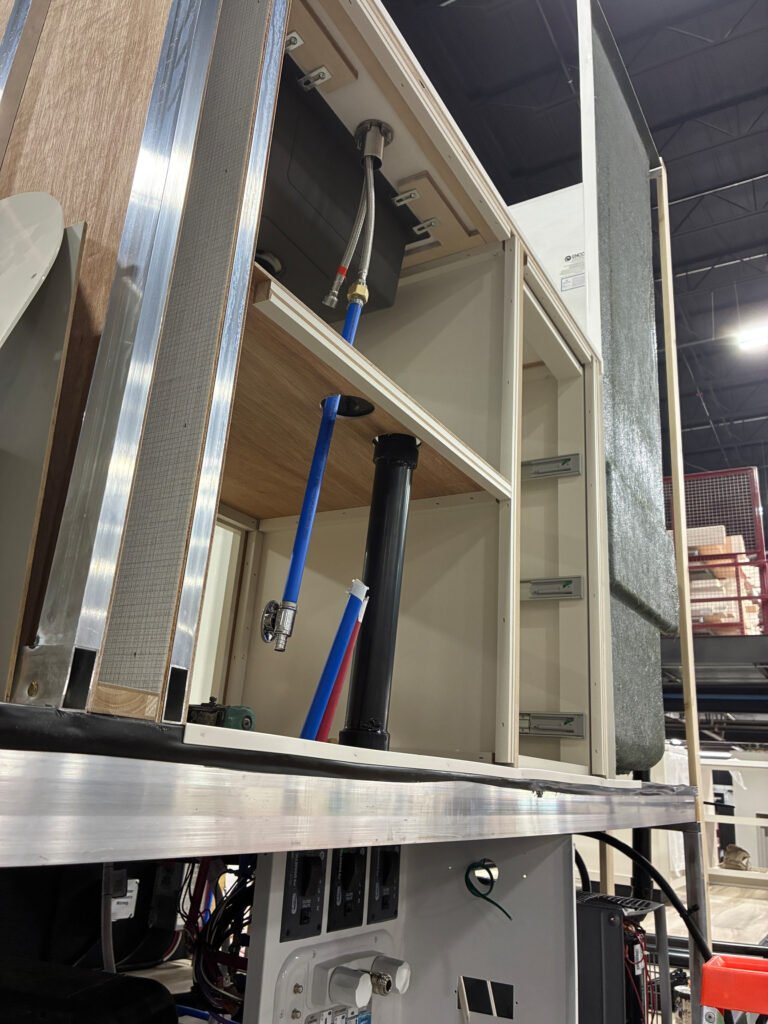
They add the main floor, upper decking, and cargo decking. The linoleum is only stapled around the outside, instead of being glued down. This lets it shift around with temperature changes. If you get a hole in your linoleum, Brinkley keeps samples that you can request and have fused back in. Some of this happens in tandem with the interior assembly, such as shower installed above and plumbing below.
Interior Assembly
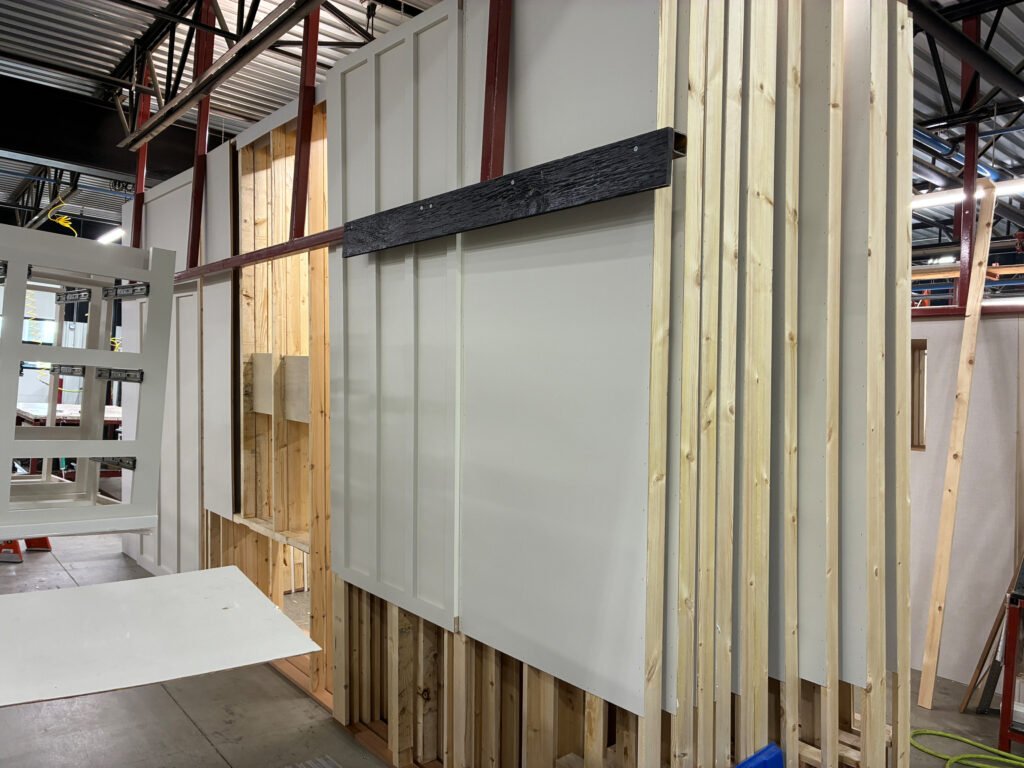
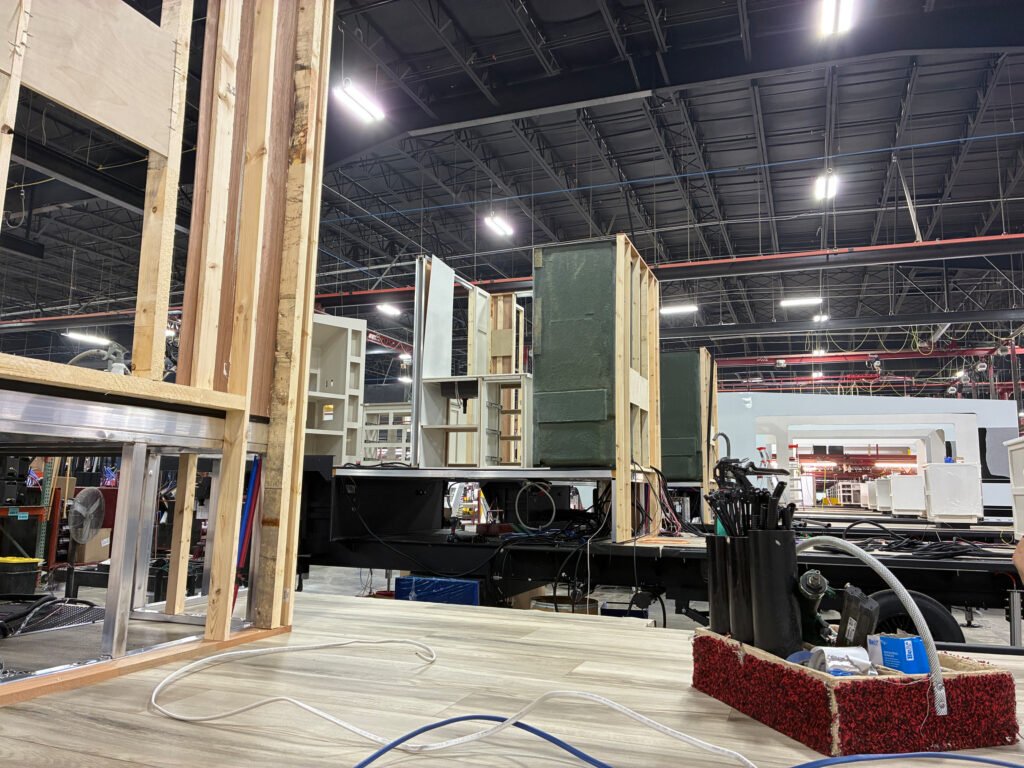
Unlike houses, RVs are built from the inside out. They build up most of the cabinets, islands, and interior walls, and then they add the exterior walls. Some of this happens in tandem with the interior assembly, such as shower installed above and plumbing below.
Side Construction Details
- One building dedicated to lamination. No wood in laminated walls
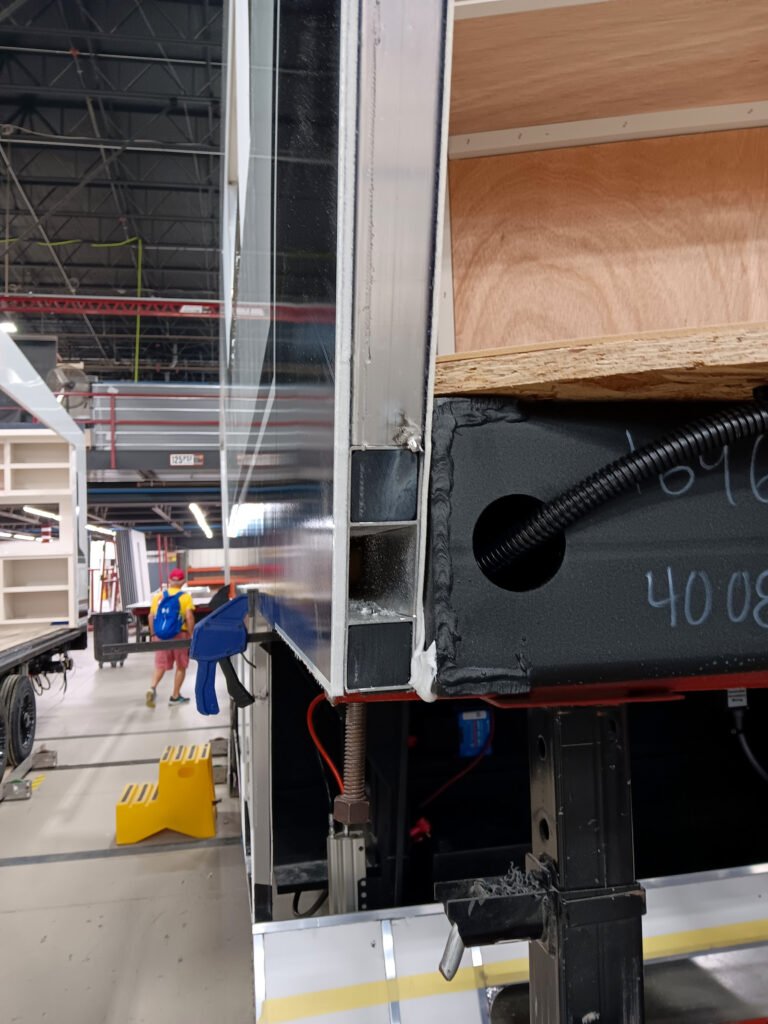
- From the outside in, the laminated walls are Automotive grade painted aluminum panels, Azdel, block foam, FRP, and interior wall board.
- There is composite inserted in some of the hollow aluminum frame tubes to serve as an anchor for secure screw connections.
- This requires more work to install and anchor because it requires drilling holes before screwing
- Composite is precisely sized for no air gaps
- Composite does not split, like wood sometimes does
- Side wall issue: sales rep claims to be resolving laminating issue.
- Adding more adhesive and roughing up the Aluminum now.
- Luan uses 11 g/sqft of glue, but it does not soak in. It can squeeze out when rolled.
- Azdel required 15 g/sqft of glue, but Brinkley tested and found 18 g/sqft was ideal
- Brinkley walls de-laminate at > 250 psi. where industry expects 150 – 180 psi for failures
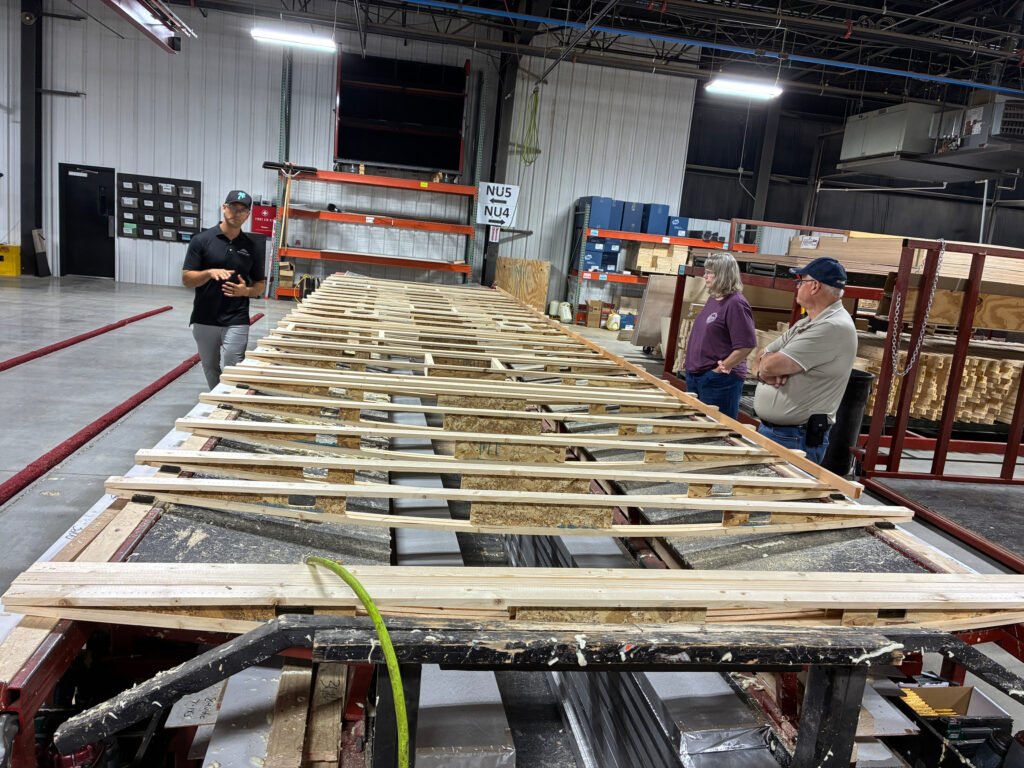
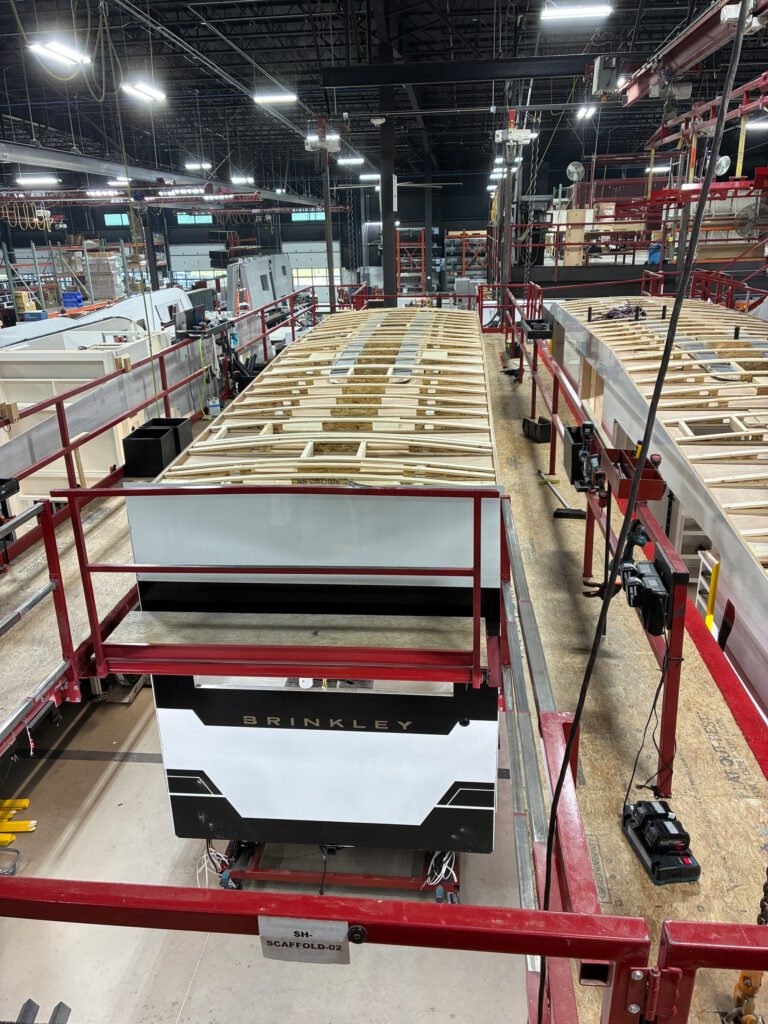
- The roof is the flex point not side walls. This is the reason the roof is made of wood.

Roof Construction
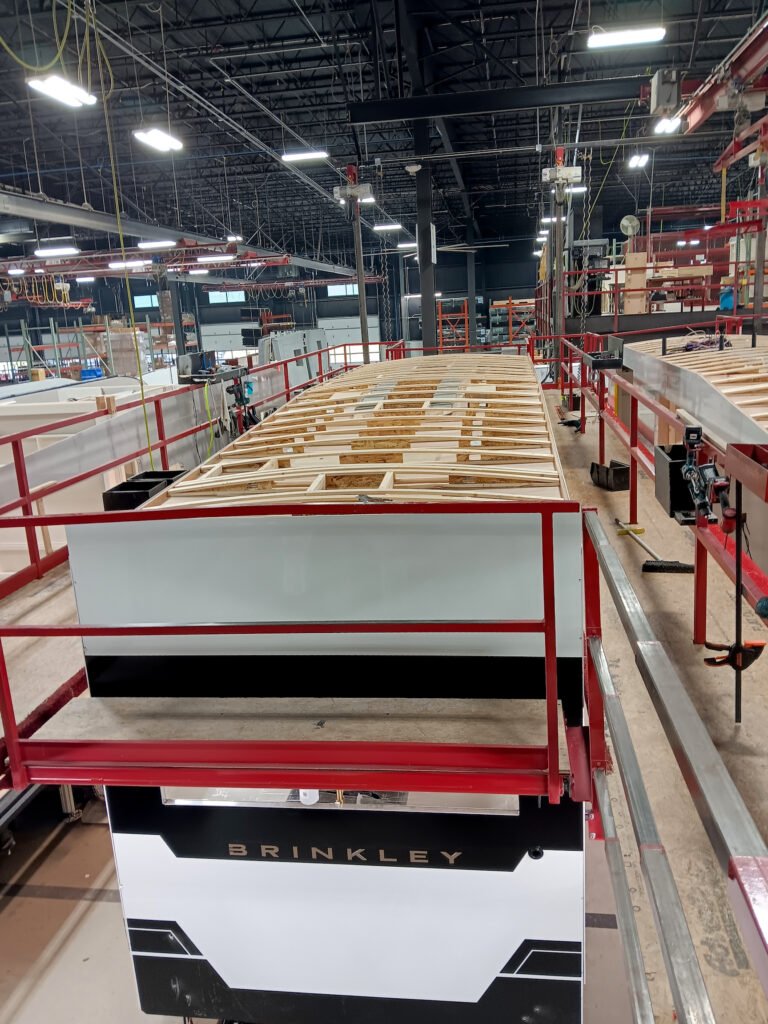
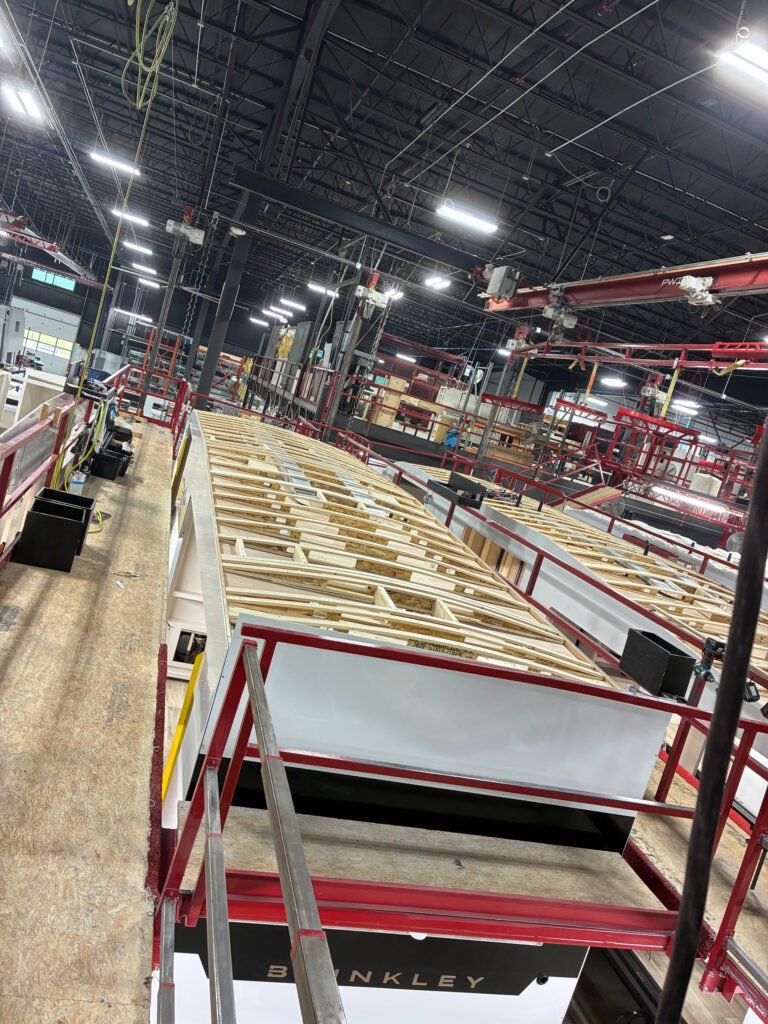
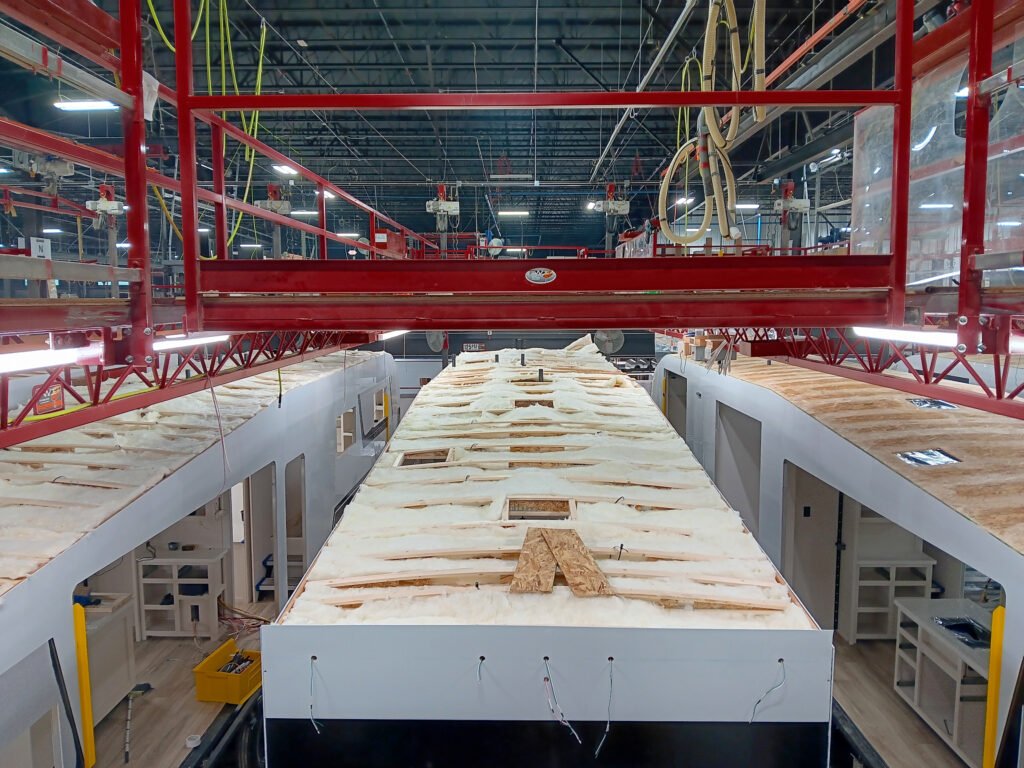
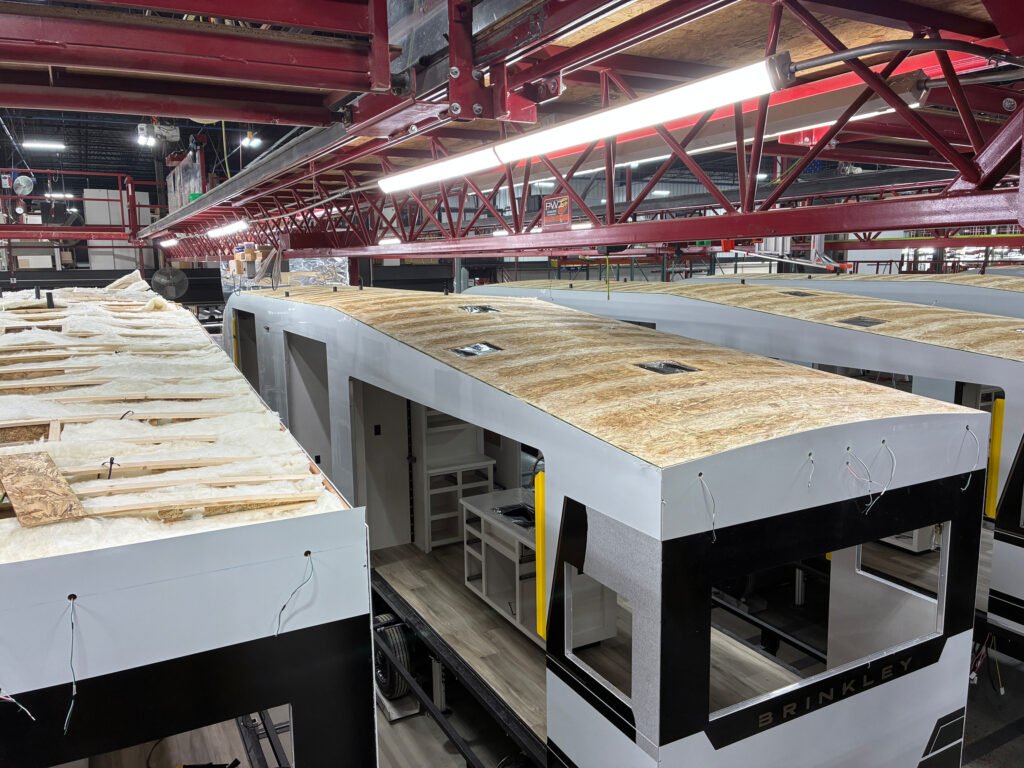
- Roof is the flex point.
- Rafters
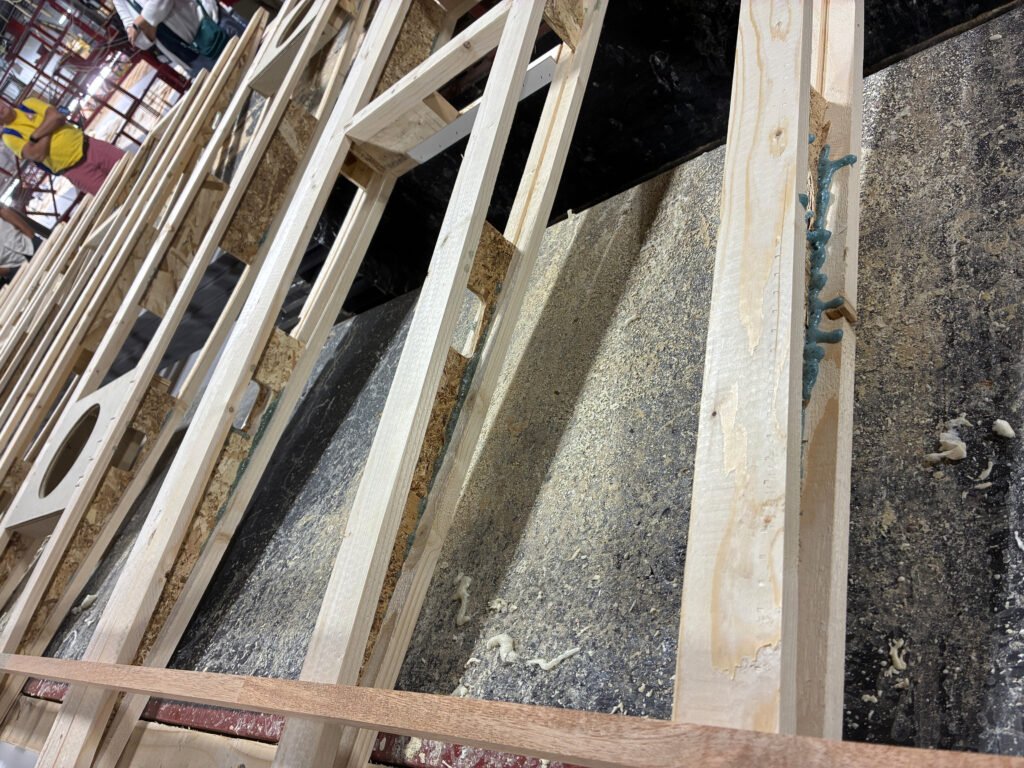
- Rafters made as a complete section versus multiple blocks of rafters
- Rafter top bow runs nearly side to side
- Rafter built similar to engineered joists
- Decking
- Uses 3/8 marine grade OSB
- Roof panels are CNC cut instead of hand cut
- Panels ride on a sliding tray to be set on the roof instead of tossed and wiggled around.
- Roof decking is sanded before laying the top 2 layer roof materials.
- PVC roofing switched in Feb 2026. Changed due to ascetics
- Used to state maintenance free roof. Now states low maintenance roof. This mean that you still need to do the normal cleaning, caulking and maintenance checks.
- 20 year warranty is only on the PVC roofing material not entire roof.
- The screws in the roof front cap don’t need caulking because of the automotive style fabrication. If you see an issue contact Brinkley to assist or provide directions.
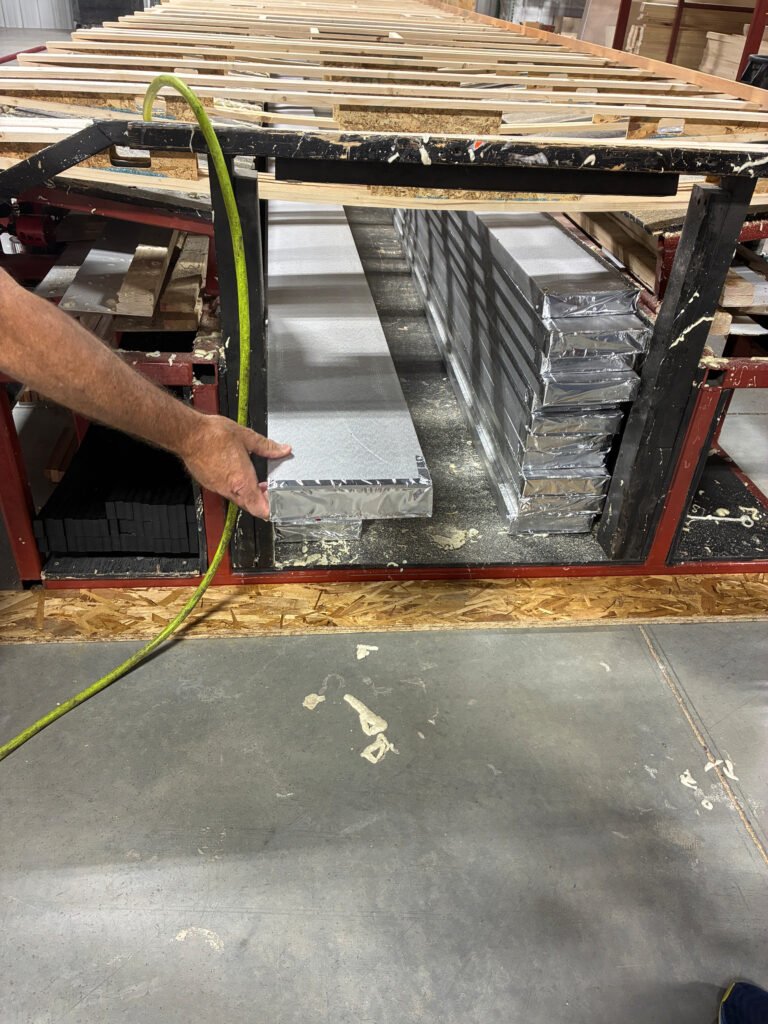
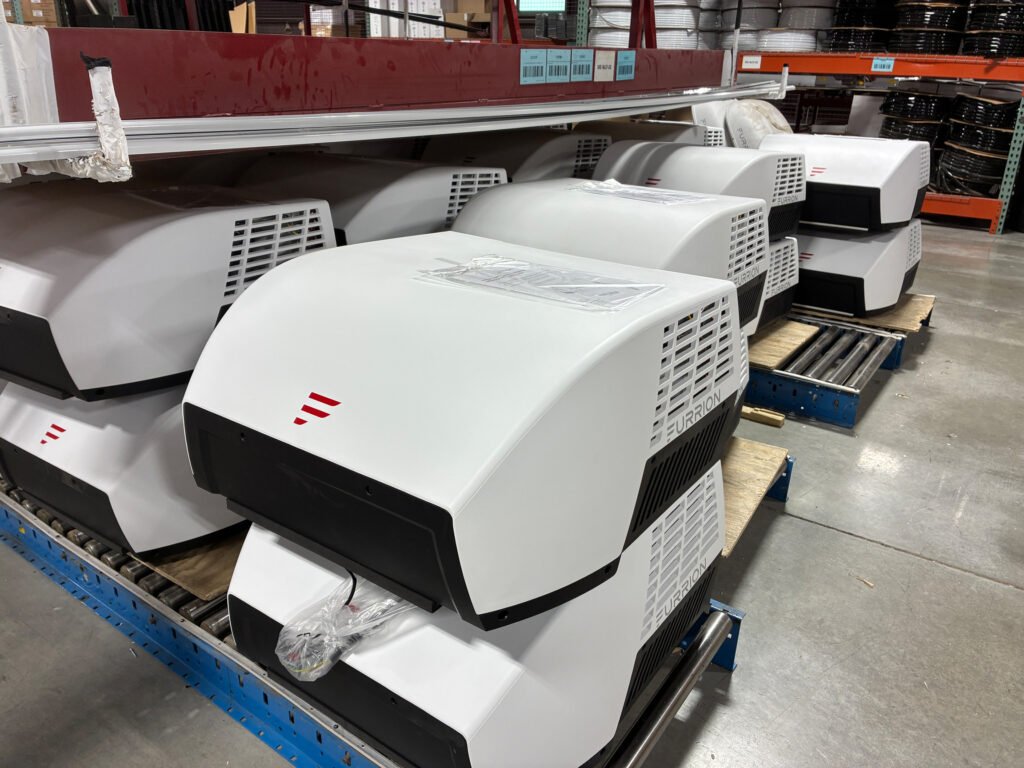
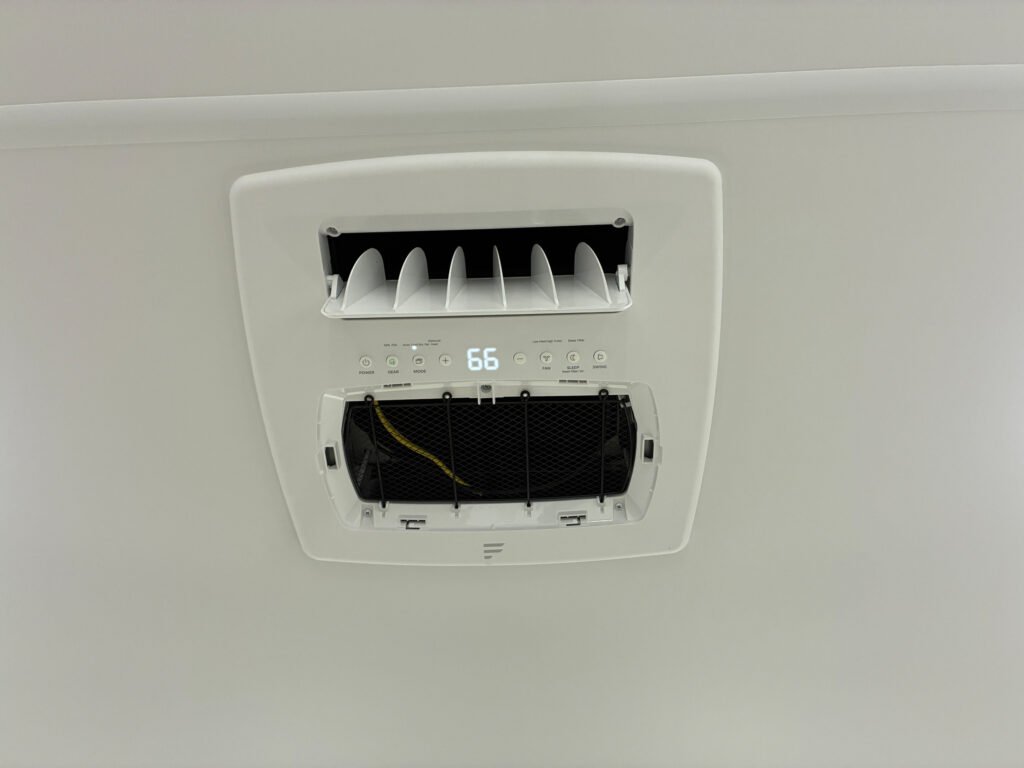
- A/C ducting runs through trusses using a foam core-ish anti-microbial material.
Final Assembly
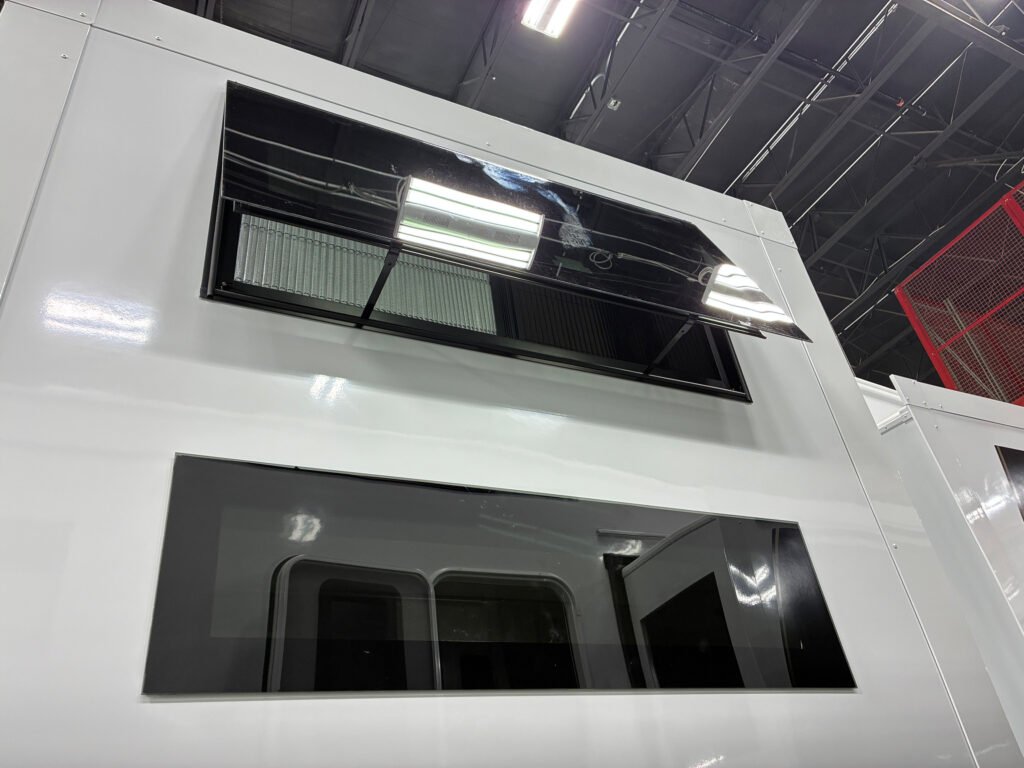
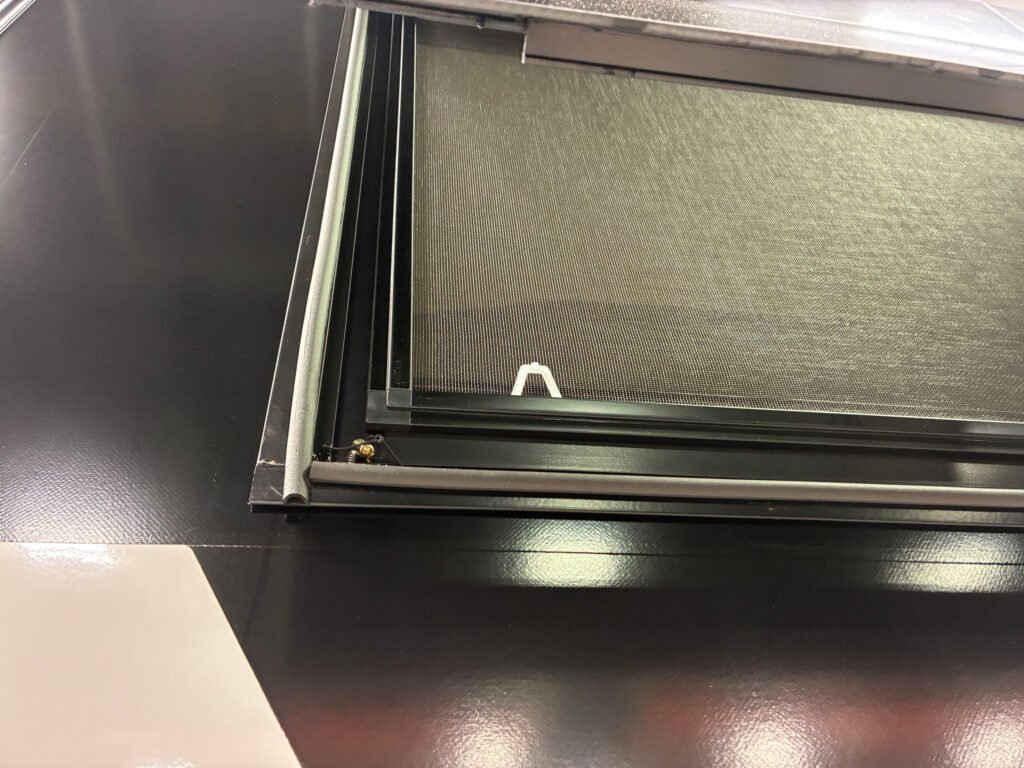
- use Euro Windows, which suck. They are making double pane standard, even through it does not do much, except a little better sound dampening.
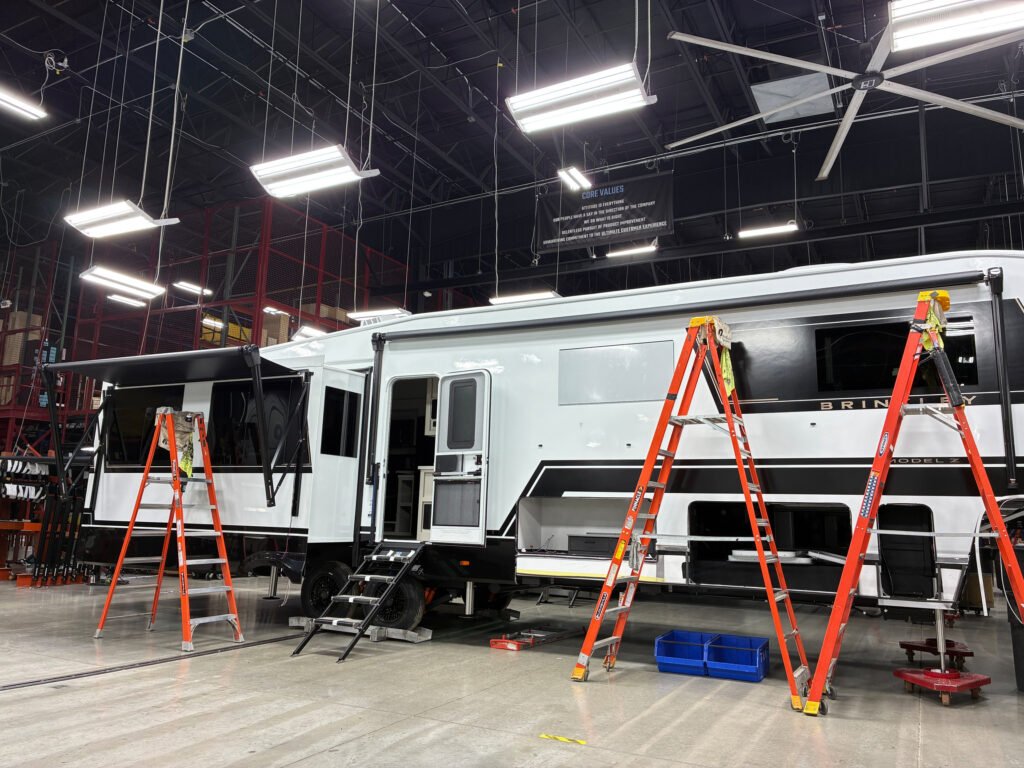
After the roof, they put in the slides, windows, and furniture. All furniture has to fit through the door, it goes in at the end to reduce the chance it is damaged.
Conclusion
- Claiming to be innovative seems to be a bit of a stretch. Looking at the construction, it is largely the same as other RVs. It seems fair to claim they are making incremental process improvements, such as using
- pre-tested wiring harnesses
- counter-sunk screws (Kreig tool-ish) for counter facings
- one piece roof
- CnC cut roof deck panels
- a lift to move roof deck panels
- individually triple powder coated frames
- frame under support for holding tanks
- frames tested to 120% of GVWR
- a 100 miles shake test on every RV
- Claiming that automotive finishes are better seems to be a bit of a stretch.
- These have not been tested for long enough on RVs to know how long they will last.
- They will likely outlast the warranty, meaning the customer is the one to get screwed, if this test is a failure
- Several times they did not tell how to do maintenance, but they said, “Oh, call us for information on how to handle that.”
- It is not clear the owner will be able to do maintenance, or it might be like the windows where you have to drill out rivets.
The feel we got from it is that their construction is maybe 25% better than other 5th Wheel manufactures, but their price is also about 25% higher. Whether it is worth it really depends on whether their claims turn out to be true or the owners are Beta Testers to find the issues with the incremental changes.