
Comlara Park, IL, July 2026
No, this is not hiking wearing animal skins and stone shoes while carrying a club. There is a primitive campground on the other side of the lake with a hiking trail loop. Despite having camped at Comlara Park several times, we have only hiked less than 10 total miles on two trails. There are more than 30 miles of trails in the park. In previous years, we went to attractions in the area and biked around the park roads.
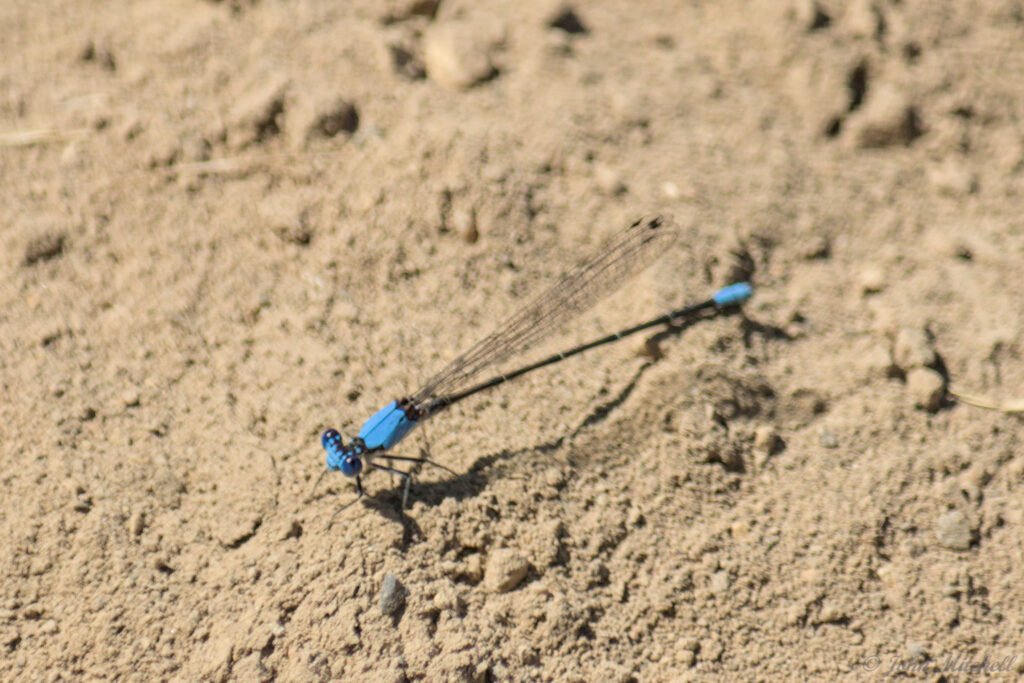
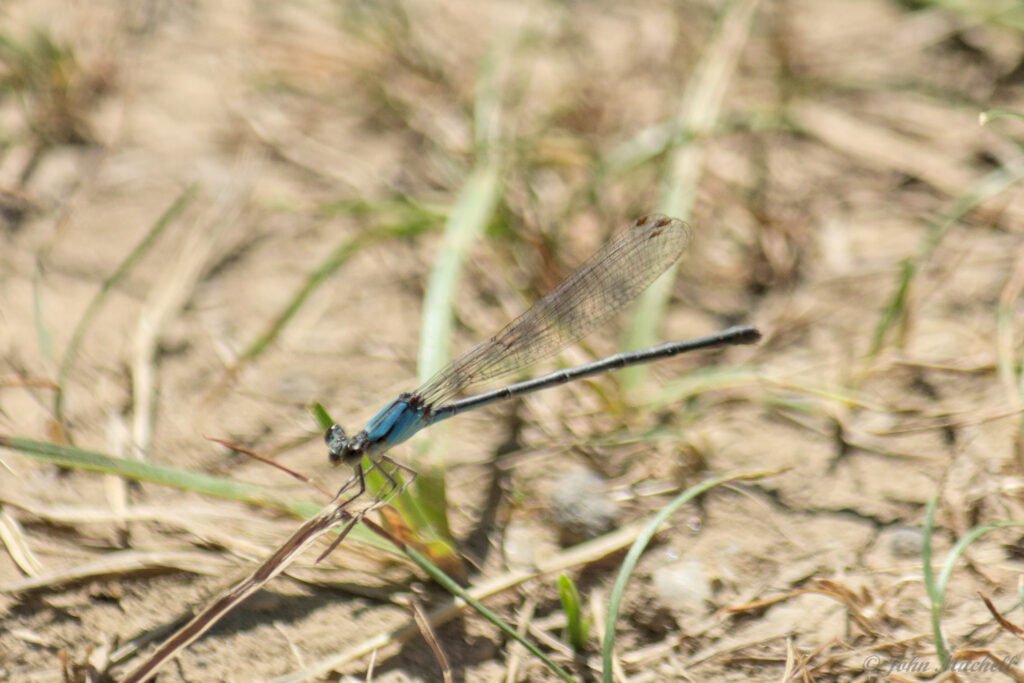
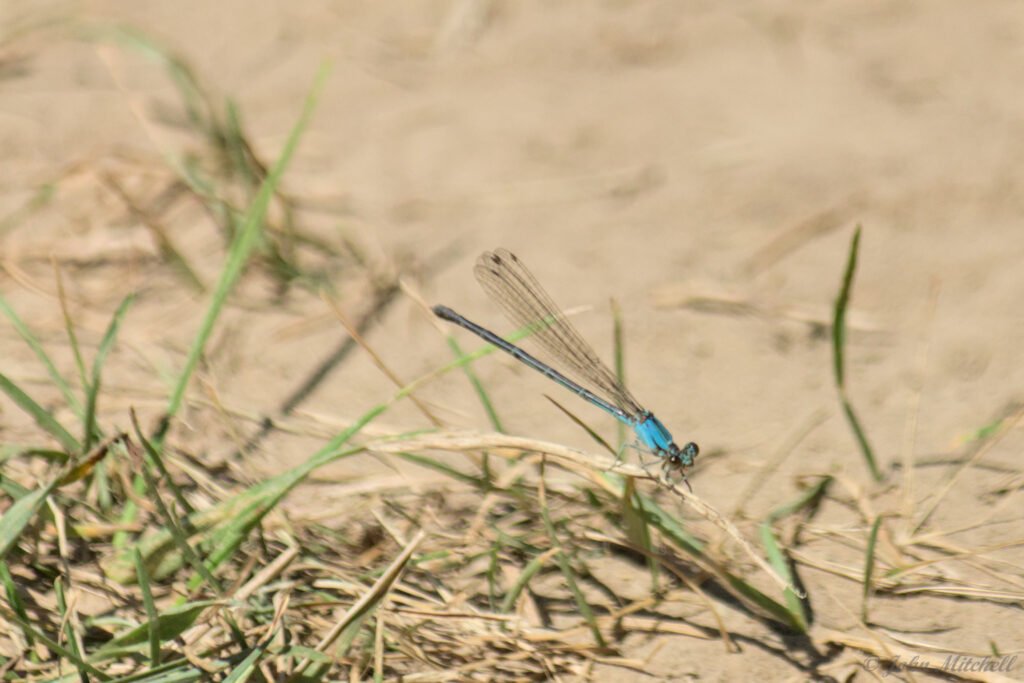
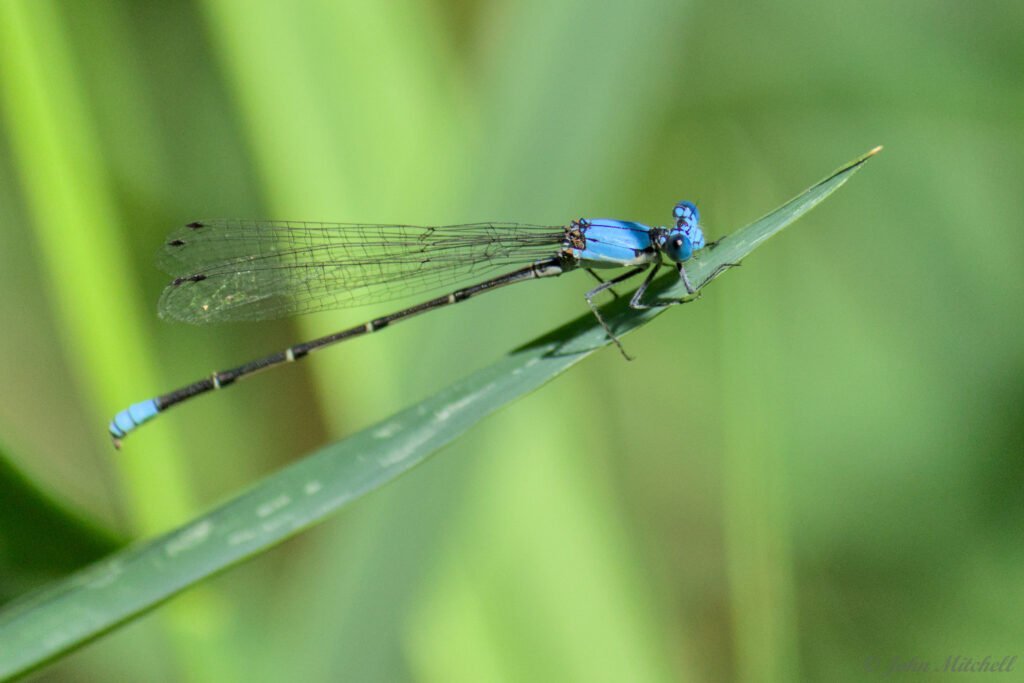
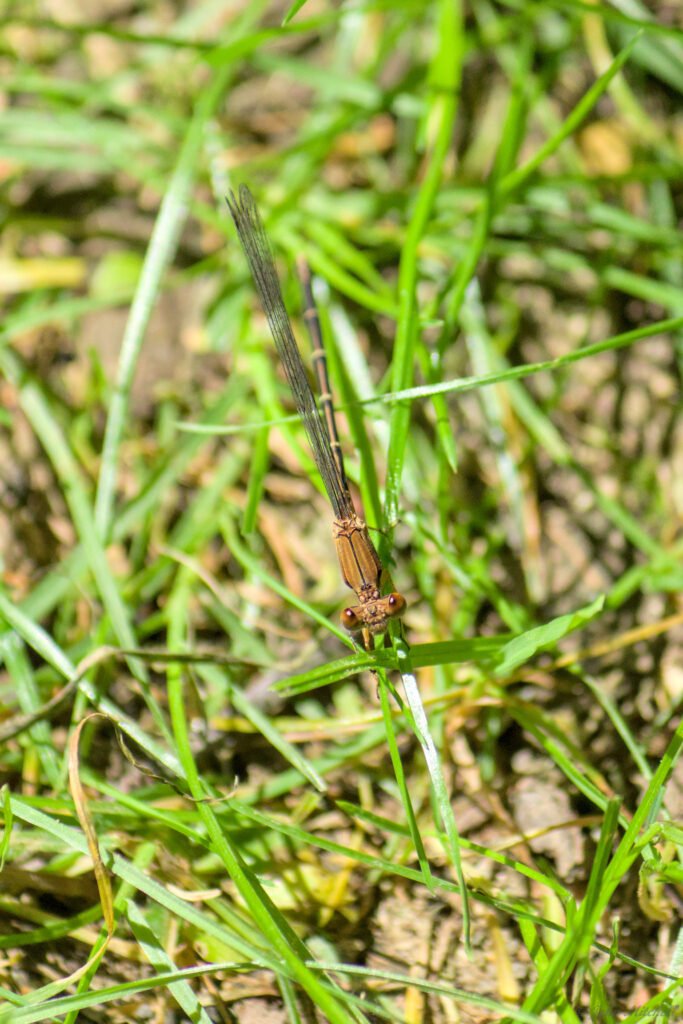
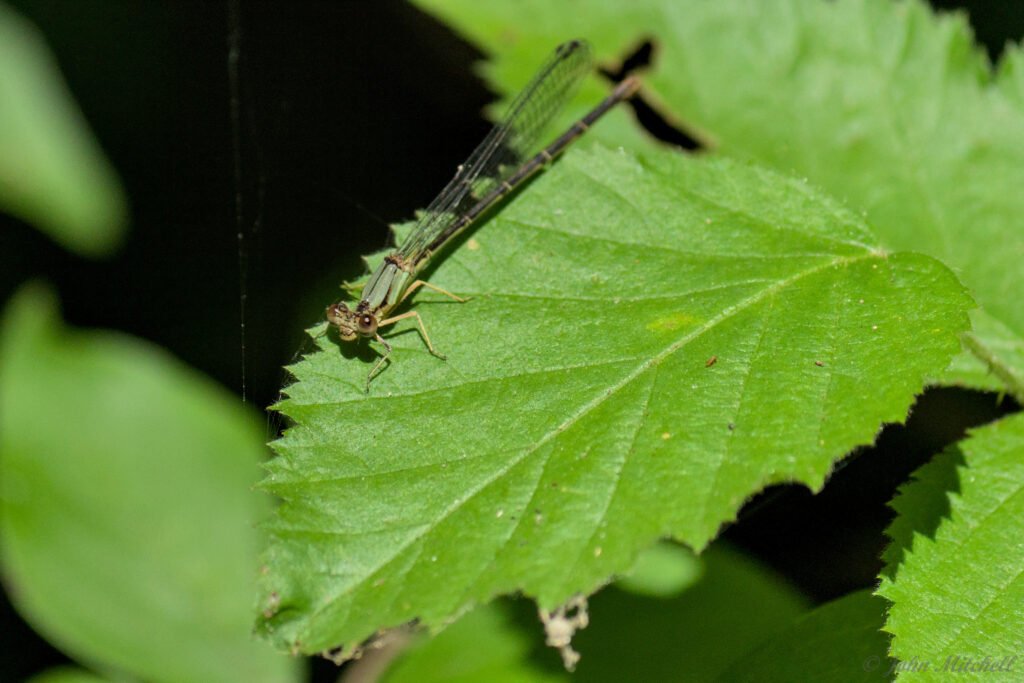
The primitive campground is on the west side of the lake. The reason we chose this was to see the sites and the lake views along the hiking trail. The entrance to the parking lot is odd because it looks like it is just for walking. The parking area is just dirt and grass. As soon as we got out of the car, we were nearly assaulted with blue Damselflies. Sadly, these pictures are a bit blurry. There were at least a half dozen in the parking lot. From left to right, these are:
- Male Eastern Forktail Damselfly (Ischnura Verticalis) (likely)
- Male Fragile Forktail Damselfly (Ischnura Posita) (likely)
- Male Fragile Forktail Damselfly (Ischnura Posita) (likely)
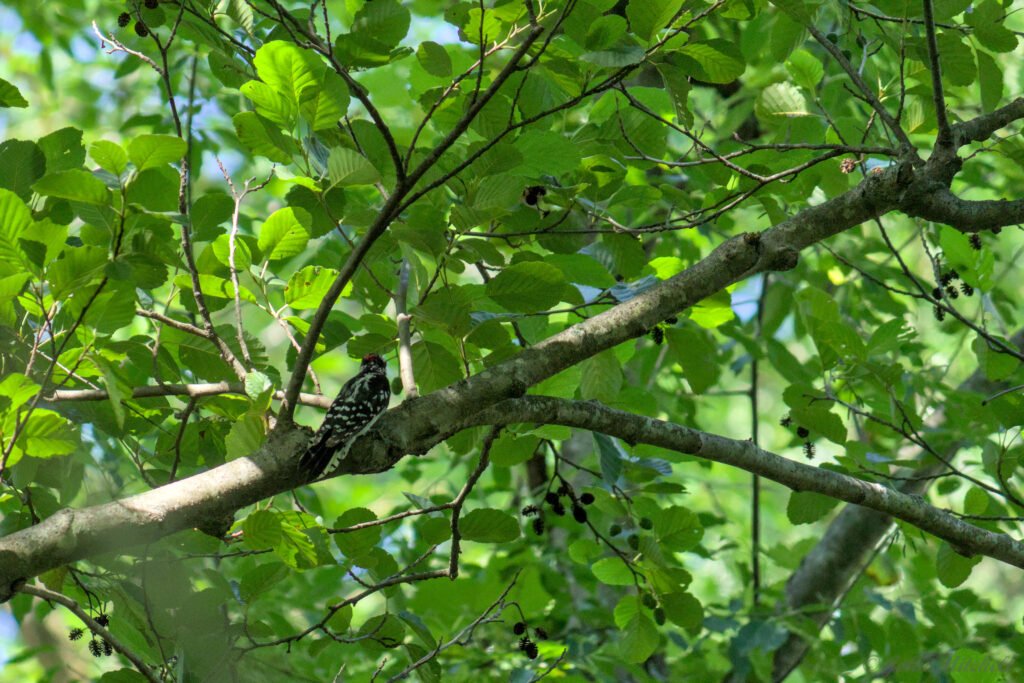
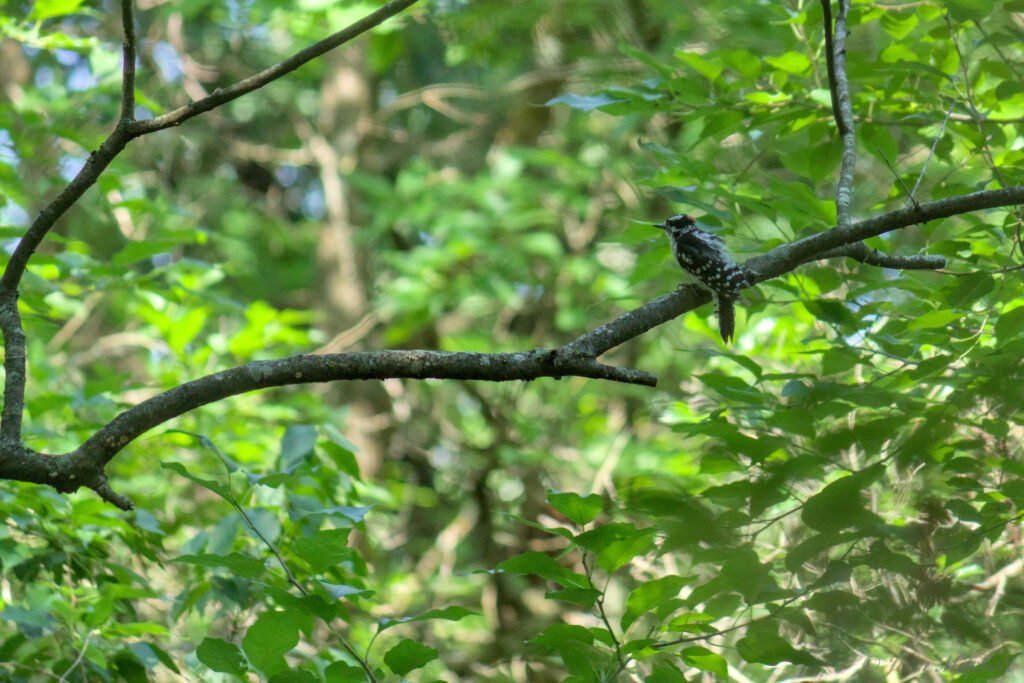
The primitive camping trail is moderately forested for the entire hike. Many trails that run along the water do not have views, and this trail suffered from the same problem. The campsites, on the other hand, did not suffer from this problem. The campsites where at the edge of the lake, usually, at the end of 100 foot spurs off the trail. At one of the first campsites, Kate saw a Downy Woodpecker (Picoides Pubescens).
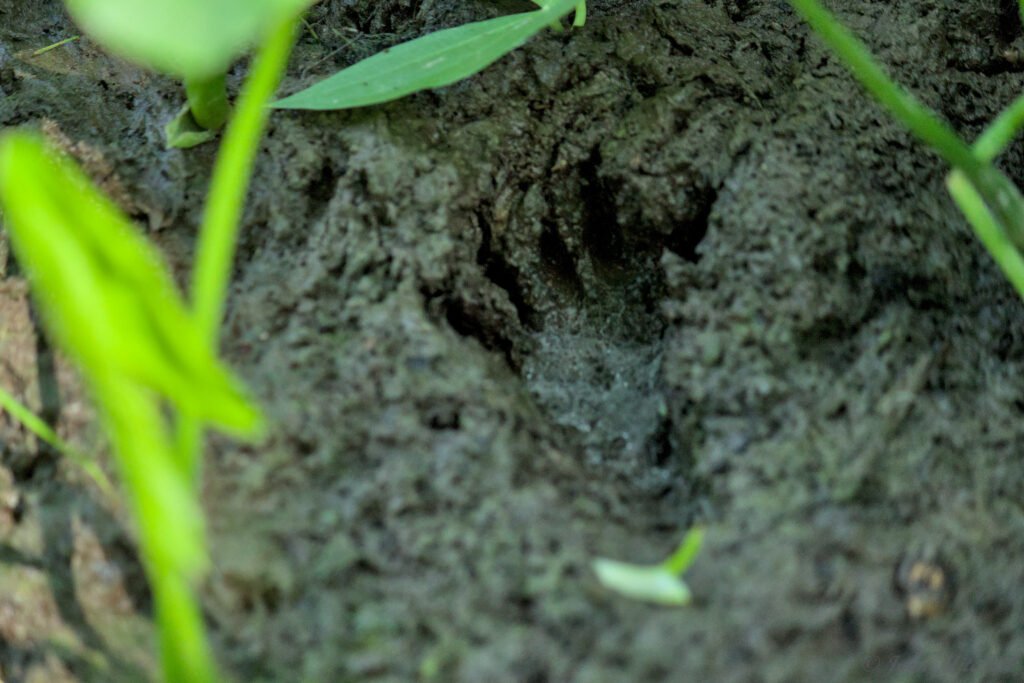
A few campsites later, we found one with a muddy track leading into the lake. This one had raccoon tracks.
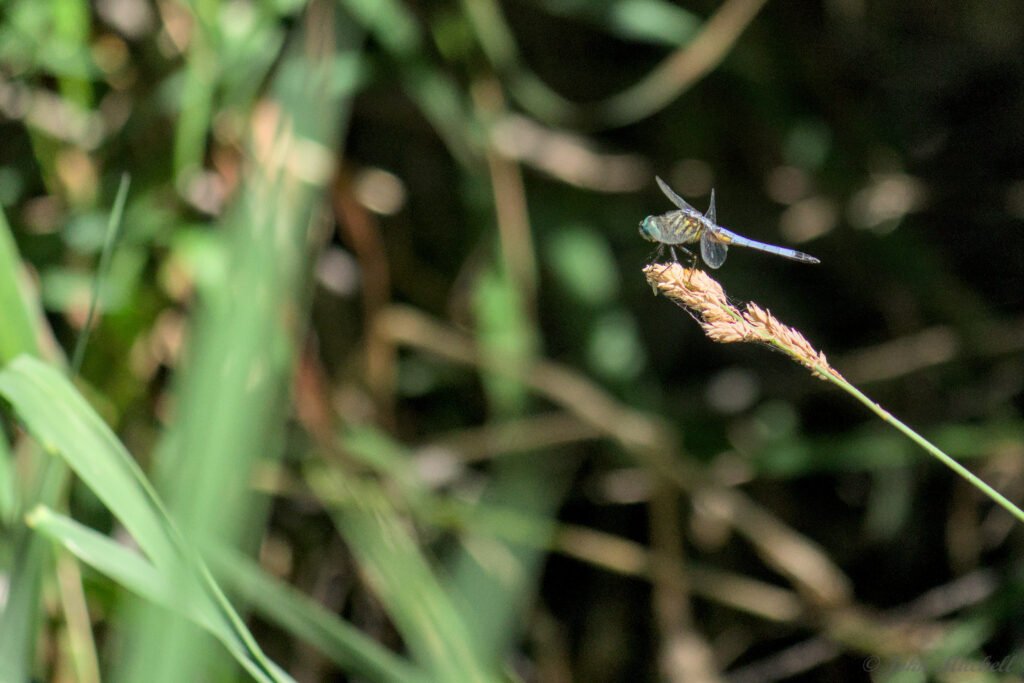
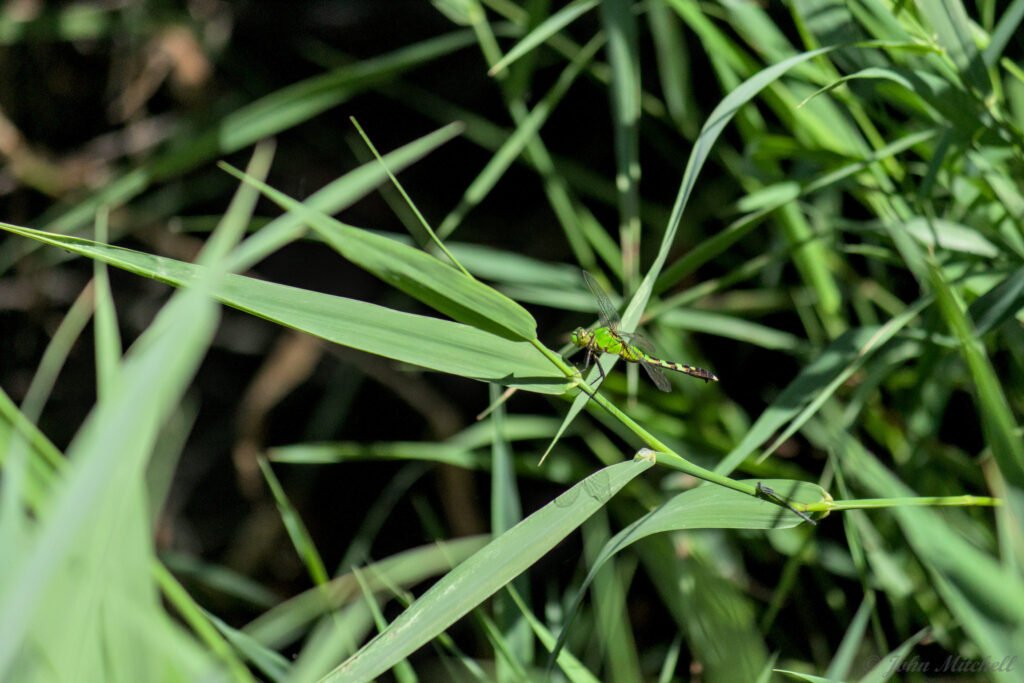
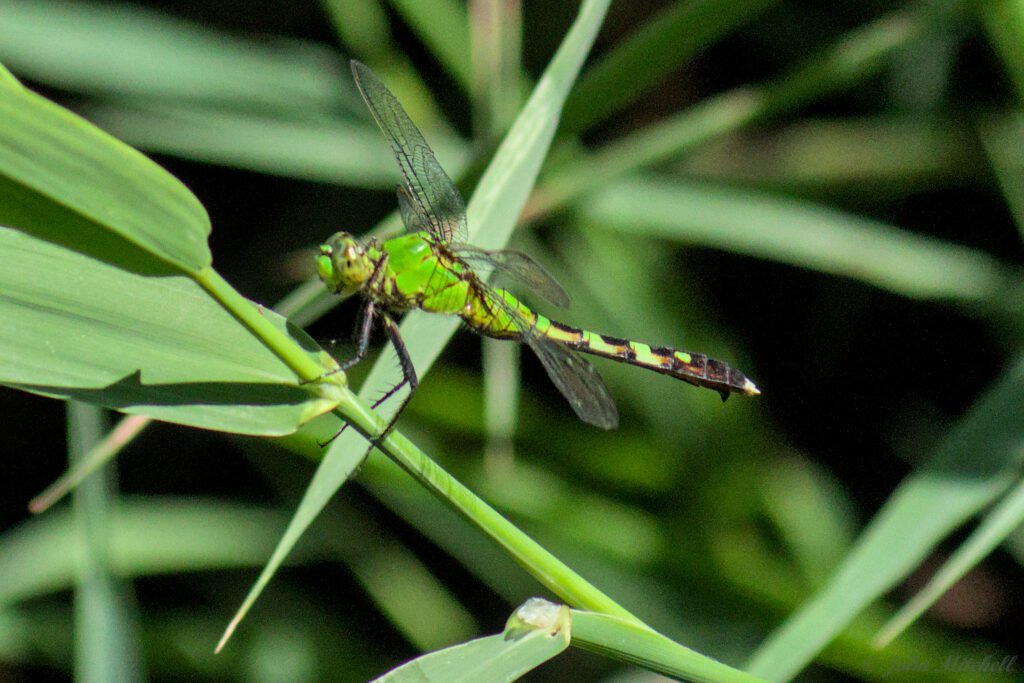
And, a lot more Damselflies. It appears that the camp area is mowed, but it might not be used or maintained much. We also started to see Dragonflies here. Some of them matched the color of the reeds so well that they were hard to find. Starting in the upper left by rows, these are:
- Male Eastern Forktail Damselfly (Ischnura Verticalis) (likely)
- Immature Female Eastern Forkatil Damselfly (Ischnura Verticalis) or Male Orange Bluet Damselfly (Enallagma Signalum)
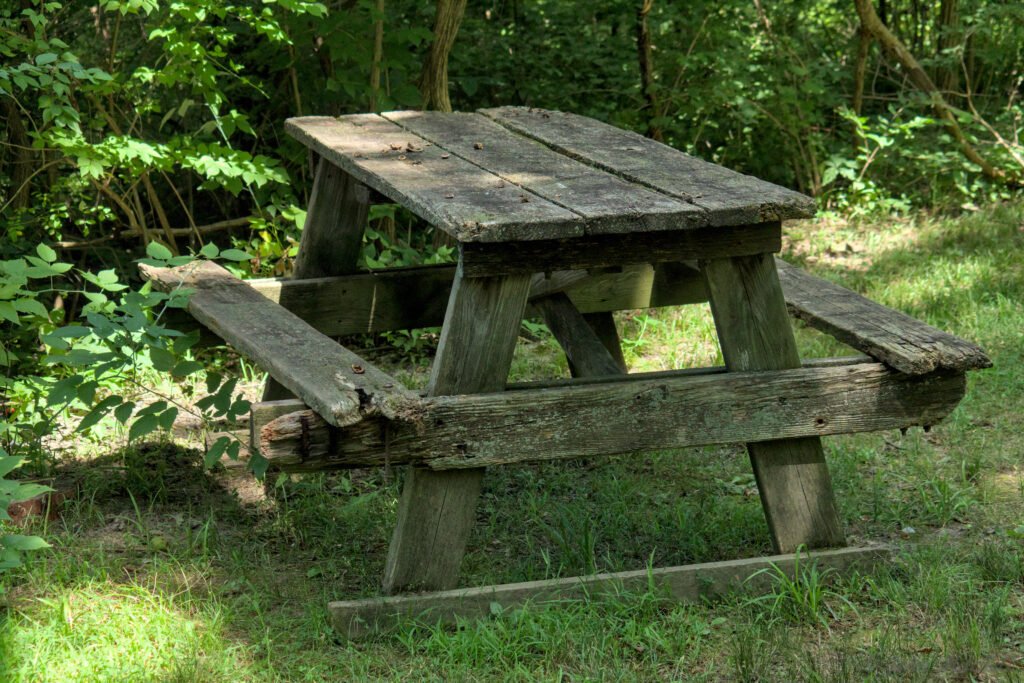
- Male Dilapidated Picnic Table (Tableus Unsafeus)
- Male Blue Dasher Dragonfly (Pachydiplay Longipennis)
- Female Eastern Pondhawk Dragonfly (Erythemis Simplicicollis)
- Female Eastern Pondhawk Dragonfly (Erythemis Simplicicollis)
We saw a new bird at this site. It is the Eastern Wood Peewee (Contopus Virens). The picture is back lit, but we verified it with the picture and song.
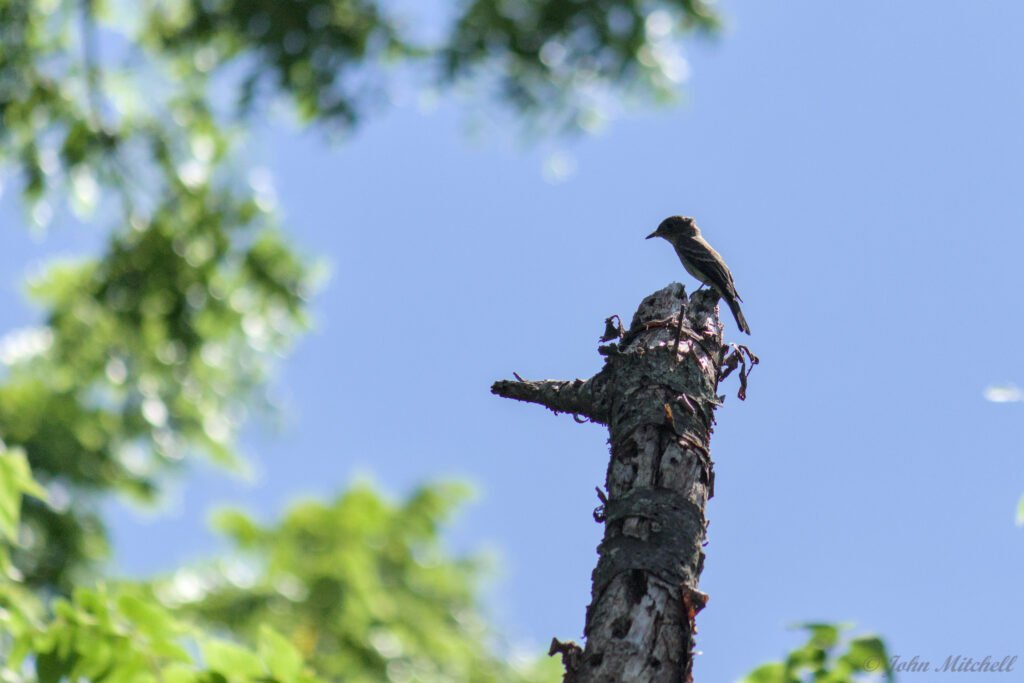
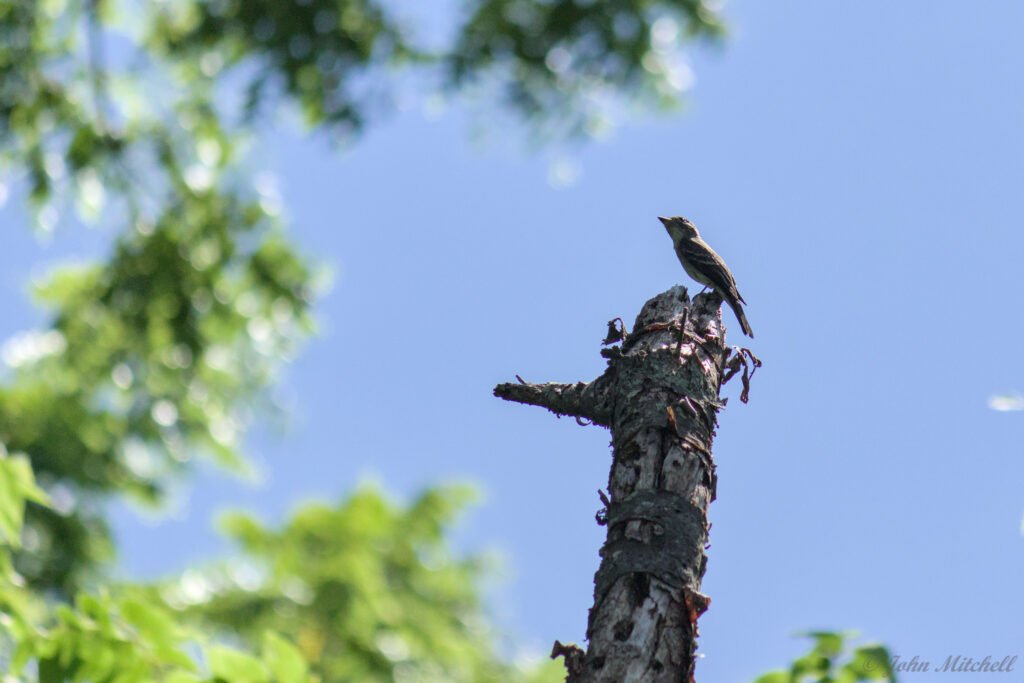
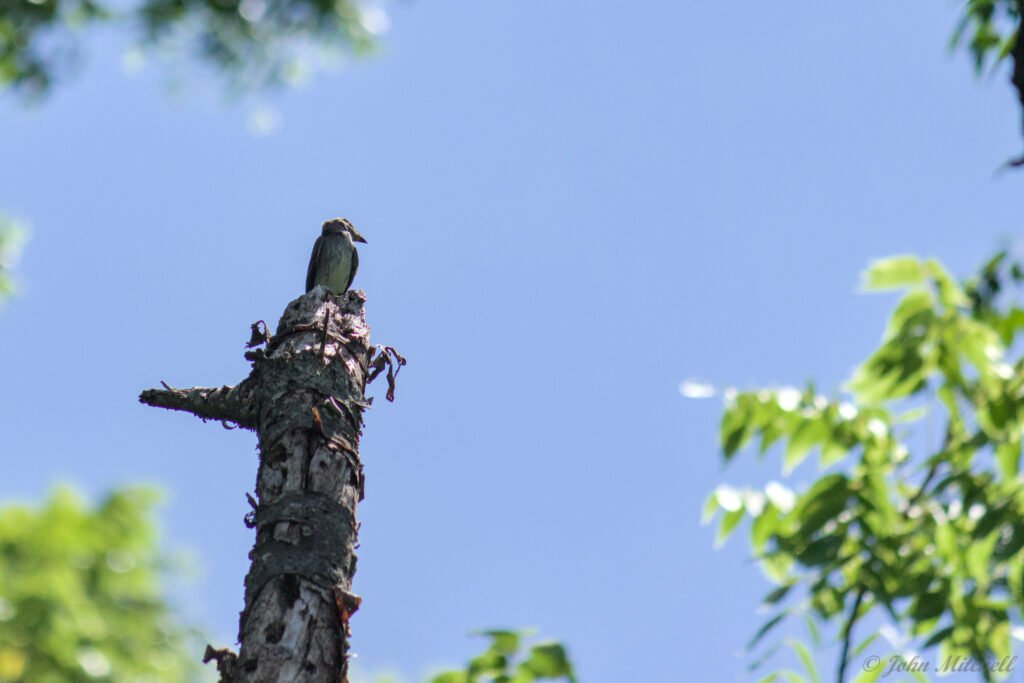
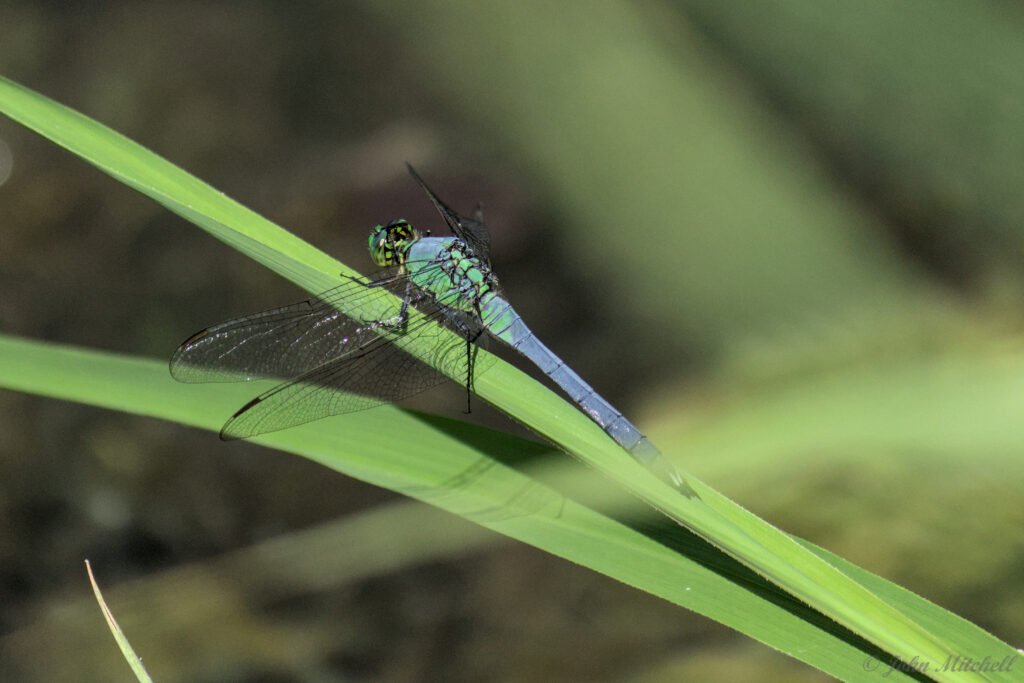
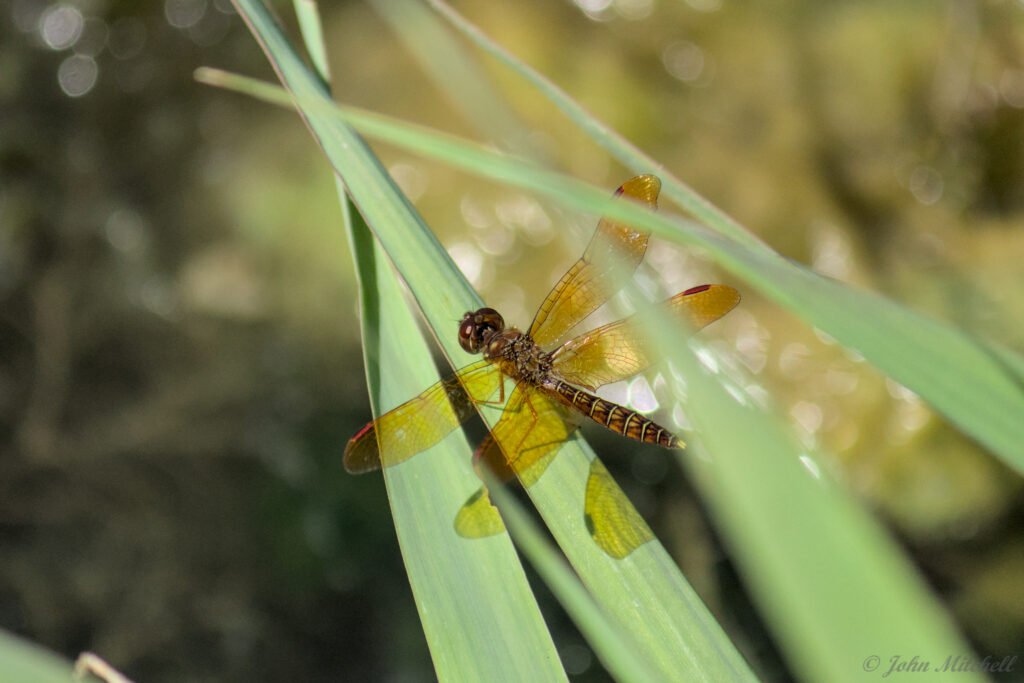
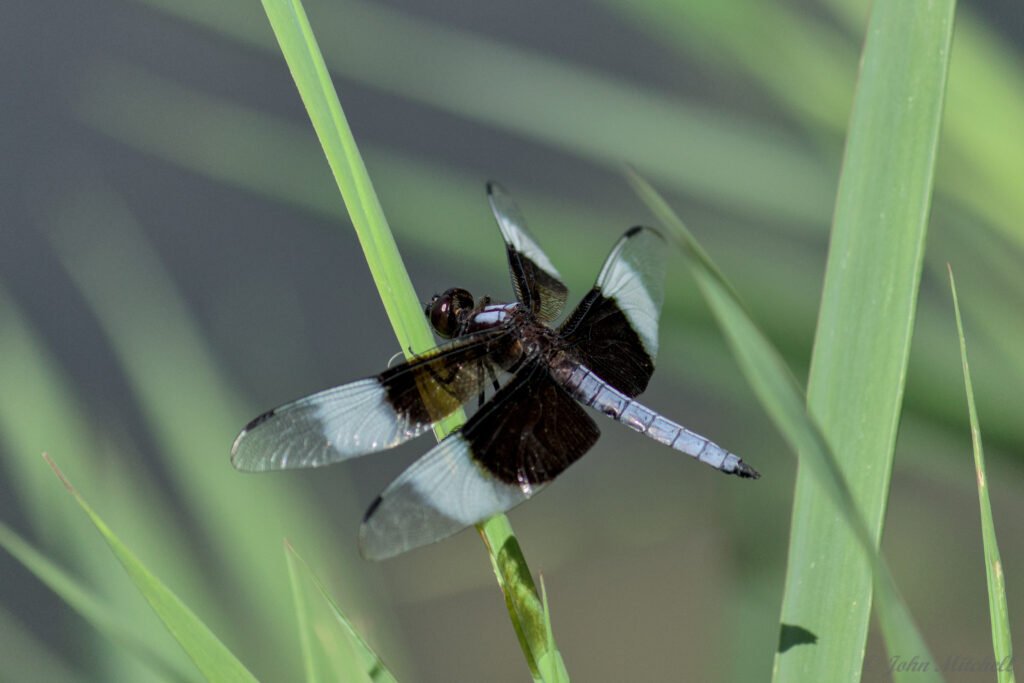
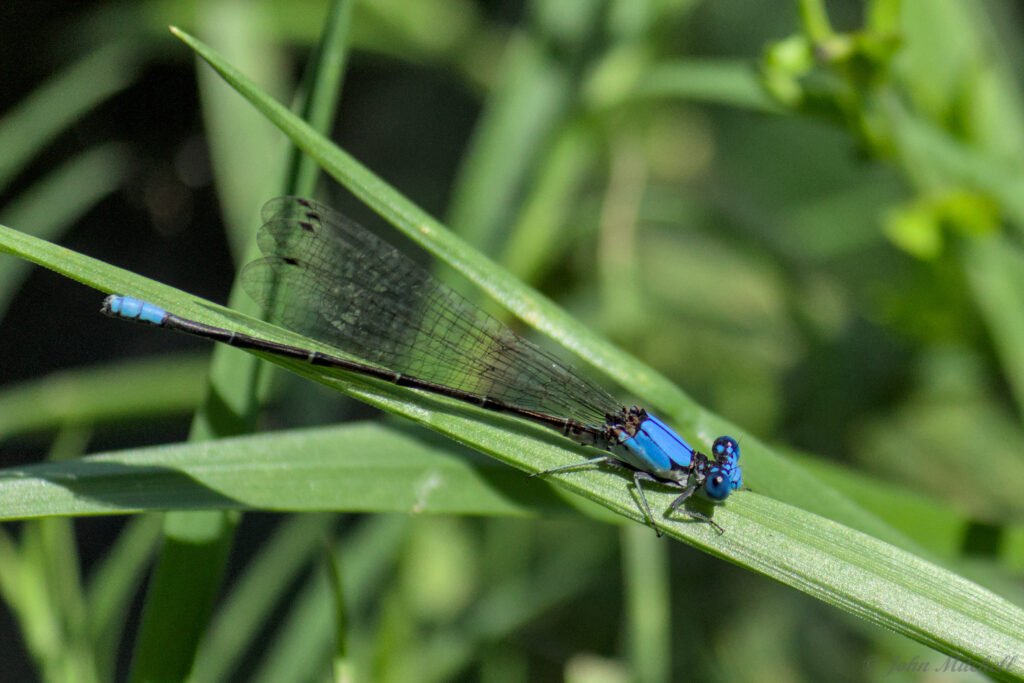
The next couple of sites were still boggy, and the Dragonflies and Damselflies were everywhere. We heard a few frogs and saw motion, but we never actually saw them. Starting in the upper left by rows, these are:
- Male Blue Dasher Dragonfly (Pachydiplay Longipennis)
- Male Eastern Pondhawk Dragonfly (Erythemis Simplicicollis)
- Female Eastern Amberwing Dragonfly (Perithemis Tenera)
- Male Widow Skimmer Dragonfly (Libellula Luctuosa)
- Male Eastern Forktail Damselfly (Ischnura Verticalis) (likely)
- Female Eastern Forktail Damselfly (Ischnura Verticalis) (likely)
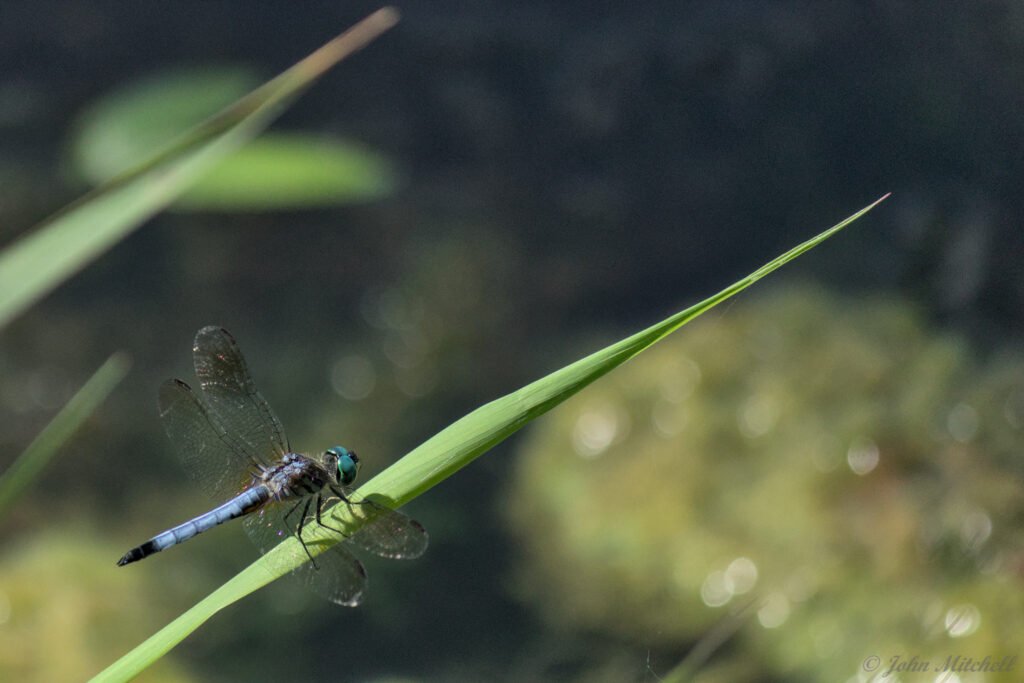
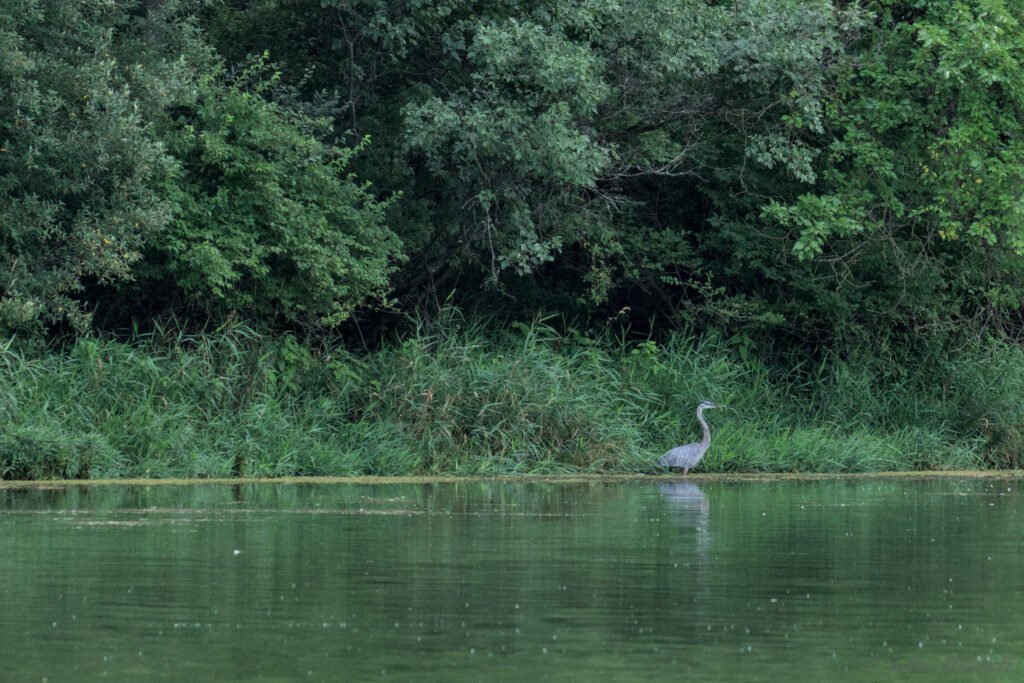
After this point, the camp sites were directly on the lake instead of a boggy inlet. The area was shadier, and there was very little insect life around. We saw a few turtles, but the dove for cover immediately. At one site, Kate spotted a Great Blue Heron (Ardea Herodias) across the lake. At this time of day, there was heat shimmer, even with the small lens.
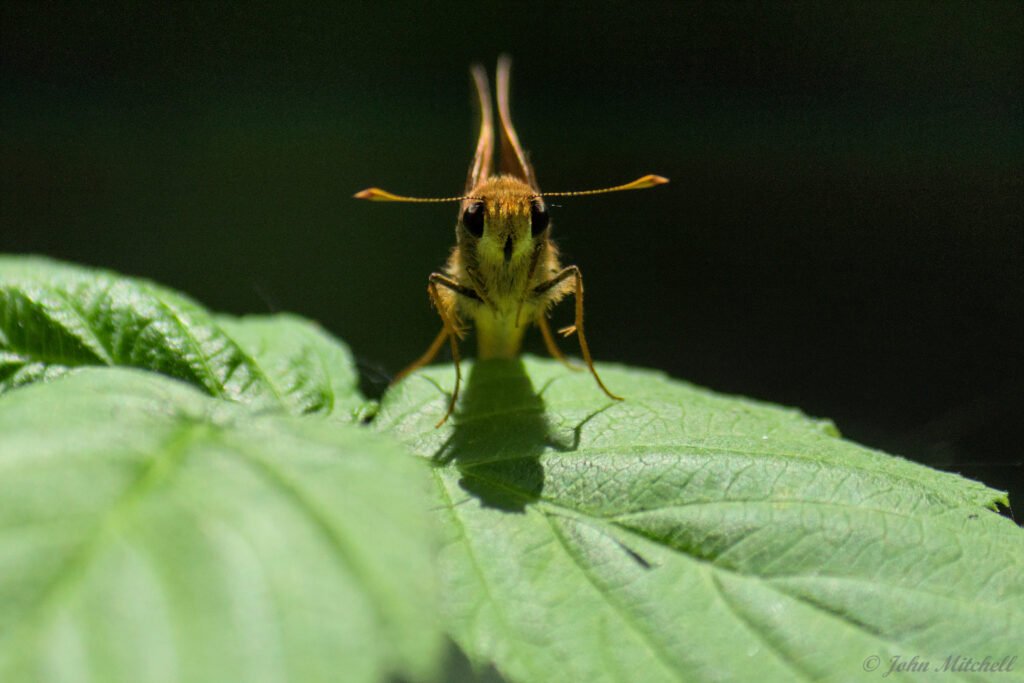
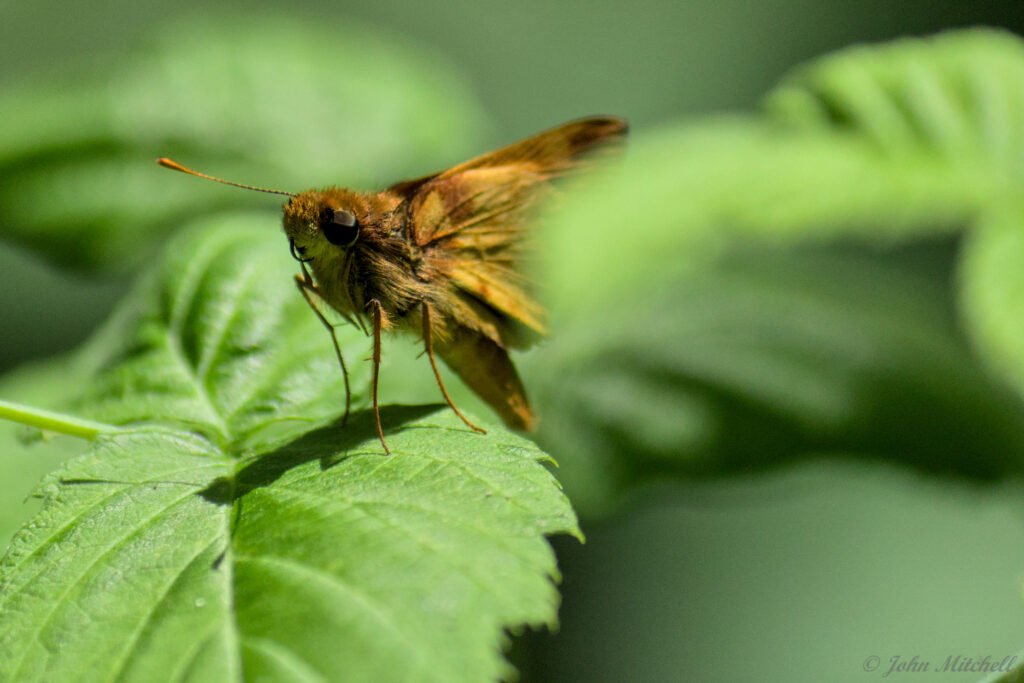
The Primitive Campground Trail is a loop that connected to the Meadowlark trail loop. We continued from the Primitive Campground Trail into the Meadowlark Trail, but halfway in, the Meadowlark trail was insufficiently mowed. Rather than get infested with ticks, we turned back. We were also hungry. On the way back, we saw a very docile and laid-back Zabulon Skipper (Lon Zabulon) Butterfly on a leaf.
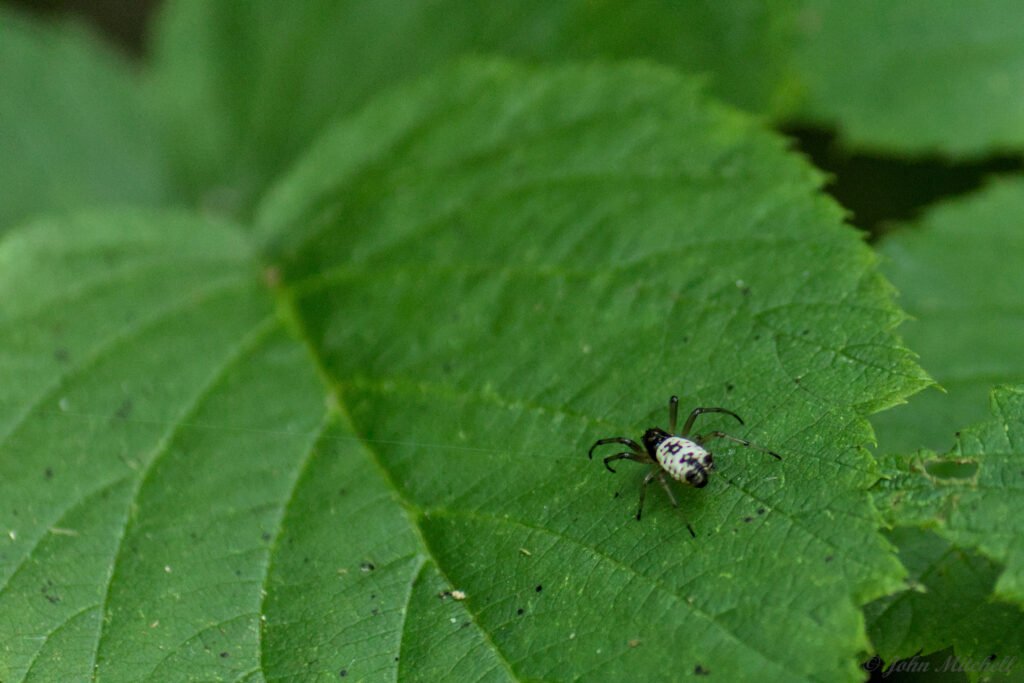
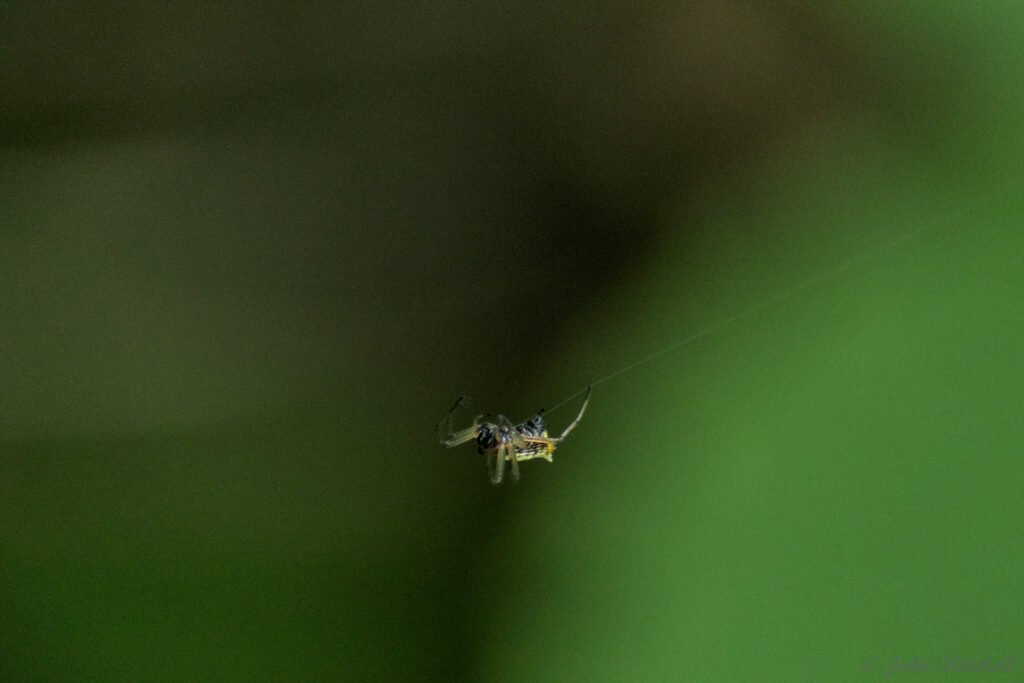
John is Kate’s Spiderman. No, we are not talking super hero. This is more in the vein of Pool Boy, Rat Catcher, or maybe Mine Sweeper. She sends him ahead to make sure that she does not run into any spider webs or spiders. These trails had A LOT of spider webs. She had to clean them off him with her walking sticks a time or two. (For reference, think of The Hobbit when they were in Mirkwood Forest. Kate was Bilbo Baggins, and John was one of the dwarves.) We made it a few hundred yards from the end, before there was a spider. It crawled over the brim of the hat and started dropping down a web. John immediately no dogged this situation and took the hat off to set the spider free somewhere other than his face.
This is a White Micrathena (Micrathena Mitrata). They are harmless (to humans) orb weaver spiders that live in the woods. They build vertical webs to catch flying insects. Unlike many orb weavers, they bite their prey before wrapping it in silk.
The trail is fairly short, and the majority of the trail is just a path with spurs off the side leading to the lake with camp sites. The views of the sites are very nice, since there are no alligators here to come out of the water into your site. Raccoons, on the other hand, might be an issue. The trail is wide and mostly flat. It connected to Meadowlark trail, but the southern half was not mowed. While it is not the longest or most difficult hike, the abundance of dragonflies and damselflies in the summer are worth seeing.