Hudson, IL, August 2026
You know how you have one of those days where everything seems to go awry. That was today’s adventure. Our original plan was to hike the Lakeview Nature Trail around 4 pm. We got out to the trail closer to 4:45 pm. Then, Kate needed a bathroom break and none was nearby. We found a restroom (yeah).
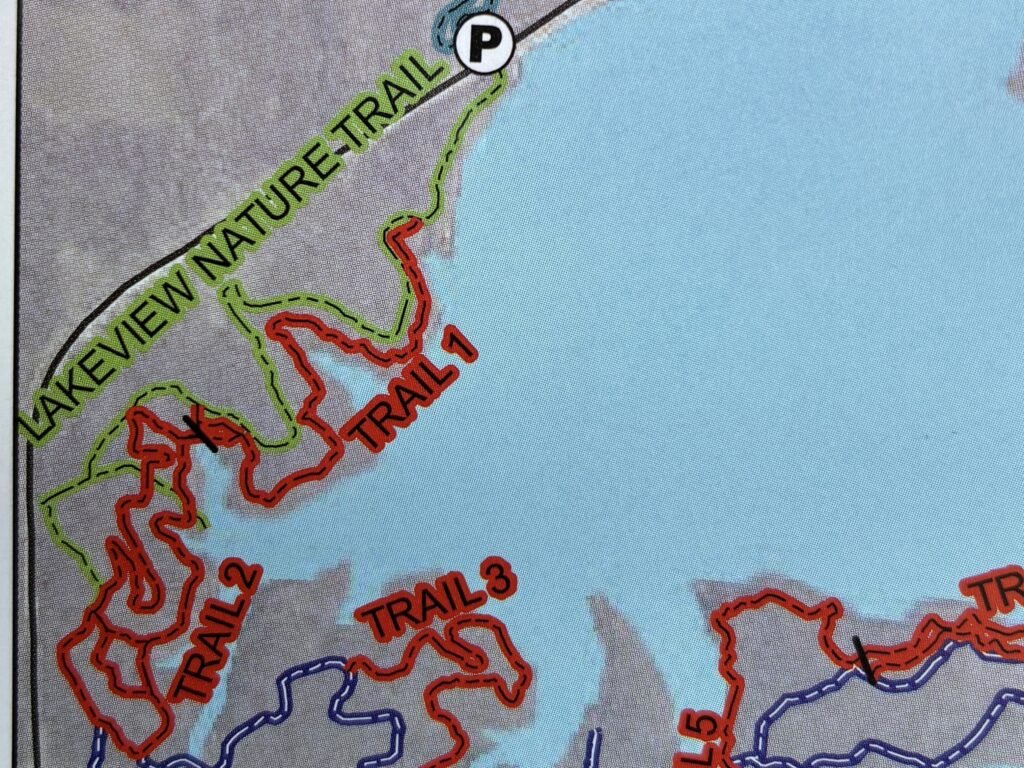
Before the bathroom break, we walked down the road to the spillway and hiked a small portion (100 yards) of the 32 miles of hiking in Comlara Park. The 100 yards was along the Lakeview Nature Trail.
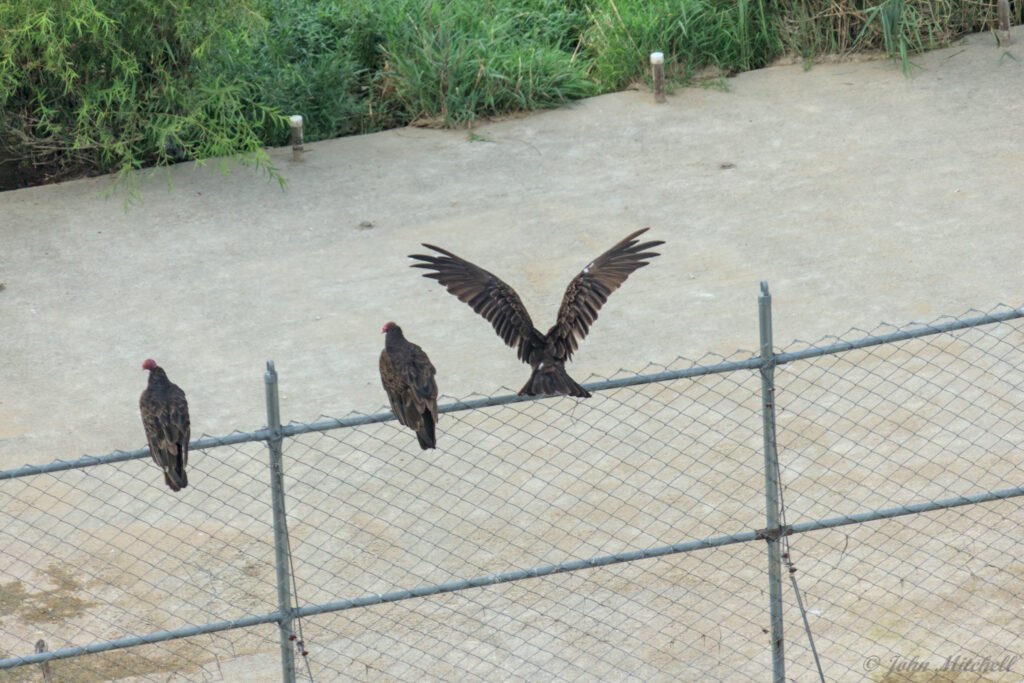
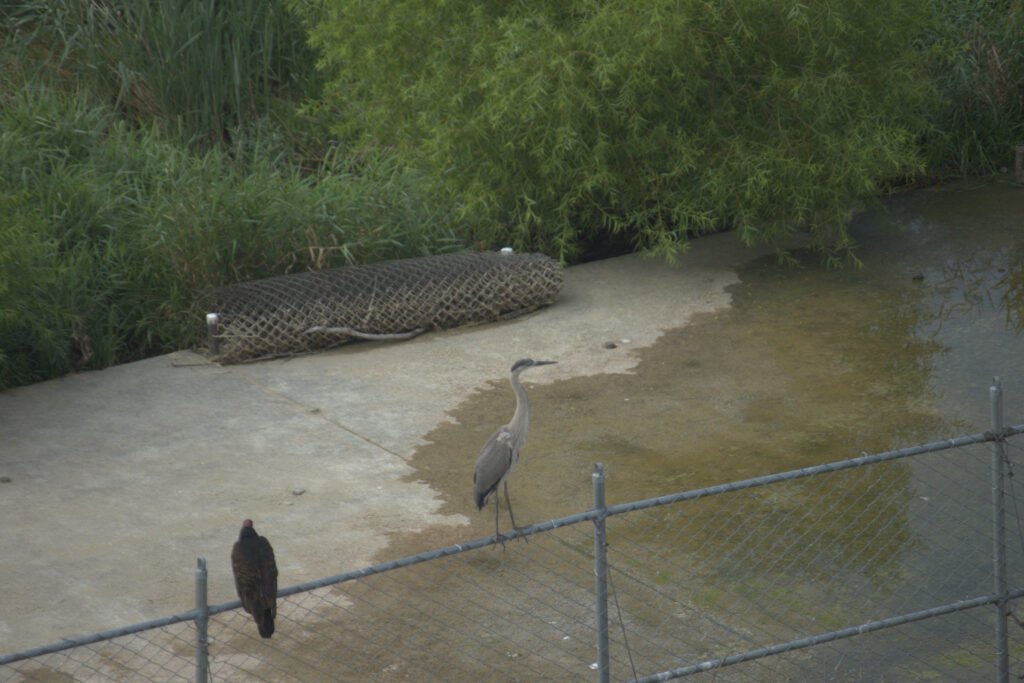
The spillway attracted our attention because we saw a bunch of dark blobs sitting on a fence in the distance. Looking through the camera, these were vultures, so we walked down to check them out. Walking toward the spillway, we saw two Great Blue Herons in the river where the spillway empties.
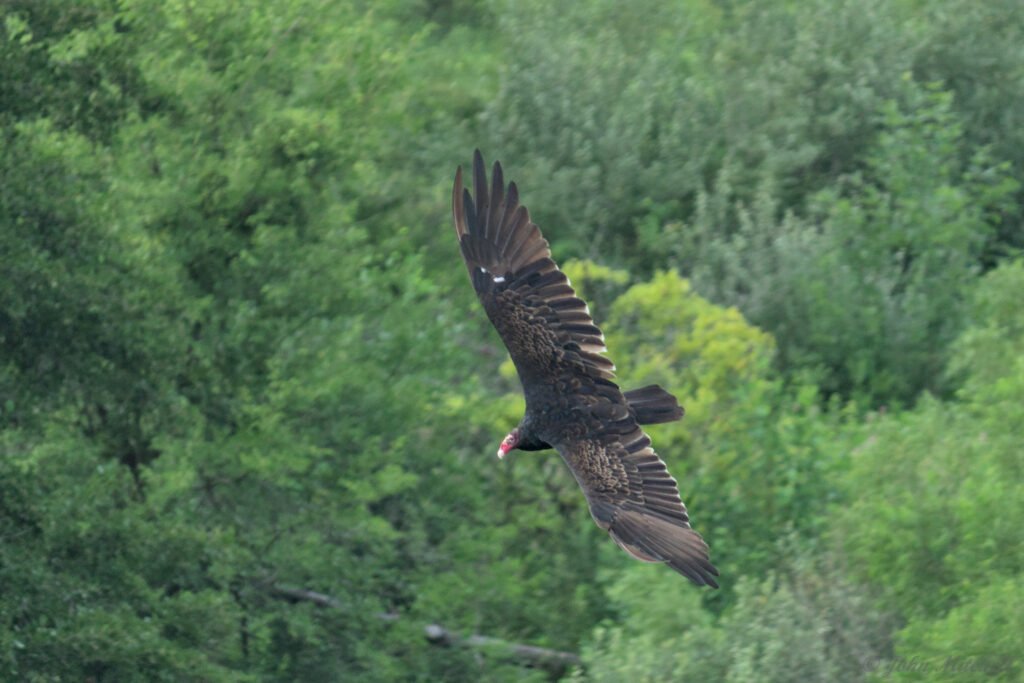
As soon as we got to the spillway, most of the birds started to fly away. It was about 15 Turkey Vultures and 6 Great Blue Herons. We tried to get some flying vulture pictures, but they are slightly out of focus. They still turned out interesting.
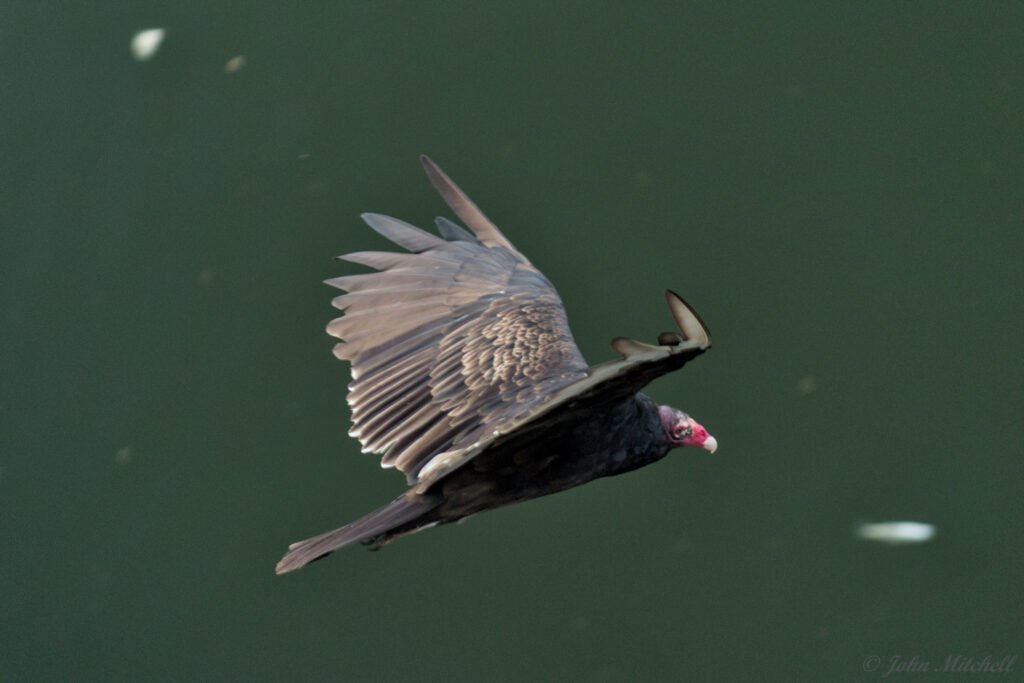
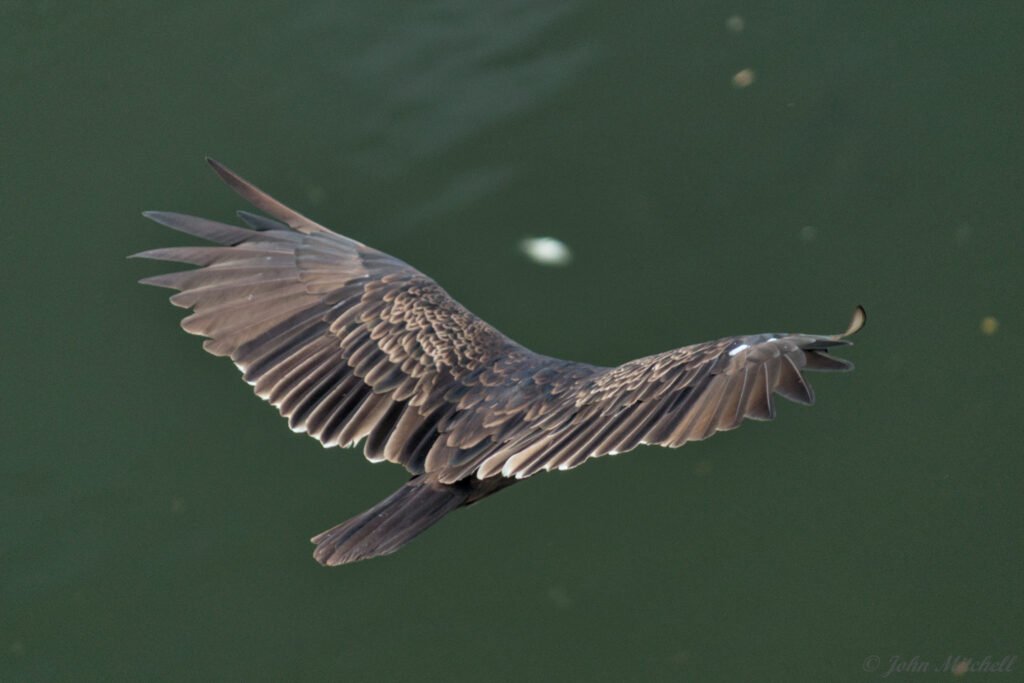
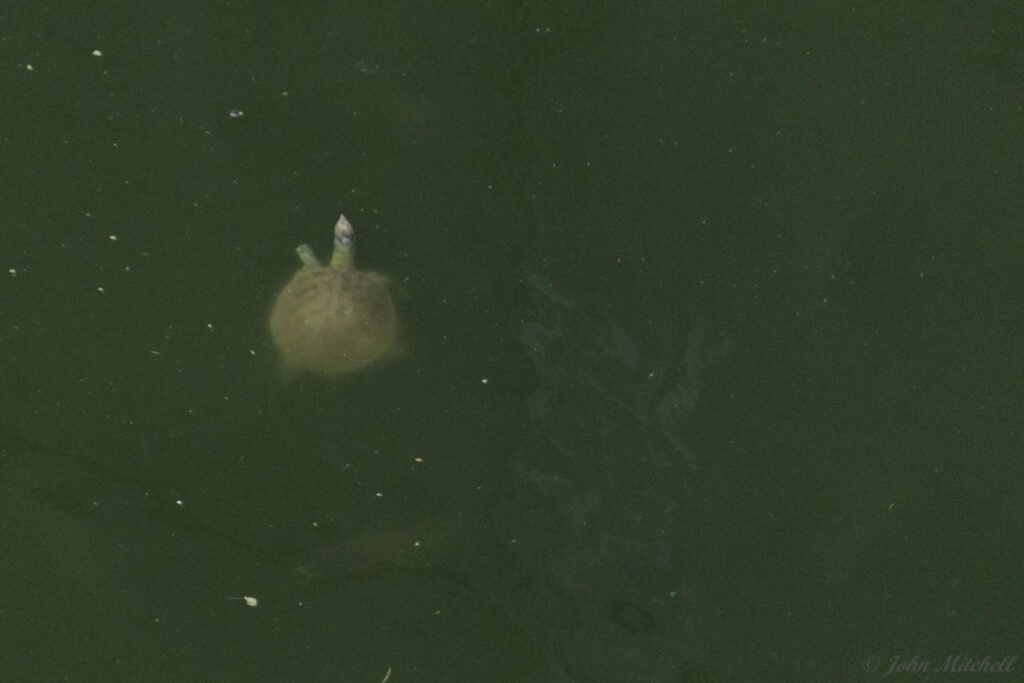
At the bottom of the spillway was a fenced in pool with a lot of little white dead fish (i.e., the white spots in the pictures above). They water was not flowing, so they might have suffocated or be dumped bait. This is what likely attracted the birds and turtles. We saw some typical slider-like turtles and this weird snorkel nose turtle. It is probably a smooth or spiny soft-shell turtle.
We saw some bigger fish in the water, but these might be something, like catfish, that can gulp air to breathe. Some of the birds stayed on the fence. Which of these is not like the others. It this Great Blue Heron slumming?
On the trail, Kate took a few pictures of the lake and trail.
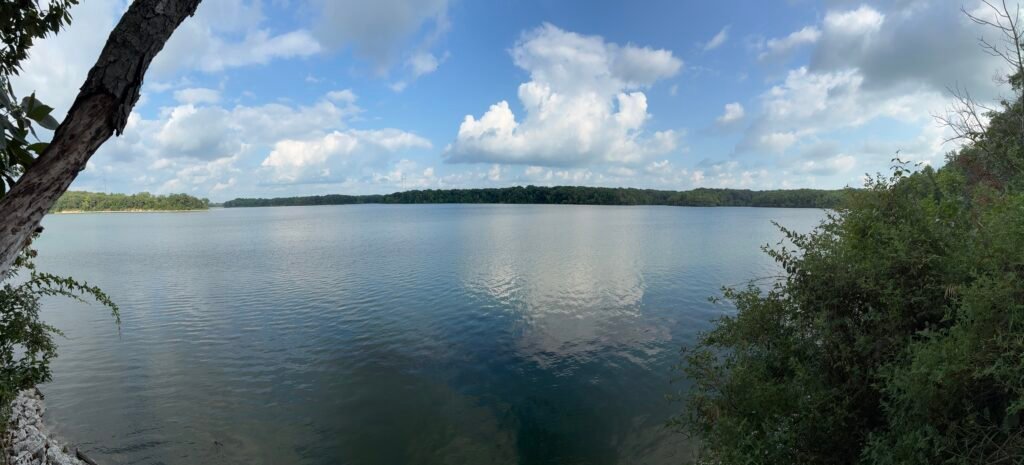
Around the lake, the trail had erosion cliff drop off of about 5 feet. I’m wondering how many people accidentally fell into the water.
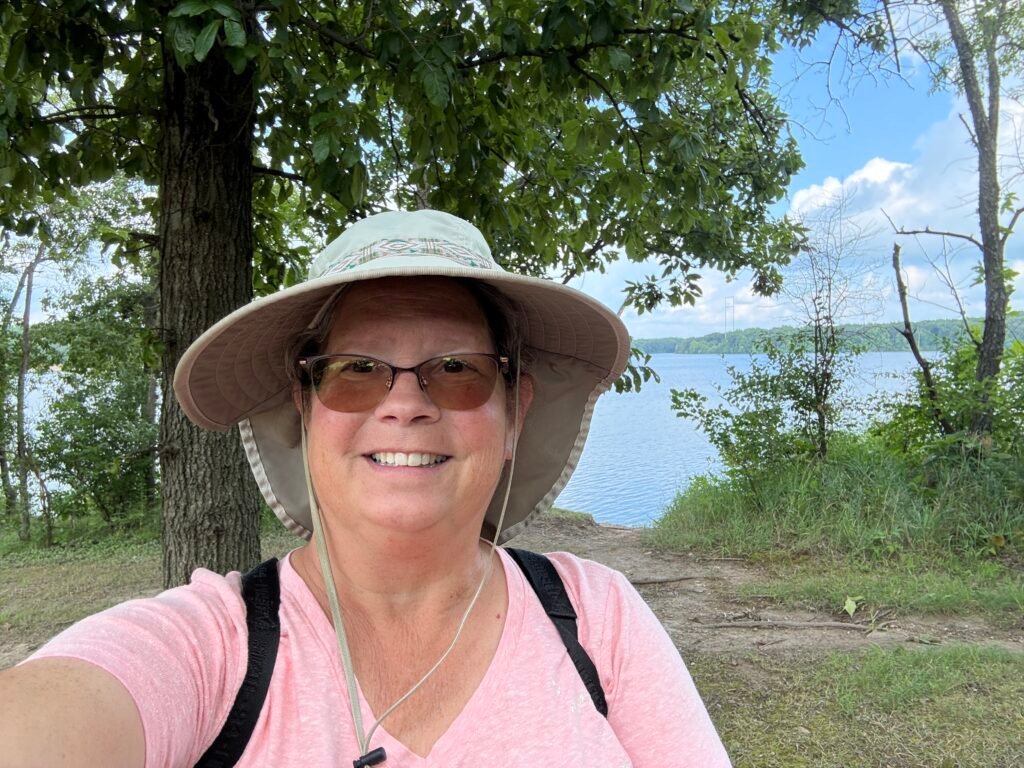
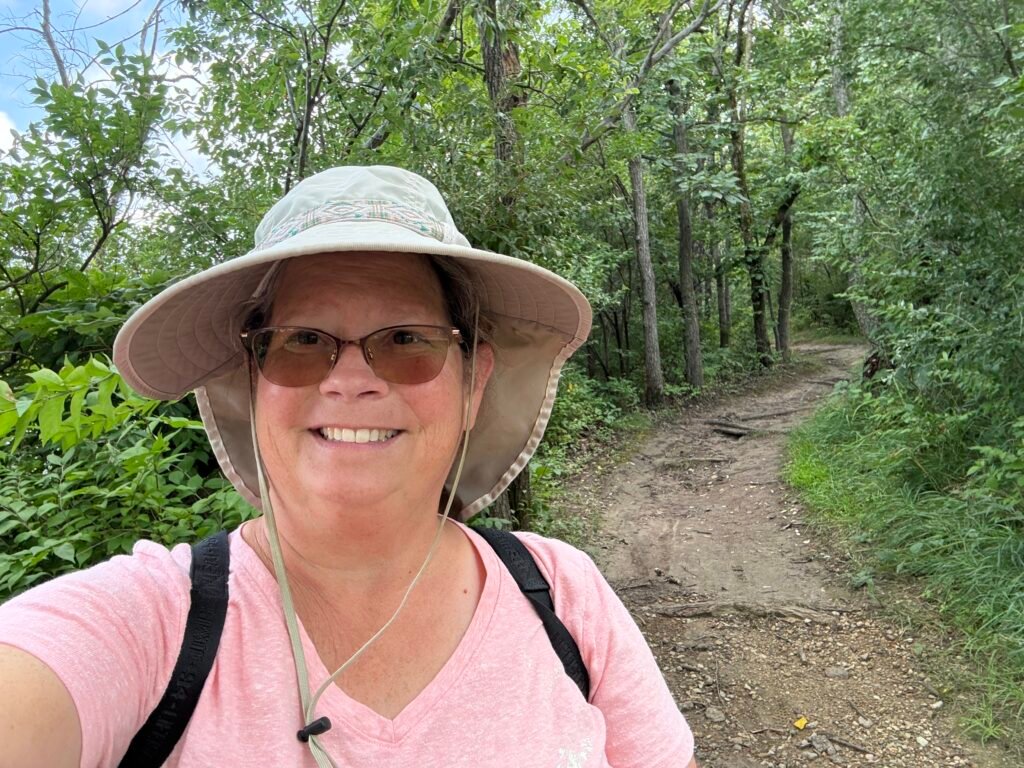
The selfies above were taken as John took pictures of a couple beautiful flowers. The one of the right is focus stacked, but the wind moved some of the petals.
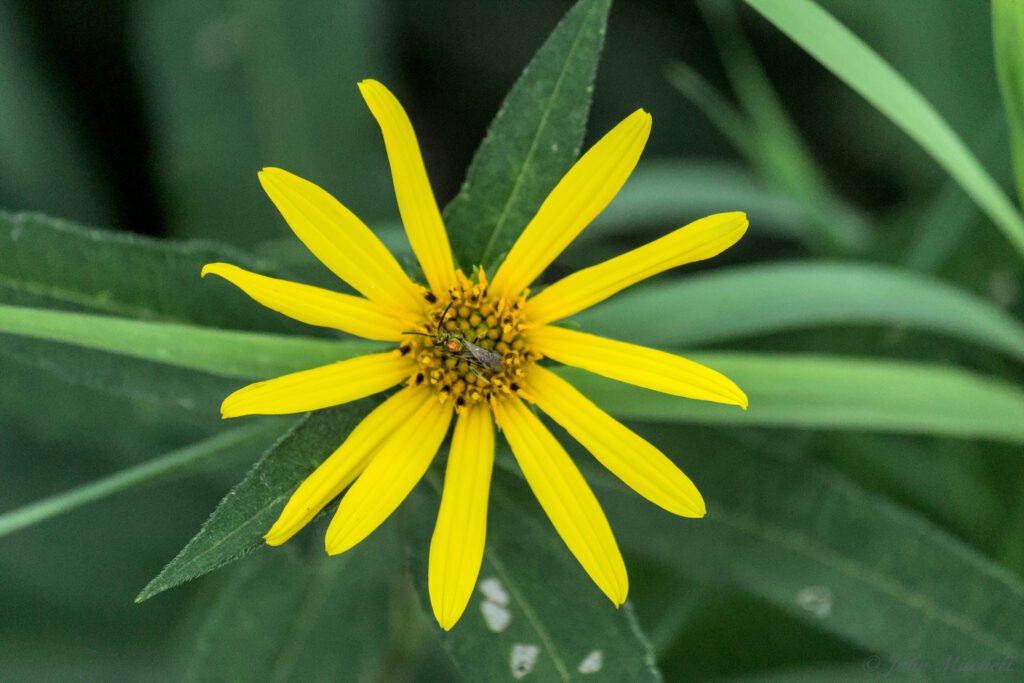
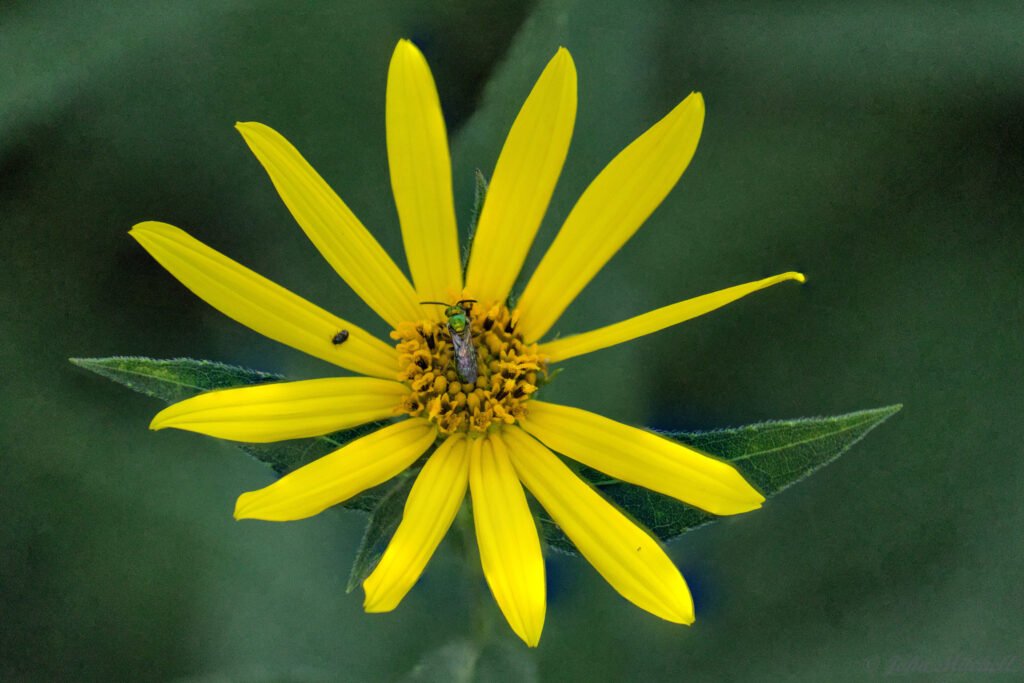
The insect is probably a Pure Green Sweat Bee (Augochlora Pura). The flower might be Whole-leaf Rosinweed (Silphium Integrifolium). It could also be Prairie Rosinwood, Smooth Oxeye, or a relative. There are a large number of rosinweeds, sunflowers, and tickseeds that look very similar.
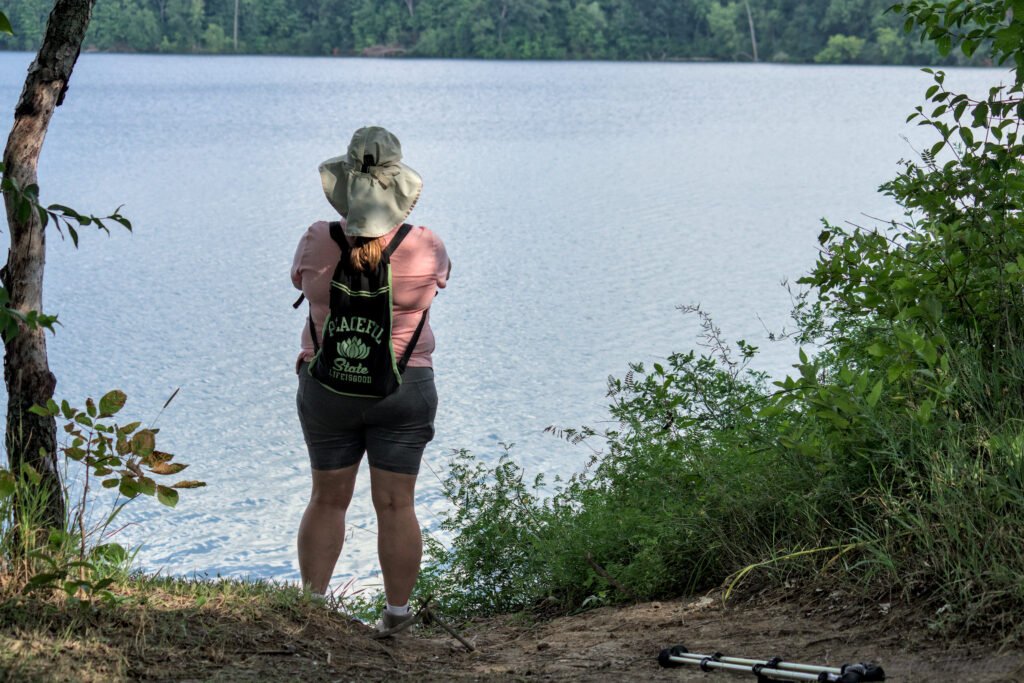
This is a picture John took of Kate taking a panorama.
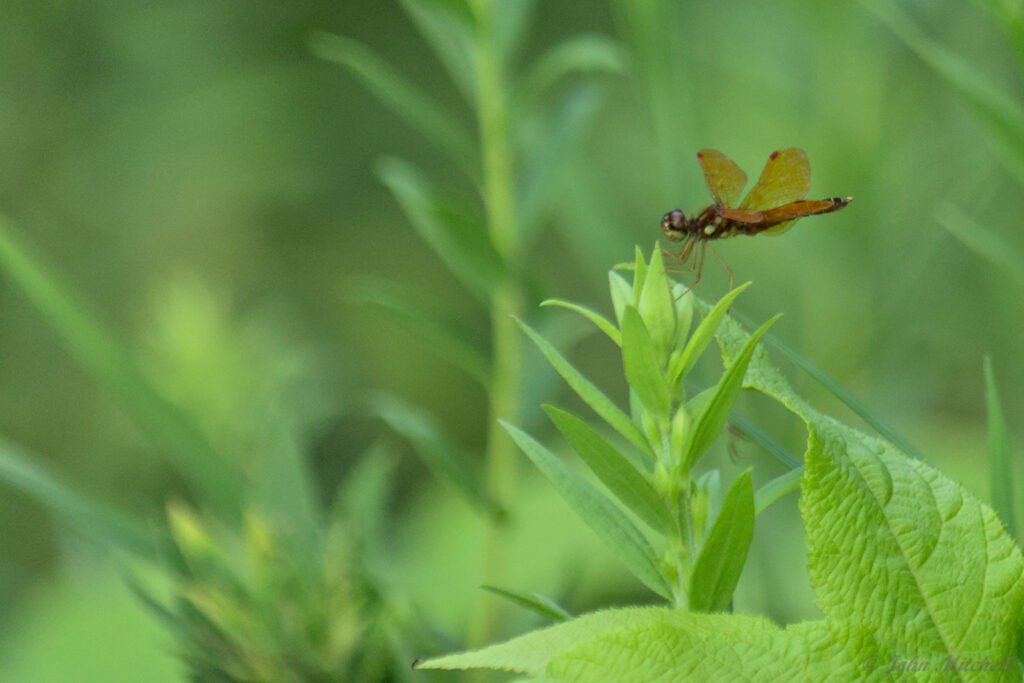
At the park office, there is a bathroom and a pollinator garden. This is another Eastern Amberwing Dragonfly.
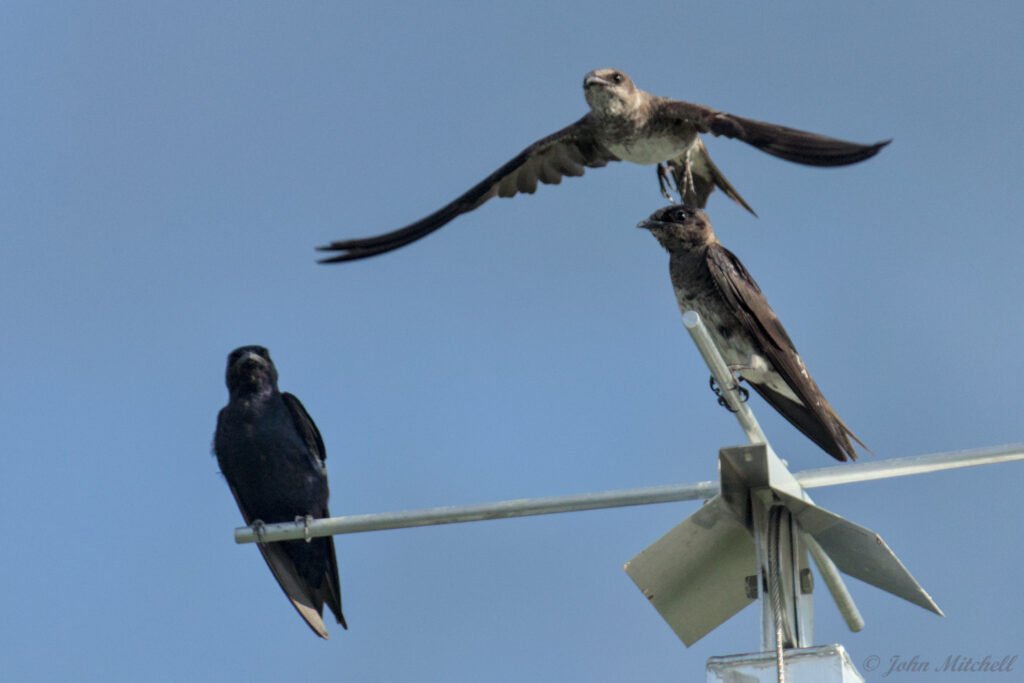
Instead of going back to the trail, we went to the park boat ramp and beach area, after the bathroom break. The following pictures were taken around the boat ramp, docks, and beach area. We went here to get pictures of the Purple Martins living in the birdhouses near the docks. One of them appears to be a juvenile that is just starting to change to the blue male colors on the head.
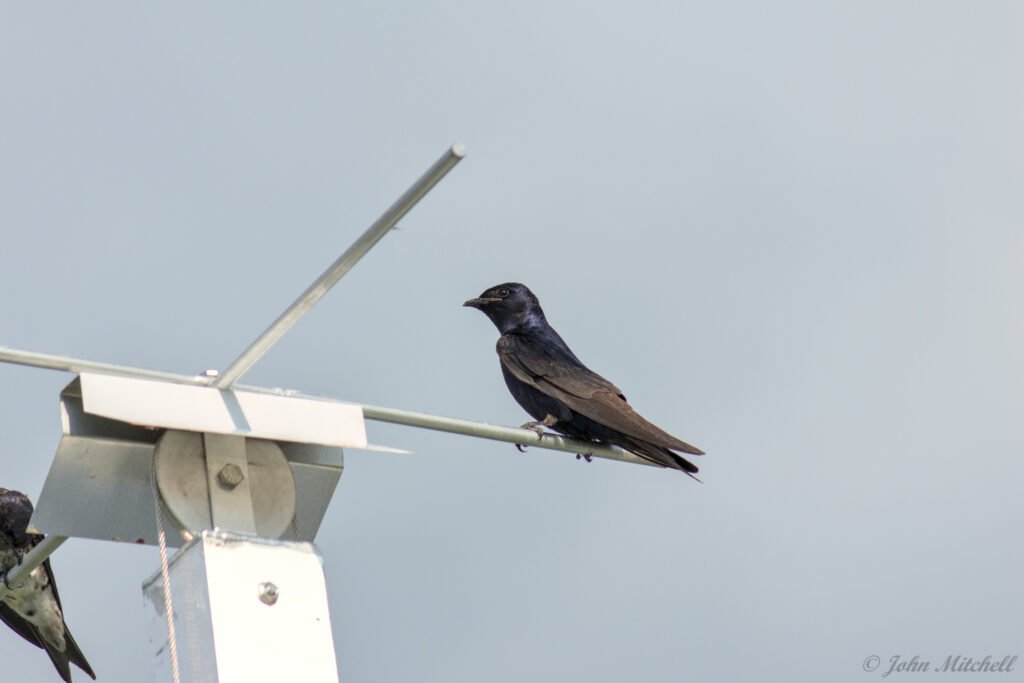
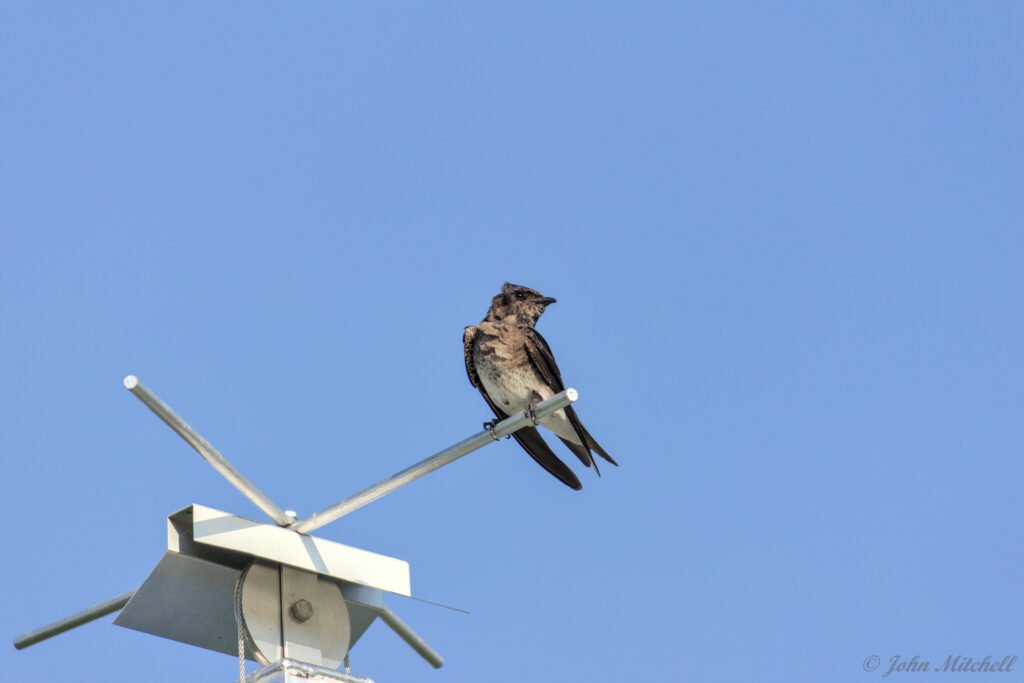
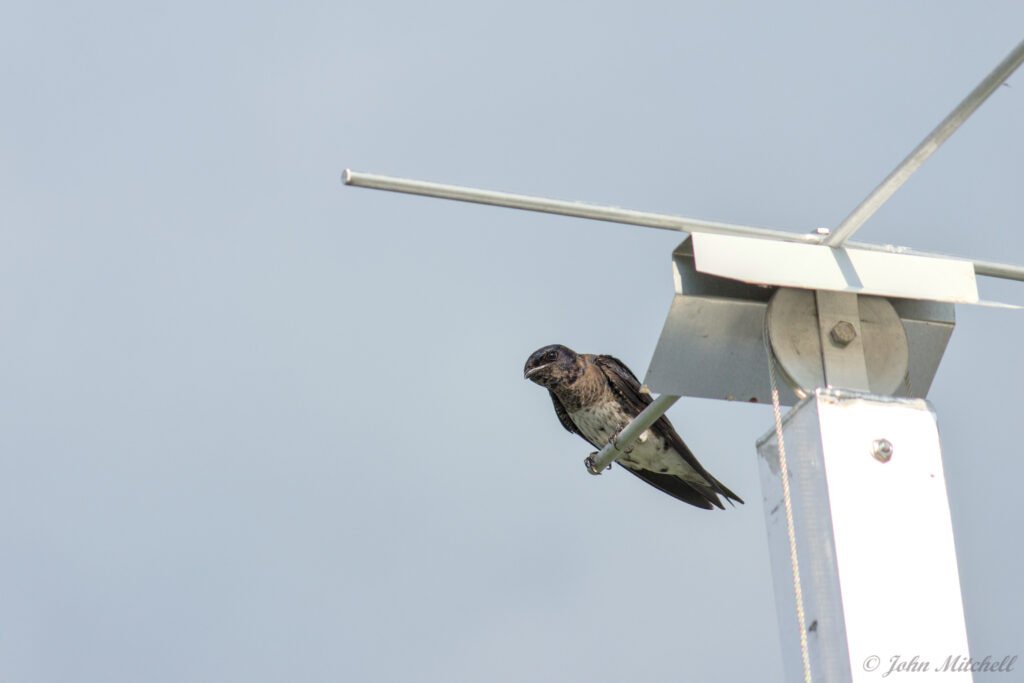
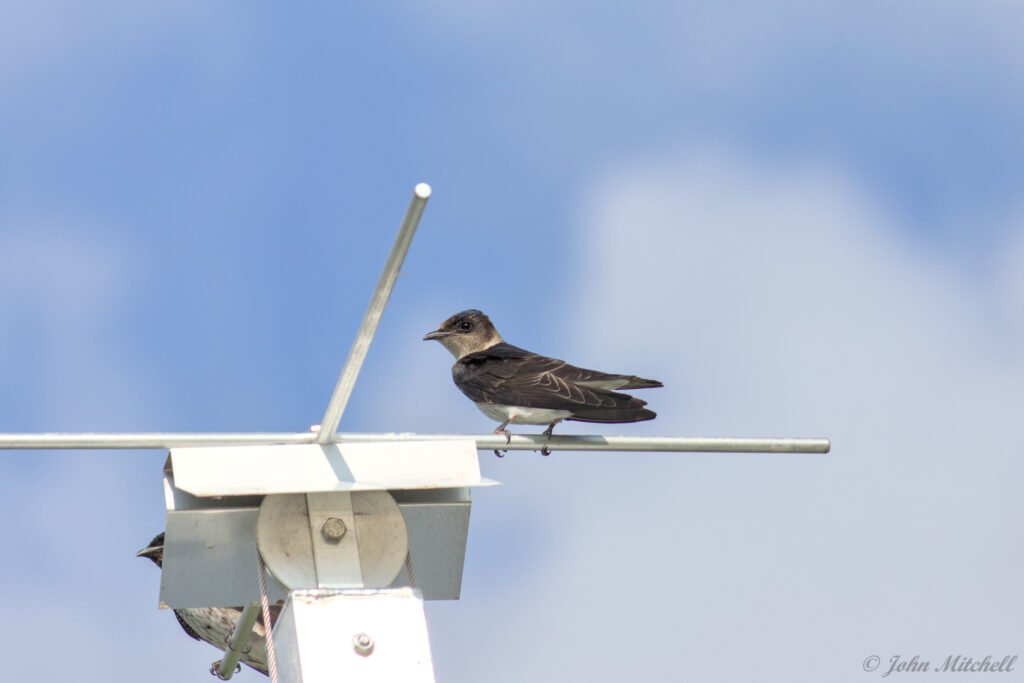
Views from the docks:
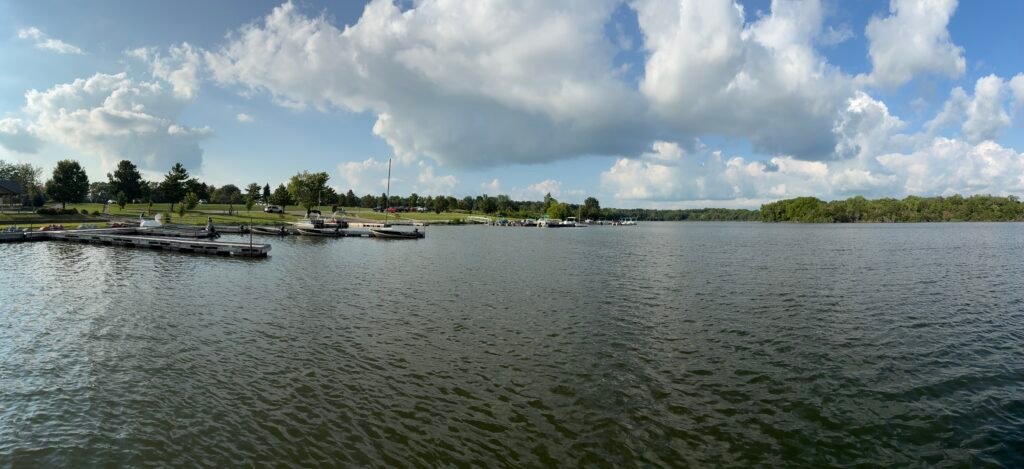
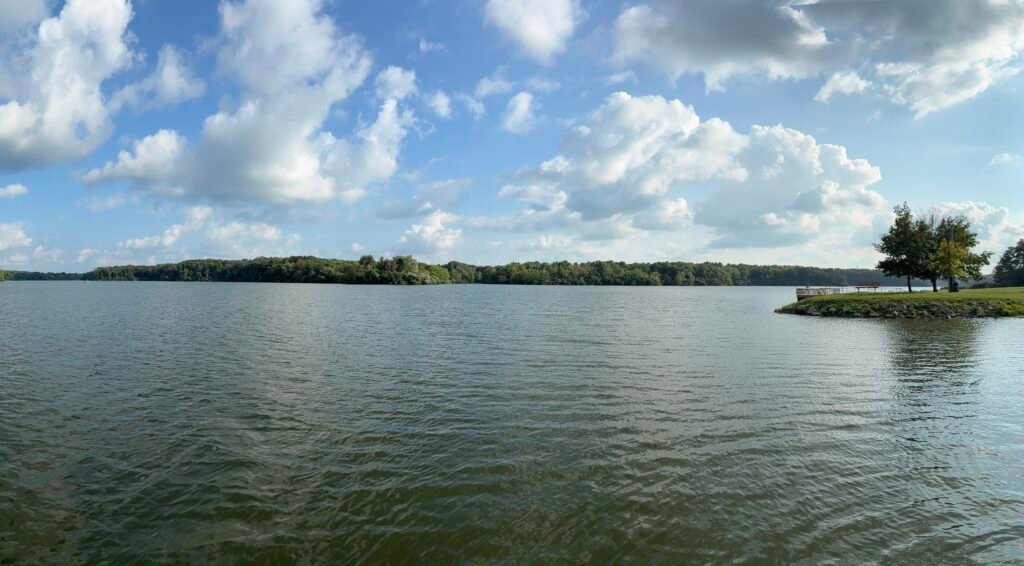
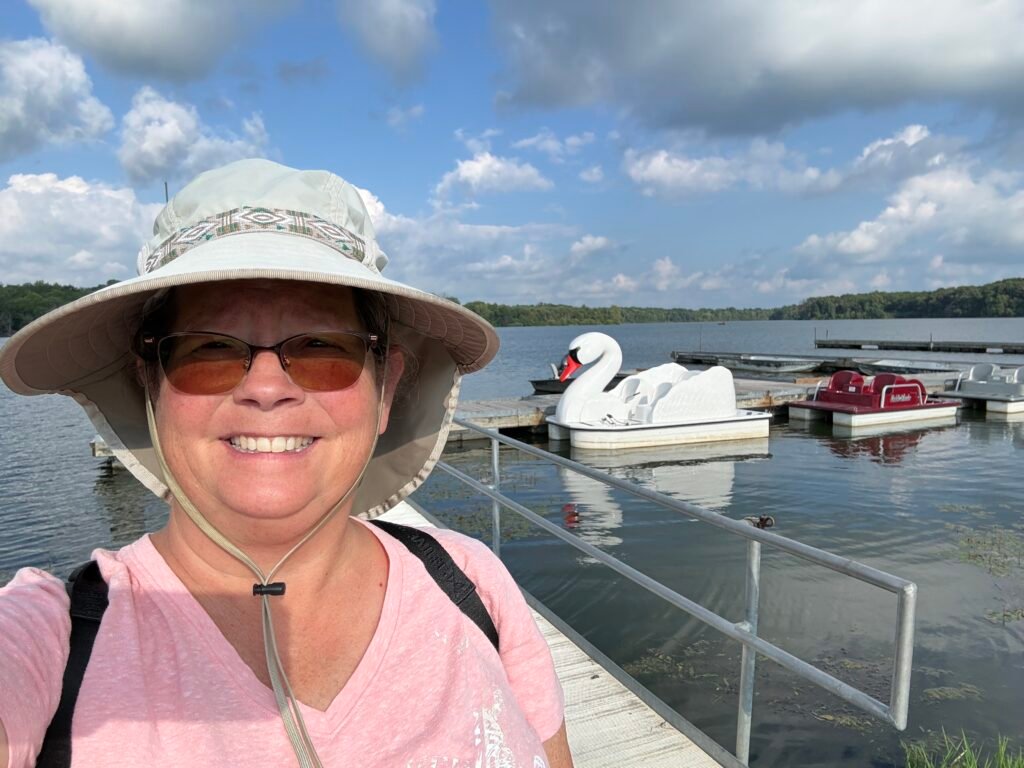
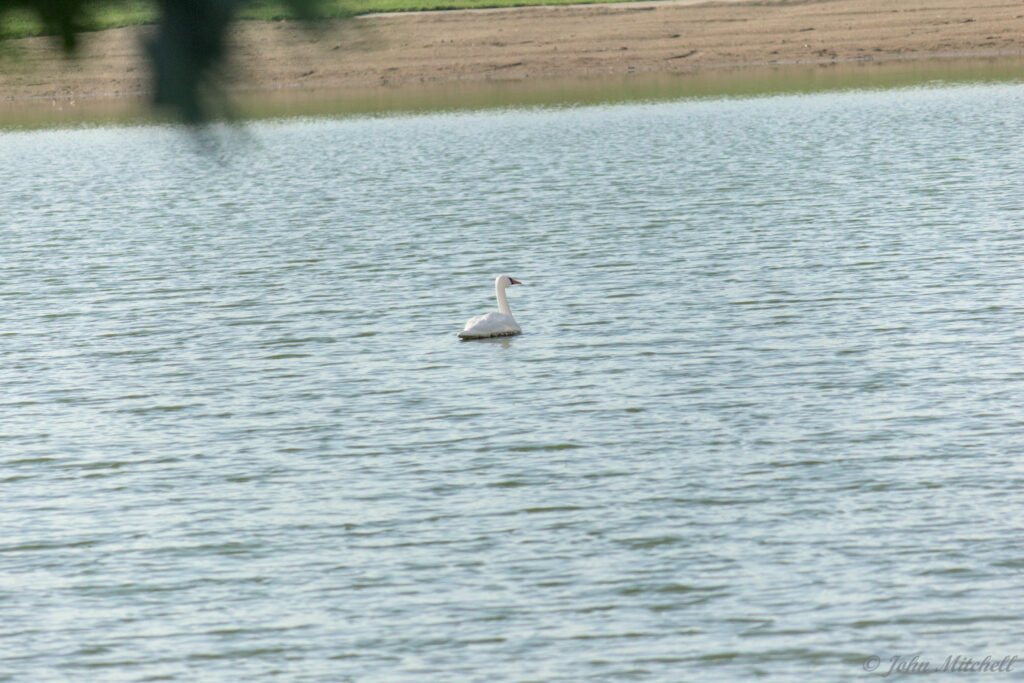
The paddle boat swan which seems to be a must have for many state parks costs around $7.5 grand. No wonder they cost so much to rent per hour.
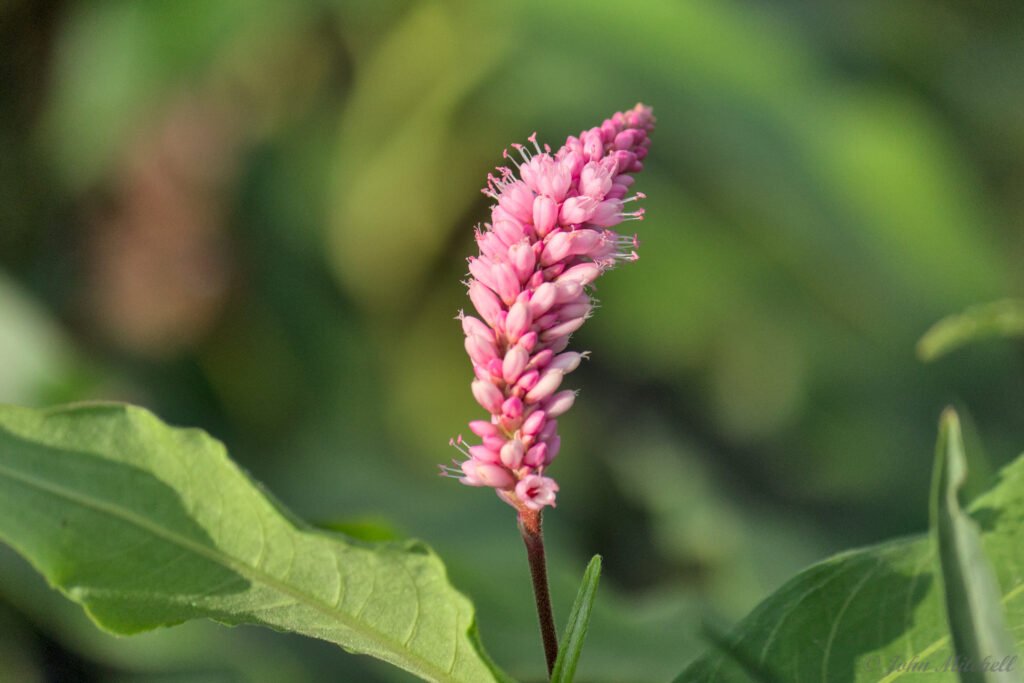
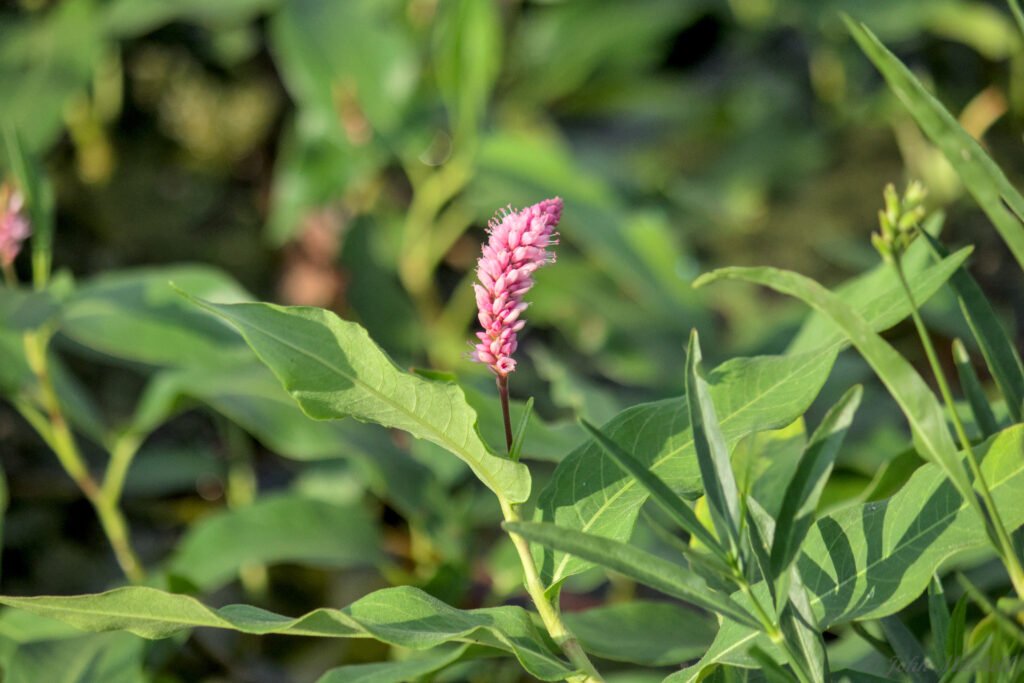
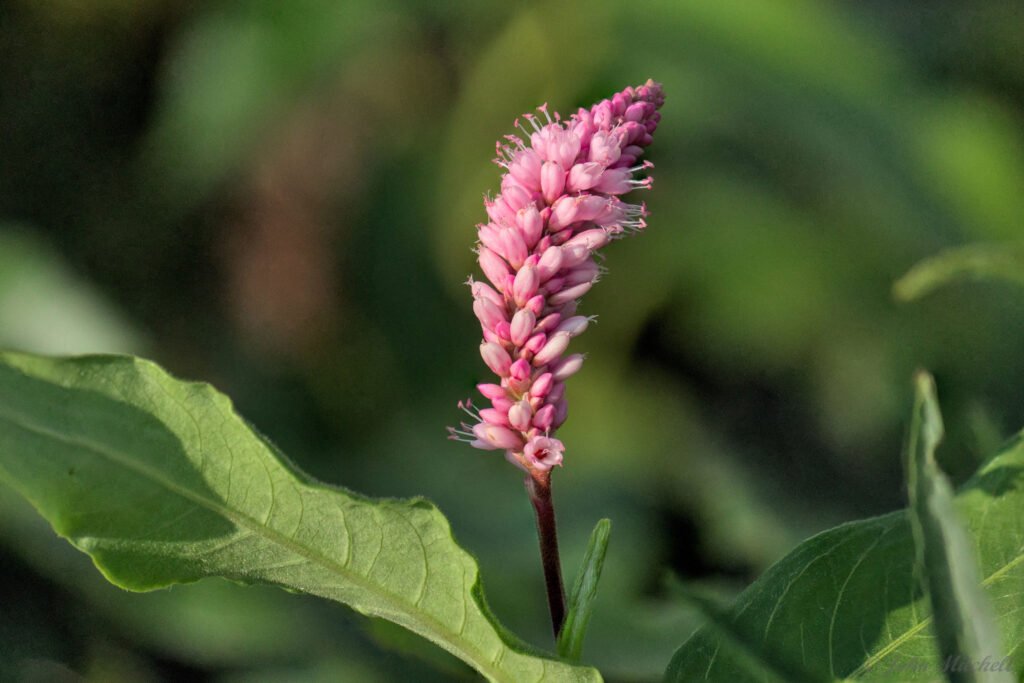
Along the docs, they had an interesting pink flower cluster. We are not sure whether it normally lives in the water or if the rain flooded it. The one on the right is focus stacked. The plant is Water Smartweed (Persicaria Amphibia), which is in the Knotweed family. It is a terrestrial or aquatic perennial plant. Parts of the plant have been used in Native American medicine or as food.
Around this time, John saw a very odd dragonfly.
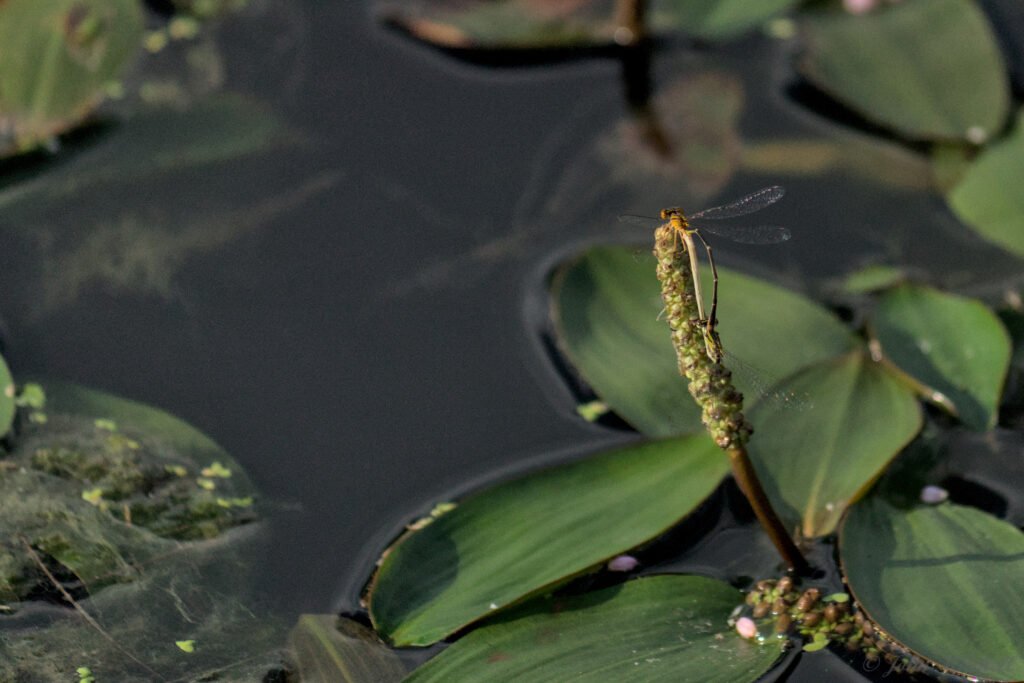
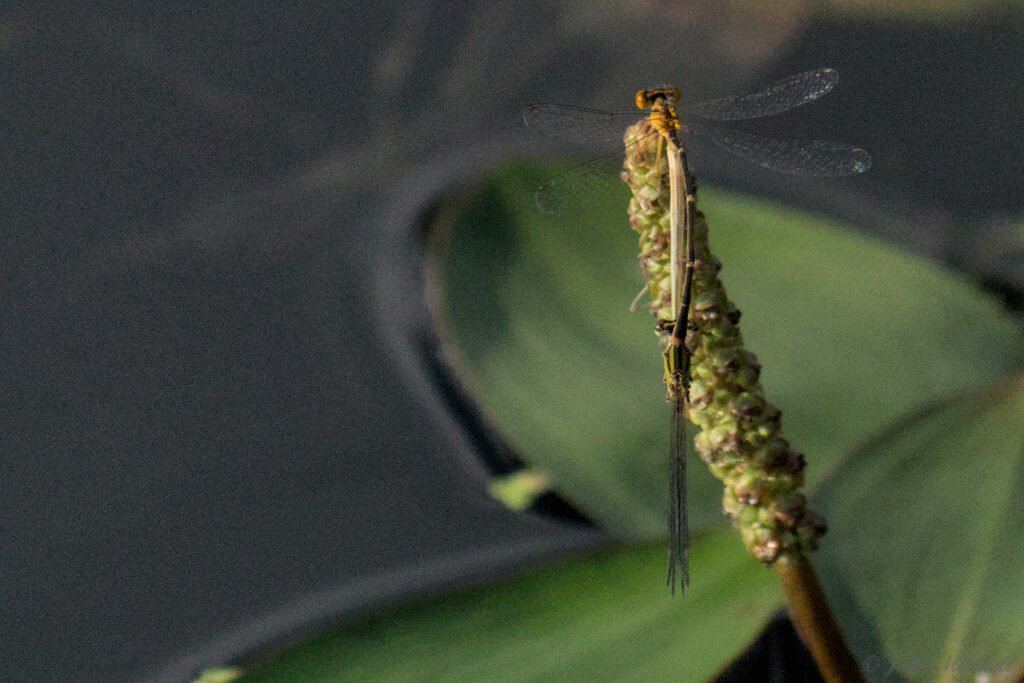
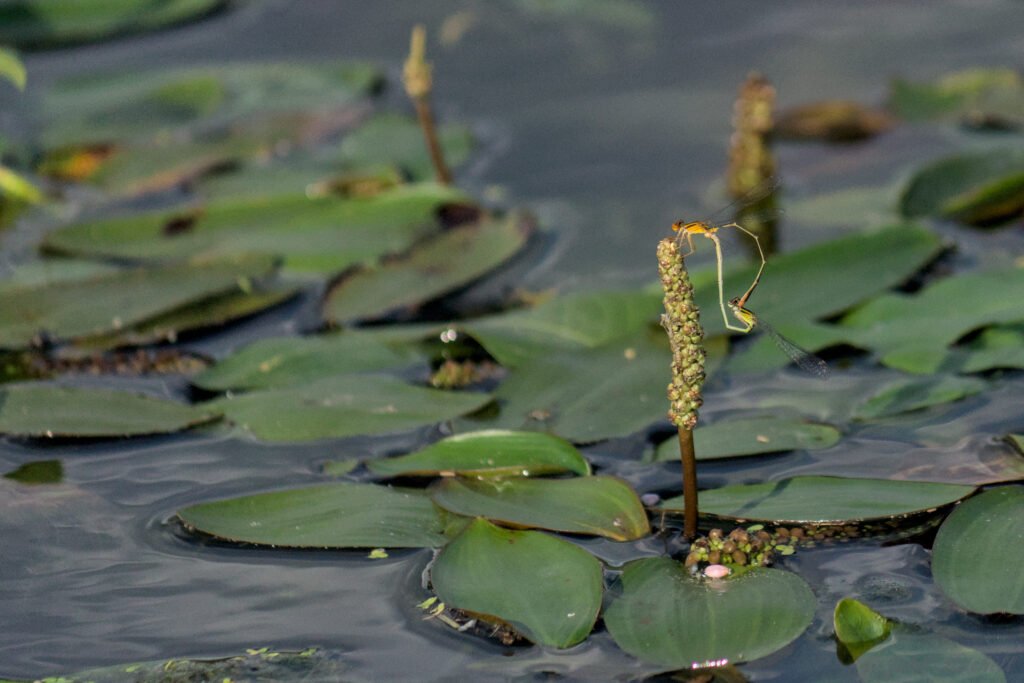
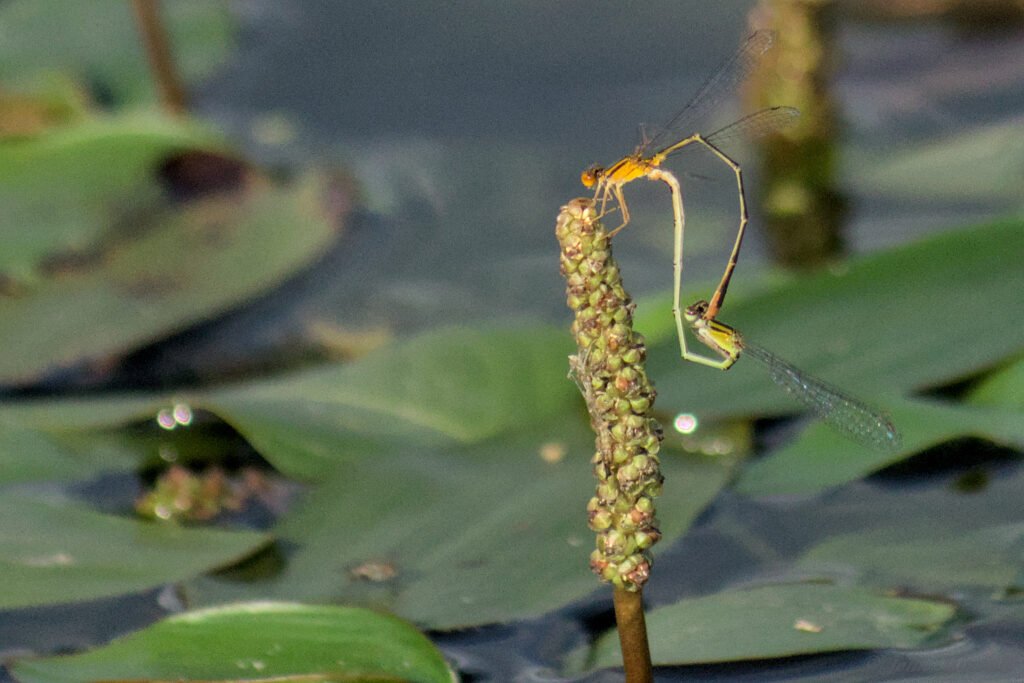
Oops. That’s awkward. Mating damselflies. Just be glad you are not this type of a dragonfly. One clenches the back of the other’s neck with their butt cheeks to mate. Seems like this method might be prone to fatalities. They may be a type of Eastern Forktail.
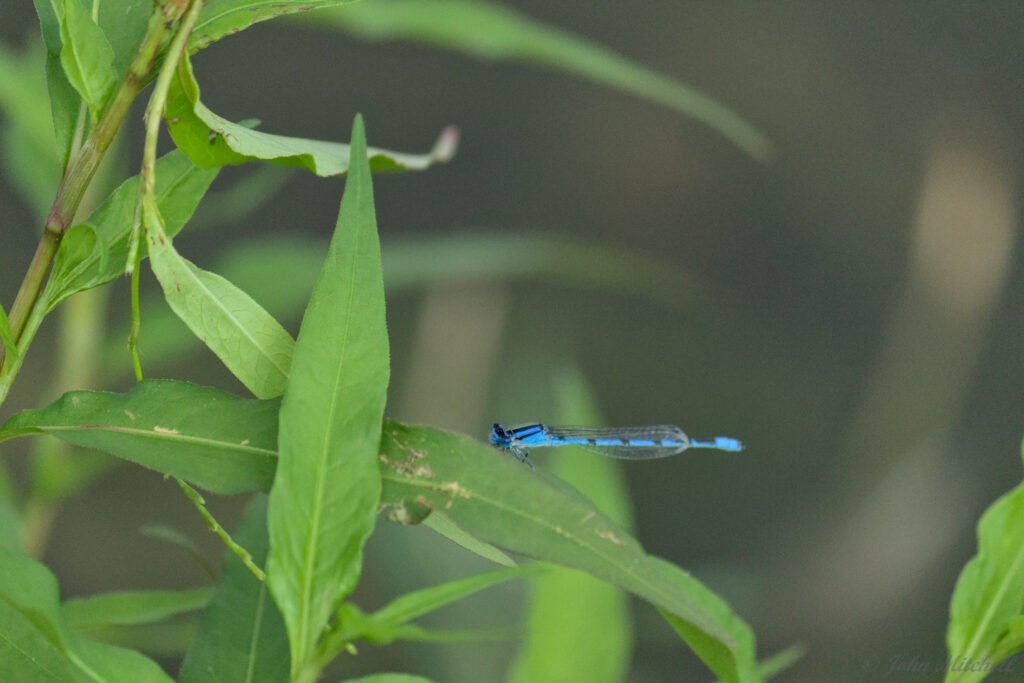
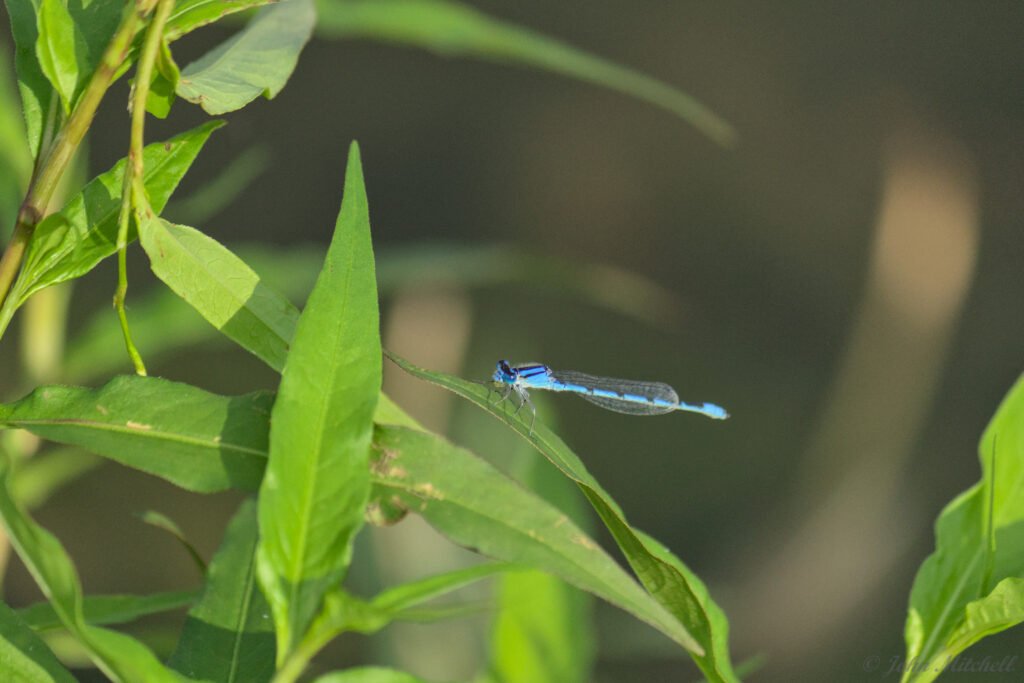
Further along the shoreline, this is the more typical appearance of an Eastern Forktail (Ischnura Verticalis) with the thicker black markings.
I saw the healthiest and tallest thistles ever. They even made me look short.
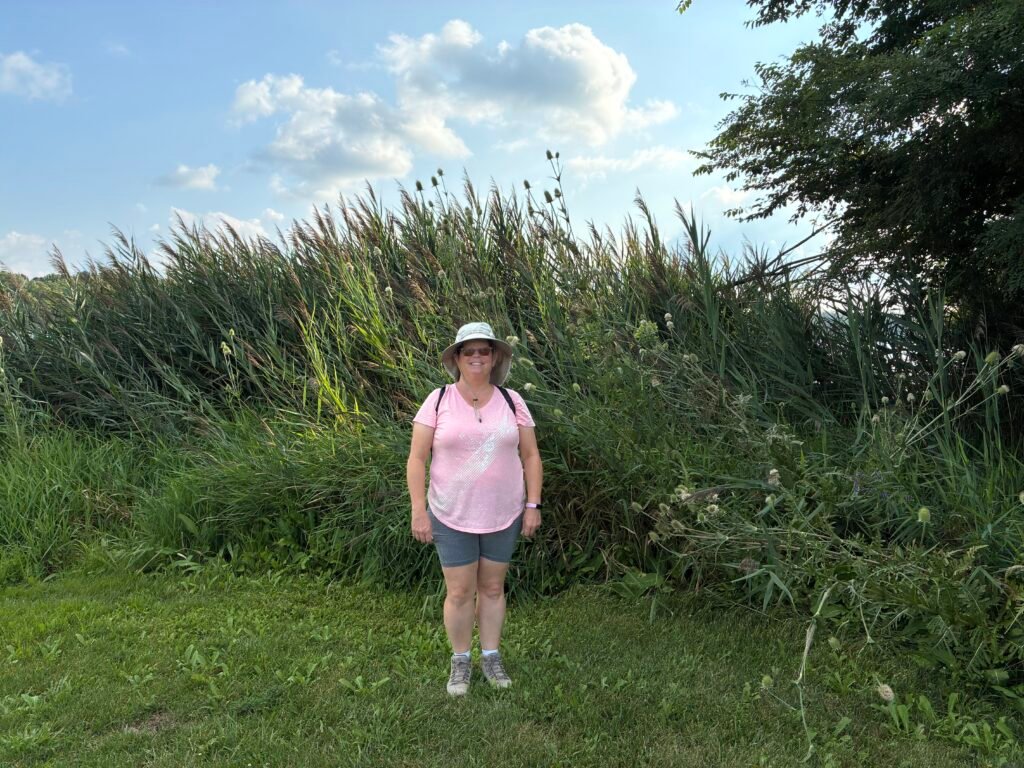
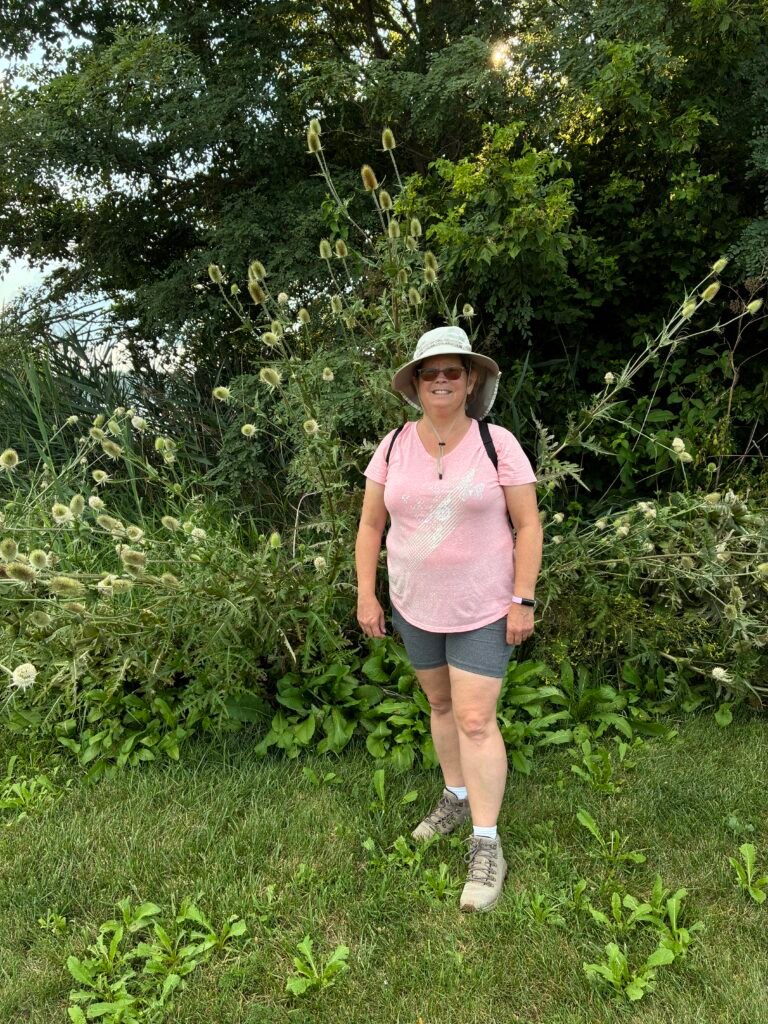
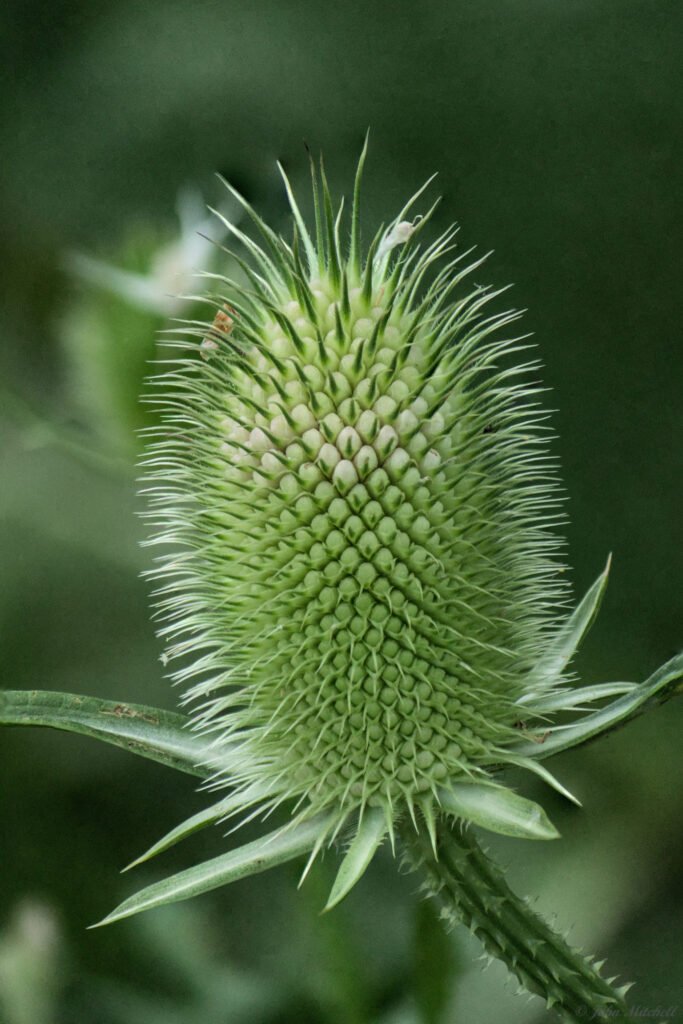
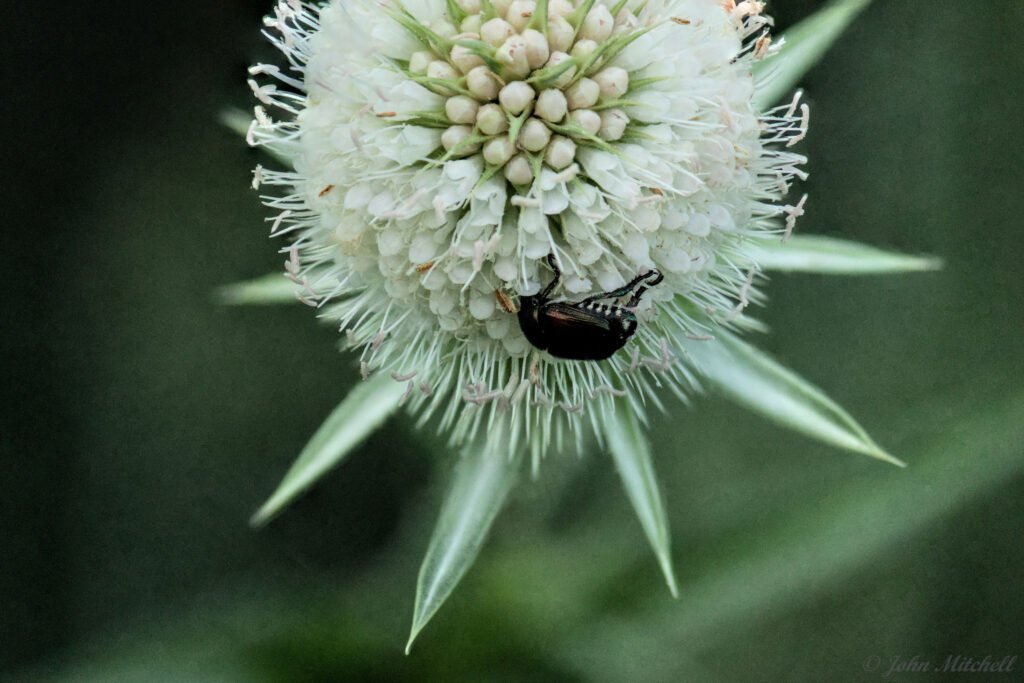
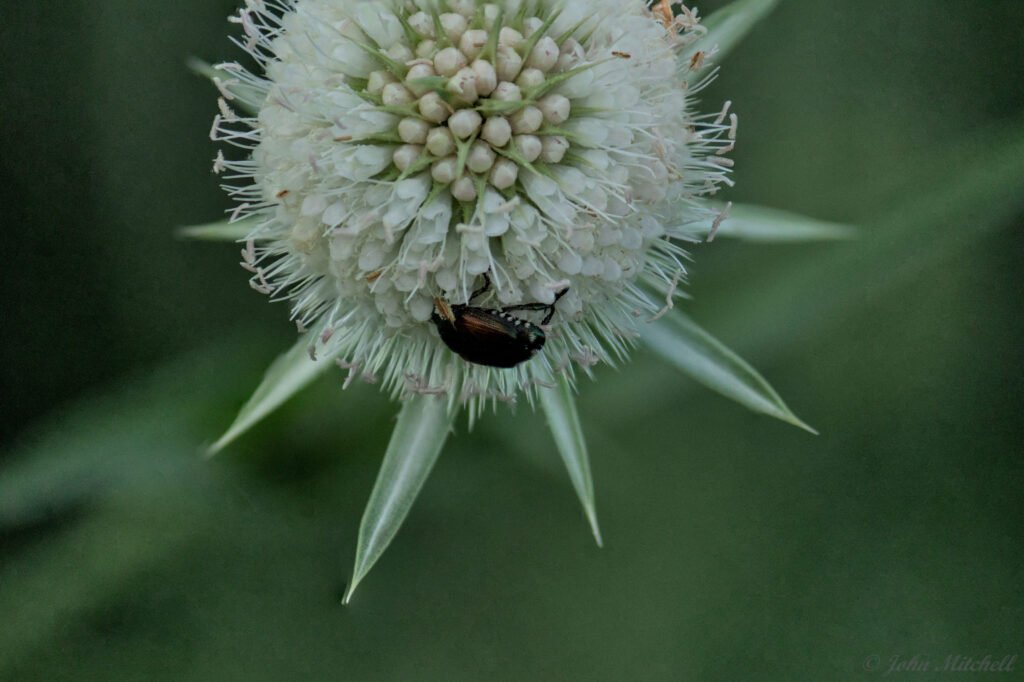
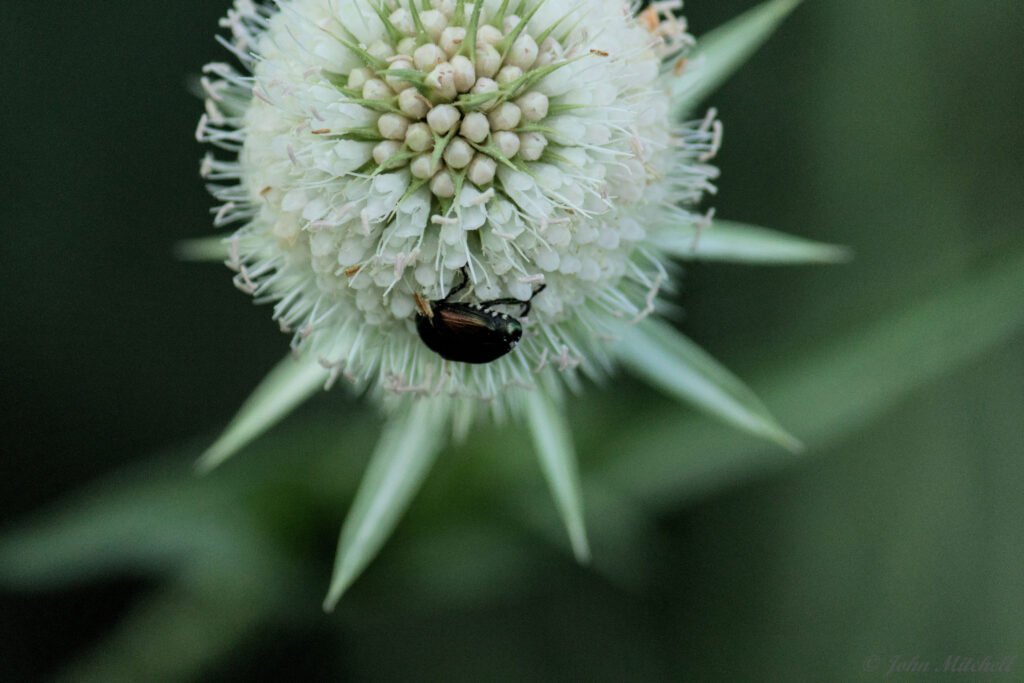
Up close, the thistle is interesting. It looks a little like a tiny pineapple, and it is not a thistle. It is a Cutleaf Teasel (Dipsacus Laciniatus), which is an invasive plant that crowds out native species.
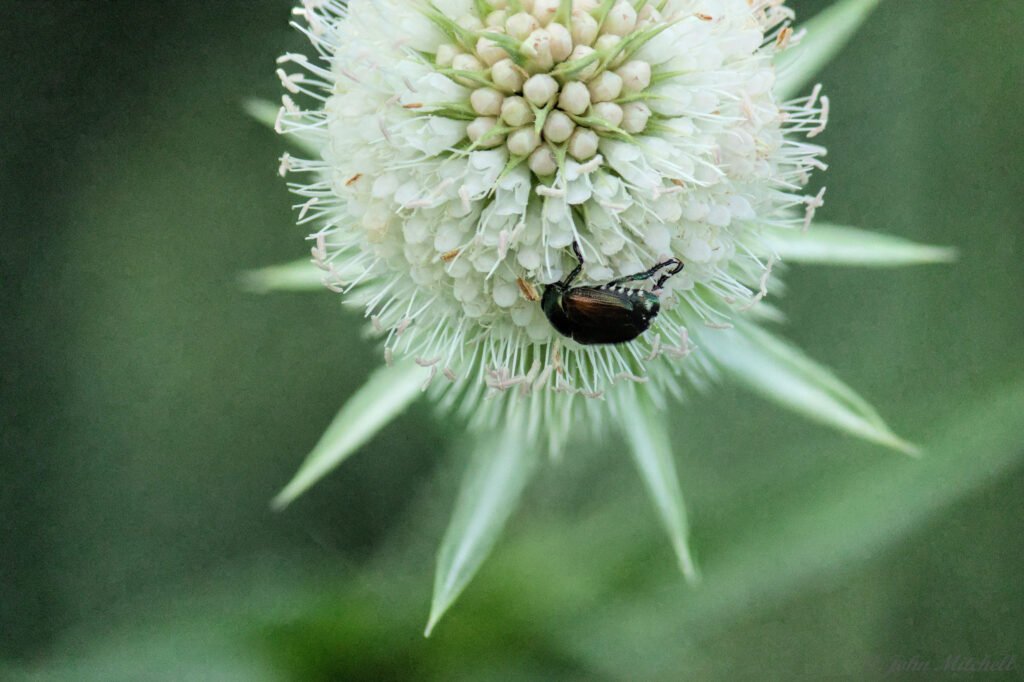
Kate saw a Japanese Beetle (Popillia Japonica) on one of the teasel pods, so John took some focus stacked pictures and played with the exposure and contrast. John’s mom could not stand these beetles because they ate her roses. In Japan, they are not an issue because they have natural predators. In the USA, they are a pest for about 400 plants.
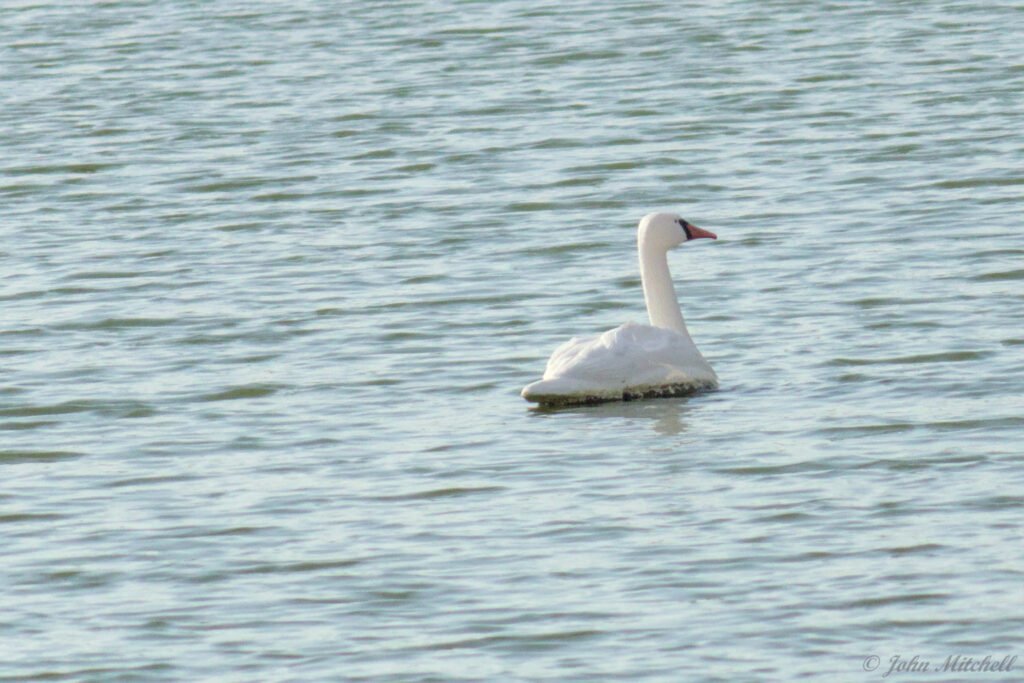
We had been watching a swan at the beach, without any zoom, because we were not sure whether it was alive or a decoy. We, we had zoom today. It is hard to tell from afar while the wind blows it around like it.
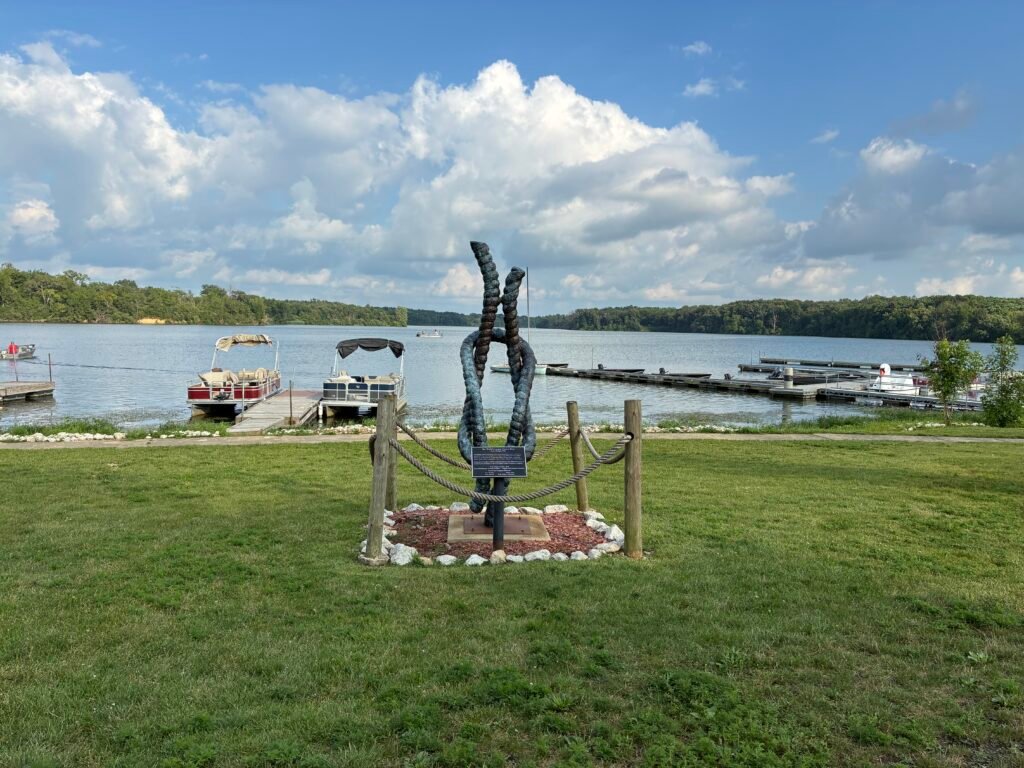
As everyone knows, I love the “worlds largest”, “worlds smallest”, “worlds ….” See prior post link on the Worlds Large Knot. Link: https://glampingwithcats.com/2024/08/25/another-worlds-largest-square-knot/. Last post did not include a selfie.