
Say, maybe a fridge? Sunday afternoon, Kate mentioned that the fridge light was out. I was thinking the bulb probably needs to be replaced. Later, Kate mentioned that she was not sure the fridge was running. Doh! Modern 12V DC RV fridges use LEDs for light. LEDs do not tend to burn out like light bulbs. And the fridge was getting warmer.
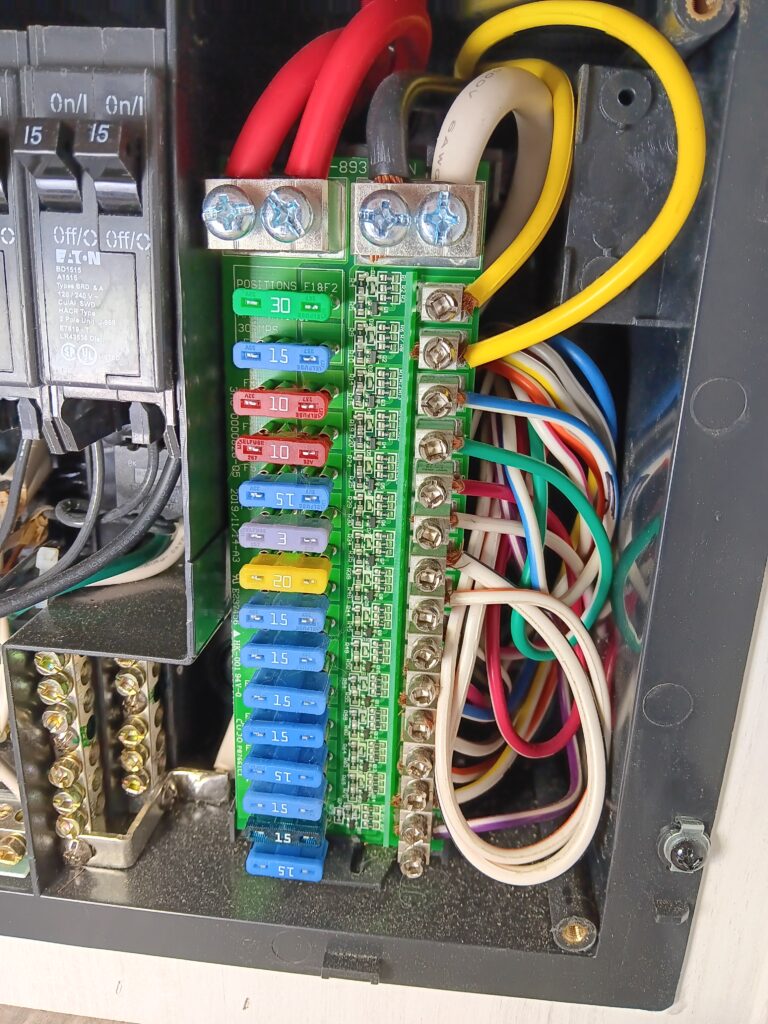
The board has an LED that lights up red beside each fuse when the fuse is blown. The fuse was not blown, and the LED did not light up with the fuse removed. This seemed like a possible circuit board issue. Kate pulled out the manual, and I found that the LED does not light if the appliance is off or disconnected. Probing the circuits with a multi-meter showed the correct voltages, but the fridge circuit acting weird.
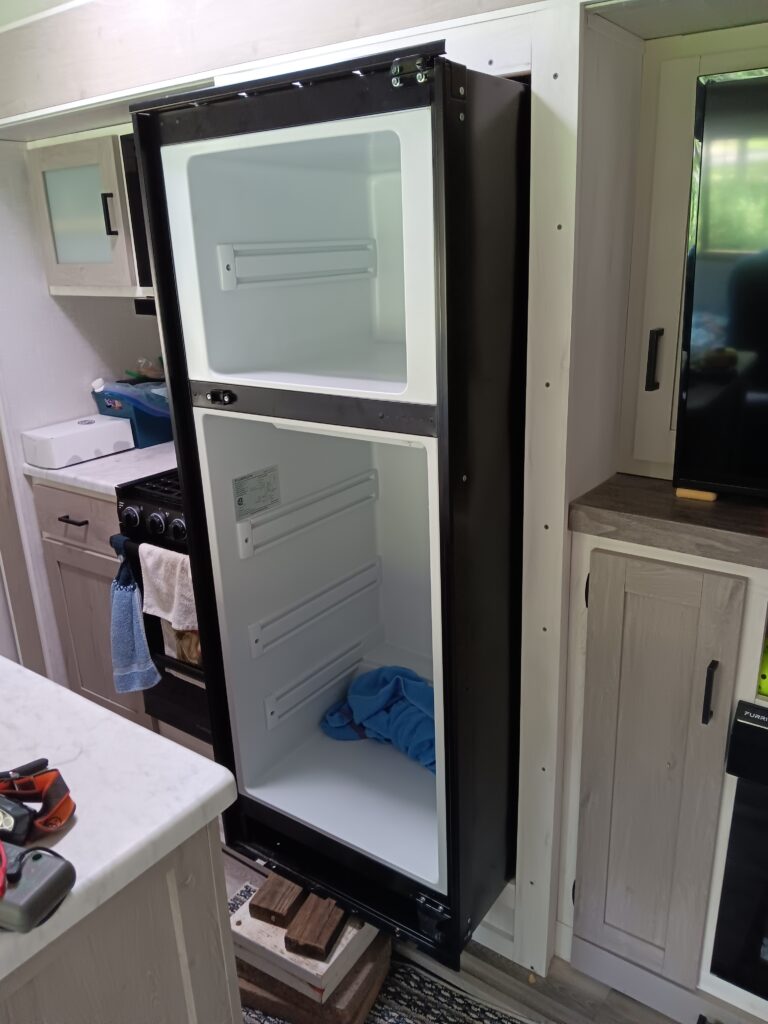
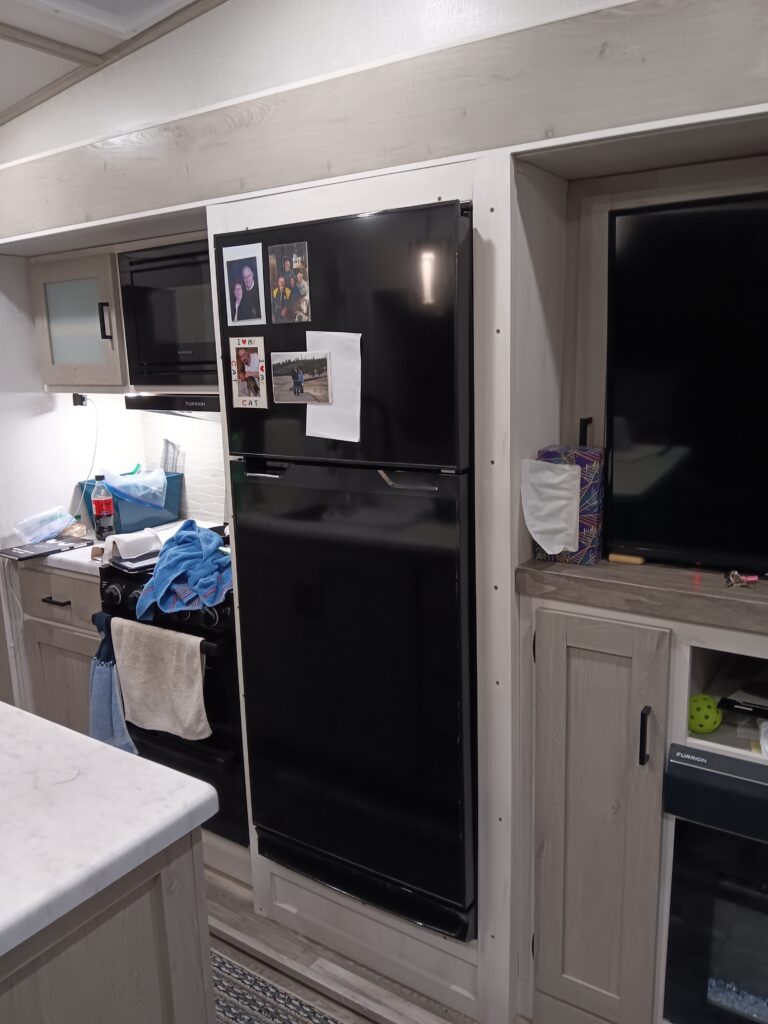
After some reading, it turns out that the Furrion brand fridge is notorious for having a fuse in the fridge that goes out. Even better, they put it in the back of the fridge. Obviously, we just need to unplug it, slide it out, and change the fuse. The only problem is that it is screwed into the wall. Since we were moving soon, we had to defer working on the fridge until Wednesday. After taking the doors off and unscrewing the mounting screws, it looked like this.
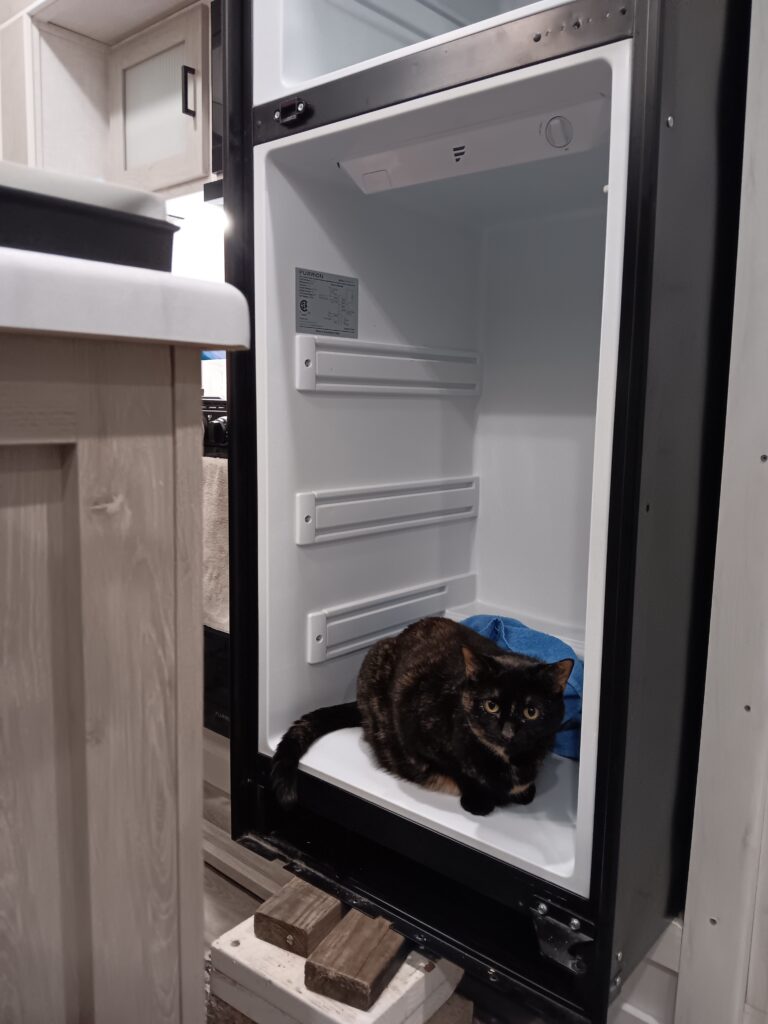
Two point five seconds later, it looked like this. If you think dinner at our place tastes a little like cat, you can blame Cleo.
The fuse was difficult to find because the inline glass fuse holder was tiny (smaller than a AAA battery). Based on the year, we expected an inline blade fuse holder. Probably due to COVID, they used whatever they could find. A blade fuse holder can have an extender plugged in to move the fuse to the front of the fridge without any wiring. The fuse we found was this:
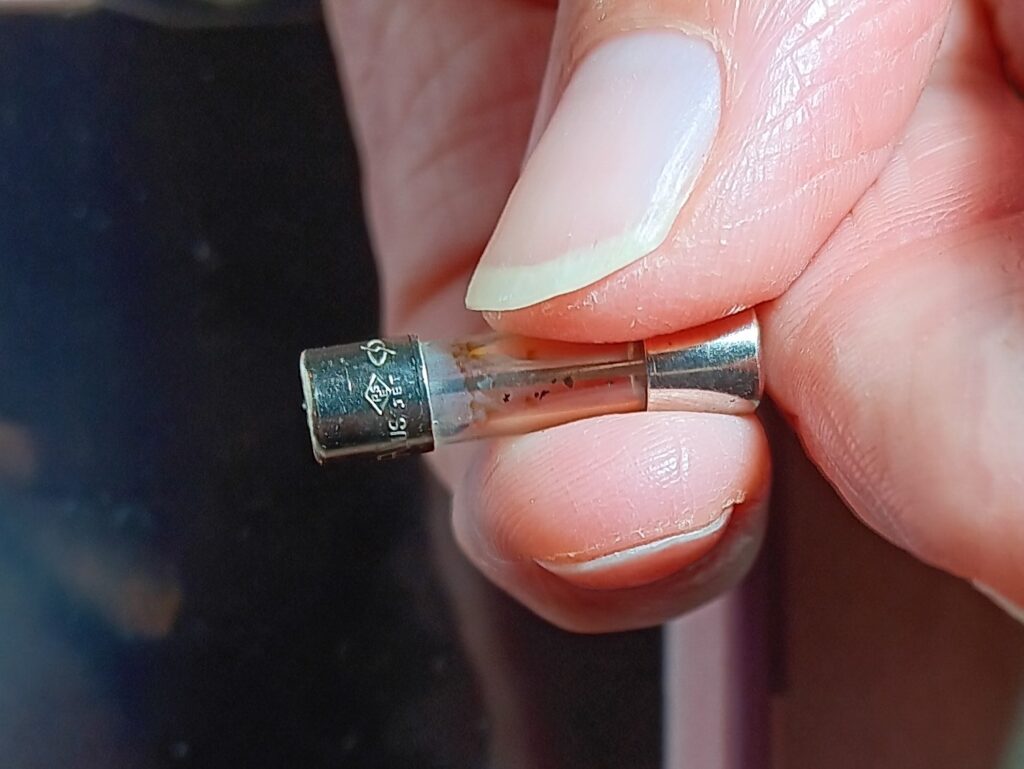
It is cloudy inside, but the element is not broken. It looked fine, but the multi-meter showed there was no connection between the ends. We do not know why it went out, unless it was age, voltage drop from too many AC units, or overworked fridge from the heat.
That fuse is a special order electronics 5x20mm GDC 15 AMP 250V time delay fuse. You can order them on Amazon, if you have an address to mail them too. (We were debating using an Amazon locker.) After about 8 hours of driving around between us, no one carries these fuses in 15 Amps. You might ask why we did not call the stores and ask whether they carried them. We did call. They said they had them. They lied. Or were too lazy to check. Or were morons.
We should give them the full credit they deserve; they were lazy lying morons.
You might ask why we did not call the manufacturer. We did. The manufacturer’s official stance was “We no longer carry those fuses. The customer should modify the wiring in their fridge to use the blade style fuse.” You might be thinking “WHAT?”. I did not think that. I had already thought “WHAT?” when I read that on the internet before calling. I just verified some details from the internet discussions. Those details included use – 10 GA wire, a blade (automotive) style fuse holder, and fast fuses are fine.
My part of that 8 hours of driving included looking for the inline blade fuse holder with 10 GA wiring. It was looking grim until a local auto/electronics shop had one. An annoying side note was that the interior fridge wiring was 16 GA, not 10 GA. The ones with 12 GA wire would probably have been sufficient and easier to install. You really only need the 10 GA wiring from the battery to the fridge, not inside it.
After about 4 hours of work, the fridge has an inline blade style fuse holder accessible at the front of the fridge. Hopefully, we will never have to pull that fridge out again.
At 11 pm, I was finally allowed to eat my victory doughnut.

One response to “If It Is Not One Thing, It Is Another.”
The fun of being a home owner! Happy you could fix it after many hours. Cleo probably was disappointed.