
National Mall, DC, June 2026
The memorial construction started on November 22, 1999, dedication happened on November 4, 2000, and opened to the public on June 29, 2001. It was constructed to honor the 120,000 Japanese Americans sent to internment camps and the Nisei soldiers that fought for the USA during World War II. Despite the official intent of the memorial, it is clear that this memorial was named by a committee that did not want to take accountability for the treatment of Japanese Americans during World War II. You can read more about it on the NPS website here.
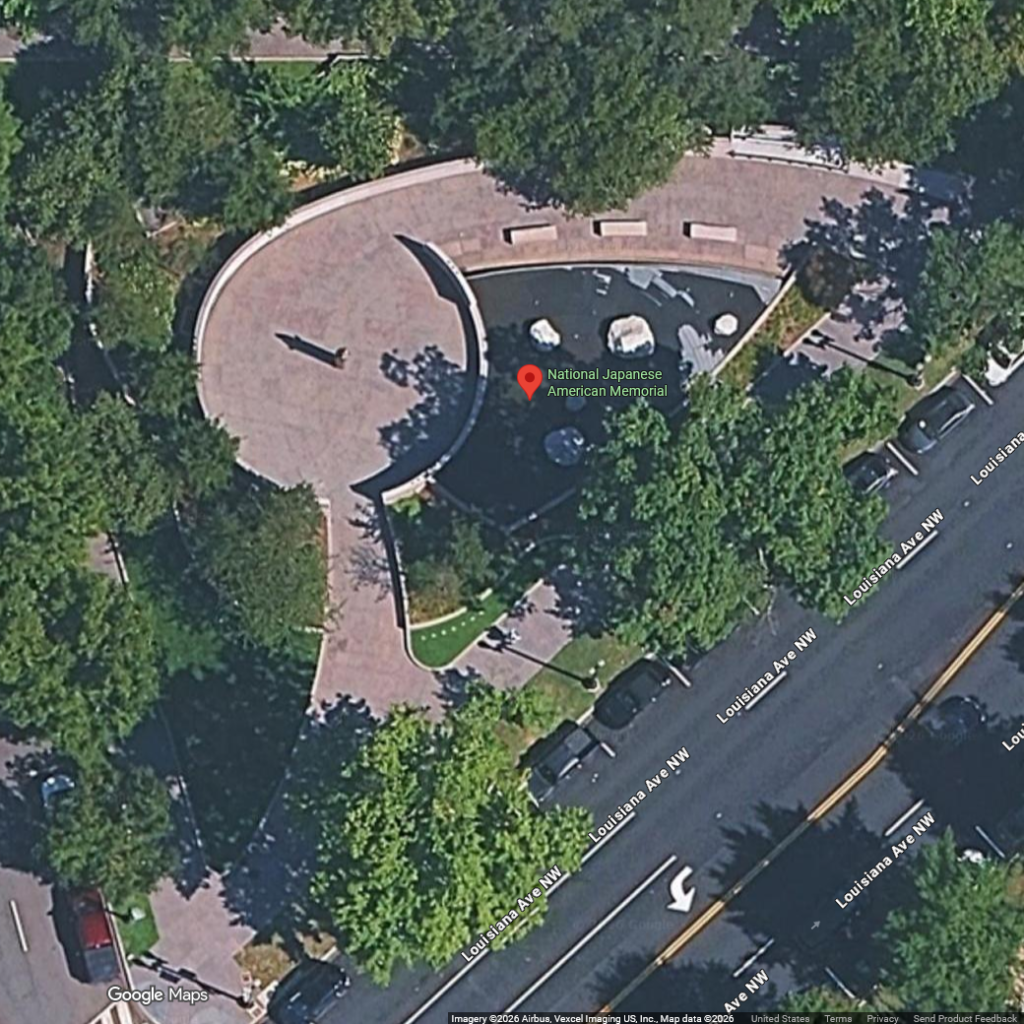
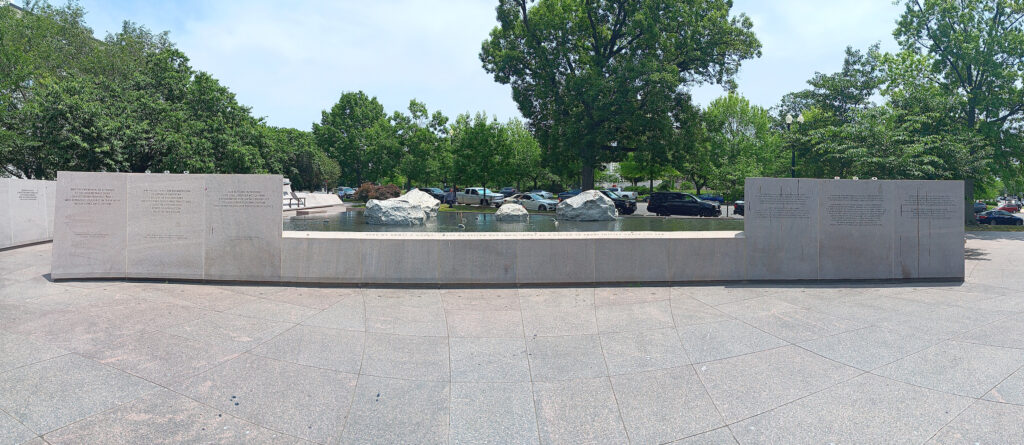
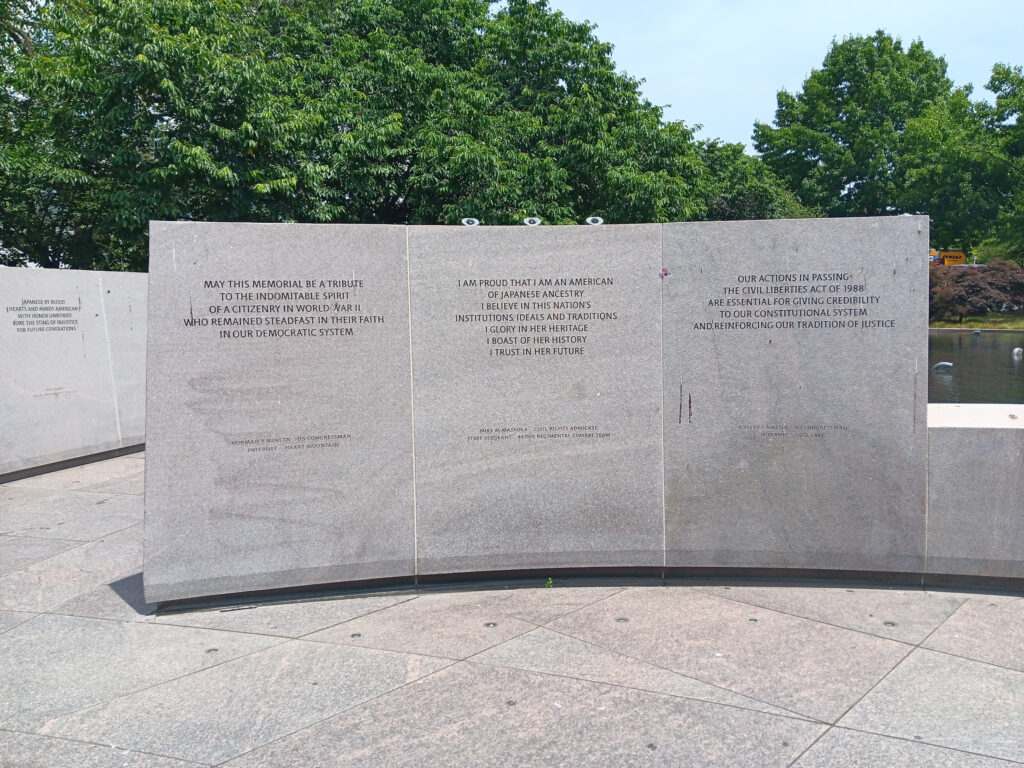
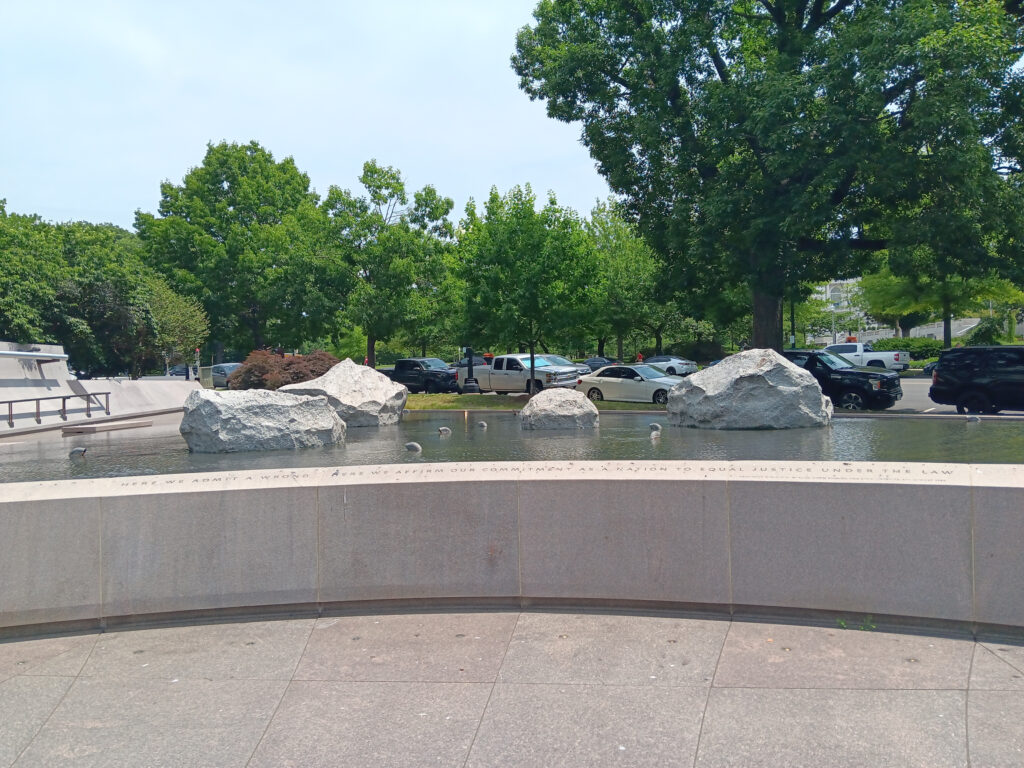
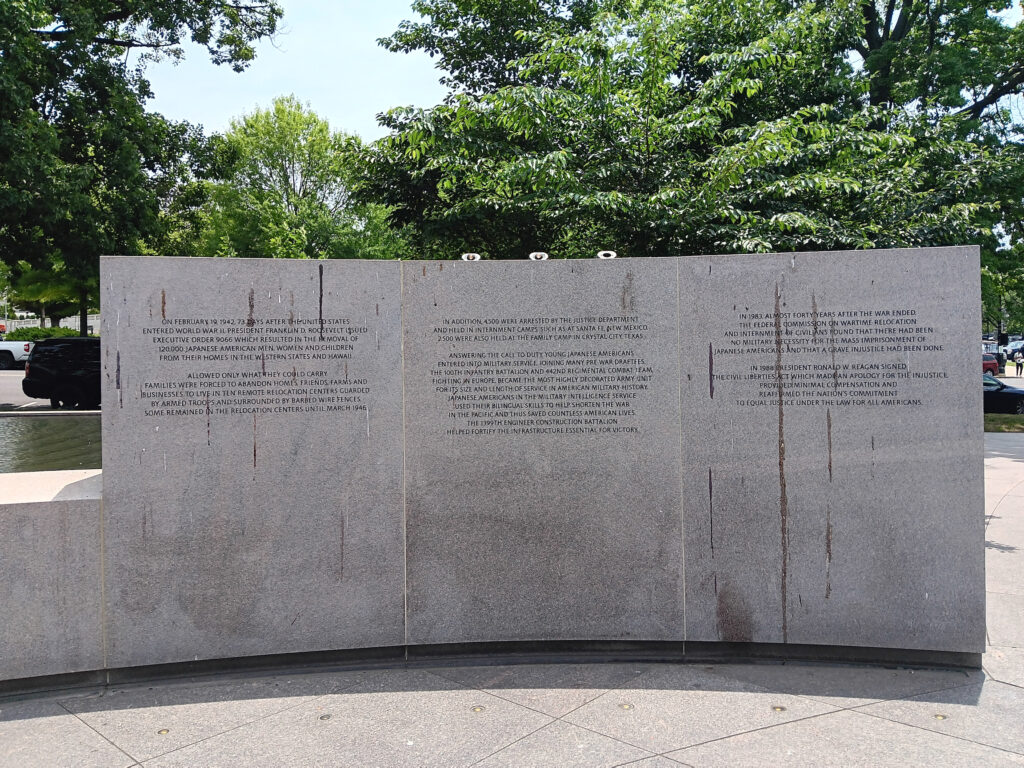
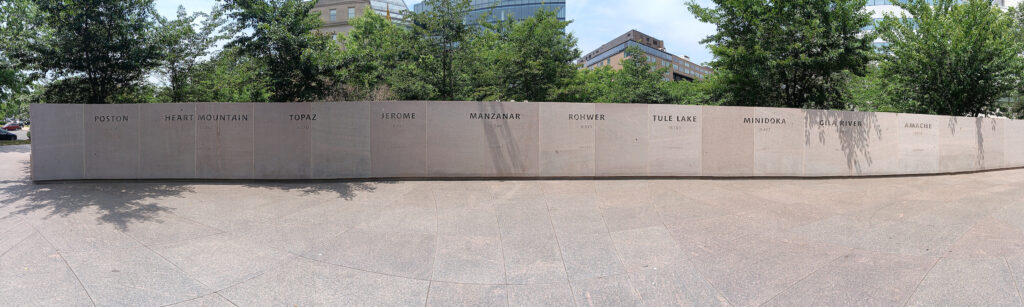
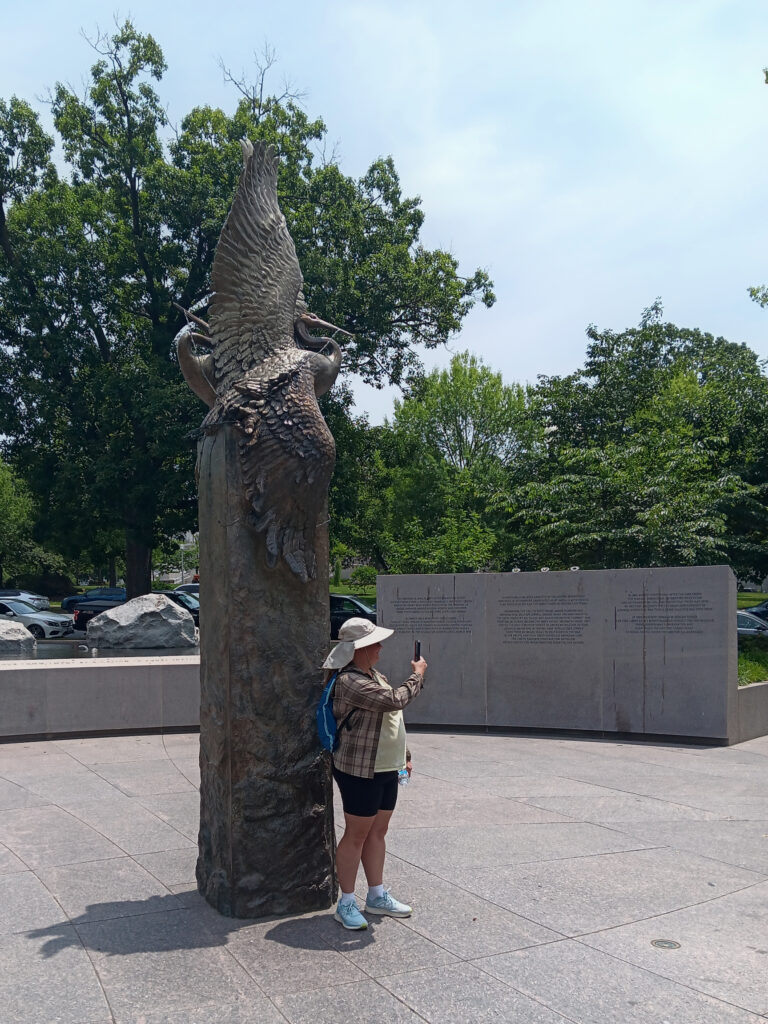
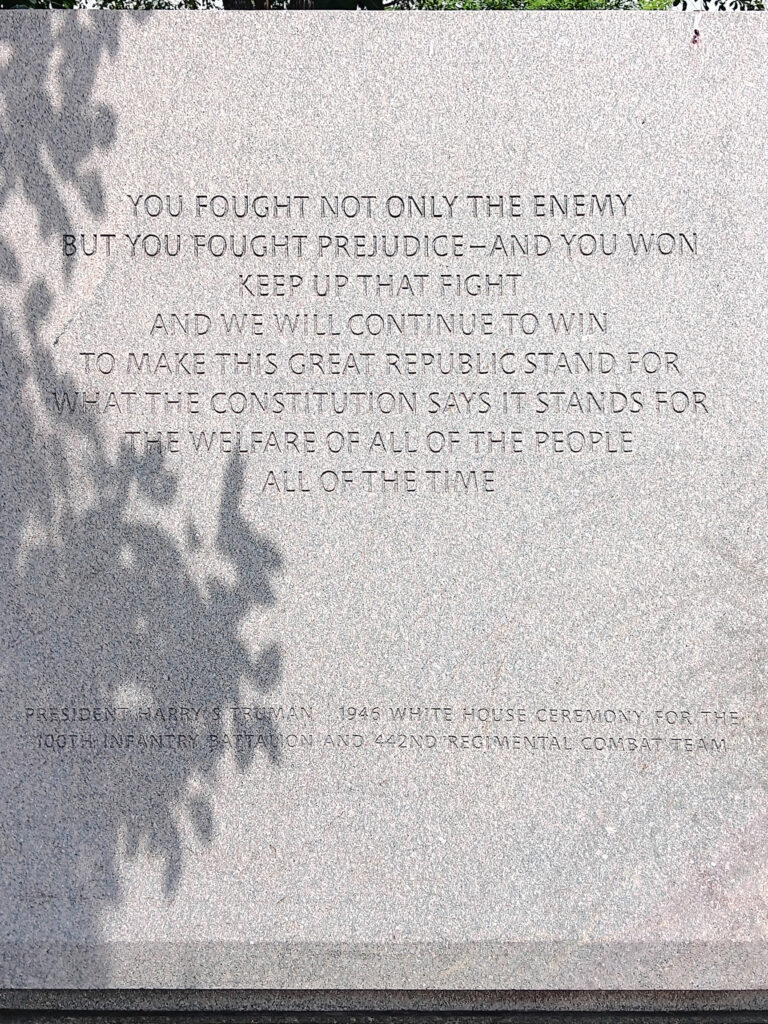
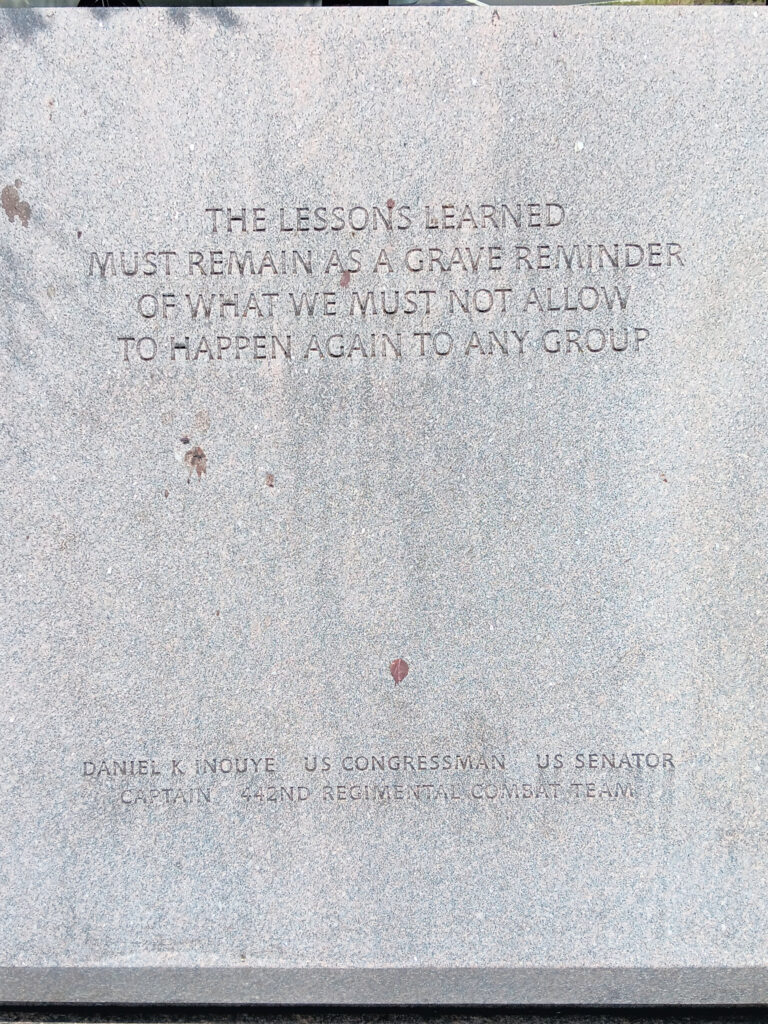
The shape of the memorial is not easy to describe, aside from a giant sundial design in the middle with a pool off to the side. Where you might expect numbers for a sundial, it has names of the ten internment camps with soil from the camps buried beneath. The arm of the sundial is a bronze sculpture of two Japanese cranes with broken wings entangled in barbed wire to symbolize the pain of captivity and resilience. The names of over 800 Japanese Americans that died during the war are engraved in the walls along with quotes of American leaders acknowledging the wrong done to Japanese Americans.
An overhead view from Google Maps will better show the layout.
This is the view approaching from the south and looking between the sundial and pool.
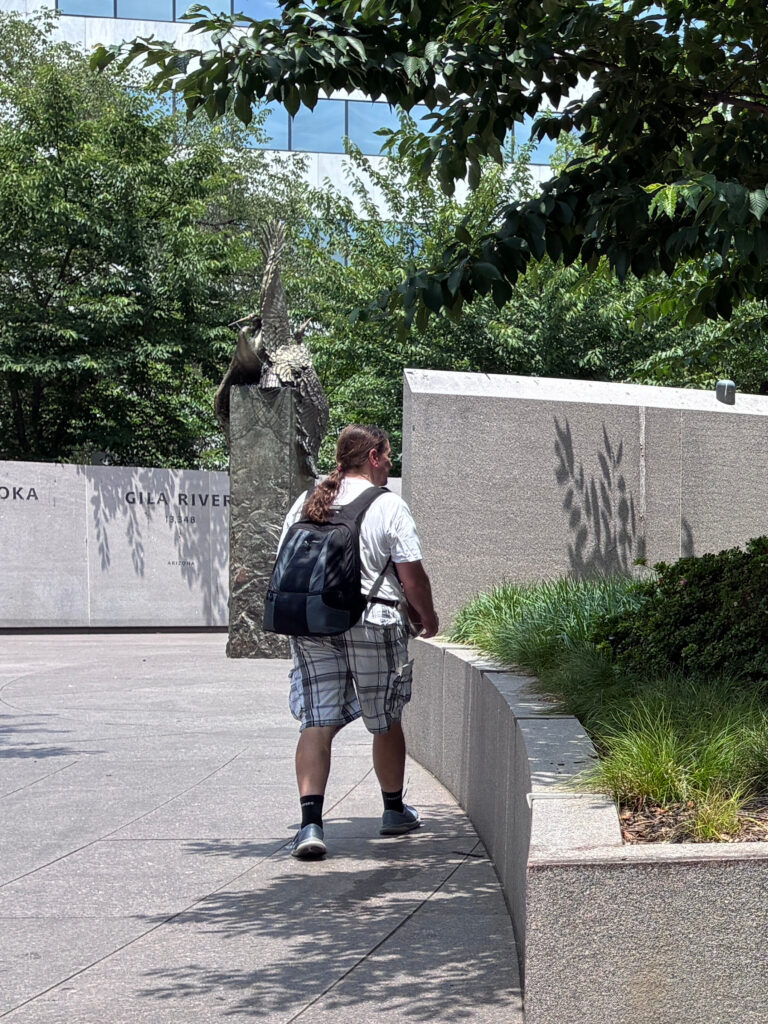
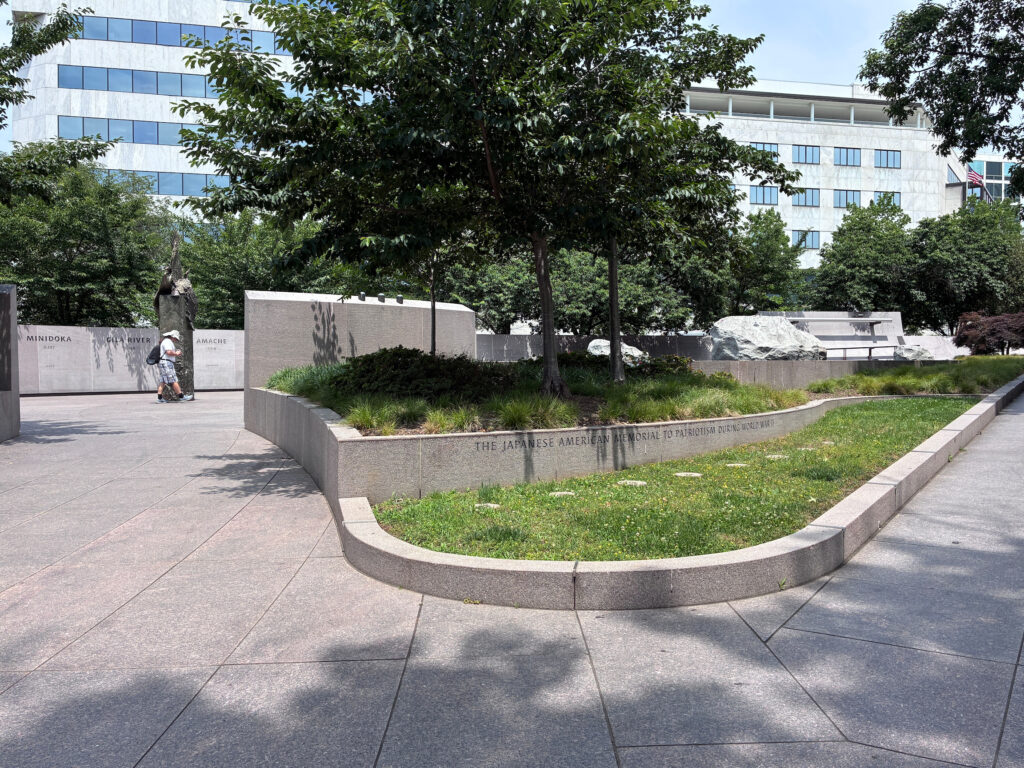
Standing at the arm of the sundial, this is the view towards the pool.
Standing at the sundial arm, this is the view of the internment camp names.
This is the bronze sculpture of the cranes in the middle of the sundial. (No, that is Kate. The sculpture is behind her to the left.)
Looking out the exit to the east, you can see more engravings on the north wall and the pool to the south.
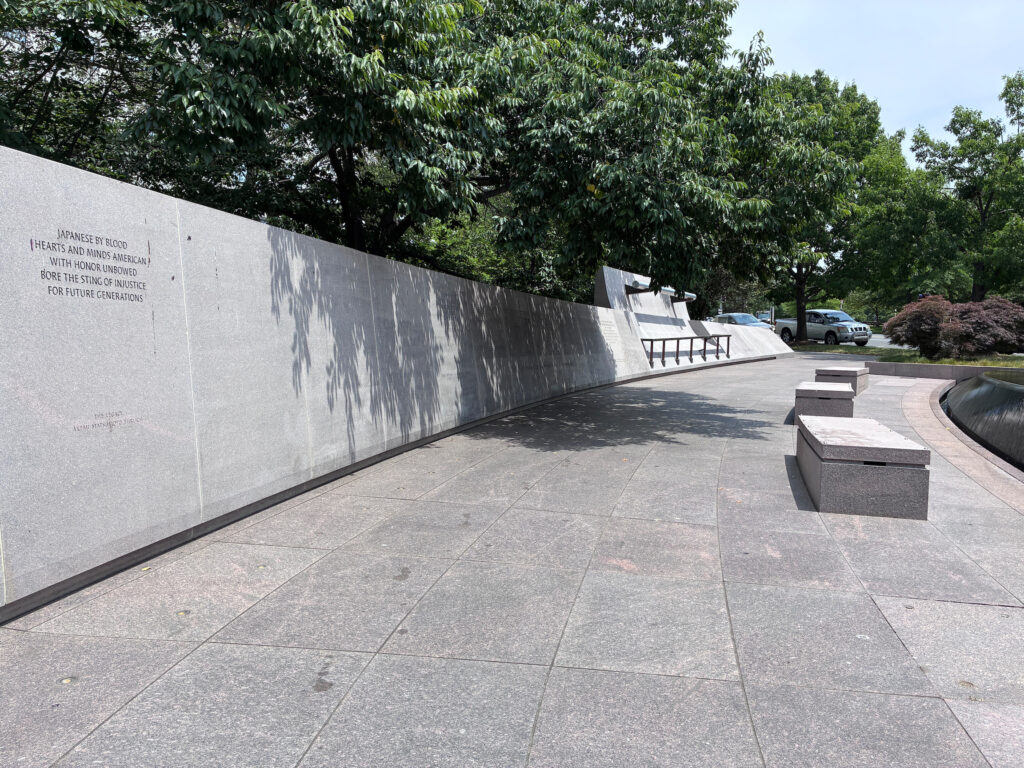
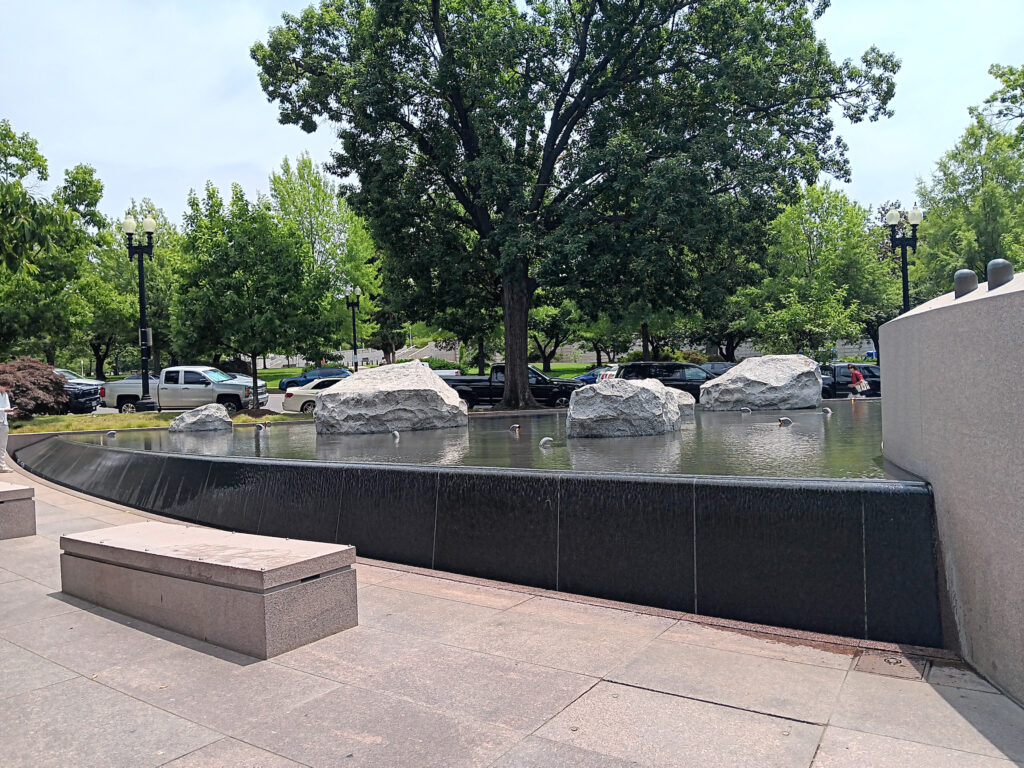
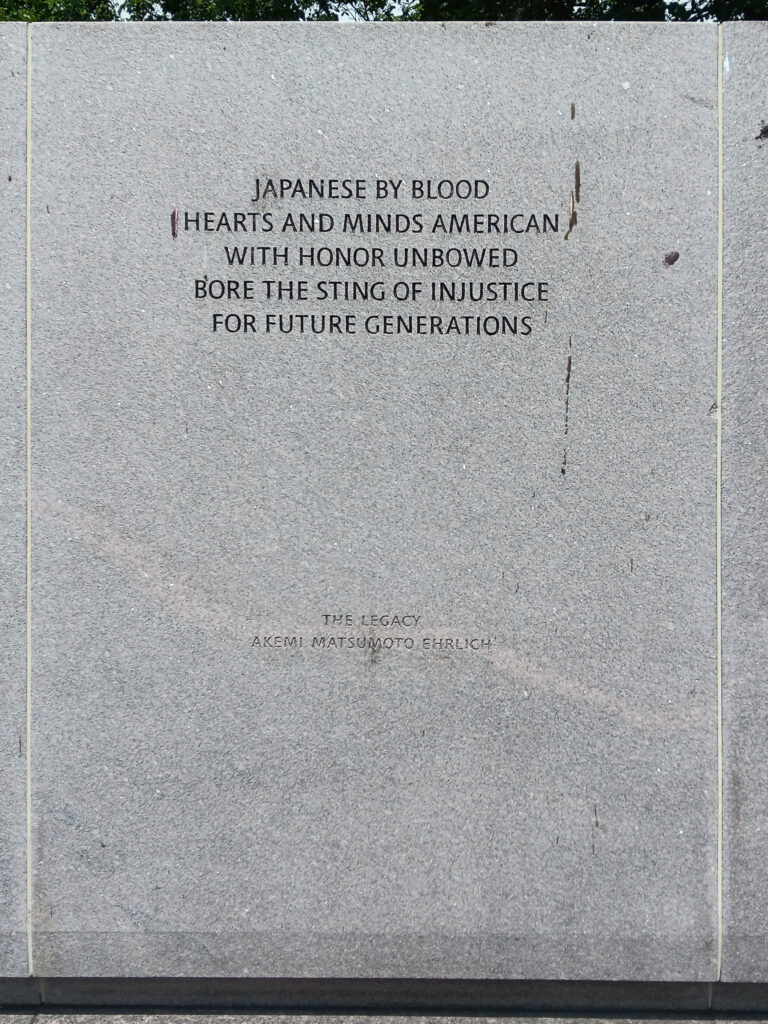
There is a single engraved panel at the sundial end of the north wall with seven contiguous engraved panels in the middle. The seven panels include the 800 names. The images have been modified in an attempt to improve the contrast for reading, especially the ones in shade.
The first single panel.
The seven contiguous panels.
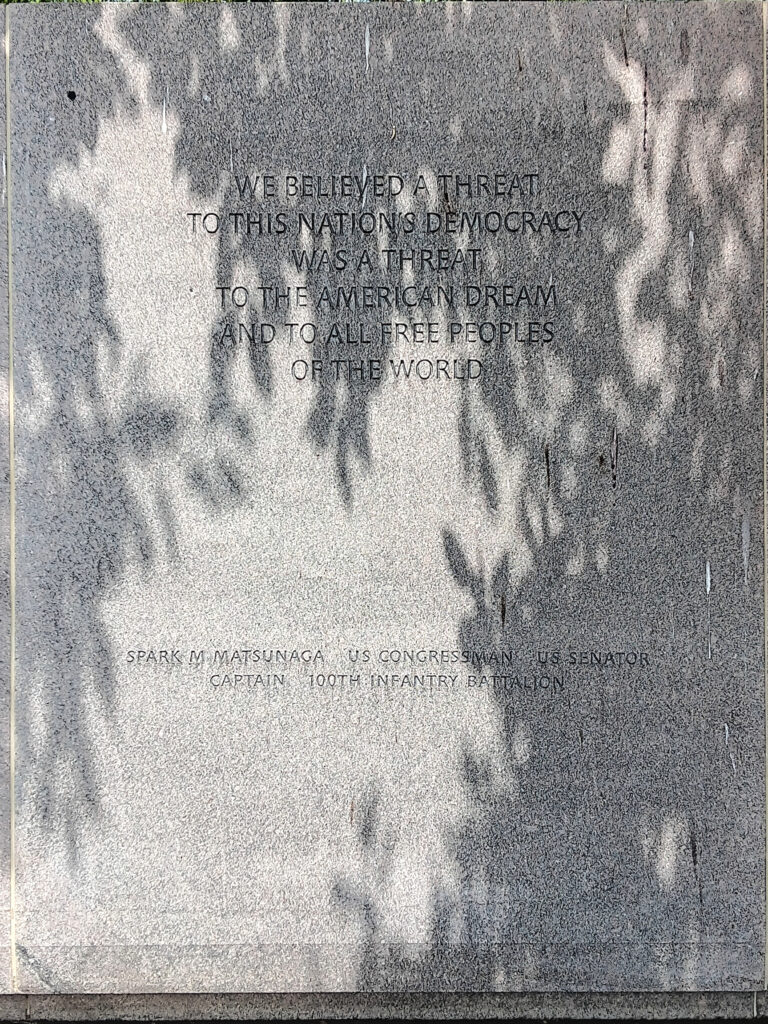
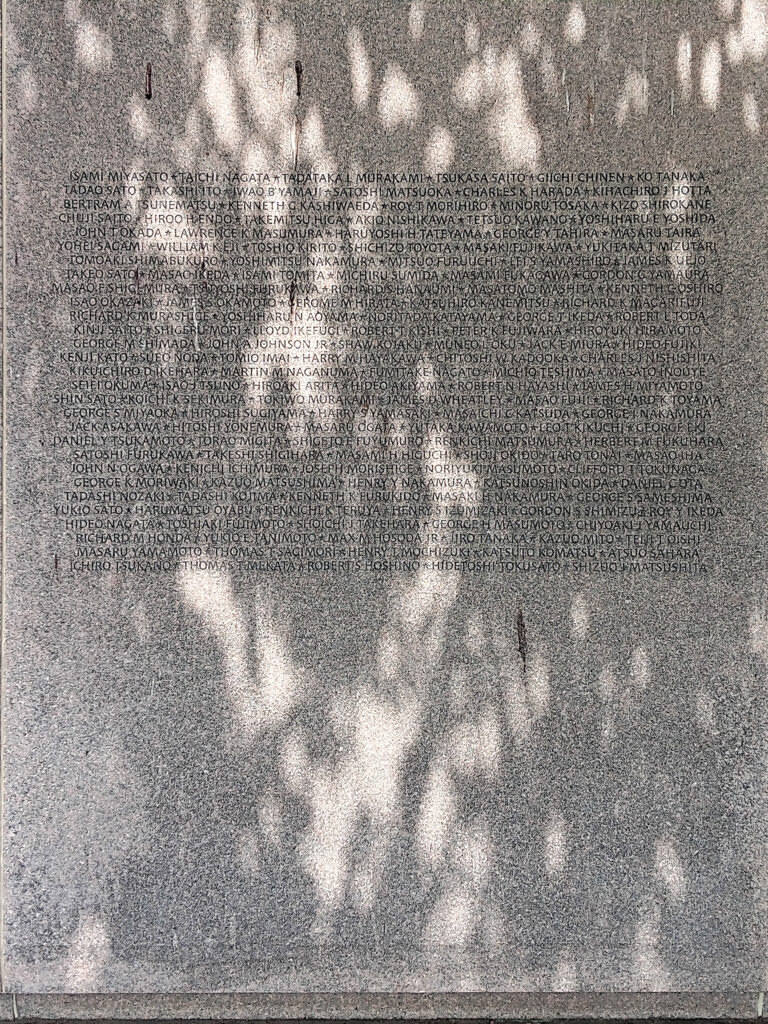
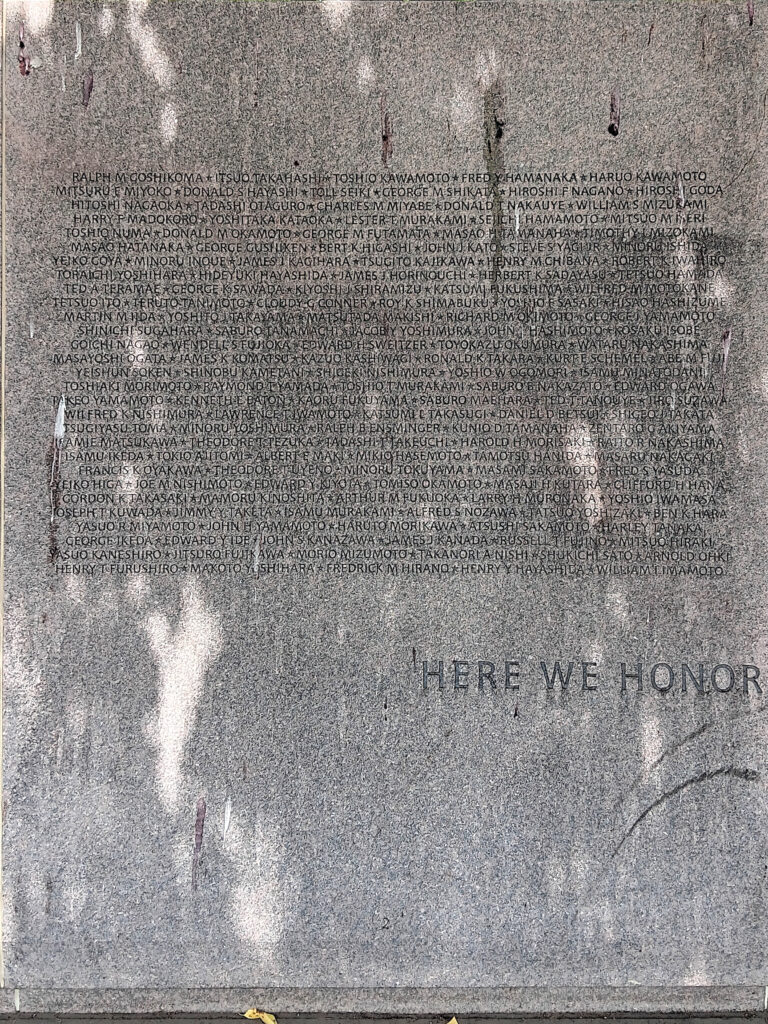
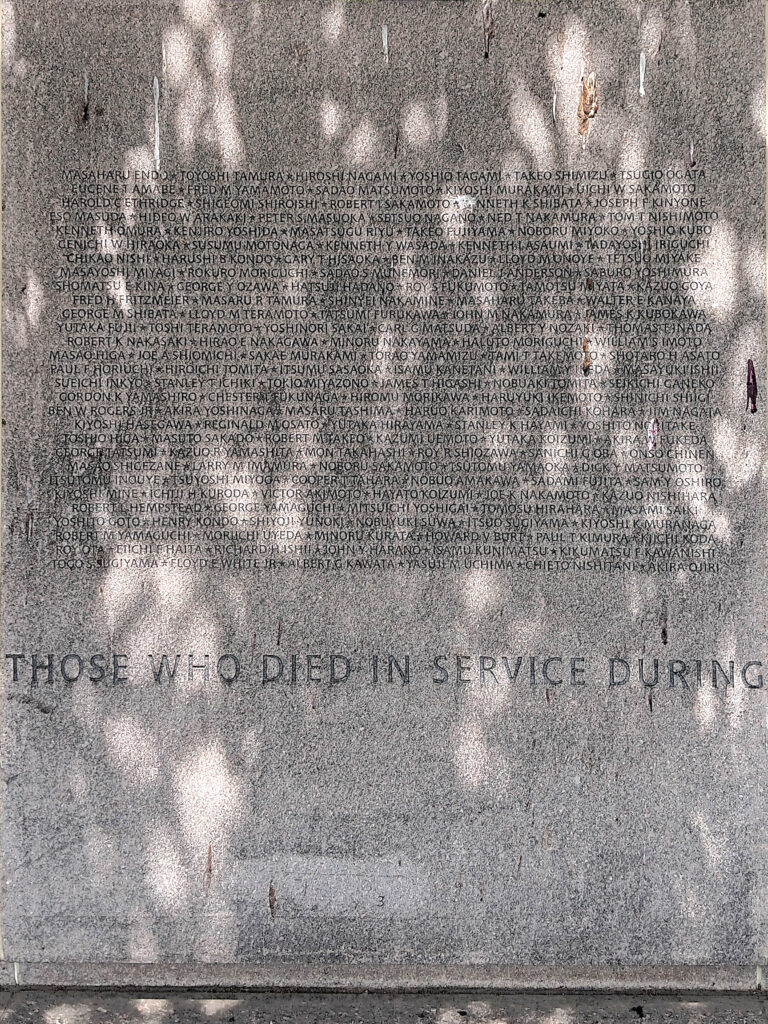
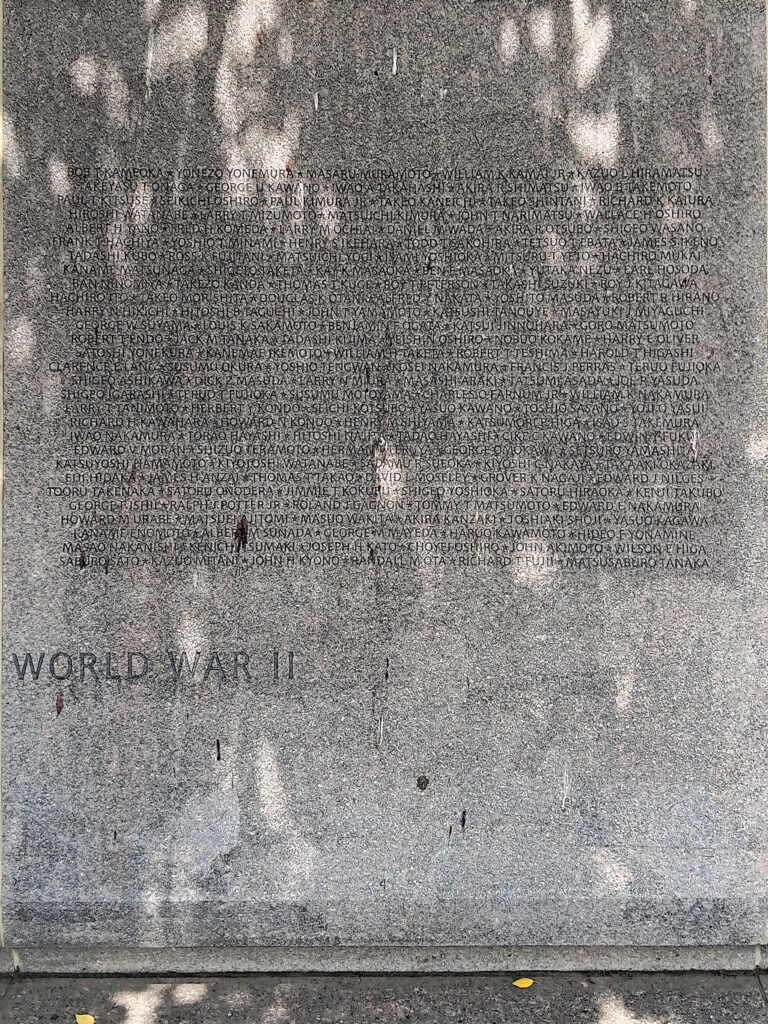
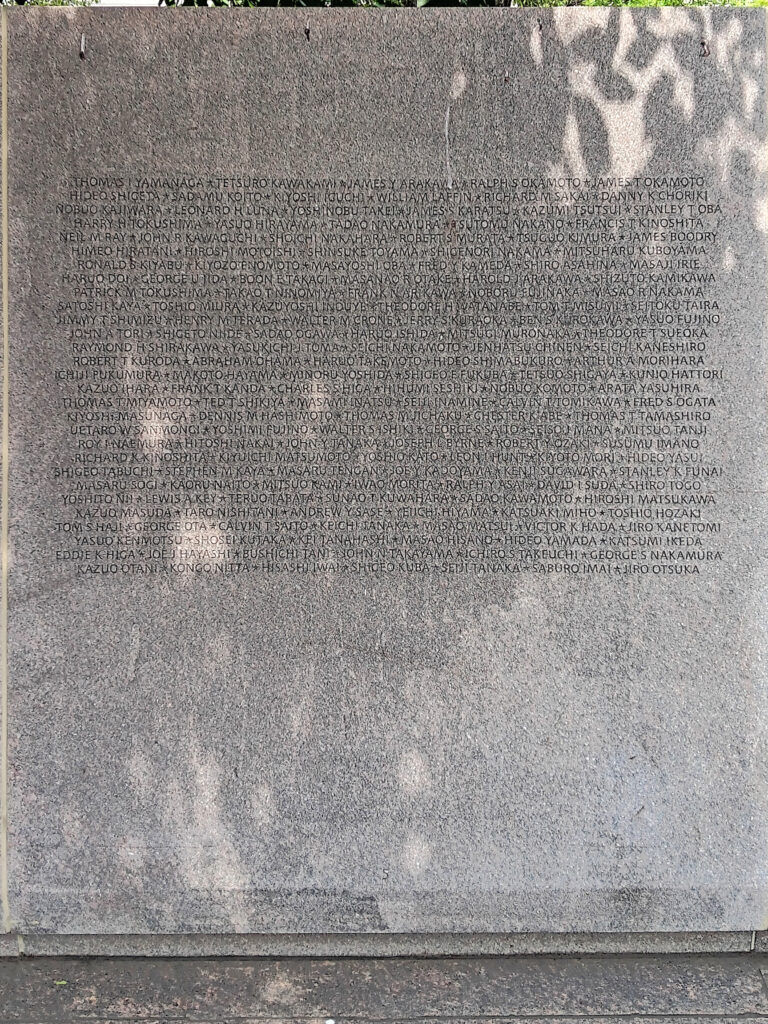
The seven contiguous panels stitched together.

(Click here for the seven panels stitched together where you can zoom and scroll.)

The last single panel.
The next stop from here was a grueling (at this point) five or six block walk to the Smithsonian National Postal Museum.